All posts by limelightmagazine

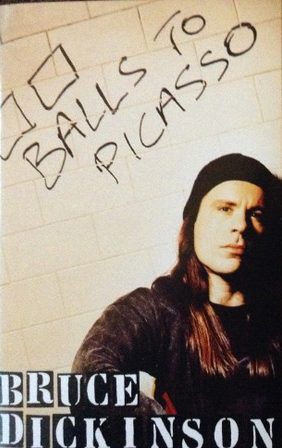
THE CASSETTE CHRONICLES – BRUCE DICKINSON’S ‘BALLS TO PICASSO’

By JAY ROBERTS

The Cassette Chronicles is a continuing series of mini reviews and reflections on albums from the 1980’s and 1990’s. The aim of this series is to highlight both known and underappreciated albums from rock, pop and metal genres from this time period through the cassette editions of their releases. Some of the albums I have known about and loved for years, while others are new to me and were music I’ve always wanted to hear. There will be some review analysis and my own personal stories about my connection with various albums. These opinions are strictly my own and do not reflect the views of anyone else at Limelight Magazine.

(WRITER’S NOTE: THIS WILL BE THE LAST ARTICLE IN THE CASSETTE CHRONICLES SERIES FOR 2023. THERE WILL BE A BEST OF THE YEAR PIECE NEXT WEEK AND THEN THE SERIES WILL RETURN FOR ANOTHER YEAR AT THE START OF 2024.)

BRUCE DICKINSON – BALLS TO PICASSO (1994)

Released in 1994, Balls to Picasso is Bruce Dickinson’s second solo album. However, it was the first one he made following his departure from Iron Maiden. It was the start of his collaboration with guitarist/producer Roy Z and the album was recorded with Z’s band Tribe of Gypsies.

I wrote about Dickinson’s Tattooed Millionaire back in 2022 and while I liked the first side of the album, I found the second side more problematic. So, when it came time to listen and write about this album, I found myself really hoping I liked the album in full. One thing I noticed about the album’s tracks is how more than a few of them mixes a more sedate opening with the more in-your-face more commonly associated with Dickinson’s vocals. Hard Rock combined with metal overtones. This isn’t a surprise so much as it makes for a pretty interesting listening experience as you can clearly see how Dickinson was still making the concerted effort to mix things up so the solo music didn’t sound like “just” another Iron Maiden record.

With Dickinson and Roy Z. co-writing most of the material together (Dickinson’s son Austin has a credit on “Laughing in the Hiding Bush” and bassist Eddie Casillas has a credit on “Fire”.), the album gets off to a lengthy start with the song “Cyclops”.

The track begins with nothing in the way of build-up, it just kicks off out of your speakers for a mostly low key beginning before a brief harder edged flourish that gives way to more of a sedate delivery for the main lyrical passage. But as the song approaches the chorus, the music grows into a intense blast of rock. And Dickinson’s vocal gets more intense as he intones “We watch you breathe through the camera’s eye.” The song is nearly 8 minutes long and after the guitar solo, the music stays in that higher gear. It’s just a beast of an opening track and captures my attention every time I listen to the album. The song’s outro goes on for a good amount of time but it doesn’t lessen the song’s impact at all.

On “Hell No”, I love the way the song starts with this kicking drum beat before Bruce Dickinson’s vocals come in. The first couple of lines, he’s delivering the vocals in a rather understated manner but he quickly puts forth a bolder vocal stance towards the end of the first lyrical stanza. This type of back and forth plays out for most of the song’s vocals. The same kind of vocal delivery is employed on “Gods of War” as well.

The first side of the album is only four songs long but when the first side closes out on one of the songs you would highlight as a particular favorite, things are going well I’d say. On “1000 Points of Light”, I love the way Dickinson’s vocals during the main part of the lyrics are pretty crystal clear, delivered more in a rapid fire manner. The chorus sounds more like how you’d expect to hear him singing, but it melds perfectly together and gives you one hell of a great track.

It has been a while since I listened to Balls to Picasso before sitting down to write this article so I found myself hearing things a bit differently than I have in the past I’m sure. But before heading into the second half of the album, I know that I was really getting drawn in to the music once again.

The album’s second half (six songs) opens with the song “Laughing in the Hiding Bush”. The song’s opening is more dramatically presented but when you get to the chorus, there’s a bit more of a vicious edge to how Dickinson’s vocals come out, particularly as he sings the song’s title. I like this version of the song no doubt, but I found myself curious as to how it would’ve come out if the harder edge provided in the chorus vocals had been employed for the entire vocal turn.

I remember thinking the song “Change of Heart” was the “ballad” track for Balls to Picasso. It’s got the softer vocal focus throughout and then gets the more uptempo pace for its chorus like pretty much any “power ballad” you could think of, but this track really struck a chord with me. Whether the tempo was slow or fast, I loved the sentiment from the lyrics a lot and that made me that much more interested in the track. The brief guitar solo for the song focused more on a feel than an over-the-top flurry of notes. Pretty much all of the guitar work on this track was pretty cool to be honest.

There’s more of a concerted hard rocking style on “Shoot All The Clowns”. There’s not much in the way of a soft intro leading into a more intense flourish. Bruce Dickinson and the band pretty much rock out the whole way through. And they do it with style here. That mid-song vocal break where Dickinson is just spitting out the lyrics is flat out cool. This is just a killer track.

The song “Fire” starts out with a solidly uptempo feel and has a great line in the chorus with “Money won’t pay for the trouble you cause, trouble’s coming back for more”. The chorus alone would make me like the song but I like the way the music comes out on this one too. Sometimes fiery, sometimes understated yet always smoking with some killer guitar lines as well.

There are plenty of great tracks on Balls to Picasso but the one that stood out as my personal favorite has to be “Sacred Cowboys”. The song is in full attack mode pretty much from the start. A static burst musically combined with another rapid fire almost spoken word delivery from Bruce Dickinson but then as the musical intensity increases you get this freaking awesome chorus including this great couplet “Where is our John Wayne, where’s are sacred cowboys now”. Add in a blazing score and an abrupt yet perfectly cast ending and you have a song that just rocks me every time I listen to it.

The album closes out on the song “Tears of the Dragon”. It’s the song that got the most attention for the album and was probably the main reason I picked up the album in the first place. It has a cool melodic sensibility running throughout the song. Both sides of Dickinson’s vocals are on display here and they work in perfect harmony. The more measured tone of the main lyrics have his straightforward delivery. But that chorus gives listeners that soaring vocal tone we all know and love. It elevates the song as a whole and I vaguely remember getting goosebumps the first few times I heard the song.

I haven’t mentioned much about Tribe of Gypsies in the piece but I have to say that as a whole, I can’t imagine how anyone else could’ve done a better job being the right backing band for Dickinson on this album.

As the album finished, I couldn’t help thinking back to when I first heard it for myself and though it is pretty different stylistically from the Iron Maiden material, I loved the different tact Bruce Dickinson took for this album in order to differentiate himself apart from Maiden.

Bruce Dickinson has a new solo album called The Mandrake Project coming out soon but before the focus turns to his present musical project, it is always nice to take a look back and get a renewed appreciation for what has come before. I know that giving high praise to anything from Bruce Dickinson is pretty much adding my voice to a rather large choir, but if you haven’t checked out Balls to Picasso yet, let me just give you my own recommendation to do so as soon as possible, you won’t regret it!

NOTES OF INTEREST: The Balls to Picasso album that was released in 1994 was actually the third attempt at the album. The first two versions were junked when Bruce Dickinson wasn’t happy how they turned out.
The 2005 Extended Edition CD release of Balls to Picasso includes a 16-track bonus disc.

The original plan had been to title the album after the song “Laughing in the Hiding Bush”. Artwork was commissioned from legendary cover artist Storm Thorgerson but according to the album’s Wikipedia page, they couldn’t afford it. That artwork would go on to become the cover for the Anthrax album Stomp 442.

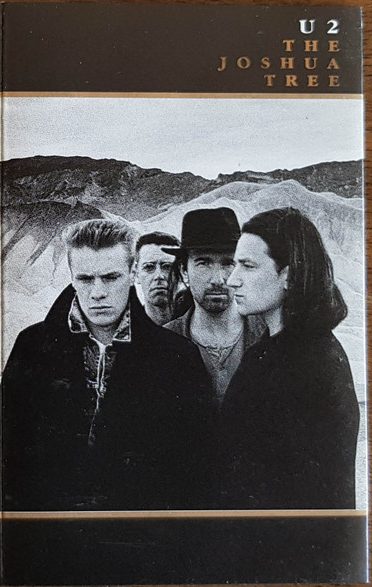
THE CASSETTE CHRONICLES – U2’S ‘JOSHUA TREE’

BY JAY ROBERTS

The Cassette Chronicles is a continuing series of mini reviews and reflections on albums from the 1980’s and 1990’s. The aim of this series is to highlight both known and underappreciated albums from rock, pop and metal genres from this time period through the cassette editions of their releases. Some of the albums I have known about and loved for years, while others are new to me and were music I’ve always wanted to hear. There will be some review analysis and my own personal stories about my connection with various albums. These opinions are strictly my own and do not reflect the views of anyone else at Limelight Magazine.

U2 – THE JOSHUA TREE (1987)

With a reported 25 million copies sold, including at least 10 million here in the United States, the U2 album The Joshua Tree almost certainly needs no little the way of introduction.

Looking at the album’s Wikipedia page, you get the idea that there has been a lot written about the album over the thirty-six years since it was first released. Hell, that page looks like someone wrote a dissertation about the album.

So I don’t think I have to write much in the way of anything approaching critical analysis in this article. I’m sure that how I reacted to the album back in 1987 and then going forward is more in tune with my own personal thoughts rather than going along with the general masses anyway.

But before we get into the album, a bit of my personal history with U2. I didn’t get into the band with their first three albums. I know that WBCN-FM out of Boston was a very early supporter of the band but I didn’t discover U2 for myself until they had that hit single “Pride (In the Name of Love)” off of the album The Unforgettable Fire, which is the predecessor to The Joshua Tree. I remember listening to the song on American Top 40 but I can’t remember how I came to own that particular album on cassette (which I still have in my collection).

That song got me hooked into the band as a fan, but I don’t think anyone was prepared for what was to come when March 9th, 1987 came and The Joshua Tree album hit the shelves. I know I sure wasn’t but from the first time I bought the cassette (which is what I listened to for this article), I was blown away.

The music, which is a lush tapestry of music throughout, is credited to U2 as a whole. Singer Bono is credited with writing all the lyrics. And while a varied set of topics are explored in those lyrics, I figure it is better to let you all decide for yourself what they mean. While I never delved deep into the actual meanings behind each song, I always had my own interpretation no matter how far off those might end up being.

Of course, the band was already popular with four studio releases to their credit already (plus a live release that was recorded in Boston). But everything that came before was just setting the table for what came forth from the recording sessions of The Joshua Tree.

The album opens with a trio of songs that became instant classics for U2 and they were also the first three singles (in a different release order) from the album. (Five singles in all were released with “In God’s Country” being a North American only release and the “One Tree Hill” single only being released in Australia and New Zealand.)

The song “Where the Streets Have No Name” opens up the album and I found that I was instantly captivated by the slow but steady build of the song’s intro before the guitar line from The Edge comes into play. Just as quickly you get the bass (Adam Clayton) and drums (Larry Mullen, Jr.) before the song takes off in full flight with Bono’s vocals. The song is decidedly uptempo, perhaps the most “rocking” of the eleven song track list. The guitar is superb throughout the song and I remember watching the video they made for the song on MTV a lot. As I recall, they were filming a live performance on a rooftop in LA and so many people were showing up to watch them that the police shut down the shoot after they did this song.

The song “I Still Haven’t Found What I’m Looking For” continues to resonate quite strongly with me even now. The track switches between mid-and uptempo tones and this one became another monster track for U2. I don’t know that I need to say too much more about this other than for anyone who hasn’t heard the song to go check it out for themselves. I think you’ll find yourself pretty captivated by what you hear.

But as much as I think those two tracks are absolute stone cold classics, I wonder if they ended up still ranking just a teensy bit behind “With or Without You”. That song was the first single released from The Joshua Tree and is STILL a megahit with the fan base. It’s a ballad in musical tone and delivery with a little bit of “power” infused later in the song’s run time.

So that’s three for three to start off the album. Killer songs with huge commercial success. But what about the last two songs on Side One? Well, they may not have been singles but neither song is any kind of a slouch or letdown.

You have “Bullet The Blue Sky” which has a thumping rhythmic feel to it. And from the very first time I listened, I thought there was kind of a sneering attitude to the lyrics and how they were delivered at various points in the song. (Again, these are MY interpretations of the songs which are likely to have no basis in reality.) The funny thing I remember most about this song actually has nothing to do with U2 themselves. Rather, I remember seeing Queensryche in concert at the Orpheum Theater in Boston. I forget which album they were touring for but they covered “Bullet The Blue Sky” during the show. Stranger still for me was it wasn’t a particularly good show because singer Geoff Tate was sick and the show was pretty short. It was the first time I can remember being disappointed by their concert performance.

As for the side closing song “Running To Stand Still”, I remember reading the song title on the cassette insert and being intrigued simply because of the title. It’s a slower song, with a decidedly softer musical feel to the song. But still, I loved the song.

As for Side Two, much like “Running To Stand Still”, I was immediately intrigued by the song “Red Hill Mining Town” simply by the song’s title. Then I listened to the song and it was killer. The song briefly opens with a soft focus delivery but quickly grows more forceful, with Bono’s vox at times becoming pretty plaintive in how he sings the lyrics. The underlying rhythm track is solid but when The Edge, Clayton and Mullen, Jr. amp up the music for sections of the song, something special happens. I know the song wasn’t released as a single but I love this one as much as if it had hit #1.

As for “In God’s Country”, it does give a challenge to “Where The Streets Have No Name” for most rocking song on the album. And you know what, it may just outdo it in that particular department. I’m not sure if this is an accurate description but the song opens with this jangly guitar sound and from then on, the song just bulldozes its way across your eardrums. And as good as the vocals from Bono are, I think this song belongs to its musical score just a tad more. The guitar playing is impeccably assured here. Whenever I hear the song, it’s like getting my mind blown all over again.

The way the band composed the songs for The Joshua Tree really varied the types of songs they had to offer listeners. Case in point, the song “Trip Through Your Wires”. I’m not sure how anyone else feels about this one but I think it is an inspired track. You’ve got the bluesy music amped up with the harmonica from Bono. Plus there’s a kind of swing to the band’s performance as well.

“One Tree Hill” was written for a close friend of Bono’s that became a roadie for the band. When he was killed in a motorcycle accident, this song came from Bono’s grief. The funny thing is that while it was never released as a single, I thought it should’ve been back in the day. Of course, that was because I didn’t know the backstory of the song at that time. Still, the song has a kinetic energy that is still evident even now.

As many times as I’ve listened to The Joshua Tree over the years, I never looked into the creative process behind the song “Exit”. So imagine my surprise that the lyrics were inspired by the Norman Mailer book The Executioner’s Song about serial killer Gary Gilmore. It seems like such an odd pairing for U2 but the song is incredible. Plus the music gives you the chills as if it is embodying all the fear that a killer like that would inspire. Of course, there’s much more involved in the song to say the least but it sure gave me at least some new insight into the track.

The album closes out with the song “Mothers of the Disappeared”. It first starts out relatively soft. Bono’s vocals are hushed and the music kind of coasts along without too much forcefulness. As the song goes forth, the music does become a bit more upfront in the mix. While the song is generally about U.S. foreign policy at the time, I always thought of it serving as kind of an elegy for The Joshua Tree album itself. Yes, totally not what was going on in the track but that was my initial impression when I heard the track back in 1987.

As noted before, it has been thirty-six years since The Joshua Tree was first released. It was a commercial success beyond measure and made U2 global superstars. Something that hasn’t changed through all the time that has passed since then. It’s one of the most successful albums ever released. And there’s no real way to deny how influential the album has been on rock music either.

I’m mainly a hard rock and heavy metal fan. Nothing is going to change that. But something else that will never change is that I think of U2’s The Joshua Tree album as one of my personal favorite albums of all time as well. There’s so much going on here that I could spend another thirty-six years listening to the album and still not fully grasp everything that went into creating about as purely perfect a listening experience as you could imagine.

NOTES OF INTEREST: The Joshua Tree album has been given two anniversary reissues. The 20th anniversary version has a bonus disc with 14 tracks including B-sides and more. There’s also a DVD with a concert, documentary and two music videos.

The 30th anniversary edition has a 2 disc version with the 2nd disc being a concert from New York in 1987. The four disc edition has that concert plus a disc of remixes and what appears to be the disc of B-sides from the 20th anniversary edition. I have the two disc edition of this release. I got it when I realized that I didn’t have The Joshua Tree on CD at all.

I’ve only seen U2 in concert once. It was pretty special as my parents got me tickets for my birthday. It was the tour for the Pop album. While there’s been a lot said about that album and the tour over the years, I rather enjoyed U2’s performance on the evening even if I didn’t like the new material they happened to play all that much (Pop is not one of my favorite U2 albums). But the classic songs, KILLER!

THE CASSETTE CHRONICLES – WHITESNAKE’S ‘LOVE HUNTER’

By JAY ROBERTS

The Cassette Chronicles is a continuing series of mini reviews and reflections on albums from the 1980’s and 1990’s. The aim of this series is to highlight both known and underappreciated albums from rock, pop and metal genres from this time period through the cassette editions of their releases. Some of the albums I have known about and loved for years, while others are new to me and were music I’ve always wanted to hear. There will be some review analysis and my own personal stories about my connection with various albums. These opinions are strictly my own and do not reflect the views of anyone else at Limelight Magazine.

WHITESNAKE – LOVE HUNTER (1979)

“I love the blues, they tell my story. If you can’t feel it you can never understand.”

That line, from the song “Walking in the Shadow of the Blues”, is a drop-dead awesome introductory lyric and while it may not sum up any kind of description of me, it does loom large for me when I talk about that song.

But we’ll get to that in a bit. First off, it’s been just over four years since I first wrote about a Whitesnake album for The Cassette Chronicles series. Truth be told, despite having multiple albums on cassette from the band, I hadn’t really even thought about writing about another one. There’s no great rhyme or reason to that, it just hadn’t come to pass.

But then a couple days back, I watched a video on YouTube with a ranking of Whitesnake’s studio album catalog and suddenly, I just felt like the time was right to talk about another album. Oddly enough, I have yet to broach the idea of writing about the band’s breakthrough albums of the 1980’s. There’s not a whole hell of a lot new to say but maybe down the line I’ll have a piece on one of those huge releases.

No, instead I’m once again focusing on the first incarnation of Whitesnake. The blues rock driven 1970s version. The one that would basically become a home for ex-Deep Purple members (with keyboardist Jon Lord already on board for this album).

As I wrote when I talked about the Whitesnake album Come and Get It four years ago, this version of the band was something I only discovered after the band went supernova with the self-titled 1987 album.

It is a case of better late than never because I found out just how much I loved this version of the band. I’ve listened to Love Hunter any number of times over the years so most of the album isn’t much of a “discovery” to me. In fact, I rather appreciate and love the album quite a lot. But as I listened to the album for this article, it was pretty cool to find myself once again rocking out to early David Coverdale and crew!

One of the earliest things that stands out in particular with this album is that David Coverdale is not the only singer who gets to shine in the vocal spotlight. In fact, guitarist Bernie Marsden shares lead vocal duties with Coverdale on the album’s opening track “Long Way From Home”. That song has no preamble to it at all. When you hear the first notes of the song, it is already in full rocking form from those first moments. It’s a quick and lively rocker and it is just the start of some incredible rock and roll moments throughout the album.

Whitesnake isn’t really known for doing cover songs but the first side of the cassette does feature the song “Help Me Thro’ the Day”. The song title is ever so slightly altered from the original “Help Me Through the Day” which was written by Leon Russell.

Whitesnake’s version is pretty decent, slower in tempo for sure. It has what I wrote in my notes as a kind of “hazy” delivery. Originally, I was going to say “sleepy” but that not only seemed inaccurate, I thought it might seem a bit insulting which is definitely not what I would say about the track.

The song “Medicine Man” was written by Coverdale alone and it is one hell of a kicking rocker. The side closing “You ‘n’ Me” has a fiery delivery to it that gives the song a nice bit of charm to it.

And getting back to that quote at the start of the article, the song “Walking in the Shadow of the Blues” isn’t just one of my favorite Whitesnake songs, it is a song that I would list as one of my all-time favorite tracks, period. The funny thing is, I didn’t discover this version of the song first. Instead, it was the live rendition on the 1980 Whitesnake live release Live…in the Heart of the City where I first heard the track. And I was just blown away by it. The song was co-written by Coverdale and guitarist Bernie Marsden. It’s got a killer amped up guitar sound powering the track and the vocal performance of what seems like an autobiographical set of lyrics is superb.

I can’t exactly explain why this song hit home with me so much but when I first heard the studio version of the song, it only served to further deepen my love of the track.

When you flip the cassette over to Side Two of the album, you start off with the song “Mean Business” and there’s no doubt that the song and the band live up to the song’s title. It bursts out of the speakers right from the start. The song’s fast paced and electrically charged delivery never relents or relaxes all the way through its running time. Just a killer track!

The album’s title track and the song “Rock ‘n’ Roll Women” are both pretty damn rocking tracks as well. The title cut has a nice solid thump to it while the latter tracks has a quick stepping groove to it.

The most interesting song on Side Two is the song “Outlaw”. It’s a good song, hard charging throughout, but what makes this particularly interesting to me is that Bernie Marsden is the one singing on it, not David Coverdale. Imagine that happening now? I can’t remember if I knew that Marsden was singing and just forgot or if I never realized it even though I’ve listened to the album so many times and read the liner notes probably just as often. But for some reason, when I read the liner notes this time, there was Bernie Marsden credited with the lead vocal and I felt surprised for reasons passing understanding.

The album is chock full of bluesy hard rock, but to close out the album, you get a really brief (just over 90 seconds long) slow moving track called “We Wish You Well”. The song serves not only as the band basically saying so long to the listeners but you could say that it could serve as a way for them to say goodbye altogether when Whitesnake officially ends their run. The song is at first the vocal track and the keyboards of Jon Lord, but then quick as you can, you get the whole band (including guitarist Micky Moody and bassist Neil Murray) joining to give the song a final flourish before it and the Love Hunter album as a whole comes to an end.

As you can clearly see, I love this album. Love Hunter was the second studio release from Whitesnake and you’d be hard-pressed to argue that they didn’t have some really great material. I know that the band will always have the two sides to them but I’ll never have anything overtly bad to say about the early days of the band because every time I listen to the early albums, I wish that I’d seen them during that time. And as you listen to Love Hunter for yourself, you’ll see why I say that.

NOTES OF INTEREST: The Love Hunter album was the last one to feature drummer Dave Dowle. The album was reissued in 2006 with an addition four bonus tracks.

Of the nine original songs on the album, each member of the band had at least one co-writing credit to their name.

The artwork, which is of course considered controversial (both then and now), was done by fantasy artist Chris Achilleos. Oddly enough, it was this piece that had the artist refuse to work with bands again until 2003 when he did an album cover for the Gary Hughe album Once and Future King Part 1. The original Love Hunter artwork was stolen from the artist in the 1980’s. Chris Achilleos had his art featured in magazines such as Heavy Metal and Radio Times. It also appeared on the covers of books featuring Conan the Barbarian, Doctor Who and Star Trek amongst his numerous credits.

THE IRON MAIDENS RETURN TO THE VAULT IN NEW BEDFORD, MA, ON SATURDAY, APRIL 6, 2024

The Iron Maidens, the world’s first all-female tribute to the legendary Iron Maiden, returns to The Vault in New Bedford, MA, Saturday, April 6, 2024, in a concert presented by JKB Entertainment Group. All Sinners open the show. This is a 21+ event. Purchase tickets HERE.

ABOUT THE IRON MAIDENS

Formed in 2001, The Iron Maidens have quickly established themselves as one of southern California’s most popular tribute acts and are rapidly gaining international recognition. The band boasts beauty as well as excellent musicianship, lively stage presence, and a remarkable stage show with theatrical scenes interspersed throughout.

First and foremost on the agenda of The Iron Maidens is talent. These women are highly trained professionals with diversified musical backgrounds ranging from orchestral and musical theater to blues and rock. The band and its members have been the recipients of many awards including best tribute band, and best in category (guitar, bass, drums, voice) at events such as The Rock City News Awards, The LA Music Awards, and The All Access Magazine Award Show to name a few.

The Iron Maidens cover Iron Maiden material from all eras of the band’s career, encompassing the band’s biggest hits as well as fan favorites. The stage show includes appearances by Maiden mascot Eddie, the grimreaper, the devil and more.

The Iron Maidens have packed houses everywhere they have played.

The Vault is located at located at 791 Purchase Street in New Bedford, Mass. Tickets can be purchased through Eventbrite.com.

PLEASE NOTE THE FOLLOWING:

MUST BE 21 or OLDER with Valid ID for Entry.

All ticket sales are final. There are no refunds or exchanges unless the concert is postponed or cancelled.

There is NO SMOKING OR VAPING allowed inside The Vault or in the bathrooms. If you are caught doing either, you will be escorted off premises and forfeit your tickets.

THE CASSETTE CHRONICLES – JUNKYARD’S ‘SIXES, SEVENS & NINES’

By JAY ROBERTS

The Cassette Chronicles is a continuing series of mini reviews and reflections on albums from the 1980’s and 1990’s. The aim of this series is to highlight both known and underappreciated albums from rock, pop and metal genres from this time period through the cassette editions of their releases. Some of the albums I have known about and loved for years, while others are new to me and were music I’ve always wanted to hear. There will be some review analysis and my own personal stories about my connection with various albums. These opinions are strictly my own and do not reflect the views of anyone else at Limelight Magazine.

JUNKYARD – SIXES, SEVENS & NINES (1991)

After discovering just how good the self-titled debut Junkyard album really was a couple months back, I figured I didn’t want to wait too long before hearing what their second album had to offer me as well.

If I was expecting Junkyard to sort of ease into things I was quickly disabused of that notion. The album’s opening cut “Back on the Streets” has a killer pacing to start off the song and that is melded together with a catchy hook filled delivery as the band seemingly goes for broke right from the get-go.

The next song up is “All The Time in the World” and while the song isn’t delivered in quite the same breakneck speed style, there is still an extremely quick moving tempo here. And the song’s chorus really grabs you. The guitar solo on the song is fantastic and singer David Roach continues to surprise the hell out of me. (All that time not hearing the Junkyard albums is really biting me in the butt once again!)

While there is always a bluesy type of feel to Junkyard’s brand of hard rock, the song “Give The Devil His Due” brings that swinging rhythmic blues-driven feel more to the forefront of the song. I could feel my foot start bouncing in rhythmic time to the music and I love when a song can make this totally lacking in any kind of rhythm guy feel like I could somehow move in time to the music.

“Slippin’ Away” (not to be confused with the Dokken song of the same or at least similar name) is much slower at the start. Not quite a ballad delivery, but it has that kind of storytelling country music vibe even with the harder rock edge coming in here and there throughout the song. The lyrical content is excellent. I know that I usually prefer the more rocking type of song but this track was just flat out superb. You can wrap yourself up in the music as the song transports you into the world it creates with each note and lyric line.

The first side of the album comes to a close with the full bore rocker “Nowhere To Go But Down”. The music hits you square out of the gate and then Roach’s vocals hit you all over again! It is yet another song that will grab ahold of you and not let go until the final note. The lyrical content makes it seem like Roach and/or the band is admonishing some repeated ne’er do well or something. Just a damn entertaining track.

As for the second side of Sixes, Sevens & Nines, the song “Misery Loves Company” kicks things off in an interesting fashion. You’ve got a hard rocking soundtrack that is deepened by the inclusion of a piano track that makes everything else sound that much more lively. According to the liner notes on the cassette, the piano (and Hammond organ) is played by musician Kevin Savigar. His playing gives this song a great little boogie-woogie sound to it. Incredible to say the least!

The piano goes away for the song “Throw It All Away”. That track has pretty much all sharp edges to it. At first I thought there was kind of sneer in how the vocals came across but that ended up being a figment of my imagination. Instead, Junkyard just bulldozes through the song giving listeners yet another song that will let them raise their fists and yell.

There’s a more deliberate delivery on the song “Killing Time”. It’s nearly seven minutes long and the kind of swamp rock music vibe rolls over you like a slow moving river. As the song heads into the chorus, the music does get a bit more of a jolt which gives the song an added edge but it works just about as perfectly as you could hope for.

The slightly country sounding tinge returns in the beginning of the song “Clean The Dirt”. It’s a rather spare musical soundtrack to start the song off with the guitar and vocals pretty much alone in the forefront, the drums come in a bit later and at first they are almost muted (or pushed way down in the mix), but then the band comes in full for the song’s chorus before going back to the slower delivery. That tempo switch continues throughout the song and makes for a very interesting track to listen to.

The album ending track “Lost in the City” has its foot on the gas from the first note of the song. It aims for straight between your eyes and finds the mark easily enough. Just a resoundingly uptempo way to end the album. It plays almost as a final victory lap in my head because it finishes off a rather superb album that has just rocked me back on my heels with just how good it is.

One thing I can definitely say after hearing the two Junkyard albums is that the next time they are in my area (or at least close enough that I can drive there and back), I’m going to have to go see them live. The studio material is just incredible and now I have a serious hankering to see how it translates live. Sixes, Sevens & Nines once again confirms that I’ve done myself a great disservice to have waited so long to get into Junkyard and that I now have a lot of catching up to do!

NOTES OF INTEREST: Guitarist Chris Gates and singer David Roach co-wrote each of the tracks. There were only two other co-writing credits with one of those being Steve Earle. He co-wrote (and sang backing vocals on) the song “Slippin’ Away” with Gates and Roach. He also added background vocals on the songs “Misery Loves Company” and “All The Time in the World”.

Bassist Clay Anthony left the band just before the Sixes, Sevens & Nines album was released. He passed away in 2020.

THE CASSETTE CHRONICLES – DANGEROUS TOYS’ ‘PISSED’

By JAY ROBERTS

The Cassette Chronicles is a continuing series of mini reviews and reflections on albums from the 1980’s and 1990’s. The aim of this series is to highlight both known and underappreciated albums from rock, pop and metal genres from this time period through the cassette editions of their releases. Some of the albums I have known about and loved for years, while others are new to me and were music I’ve always wanted to hear. There will be some review analysis and my own personal stories about my connection with various albums. These opinions are strictly my own and do not reflect the views of anyone else at Limelight Magazine.

DANGEROUS TOYS – PISSED (1994)

With the sold-out Dangerous Toys show at The Vault in New Bedford, MA, happening just two days (Saturday October 21, 2023) after this article will post online, I thought it would be interesting to check out the band’s album Pissed this week. While I’ve written about the band’s self-titled debut album and their Hellacious Acres release, not only have I not written about their third album but I’ve never even heard it before deciding to write about it for The Cassette Chronicles.

So I get to go in totally cold on the 10 tracks that make up the album because to the best of my knowledge I’ve never heard any of the songs at all. And since the most recent set lists attributed to the band on setlist.fm say that two songs from Pissed are played live, it might be nice for me to have some familiarity with them.

And that new-slash-growing familiarity with those two songs comes right at the start with both the title track and “Paintrain” opening things up on Side One.

There’s nothing in the way of overture or intro for the title track with the music pretty much kicking in hard and fast right from the first notes. It’s aggressive with singer Jason McMaster viciously intoning “You always seem to piss me off!” While the song may not have had the same “hit single” attached to it as the band’s best known songs, I really liked this song and the seeming level of extra intensity the band had in the delivery.

With “Paintrain” listeners get another in-your-face rocker with a razor sharp focus from the music given increasing fuel to the fire with the gripping vocal performance.

As for the rest of Side One, “The Law Is Mine” kicked off with this very brief but cool sounding drum beat in the intro before the band kicked in as one. This is a blast of a track for me. I loved the way the guitar solo came out on this one. The fast pace had my foot a-tapping throughout.

On “Promise The Moon”, I wasn’t crazy about the way Jason McMaster’s vocals were presented during the song’s first lyrical verse. It was just too over-produced sounding to me. And while this song is probably what we all would consider a “power ballad” (or at least the Dangerous Toys version of one), it’s actually a pretty cool track. McMaster’s vocals return to a more natural style after the song’s first stanza and the questioning and emotional nature of the lyrics come through a bit more powerfully.

The first side closes out on a far more aggressive posture with the song “Strange”. The immediate opening of the song might make you think differently the first time you hear the song but man, once that more fiery delivery kicks in, you can hear how the band’s songwriting “posture” changed immediately (and for the better). And the gutteral yet elastic vibe conveyed through the vocal performances are just fantastic. Edgy and vicious without sacrificing clarity and power.

The second side of Pissed opens pretty much like side one. There’s no real table setting intro for the song “Loser”. Instead the song once again just bursts forth from your speakers and goes full bore right from the first note. And man, the guitar playing on this one (particularly the solo) is phenomenal.

And then comes an absolute monster track in “Hard Luck Champion”. OH MY GAWD! This is incredible. A full frontal musical attack of the senses, the music is fierce (with another highly motivating guitar solo) and the way McMaster attacks the vocals is awesome. The middle part of the song slows down just a bit before getting back to the more aggressive stance of the track. This is an amazing song. I WISH this was going to be in the set list this coming weekend.

“Screamin’ For More” and “Oh Well, So What!” serves to provide a particular focus on the way that McMaster’s vocals are rapid fire machine gun bursts. He spits out the lyrics that leaves you rocked back and glued to your seat.

When you hit the album’s final cut, “Illustrated Man” you’ll find that the tempo is a bit more restrained than the two tracks that preceded it but it is still a pretty lively number. And it brings the album to a fitting conclusion.

After Dangerous Toys was dropped from their major label during the tour for their 2nd album, you have to think they were indeed ticked off about how things had gone for them. I would say this third album being called Pissed is probable confirmation of that notion. I’ve seen other reviews and editorial comments calling the album darker and harsher in terms of the music and lyrics. But I have to say that I found myself thoroughly enjoying this album from start to finish.

This was a really interesting development for me because when I wrote about the first two Dangerous Toys album back in 2017 and 2021, I wasn’t quite as taken with those releases as a whole. Sure I liked the “known” songs but particularly with the first album, I thought the non-single tracks left me wanting just a bit.

But Pissed pretty much avoided anything resembling a song I wouldn’t want to hear ever again. It’s a great collection of songs that may have missed its mark with audiences in 1994 but nearly three decades later, it’s finding a home in my cold dead heart.

Listening to this album will leave you feeling anything but “pissed”. Instead, you’ll find yourselves wondering why I was so stupid as to have spent nearly thirty years without knowing just how damn good Pissed really is!

NOTES OF INTEREST: After the recording of the Pissed album, bassist Mike Watson was replaced by Salty Dog’s Michael Hannon.

The Pissed album was produced by Billy Sherwood, who has had two stints (including the current lineup) with the prog rockers Yes.

The album was reissued in 2017 through ex-Megadeth bassist David Ellefson’s record label EMP Label Group.

THE CASSETTE CHRONICLES – DIO’S ‘HOLY DIVER’

By JAY ROBERTS

The Cassette Chronicles is a continuing series of mini reviews and reflections on albums from the 1980’s and 1990’s. The aim of this series is to highlight both known and underappreciated albums from rock, pop and metal genres from this time period through the cassette editions of their releases. Some of the albums I have known about and loved for years, while others are new to me and were music I’ve always wanted to hear. There will be some review analysis and my own personal stories about my connection with various albums. These opinions are strictly my own and do not reflect the views of anyone else at Limelight Magazine.

DIO – HOLY DIVER (1983)

Given the fact that Holy Diver, the debut studio album from Dio, is to this day acknowledged as the best album the group did and remains a defining moment in the career of singer Ronnie James Dio, I don’t think it is going to shock anyone if I get the spoiler alert portion of this article out of the way early.

That is to say I absolutely love this album! Of course, I was late in getting around to the album because the first time I heard a Dio release was the Dream Evil album which came out four years after Holy Diver.
But on this first album, when you combine Dio’s vocals with Vivian Campbell’s guitar playing, Jimmy Bain on bass and Vinny Appice on the drums, you definitely get a full-on metal assault that stands the test of time.

Whether or not it was expected to go down that way when the album was originally released, I have no idea. But I know that I still get excited each time I go to put this album on.

The music for Holy Diver was written by the four individual members in varying combinations while Ronnie James Dio wrote all the lyrics. And it is the lyrics that really stand out to me. I mean as a whole within each song and then with each track also having some killer individual lyrical lines that continue to blow me away even now. They have just struck a chord with me so that each time I hear them, I get this little jolt of memory from the first time I heard the words.

The first side of the cassette opens with the song “Stand Up and Shout”, which is ball of kinetic energy tossed into a crowd like a grenade. It bursts out of the speakers and wastes little time in getting the listener amped up. I can’t imagine anyone not jumping out of their seats when you hear this song. The anthemic exhortations feel just as empowering now as they did in 1983. And I love the opening line, “It’s the same old song / You’ve gotta be somewhere at sometime /And they never let you fly”.

The album’s title cut comes up next and while the video for the song isn’t exactly what you would call “great”, it was always a thrill to see it come on MTV back in the day. It’s still one of the most popular Dio tracks and while it is not quite as revved up in terms of tempo as “Stand Up and Shout”, the song still has a highly charged uptempo feel to it. As for a killer lyrical line I think “Between the velvet lies / there’s a truth that’s hard as steel” is great one.

The song “Gypsy” is a solid rocker that lets the band shine nicely as a whole. And the verse: “Well I rolled the bones / To see who’d own /My mind and what’s within /And it’s a given rule / That we’re all fools /But need to have a little sin” always manages to catch my ear.

I could be wrong about this but I think the song “Caught in the Middle” is a bit of an overlooked track in the Dio catalog. But I actually like this song a lot. I like the uptempo pacing and I think Vivian Campbell’s playing on this one is really cool. To top it off, I like Dio’s vocal performance here a lot as well. And the lyrical line “Looking inside of yourself / You might see someone you don’t know / Maybe it’s just what you need / Letting the river I know that’s in you flow” seems rather like a positive affirmation kind of lyric without being the kind of cheesy that would make one’s eyes roll.

The first side of the album closes out with “Don’t Talk To Strangers” which is another classic Dio track of the first order. I love the way the song opens with a vastly slower and more dramatic tempo but then blows up into a take-no-prisoners fiery rip-roaring rocker. At times, Ronnie sounds positively vicious in his delivery. And I have to say, start to finish, the song has a killer set of lyrics though I do love the line “Don’t writing in starlight / ‘Cause the words may come out real” a lot.
As a fan of stories and words in general, I am always on the lookout for song lyrics that can just hit me out of nowhere and continually catch my ear no matter how many times I listen to the song. And the Holy Diver album never disappoints.

The second side of the album opens with “Straight Through the Heart” which is a powerfully stomping rocker. I love the first line of the song “Hanging from the cobwebs in your mind” but the verse “Oh, never tell a secret with your eyes / It’s the eyes that let you down / Tell a little truth with many lies / It’s the only way I’ve found” is just flat out awesome in my estimation.

While “Invisible” starts off with a sense of the theatrical in the song’s intro, it quickly becomes a blazingly hot high energy rocker. The storytelling that Dio does with his vocals and the song lyrics is amazing. It’s another track that I found that I love the entire set of the song lyrics. But the opening stanza when the song is far slower in tempo always gets me. It’s just incredible to hear “If your circle stays unbroken / Then you’re a lucky man /’Cause it never never never has for me / In the palace of the virgin / Lies the chalice of the soul / And it’s likely / You might find the answer there” before the band comes in hot and heavy and Dio adds an edgy growling tone to his performance with lines like “She was a photograph / Just ripped in half / A smile inside a frown”.

Chances are if you still listen to the radio, you are still hearing the song “Rainbow in the Dark” a lot. I know when I am listening to 94 WHJY out of Providence, RI, I hear the song all the time. You’ve got that instantly recognizable keyboard heavy intro leading into the song as a whole but man, just when you might think the song is a tad overplayed, you hear it again and it hits you all over again. And while I do love all of the lyrics that Ronnie James Dio is singing in the song the stanza “You’re just a picture / you’re an image caught in time / We’re a lie, you and I / “We’re words without a rhyme” is just intensely cool.

The Holy Diver album ends with the song “Shame on the Night” and it’s Jimmy Bain’s bass and Vinny Appice’s drums that not only hold down the bottom end of the track but give it that thumping whallop you hear throughout the song’s running time. It’s a much more methodical delivery that the more fast paced and in-your-face songs but no less heavy and catchy. Plus how can you not like a song that has lyrics like “Shame on the night / For places I’ve been / And what I’ve seen/ For giving me the strangest dreams / But you never let me know just what they mean”?

I can’t imagine anyone who could hear the Holy Diver album and not like it. I’m shocked if people don’t LOVE it! After time in Rainbow and Black Sabbath, Ronnie James Dio got it right once again with his solo Dio band right out of the gates. Holy Diver is an essential heavy metal album that belongs in every fan’s collection. You’ve got great music, killer lyrics and perhaps (or even likely) the all-time greatest metal singer on the mic. What more can you ask for from an album whose greatness is undisputed four decades after it came out?

NOTES OF INTEREST: The Holy Diver album has achieved at least platinum certification according to the album’s Wikipedia entry. It was remastered and reissued in 2005 through Rock Candy Records with audio of Ronnie James Dio answering questions. It was then reissued again in 2012 in a 2-disc edition that had nine bonus tracks on it.

The documentary Dio: Dreamers Never Die was released on DVD and other physical media formats on September 29th, 2023.

A graphic novel entitled Dio: Holy Diver was published by Z2 Comics in 2022. It was written by 30 Days of Night author Steve Niles with art by Scott Hampton and Bill Sienkiewicz. Its storyline focuses on what led up to the moment that is captured on the cover art for the album. I own a copy of the graphic novel and it is a decent story.

According to a September 27th news article link I saw, Dio’s widow Wendy has said that the Dio’s Disciples band will be going back out on tour in 2024.

Fall River Arts Academy Students to Perform at Foxwoods on Oct. 8th

This October, music students from the Fall River Arts Academy will take the stage at the Foxwoods Hard Rock Cafe in Ledyard, Connecticut.

The Hard Rock Cafe’s origin dates back to 1971 in London, where Peter Morton and Issac Tigrett opened an American style diner inside of an old Rolls Royce dealership. Alan Aldridge, who conceptualized the brand’s logo, famously designed album covers for artists like Elton John, The Who, and The Beatles. The cafe was an instant hit among Rock & Roll artists and patrons alike, becoming a worldwide staple with their star-studded collection of iconographic memorabilia. Nowadays, the Hard Rock Cafe has venues in over 74 countries which host over 15,000 live acts each year. The Fall River Arts Academy students will perform at Foxwoods on Sunday, October 8, 2023, at 1:00 PM.

The student-led bands range in age, with the youngest members being 8 years old and the oldest members being young adults. Each band rocks out to fan favorite radio hits at both formative local showcases and prestigious performance spaces.

Our school is dedicated to presenting students with the opportunity to perform at top venues around the country.

Call/text 508-567-5555 for more information or find us at fallriverartsacademy.com to find out how you can get involved with Fall River Arts Academy.

10,000 MANIACS BRING ‘REVIVAL’ TOUR TO NARROWS CENTER IN FALL RIVER, MA

10,000 Maniacs, one of America’s most beloved independent bands with hits “Because The Night,” “These Are Days,” “Trouble Me,” “More Than This,” and “Candy Everybody Wants,” returns with an extensive spring tour that will make a stop at the Narrows Center in Fall River, MA, on Saturday, April 27, 2024. Click HERE for tickets. Because this is an intimate venue for this band, we expect this show to sellout in advance.

The Narrows Center is located at 16 Anawan Street in Fall River, MA. Tickets can be purchased online at narrowscenter.org. For those wanting to purchase tickets in person, box office hours are Thursday through Saturday, 12 noon to 5 p.m. Parking is free. Patrons are welcome to bring their own food, beverages, and alcohol to all events in bags and small coolers that will fit under your chair. 

THE CASSETTE CHRONICLES – JUNKYARD’S SELF-TITLED DEBUT

By JAY ROBERTS

The Cassette Chronicles is a continuing series of mini reviews and reflections on albums from the 1980’s and 1990’s. The aim of this series is to highlight both known and underappreciated albums from rock, pop and metal genres from this time period through the cassette editions of their releases. Some of the albums I have known about and loved for years, while others are new to me and were music I’ve always wanted to hear. There will be some review analysis and my own personal stories about my connection with various albums. These opinions are strictly my own and do not reflect the views of anyone else at Limelight Magazine.

JUNKYARD – JUNKYARD (1989)

With a sound that has been described as mixing in Southern rock, boogie woogie and AC/DC, the band Junkyard drew broad comparisons to fellow Geffen Records label mates Guns N’ Roses when their self-titled debut album was released. You’d have thought that would’ve been enough to draw me in to check out the band but in all the years since the band first hit the scene, I don’t think I’ve ever really heard anything from Junkyard.

It’s a little embarrassing to say the least. That embarrassment is slightly compounded a bit more when you consider that I have a Facebook friend who is majorly into the band. I remember a few years back she even asked if I wanted to see an area show they were playing to do a concert review.

The band’s first two albums have been sitting in The Big Box of Cassettes for a good long while now. So I thought what better time than now to FINALLY give a good listen to Junkyard and give my long after the fact thoughts?

The first side of the album opens with the song “Blooze” and while singer David Roach is “drinking his blooze away”, this song kicked off a rather interesting bit of education for me as it relates to the band.

By that I mean, this was incredible! The first side of the Junkyard album is filled with some fantastic music…to say the least. With “Blooze”, you can feel how the band captures lightning in a bottle as the song’s pacing is just relentlessly in your face. It’s a killer sounding track and the vocal take has a gritty tone to it that sharpens the track’s edge just a little bit more to my ears.

The band follows that up with another double-barreled shot of fiery rock and roll with “Hot Rod”. What I liked a lot with this particular track was hot it employed a swinging style in the music’s melody and delivery. It gave more of a free-wheeling feel to the song and I found I enjoyed it a lot.

Now, if you want to find a song that seems to lean a bit on the “Southern rock” template a bit heavier than other tunes on the album, the song “Simple Man” (which is not a cover track of that big hit song of the same title). The track is much slower than the first two songs, but still maintains a rather lively quick stepping feel overall.

You know how the band has the AC/DC comparison attached to it? It’s a great thing if you can pull it off and still manage to have a sound wholly your own at the same time. But on the song “Shot In The Dark”, I thought the track was something you could imagine the band Kix, not AC/DC or Guns N’ Roses, having done. And believe me, I mean that in the most complimentary fashion. There’s a great little hook in the song that did in fact “hook me in” to the entire song. And man, this was a really blazing track.

Of course, my Junkyard education gave me a rather embarrassing lesson when the last song of Side One kicked in. I said I didn’t think I’d ever heard anything from the band before now. Wow was I wrong!

Of course I’m talking about the song “Hollywood”. And not only have I heard the song a lot over the last 30 plus years, but I actually love it a lot. But somehow, I can’t remember actually knowing that it was Junkyard that did the song. I don’t know, maybe I’m losing my mind or something. But as the song played this time around, I was rather stunned to realize Junkyard was the one that did the song. I’d really love to know how I could forget or not know they did such a great song. But here’s a question for everyone, is it their best known song?

As for the second side of the album, the wildly energetic rock and roll continues apace right from the start. The song “Life Sentence” features some ripping guitar work to open the song that grows from that intro to a more explosive full-on rocker throughout the rest of the track.

The guitar playing from Chris Gates and Brian Baker is pretty damn good throughout the album but I thought the song “Can’t Hold Back” was a spotlight track for their work. It ended up being one of my personal favorite songs on the album. You can feel the band kind of revving up in the intro before their full musical attack kicks in but once it does, man what a killer song.

That same kind of guitar-centric opening before the full sonic picture starts can be said about the song “Texas” as well. There’s a bit of noodling around for the song’s intro but once things get rolling, as David Roach proclaims his love for “that Texas ass!”, it’s just an unstoppable energetic number that I loved.

What struck me weird for the album is the song “Long Way Home”. It’s got more of a methodical bluesy approach to the track and usually it’s something I heartily enjoy. But for some reason, while the song it decent, I would hesitate to say I really loved it. I can’t quite put my finger on why I felt that way but that’s just how it seemed to come across to me.

The album closes out with the song “Hands Off” and the band seemed to want to slow things down a bit as the album concludes. But slowing down is kind of a relative term here. Yes, it wasn’t as over-the-top in terms of pacing like “Blooze” or “Hot Rod” but it still has its moments where power and intensity break through the more keenly focused but clearly slower tempo portions of the song. It does bring the album to a immensely satisfying conclusion however.

And that’s where I was left after listening to the album for the first time. Yes, I completely missed the boat on this band back in the day. Which is embarrassing beyond measure considering 1989 was probably where I was in my prime as an 80’s metal fan. But 34 years after the fact, I’ve discovered just how freaking good the Junkyard album is and now I’m really looking forward to checking out what else they have to offer. Because again, this album is one hell of a fantastic listening experience!

NOTES OF INTEREST: The debut album featured guest appearances from Al Kooper on the tracks “Hands Off” (he played piano) and “Simple Man” (he played both piano and Hammond organ). Guitarist Earl Slick (who played with David Bowie among his list of credits) played slide guitar on “Simple Man” and “Long Way Home”.

Junkyard released two studio albums before being dropped from their label back in 1992. They had a third album recorded but it remained unreleased until 1998 when the band self-released the material under the names Joker and XXX.

The band has two other studio albums to their credit as well. High Water came out in 2017 while the album Old Habits Die Hard (originally recorded in 1992 apparently) came out in 2019. They also have a live album, an EP and a compilation of previously unreleased material available.

Singer David Roach, bassist Todd Muscat, drummer Patrick Muzingo and guitarist Tim Mosher have been in the band’s reformed lineup since 2000. Guitarist Jimmy James has been with the band since 2017.