All posts by limelightmagazine

The Cassette Chronicles – KISS’s ‘Revenge’

By JAY ROBERTS

The Cassette Chronicles is a continuing series of mini reviews and reflections on albums from the 1980’s and 1990’s. The aim of this series is to highlight both known and underappreciated albums from rock, pop and metal genres from this time period through the cassette editions of their releases. Some of the albums I have known about and loved for years, while others are new to me and were music I’ve always wanted to hear. There will be some review analysis and my own personal stories about my connection with various albums. These opinions are strictly my own and do not reflect the views of anyone else at Limelight Magazine.

KISS – REVENGE (1992)

This week’s article is once again courtesy of me having listened to this album first on CD. I have been slowly acquiring the Kiss catalog on CD and my friend Jeff from Georgia had found me a copy of Revenge on disc on one of his many jaunts to the various record shops where he finds material.

When I played the CD version of the album, I was just kind of listening for fun. I had the cassette edition in the Big Box of Cassettes and planned to listen to that in order to write this article. When I mentioned to Jeff that I was listening to Revenge, he responded by saying that he liked half the album which meant that I would probably like the stuff he didn’t like. (It would seem everyone has discovered my contrarian musical nature by now.)

The album is jam-packed with 12 songs but the song “God Gave Rock ‘n Roll To You II” (a remake of the song originally done by British band Argent) was actually released in 1991 as part of the soundtrack for the movie Bill & Ted’s Bogus Journey. However, when Revenge came out about a year later, the song was included on the album’s first side.

I’m pretty sure that I liked the song when it was originally released but over the years I’ve come to find it rather annoying. I don’t know, it just seems to be a little over the top (even for Kiss) and overplayed as well. This is a sad realization for me because apparently Gene Simmons considers the song as a testament to drummer Eric Carr, who died soon after the song was released on the movie soundtrack.

Still, the album does start off pretty strongly. The song “Unholy” opens up things and I loved the heavier feeling to the music and the vocal performance from Simmons. The songs “Spit” and “Domino” are outstanding heavy rockers as well. The latter song is one of my “latter day” favorite tracks from the band.

The other two songs on Side One are “Take It Off” and “Tough Love”. Since I hadn’t heard the album in full before now, most of the material including these tracks are new to me. I loved the guitar work from Bruce Kulick on “Take It Off” in particular. While I thought “Tough Love” certainly captured the energetic feeling you get from pretty much any Kiss rocker, I ended up not being fully crazy about the song as a whole. I’m not quite sure why it didn’t hit home with me though.

The second side of Revenge an almost entirely new listening experience for me. The band kept up their high-wire rocking pace for most of the songs on the album but they did go the ballad route with “Every Time I Look At You”. However, I really wish they hadn’t because I didn’t care for the song at all.

Other than that though, Side Two was chock full of some great songs. Some of the vocals on side opener “Heart of Chrome” seemed to get swallowed up in the mix but the song was good enough that I didn’t really get too upset about that. The closing track was an instrumental by Eric Carr called “Carr Jam 1981”. It was pretty good overall and I wonder how it would’ve progressed had it been intended for a full song.

In between those tracks, the band hit full bore rocking with songs like “Thou Shalt Not”, which was a killer track. However, “Paralyzed” topped that with an even more intensely blazing intensity. And the one song that I had at least a passing familiarity with was “I Just Wanna” which tickled all sorts of buttons for me.

While there were a couple of tracks that I didn’t like all that much, Revenge is definitely an enjoyable album for me. Much to what I’m sure will be my friend Jeff’s chagrin, I liked fully more than half the album and I think this will be one of the Kiss albums that I end up playing a lot more as time goes by.

NOTES OF INTEREST: The album went gold for the band. It is the final album to feature any contributions from drummer Eric Carr. As noted earlier in the article, he had passed away before the album was released. Revenge is dedicated to him. While he was in the video for the “God Gave Rock ‘n Roll To You II”, he didn’t actually record the drum tracks for the song (he did contribute backing vocals). Instead, it was Eric Singer behind the kit and when Carr died, Kiss hired Singer full-time and he performed the material on Revenge with the exception of the song “Take It Off” and of course, “Carr Jam 1981”. Guitarist Bruce Kulick re-recorded the guitar parts on the “Carr Jam 1981” instrumental which had been originally played by Ace Frehley. Oddly enough, the riff in the song (according to the album’s write up on Wikipedia) ended up being used by Frehley for his 1987 Frehley’s Comet song “Breakout”.

Before Revenge was recorded, guitarist Vinnie Vincent had made up with both Gene Simmons and Paul Stanley. He wrote songs with both of them. But before the album’s release he’d fallen out with the band again and his only credit on the album turned out to be the co-write on “Unholy”. Paul Stanley co-wrote “Take It Off” with producer Bob Ezrin and Alice Cooper guitarist Kane Roberts. Meanwhile, the solo in the song “Every Time I Look At You” was played by Dick Wagner, who also played guitar with Alice Cooper.

RICHIE KOTZEN TO PERFORM AT VAULT MUSIC HALL IN NEW BEDFORD, MA

UPDATE 5-13-20 – Richie Kotzen’s concert at The Vault Music Hall has been postponed due to Covid-19. JKB Entertainment Group/Limelight Magazine is currently working on rescheduling the performance to a Saturday in either January or February 2021. We will share additional information as soon as possible. While you can request a refund, anyone who decides to hang onto their ticket will receive an 11”x17” event poster. You can pick it up with proper I.D. immediately after the show. (Posters will only be given to anyone who purchased a ticket through May 15, 2020).

To coincide with his 50th birthday, Richie Kotzen is embarking on a solo tour with his band that will make a stop at the Vault Music Hall in New Bedford, Mass., on Saturday, June 20th. Tickets are on-sale now and can be purchased by clicking HERE.

With guitar styles ranging from rock, blues, jazz and fusion to pop and soul, Richie Kotzen has built a remarkably diverse career as a guitarist, singer and songwriter. During that span, he has not only built an incredibly successful solo career, but has also found himself writing, recording and playing live with a variety of different artists, ranging from rock bands like The Winery Dogs, Poison and Mr. Big to jazz/fusion groups like Vertu featuring Kotzen and jazz legends Stanley Clarke and Lenny White.

A prolific songwriter, Richie has written several songs that have gone on to become hit singles around the world. His song “Stand.” written while a member of Poison, reached the top 20 on the Billboard charts. As the lead single off of their album NATIVE TONGUE, “Stand” was the catalyst for the album reaching platinum status. While with Mr. Big, Richie also enjoyed another milestone, having his song “Shine” reach #1 in both Europe and Japan.

Richie continues to make amazing records and to tour around the world, playing stadiums, festivals, and clubs. His current tours have spanned several continents, including North America, Europe, South America and Asia. He has played with many other well known musicians, has performed on television programs such as “The Tonight Show with Jay Leno” and “Live with Regis and Kelly,” and continues to appear in countless books, magazines and websites, being acknowledged as one of the top guitarists in the world!

Having recently celebrated his 50th birthday, Kotzen is spending the entire year celebrating in as large of a way as possible to make it his biggest and most memorable birthday yet.

50 FOR 50—his 22nd solo album—has just been released on Feb 3rd via his own custom label, HeadroomInc. The self-produced three-disc collection is just what the title implies: a collection of 50 previously unreleased compositions produced, performed and written by Kotzen in honor of his birthday. It’s the follow-up to his critically acclaimed SALTING EARTH album, which was released April 14, 2017 via Headroom-Inc.

Although Kotzen has been hailed as a guitar virtuoso since the release of his first album, it is his emotional lead vocal delivery and diverse songwriting style that separates him from his peers thanks in large part to artists that influenced him in the Philly Soul R&B to Jazz, Rock, Funk, and Fusion Guitar genres. 50 FOR 50 captures the full artistic scope of what makes Richie Kotzen such a unique artist.

“The idea of a 50 song album came to me while I was on tour sometime last year,” Kotzen explains. “I had completed what would have been your typical 10 to 12 song album and was anticipating a 2020 release. Somewhere along the line, I discovered a few completed songs that for whatever reason were never released. Along with that, I found a massive collection of material that was in various forms of completion. Some songs had drums bass and piano with no vocal, other songs were nothing more than a bass line and a vocal melody and so on. I decided to take that summer and fall, stay in the studio, and see how many of these ideas I could bring to completion. The concept was to include the already completed works and finish the other ideas and then stop once I reached 50 songs. Reality is we’ve got way more sitting on the hard drives waiting for attention. I figured if I can walk out of the studio with 50 songs (that I like) mixed and mastered, I can release a 50 song package on my 50th birthday.”

The Vault Music Hall is located at located at 791 Purchase Street in New Bedford, Mass. The venue is set within a former bank building featuring original vault doors and a truly historic feel. The show is 21+ with valid I.D.

Photo by By Larry Dimarzio

The Cassette Chronicles – Great White’s ‘Hooked’

By JAY ROBERTS

The Cassette Chronicles is a continuing series of mini reviews and reflections on albums from the 1980’s and 1990’s. The aim of this series is to highlight both known and underappreciated albums from rock, pop and metal genres from this time period through the cassette editions of their releases. Some of the albums I have known about and loved for years, while others are new to me and were music I’ve always wanted to hear. There will be some review analysis and my own personal stories about my connection with various albums. These opinions are strictly my own and do not reflect the views of anyone else at Limelight Magazine.

GREAT WHITE – HOOKED (1991)

The impetus for selecting Great White’s Hooked album for this week’s article came not from reaching into the Big Box of Cassettes like so many other pieces in this series. No, this time it actually came about from a big bag of CDs that I bought at a flea market a year or so ago.

I hadn’t gotten around to listening to many of those purchases yet but in the midst of doing some straightening up of my various CDs, I looked into the bag and realized that I had a copy of Hooked on disc. I’d completely forgotten that I bought it but I ended up listening to it and was going to write about it for a message board where I post brief CD reviews.

But then I remembered that I have a cassette copy of the album. I bought the cassette edition of the album when it originally came out so I dug it out and thanks to some unscheduled down time at the day job, gave it another listen in order to turn it into the article you are now reading.

After the big success of 1987’s Once Bitten and 1989’s …Twice Shy, I know that I was really looking forward to Hooked being released. I remember seeing ads in the magazines I read at the time. When I got my hands on the album, I really enjoyed it but only played it a few times for reasons that have slipped my mind by now.

1991 was well into the fading commercial fortunes of 80’s metal and Hooked was far less successful for Great White than its two album predecessors, even though the album did get pretty good critical reviews. By giving the album a new listen (or three) I came to realize that Hooked was a damn good album that rivals the band’s two best known releases and might even surpass them in some respects (if you add in their spectacular 1999 album Can’t Get There From Here, you’ve got the quartet of what I think is their best material).

The album opens up with a couple of stone cold killer rockers in “Call It Rock N’ Roll” and “The Original Queen of Sheba”. The latter of those two songs is just a ballsy rocker that you can really sink your teeth into. However, “Call It Rock N’ Roll” perfectly encapsulates all that made Great White such a hot band for the latter part of the “Metal Years”.

While “Cold-Hearted Lovin'” has a uptempo groove to it, there’s also a sly bluesier side to the music that makes it that much more of an endearing song to me. The first of the two cover songs on the album is “Shake It” from The Angels but Great White did a fantastic job of making the song it’s own.

Say what you want about the band’s Led Zeppelin pretensions but the combination of Jack Russell’s voice and the strong guitar work from Mark Kendall (as well as Michael Lardie, who co-wrote six of the ten tracks on the album as well as co-producing it) gave the band a signature sound in their own right. You couldn’t hear Jack Russell singing and not think, “That’s a Great White song!”

The first side of the album closes out with a shockingly good ballad called “Lovin’ Kind”. It’s good songwriting from start to finish that comes alive with Russell’s vocal performance and a chorus that resonates with the listener.

“Heartbreaker” opens side two of the album and the song mixes a slower pace with more of a rocking beat back and forth during the song. But it was the next song up that really scored big with me. “Congo Square” has a great rhythmic vibe to it while simultaneously feeling as if the band was purposely restraining their full power until they unleashed it as the song moved towards its ending. There’s a long guitar solo on the outro that is just COOL!

“Desert Moon” might be the album’s best remembered song given that it served as their concert opener for a number of years. The strengths of the song haven’t faded over time and if I was to ever see the band live again (I saw them on the …Twice Shy tour) I would love to hear the song performed.

An ode to one’s hometown makes for a fun, slick and playful party atmosphere on “South Bay Cities”. Even when I first heard the song when the album came out, this song stood out to me for some reason.

A cover of The Small Faces song “Afterglow” closes out the album and while it is a much more mellow fade out than I normally prefer, this song was just amazingly done here and I couldn’t fault anything about the choice in song or placement in the running order.

My fandom for Great White didn’t start until I first heard “Rock Me” from the Once Bitten album. I eventually heard their earliest stuff but I found that stuff just OK. Nothing wrong with it per se, but it never stuck with me as much as their more noteworthy releases. I understand the reasons for the band’s fading commercial fortunes with the changing musical climate and then later their involvement with the nightclub fire and bitter breakups with singer Jack Russell. But if you go back and listen now, you will find that Hooked is a great rock and roll album that deserved a far better fate than it ended up getting.

NOTES OF INTEREST: While less successful commercially, the album did eventually get certified gold. More impressive is that they did it without a bonafide hit single. “Desert Moon” got some single airplay but nothing that made a real dent in the charts or anything.

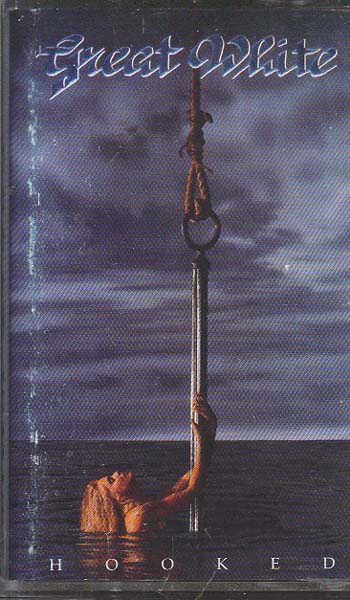
The original cover art featured the full naked female model on a hook over water. However, it was eventually replaced by a version that showed just the model’s head and arms on the hook.

The 2005 Japanese remastered release included 4 bonus tracks as well as an 11-track live CD.

Hooked was the last album to feature Tony Montana as the band’s bassist.

FILMING LOCATION SPOTLIGHT – “MAUSOLEUM” (1983)

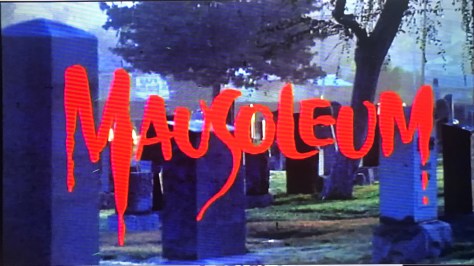
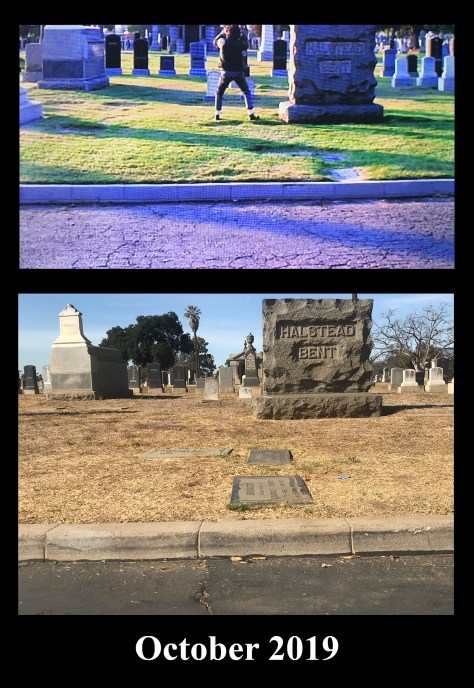
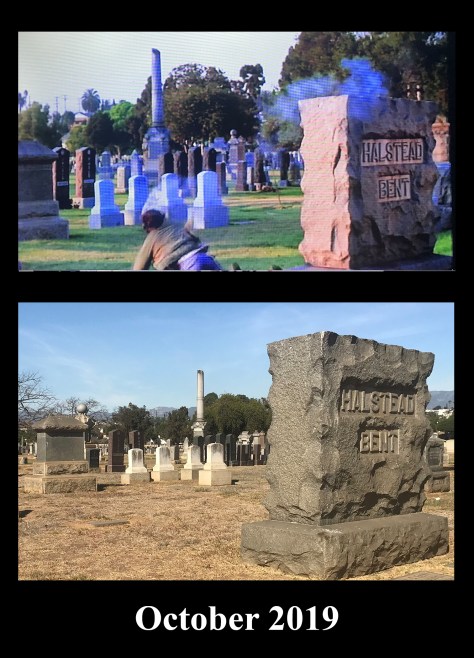
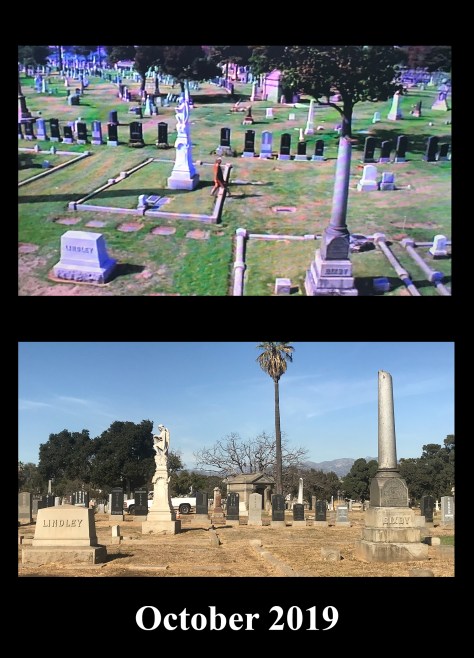
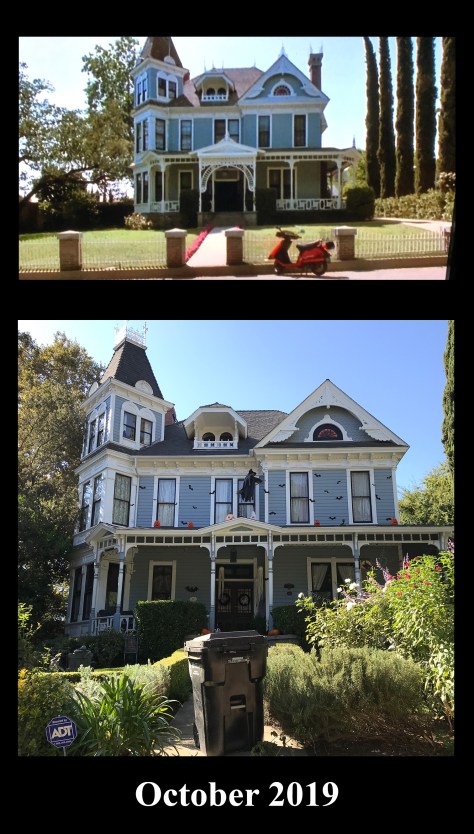
On the second and fourth Friday of every month in 2020, Limelight Magazine will spotlight the filming location site(s) we visited for some of our favorite (and not so favorite) films. Today we spotlight some of the filming locations for the 1983 movie Mausoleum which was directed by Michael Dugan. The top photo is a screen shot taken from the movie while the photo underneath is what the location looks like today.

The mausoleum and gravestones from this movie are located inside Evergreen Cemetery, 204 North Evergreen Avenue, Los Angeles, CA.

The Cassette Chronicles – The Firm’s ‘Mean Business”

By JAY ROBERTS

The Cassette Chronicles is a continuing series of mini reviews and reflections on albums from the 1980’s and 1990’s. The aim of this series is to highlight both known and underappreciated albums from rock, pop and metal genres from this time period through the cassette editions of their releases. Some of the albums I have known about and loved for years, while others are new to me and were music I’ve always wanted to hear. There will be some review analysis and my own personal stories about my connection with various albums. These opinions are strictly my own and do not reflect the views of anyone else at Limelight Magazine.

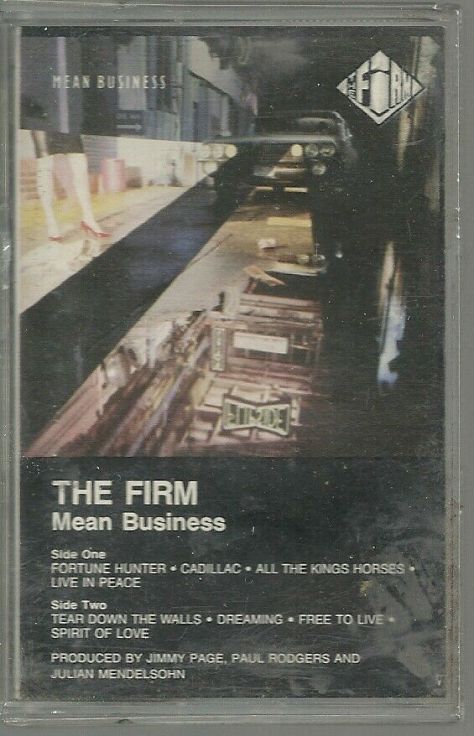
THE FIRM – MEAN BUSINESS (1986)

After having a gold album with their self-titled debut album and a big radio hit with the song “Radioactive”, it shouldn’t be much of a surprise that the “super group” put together by Bad Company singer Paul Rodgers and Led Zeppelin guitarist Jimmy Page would regroup for another release.

And yet despite that pedigree, it seems to me that on a personal level and in the grander musical scheme of things, The Firm never did quite get too much of a big deal made out of them. The personal angle for me comes about because while I remember loving the hell out that “Radioactive” song, I never heard anything else by the band. Or at least so I thought.

And that’s where Mean Business comes into play. Hell, I don’t think I even realized that the band had done a second album until I was sent a copy of it from my friend Jeff in Georgia. As I listened to it, I realized that I actually had heard “All The King’s Horses” before. But since I didn’t own the album until recently, I’m pretty sure that I must’ve just heard it on the radio over the past few…ahem…decades.

That song is on the first side of the eight song album and while it is the most recognizable track, there’s actually quite a good mix of bluesy rock and roll to discover here. The band’s leadership came from Page and Rodgers but with Tony Franklin on bass and Chris Slade on drums, all the musical bases were covered with the lineup. While Page and Rodgers wrote and/or co-wrote the majority of this album together, Franklin is credited with writing the song “Dreaming”.

The album opens with a stone cold killer in the rocking number “Fortune Hunter”. Musically, it just burns from start to finish. I was a tiny bit unhappy with the production sound on the vocal track though. At first I thought that maybe the tape was warped or something but as it turns out, it was the track itself. Whatever decision was decided on to put a slightly heavier bit of production layering on the vocals, it wasn’t quite as successful as one might’ve hoped for. Still, leaving that aside, even Rodgers vocals come up pretty strong.

I wasn’t crazy however about the music for “Cadillac”. The slow and plodding tempo may have lent itself to the track sounding a bit heavier but it just didn’t really work for me overall. I will say that I did like the drums from Slade on this track, they got a bit more spotlight here.

Meanwhile, “Live In Peace” has a finely crafted solo at the end of the track that amplifies it as a whole.

Side two has a rocking opener in “Tear Down The Walls” and I liked “Free To Live” well enough as well. But I really enjoyed the album’s final song “Spirit Of Love”. It already had everything you could’ve asked for with an uptempo pace but throw in some great guitar playing (naturally), an impressive vocal take (again, naturally) and then enhance all that with an accompanying choir providing backing vocals and this song just soars.

I’m a huge fan of Paul Rodgers from his time with Bad Company and Free. That’s not much of a surprise. Neither is the fact that I love Jimmy Page from his Led Zeppelin days. But I think it is safe to say that I’ve really not given any of their other projects nearly the look-see that they definitely deserve. The fact that they are together on this album shows that they not only worked well together but put out some quality music in their brief collaboration. It is definitely in my and your best interests to reconsider taking the time to check out what they have to offer outside of the bands that made them famous. Mean Business is a pretty good place to start.

NOTES OF INTEREST: This album was the final studio album for The Firm. Drummer Chris Slade would go on to play for AC/DC while Tony Franklin would join up with John Sykes and Carmine Appice in the band Blue Murder. Meanwhile, Rodgers and Page have done far too many things for me to list here but if you look them up online, you will find a wealth of material to check out.

The song “Live In Peace” was originally recorded for the Paul Rodgers solo album Cut Loose. The version on this album is different than that version. Oh, and the Cut Loose album will be a future Cassette Chronicles article.

“Fortune Hunter” was initially written by Jimmy Page and Yes bassist Chris Squire for a project they were working on in the early 80’s. The project got shelved and Page resurrected the song for this album. However, this version of the song is credited as a co-write between Page and Paul Rodgers, not Chris Squire.

The Cassette Chronicles – Rush’s ‘Moving Pictures’

By JAY ROBERTS

The Cassette Chronicles is a continuing series of mini reviews and reflections on albums from the 1980’s and 1990’s. The aim of this series is to highlight both known and underappreciated albums from rock, pop and metal genres from this time period through the cassette editions of their releases. Some of the albums I have known about and loved for years, while others are new to me and were music I’ve always wanted to hear. There will be some review analysis and my own personal stories about my connection with various albums. These opinions are strictly my own and do not reflect the views of anyone else at Limelight Magazine.

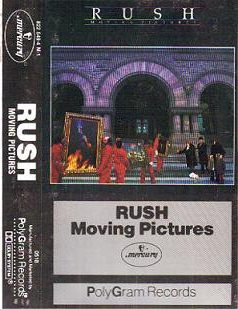
RUSH – MOVING PICTURES (1981)

It is with broken hearts and the deepest sadness that we must share the terrible news that on Tuesday our friend, soul brother and band mate of over 45 years, Neil, has lost his incredibly brave three and a half year battle with brain cancer (Glioblastoma). We ask that friends, fans, and media alike understandably respect the family’s need for privacy and peace at this extremely painful and difficult time. Those wishing to express their condolences can choose a cancer research group or charity of their choice and make a donation in Neil Peart’s name.

Rest in peace brother.

Neil Peart September 12, 1952 – January 7, 2020

The above statement was released on Friday January 10th, 2020 and it sent shock waves through the music world as fellow musicians and fans worldwide were stunned by the death of Neil Peart. Of course, it wasn’t just that the husband, father and drummer for the band Rush had passed away, but that so very few people even knew that he’d been sick with brain cancer. But I guess that was by design and intent, summed up by a song on the very album I’m writing about in this article.

I wasn’t originally going to be writing about a Rush album this week, but I kind of felt compelled to do so because of Peart’s passing.

There has always seemed to me a schism in how music fans have felt about Rush. You have the diehards who can’t get enough of the band. To them, Rush is the be all, end all of music. Then you have those who for a myriad of reasons, just don’t like them at all.

I suppose that I can understand each side. But I’m somewhere in the middle. For me, in the most general of terms, Rush has always been a “radio band” to me. That’s the phrase I use for bands that I love hearing on the radio but don’t really feel overly compelled to buy their albums. Or if I do buy their music, it is on a very limited basis. I hear Rush all the time on 94 HJY out of Providence, Rhode Island. And whenever they play a song, I love to hear it. The band’s “hits” are damn good and invite repeated listening.

But for whatever reason, I’ve never been a diehard. I didn’t see them in concert and I’d only bought a couple of their albums (on cassette). When I first discovered the idea of concept albums, it was releases by Queensryche and Iron Maiden that fueled my fire for that style. When I found out Rush had done one with 2112, I bought it. Of course, maybe I’m just not smart enough to appreciate what they did on that album but sadly, I found it impenetrable for me. I also had the Presto album which was purchased because I really liked the song “Show Don’t Tell”. Unfortunately, neither album still has a home in my music collection.

So it was off to the record shop where I knew I could pick up a Rush cassette to be the focus of today’s piece. I’ll admit that I kind of took the easy way out by picking Moving Pictures because it was stocked with three huge hits for the band.

(Let me add that I fully realize that whatever I write from this point forward, I know it is a case of most people thinking “No Shit, Sherlock” regarding my impressions)

The seven track album runs just over 40 minutes but there’s a whole lot of musicality packed into every second of its run time.

Side One is top heavy with three killer classics, but before I talk about those I want to mention the other song on this side first. “YYZ” is an instrumental and I think it will shock no one that I haven’t heard it before. Like I said, I’m a hits on the radio fan for the most part. I think that my lack of musical ability tends to affect my ability to appreciate most instrumental works as well. But I have to say that I came away pretty invigorated by “YYZ”. There’s plenty of spotlight moments for guitarist Alex Lifeson and bassist Geddy Lee as well as Neil Peart. Of course, it doesn’t surprise me that when they are all melding into one sound that the song is at its best. It was a nice discovery to make.

As for the hits, what can I say that is new to anyone regarding “Tom Sawyer”? That’s right…nothing. It is just a flat out great song and has definitely earned its place in any best of Rush list.

“Red Barchetta” did provide me a bit of a surprise believe it or not. I’ve heard the song an ungodly amount of times but that familiarity kind of blurred the lyrics for me. As I listened to it for this article, it dawned on me that it was all about a wild drive in a car. I looked up the story behind the song and it was pretty fascinating. I think that I’ll be listening to the song with a different appreciation from now on.

Before I talk about what I consider my favorite song on the album (and probably my favorite Rush song period), let’s skip to Side Two first. Let me just say that I just didn’t really find “The Camera Eye” or “Witch Hunt” to be my cup of tea. But I was pretty happy to find myself enjoying “Vital Signs” a whole bunch.

Okay, back to the album centerpiece (my opinion) song. “Limelight” is the closing track on Side One and it is a musical and lyrical showcase. Peart’s thoughts and feelings about the band’s increasing fame set to music ironically only served to increase the band’s fame because this song is such an all-time classic. It also helps that Geddy Lee’s vocal for the song was particularly inspired. Neil wrote it, Lee “sold” it and Lifeson plays a hell of a solo on it.

I don’t know if this is an overreaction to Neil Peart’s death or not but I like that I gained an appreciation for one of the band’s albums regardless of the initial prompt to do so. Whether it will further key me up to do a deeper dive into the band’s music, I don’t know. But I’d like to think that it would. It is sad that it would take the death of one of the band members to do that but having a fuller appreciation of the depth of loss felt by those who have worshipped the band’s music for decades can’t be a bad thing.

In “Limelight”, Peart wrote the following:

” Living in a fisheye lens

Caught in the camera eye

I have no heart to lie

I can’t pretend a stranger

Is a long awaited friend”

I get what he was saying with that line, but I think that I can say that by discovering a love of the Moving Pictures album, I can see why Rush fans would reverse those last two lines on him at this time. Their shared love of the music Peart was involved in creating with Lee and Lifeson made him seem more friend than stranger. So I can see why those diehard fans like Limelight Magazine’s own Jay Kenney would have, upon hearing that Peart had died, “felt a shadow cross their heart.”

NOTES OF INTEREST: KNAC.COM aired a three hour block of Rush music on Sunday January 12th during The Vault radio program hosted by DJ Will as a tribute to Neil Peart.

In a bit of odd timing, a friend of mine in Wisconsin named Cindy got back in touch with me after I hadn’t heard from her in a long time. She’s a huge fan of Rush, but lost everything including her Rush music collection in a recent apartment fire. During that trip to the record shop to get the Moving Pictures cassette, I picked up a CD editions of the first Rush album and the Rush in Rio live album to send her as she begins to re-assemble her collection.

Filming Location Spotlight – “House” (1985)

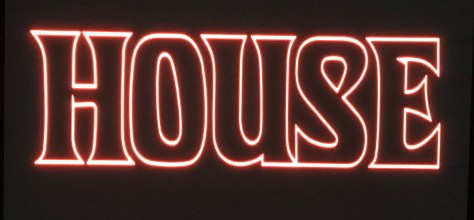
On the second and fourth Friday of every month in 2020, Limelight Magazine will spotlight the filming location site(s) we visited for some of our favorite (and not so favorite) films. Today we spotlight the filming location for the 1985 movie House which was directed by Steve Miner. The top photo is a screen shot taken from the movie while the photo underneath is what the location looks like today.

The house from this movie is located at 329 Melrose Avenue in Monrovia, CA. When we visited this location, the street was under construction. We attempted to move the recycling bin in front of the house for the photo but the police officer directing traffic would not let us do so. He did allow us to take the photo from our rental car.


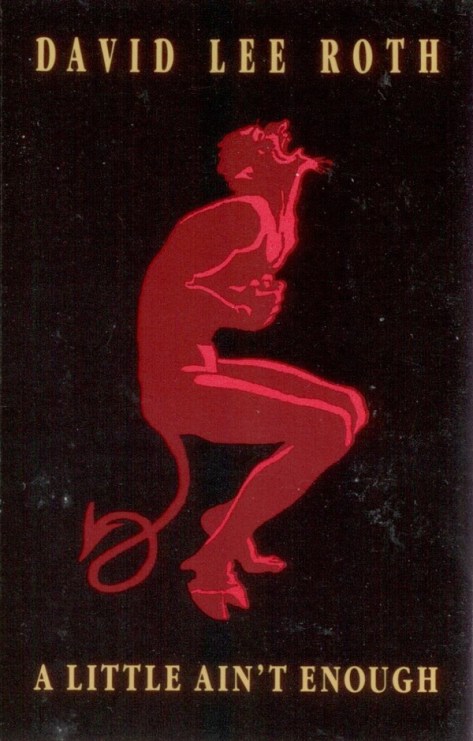
The Cassette Chronicles – David Lee Roth’s ‘A Little Ain’t Enough’

By JAY ROBERTS

The Cassette Chronicles is a continuing series of mini reviews and reflections on albums from the 1980’s and 1990’s. The aim of this series is to highlight both known and underappreciated albums from rock, pop and metal genres from this time period through the cassette editions of their releases. Some of the albums I have known about and loved for years, while others are new to me and were music I’ve always wanted to hear. There will be some review analysis and my own personal stories about my connection with various albums. These opinions are strictly my own and do not reflect the views of anyone else at Limelight Magazine.

DAVID LEE ROTH – A LITTLE AIN’T ENOUGH (1991)

It’s funny how things turn out sometimes. I picked this album out of The Big Box of Cassettes and even though I hadn’t listened to it yet, I kind of started writing a potential opening to this article in my head.

However, I really had to throw that out once I listened to the album. The reason for that is because most of what I was going to say by way of introduction had to be eliminated or at least changed up a bit.

While I have listened to David Lee Roth sing as part of Van Halen for years, I have to say that I was never a member of the Cult of Dave. He was a great frontman, that’s not in question. But I just never thought he was the greatest thing since sliced bread like so many other fans would likely say. And as he aged, the stuff that made him a legend became more cartoonish and sad to me.

As for his solo music, I’d heard the various songs that got played on the radio, but the only album I ever bought was the Skyscraper release. That had the big “Just Like Paradise” hit on it and I liked that album well enough. But I’d never bothered with any of his other albums, so listening to A Little Ain’t Enough for this article was also the first time I’d heard anything besides the title track.

Let’s just say I didn’t have high expectations.

And wow did I get a wildly rude awakening! Seriously, this is a such a freaking fantastic album that if I was a Looney Tunes cartoon character my eyes would be bugging out of my head and my jaw would’ve hit the ground like an anvil.

The title song opens up the 12-track album and it is still rather exciting to hear. I think I heard it recently on the Dee Snider radio show “The House of Hair” so that might be why I remember it so keenly now. Either way, it is a really rocking number that sets the stage for the rest of the album.

The thing that I had somehow forgotten is that this album featured Jason Becker on lead guitar. I remember that he had been in the band but not what period that was in Roth’s solo career. Looking at the songwriting credits, I did find it odd that he only had just two co-writing credits though (More on Becker in the Notes of Interest section).

Truth be told, the credited band lineup for the album was pretty intriguing. Steve Hunter (from The Alice Cooper Band), Brett Tuggle and both Matt and Gregg Bissonette. They all had songwriting credits in various combinations as well.

Still, that couldn’t have really prepared me for what was to follow the album’s title cut. Let me just get it out of the way now, there is not a bad track on here! With six songs on each side of the cassette, Roth has what would likely be thought of in the 1980’s as a perfect album to put on at a party.

The majority of the music is of the fast paced and crackling with electricity rockers but on a couple of songs (“Tell The Truth” and “Sensible Shoes”), Roth and Co. get impressively bluesy.

As I said, I like every song on this album. I bounced from one cut to the next with a very charged feeling to hear what was next. I suppose I was also waiting for a song to come on that I didn’t like so that I could say, “Ah! This Sucks!”, but I gave up on that by the time Side One finished.

I loved the Side One song “Hammerhead Shark” a lot, but I was really blown away by the Side Two track “It’s Showtime!” which was one of the two tracks that Jason Becker co-wrote. It’s is so relentlessly paced that I wondered how Roth kept up the rapid fire pace with his vocals to keep up with the music.

And that’s just a couple of tracks that I decided to spotlight in particular. But you can’t go wrong with any of the songs. You’ll find something to love with “Lady Luck”, “Shoot It”, “Last Call” and “40 Below” as well.

Normally, I might be mad to have been so thoroughly proven wrong about an artist and/or album but with the case of David Lee Roth, this album’s title proves musically prophetic because I find myself unable to get enough of this album. It’s really impressive to me and I think that once I finish writing this article, I’m going to go back and play it again!

NOTES OF INTEREST: Guitarist Jason Becker was diagnosed with ALS (Lou Gehrig’s Disease) a week after joining the band. While he did finish recording this album, he was unable to tour for it as his illness had progressed enough to rob him of the strength in his hands.

Guitarist Steve Hunter not only played on nine Alice Cooper albums (including the most recent one Paranormal) but he’s played with Lou Reed, Peter Gabriel, Tracy Chapman and others. He’s also released seven solo albums. According to Wikipedia, he’s legally blind.

While A Little Ain’t Enough sold enough copies to achieve gold certification, it was considered the downfall of Roth’s run of success. The tour was a failure and the album went out of print in 1996 before a remastered edition was released in 2007. The title track was co-written by singer/producer Robbie Nevil, best known for the 1986 smash hit single “C’est la Vie”.

The biggest surprise to me, other than loving the album, was discovering that longtime Dio guitarist Craig Goldy co-wrote the song “Lady Luck” for the album.


Howard Jones to perform his ’80s hits & more at Narrows Center in Fall River, MA

Howard Jones, who is most famous for his songs “Things Can Only Get Better,” “No One Is To Blame,” “What is Love?,” and “Like To Get To Know You Well,” will make his debut performance at the Narrows Center in Fall River, MA, on March 17th. Joining him on stage will be Nick Beggs (Kajagoogoo, Steven Wilson, Steve Hackett, John Paul Jones) on chapman stick and Robin Boult (Roger Daltry, Dave Stewart, Fish) on guitar. They will perform Howard’s best-known hits, fan favorites and more. Purchase tickets HERE.

Jones has been a constant presence on the international touring scene for the past three decades, playing live in a number of different configurations including intimate solo shows and dates with his full high-tech band set-up. His new show will also provide the opportunity for the audience to hear first-hand about the inspiration behind Howard’s beloved material as well as stories from his touring career.

Jones first burst upon the contemporary music scene in 1983, with his very English songwriting and pioneering synthesizers. His first two albums HUMAN’S LIB and DREAM INTO ACTION were worldwide hits. HUMAN’S LIB reached #1 in 1984 in the UK and featured the hits “New Song,” and “What Is Love?” In 1985, Jones released the follow-up, DREAM INTO ACTION, which quickly became a Top Ten platinum album in the United States and featured the smashes: “Things Can Only Get Better,” “Life In One Day,” “No One Is To Blame,” and “Like To Get To Know You Well.” Howard Jones has sold over eight million albums worldwide and continues to make new music and tour the world.

His most recent album is TRANSFORM, his first new studio album in nearly a decade. Released in 2019 to critical acclaim, TRANSFORM features several collaborations with electronica luminary BT. Of the album, Paste avowed, “TRANSFORM is remarkably consistent to Jones’ lush brand of synthpop…a balance of what is familiar and what is innovative, new magic from old spells” while Pop Matters declared the album to contain “dazzling synth sounds, catchy melodies and introspective and life-affirming lyrics – but with a contemporary feel.”

Jones recently performed on NBC’s top-rated morning and nighttime shows respectively, Today and The Tonight Show Starring Jimmy Fallon. He’s excited to take his trio on the road to perform his hits, fan favorite sand new songs from TRANSFORM.

The Narrows Center is located at 16 Anawan Street. Tickets can be purchase online at narrowscenter.org or by calling the box office at 508-324-1926. For those wanting to purchase tickets in person, box office hours are Wednesday through Saturday, 12 noon to 5 p.m.

The Cassette Chronicles – Queensryche’s ‘Queensryche’

By JAY ROBERTS

The Cassette Chronicles is a continuing series of mini reviews and reflections on albums from the 1980’s and 1990’s. The aim of this series is to highlight both known and underappreciated albums from rock, pop and metal genres from this time period through the cassette editions of their releases. Some of the albums I have known about and loved for years, while others are new to me and were music I’ve always wanted to hear. There will be some review analysis and my own personal stories about my connection with various albums. These opinions are strictly my own and do not reflect the views of anyone else at Limelight Magazine.

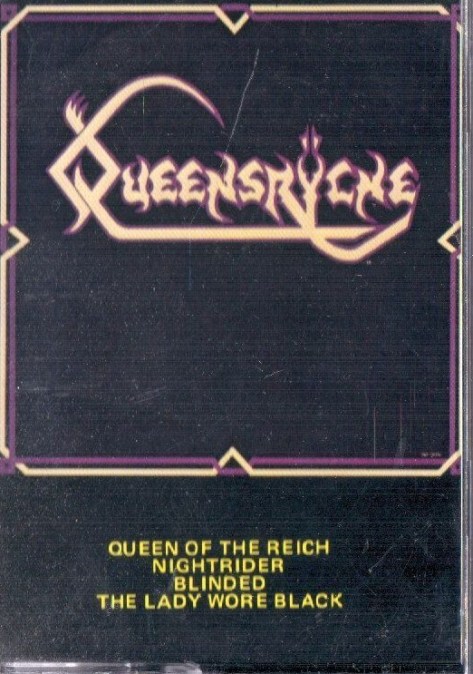
QUEENSRYCHE – QUEENSRYCHE (E.P., 1983)

2019 was a pretty big year for Queensryche and their now ex-lead singer Geoff Tate. The band had pretty big success with their new album The Verdict, which not only got great reviews but it was named on a number of best of lists including my own personal list as well as Limelight Magazine’s Top 10 of 2019 rankings. Their tour for the album got great notices, which I agreed with when I saw their performance in Worcester, MA, early in 2019.

As for Geoff Tate, he spent the year touring behind the 30th anniversary celebration of the band’s Operation:mindcrime album. He played a two night stop in New Bedford, MA, and when I saw the first night’s show, the reports I’d heard that he sounded better than he had in years was confirmed. When I read that he was coming back to the area in 2020 to perform the albums Rage For Order and Empire, it was the first concert ticket I bought.

So when I decided to ease into this year’s Cassette Chronicles articles by featuring an EP, the original Queensryche EP was the only real choice I could make.

As I mentioned in my article on the Operation:mindcrime album last year, the EP was my first brush with the band’s music but it came at a time when I had yet to become a metal fan, so I didn’t really think much of it when I first listened to it.

Of course, that changed once I got into the band. And as I listened to this release for the article, I was kind of taken aback by just how fantastic the band sounded right out of the gate. There’s just four songs on the EP but each one gives a clue at the band’s greatness to come.

“Queen of the Reich” is one of the band’s signature songs no matter how much time passes. Besides the obvious tie with the band’s name, the racing intensity gives the track an anthemic quality while simultaneously making your pulse pound.

The next two songs are “Nightrider” and “Blinded”. I don’t think they get nearly the recognition they probably deserve. However, you’d be remiss to simply forget about them. “Nightrider” is a fast paced metallic romp that features a kind of science fiction bent to the lyrics. This is something that would later echo on the some of the material on the Rage For Order album. As for “Blinded”, the rhythmic pounding behind the kit by drummer Scott Rockenfield gave the song the heavy sound conveyed along with the attacking guitar sound. His drum work is superb throughout but it is this song which he elevates the most.

Of course, the band’s best work is saved for the closing track “The Lady Wore Black”. As the title readily implies, this is an epic track that is the band’s first brush with telling a story with both a dramatic and theatrical sense of style. It sets the stage for all the other epics they would write over the next few albums including the entirety of the Operation:mindcrime release. It’s also the song where the legend of Geoff Tate starts to form. His vocals are superb on this track in particular as he embodies the lyrics, conveying the song’s emotional heft to the listener as if this was something that he had actually experienced himself.

Truth be told, once I had begun my Queensryche fandom and had obtained all their back material, it amazed me to realize just how fully formed the band felt right from the start. Every band has a starting point and you’d be hard pressed to deny that the Queensryche EP is just about as note perfect as a band could hope to be on their first release.

NOTES OF INTEREST: The original release of the album lasts less than 18 minutes. It was first released in 1983 by 206 Records but when the band signed with EMI-America it was reissued via that later again that same year. The tour behind this release saw Queensryche open for Quiet Riot and Twisted Sister.

When the album was first issued on CD, the song “Prophecy” was included as a bonus cut. The song was recorded during the Rage For Order period. A 2003 reissue saw the audio tracks from the Queensryche VHS release Live In Tokyo added to the album. The VHS is out of print (but I have a copy of it).