All posts by limelightmagazine

THE CASSETTE CHRONICLES – WINGER’S ‘PULL’

By JAY ROBERTS


The Cassette Chronicles is a continuing series of mini reviews and reflections on albums from the 1980’s and 1990’s. The aim of this series is to highlight both known and underappreciated albums from rock, pop and metal genres from this time period through the cassette editions of their releases. Some of the albums I have known about and loved for years, while others are new to me and were music I’ve always wanted to hear. There will be some review analysis and my own personal stories about my connection with various albums. These opinions are strictly my own and do not reflect the views of anyone else at Limelight Magazine.

WINGER – PULL (1993)

After writing about Winger’s In the Heart of the Young album the last time around, I found myself on a bit of Winger kick. Which is why you are reading about their third album Pull this week.

But it is a stranger story still about this album than Album #2, where I knew the hits but hadn’t ever heard the rest of the album. This time, I’ve never heard the album at all. The only familiarity I had with any of the material comes from having seen the band live back in 2019. The first two tracks on Pull are “Blind Revolution Mad” and “Down Incognito” and they are, until now, the only songs I’d heard. But that’s because in looking up the expected set list for that concert I went to, I didn’t recognize these tracks and ended up looking them up on YouTube so I could be familiar with them. Of course, only “Down Incognito” was actually played during Winger’s set but at least I knew it.

So that’s my tale of experience with the Pull album. And now I could sit down and listen to it in full before writing the rest of this article.

In 1993, the glam metal that ruled the past decade or so was, if not entirely dead, certainly displaying its death rattle. Not exactly the best time for Winger to release their third album. And given the lack of commercial success, that fact seems to be borne out.

But as I looked up information online, the album does seem to be a particular favorite of their fans. With singer/bassist Kip Winger co-producing the album with Mike Shipley, the more glam aspects of the band’s sound were set aside and a heavier sound came to the forefront. Not too mention there is more of a progressive rock bent to the music at times too. And the lyrics changed from extolling the virtue of the girl being “only seventeen” to Winger leaning in on real world issues in at least three songs on the album.

As I said before “Blind Revolution Mad” and “Down Incognito” are the first two tracks on the album and though I sort of knew the songs, I had to familiarize myself with them again. I had forgotten that “Blind Revolution Mad” started off pretty low key for the first part of the song before Winger kicked the song into another gear and brought out the harder edged and faster moving part of the song. Kip Winger’s voice goes from soft and inviting to a real edgy and intense style as the tempo switches up. It makes for an interesting song to me (plus there’s that wild guitar solo) because both styles were important to make the song work as a whole.

As for “Down Incognito”, it was the only song that got officially released as a single. Given the time of the album’s release, I can’t say I’m overly surprised by that. But I do have to say that I found myself really digging into the song. You’ve got that bluesy harmonica that briefly opens the song and then a slow building musical soundtrack that seems to be played in a bit of a hushed tone until the band comes in on a more forceful take. They don’t hit the gas pedal so much as find a solidly rocking mid-tempo groove but when they hit that first solo break, you get the harmonica solo (from guest performer Frank Latorre) that keeps the grittier vibe of the song intact.

Of course, now I was dealing with the remaining 8 songs I’d never heard before so what would this new-to-me music do for me, right?

“Spell I’m Under” starts off slow enough to be a traditional power ballad but the hook and repeatable chorus aren’t quite up to those 1980s ballad expectations. Still, this ended up being a draw for me because while the pace was slow, the spots in the song where the band has a heavier touch kept me wondering in what direction they’d take the song next.

Let me just lay it out about the next song…”In My Veins” is a killer song! I love the way the band performs here. Rod Morgenstein’s drums are superb here and between the tastefully rocking guitar work and Winger’s drama-infused vocals/lyrics, this song was a shot in the arm that is guaranteed to get you pumped up.

As pumped as you’ll be with that track, it doesn’t quite adequately prepare you for how heavy the song “Junkyard Dog (Tears of Stone)” is and how powerful an impact the song will make. The song’s running time is nearly seven minutes long and the intensity doesn’t really let up until the final notes, even though there’s a few pacing changes throughout the track.

“The Lucky One” is definitely more of a ballad through the first portion of the song but once the band comes on in full, the song becomes a bit more interesting to hear. Well, for me at least. Meanwhile, “In For The Kill” is a stomping rocker with a message. I liked the heaviness of the performance and while I had to really pay attention to get what the band was aiming for with the lyrics, this was a really entertaining song with a point.

“No Man’s Land” rocks out right from the start! It’s got a great hook to draw you in and a set of lyrics that tell a story in an almost subversive kind of way. And Reb Beach’s solo…excellent. Is it me or does he not get enough credit as a guitarist? While “Like a Ritual” isn’t quite as lively stepping as “No Man’s Land”, it is still decidedly uptempo and yet another song that shines the brightest of spotlights on the band’s creativity for this album. The way the song closes out with a bit of a showcase for Rod Morgenstein really got to me. It’s not a long “solo” but it sure makes me want to seek out more of his playing (perhaps I need to check out some of his work with the Dixie Dregs). It’s a cool little jam.

The album closes out with the song “Who’s The One” and as it turns out, I appear to have known of this song for a while too. But I didn’t realize it until I heard the song as I was getting set to write this article. Now ask me if I can remember where I’ve heard the song before. The song stays in a decidedly midtempo pace and style for the majority of its run time, but with an acoustic guitar playing a major role musically and a great hook in the song’s chorus, this is actually a fantastic song. I have no idea why I forgot this song, which is kind of embarrassing to me, really. I loved Kip Winger’s vocal take on this song a lot!

Pull is the last of Winger’s studio albums to get a cassette release so I’m glad that I decided to write about the band the last couple of times. It may clear them out for any future articles in the series but man, I came away so impressed with this album. A different style for any band’s musical direction may not always work but Winger certainly handled things quite adeptly with the Pull album. It may have taken my three decades to realize this but Pull is an album that shows Winger taking a big step forward in the band’s evolution while providing a 10-song palette of incredible music for fans to enjoy.

NOTES OF INTEREST: The album’s lack of commercial success left the Pull peaking at #83 on the album charts.

The bonus track “Hell To Pay” was originally only on the Japanese edition of the album. It would then be included on the band’s compilation release The Very Best of Winger.

Other than the song “Spell I’m Under” which was written by Kip Winger alone, he and guitarist Reb Beach co-wrote the album together. Pull was recorded with the band performing as a trio after the departure of Paul Taylor who is mentioned in the album’s liner notes in a very positive fashion.

THE CASSETTE CHRONICLES – WINGER’S ‘IN THE HEART OF THE YOUNG’

By JAY ROBERTS

The Cassette Chronicles is a continuing series of mini reviews and reflections on albums from the 1980’s and 1990’s. The aim of this series is to highlight both known and underappreciated albums from rock, pop and metal genres from this time period through the cassette editions of their releases. Some of the albums I have known about and loved for years, while others are new to me and were music I’ve always wanted to hear. There will be some review analysis and my own personal stories about my connection with various albums. These opinions are strictly my own and do not reflect the views of anyone else at Limelight Magazine.

WINGER – IN THE HEART OF THE YOUNG (1990)

Despite the fact that I know the three singles that were released from Winger’s 2nd studio album In The Heart of the Young quite well, I have never actually listened to the whole album before now.

I can’t rightly explain how I managed to not buy this album back in 1990. With their self-titled first album, I had the album, saw them on their first tour and met them after the show I attended. So I don’t know why I never listened to or purchased the follow up album.

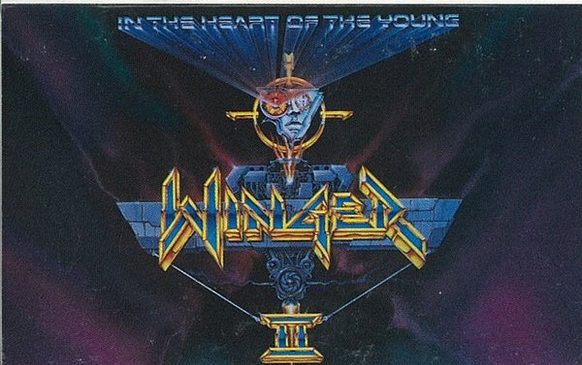
So it is a case of no time like the present to rectify this situation. The first thing I learned in the Internet research for this article is that this album is sometimes referred to as Winger II. I’d venture to say that this is due in large part to the album’s cover art which clearly shows the Roman numerals for the number 2.

But whatever you call the album, the music is immediately evident to be much in the same vein as the band’s first album. Winger used producer Beau Hill once again so the somewhat similar sound makes sense. But much like the first album, the material does branch out on some songs for a more dramatic and artful presentation. With every member of the band (singer/bassist Kip Winger, guitarist Reb Beach, guitarist/ keyboardist Paul Taylor and drummer Rod Morgenstein) having a hand in writing/co-writing at least some of the material in various combinations, the band’s various influences were sure to play a role in the variety of material.

As I said, there were three singles released from the album. And they come within the first four tracks on the album. “Can’t Get Enuff” opens up the album and it is a hot rocking type of song that has the kind of immediacy to it that still gets the listener amped up. The song “Easy Come Easy Go” is in that same style and I can still recall how I’d sing along to the song every time I would hear it either on the radio or on MTV.

The third single was the power ballad “Miles Away”. While the main lyrics drag a bit, I found that I still enjoyed the parts of the song when it hits the chorus and the tempo changes to become more of a rocker.
Now for all the songs I hadn’t heard before, I need to start with the only song of the first four tracks that wasn’t a single. “Loosen Up” is a superb song. It’s got a great rhythm to the music as the band rocks out on this song.

The first track that showcases the band’s more serious musical attitudes is “Rainbow in the Rose”. It bounces back and forth in terms of tempo and I wasn’t sure that I was going to like the song at first but I quickly found myself enjoying it quite a bit.

For “In the Day We’ll Never See”, there’s a slow build dramatic take at the beginning of the song before it launches it more a full burn rock number.

Much like “Miles Away”, the song “Under One Condition” starts off as a kind of ballad track but it eventually gets a far more intense and upbeat delivery in the performance which left me with a much more positive outlook on the song than I might’ve expected.

With a title like “Dirty Little Blonde”, you will likely be unsurprised to find the song as a down-and-dirty swinging rock-n-roll vibe working throughout the song. This is chiefly fueled by guitarist Reb Beach’s playing but for a song that might be easily dismissed because of the title and/or lyrics, this one stuck with me a lot.

Speaking of the guitar playing, I loved the intro to “Baptized By Fire”. It’s a quick little fleet-fingered exercise that gives way to a highly energetic rocker. I would say that I thought this was a killer track except for one thing. In the middle of the song, is Kip Winger rapping the lyrics for a couple of stanzas? I thought my ears were playing tricks on me but when I went back and listened again, it sure does sound like he is. That threw me off enough that I ended up being taken out of the song as I listened.

If Winger had released a fourth single from the album, I would not have been opposed it being the song “You are the Saint, I am the Sinner”. It’s another hard charging rock number but from the first time I listened to it and wrote the note “LOVE THIS ONE”, this song really stood out a lot to me.

The final song on the album is the title track and once again, Winger stretches their musical muscles to present a far more dramatic set piece type of song to kind of anchor the album. You’ve got a table-setting fade in to open the song that leads into a more uptempo performance for most of the song (it briefly eases off a bit later in the song). The song does a great job of putting a strong emphasis on a more progressive rock type of songwriting but I would say that it works wonderfully here.

So despite never hearing this album in full since it was released 34 years ago, I have to say that I was very satisfied with what In the Heart of the Young had to offer me, however late I was in discovering it. You’ve got both the classic hit tracks that helped the album’s commercial fortunes but then there are those undiscovered gems (to me anyway) that give you a fuller understanding of what the band was doing to follow up the success of their first release. I’m pretty sure this is going to find its way into a more regular playing rotation for me and for that I’m indeed quite thankful for this “new” listening experience.

NOTES OF INTEREST: In the Heart of the Young achieved platinum sales status in the US and the album peaked at #15 on the album chart. The Japanese version of the album has two bonus tracks on it: The studio track “All I Ever Wanted” and a remix of the song “Headed for a Heartbreak” from the first album.

The “All I Ever Wanted” track was one of two written during the recording process for the album. The other song is called “Never”. They didn’t make the album but got released as B-sides before the former showed up on the Japanese version of In the Heart of the Young. Meanwhile, “Never” eventually got released on the Winger compilation album Demo Anthology.

Guitarist/keyboardist Paul Taylor left the band after this album. He was out of the band for at least 30 years before rejoining in time to take part in the 2023 album Seven.

THE CASSETTE CHRONICLES – SUICIDAL TENDENCIES ‘LIGHTS…CAMERA… REVOLUTION’

By JAY ROBERTS

The Cassette Chronicles is a continuing series of mini reviews and reflections on albums from the 1980’s and 1990’s. The aim of this series is to highlight both known and underappreciated albums from rock, pop and metal genres from this time period through the cassette editions of their releases. Some of the albums I have known about and loved for years, while others are new to me and were music I’ve always wanted to hear. There will be some review analysis and my own personal stories about my connection with various albums. These opinions are strictly my own and do not reflect the views of anyone else at Limelight Magazine.

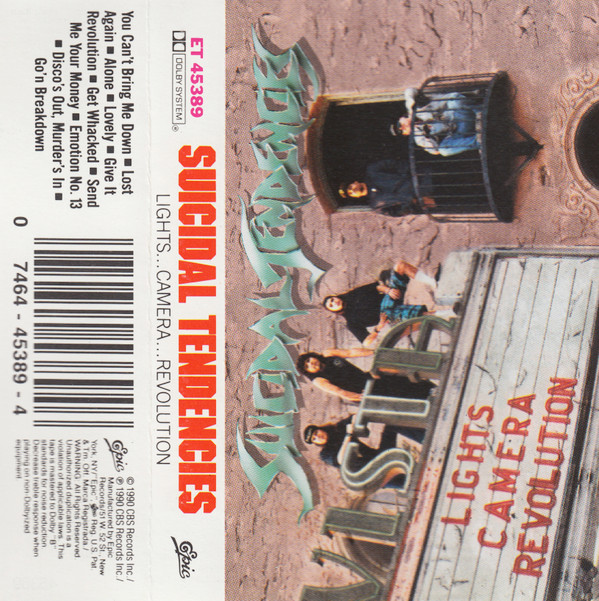
SUICIDAL TENDENCIES – LIGHTS…CAMERA…REVOLUTION (1990)

Before the release of the Lights…Camera…Revolution album, Suicidal Tendencies was merely a blip of sorts on my own personal musical radar screen. My knowledge of them pretty much consisted of a couple songs from their previous album How Will I Laugh Tomorrow When I Can’t Even Smile Today and that they’d been banned from playing shows in Los Angeles either for being perceived as being a gang or for having gang relations.

But all that changed when this album, their 5th studio release, came out. While the band was known more for being a punk/thrash crossover act beforehand, Lights…Camera…Revolution pretty much took the band fully into the thrash metal genre.

That is made pretty clear with the album’s opening track “You Can’t Bring Me Down”, a brutally effective song that while it never made a dent in the charts as a single release, it is still considered a successful track. The band ended up being nominated for a Grammy for “Best Metal Performance” in 1991.

The song starts out with a slow building intro before singer Mike Muir comes in with a shouted “What the hell’s going on around here!” and then the band just explodes into the aggressive, assaulting cacophony led by guitarists Rocky George (who co-wrote the song) and Mike Clark. It’s a furious blitzkrieg of rage and the accompanying video is apparently in answer to that Los Angeles ban I mentioned above. What’s more is that after the guitar solo, Mike Muir cuts back in with an absolutely astonishing and perfectly written rant that encapsulated the band’s feelings. Unfortunately, because of some profanity, it tended to get cut or bleeped when you heard it on the radio and from the video itself. I also don’t know how Muir manages the rapid fire delivery of the vocals. I used to try to sing along (badly) to this track and I always ended up with a sore jaw because of the pace of his performance.

After the fury of the lead track, the song “Lost Again” ends up being far slower moving but still has a heavier vibe to the music with an extra sharp edge to the vocal performance.

The album had a total of four singles released from it and the last two were on the album’s first side. The first of that latter duo is the song “Alone”. In the beginning you get a softer delivery and a more clean vocal style from Mike Muir that serves as a set up for the more uptempo pace of the song after the first lyrical stanza. As the song proceeds, the music keeps growing more relentless and the vocals match that style too.

The last single was the song “Lovely” which is the first song that seems to fully incorporate some of the funk influences brought in to the band’s sound by their new bassist Robert Trujillo. The funk style is merged rather nicely with the more aggressive rocking side of things.

The first side of the album closes out with the song “Give It Revolution”. The song mixes tempos with a heavy mid-tempo groove that gets faster over the course of the song. The lyrical content on this song is superb and I’ve always loved the line “You can put a bullet in my head, but you can’t kill a word I’ve said.” What I’ve read online about this album is that the band’s lyrical content got a lot more sophisticated beginning with Lights…Camera…Revolution and I’d say this song in particular is a good demonstration of that.

The first side of the album remains a stone cold classic collection of songs nearly 35 years after it was released. You might expect a bit of a letdown when you flip the cassette over to Side Two, but Suicidal Tendencies keeps up the intensity right from the start.

The opening track on Side Two is “Get Whacked” and after an opening overture that sounds something like you’d hear in a royal ceremony, the music becomes an infectiously foot-stomping masher with Muir’s insanely catchy raw vocals drawing you in AND slapping you in the face.

The next song is “Send Me Your Money” which might be the one track most metal fans have heard of the most. Or at least saw the video back in the day on Headbanger’s Ball. It’s a hard-hitting funky-slash-rocking number that sees the band deliver a brutally hilarious though sincere takedown of those preachers you see on TV begging for your money.

After “Send Me Your Money” the band switches gears and delivers a gripping number with “Emotion No. 13”. Musically, the song is pretty relentless. And when you sit back and listen to the lyrics, there’s some incredible lines in it. Even after all these years, I was flabbergasted to “finally” hear the line “I wonder if I’ll ever do the things you want the way you want / When I don’t even know what I want yet.” That may not resonate quite the same with me now as it would’ve back when the album was first released but I can grasp the significance at least.

I always thought the song title “Disco’s Out, Murder’s In” was a little weird and I’m not sure I have ever gotten what this song means. That said, it is an incredibly involving song with the song title repeated a lot and a music score that is like getting hit by a 2X4.

The album closes out with the song “Go’n Breakdown” has a nice twist in Muir’s vocal delivery in front of a blazing musical soundtrack. And they go out with a kind of sneering unbreakable attitude right to the very last lyric line and musical note.

I actually got to see Suicidal Tendencies opening for Queensryche on their Empire Tour. Sadly, as much as I love this album I hated their performance. I don’t have blood tests from that night but their show was ruined by Mike Muir who seemed either drunk, high or both. He was nearly unintelligible whether singing or speaking and it just cast a disappointing shadow on the entire band’s set.

That said, it can’t take away from just how incredible the Lights…Camera…Revolution is. Thirty-four years after its release and every time I play the album, I get amped up. Whatever sense of contrarian attitude that remains within me is fueled by that still astonishing “You Can’t Bring Me Down” song. The album remains a turning point in the band’s evolution and for me it stands head and shoulders above the rest of their catalog.

NOTES OF INTEREST: While the Lights…Camera…Revolution album only peaked at #101 on the album chart, it remains my personal favorite and it seems to be one of the more critically acclaimed releases for the band.
The album was the first that featured Robert Trujillo who would later go on to join Metallica years later. However, it was the last album that featured drummer R.J. Herrerra.

THE CASSETTE CHRONICLES – MR. MISTER’S ‘WELCOME TO THE REAL WORLD’

By JAY ROBERTS

The Cassette Chronicles is a continuing series of mini reviews and reflections on albums from the 1980’s and 1990’s. The aim of this series is to highlight both known and under-appreciated albums from rock, pop and metal genres from this time period through the cassette editions of their releases. Some of the albums I have known about and loved for years, while others are new to me and were music I’ve always wanted to hear. There will be some review analysis and my own personal stories about my connection with various albums. These opinions are strictly my own and do not reflect the views of anyone else at Limelight Magazine.

MR. MISTER – WELCOME TO THE REAL WORLD (1985)

The first Mr. Mister album I Wear The Face didn’t exactly set the world on fire in terms of commercial success. So when the band’s second album, Welcome to the Real World, I’m not sure that anyone saw the success that was about to find the band.

That said, other than hearing the band’s three singles from the album, I’d never listened to this album in full before now. Maybe that’s why I was surprised to see that those three singles that made such a big impact on the charts were on the second side of the album. From what I remember of the pop albums I bought back in the day, at least one of the hit singles always seemed to be on Side One. 

That’s okay though, it gave me time to really dig into the first side of the album with those five songs I’d never heard before now. And while I’m way more of a hard rock and heavy metal aficionado, I have to say that I was rather strongly surprised or maybe I should say impressed with the first side of this album.

Things kick off with the song “Black/White” the first of three straight higher tempo tracks. The vocals from Richard Page are strong throughout the album but what really caught my ear on this particular track was the guitar playing from Steve Farris. There was some delicious moments of fretwork and I was sold on the song pretty quickly.

The track “Uniform of Youth” moves at the same faster pace but instead of the guitar, I thought the keyboards were the fuel that powered the song here. Meanwhile, “Don’t Slow Down” had a lively pace to it but it did have a bit more of a slowdown than the first two songs. I really liked the way this song was constructed. It had the kind of cinematic tone to it that would make you think it would work perfectly on a soundtrack for some kind of movie or TV show that had a road trip as the key part of the plot.

I will say that I found the song “Run To Her” rather annoying. It is a ballad track but the sleepy and meandering way the track was performed had me wishing it would end sooner rather than later.

I may not have liked that song but the first side bounced back with the closing number “Into My Own Hands”, which ranged from mid-to-uptempo in terms of delivery.

I heard one of the band’s singles on the radio station I listen to at work and that prompted me to write this piece. I remember listening to the songs on American Top 40 (and likely during regular airplay on 92 Pro-FM out of Rhode Island as well). I always liked the two singles I remembered most and whenever I hear them on the radio now, I find myself either humming or singing (badly) along to the songs.

But as I flipped the album over to Side Two, I was struck by the fact that until I got to the chorus of “Is This Love”, I didn’t really remember the song at all. Considering it went to #8 on the singles chart, it is kind of amusing to me that I had such a moment of forgetfulness. As I listened to it for this article I got to rediscover those main lyrical passages that led to the song’s chorus. I found myself enjoying the song anew.

It is at this point in researching things for the article that I discovered something I had never known before. According to Wikipedia, all the songs that appear on Welcome to the Real World appear to feature lyrics written by John Lang. Who’s he? Well, he’s not a member of the band. I had to do a further search to learn that he’s apparently the cousin of singer/bassist Richard Page (assuming the Internet is accurate). I’m not quite sure if he wrote all of the lyrics but he gets co-writing credits on each song so it seems likely. 

After “Is This Love”, the band’s two most successful songs follow in quick succession. Both “Kyrie” and “Broken Wings” hit #1 on the singles chart and even now I can understand why. They are just fantastic songs that really capture your ear even now. I vaguely remember that the song had a religious connotation from back when the song was first released but it wasn’t until now that I looked it up and learned that singer Richard Page said the song is essentially a prayer. Funny that. I mean, since I have no use for religion and yet “Kyrie” remains one of the better remembered 80’s pop songs in my mind.

As for “Broken Wings”, man that is still a powerfully addicting song here in 2024. While the song does have a tendency towards an uptempo pace, it’s like someone is riding the brake at the same time as it never quite spills over into a full on highly energetic number. That’s okay though because the song came out about as perfectly as you could’ve hoped for.

The album closes out with the songs “Tangent Tears” and the album’s title track. Both have a livelier than usual performance to hear. While there’s nothing really wrong with either track, I can’t say that they made too much of an impression on me though. Definitely album tracks for me as opposed to wishing they’d been singles or anything.

Before I started off my fandom for rock and metal, I was definitely a pop music fan. I loved a lot of those 1980s pop bands and Mr. Mister was one of them. And while it has taken nearly four decades for me to listen to the album in full, I would have to say that Welcome to the Real World was well worth checking out. It’s got some great music throughout the album and it will remind pop music fans of just how good they had it back in the early to mid-1980s.

NOTES OF INTEREST: Welcome to the Real World went platinum in the US and triple platinum in Canada. The album got a reissued edition in 2015 with an additional six bonus tracks made up of live cuts, different mixes and extended editions. The album hit #1 on the charts.

Singer Richard Page turned down offers to join both Toto and Chicago after the band’s first album was released. Guitarist Steve Farris left the band in 1988.

Mr. Mister’s fourth and final album was called Pull. It was originally recorded in 1990 but the label didn’t release it and the band broke up shortly thereafter. It was finally released in 2010.

THE CASSETTE CHRONICLES – EUROPE’S ‘THE FINAL COUNTDOWN’

By JAY ROBERTS

The Cassette Chronicles is a continuing series of mini reviews and reflections on albums from the 1980’s and 1990’s. The aim of this series is to highlight both known and underappreciated albums from rock, pop and metal genres from this time period through the cassette editions of their releases. Some of the albums I have known about and loved for years, while others are new to me and were music I’ve always wanted to hear. There will be some review analysis and my own personal stories about my connection with various albums. These opinions are strictly my own and do not reflect the views of anyone else at Limelight Magazine.

EUROPE – THE FINAL COUNTDOWN (1986)

For an album that would spawn five single releases including two that made the Top 10 chart, you’d think Europe’s most commercially successful album would get a little more respect. Instead, The Final Countdown seems to get dumped on a lot. Hell, the album’s own Wikipedia page has a whole section on some of the crappy reviews it got then and even more modern day reviews.

I remember reading a concert review in the Boston Herald many years ago where Europe was the opening act (for Bon Jovi I think) where the reviewer summed them up as a 2nd rate Bon Jovi which made them a 4th rate act.

WOW!

I like a lot of this album so I don’t see why it gets all this invective thrown at it. I’ve written about Europe three previous times in The Cassette Chronicles series so this week I decided it was time to weigh in on the band’s most successful release.

This was the band’s 3rd studio album and the first one to feature drummer Ian Haughland and keyboardist Mic Michaeli (who co-wrote the ballad “Carrie”).

I mentioned that there were five singles from the album but what was interesting to me was how the three biggest ones were the first three tracks on The Final Countdown.

The title track opens up the album and it remains Europe’s signature track. With the opening intro trumpeting out of your speakers with a now instantly identifiable musical salvo and the science fiction style lyrics, I can’t imagine how anyone wouldn’t be taken in by this song. And over the ensuing decades since the song was released, the track has been used in a variety of other mediums (including as an anthem for sporting events). While it did end up getting wildly overplayed back in the day, I maintain that this is still one of the best remembered tracks from the entire 80s metal heyday.

The song “Rock The Night” is one of those “get your butts out of your seats” fist pumping anthemic rockers. While I’ve heard the song any number of times over the years, I have to admit that every time I hear it I still get a surge of adrenaline flowing through my veins. It may have only reached the Top 30 as a single but I think the song still rocks!

The final song in the opening trio doubles as Europe’s most commercially successful single. And I don’t think anyone will be all that surprised that it is the power ballad “Carrie”. It hit #3 on the singles chart. Given that we’re talking about 1986, a power ballad being the biggest hit for a band isn’t all that surprising. I know that the song was a pretty popular one with me back in the day. But as it was also overplayed, it became a song that I dreaded hearing for a good long while. I still like the song overall but it isn’t a stretch to imagine the repetition of the song title and the increasing level of overwrought vocal performance from singer Joey Tempest as the song plays through increasingly annoying.

That kind of annoyance is pretty quickly dispersed when you get to the song “Danger on the Track”. A straight up rocker from start to finish, I loved the way it gets your blood pumping. And the keyboards in the song get some solo time in the spotlight. Your mileage may vary when it comes to a strong keyboard sound but I thought they fit perfectly with how they were composed for this track.

I’m sure it was before the time that The Final Countdown album was released but at some point in my younger days like many others, I had a fascination with ninjas. Between the movies in theaters and the one season show The Master starring Lee Van Cleef and Sho Kosugi, I loved the whole mystique of these covert assassins. I even remember going to Dwyer’s magazine store in North Dartmouth, MA and buying various issues of what I believe was called Ninja magazine. So the Side One closing track “Ninja” always made me think of those movies and magazines even when I first heard the track. Much like “Danger on the Track”, this song is a fast burning rocker.

The opening song on Side Two is “Cherokee” which is another song that got released as a single. This means there was a video produced as well. I have no memory of ever seeing the video but when I looked up information about the song, it was noted that the video was stunningly inaccurate in terms of historical fact. Not that I would’ve expected Europe or whoever put the video concept together to put forth the detail historical research that Iron Maiden or Sabaton would put into their songs but I have a feeling if this video was made today, you would hear the caterwauling from miles away.

What makes the timing of this article so perfect in regards to “Cherokee” is that I was reading a book that used the Cherokee people and the Trail of Tears (mentioned in the song as well) as part of the plot. The book is called Blood Sisters by Vanessa Lillie and I was reading it as part of the Mystery Book Club that I co-run at my local library. When I pulled the album so I could write this article I read the track listing, saw “Cherokee” and thought, “hmm…how’s that for timing?”

For the song “Time Has Come”, the track starts off with a softer delivery in its intro. Light music and a restrained vocal from Tempest. But you can feel the intensity building up quickly and as the track hits the first chorus, the band comes on in full. This turns the track towards a far more rocking tempo. I like the way the band hits as it gets heavier sounding. I know this is more of an album track in the overall scheme of things but I find that each time I give the album a full listen, I enjoy the song a lot.

“Heart of Stone” is a really cool rocker as well. What I like the most is how the chorus flows. It might be one of the best choruses of any of the songs on the album. “On The Loose” also finds Europe going full bore, rocking out with a blazing speed. I liked the way the guitar solo came off as a bit of frenzied chaos.

The album closes out with the song “Love Chaser”. It is another uptempo track but not quite as fast playing as the previous two songs. It was released as a single but apparently only in Japan.

Clearly I have a different opinion about this album than any of those other “name” reviewers quoted on the album’s Wikipedia page. I’ve always liked Europe even if there may have been a song here or there that didn’t quite do it for me. But in the case of The Final Countdown album, there’s nary a negative thought for me to express. The album is of its era, but since I happen to have grown up during that era, is it really all that much of a shock that I would love the album?

NOTES OF INTEREST: The Final Countdown album went all the way to #8 on the Billboard album charts. It would go on to sell more than three million copies. It was just as successful in a number of countries around the world.

The album has been given at least two reissues. The first one came in 2001 from Sony Records and featured 3 live bonus tracks (I own this version of the CD). In 2019, Rock Candy Records reissued the album with three more bonus cuts added onto the release. Originally, I had owned the album on a cassette I had dubbed from a friend’s official copy.

Guitarist John Norum left the band shortly before the band was to head out on tour. He was replaced by Kee Marcello. He would not appear on another Europe album until he rejoined the band for the 2004 album Start from the Dark.

THE CASSETTE CHRONICLES – CHEAP TRICK’S ‘DREAM POLICE’

By JAY ROBERTS

The Cassette Chronicles is a continuing series of mini reviews and reflections on albums from the 1980’s and 1990’s. The aim of this series is to highlight both known and underappreciated albums from rock, pop and metal genres from this time period through the cassette editions of their releases. Some of the albums I have known about and loved for years, while others are new to me and were music I’ve always wanted to hear. There will be some review analysis and my own personal stories about my connection with various albums. These opinions are strictly my own and do not reflect the views of anyone else at Limelight Magazine.

CHEAP TRICK – DREAM POLICE (1979)

It was a random choice that led to me writing about Cheap Trick’s fourth studio album Dream Police this week. I was trying to pick an album and I just walked over to the case hanging on the wall and did a blind draw.

But the interesting thing for me in picking the album is that 2024 is the 45th anniversary of the Dream Police release. I wish I could be so lucky in all my blind picks.

The album was done in the early part of 1979 but with the band still riding high off of the surprise success of the live album At Budokan, it got held until later in the year.

In all, the Dream Police amply demonstrates that Cheap Trick wasn’t just “getting lucky” with their delayed success. I say this because the album is chock full of some incredible songs with great performances all around from singer Robin Zander, guitarist Rick Nielsen, bassist Tom Petersson and drummer Bun E. Carlos.

Having written about Cheap Trick twice already in this series, it should come as no surprise that I consider myself a rather big fan of the band. Maybe I don’t reach the fandom heights of my friend Dave (a CT FANATIC…in a good way). But I know when a new Cheap Trick album is announced, I am very excited to add it to my collection.

That said, I found myself somewhat amused by the fact that I like this album and yet I’m still turned off by a couple of tracks that just grate on my ears (and nerves).

But we’ll get to that later.

The first side of the Dream Police album opens with the title track. It’s a song that finds everything you might know about Cheap Trick (killer music fueled by hard driving guitar work, great melodies that get  you hooked and some really harmonious vocals that are instantly memorable and highly addictive) combining to serve up what has become one of the band’s biggest hit songs. There’s an all-out frenetic pace to the music and, when you take the lyrics at straight up face value, some intensely paranoid sounding lyrics.

The song “Way of the World” follows that up with more energetic rock and roll. The melody here has an undeniable hook that quickly endears the track to the listener.

Now, I have pretty much all of Cheap Trick’s albums and while I do listen to them as I rotate through my music collection, I sometimes forget what songs are on any given album (save the biggest hits, of course). So I was pleasantly surprised to find myself rocking out to the song “The House Is Rockin’ (With Domestic Problems)”. There’s a furious and fiery delivery to the music and a fierceness to Robin Zander’s vocals. What really struck me almost as if I was discovering it for the first time was the ballsy guitar soloing from Rick Nielsen. I caught myself thinking, “This freaking rocks!” at the time I was giving this album another listen before sitting down to write the article.

On Side Two, Bun E. Carlos lays down some crashing thunder with the drumming on the opening track “I’ll Be with You Tonight”. A straight up rocker from start to finish and highly enjoyable. But I loved how I really heard what the drums were doing on the song this time around.

While “Voices” does have a couple brief moments where the music gets a bit of a rising flourish, for the most part, the track employs more of a midtempo pace. Zander’s vocals are a lot softer in their delivery too. It’s a nice brief respite from the more in-your-face rocker tracks but the song kicks butt in its own way.

Cheap Trick then follows that song up with a couple of smoking hot rockers. “Writing on the Wall” is a straight on burner number. Meanwhile, “I Know What I Want” has a killer vibe to it. The vocal delivery is dramatically different and not just because it is bassist Tom Petersson on lead vocals for the track. I loved the way the delivery of the vocals were shaded so that there was an edge to them that I’d forgotten about.

Now, if you’ve been paying attention, I’ve had nothing but nice things to say so far. So you may be wondering what it was that I don’t really like about the Dream Police album.

I hesitate to say this because it will probably make me a pariah should I ever get the chance to meet the band and someone in their camp reads this article, but I really don’t care much for “Need Your Love”. Okay, maybe that’s not entirely accurate though. See I do like the song a bit. The guitar playing is superb and the way the music rises to the challenge at the end does at least endear the song to me a bit. But that endless repetition of the song title in the lyrics tends to grate pretty hard on my nerves. The song is more than seven minutes long and it just annoys by the end of the vocal track.

Of course, by way of comparison “Need Your Love” is a strong track compared to “Gonna Raise Hell”. The song is over nine minutes long and it feels interminably longer than that. To describe this one as annoying is being generous. It’s almost like Cheap Trick just forgot to stop playing and the tape just kept recording until it ran out.

Yep, despite my immense love for the band and risking being banned from meeting the band someday, I really just don’t like “Gonna Raise Hell” at all.

But you can’t like everything, right? With that small bit of negative reaction aside, I just love the rest of the Dream Police album a whole lot. Forty-five years on, the album continually gets your blood pumping and shows the band at just one of their high peaks of creativity!

NOTES OF INTEREST: The Dream Police album has been certified platinum at last check. It went as high as #6 on the album chart while the “Dream Police” song went to #26 on the singles chart. The song “Voices” hit #32 as a single.

The album was reissued in 2006 with four bonus tracks . According to the album’s Wikipedia page there are five songs that were listed as “unreleased outtakes”. Two of those songs did end up being recorded and released later on down the line. One was “Next Position Please” that Cheap Trick re-recorded and had it serve as the title cut of their 1983 album. The song “It Must Be Love” was recorded by Rick Derringer in 1979. There also appears to have been a Japanese reissue in 2017.

Toto’s Steve Lukather played guitar on the “Voices” track. Jai Winding played the organ, piano, keyboards and synths on the Dream Police album.

THE CASSETTE CHRONICLES – DEF LEPPARD’S ‘ON THROUGH THE NIGHT’

By JAY ROBERTS

The Cassette Chronicles is a continuing series of mini reviews and reflections on albums from the 1980’s and 1990’s. The aim of this series is to highlight both known and underappreciated albums from rock, pop and metal genres from this time period through the cassette editions of their releases. Some of the albums I have known about and loved for years, while others are new to me and were music I’ve always wanted to hear. There will be some review analysis and my own personal stories about my connection with various albums. These opinions are strictly my own and do not reflect the views of anyone else at Limelight Magazine.

DEF LEPPARD – ON THROUGH THE NIGHT (1980)

And the first shall apparently be last…

Nope, nothing cryptic about that. Def Leppard’s debut album On Through The Night is the fourth album I’ll have written about for The Cassette Chronicles series and it will likely be the last as I don’t have any other albums from the band on cassette. While I suppose it is possible a shopping trip to Purchase Street Records could yield another album of theirs on cassette, I’m not planning on doing that at this time. So this could very well be the last time I feature Def Leppard in the series.

And if that is what comes to pass, it makes sense to go back to the very beginning with the band. When I first started prepping this article I made note of the album’s release date. It was released just after I had turned nine years old and thus it was at least four years before I’d even become a rock and roll fan. It’s been just over 44 years since On Through The Night was released…how time flies, right?

I must confess that while I still own the original copy of the album I bought once I hit rock and roll fandom, it is not an album I’ve gone to back a whole lot. Yes, I’ve played it over the years but it is still rather rare that I do a full album listen. So as I got ready to listen I found myself wondering if it would hit me as differently as the High ‘n’ Dry album did when I wrote about that album here on the Limelight Magazine website.

Of the three official singles that came off On Through The Night, two led off the album. Those songs, “Rock Brigade” and “Hello America”, are likely the best remembered songs from this earliest period of Def Leppard’s history.

“Rock Brigade” is a hard-charging rocker from the start and “Hello America” is also full of that same kind of high energy rocking sound as well. As I was listening to both songs I found myself thinking that the two songs showed off how full of piss and vinegar Def Leppard sounded. You can chalk it up to youthful exuberance or what have you but even at this early stage, the band could craft a song that made you take notice. 

The production sound on the album sounds pretty dated in the here and now but you can’t help but like how it shows where the band was starting from. I know there’s a big divide between fans of the first two albums and everything Def Leppard has done since they came out but I like seeing how their sound has evolved from start to finish. One thing I noted on the song “It Could Be You” is how different Joe Elliott’s voice sounds. It’s kind of as if he hadn’t quite yet matured into his voice. While it works perfectly on the On Through The Night album, I am glad that his vocals have changed as the band has gone along.

The guitar soloing on each song features Steve Clark on some, Pete Willis on others. In the case of the track “Sorrow is a Woman”, they both are playing on the third solo in the song. There’s a more measured tone for the song’s main lyrical stanzas but that restraint gives way during the choruses and a more vibrantly effective rock sound takes over.

For “Satellite”, it’s pretty much a full throttle rocker. It downshifts briefly right before the guitar solo and then it ramps back up with a full-throated roar.

While the first five songs on Side One of the album are straight up get in and get out rock tracks with an undeniable melodic hook, the last song on the album side goes about things a bit differently. “When The Walls Come Tumbling Down” opens with a spoken word intro (recorded by Dave Cousins of The Strawbs) that sets the song up with a turn towards the dramatic. Soon after, Def Leppard breaks out into a fast moving rocker musical score but the lyrics sure made it seem like they were actually telling a kind of sci-fi story set in a disaster struck land. 

Assuming I’m not wrong about that, you could’ve won big money by betting that I never would’ve recalled that no matter how many guesses you gave me. It’s not storytelling on the level of Iron Maiden or anything but it sure made me sit up and take notice. Taking notice of that bit after owning the album for nearly forty years is a nice way to cast at least one song in a new and different light for me.

The second side of the album opens with the song “Wasted” which is the third of the three official singles off of On Through The Night. Aiming for accuracy, it’s actually the song that was released as the first single. The odd thing is that while I didn’t recall anything about the song as I got ready to listen to it, as soon as it started playing I remembered the track and how much I liked it. Sure, I haven’t heard it enough to have kept it in the forefront of my mind but once you hear the lyrics and the music, it strikes a chord all over again.

“Rocks Off” is not a song I remembered much either but I actually found myself enjoying it quite a lot. It’s got energy to burn to say the least. You can say the same about the song “It Don’t Matter” but I will say that I really liked the solo from Pete Willis in the latter track a whole lot.

Much like “When The Walls Come Tumbling Down”, the song “Answer to the Master” seems to have a lot more going on than you’d expect from a Def Leppard song. Again, this one sounds more like what you’d get from Iron Maiden or perhaps Judas Priest. But I love that again, I hear a Def Leppard song almost like its completely new to me and I see it from a different perspective than any time I’ve listened to it in the past.

While most of the songs on On Through The Night are relatively compact in terms of running time, Def Leppard really goes for the epic on the album closing “Overture”. It’s nearly 8 minutes in length and after looking through the band’s discography, I realized that it is the longest song they’ve ever recorded. 

Once again, it has a storytelling element to it and the music has peaks and valleys to coincide with that kind of song style. Moving fast with an in-your-face immediacy at times, the track can then pull itself back and give you a more deliberate sound all to serve the best interests of the song.

I have to say that much like when I wrote about High ‘n’ Dry, doing a new listen of the On Through The Night album for this article has given me a new sense of the release. Like I said in the early part of this article, it is an album I don’t play a lot. And after getting a bit of an eye-opening with this new listening session, it seems that lack of play over the years was to my detriment.

I’m not saying I now prefer this era over the Pyromania and Hysteria era where I came of age as a rock fan but it has made me look at Def Leppard’s first two albums with a renewed sense of appreciation. So maybe those who haven’t given this album its proper due should do what I plan to do from now on and that’s listen to this album a lot more…On Through The Night.

NOTES OF INTEREST: The songs “Rocks Off” and “Overture” are re-recorded versions of the songs that had appeared on Def Leppard’s E.P. The Def Leppard E.P. that was originally released in 1979 and later got a reissue in 2017. According to the album’s Wikipedia page, other tracks were re-recorded from previously issued singles.

The On Through The Night album has at last reported (May of 1989) achieved platinum sales status in the U.S. The album was produced by Tom Allom who is likely best known for his production work with Judas Priest.

Other than drummer Rick Allen, each of the remaining four members (Joe Elliott, Rick Savage, Steve Clark and Pete Willis has songwriting credits on the album.

ZOMBI TO PERFORM AT THE MIDDLE EAST UPSTAIRS AS PART OF THEIR ‘DIRECT INJECT’ TOUR THIS SPRING

Zombi, the electro-prog duo featuring Steve Moore and AE Paterra, return this spring with their eagerly-awaited new album, Direct Inject (March 22, Relapse Records), and a tour of the East Coast which will make a stop at The Middle East Upstairs in Cambridge, MA, on April 9, 2024, with special guest Overcalc. Purchase tickets HERE.

A preview of the nine-song collection is available now, with the track “The Post-Atomic Horror” (https://orcd.co/zombi-directinject) streaming now.

“’The Post-Atomic Horror’ is a very fun song for us to play,” says Paterra. “No trappings from our machines, just bass and drums, as stripped down as we can be. Definitely one for us to lean into on stage – a few minutes of riffs and wide open drums.”

Direct Inject, which was self-produced by Moore and Paterra, also features guest percussionist Jeff Gretz (Zao/From Autumn To Ashes), and guitar player Phil Manley (Trans Am).

“In 2022, after our tour with The Sword, we posted up in our friend’s studio in Clearfield, PA for a week of diner breakfasts and gas station BBQ,” shares Moore. “We would record every day and improvise until we found ideas we liked. We then took these ideas back home to Albany and Chicago to give them structure. A few months later, after our tour with Om, AEP went back to Clearfield to record final drum tracks. Everything else was recorded at my home studio. The only exceptions are ‘Sessuale I’ and “Sessuale II,” which were both written in the early ‘00s but never officially released.”

Album pre-orders are available now, with Direct Inject available on several limited-edition vinyl variants, CD, and digitally. Click HERE to pre-order.

Formed in 2001, the Pittsburgh-founded, instrumental duo have released seven full-length albums including their most recent offering, 2020’s 2020 and the 2022 covers collection, Zombi & Friends, Vol.1, which saw the pair cover songs from Neil Diamond, Dionne Warwick and the Alan Parsons Project. Known for their distinctive style, which blends prog rock, electronics and an affinity for ‘70s and ‘80s era horror films, Zombi create music that’s both retrospective and futuristic, expansive, and intimate. Each release has seen the band refine and evolve its sound, exploring different textures and moods while staying true to their core aesthetic.

SUBMITTED PHOTO - ZOMBI (PHOTO BY SHAWN BRACKBILL)

SUBMITTED PHOTO – ZOMBI (PHOTO BY SHAWN BRACKBILL)

THE CASSETTE CHRONICLES – DORO’S ‘FORCE MAJEURE’

By JAY ROBERTS

The Cassette Chronicles is a continuing series of mini reviews and reflections on albums from the 1980’s and 1990’s. The aim of this series is to highlight both known and underappreciated albums from rock, pop and metal genres from this time period through the cassette editions of their releases. Some of the albums I have known about and loved for years, while others are new to me and were music I’ve always wanted to hear. There will be some review analysis and my own personal stories about my connection with various albums. These opinions are strictly my own and do not reflect the views of anyone else at Limelight Magazine.

DORO – FORCE MAJEURE (1989)

After the Warlock band ceased to exist over legal disputes regarding the ownership of the name, singer Doro Pesch forged ahead with a solo career that is still going strong all these decades later. 

Force Majeure, Doro’s first solo album came out in February 1989 and after becoming a fan with the Warlock album Triumph and Agony, I was completely on board with this next offering featuring my rock and roll crush back when I was a young and dumb senior in high school.

The album actually kicks off with a cover song. This was a first for Doro and she chose an interesting song to cover with Procol Harum’s “A White Shade of Pale”. I’ve heard both versions of the song and while this is a fine cover (and certainly more of a heavier rock sounding version here), I’m not sure this was the best way for Doro to kick off her solo album. Again, it isn’t a knock on the song but if I’m making my way on my own, the last thing I’d want to do is start off by doing someone else’s song as the lead track (and first single) on the album.

The album kicks off in earnest after that cover with the song “Save My Soul”. The song is a still powerful hard rocking gem in my book to say the least. And it helps start to explain why I’ve been such a devoted fan of Doro’s all these years.

Her voice is just freaking amazing. She can rip your throat out with a razor sharp scream, fire out lyrics with rapid fire delivery and yet as the other songs side one of Force Majeure so amply demonstrate, she can delivery a stunningly beautiful and ethereally delicate vocal performance as well. 

The song “Hellraiser kicks off with a kind of Gothic-inspired feel that keys into the overall sound of the track. The song has a far more deliberate pacing except for the brief lead into the chorus where it picks up a bit before settling back down. I loved the whole vibe of the song.By the way, the song is listed as being on Side Two of the album on the Wikipedia page but it is on Side One of my cassette. I wonder if there are two versions of the album and that accounts for the way it is listed online.

For the song “Mission Of Mercy”, the slow build of the music and vocals until it explodes for the track’s chorus was really cool. I don’t mind saying that I was singing along as I listened to the song and even caught myself making the devil horns sign as I was doing so. Well, at least until I realized I was doing it and stopped. Still, this is a killer track.

For a more full-on hard rocking song, you can’t go wrong with “Angels with Dirty Faces”. It’s rocket ride of shredding music that just blows the doors off the place from start to finish.

But its the final song on on Side One that brings forth that stunning beauty I was talking about earlier. The song is called “Beyond the Trees” and it is pretty much just the piano/keyboards with Doro’s vocals. It is an absolutely beautiful song, a ballad that while shirking the lovey-dovey aspects of the style, stands out so perfectly. I remember being blown away the first time I heard it and I still think of the song in that respect every time I hear it. Doro has recorded a lot of ballads over the years but this one is always going to be one of my most favorite ones.

You get a trio of hard driving rockers to open things up the second side of the album. While I was listening to the songs for this article, I was struck by the notion that this was almost like a trilogy of violence. First you get punched in the face with “Hard Times” (which was the 2nd and final single from Force Majeure), then you get kicked in the teeth by “World Gone Wild”. That song seemed to be a relentless sonic attack in terms of the fire and fury it had fueling the music and the way Doro delivered the vocals. By the way, “World Gone Wild” was the song that seems to have swapped places with “Hellraiser” in the track listing for the album.

Finally, you get kicked in the groin with “I Am What I Am”, which is even more of a blazing rocker as Doro serves up a machine gun vocal track for a song that is just barely over two-and-a-half minutes in length. The lyrics definitely stand out as a declarative statement from Doro as well.

The way those three songs hit you over and over again, when you get to the song “Cry Wolf”, you need the musical respite it provides as the music downshifts just a bit. The song moves a lot slower in the main lyrical passages though it does get much more of a fuller sound for the roar of the chorus.

That respite is short-lived though because the song “Under the Gun” is pretty much a companion piece to “I Am What I Am” in terms of an unleashed force of furious heavy metal. Bobby Rondinelli’s drums are particularly powerful in powering the music of this song and again, Doro just rips your throat out with her vocal delivery.

“River of Tears” doesn’t have the same kind of Gothic thrust like “Hellraiser” but it does have the same kind of storytelling feel to it. Much like “Cry Wolf”, the song starts off in more of a midtempo delivery before things get heavier for the chorus and towards the end of the track as a whole.

The album closes out with a brief (just 36 seconds) a capella vocal from Doro. She’s singing in German (which is a tradition for her albums). It’s called “Bis Aufs Blut” which translates apparently to “Till It Bleeds”. I love this song short but because of how special it sounds, I’ve never bothered to see how the rest of the lyrics translate. I’m happy to leave it undiscovered so it doesn’t change the “magic” of the song for me.

Over the many years I’ve been a fan of Doro Pesch, I’ve seen her twice in concert and got to meet her after the second show. Hell, the profile photo on my Facebook page is a photo of the two of us. Even when she didn’t have US distribution for her albums, I would buy them through import companies. She’s long been my choice for “Metal Queen” and the Force Majeure album does a great job of letting listeners discover the wide tapestry of Doro’s talents to say the least. This is an album I love to pop in every so often. It reminds me of just how much I love her music and why.

NOTES OF INTEREST: Despite being packed with 13 tracks and being just a really damn fine album, Force Majeure had just about zero commercial success in the US when it was released. It peaked at #154 on the album chart. It apparently sold a lot better in Europe though.

While bassist Tommy Henriksen had 5 co-writing credits on the album, guitarist Jon Levin’s sole songwriting credit is for co-writing the song “Under the Gun”. In a way, that’s too bad because his playing on the album is intense. Also, Levin’s last name is incorrectly spelled as “Devin” on the album’s liner notes. The majority of the songwriting for Force Majeure was otherwise done by Doro Pesch and Joey Balin. Balin also produced and arranged the album.

Drummer Bobby Rondinelli, who rounded out the recording lineup for the album, has played with Rainbow, Scorpions and others across his lengthy career. The keyboards were played by former Dio keyboardist Claude Schnell who is credited as an “additional musician”.

THE CASSETTE CHRONICLES – MELISSA ETHRIDGE’S ‘BRAVE AND CRAZY’

By JAY ROBERTS

The Cassette Chronicles is a continuing series of mini reviews and reflections on albums from the 1980’s and 1990’s. The aim of this series is to highlight both known and underappreciated albums from rock, pop and metal genres from this time period through the cassette editions of their releases. Some of the albums I have known about and loved for years, while others are new to me and were music I’ve always wanted to hear. There will be some review analysis and my own personal stories about my connection with various albums. These opinions are strictly my own and do not reflect the views of anyone else at Limelight Magazine.

MELISSA ETHERIDGE – BRAVE AND CRAZY (1989)

My first memories of hearing the music of Melissa Etheridge came from hearing two songs from her self-titled first album on the local radio station. I can’t remember if I heard them on the stations regular programming or if it was through a specialty radio show broadcast they aired, but I know that when I heard the songs “Similar Features” and “Bring Me Some Water”, I was pretty damn intrigued.

Right from the start, her material was rocking and those early comparisons to Springsteen were at least in the ballpark of being accurate. But the funny thing is that I never got around to buying the first album until after I had picked up the Brave and Crazy album, which is her second studio release. I don’t know what the reason might have been for me not picking up that first album but considering I own the album on cassette and a 2 disc deluxe edition CD edition as well, I’d say I more than made up for that oversight.

But for me, the fandom for Etheridge’s music really got kicked into high gear with this album. And by fandom, I mean going to six concerts (including one that saw Aerosmith’s Joe Perry come out during the encore cover of AC/DC’s “You Shook Me All Night Long”), spending a year in a fantasy football league made up entirely of her fans, buying a ton of concert CDs and rare demos and more. What can I say? I just really was digging the music she was putting out for a while there. Plus, since I really like singer-songwriters who have an uncanny ability to tell a story, are handy with a turn of phrase and still manage to rock out, how could I not become a fan?

As for the Brave and Crazy album itself, the album kicked off with the song “No Souvenirs”. It was the first of two singles released from the album and while neither one made a dent in the singles chart back then, the song still resonates strongly tonight.

The track kicks off with Etheridge singing the first line a capella before the music kicks in and then it’s a solidly uptempo rocker that has great lyrics and a catchy hook.

The other single released from the album is the song “You Can Sleep While I Drive” and this song amply demonstrates Etheridge’s ability to tell a story. It’s got a fantastic set of lyrics that help convey the listener on the journey the song takes with the two people that feature in the song. It remains a personal favorite for me even now.

The song “The Angels” has a rising / falling pace to it. The main lyrical passages are a bit slower but when the chorus kicks in, the tempo picks up as does the power level in the vocal performance. You can kind of say similar things about the song “You Used To Love To Dance”, but I do like that song more thanks to a killer lyrical chorus.

The first time I ever heard the album’s title track, I have to say that I wasn’t quite into it. But over the ensuing decades, I’ve come to love the “Brave and Crazy” song a lot. There’s more of a funky vibe to the music overall. It’s still got a lively pacing but the bass line from Kevin McCormick gives the song a whole different vibe. I love the way Etheridge’s vocals came out on this track. You’ve got a mix of a playful tone to the delivery but as the pace increases over the song’s run time, you also get more of a rock yelp mixed in at times too.

One of the reasons that Brave and Crazy has remained a personal favorite for me besides the amalgation of great songs is that the album has one of my all-time favorite Melissa Etheridge songs on it.

In fact, it is that song “Testify” that opens up the second side of the album. I’ve never bothered to look online to find out what the story is behind the song (the one song on the album that Melissa Etheridge didn’t write solo. McCormick has a co-write credit for it) but I’m sure what I took out of it was entirely opposite of its real meaning. Still, the way this song hit me back then and still remains able to do that when I hear it in the here and now is something that amazes me.

The song ranges in pace from mid-to-uptempo and the lyrics made me sit up and take notice for some reason when I first heard it. I love the opening line “Mornings hard/coffee’s cold/pretending that the days mean more than getting old”. I know it doesn’t seem like much on its own but in the context of the full set of lyrics, it was one of many great lines that caught my attention.

At the start of “Let Me Go”, Etheridge’s vocals have a huskier tone while the song is getting warmed up. As the tempo increases to more of a rocking and gritty vibe, the vocals become more clear cut and declarative. The song’s bass line is more upfront in the mix giving the track a different feel too.

The song “My Back Door” sees Etheridge mining the past for a set of reflective lyrics. The music right at the start is more measured, albeit still upbeat. As the song hits its chorus, the pace increases again to turn the song into more of a rocker. I would venture to say the song “Skin Deep” is constructed in a similar kind of way. The vocals here are great as they are seemingly fitted to the message/tone of the lyrics in a nice bit of symmetry.

The album closing “Royal Station 4/16” is another “story” song. I remember either hearing or reading interviews back when the album came out about how the song was written when Melissa Etheridge was in London and looking out over a train yard or something like that. I’m not sure if that’s completely accurate as the memory fades, but what I liked about this song is the way the pace seems to mirror the way a train would start off on its journey. A bit slow at the start with kind of a shuffle or hesitation as it gets underway before it hits the stride and is fully off and running. It is also quite fitting that a train song would take the listener on a journey, especially with this track’s extended outro. As the last song on the album, I found the last line in the main lyrics being “I say goodbye” to be a perfect way to finish things off.

For me, the first five Melissa Etheridge albums are stone cold classic releases that still thrill me whenever I put them on. And Brave and Crazy is a big part of that thrill. It remains a great reminder of just how much I have loved Etheridge’s music over the years. She turned out some damn fine rock and roll over the first five albums and they still manage to keep me entertained all these years later. I can’t think of a better recommendation than that.

NOTES OF INTEREST: According to the album’s Wikipedia page, the Brave and Crazy album has achieved platinum status in the U.S., Canada and Australia. It has gone gold in New Zealand.

U2’s Bono plays harmonica on the album’s closing song “Royal Station 4/16”.

Country artist Trisha Yearwood included a cover of “You Can Sleep While I Drive” on her album Thinkin’ About You in 1995. She had more success on the country charts with the song (it reached #23) than Etheridge did on the mainstream chart.