Category Archives: Cassette Chronicles

THE BEST OF THE CASSETTE CHRONICLES – YEAR 9

By JAY ROBERTS

It’s sad but true, the 9th year of The Cassette Chronicles has come to a close. I’ve continued to have fun writing the series.

There were another 22 new articles produced for the series this year. Some articles were produced just because I wanted to write about a band or an album. At least two pieces came about as tribute to a fallen musical icon.  But whatever the reason I had for picking a particular album, I love getting to discover or re-discover the albums from the viewpoint of here and now, even when I’ve been listening to some of those albums for decades.

Thanks to the continued support of Jay and Katie from Limelight Magazine.com, The Cassette Chronicles will be returning for a 10th year in early 2026. And if fortune smiles upon the production schedule without out real life getting in the way, we may just hit the magic #300 later next year.

I just want to say thank you again to everyone who has taken the time to read these articles whether you come directly to Limelight Magazine.com or you have seen one of the links I’ve posted on various sites across the Internet each time a new piece goes live.

Here’s to another great year in 2026 but until that starts, here’s the ten albums I’ve chosen (in no particular order) to spotlight for 2025.

See you next year!

(Please click on the cassette title to read the article)

#1 – SAVATAGE – STREETS: A ROCK OPERA

#2 – COUNTING CROWS – AUGUST AND EVERYTHING AFTER

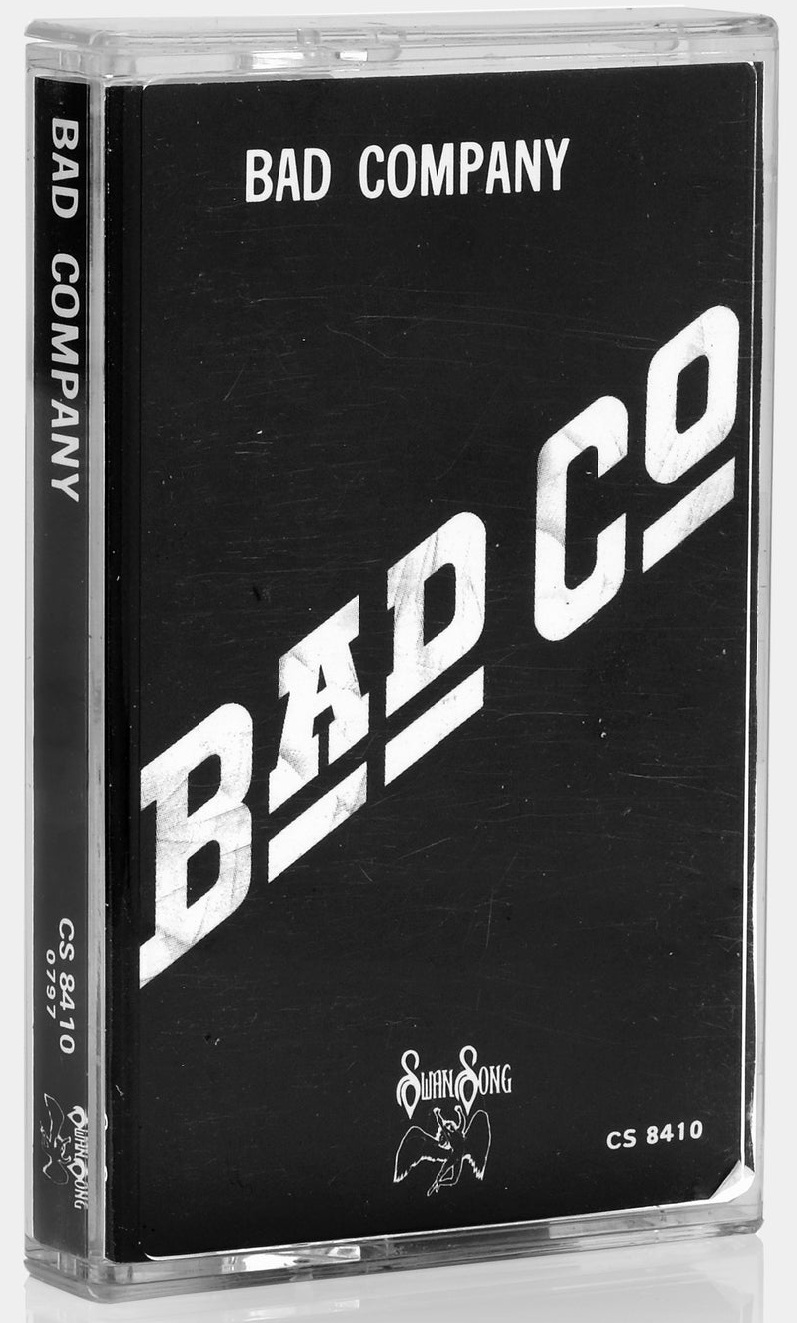
#3 – BAD COMPANY – BAD COMPANY

#4  – BILLY IDOL – REBEL YELL

#5 – OZZY OSBOURNE – THE ULTIMATE SIN

#6 – DIAMOND HEAD – BORROWED TIME

#7 – D.A.D. – NO FUEL LEFT FOR THE PILGRIMS

#8 – STONE FURY – LET THEM TALK

#9 – DIO – SACRED HEART

#10 – LOUDNESS – THUNDER IN THE EAST

THE CASSETTE CHRONICLES – ARMORED SAINT’S ‘MARCH OF THE SAINT’

By JAY ROBERTS

The Cassette Chronicles is a continuing series of mini reviews and reflections on albums from the 1980’s and 1990’s. The aim of this series is to highlight both known and underappreciated albums from rock, pop and metal genres from this time period through the cassette editions of their releases. Some of the albums I have known about and loved for years, while others are new to me and were music I’ve always wanted to hear. There will be some review analysis and my own personal stories about my connection with various albums. These opinions are strictly my own and do not reflect the views of anyone else at Limelight Magazine.

(WRITER’S NOTE: This is the final Cassette Chronicles article for 2025, closing out our ninth year. Next week, there will be a recap piece with links to ten of the pieces that were written this year. It’s a chance to check out some of the album’s spotlighted in 2025 on the off chance you missed reading them the first time around. Thanks for continuing to read the series and I look forward to kicking off our 10th year of The Cassette Chronicles in early 2026.)

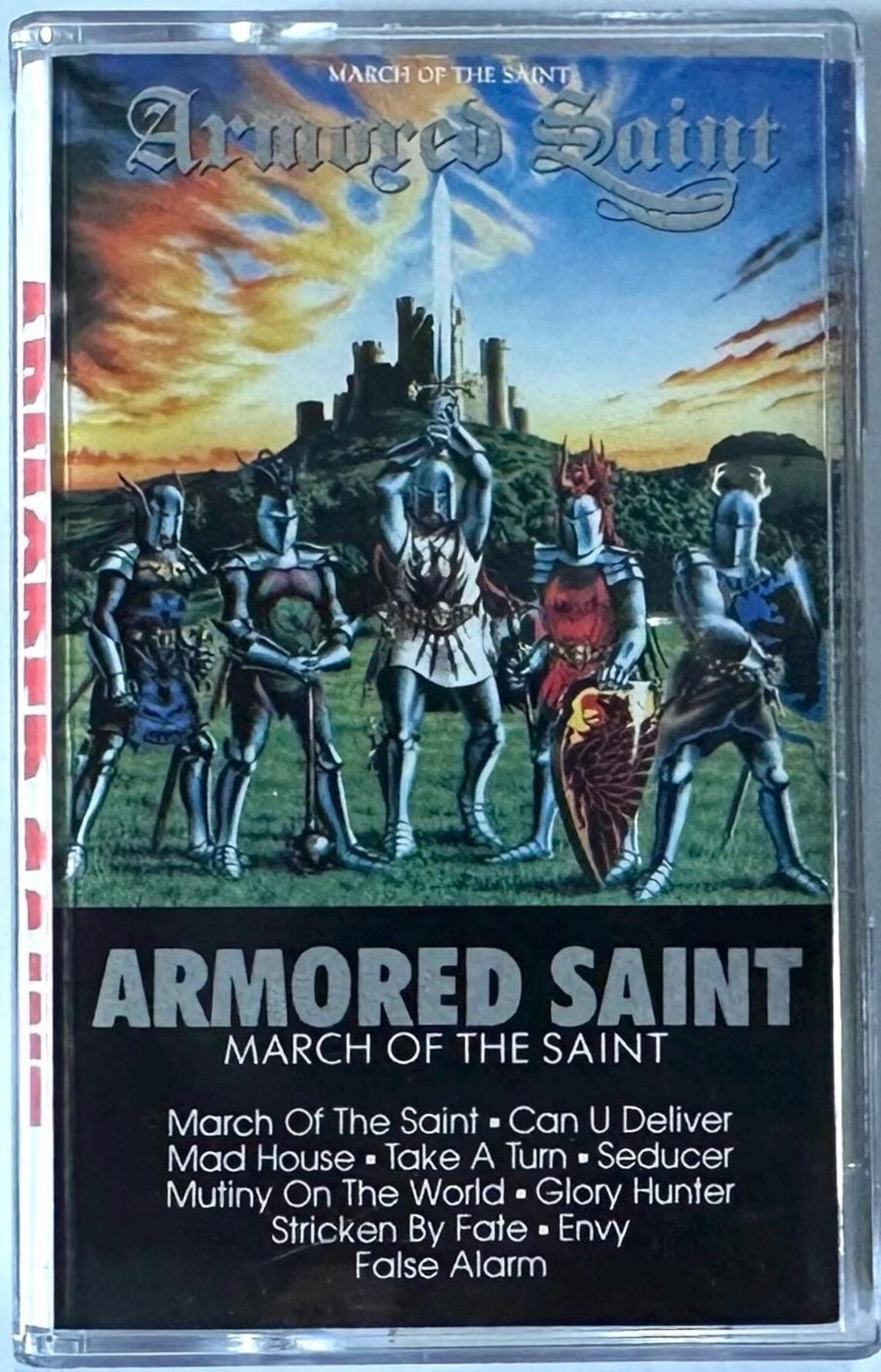
ARMORED SAINT – MARCH OF THE SAINT (1984)

March of the Saint, the full-length debut album from Armored Saint, came on the heels of their 1983 self-titled three song EP. While this debut release did yield what is described as a minor MTV hit with the song “Can U Deliver”, the album didn’t exactly set the sales charts on fire. It peaked at #138 on the album chart and so you might think that this album would have faded into some sort of obscurity given that it is now more than four decades old. 

But you’d be wrong. And it isn’t just the metal diehards that likely remember the album either. Armored Saint is still around and turning out great album after great album. And when they tour, songs from March of the Saint still find their way into the set list and get huge crowd reactions.

While it is not the album I turn to regularly enough, besides the title track and “Can U Deliver”, whenever I think of this album, I also eagerly recall the songs “Mad House” and “Mutiny on the World” as well.

Of course, that does mean I need this refresher listen to dig into the other songs all over again.

On Side One of the album, the title track opens things up and I still find that I love the way Armored Saint kind of slow rolls the intro with a kind of pomp and circumstance overture before the full-on metallic roar of the music kicks in full. From that point, it’s a pure driving rocker. If it was the first time anyone heard singer John Bush’s voice, they had to be blown away. He sings straight out with power but when called upon to do so he can kick things up and unveil a metal scream that will rival anyone else’s screaming ability. And the fact that he’s still doing that even now is all that more impressive.

I mentioned the track “Can U Deliver” previously and it follows the title track. There’s no holding back on this one as it delivers a wallop right from the start and doesn’t let up. I can see why it got to be a “minor” hit with the video.

Giving the March of the Saint album a killer trio of songs to open up the album, the song “Mad House” is another frenetically paced rocker. The guitar work is phenemonal and you get a killer vocal take from John Bush. I also liked the way the band constructed the chorus. With Bush singing the regular lyrical content, they added a big backing gang vocal when the song title was sung. It enhanced the chorus and while I’ve loved the song since first hearing it, I found myself with a new appreciation for the track.

I would’ve liked to know who wrote what for the ten songs on the album but all the songs are credited to the band as a whole.

The song “Take a Turn” is pretty interesting. In the main lyrical passages, the music is slow and deliberate but as the track goes into the chorus, the music gets more in-your-face and faster. And the vocals get a more intense delivery.

The first side of the album closes out with the song “Seducer”. Right from the start, the song bursts out of the speakers with a fiery delivery that captures your ear pretty fast. What I noticed most is that along with “Take a Turn”, the track is definitely from the “album track” side of the musical ledger BUT both songs deserve far better than to be written off with that designation. Both are solidly entertaining songs and help shine a light on just how well the band started out with this album. The songwriting is there with every track on the first side and I can’t help but love that Armored Saint seemed to know what they were doing even in their earliest days.

For the album’s second side, the band kicks off with the song “Mutiny On The World”. I don’t know what it is about this song but I really love it! It’s got a killer rhythm to the music and I dug the way the vocals came through. The vocal phrasing in the chorus, particularly when the song title is sung, grabbed my attention each time through.

The remaining four songs on Side Two of March of the Saint are lesser known tracks in comparison to the rest of the band’s catalog but don’t let that fool you into thinking that they are somehow lesser lights.

For example, “Glory Hunter” is a monster track. I think I’d forgotten about this one a bit. With a kicking delivery, the music gets you amped up pretty quickly. This song hit me a lot different and made a bigger impression on me than I remember it having done in the past, which is just a bit strange to me.

Keeping in mind that I’m far from a musical expert, but I have to say that the way drummer Gonzo Sandoval gets to provide the intro for “Stricken By Fate” will really draw you into the song. Once his ear-grabbing intro blends into the full musical score, you can still hear how his drumming ties the rest of the music together. Midway through the song, which is a stomping kind of uptempo number, you get this cool little guitar interplay with Bush’s vocals that had me drawn in all over again.

For “Envy”, there’s a slow burn intro that steadily grows until the music is playing out in full rocking glory. The song is the shortest one on the album but it manages to provide plenty of sonic thunder to keep your heart rate rising throughout.

The album closes out with the song “False Alarm”, another uptempo number. It rocks pretty much from the start and I dug the way Bush performed vocally on this song. I think Side Two is probably very underappreciated by even some Armored Saint fans but I’ll be damned if I didn’t find myself rocking out as if this was the first time I’d heard the song.

A few months back, I was hanging out at the record shop and a discussion of our favorite albums came up. And surprisingly, one of the other customers in the store at the time said that March of the Saint was one of his all-time favorites. I was a little surprised considering that another band is his personal favorite. I figured it would be one of their albums that he mentioned first. But that’s what makes this album still resonate with me all these years later. It’s so good that it still gets chosen as an all-time favorite by those metal fans in the know. Is it any wonder why I am such a fan of both Armored Saint? Does March of the Saint deliver the goods? You bet your ass it does!

NOTES OF INTEREST: The March of the Saint album was reissued on CD in 2006 via Rock Candy Records. That version of the album comes with three bonus tracks which are demo versions of “March of the Saint”, “Seducer” and “Mutiny on the World”.

Reportedly, singer John Bush and bassist Joey Vera do not like how the production and mix of the record came out. They were frustrated with the producer and according to the info listed on the album’s Wikipedia page, they claim to still be in debt over how much the album cost to make. Though I’m not sure how old that particular quote from them might be.

THE CASSETTE CHRONICLES – STEVE PERRY’S ‘STREET TALK’

By JAY ROBERTS

The Cassette Chronicles is a continuing series of mini reviews and reflections on albums from the 1980’s and 1990’s. The aim of this series is to highlight both known and underappreciated albums from rock, pop and metal genres from this time period through the cassette editions of their releases. Some of the albums I have known about and loved for years, while others are new to me and were music I’ve always wanted to hear. There will be some review analysis and my own personal stories about my connection with various albums. These opinions are strictly my own and do not reflect the views of anyone else at Limelight Magazine.

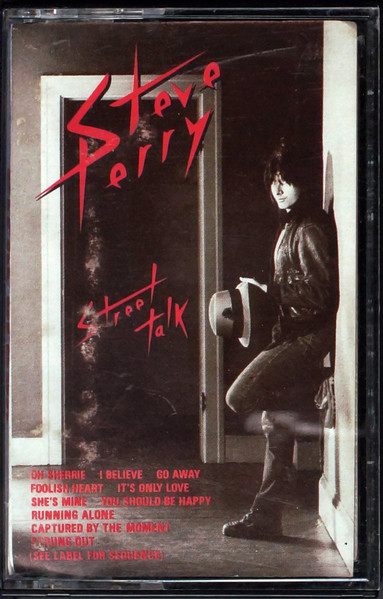
STEVE PERRY – STREET TALK (1984)

It is a good thing that Steve Perry’s solo debut opens with the song “Oh Sherrie” given that it became his biggest solo hit. It also helps me in the construction of this article because I get to talk about it first and then focus on the slightly lesser known tracks that comprise the rest of the album.

“Oh Sherrie” is an amazing song. Written for Perry’s girlfriend at the time, the song was released as a single in March 1984, nearly a month ahead of the album’s release. And it was a monstrously successful song. It would go on to hit #3 on the singles chart, and #1 on the Rock chart. The video had heavy MTV airplay as well.

And man, I remember rocking out to both the song and the video back in the day. The track opening with the slight musical intro before Perry’s booming a capella vocal comes in for the opening lyrical stanza. It’s almost haunting the way the song starts and then Perry comes in on full attack. As the rocking soundtrack kicks in, the song grows even more powerful. That guitar solo is immense and the way it fades out in the same kind of slight musical tone that the song began brings the track full circle. It’s a true classic song and while it galls me that it is sometimes mistakenly referred to as a Journey song, I still get a chill every time I happen to hear the opening strains of the song on the radio.

I should note that Steve Perry co-wrote all of tracks on the album. But he had an extensive list of co-writers as well. Most prominent among them were Bill Cuomo, Randy Goodrum and Craig Krampf. They also performed musically on the album. Perry produced the album and came up with the cover art concept as well.

Now, I mentioned that the other tracks on the album were slightly less well known than “Oh Sherrie” but that’s actually not quite strictly accurate. The Street Talk album actually had four Top 40 singles come off of it.

One of those “other” singles is on Side One of the album. “Foolish Heart” is a ballad but not one the kinds of ballad that is so slow as to feel as if you aren’t moving along in the song. The backing music has a slight uptick. And Perry’s performance here makes it a real classic track of his discography. I still hear this song a lot on the radio. The video for the song is pretty interesting for being a one continuous shot concept performance. And there’s an alternate ending to the video that is seen as him basically announcing he’s going back to Journey at the time. This was the fourth single from the album and it hit #18 on that chart. It’s also been covered at least four times by other artists including on Sheena Easton’s 1997 album Freedom.

As for the rest of the songs on the first side of the album, the song “I Believe” initially gave me an old time rock and roll vibe when I first heard it. It may not actually be the intent of the song but that first impression has always stuck with me for some reason. It’s an uptempo number and the way Perry’s vocals come through on the song is actually kind of cool. The vocal gets very plaintive in the delivery at points and yet while his strong vocal presence within that delivery could seem a bit out of place given the vibe of the music, the two parts of the song actually combine to give you one heck of a listening experience.

The song “Go Away” has a bit of an uptempo delivery. That pacing keeps it from being what would you could call a ballad track, but I think if the musical had been slowed down, this would’ve been a cool ballad tracking. Still, as originally performed, this is a killer track!

I love the way the percussion and bass have such prominence in the song that even I can pick them out in the song throughout. I think it is that rhythmic foundation that grounds the song and lets everything you hear over it that makes the track “sing”. Speaking of singing, the way Perry has this kind of stop/start stutter step in the way each line is delivered in the main verses was pretty interesting. Despite the song not being more in your face, I think it’s an understated bit of pop elegance.

The first side of Street Talk closes out with the song “It’s Only Love” and it is another strong rocking number. While there’s plenty of synthesizer used in the song, it is the drums and guitar threaded into the music that really raises the song. The lyrics are very cool and the phrasing of Perry’s vocals given them added heft. I love the way he delivers this particular passage: “Opened up your letter / I can’t believe my eyes / You said I should know better / But I have no alibis”

Side Two opens with the song “She’s Mine”. I have loved this song from the first time I heard it. It hit #21 on the singles chart and in the main portions of the song there’s a sense of melodrama that gives off a slightly creepy vibe at times. The chorus of the song finds the tempo jacked up to full rocker status and the switch back and forth is pretty compelling. The song has another killer guitar solo and you know how The Police song “Every Breath You Take” is not a love song? There are times when I think that “She’s Mine” is a spiritual companion to that track. By that I mean that this isn’t Perry inhabiting the role of someone telling an interloper to stay away from his woman or anything but rather he’s singing from the viewpoint of the interloper themselves. I’m not saying that I’m right about that, just that I think the song could be interpreted that way. Over the course of the song’s outro, whomever is playing the guitar is providing some incredible playing as well.

Michael Landau is credited playing the guitar for the song “You Should Be Happy” and I gotta say, he really shines here. The guitar parts help fuel the overall sense of urgency that comes through on the the song. Perry’s vocals are the star of the show of course, but even with all the other instrumentation, it is the guitar that lets this song rise above itself and go from a standard track to a full on driving rocker and yet another example of why I find this album such a standout.

From its first notes, the song “Running Alone” has something special going for it. It has a dramatic immediacy to it in the intro and then Perry’s vocals come in and the lyrical content becomes an uplifting kind of track. Slower in tempo than a lot of other tracks on Street Talk but not quite a ballad, I dug the way everything came together with this track. I’m usually on the cranky and bitter side of things but crazy as it seems I always seem to feel “better” after listening to this song. Okay, sure maybe the feeling doesn’t last but for those few minutes, even a miserable SOB like me can feel “good”. Maybe lines like the following are why I have this momentary lapse from my standard grumpiness: “I believe that every soul / has a song to sing / The spirits locked in every man / Waiting for a wing / Oh so much wasted / And so little used / The trick of the dreamer /is keeping yourself from the blues”.

Strangely enough, Street Talk keeps up the incredible run of great tracks with the song “Captured by the Moment”. It’s another song that has a kind of haunted feeling, which is only further emphasized by the opening stanza’s lyrics that reference Martin Luther King, the Beatles and the JFK assassination. Maybe not the lightest subject matter but I get what they were going for here. The delivery in the main passages are delivered in a slow almost hushed way and then as you hit the chorus, the music explodes into a bright blazing furious rocker tempo. It’s very dramatic and feels like a showpiece number. Something that would’ve made an amazing visual to play out on a stage or something. In an album full of amazing tracks that continually renew themselves to me upon each listen, this might be the most intense track of them all.

The album closes out with the song “Strung Out”. It hit #40 on the singles chart and man, did Perry know how to bring things to a rousing flourish to close things out or what? It’s uptempo throughout but you can hear the song waiting to burst out in the chorus. The song is one grand performance after another. Guitars are providing major riffs, drums are crashing through everything and Perry is once again delivering the vocal goods. The way the song comes to an immediate halt right there at the end was a great choice as well.

As you’ve been reading along, I’m sure you’ve noticed that I really didn’t have anything negative to say about this album. And that is because there really isn’t anything to say on that front. This is an absolutely stone cold classic album in every respect. The songs, the performances. Sure, Steve Perry is always going to be more readily identifiable as Journey’s singer but never let anyone forget that with Street Talk, he delivered one the singular greatest solo albums of all time! 

NOTES OF INTEREST: The Street Talk album went double platinum and established Steve Perry as a bonafide hit solo artist as well as from his time with Journey.

The 2006 CD reissue of Street Talk has five bonus tracks. The first three are demos from his pre-Journey project ‘Alien Project’. The fourth song “Don’t Tell Me Why You’re Leaving” was the B-side to “Oh Sherrie”. The final bonus track “If Only For the Moment, Girl” was originally released on the We Are The World album/project.

Guitarist Waddy Wachtel plays the guitar solo on “Oh Sherrie” and also appears on “It’s Only Love”. He’s had a wide and varied career but has done work with two of my favorite artists in Warren Zevon and Beth Hart. Bassist Kevin McCormick appears on the song “Running Alone”. His extensive credits list included a long term collaboration with Melissa Etheridge.

THE CASSETTE CHRONICLES – WARLOCK’S ‘HELLBOUND’

By JAY ROBERTS

The Cassette Chronicles is a continuing series of mini reviews and reflections on albums from the 1980’s and 1990’s. The aim of this series is to highlight both known and underappreciated albums from rock, pop and metal genres from this time period through the cassette editions of their releases. Some of the albums I have known about and loved for years, while others are new to me and were music I’ve always wanted to hear. There will be some review analysis and my own personal stories about my connection with various albums. These opinions are strictly my own and do not reflect the views of anyone else at Limelight Magazine.

WARLOCK – HELLBOUND (1985)

The second studio album from Warlock, following their debut release Burning the Witches, raises a question right from the first time you see the cover art.

And that question is…who thought it was a good idea to release an album with a cover art photo of the band that looked like a smoke machine had run amuck?

Seriously, you can barely make out two of the guys in the photo and the smoke pervades the entire picture.

Granted, everyone knows that everything about Warlock came down to powerhouse vocalist Doro Pesch but even she is at least partially obscured by the smoke. And while she’s never been one to trade on her looks to get ahead in music, who wants to cover up the fact that besides being a great singer, she’s a smoking hot blonde German goddess?

Maybe nowadays, that’s the less politically correct thing to think, but in 1985? Come on now!

Looking up the credits online, I noticed that besides the band getting writing credits on every song, album co-producer Henry Staroste was credited as a co-writer as well. Rene Maue got three co-writing credits. The liner notes aren’t specific as to who did what, but I looked forward to the band’s True As Steel album and saw that Maue was credited as co-writing lyrics so perhaps that was their role here as well.

Anyway, that’s a look at the behind the scenes credits. Let’s turn our focus to the music now. I’m a HUGE fan of Doro Pesch and Warlock. I have been since the Warlock album Triumph and Agony. I loved seeing her perform that whole album when I FINALLY saw her live for the first time in 2017. And seeing her again a couple years later where I got to meet her (my pic with her is my profile pic on my Facebook page). But when I first discovered the band and learned about their earlier albums, I was able to track down copies of them on cassette and here we are forty years later and I am going to write about this particular release.

The album opens with the title track and I’m not sure if the live crowd that you can hear in the opening part of the track is real or an addition in the studio. But you can’t deny the fast and furious nature of the song and how it carries you along through the length of the song.

I should point out that while I do love the production sound of the album, you can clearly see how the much rawer sound of these early days would later give way to the more polished sound you get as the band’s career would progress, then end and would continue on with Doro’s solo career.

With Doro’s vocals exploding forth from your speakers and the drums from Michael Eurich forming a pounding foundation that allows Rudy Graf and Peter Szigeti to perform a solid six string duo attack over the rest of the soundtrack, “Hellbound” gets the album off to a pretty solid start.

The song “All Night” follows next and it is a track that has a different tone and tempo to it. There’s a much more mid-tempo design to the music, so you get a slow ride across the musical landscape as compared to “Hellbound”. I like the slightly more dramatic tone that the music invokes in the song.

One of the things I like to hear when I go back and listen to these earlier Warlock albums is how I can hear the way Doro’s voice started and progressed to the point where she is now after a successful four decade career that is still going on. She has an incredible scream ability here but it always is done in an under control way, if that makes sense.

The faster pace returns on “Earthshaker Rock”, which features the title words in the chorus giving the song an anthemic feel that also comes through in the full song lyrics. This is a song that you have to pump your fists into the air if you hear it.

For “Wrathchild” (not the Iron Maiden song), you get a pretty cool sounding guitar line in the song’s intro and then a full uptempo (although not as blazingly fast at the start as other songs on the album) kicks in. As the song hits the midpoint, the pacing kicks up as it heads into the guitar solo and then is pretty much a full on explosive rocker until the song ends with a brief reprise of the same guitar line that was in the intro.

The first side of the album closes out with the song “Down and Out”, which briefly features Michael Eurich behind the drum kit before the guitars come in and you get a solid thumping intro before the song settles into more of a groove rocker. But what makes this song pretty cool is how you can hear the progression from that groove in the very early going to it blooming into a far faster rocker for the chorus. Doro’s vocals are intense here. The tempo alternates back and forth from main lyrical passages to the chorus and that makes the overall listening experience pretty cool.

Side Two of Hellbound opens with the song “Out of Control”. Which is a bit funny considering the rather, dare I say, gentle way that the song opens. That brief intro almost immediately gives way to a furious sonic attack that better resembles the song’s title. And man, I love this freaking song! I can’t say for sure but “Out of Control” might just be the song that sounds most like how Warlock would sound on the Triumph and Agony album.

There’s no soft-pedalling going on for “Time To Die”. Right from the first notes, Warlock is on fire throughout the track. Eurich’s drumming plays a huge role on this song and I love the way Doro is just attacking the vocals here. There’s the rapid fire delivery of the main lyrics and then she adds in some kind of unearthly scream at points in the song for added emphasis. It all works so well. The frantic and frenzied delivery of the solo in this song catches your ear as well.

I love the riff that kicks off “Shout It Out”. It sets the tone with a sense of urgency before a small scream from Doro and the full musical score kicks in fully. It’s an uptempo number but like “Wrathchild” isn’t quite as blitzing as other songs on the album at the start. It sure as hell gets much faster over the course of most of the latter half of the song though.

The last track on Hellbound is the song “Catch My Heart” and it is the song that would qualify as the “ballad” track. What I found most interesting at the start is how the guitar line that fuels the intro is really cool. If you’ve followed Doro’s career for any length of time, you know that despite her ability to just rock out like a BOSS, she always has at least one song that shows off the “softer” side of her vocal abilities. Of course, even here there’s little that would really make you think, “UGH! Not a damn ballad.” While the music is slow and deliberate, Doro’s performance of the song lyrics doesn’t make her sound like she’s trying to be anyone but herself. Her vocals are readily identifiable and despite the overall feel of the song, Doro still brings plenty of vocal fire as the song rambles along. And like a lot of ballads, that depth of feeling later combines with a more intense musical score over the song’s latter half, combining for quite the powerful track as the song and album fades out to its end. I will say the final strains of how the album ends is a bit weird but one small “defect” isn’t enough to ruin the track or the album for me.

I know that this early Warlock stuff was a lot rawer than what people might remember given everything that came later but I know I still enjoy a lot of what is going on with the album and as someone who is a devoted Doro Pesch fan, any material that she’s a part of is always going to hold a strong place in my music-loving heart. So while Hellbound may not be an album that will be the first one you think of when it comes to Warlock and/or Doro, it is certainly a strong release that deserves a much wider audience.

NOTE OF INTEREST: The 2011 reissue of the album contains two bonus tracks. One is a studio track from a different time period than the Hellbound album. The other is a live version of the album’s title track. The album peaked at #53 on the German album charts.

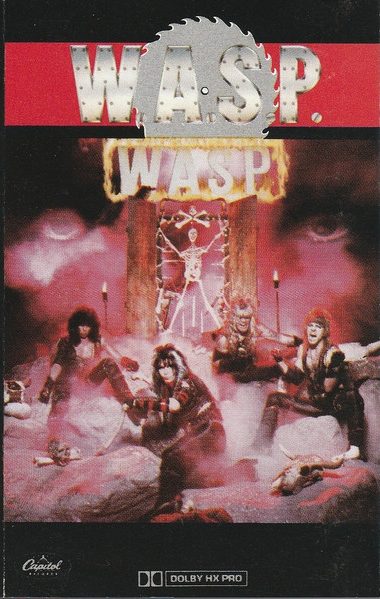
THE CASSETTE CHRONICLES – W.A.S.P.’S SELF-TITLED DEBUT

By JAY ROBERTS

The Cassette Chronicles is a continuing series of mini reviews and reflections on albums from the 1980’s and 1990’s. The aim of this series is to highlight both known and underappreciated albums from rock, pop and metal genres from this time period through the cassette editions of their releases. Some of the albums I have known about and loved for years, while others are new to me and were music I’ve always wanted to hear. There will be some review analysis and my own personal stories about my connection with various albums. These opinions are strictly my own and do not reflect the views of anyone else at Limelight Magazine.

W.A.S.P. – W.A.S.P. (1984)

If you had told me when this series started that I’d write more than two hundred seventy-five articles and had still not written about a W.A.S.P. album, I would’ve called you a liar.

As it turns out, you would’ve been more prophet than liar. Because it is true, I have never covered a W.A.S.P. album until now. I had to go and check my master list and then much like Ol’ Saint Nick himself, I had to check it twice. I was floored!

That cinched the decision about what album to write about for this week’s installment of The Cassette Chronicles and it’s a good thing because I’m not sure how often I’ve listened to the debut album in full lately.

The first side of the cassette opens up with the song “I Wanna Be Somebody”. It is the first official single from the album and it retains its incredible ability to grab you even more than four decades later. The pacing is hard-driving and Blackie Lawless instantly draws you in with his memorable vocal style. While he may not be the greatest vocalist of all-time, once you hear him you will always know his voice. I love the song in this form and it has made for some great live recordings across the band’s career as it has been used as the crowd sing-along track in various shows. 

The funny thing about this song for me as I listened to it for this piece, I looked up details on the song. The chart position stuff was kind of bland, but learning that the title was taken from a line of dialogue in the Barney Miller TV show from the 1970s (according to the album’s Wikipedia page anyway) was extremely fun to discover. The dialogue was spoken by the character “Detective Ron Harris”. The reason I’m including this is because the actor Ron Glass, who portrayed Harris would go on to play the character of “Shepherd Book” on one of my all-time favorite TV shows Firefly. I’m a devoted fan of that franchise and any new tidbit of info that ties to the show is always great.

For “L.O.V.E. Machine”, there’s a mix of both uptempo pacing and a heavier feel to the music as well. The chorus is pretty simple in that you can pretty much sing along immediately after hearing it the first time in the song or at least after you hear the song in full for the first time.

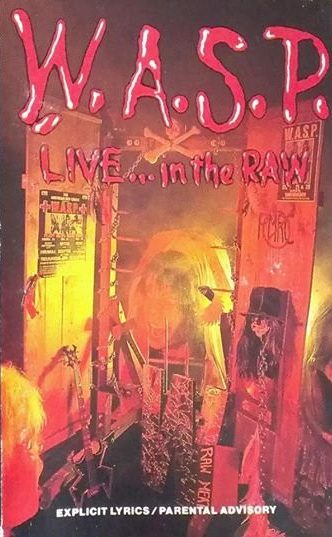
While I didn’t discover W.A.S.P. for myself until I saw a rock magazine ad for their album “Live..In The Raw”, Blackie Lawless instantly ingratiated himself with me both with his vocal style, lyrics that could be both pointed and just a blast that will always remind you of the “80s Metal Years”. On the song “The Flame”, the music is fast paced but it is the way his vocals come off just a bit more strident than usual that kicks the song up a notch for me. Some of the line run-throughs you think he just might blow his voice out.

Oh, I should mention that besides singing and playing bass on the album,  Lawless co-produced the release and wrote most of the songs by himself. He co-wrote “The Flame” with guitarist Chris Holmes and J. Marquez. And he co-wrote the Side Two track “Tormentor” with Holmes.

The song “B.A.D.” is a bit of a weird track for me. I like the song but it is probably the song that would rank the lowest of the ten original tracks. The thing is, I can’t explain exactly why I feel this way. It’s got a decent vocal, and good music with a solo that at the very least grabs your attention. But the song just doesn’t quite get my juices flowing as much as other material on the album.

The closing track of Side One is the song “School Daze”. The first time I heard the song the intro cracked me up. It uses a group of children saying the Pledge of Allegiance and when they are done, the music cranks up and Blackie Lawless explodes at the school system. Given that I was about thirteen-years-old when the song came out and pretty much hated school, you can imagine how strongly lyrics like “A juvenile’s jail and I’m here locked up in their cage” or “A homework hell-house screams at me “Make The Grade” resonated with me back in the day. And wouldn’t you know it, the song still gets me fired up even now. There’s mid-tempo feel in the early part of the song but it quickly gets far more of a lively rocking beat.

The second side of the W.A.S.P. album opens with the song “Hellion”. As with the rest of the material, the pacing is an electrically charged explosion of metallic riffs. I love the mid-song lyrical bridge a lot but what really got me going for this one is the way the song’s title gets sung in the chorus. It starts off a tad lighter and then grows as the word is stretched out. I like the way that comes through as I listened to the song in the here and now.

I mentioned before that while Blackie Lawless may not be the most technically gifted singer but I still have loved his vocals all these years. So when the band’s power ballad track “Sleeping (In The Fire)” kicks off you might think it would be a mismatch of vocals versus material. But you know what? This ballad actually ages a LOT better than many ballads of the 80s era. It’s not overly sappy, or at least it isn’t delivered that way. Hell, most of the song is more power than ballad so it might be a mistake even including the word ballad in the description of the song. But I love the music of the song and the guitar solo is fantastic!

“On Your Knees” is pretty much a sex-soaked rocker but weirdly it’s less of a erotic romp and more of a dark side of a life gone way off track. Or I could be reading way too much into the song as I read the lyrics while listening to the track this time around. Fast paced, it catches your ear but it’s definitely not one you would play for your grandma. 

I mentioned “Tormentor” earlier in the piece because of the writing credits but as the song plays out, it has a mixture in the music. There’s a definite uptempo style to the music but at the same time there’s a stomping thump to the score as well. It makes the song that much more interesting to me. And the sound effects used at the start definitely sets the mood to match the song title as Lawless proclaims, “I′m a liar and I’m a cheat / I have no morals and I′m a thief / Pillage and plunder, curse those who enter /I am a killer and tormentor” as the opening verse.

When I was in the 10th grade, I managed to BS my way into convincing my English teacher into letting me write a term paper on W.A.S.P. though I’m not sure how I managed to pull that off. Thing is, she was an ardent feminist (and there’s nothing wrong with that) and given some of the lyrics I quoted in the paper, I was sure I was going to get a failing grade. Either she was grading easy or I wrote a pretty damn good paper because I got one of the highest grades in the class. I’m pretty sure that I didn’t include any lines from “Tormentor” but I am reasonably sure I had stuff from “I Wanna Be Somebody”. Of course, the most red mark comments I had were about other sex-drenched lyrical passages from songs on other W.A.S.P. albums I quoted in the paper. But hey, she liked my writing so who am I to look askance at a rare good grade, right?

The closing song on the original album is called “The Torture Never Stops”. Right from the start, there’s a sense of musical adventure to the music. At times it feels like I’m on a wild ride on a horse gone loco. Much like “The Flame”, the vocals from Lawless get a bit more strident than usual but it still works. And I love the line “And hope’s the rope that keeps you tied in knots”, but in the here and now that line takes on a different meaning to me than was likely intended when Lawless wrote the song. 

In the interest of giving the fullest picture of the album, I also checked out the extra three songs they put on the reissued version of the album. The song “Show No Mercy” was the B-side to “Animal (Fuck Like A Beast)”. It’s fast paced and I think it is even more raw sounding than the music on the original album. Though that could just be my ears playing tricks on me.

I have a friend that LOVES The Rolling Stones. They might just be her favorite band. So I’ve got to ask her if she’s ever heard the W.A.S.P. cover of the song “Paint It Black”. But I’m also wondering if she’ll like it or be horrified. W.A.S.P. definitely gives it a far more metal feel. The thing is, while the song is “fine”, I just don’t know that covering the song was necessary. 

And of course, we can’t have a complete picture of the W.A.S.P. album without acknowledging the grand grimy majesty of “Animal (Fuck Like A Beast). If I’m being honest, I can at least acknowledge the WHY of this song giving  so many of the so-called “Washington Wives” the vapors. I mean, you kind of know where this song is going when the opening two verses are as follows:

“I got pictures of naked ladies 

Lyin’ on their beds

I whiff that smell and sweet convulsion

Starts a swellin’ inside my head

I’m makin’ artificial lovers for free

I start to howl, I’m in heat

I moan and growl, and the hunt drives me crazy

I fuck like a beast”

But as a thirteen-year-old who hadn’t quite matured into the semi-responsible person I am now (I think), this was a song that said the “F-word” a few times in the lyrics and pissed off a lot of people. It was practically guaranteed I would love it. And it still doesn’t give them the right to censor or label music they didn’t like.

And there you have it. Revisiting the self-titled debut album from W.A.S.P. in full was a freaking thrill-ride for me. There’s so many great songs on the album that I still see people proclaiming that this is their favorite album from the band. I wouldn’t go quite that far because I have other albums that I like more, but damn if this one doesn’t have everything going for it now that it did back in the day.

NOTES OF INTEREST: The song “Animal (Fuck Like A Beast)” was originally supposed to be on the debut album. But after it was designated one of the “Filthy Fifteen” by the handwringing crybaby political group the PMRC, the record label pulled it from the release. It got released as a single in the UK, making it an automatic collector’s item. I have a cassette edition of that single. The song was restored to the album when it was reissued in 1998 with two more songs added as well. However, that reissue put the “Animal” song as the lead track changing the track listing from how it came out originally.

The debut album (which achieved GOLD status in sales in the US) may most often be considered a self-titled release but according to what I read online, there are two other album titles that were printed on various editions including ‘Winged Assassins’ and ‘I Wanna Be Somebody’ (which as you read in the main part of the article is a song on the album). 

At least 14 different bands have covered various songs from the W.A.S.P. album over the years.

Drummer Tony Richards left W.A.S.P shortly after the release of the band’s debut album. Prior to joining the band, he was a member of Dante Fox, the forerunner band to Great White.

THE CASSETTE CHRONICLES – BAD COMPANY’S ‘DANGEROUS AGE’

By JAY ROBERTS

The Cassette Chronicles is a continuing series of mini reviews and reflections on albums from the 1980’s and 1990’s. The aim of this series is to highlight both known and underappreciated albums from rock, pop and metal genres from this time period through the cassette editions of their releases. Some of the albums I have known about and loved for years, while others are new to me and were music I’ve always wanted to hear. There will be some review analysis and my own personal stories about my connection with various albums. These opinions are strictly my own and do not reflect the views of anyone else at Limelight Magazine.

BAD COMPANY – DANGEROUS AGE (1988)

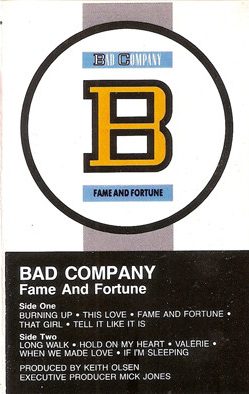
After the 1986 album Fame and Fortune re-established Bad Company on the rock scene but still found them lacking in terms of commercial sales, I’d say it is safe to say that there was just a bit more riding on their future with the release of Dangerous Age.

Now I know that the Brian Howe years are now almost uniformly considered the “lost” or “forgotten” years within the band’s own personal history (when they aren’t trying to pretend it never happened), but at the time the direction pursued on this album was perfect for the times.

As a fan of all aspects of the band’s history, I love the Brian Howe material…a LOT! That said, it’s been a while since I have done a full listen to the Dangerous Age album and now seems like the perfect time to fix that particular situation.

Despite there only being two songs released from Dangerous Age as singles, I think the song “One Night” should’ve gotten the single treatment as well. The song opens up the album and it is a strong rocker with plenty of melodic hooks to it.

“Shake It Up” is a kicking rock track and I like it, but the song “No Smoke Without a Fire” is by far the most memorable song from the album. I remember it being the song that I first heard that clued me into the album even existing and it remains a personal favorite Bad Company song for me. I love the way the song has a slow roll intro and then you get a gritty guitar riff underscored by a solid thumping beat from drummer Simon Kirke. And for my money, I think this was the best example of the impassioned vocal style from Brian Howe on the album.

The fact the neither song broke into the Top 40 singles chart doesn’t diminish their effective musical power and the Mainstream Rock Charts (one of those weird sub-group charts Billboard did or does) did see both songs peak in the Top 10 there).

After that killer trio of songs, I really had to dig back in to see what I hadn’t really been hearing much of lately. 

That starts with the track “Bad Man”. I like the jaunty guitar line that opens the song, it has a cool little vibe to it and it recurs throughout the song. The first verse is a bit more mid-tempo but as the song approaches its chorus, the more full-throated rocker pacing kicks in. There’s a lot of great guitar riffs in the song and that made this song such a great one to familiarize myself with all over again.

The first side of the album ends with the album’s title track. The song starts off with a slight bluesy little guitar line before the song blows out in full rocking style. I didn’t really think of these things back in the day, but MAN, this song sure does raise eyebrows with its lyrical content now. I mean, for all the crap Winger gets for their song “Seventeen”, the girl at the center of this song is only sixteen and this is the opening part of the lyrics: “She’s gettin’ ready to dance tonight / Black high heels, a dress that clings on tight / Skin so smooth, a young man’s dream /Lips so red, she’s only just sixteen, yes she is”. In 1988, I was only 17 myself so the lyrics fit what was likely my frame of mind. Nowadays, I sit here thinking, “Where are this girl’s parents?” That said, I still love the high level of energy that comes through in the final performance.

For the second side of Dangerous Age, things kick off with the song “Dirty Boy”. It has an upbeat tempo but is noticeably just a bit slower in the main lyrical passages. I like the way Simon Kirke’s drums here are higher in the mix. That thumping beat gives the song a nice heavier foundation that the rest of the song is built upon. And I really dug the solo in the song as well.

Solidly uptempo, the song “Rock of America” is a cool little number though it does make me chuckle considering everyone involved with the song was English. 

Bad Company joined in on the ballad craze of the late 1980s with the song “Something About You”. Honestly, I’d forgotten about this song. It has all the elements you’d expect to find in a ballad of the era. Slower delivery, the impassioned vocal styling of lovey-dovey lyrics and the underplayed electric guitar line popping up throughout, plus the mid-song solo. While the song is unlikely to be one of my favorites, it does have a nice relaxing tone to it and unlike the power ballads where the end of the song is way more of a full-on rocker, Bad Company plays it straight throughout without the rise in instrumentation power.

That more rocking sound returns on “The Way That It Goes”. Well, it is a bit more midtempo at the start but the music is rocking and I dug the way the chorus featured a gang vocal backing up Brian Howe’s singing. 

The original album ends with the track “Love Attack”. Okay, I admit that it is not exactly the greatest or even “deepest” song title in the history of music. But let’s set that aside and just enjoy the song, shall we?

The killer guitar line in the opening hooks you immediately. And despite the clunky song title, the combined talents of Howe, Kirke, guitarist Mick Ralphs and bassist Steve Price (making his 2nd and final recording appearance with the band) actually give this song a bit of urgency and immediacy that you might not have expected to feel. Since I’d not listened to the full album in a while, I did indeed feel a bit of surprise with how much I got out of listening to it now.

While the song “Excited” is a bonus track on the CD version of the album, I went online to listen to it in the spirit of being a completist. While I do own a few of the Bad Company albums on both cassette and CD, Dangerous Age is not one of them so I am not sure that I’ve ever even heard this one before now. What I can tell you is that I was quickly struck by the killer musical score. While the main vocal parts are just a tad slower, I really loved the roll out of the more rocking and/or uptempo sections. The guitar work is full of tasty licks not to mention a smoking solo and I loved the way the drums came out in the song as well. I don’t mind saying that by the time of the second chorus I was bopping my head along to the music and singing along with the band as they intoned the song’s title in the chorus. I may not have heard the track before now but man, that was a really cool track and now I’m going to have to track it down on a physical format.

The Dangerous Age album was the bridge album release before Bad Company would fully explode into the full on commercial success they’d enjoy when the Holy Water album would come out. You can clearly see where the band’s sound was going and in hindsight, also the direction of the band as a whole with Brian Howe and Terry Thomas doing the majority of the heavy lifting for the album’s material. But I can’t see how anyone could’ve or should’ve been complaining so much when  you were turning out an album that is packed with some great rocking work that still has the power to hook you more than three decades after its original release.

NOTES OF INTEREST: The Dangerous Age album was certified gold in the US even though it only peaked at #58 on the Billboard album chart.

Much like the Holy Water album that came next for Bad Company (and that I’ve written about in this series) Dangerous Age features producer Terry Thomas. As with the Holy Water album, Thomas did a lot more than produce the release. He played the Hammond organ and guitar, did backing vocals and co-wrote all eleven songs (that includes the bonus track “Excited”) on the album. Interestingly enough, guitarist Mick Ralphs co-wrote just four songs on the album.

There is a Bad Company tribute album called Can’t Get Enough: A Tribute to Bad Company due out October 25th, 2025. While I’m not a fan of tribute albums myself, I was a little disappointed to see the songs included are only from the original era of the band yet there is a version of Free’s “All Right Now” there too. Would it have killed them to acknowledge the Brian Howe era with at least ONE song?

THE CASSETTE CHRONICLES – IRON MAIDEN’S ‘THE NUMBER OF THE BEAST’

By JAY ROBERTS

The Cassette Chronicles is a continuing series of mini reviews and reflections on albums from the 1980’s and 1990’s. The aim of this series is to highlight both known and underappreciated albums from rock, pop and metal genres from this time period through the cassette editions of their releases. Some of the albums I have known about and loved for years, while others are new to me and were music I’ve always wanted to hear. There will be some review analysis and my own personal stories about my connection with various albums. These opinions are strictly my own and do not reflect the views of anyone else at Limelight Magazine.

IRON MAIDEN – THE NUMBER OF THE BEAST (1982)

When I decided to write about the Iron Maiden album The Number of the Beast, little did I know there were so many firsts and lasts involved with the album’s creation.

The most notable “first” is that it was the first album to feature Bruce Dickinson on vocals. I think we all know how well that lineup change from Paul Di’Anno worked out for the band. It was also the last album to feature drummer Clive Burr, who received his first and only writing credits for the band on the release as well. Meanwhile, guitarist Adrian Smith got his first writing credits on the album after only playing on the previous album Killers

I was still a few years away from “discovering” Iron Maiden for myself but since that fateful day I’ve snapped up all of their studio albums and for me The Number of the Beast is definitely the album that would’ve gotten me into the band had I heard it first. As much as others like the first two albums, I’m not nearly as big a fan of them. For me, a lot of those songs on the first two albums didn’t really get me all excited until I heard Bruce Dickinson singing them. I’m sure that’s considered blasphemy but there it is.

When you look at the track listing for the album, it is almost a greatest hits package all by itself. 

“Invaders” kicks off the album and I find it funny that such a blitzing metal attack that really fires you up when you listen to it is or at least was considered “not good enough” by bassist Steve Harris and likely would’ve been cut from the album if they’d had anything else to replace it with. WHAT? Man, that would’ve been a bummer because I think the song is killer all the way through.

For “Children of the Damned”, I like the way the song starts off sort of slow with an impassioned but restrained vocal performance from Dickinson. But the way Maiden builds the song’s intensity lets the song grow into a real classic that moves from each individual strength of the band members at the time. The intensity buildup begins in the chorus but then growns even more insistent as the music begins to get faster as Dickinson’s singing builds the storyline until it finally breaks out into a full-fledged blazing musical soundtrack that continues right til the end of the track.

With “The Prisoner” being based off the 1960s TV show, the use of the audio clip from the show in the song’s introduction really brings it home for me. (Seriously, I really need to find a way to watch the TV show someday.) After the spoken word clip, you get an almost marching musical beat intro for a bit but then the music explodes into a full bore rocking sound. Add in a fantastic set of lyrics and a delivery of said lyrics and you get the kind of relentless metal assault that gets you amped up and keeps you on a high energy level to the very last notes of the song. 

The closing song for Side One is “22 Acacia Avenue” which is the second song about “Charlotte the Harlot”. I really dig the song but it also gave me a bit of a funny moment at one of the Iron Maiden concerts I went to. I was there to right a review of the show so I had the setlist on hand so I could just check off each song as it was played. There was a husband and wife behind me during the opening act and the husband saw my list and asked to see it during the intermission. Whatever song he was hoping to hear wasn’t on my list but what made things both funny and memorable was that the couple had brought their two teenage daughters to the show. It was their first Iron Maiden concert and the guy said they were hoping to hear their favorite song. I asked what it was and they said, “22 Acacia Avenue”. I couldn’t help myself and said to the dad, “Do they know what that song is about?” I don’t know, I just wasn’t expecting a couple of teenage girls to have a song about a whorehouse be their favorite track.

I know these four particular tracks aren’t in every setlist for when the band is on the road, but for me, they are always a welcome addition to any live show and each of them are damn good songs any way you look at it.

As for Side Two, talk about a master class in metal music greatness! I mean three of the songs are played in nearly every single concert tour Iron Maiden has done since these songs were first released!

Normally when I go to shows, I’m doing a review and you will barely see me react to what I see during the concert because I’m busy concentrating on taking it all in so I can write about it with as much detail as possible.

But that all goes out the window when the opening narration of the album’s title track starts to play. I join in with everyone else and just blow the roof off the venue with loud cheers of exhultation for this song. When I first heard it, my instant love for the song was likely due to the whole not exactly accurate song about Satan idea, knowing how it would piss off people that I liked the song so much. I know now that the song was inspired by a nightmare Steve Harris had but I didn’t know that when I first heard the track. Thus I had my own take on the song, however wrong that turned out to be. 

These days, understanding what the song is actually about doesn’t change how much I love it though. You get that darkly powerful riff after the spoken word intro, and a shaded vocal from Dickinson in that first verse. But this is another song that you can hear grow from a slower tempo into something that just rips your throat out all the way. After that first verse and one hellaciously powerful scream from Bruce, the music is an unstoppable blitzkrieg as the guitars are on fire and the drumming from Clive Burr builds the foundation which allows for Harris, Dave Murray and Adrian Smith to just shine throughout. This is always going to be one of my favorite songs not only by Iron Maiden but throughout the entire metal genre.

Do you remember when chat rooms were the big thing on the Internet? I was in a music one for a long while and while it is entirely possible the person was full of it, they said they were a nun and she was a huge Iron Maiden fan and “The Number of the Beast” was one of her favorite songs. I remember when they said that, my response was “I’m guessing you don’t play that one loudly at the convent.” That chat room is long gone but it was an interaction that has stuck with me.

The conflict between Native Americans and European settlers is the focus of “Run to the Hills” which remains one of the major Iron Maiden songs more than four decades after its release. It was the first single released ahead of the album itself coming out. It’s utterly relentless musically, but the video for the song is what gets me. Despite the serious nature of the song’s subject matter, I only just learned by reading it on the album’s Wikipedia page, the footage of the fighting between the two sides comes from a parody movie from 1923 called The Uncovered Wagon. See, you really do learn something new every day.

Poor “Gangland”, it is seemingly the most unloved song that found its way onto The Number of the Beast album. The band seems to regret not only putting it on the album but it also seems like they even regret writing the song period. The thing is that while it may not be Iron Maiden’s greatest ever song, I like the full throttle musical score and I think the way Bruce Dickinson attacks the lyrics vocally is damn good. Plus, the chorus really works as well. It’s definitely a song that deserves more love from its creators.

While Iron Maiden has had plenty of worthy epic-type tracks over their career, the closing song “Hallowed Be Thy Name” remains their biggest, best and most popular one. And when you listen to the song, you can certainly hear why. 

With that deeply dark intro and Dickinson vocally embodying a prisoner wait for his execution by hanging, you can hear the church bell ringing its tone as the prisoner’s final moments approach. Once the heavier musical delivery thrusts into the open, the vocal delivery becomes so intense that it feels like it is shredding your brain. You can see everything in your mind that is being described to you. Between “Rime of the Ancient Mariner” from the Powerslave album and this track, Iron Maiden amply demonstrates their ability to craft the cinematic epics that create visuals in your mind to go along with the music. It’s another song that has featured in nearly every Iron Maiden tour over the years and there’s a good reason for it. It’s a stone cold classic track in every sense of the word. I love the extended musical piece over the second half of the song that leads into the dramatic flourish that brings both the song and album to a fitting conclusion.

The Number of the Beast album was the first time the rest of the band worked with Bruce Dickinson. And I’m sure no one had any idea how it would turn out. But clearly they not only hit it out of the park their first time out together, but it was just the start of a decades long collaboration that brought the band to heights undreamt. This album is utterly fantastic..I don’t know any other way to put it so succinctly.

NOTES OF INTEREST: The Number of the Beast album has been certified gold or platinum in at least 15 countries. In the US, it hit the platinum sales mark.

The album was reissued in 1995 with a bonus disc featuring while the 1998 reissue had just one disc with the original eight tracks while adding in the song “Total Eclipse” from the 1995 reissue. The 40th anniversary vinyl reissue in 2022 drops the song “Gangland” entirely and puts “Total Eclipse” in its place. Because “Total Eclipse” figures so much into later versions of the album, I went and listened to the song and while the song has a solidly thumping tempo, I don’t really think it is all that superior to “Gangland”.

According to a quote from artist Derek Riggs, the cover art was at least in part inspired by artwork he saw in a Doctor Strange comic book. The cover art would appear in the video for the song “Speed of Light” from the band’s album The Book of Souls.

Barry Clayton, who provided the spoken word intro for the song “The Number of the Beast” passed away in 2011. While working as both an actor and director, he performed the role of the narrator on the animated series Count Duckula.

THE CASSETTE CHRONICLES – BILLY IDOL’S ‘REBEL YELL’

By JAY ROBERTS

The Cassette Chronicles is a continuing series of mini reviews and reflections on albums from the 1980’s and 1990’s. The aim of this series is to highlight both known and under-appreciated albums from rock, pop and metal genres from this time period through the cassette editions of their releases. Some of the albums I have known about and loved for years, while others are new to me and were music I’ve always wanted to hear. There will be some review analysis and my own personal stories about my connection with various albums. These opinions are strictly my own and do not reflect the views of anyone else at Limelight Magazine.

BILLY IDOL – REBEL YELL (1983)

Having at long last seen Billy Idol in concert for the first time this past weekend, I figured it was about time that I wrote about another of his albums. I’d written about Charmed Life nearly three years ago and hadn’t found my way to writing about another album in Idol’s discography since.

But since I’ve been on a rock and roll high since the fantastic show he put on, I had to dig out his second solo release Rebel Yell and finally give the full album a listen. I know the hits of course, but until sometime last year I never owned a copy of the Rebel Yell album itself.

With the title track kicking off the album, Billy Idol and guitarist Steve Stevens (who wrote all the songs on the original nine track release), wasted little time in giving the listener a full throttle rocker. You’ve got a killer rock guitar powering the score with a variety of other sounds and styles woven into the mix throughout. Over the top of that, you’ve got Idol’s cutting and sometimes raspy vocal delivery livening up the track even more. 

The song is named after a brand of whiskey that Idol saw members of The Rolling Stones drinking at a party and he went and turned it into a classic 80’s hard rock anthem that still can light up a crowd all these years later.

Surprisingly though, the highest the song reached on the singles chart was #46, which I found to be a bit of a shock since it remains one of his most notable tracks. Of the four singles released from the album, only “Eyes Without A Face” (topping out at #4) and “Flesh For Fantasy” (peaking at #29) actually became Top 40 hits.

Speaking of “Eyes Without A Face”, I love the way this ballad’s title actually comes from an old black and white horror movie (of which Billy Idol was a fan). Here generations of people probably think of this song in some kind of romantic way and yet the inspiration for the song is anything but that. I like the midsection of the song when Idol switches up his vocal delivery and the guitar line is a lot more rocking than most of the rest of the track.

The song “Daytime Drama” had me thinking more pop or dance music than a rock song. I can’t say that it is my favorite song on Rebel Yell but I like the way Idol and Stevens worked different styles into the music so that Idol had something a little bit different than others might have had to offer at that time.

The final song on Side One of the album is “Blue Highway” and it is a fast moving uptempo track. I found myself digging the song during the live show I was at, but as I listened to the studio album, I found that it really has such a nice driving beat and musical hook, that I was left wondering why it hadn’t been chosen to be a single. It’s just a damn good track!

On Side Two, you start off with “Flesh For Fantasy”. I know it was one of his more successful songs but as I mentioned when I was writing a review of the concert I just saw, I think it is still an underappreciated track nonetheless. It’s got a moody atmospheric style to it and kind of becomes the dramatic centerpoint for the album if you are looking for a single track that conjures up the kind electrifying performance that was done during his “It’s A Nice Time To…Tour Again” stop in Mansfield, MA. I just flat out love this song.

After that, the rest of Side Two is made up of songs I can’t rightly recall ever hearing before. So now Rebel Yell really was treading new ground for me. 

First up was the song “Catch My Fall”, the album’s fourth and final single (It didn’t break the Top 40). Idol’s vocal track is a bit more subdued here while the music has a mixture of songs that place it more in that same kind of pop/dance music vein. There’s even a prominent saxophone line in the song. That shouldn’t be taken as me not liking the song. It’s actually pretty decent even if it isn’t quite the kind of “hard rock” I might’ve been expecting had I bothered to listen to the full album at anytime in the forty-two years it has been available!

I have to say that the song “Crank Call” starts out with a gritty guitar line that continues throughout the song. I love the way Idol delivers the vocals on this one. It’s almost like he’s singing them with that sneer on his face that he’s so famous for doing. And there’s a bit of a sense of the mischievious in this song. I love the guitar solo from Steve Stevens a lot too. Chalk this one up as another song that I’m now regretting not having spent the last few decades listening to.

“(Do Not) Stand in the Shadows” first struck me that it was a bit understated. Which is a weird thing considering that it is indeed a fast paced rocker. But there was something that made the music seem a bit “softer” in the first half of the song despite that pacing. But man, when the guitar solo kicks in, Steve Stevens just explodes. And Idol’s lyrics and delivery is phenomenal here.

The album closes out on the song “The Dead Next Door”, which is an almost elegiac kind of song. Soft music accompanying Idol’s vocals. It’s not the way I would’ve chosen to close out the album but given all the more rocking energy expended throughout the rest of the album, a softer closing number might be the best way to bookend the entire album after all.

The Rebel Yell album has three classic Billy Idol songs going for it, but what I didn’t know until now is just how good the rest of the music on the album is. It may have taken seeing Idol put on a hell of a show to kickstart me into doing a proper “investigation” into the album but no matter the reason, I’m even that much more of a fan of both Idol and the Rebel Yell than I had been in the past.

NOTES OF INTEREST: The Rebel Yell album hit #6 on the album chart and has sold more than two million copies. The album was reissued on CD in 1999 with five additional bonus tracks comprised of two original demos and three session takes. It was also reissued again in 2010.

While the album was originally recorded using a drum machine, drummer Thommy Price was brought in late in the recording process to re-record the drums.

THE CASSETTE CHRONICLES – IRON MAIDENS ‘POWERSLAVE’

By JAY ROBERTS

The Cassette Chronicles is a continuing series of mini reviews and reflections on albums from the 1980’s and 1990’s. The aim of this series is to highlight both known and underappreciated albums from rock, pop and metal genres from this time period through the cassette editions of their releases. Some of the albums I have known about and loved for years, while others are new to me and were music I’ve always wanted to hear. There will be some review analysis and my own personal stories about my connection with various albums. These opinions are strictly my own and do not reflect the views of anyone else at Limelight Magazine.

IRON MAIDEN – POWERSLAVE (1984)

It’s funny how things work out sometimes. I had to delay this article by a week because of real life issues and I just couldn’t come up with a decent piece for the album I WAS planning on writing about originally. Frustrated that my writing was crap, I ended up choosing to write about Iron Maiden’s Powerslave album based on a couple of reasons. The first was I chose the album as driving music for one of the days I was out running errands. That was the CD edition I own of course, but since I also have the cassette version as well, I dug that out when reason #2 presented itself.

I was reading up on one of the music groups I belong to on Facebook and one of the other members commented on a post about the album saying how it was the last Iron Maiden album they had liked. I read that post and thought to myself, “forty years and they hadn’t liked anything else Iron Maiden had done?” I can understand not liking a particular song or even a particular album over four decades but the entire catalog over that time? So I wanted to check in again with the album to see if giving it a good listen could make me understand why that poster  was done with the band afterwards.

Oddly enough, despite featuring at least four all-time classic tracks in their catalog, for me Powerslave is not one of the band’s albums that I do full listens to all that often.

The first side of the album opens up with two of those classic tracks, “Aces High” and “2 Minutes to Midnight”. The two songs were also the ones chosen to be released as singles from the album. For “Aces High” which is about the “Battle of Britain”, which is credited as the first major military battle fought entirely with air forces. And the relentless pacing of the song certainly captures the feeling that must’ve been going on during all the battle. Pure adrenaline fueling the music and your heart rate! Of course, what helps make the song so memorable is the intro used for the video and in all their concert performances. Iron Maiden features a speech from Winston Churchill (“we shall fight on the beaches…”)and it is a perfect setup to launch into the song.

As for “2 Minutes To Midnight”, which is about the Doomsday Clock and how the Cold War tensions kept inching the clock forward. I love how in reading about the song I learned that guitarist Adrian Smith and singer Bruce Dickinson wrote the song, according to Smith, in about 20 minutes. Imagine being able to write a stone cold classic song in less time that it takes to watch an episode of a sitcom. The song kicks off pretty fast, burning its way through pretty much in the same fashion as “Aces High”. You get that killer musical pacing and the drop dead awesome vocal intonation from Dickinson. I remember the first time I heard the song and was blown away when the lyrical line “The body bags and little rags / of children torn in two” came through. First, the image it conjures is terrible but the way the point was driven home was how it was performed by Dickinson. There’s an extra bit of edge to his line delivery there and for some reason it always remains such a descriptively memorable part of the song for me.

Can I tell you the truth? The instrumental “Losfer Words (Big ‘Orra)” is not a song I really enjoy all that much. Sure it’s got a highly jaunty rocking pace to it but while the band may not have been able to come up with lyrics for the song (as originally intended when they wrote the piece), I really wanted to hear some vocals here and kind of zone out a bit when I hear this track.

While “Flash of the Blade” is probably considered a “lesser” track in Iron Maiden’s catalog of songs, I really love how they worked up a song that talked about Bruce Dickinson’s love of fencing. I found myself really digging into the lyrics for the song as I listened to it for this article and found that as I listened, I got inspired enough that I wondered what it would feel like to be learning how to fence and the rush you’d get from all that thrust, cut and parrying action.

The first side of the album closes out on the song “The Duellists” which as you listen to the performance, you could find yourself thinking it was thematically similar to “Flash of the Blade”, the song was written by Steve Harris and is based off the Ridley Scott movie of the same name. There is dueling involved, but mostly it is about two rival French officers during the Napoleonic Wars. Once again, this isn’t a song I have listened to nearly as much over the years but I do like the way this song comes out in the end. And with a lengthy mid-song instrumental piece, I found it more interesting because of the lyrics before and after that instrumental break.

For Side Two, the album is shorter in terms of having just three songs (Side One had five tracks) but thanks to some lengthy running times for the songs, it is actually a bit longer in the overall running time.

Iron Maiden wastes little time in ramping up their musical rampaging with “Back in the Village” which is a sequel track to their song “The Prisoner” (released in 1982). Of course, both tracks are based on the classic British TV show “The Prisoner”, which is a show I must get around to watching someday for all the good things I’ve heard about it. As for the song itself, it is another fast paced rocker song and I found myself appreciating it a bit more than I think I might’ve done before. I don’t know why, since I’ve always kind of like the song but it just hit differently for me this time.

The “Powerslave” title track song is obviously the key song for the album but not just because it serves as said album track. The ancient Egyptian themes and the artwork inspiration for the album also served as the motif the band used for their world tour promoting the Powerslave album. It’s a freaking incredible song that I can’t get enough of whenever I hear it.

Now, the closing song on the original version of the album brings up something for me that I always found interesting. When I was in school, I kind of hated history class. Not that I couldn’t do the work or anything, but it was just so flat, dull and boring to me a lot of the time. And let’s not forget that I went to school at a time when learning from ANY alternate sources was actively frowned upon by teachers. I once had a teacher get mad because when asked how I did so well on a test about Greek mythology, I told her that it was due to reading Thor comic books. She correctly pointed out the fact that it was Norse mythology being used in the comic books. But when I told her the comics got me interested in actual Norse mythology and reading about that got me interested in Greek mythology, she was kind of snippy about it. As if the reason I got the good grade somehow cheapened the grade itself.

Well, if she’d ever tested me on stuff that I learned about through Iron Maiden’s many songs drawing from literature, history and the like, her head might’ve exploded!

But my interest in history wasn’t originally peaked by the Powerslave album. The reason for that is I didn’t “discover” Iron Maiden until their next album, Somewhere in Time. It was the “Alexander The Great” track on that album that piqued my interest. But as my interest in the band grew and I started getting their back albums and learned of how they drew their inspiration from all these rich actual sources of literature and history, I found myself wanting to know more after listening to the songs.

I imagine that Iron Maiden being consistently able to bring history alive in such a way that interested me is why I became such a fan of this album’s closing track “Rime of the Ancient Mariner”. Based on the Samuel Taylor Coleridge poem which has the same title, the song takes you on the same long journey the poem conjures up. It is over thirteen minutes long making it the longest Iron Maiden song for over thirty years. But what makes the song so interesting isn’t just how it was inspired by the poem but the way the band turns the song into such an event. You get their overarching rocking musical soundtrack but there’s spoken word material and sound effects to build that illusion of both being at sea and I think the sense of madness closing in at one point as well.

I’ve seen the band perform this track live and it is a showstopping piece of perfection to say the least. Plus, three of the band members have gone on record saying it was their favorite song to perform live as well. 

I still may not understand why someone would’ve stopped listening to Iron Maiden after this album but as I listened to Powerslave for the writing of this article, I can certainly concur with the notion that the album is such a classic that it sounds as fresh and vibrant only a couple weeks short of its 41st anniversary as it did when it was first released. It is simply a classic metal album of the first order.

NOTES OF INTEREST: The Powerslave album peaked at #21 on the Billboard album chart. It has officially been certified platinum according the the album’s Wikipedia page, though I don’t know if it has gotten more certifications in the forty plus years since its original release.

The album got reissued in 1995 with a 4-track bonus disc included. It was also reissued in both 1998 and 2015.

The tour for the album was called the “World Slavery Tour” and went for eleven months. It led to one of the greatest live albums ever in Live After Death. While I’ve seen the band a number of times since I “discovered” them, I missed out on this particular tour, though I do have a replica T-shirt for the tour.

THE CASSETTE CHRONICLES – OZZY OSBOURNE’S ‘THE ULTIMATE SIN’

By JAY ROBERTS

The Cassette Chronicles is a continuing series of mini reviews and reflections on albums from the 1980’s and 1990’s. The aim of this series is to highlight both known and underappreciated albums from rock, pop and metal genres from this time period through the cassette editions of their releases. Some of the albums I have known about and loved for years, while others are new to me and were music I’ve always wanted to hear. There will be some review analysis and my own personal stories about my connection with various albums. These opinions are strictly my own and do not reflect the views of anyone else at Limelight Magazine.

OZZY OSBOURNE – THE ULTIMATE SIN (1986)

On Tuesday July 22nd, 2025, heavy metal’s own “Prince of Darkness” Ozzy Osbourne passed away at the age of 76 after years of health issues. It was just a couple weeks after the “Back to the Beginning” event, where Ozzy performed for the final time, was held.

It was a bit fitting that I learned of the news while filling in for a shift at my friend’s record shop, Purchase Street Records. I had texted my friend Jeff to let him know that I was working at the shop that day (pretending that anyone would actually care about that) and he got back to me saying that Ozzy had apparently died.

Not surprising given the health issues he’s had, but still a bit of a shock. I had to confirm it but then I told a couple of the customers that were in the store who were also a bit shocked as you might imagine.

And so begins a long period of time as everyone who ever heard the music of Black Sabbath or Ozzy’s solo career will weigh in on his passing from a multitude of angles.

I had actually planned on writing about a different album this week but I scrapped that in order to pay tribute to Osbourne. The funny thing is, I realized that I’ve never written about an Ozzy solo release in the eight plus years of doing this series. And the only Black Sabbath album I have written about featured Tony Martin on vocals. 

I could’ve sworn I’d done something with Ozzy’s solo albums but as I looked into it, I apparently wrote some very brief pieces on a now-defunct message board forum that I was part of for a good long time. Part of what I said there will be incorporated here.

For me, The Ultimate Sin was the first Ozzy Osbourne album I ever bought and it remains my favorite. What I didn’t realize until now is that Ozzy himself apparently didn’t like the album. I was reading the Wikipedia page for the album and he apparently liked the material but blamed producer Ron Nevison for everything feeling and sounding the same. Me, I don’t feel that way and continue to love the album.

The first side of the album opens the album’s title track, which is one of the two big tracks from the album to this day. It’s a phenomenal track with a great guitar run through from Jake E. Lee but it is far from the only great bit of music on the album.

While “The Ultimate Sin” had a slightly more methodical delivery amidst the overall uptempo pacing, “Secret Loser” was a flat out rocker right from the start. While you may question the idea of being a “secret” loser when you are singing a song about it, this is a flat out great track. It has a fiery delivery of the music and Ozzy giving a vocal performance that is almost rapid-fire in its delivery at times.

As I’m writing (and editing) this article, I’m thinking about my own various experiences with Ozzy Osbourne over the years. I mean besides the music itself. While I’m sure others have seen him live in concert many times, I only saw a solo Ozzy show once. It was the last solo tour he did before starting Ozzfest (a package tour I never once attended). If my memory is right, it would’ve been in 1996. While Ozzy’s performance was good, I remember the show particularly because Prong and Filter opened up and I walked out on both performances because I didn’t like either band.

The song “Never Know Why” is a pretty damn good rocker, but while I did enjoy the song for the most part, the repetition of “We Rock” in the lyrics grew tiresome as the song progressed.

Another blazing rocker is “Thank God for the Bomb” which is thematically in line with the Side 2 track “Killer of Giants”…at least in my mind if nowhere else.

The first side of the album closes out with the song “Never”. Good song but I wonder why they decided two songs with “never” in the title were sequenced on the same side of the album. Granted, they were dramatically different and all but it just seems weird as I think about it in the here and now.

Before diving into the second side of The Ultimate Sin, I thought I’d dig into the 2nd time I saw Ozzy in concert. This time it was with Black Sabbath as they toured for what ended up being their final studio album 13. I loved the show overall and while Ozzy sounded a bit off-key at times, it was the first time I was seeing Tony Iommi and man was I blown away by witnessing him play guitar live. 

The second side of the album opens with the song “Lightning Strikes”. It’s an explosive rocker from the start and perhaps a bit of an underrated gem because it is such a good song that it should’ve been as big as both the title track and “Shot in the Dark”. I love the guitar playing on this song. At times it is understated but when more of a pyrotechnic approach is called for, Jake E. Lee delivers the goods.

I mentioned “Killer of Giants” earlier in this article when talking about the song “Thank God for the Bomb” and how I think of them as thematic compatriots. The opening of “Killer of Giants” has a great understated guitar intro before a relatively subdued vocal take from Ozzy comes in. The song is way more of a dramatic presentation until you get to that first chorus when the music breaks out into a more readily rocking tempo. The song alternates with those two stylistic choices for the next part of the song before sticking with a more in-your-face rocking nature til the end of the track.

I’m not sure if I’ve ever fully appreciated the song “Fool Like You”, but as I was listening to the album so I could write this article, I discovered that I was really getting into the song. Maybe a bit of sentimentality was creeping in because of Ozzy’s passing but the song just clicked with me. You’ve got a vibrantly rocking musical score behind Ozzy’s vocals and while it may not be one of his greatest songs ever, I definitely felt myself rocking to the song this time around.

Speaking of sentimentality, I’m not usually prone to it. So when I saw Black Sabbath on their final run of their “The End” tour in 2016, I wasn’t sure how things were going to go. Remember I mentioned that when I saw them a few years earlier, Ozzy had been a bit off-key at times. But I shouldn’t have worried because this particular show was AMAZING! I even gained a new appreciation for a Sabbath song at the show. The song “After Forever” just blew me away and Ozzy’s vocal for the song on that night was just killer!

 I had written a review of the show for the KNAC website and the final paragraph of that review summed up succinctly what I thought of the final actual tour that Ozzy performed: 

“I don’t give raves to a band based on sentimentality so when I say that BLACK SABBATH delivered a fantastic concert, it is based on their actual performance and not the fact that they have announced “The End”. And that is exactly what happened in Mansfield on August 25th. BLACK SABBATH put on a show for the ages leaving the masses with a indelible memory of a band firing on all cylinders that was less a celebration of their leavetaking and more a reminder of the fact that they are, indeed, the Godfathers of Metal.”

And that brings us to the closing track of The Ultimate Sin album, the all-time classic “Shot in the Dark”. I don’t know what else I can really say about that song other than that. The great mood established right from the start, the burning guitar track…killer lyrics and an all-time vocal performance from Ozzy. Does anything else really need to be said? Just go listen to the song and you’ll get it for yourself. Assuming you haven’t already spent decades loving the song, of course.

When I confirmed the news that Ozzy had indeed passed away, after my first thoughts of shock and sadness, my next “first” thought was for the daughter of an author friend of mine. While she will remain nameless here, she is a HUGE Ozzy fan. She and her family took a trip to the Rock and Roll Hall of Fame earlier this summer and there she is in front of the Ozzy exhibit just to continue our totally fake and manufactured feud about who is the best Sabbath singer. Of course, she’s Team Ozzy and because of my love of all things Dio, I choose Ronnie’s side. It has led to a lot of good natured banter between us as she’s been discovering all the great music that I grew up with. But now I wish she’d actually been able to see him live in concert. She’s saddened but doing okay. She even wrote about Ozzy on her Facebook page yesterday as she mourns his passing which included this great line that got me chuckling to myself: “- To this day, there are still very few singers/songwriters that can truly make me feel as if satan himself is out to get me, in the best way possible.”

And that’s what I’m sure many (or all) metal fans will be doing for a few days at least, pulling out albums and rejoicing in the music Ozzy Osbourne was part of creating and that will stand as his testament now that our Prince of Darkness has left us.

For me, that process of digging out his music all begins with The Ultimate Sin. I still think of it as my favorite Ozzy solo album and while critical opinions may vary, nothing can dim my love of the album.

Born John Michael Osbourne, the man who would become “Ozzy”, leaves behind a catalog of music that fans will know and love forever.

Rest in Peace Ozzy!

NOTES OF INTEREST: The Ultimate Sin peaked at #6 on the album chart in the US. It went double platinum. 

When Ozzy’s solo catalog was remastered and reissued in 2002, The Ultimate Sin was the only one that didn’t get re-released. The only available version of the album on CD is apparently the 1995 reissue which features the single edit version of “Shot in the Dark”.

Most of the music on The Ultimate Sin is credited to Ozzy, bassist Bob Daisley and guitarist Jake E. Lee. However, “Shot in the Dark” is credited to Ozzy and bassist Phil Soussan. It is believed (though I’m not sure if it is confirmed) that a legal struggle between those two is the reason why the album never got reissued in 2002.

At one point, Greg Chaisson was hired to be the bassist in the band, but he was fired for not fitting the image of the band. He would later reunite with Jake E. Lee as part of the band Badlands.