Category Archives: Cassette Chronicles

THE CASSETTE CHRONICLES – TUFF’S ‘WHAT COMES AROUND GOES AROUND’

By JAY ROBERTS

The Cassette Chronicles is a continuing series of mini reviews and reflections on albums from the 1980’s and 1990’s. The aim of this series is to highlight both known and underappreciated albums from rock, pop and metal genres from this time period through the cassette editions of their releases. Some of the albums I have known about and loved for years, while others are new to me and were music I’ve always wanted to hear. There will be some review analysis and my own personal stories about my connection with various albums. These opinions are strictly my own and do not reflect the views of anyone else at Limelight Magazine.
TUFF – WHAT COMES AROUND GOES AROUND (1991)

In the more than three decades since the release of the Tuff debut album What Comes Around Goes Around, I have somehow managed to avoid ever hearing anything from the album. For me, Tuff is another one of those 80’s glam heyday bands that just fell through the cracks for me (and it would appear, many others).

I’d heard of them before but never got around to checking out their music. It wasn’t until their parody song “American Hair Band” that I ever heard the band at all. Funny how I love the one song from the band that isn’t quite meant to be taken seriously.

But with thirty years plus gone by, I figure now is a pretty good time to check out the album to see what I thought of it.

My first impression was that the band started off Side One of the album sounding exactly like you would expect a band to sound like circa 1991. Singer Stevie Rachelle, guitarist Jorge DeSaint, bassist Todd Chase and drummer Michael Lean certainly had the chops to craft the music of the day. But while I loved the rocking uptempo style of the songs “Ruck A Pit Bridge” and “The All New Generation”, I found they were relatively uninteresting to me lyrically. And I really didn’t like the outro of “Ruck A Pit Bridge” where the band cut out the rock and went with a more funky riven sound that just didn’t work for me.

When an album starts off that way, you might find yourself in for a drag of a listen but surprisingly enough, the band really started firing on all cylinders with the power ballad “I Hate Kissing You Good-Bye”. While a lot of ballads from the era don’t age well, it seems Tuff did a better job of crafting a ballad that doesn’t turn your stomach years later.

There’s a thumping groove threaded throughout the rocker “Lonely Lucy” that gives the song a bit of an extra kick in the pants musically. And though the side closing “Ain’t Worth A Dime” starts off a bit slow, it grows into a solid rocker and you can really hear the scornful inflection in Rachelle’s vocal delivery.

The second side of What Comes Around Goes Around is strong from start to finish. The main lyrical passages of “So Many Seasons” tread a more mid-tempo ground in terms of pacing but the chorus and the song’s outro feature much more of a rocking edge to the sound.

The title “Forever Yours” definitely sounds like a ballad. And the lyrics would be the kind you find in a ballad, but the song’s musical soundtrack is actually more of a rocker throughout and had the right combination of melodic hooks that further endears the song to me. Surprisingly enough, I thought of this one as one of the album’s highlights.

But we do get a true power ballad on Side Two in the form of “Wake Me Up”. It’s a great sounding track that finds the band outdoing themselves in terms of performance. However, they can’t get the full credit for this song as the liner notes list Poison’s Bret Michaels as the sole writer of the track. Bret wrote a hell of song and Tuff did it up right as yet again, I have to say that I really enjoyed the song.

The album closes out in rousing fashion with the blazing rocker “Spit Like This” and the heavily anthemic sounding (at least for the song’s shout out chorus) “Good Guys Wear Black”.

Okay, so once again I have completely missed the boat on a great sounding album from the good ol’ days when metal ruled the world. It’s annoying to discover “new” music so long after it came out because it means I could’ve had a lot more time to appreciate it. But appreciate it I do now that I’ve finally heard the album. What Comes Around Goes Around has at long last come full circle for me, and it is just a really fun enjoyable slice of rock and roll that gets to the heart of the kind of music I loved from back in the day right through to this very day!

NOTES OF INTEREST: The “American Hair Band” song was released on 2001 Tuff compilation The History Of Tuff. Not counting live releases or compilations, Tuff had just three all new studio releases to their name.

Ex-Alice Cooper guitarist Kane Roberts and ex-Fifth Angel / House of Lords drummer Ken Mary are listed among the names who sang backing vocals on What Goes Comes Around Goes Around. The album was reissued in 2012 with four re-recorded tracks as well as some new songs. It got a slightly updated title in What Comes Around Goes Around…Again! A second remastered edition came out in 2021 according to the band’s Wikipedia page.

Before Stevie Rachelle joined Tuff, the band was fronted for a year by future Nitro singer Jim Gillette.

THE CASSETTE CHRONICLES – FIONA’S ‘HEART LIKE A GUN’

The Cassette Chronicles is a continuing series of mini reviews and reflections on albums from the 1980’s and 1990’s. The aim of this series is to highlight both known and underappreciated albums from rock, pop and metal genres from this time period through the cassette editions of their releases. Some of the albums I have known about and loved for years, while others are new to me and were music I’ve always wanted to hear. There will be some review analysis and my own personal stories about my connection with various albums. These opinions are strictly my own and do not reflect the views of anyone else at Limelight Magazine.

FIONA – HEART LIKE A GUN (1989)

In all honesty, when it comes to the third Fiona album Heart Like A Gun, I didn’t remember much about it. I knew it existed of course, but I had never heard it before. I pretty much just remember this album being the one that made her a household name for five minutes or so. Due largely to the song “Everything You Do (You’re Sexing Me)”, the duet she did with Kip Winger. Of course, I don’t remember much about the song either. I know there was a video that if memory serves was considered “steamy” back in the day. But I thought the song was more of a ballad. Then I listened to Heart Like A Gun for the first time and was surprised that the song has much more of a rocker feel to it than I thought.

The song is the second one on the first side of the album so you do get the “hit” song out of the way pretty fast. After that, I had nine songs to dig into that were pretty much all-new to me.

Even though in 1989, with the idea of aiming music towards being as commercially accessible as possible being in full force, I was at least a little taken aback when the album’s opening cut “Little Jeannie (Got The Look Of Love)” struck me as way more of a pop song than a hard rock one. Well, at the beginning of the song anyway. As it progressed, the music had much more of rock edge to it. In the end, I did find that I quite enjoyed the song as a whole.

Whether a song was pure rock or geared towards drawing in a pop audience, I was actually rather intrigued by the first side of Heart Like A Gun. The song “Mariel” is a power ballad that actually emphasized a lot more of the “power” part of that song descriptor. Fiona’s voice really kicks things up a lot during the song. The remaining two tracks are more uptempo in nature with the music’s hard driving rhythms giving “Where The Cowboys Go” (the 2nd single from the album) and “Draw The Line” a nice little burst of crackling energy.

When you move over to Side Two of the cassette, you get immediately hit with two strong rockers in “Here It Comes Again” and “Bringing In The Beast”. Both of these songs double down on that kind of “fully cut loose” rocking fury. Fiona’s voice is incredible here and I really dug the “Here It Comes Again” song a lot. If push comes to shove, I’d say it’s my favorite cut on Heart Like A Gun.

The song “Victoria Cross” seemed to be a bit wanting when I listened to it. The power ballad just didn’t quite hit the mark for me. However, I did enjoy “Look At Me Now” a lot. It starts out a little bit more in a midtempo groove but it grows into a faster paced rocker over the song’s run time.

The album’s closing song “When Pink Turns To Blue” rides that midtempo vein from start to finish but I thought it worked perfectly as it gave Fiona’s voice a little bit extra room to convey a more dramatic vocal take without crossing over into melodrama.

As the Heart Like A Gun started playing, I was worried that I was in for an album that tried to make Fiona into some kind of pop princess. But I was rather keen to discover that the album was far more of an entertaining hook-filled rock and roll release instead. Forgive the cliche, but Heart Like A Gun ended up pretty much hitting the bull’s-eye for me and I’m going to enjoy listening to this album a lot more in the future to come.

NOTES OF INTEREST – I checked out the album’s Wikipedia page and besides singing on the “Everything You Do (You’re Sexing Me)” song, Kip Winger played bass on the Heart Like A Gun album as well. He was joined by fellow Winger bandmate Rod Morgenstein on drums. Night Ranger’s Brad Gillis played guitar. However, according to the actual liner notes on the cassette, David Glen Eisley and Dweezil Zappa were among a host of other musicians involved in the creation of the album as well.

The writing credits for the album is an eclectic and impressive group too. According to the album’s Wikipedia page, Mark Mangold, Mike Slamer, Martin Page, Aldo Nova, Foreigner’s Alan Greenwood, Blackhawk’s Van Stephenson and even actress Madeleine Stowe are listed among the co-writers for the album’s ten tracks.

In total, Fiona has released five solo albums. The last one, Unbroken, came out in 2011. She’s also worked as an actress, appearing in an episode of Miami Vice and was the female lead in the movie Hearts Of Fire opposite Bob Dylan.

ADVERTISEMENT

THE CASSETTE CHRONICLES – AUTOGRAPH’S ‘LOUD AND CLEAR’

By JAY ROBERTS

The Cassette Chronicles is a continuing series of mini reviews and reflections on albums from the 1980’s and 1990’s. The aim of this series is to highlight both known and underappreciated albums from rock, pop and metal genres from this time period through the cassette editions of their releases. Some of the albums I have known about and loved for years, while others are new to me and were music I’ve always wanted to hear. There will be some review analysis and my own personal stories about my connection with various albums. These opinions are strictly my own and do not reflect the views of anyone else at Limelight Magazine.

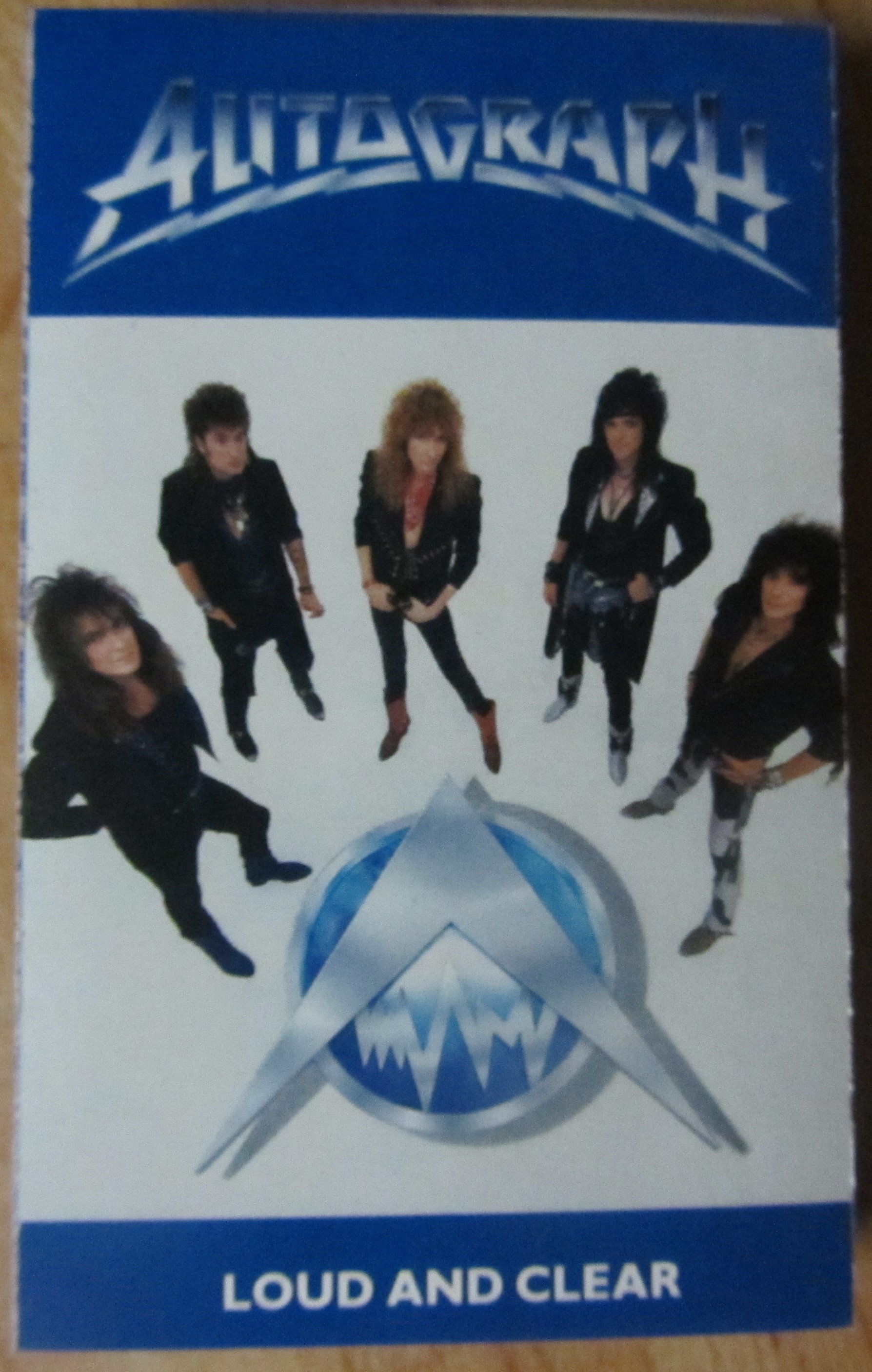
AUTOGRAPH – LOUD AND CLEAR (1987)

When I wrote about the debut Autograph album Sign In Please nearly five years ago to the month, little did I think that I would be writing about another one of the band’s albums. Especially since after the debut album they kind of fell off the map for me and never really had another signature hit. I say this despite the fact that Loud And Clear has been sitting in The Big Box of Cassettes all this time too.

Listening to that first album, I found that for the most part, I just enjoyed the big hit “Turn Up The Radio” and a couple of other tracks that weren’t completely glossed up with the requisite 80’s production sound.

Fast forward to 1987 (making it the 35th anniversary of Loud And Clear‘s release this year) and the band was still plugging away. This third album was a bit of surprise for me. Okay, technically since I’d never heard the album before now, the whole thing was a surprise but the more important part of that statement is that even with an abundance of the same 80’s production style that didn’t quite work for me all the time with Sign In Please turned out to be just fine with this album. Don’t ask me why, I can’t explain it.

The album’s title track opens up Side One and it is pretty much a full-on rocking out experience. I got into the song right from the start and it does a great job of setting you up for the rest of the album.

The first side of the album continues along in a more amped up way for the first four songs. Though the title “Dance All Night” might not seem like it, the way the song came out, this felt like it was intended as a kind of anthemic type of song. The songs “She Never Looked That Good For Me” (a title that would likely not go over well these days) and “Bad Boy” are both solidly uptempo tracks. When listening to “Bad Boy”, I thought that given the song’s title it would be more of an anthem song than “Dance All Night” which I guess goes to show you that pre-judging a song by the title is at least sometimes foolish.

Side One closes out with the song “Everytime I Dream”. Given that this album came out in 1987, I don’t think anyone will be surprised to learn that this was a power ballad. By this point in the decade, it was pretty much a law that a band had to have at least one ballad on an album. In the case of this particular track I don’t think it is all that bad a song overall. I think others might quite enjoy it but it didn’t quite hit home fully with me.

When you get to the second side of Loud And Clear though, there isn’t a slow song to be found. It’s all rockers in a high gear with songs like “Down ‘N Dirty”, “When The Sun Goes Down” and “More Than A Million Times”. I will say that “Just Got Back From Heaven” might cause you to think it was going to be a ballad based solely on the title but it does a darn good job of providing a crackling jolt of rock and roll energy.

However much I liked those four tracks, it was the side opening song “She’s A Tease” that really blew me away! Loud And Clear is just the second Autograph album I’ve ever listened to so it’s not like I have a great back catalog of songs to base this on, but “She’s A Tease” is one of the best songs I’ve heard from the band. I loved the vocals from Steve Plunkett and the band as a whole really rev up the rock on this song. The guitar playing from Steve Lynch is particularly appealing to me on this track.

It’s funny how the album with Autograph’s big hit song didn’t quite thrill me as a whole and then to turn around and discover that an album of theirs that is almost completely under the radar would turn out to be such a big winner with me. Loud And Clear is the kind of album where you get way more than you were probably expecting and I know that I’m going to be very interested in hearing the album more in the future.

NOTES OF INTEREST: The Loud And Clear album went nowhere sales-wise. It rose to only #108 on the album chart. It would be the last album to feature all five original members (Plunkett, Lynch, bassist Randy Rand, drummer Keni Richards and keyboardist Steven Isham). It would also serve as the last album from Autograph until 1997 when they released Missing Pieces.

The songs “Dance All Night” and “She Never Looked That Good For Me” are featured in the Dudley Moore-Kirk Cameron comedy film Like Father Like Son. The band appeared briefly in the film as well.

The video for the album’s title track featured both Ozzy Osbourne and Motley Crue singer Vince Neil.

Autograph is currently active as a four piece band. Bassist Randy Rand is the only original member left in the lineup. Jimi Bell (House of Lords) plays guitar for the band now, which features Simon Daniels on lead vocals and guitar and drummer Marc Wieland.

THE CASSETTE CHRONICLES – SAVATAGE’S ‘HALL OF THE MOUNTAIN KING’

BY JAY ROBERTS

The Cassette Chronicles is a continuing series of mini reviews and reflections on albums from the 1980’s and 1990’s. The aim of this series is to highlight both known and underappreciated albums from rock, pop and metal genres from this time period through the cassette editions of their releases. Some of the albums I have known about and loved for years, while others are new to me and were music I’ve always wanted to hear. There will be some review analysis and my own personal stories about my connection with various albums. These opinions are strictly my own and do not reflect the views of anyone else at Limelight Magazine.

SAVATAGE – HALL OF THE MOUNTAIN KING (1987)

As the sixth year of The Cassette Chronicles was ready to kick off, I was trying to think of what album and/or band I wanted to feature in this year’s first article. I could’ve gone any number of ways but in the end, I thought I’d feature the band that I always welcome in the New Year with.

At midnight each year, I always play a Savatage album as the first music of the year. Well, being the old fart that I am, I didn’t really stay up this year so my first music choice of 2022 was delayed until I woke up in the morning.

But no matter how you look at it, I just don’t think you can go wrong with the Savatage album Hall Of The Mountain King. This was the band’s 4th studio album and though it was the first time they would collaborate with producer Paul O’Neill (who co-wrote four of the songs on the album as well), the band hadn’t yet changed their sound to the more symphonic rock/metal style of the second half of their career and when the rise of Trans-Siberian Orchestra happened. Instead, Hall Of The Mountain King fall squarely on the “power metal” side of the ledger and it just doesn’t disappoint in the least.

The first side of the album has four songs which might seem a bit short but each of these tracks is a phenomenal bit of metal. The opening song “24 Hours Ago” is the perfect kind of table setting song. The heavy and attacking musical tempo gels perfectly with a ripping vocal take from Jon Oliva and immediately seeps into your consciousness from start to finish.

Jon Oliva wrote “Beyond The Doors Of The Dark” on his own and after a slightly restrained delivery in the opening portion of the song, it just bursts out into a metallic frenzy. And Oliva sings with a devilish and gleeful evil sound to his vocals on this one. It is a simply killer track.

Both “Legions” and “Strange Wings” are hard-driving metal songs as well. Quickly paced, each track further burnishes the album’s stellar feel. I particularly love the riff that powers “Strange Wings” throughout the song.

One of the other reasons I thought of this album for the first article of the new year is because after more than a few years lost in the merchandising wilderness, Savatage has recently started offering a number of new items for sale through their website. They’ve reissued a couple albums on vinyl and have various T-shirts and other accessories available as well. One thing that I liked (but haven’t bought) was a blanket with the outstanding album cover art for Hall Of The Mountain King on it. As a devoted fan of the band despite their continued hiatus, I can just see myself curling up with that on a cold winter’s night as I listen to the band’s music.

The second side of the album features six songs with two of them being instrumentals. The first of those instrumental pieces is “Prelude To Madness”, which is inspired by the classical music piece “In The Hall of the Mountain King” by Edvard Grieg. Once I found out about that connection, I actually went out and bought a Grieg compilation to hear that original music. I can’t say that I was overly taken with Grieg’s music but it’s nice to have that little tie-in as a part of my collection.

“Prelude To Madness” serves as a lead-in to the album’s title track, which is a wholly original track and not really tied to Grieg’s work. Between the scene setting musical opening establishing a cinematic vibe and the heavy feel to the rest of the music, listeners will get quite a sensory overload. When you add in the lyrics that seem straight out of a great fantasy novel and Oliva’s killer vocal performance of those lyrics, you can understand why the “Hall Of The Mountain King” song still stands out as one of the band’s best creative endeavors.

“The Price You Pay” is another great sounding heavy rocker but I really sink my teeth into “White Witch” each time I hear it. There’s a brutally precise intensity to the song that never fails to draw me in.

The album’s second instrumental is called “Last Dawn”. Guitarist Criss Oliva wrote the brief piece himself. It runs just 1:15. I like it but even all these years later I can’t decide if it is meant to stand on its own or serve as the lead-in to the album’s closing song “Devastation”.

And believe me, “Devastation” lives up to its title as Savatage quite literally lay waste and bring about the end of the world in this tale of the Four Horseman of the Apocalypse setting out on their ride. It’s another killer track that grabs me every single time.

The Hall Of The Mountain King album was not my first exposure to Savatage…at least as far as I can remember. I am pretty sure I heard the song before I ever bought the album. But I know that I got the album AFTER “discovering” Savatage with the Gutter Ballet album. But that doesn’t lessen my love of this album in the slightest. I read online that Metal Hammer magazine ranked Hall Of The Mountain King as the 8th best power metal album of all-time back in 2019. I think you’d be hard-pressed to argue with that assessment (or at least to lower their ranking) because here we are during the 35th anniversary year of the album’s release and Hall Of The Mountain King still resonates as strongly now as it did when I first heard it for myself. It’s one of the many reasons why Savatage remains my favorite band.

NOTES OF INTEREST: The album has received three reissues since 1987. It was reissued in 1997, 2002 and 2011 and each time the reissues contained bonus tracks and those extra tracks were different each time.

Singer Ray Gillen (Badlands / Black Sabbath) provides background vocals on the song “Strange Wings”. He’s credited as Ray Gillian in the album’s liner notes. Bob Kinkel played keyboards on the album. He would go on to play a big role in Trans-Siberian Orchestra.

Instead of listing what each member of the band played on the album, the liner notes list singer Jon Oliva as “The Grit”, guitarist Criss Oliva as “The Crunch”, drummer Steve ‘Doc’ Wacholz as “The Cannons” and bassist Johnny Lee Middleton as “The Thunder”.

THE BEST OF THE CASSETTE CHRONICLES – YEAR 5

BY JAY ROBERTS

For 2021, life continued to be complicated for the world at large. While there’s no need to rehash what we all know about that, the fifth year brought about some changes for The Cassette Chronicles series as well. Specifically, I had to cut it back to a bi-monthly schedule.

So while there may have been less articles coming out this year, the twenty four albums examined covered the gamut from the heaviest of metal to some of the most successful of 80’s top 40 music. One band was featured in five articles (though I only chose one to represent them), while a look back at the Giant album Time To Burn got me a content warning on Facebook because of the album artwork.

When I started out this series on a lark, I don’t know that I anticipated doing it for five years. But thanks to Limelight Magazine, I’ve been able to write a great number of albums and I look forward to continuing doing that very thing in 2022 as well. It will still be on a bi-monthly schedule but here’s to keeping the flame burning bright for the best in both well known and under the radar album gems.

While I don’t typically rank the albums in any specific numerical order, this year my favorite piece was brought on by quite possibly the saddest news for me personally in regards to the music world. The death of Mike Howe hit me hard and though it took me quite a while to get the words I wanted to say in a coherent fashion, my article on the album Blessing In Disguise balanced not only a look at the album itself but paid tribute to Howe, a vocalist I loved.

So take a look at that one and the other nine albums that you will see below, I think it is worth the trip. I thank everyone for continuing to read the series and I look forward to doing it all again next year. Come along for the ride, won’t you?

Please click on the cassette title to read the article.

#1 – METAL CHURCH –  BLESSING IN DISGUISE

#2 – JUDAS PRIEST – RAM IT DOWN

#3 – TESLA – THE GREAT RADIO CONTROVERSY

#4 – XYZ – HUNGRY

#5 – BLACKEYED SUSAN – ELECTRIC RATTLEBONE

#6 – RATT – DANCING UNDERCOVER

#7 – GIANT – TIME TO BURN

#8 – ELECTRIC BOYS – GROOVUS MAXIMUS

#9 – DIRTY LOOKS – TURN OF THE SCREW

#10 – NEVADA BEACH – ZERO DAY

THE CASSETTE CHRONICLES – CHEAP TRICK’S ‘STANDING ON THE EDGE’

BY JAY ROBERTS

The Cassette Chronicles is a continuing series of mini reviews and reflections on albums from the 1980’s and 1990’s. The aim of this series is to highlight both known and underappreciated albums from rock, pop and metal genres from this time period through the cassette editions of their releases. Some of the albums I have known about and loved for years, while others are new to me and were music I’ve always wanted to hear. There will be some review analysis and my own personal stories about my connection with various albums. These opinions are strictly my own and do not reflect the views of anyone else at Limelight Magazine.

(WRITER’S NOTE: This is the final article in The Cassette Chronicles series for 2021. There will be a best of highlight article in the next week or two. The series will return for another year in early 2022. Thank you for reading!)

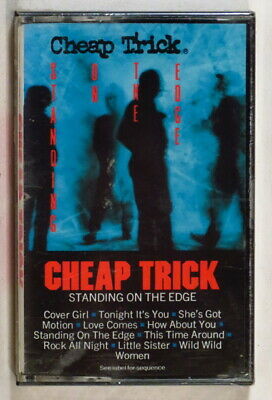
CHEAP TRICK – STANDING ON THE EDGE (1985)

Regardless of the acclaim, or lack thereof, Cheap Trick’s eighth studio album Standing On The Edge receives from either the fans or from critics past and present, it was this album that started everything for me with the band.

While the album was released in 1985, I think it was a few years after the fact when I actually came into possession of the cassette copy that I still have to this day. I remember that because when I went to my junior prom in 1988, I was trying to play it in the limo a few of us got together for the event but only a couple of songs ever got played because those other people turned out to have zero musical taste.

That aside though, I can truly say that everything about Standing On The Edge did and still does resonate with me to this day.

The ten track album doesn’t have a flaw in my opinion. On the first side of the album, things kick off in a beautifully hard rocking Rick Neilsen-written song with “Little Sister”. It’s got a playful innuendo soaked set of lyrics that are so memorable that you don’t have to work hard to remember them and sing along to every time you hear the song.

That leads into the album’s lead single, “Tonight It’s You”. The single didn’t quite make the Top 40 singles chart but it did come close and it is a solid power ballad type of track, with a slightly more rocking feel in the song’s chorus. If you were someone who communicates your feelings towards your significant other (or your potential significant other), this is definitely the kind of track you’d use for that purpose.

“Love Comes” is another slower type track. It’s full of melodic hooks and lyrically sentimental but the midtempo pace doesn’t let it get bogged down into overt sweetness that would give one a toothache. (The song got re-recorded for the “lost” Robin Zander solo album Countryside Blvd. in 2010.)

The song “She’s Got Motion” is a great showcase for the harder edged and faster paced side of singer Robin Zander’s vocals. I love the way he interprets the lyrics for his performance on this track. The edgier side of his vocals gets a great work out on the more rocking tracks throughout the album. The side one closing “How About You” is another great example of Zander just attacking the song lyrics with a frenzied approach.

The second side of Standing On The Edge kicks off with the album’s title track and it blazes fast and furious with both music and Zander’s vocals.

While Tom Petersson was out of the band during this time, Jon Brant was the band’s bassist. And between he and Bun E. Carlos, the rhythm section was pounding out some great sounds to form the foundation of the sounds. There was also a heavy dose of electronic drums added in the mixing of the album but overall, everything just sounds great.

The song “This Time Around” is a track that once again showcases the band’s softer side but wisely balances out the slower portions of the song with a bit more upbeat pacing in spots.

The album closes out with three incredible hard rocking tracks. “Rock All Night” has a crushing drum sound powering through the entire track and Cheap Trick sounds so “heavy” here. This is a real monster track that doesn’t get nearly the credit it should.

“Cover Girl” is an explosive rocker that speeds along in a fast and furious manner, yet doesn’t sacrifice any of the melody that is woven into the song. I like the way the vocals are layered throughout the track as well. It’s guaranteed to get your blood pumping and is a particular highlight for me even now.

The closing song “Wild Wild Women” isn’t quite as fast paced as “Cover Girl” but it still rocks pretty hard. As I listened to the album back in the day, I would sing along to this song and mimic the various intonations Robin Zander has in his vocals for the song. Granted, I can’t carry a tune in a bucket, but the effort was there at least.

For an album that is just under 40 minutes long, Standing On The Edge is a perfect summation of the band to me. It’s full of hard rocking sounds guaranteed to flood with you adrenaline, but has the kind of melodic sound that continues to endear the band to listeners all these years later. I saw a review quoted on the album’s Wikipedia page that referred to Cheap Trick as the “pranksters of pop”, and I think that’s a pretty good compliment.

But while the band never seems to be having anything less than a blast with their music, don’t let the whole pranksters aspect make you forget that Cheap Trick knows how to craft perfect rock and roll / pop songs that stand the test of time.

I own every studio album (and more than a few live, compilation and archival releases) that Cheap Trick has ever released. And while the band has a lot of classically appreciated albums that get far more respect, I still come back to Standing On The Edge as “MY” Cheap Trick album. If I’m trying to get someone into the band, I still pull it out as an example of everything that is great about the band!

NOTES OF INTEREST: Jack Douglas was the producer for Standing On The Edge. He produced the band’s self-titled debut album in 1977 as well as the band’s Found All The Parts EP. However, according to Wikipedia, Tony Platt handled the mixing of the album, which is why the electronic drums and keyboards play a bigger role in the album than had apparently originally been intended.

The 2010 reissue of the album (which I’m now going to have to track down a copy for myself) has five bonus tracks on it.

Mark Radice, who played keyboards for the Standing On The Edge album, also co-wrote eight of the ten songs on the album with the members of Cheap Trick.

THE CASSETTE CHRONICLES – BLACK ‘N BLUE’S ‘WITHOUT LOVE’

By JAY ROBERTS

The Cassette Chronicles is a continuing series of mini reviews and reflections on albums from the 1980’s and 1990’s. The aim of this series is to highlight both known and underappreciated albums from rock, pop and metal genres from this time period through the cassette editions of their releases. Some of the albums I have known about and loved for years, while others are new to me and were music I’ve always wanted to hear. There will be some review analysis and my own personal stories about my connection with various albums. These opinions are strictly my own and do not reflect the views of anyone else at Limelight Magazine.

BLACK ‘N BLUE – WITHOUT LOVE (1985)

More than three years ago, I wrote about Black ‘N Blue’s third album Nasty Nasty. In the opening of the article, I mentioned that the album had more of a raw production sound to it after a more streamlined sound failed to break the band to a bigger audience.

That attempt at a more streamlined sound was this second album from the band. While I’ve known of the band for decades, I didn’t spend a whole lot of time checking out their music and so as I listened to Without Love for this article, I was hearing it for the very first time. I guess thirty six years from the album’s original release qualifies as being late to the party.

While the band’s timing and material is usually cited as the reason for why they didn’t become more well-known, I have to say that I was pleasantly surprised by this album. I do like a real melodic hook to the rock I listen to, so as Without Love opened with the track “Rockin’ On Heaven’s Door”, I was quickly taken with the track. It’s a fast paced rocker (a description that fits most of the eleven songs on the album) that has a great instaneous hook that draws you in.

Black ‘N Blue didn’t quite follow that opening song up strongly with the next two songs on Side One of Without Love though. The album’s title track is good but doesn’t quite thrill me the way the first song did and “Stop The Lightning” was shoulder shrug inducing for me, just a “meh” kind of track.

But the first side does come back to form strongly with the song “Nature Of The Beach”, which is an ode to living life on said beach. It’s got a great feel to the music and I like the lyrical / vocal take from Jaime St. James. As for the side closing “Miss Mystery”, that’s a song that has such a catchy delivery I found that I wished it had become a hit for the band.

While I wasn’t totally sold on the entirety of Side One, when I flipped the tape over I found that I really loved Side Two.

The second side of Without Love kicks off with “Swing Time”, which much like “Rockin’ On Heaven’s Door” is a side opening rocker guaranteed to hook you fast. I loved the song.

While I thought the “Bombastic Plastic” song title (and ensuing use of it in the chorus) came off sounding a bit silly, the music for the track more than made up for it. The song “Strange Things” opens up with a slower delivery that deepens the music’s feel and as it goes on, a more rocking tempo takes over. The opening part of the song seemingly hinted at a kind of cinematic type of song which I think would’ve played out great. That said, I liked how the band took both styles in the song and melded them into one great song.

There’s a definitive stomp to the groove driven bluesy rock sound on “Two Wrongs (Don’t Make It Love”). For those who love that overt blues rock sound in their music, you will love this one.

Black ‘N Blue’s cover of the Aerosmith song “Same Old Song And Dance” came out rather well. It pretty much plays it straightforward with how they perform the track, but the weird thing is that I’m not sure how many members of the actual band were involved in the recording for this one. If you look at the liner notes, other than vocals and lead guitar, it seems everything was played by guest musicians (including noted music producer Bob Rock on rhythm guitar). Call me crazy but what’s the point of doing a cover if most of your band doesn’t appear on the track?

Of course, if you want the true spark track that drives my enjoyment of Without Love, look no further than “We Got The Fire”. This song is a killer rock track that shows off the band in spectacular fashion. While I have a ways to go in exploring all the songs Black ‘N Blue recorded, this one is definitely a song that would make my best of list for sure.

It’s strange that an album that was so relatively unpopular back in the day that the band overhauled their sound the next time out would be one I enjoyed so much. I believe it is available on CD and I just might find myself upgrading because Black ‘N Blue’s Without Love is one hell of an entertaining release!

NOTES OF INTEREST: The band co-wrote the title track and “Miss Mystery” with Jim Vallance, the longtime songwriting partner of Bryan Adams.

Vallance played “Simmons drums” on “We Got The Fire”. The song featured Loverboy singer Mike Reno on backing vocals and Toto’s Steve Porcaro as one of three musicians credited on keyboards for the track. Adam Bomb contributed “additional guitars” to the song as well.

The band’s cover of Aerosmith’s “Same Old Song And Dance” being included on the cassette edition of Without Love seems to have been forgotten in terms of online research. I looked at the Wikipedia entry for the album and the song is only listed as a bonus track for the CD version.

THE CASSETTE CHRONICLES – JUDAS PRIEST’S ‘RAM IT DOWN’

By JAY ROBERTS

The Cassette Chronicles is a continuing series of mini reviews and reflections on albums from the 1980’s and 1990’s. The aim of this series is to highlight both known and underappreciated albums from rock, pop and metal genres from this time period through the cassette editions of their releases. Some of the albums I have known about and loved for years, while others are new to me and were music I’ve always wanted to hear. There will be some review analysis and my own personal stories about my connection with various albums. These opinions are strictly my own and do not reflect the views of anyone else at Limelight Magazine.

JUDAS PRIEST – RAM IT DOWN (1988)

In the week leading up to the writing of this article, thanks to a big storm I had no power for 3 days. So my original plans to pull a cassette out of The Big Box of Cassettes and write about that was kind of sidelined.

I couldn’t really do any research on an album I wasn’t familiar with already. So this week’s write up on the Judas Priest album Ram It Down comes from my own personal cassette collection and it is an album that I am indeed rather familiar with. I still had to do some research but at least I knew the album beforehand. In fact, it was the first Judas Priest album I ever bought. And that might be at least part of the reason why it still stands the test of time for me and remains one of my favorite albums from the band.

I didn’t really know much about the band until I got this album. Pretty much my first memory of the band was when I was attending Boy Scout camp (try not to laugh at that notion) and one of the counselors had a cassette holder full of Judas Priest cassettes. I didn’t hear any of them at the time but I remember seeing the line up of albums in the holder. I don’t remember the counselor’s name but he was a huge fan of the band as you might imagine.

Of course, my lack of knowledge about the band was turned around when I got the Ram It Down album. Before I’d even listened to any of the music, I was struck by the stunning artwork. I love the visual of the fist crashing down from the sky onto the planet (presumably Earth itself).  You can’t say it doesn’t catch your eye.

But for all that I love the art, when the album started I found myself immediately hooked. Right from the Rob Halford scream on the title track that opens the album, this was an album I knew I was going to love. But it wasn’t just that scream that made the “Ram It Down” song stand out to me. The song’s rip-roaring frenetic pace captured my imagination as well. The speed at which the guitars pummelled your ear drums was just relentless.

The track “Heavy Metal” is the kind of anthemic rocker you might expect from Judas Priest if you have any kind of history with the band. I loved the killer guitar solo that powered the intro to the track. The fiery pacing of “Love Zone” and “Come And Get It” made the tracks winners in my eyes back in 1988 as well as when I listened to it for this article.

When I decided to write about the album, I mentioned to a friend of mine that I was working on an article that would be as hard as iron and as sharp as steel. Which is of course a lyrical line from the Side One closing number “Hard As Iron”. The song has a nice little edgy feel to it and Halford delivers those vocals superbly.

The first side of the album is just one great track after another in my book and there’s not really much of a let up when you flip the tape over to Side Two.

For me, the song “Blood Red Skies”, which opens the second side, is one of my favorite Judas Priest songs. I loved the way the band established the song with a moody atmospheric opening part. But as the vocals kick in, you can’t help but imagine that the song is the blueprint for a science fiction screenplay or novel set in some kind of dystopian future. After the first verse of lyrics, the song does grow into more of a straightforward rocker but in all, this is just an incredible song.

I’m also a big fan of “I’m A Rocker”. It’s another anthem track, this time paying tribute to the rock and roll lifestyle but it can also be easily adopted by the metal fandom as their own musical declaration of intent too.

I don’t know how the rest of the Priest fanbase feels about the band’s cover of Chuck Berry’s “Johnny B. Goode” but I’ve always kind of liked the song. It was done for the comedic movie Johnny Be Good starring Anthony Michael Hall but it also ended up on Ram It Down as well. The thing I vaguely remember about the song is that upon its release there was an article that had the band saying if they didn’t like how the song turned out as they recorded it, it never would’ve seen the light of day. I have no idea where I read that but it has stuck in my memory all these years.

The song “Love You To Death” is a bit slower in tempo than most of the other songs on Ram It Down but it still has a beat to it that kind of makes you want to stomp your feet to it. And the inclusion of the sound of a whip in the mix drives home the fact that the song can have more than one meaning to it.

In the more than three decades since the release of Ram It Down, I’ve always considered the album closing “Monsters Of Rock” track to be the one real down note about the album. It always seemed so plodding in nature that it just felt completely out of place alongside the rest of the material. And while the song certainly hasn’t changed tempo in all these years, for some reason as I listened to it for this piece, I found myself struck by how much I was actually appreciating the song. Perhaps it just hit me just right this time, the result of years of listening to the song. But I really was quite surprised to find myself enjoying the song. It was almost like I was “finally” hearing it for the first time.

Ram It Down was my first Judas Priest album and to this day it remains one of my favorites. It is just chock full of great material fueled by a killer rhythmic foundation, screaming guitars from Glenn Tipton and K.K. Downing and the vocals of the Metal God himself, Rob Halford. If you can’t appreciate the greatness of this album, I just don’t know what there is left to say to you. But in all honesty, you really have to give the album a new listen and I think you’ll discover that it is just as strong an album as the more readily acknowledged classic albums from the band.

NOTES OF INTEREST: Despite not being overly well received by critics, the Ram It Down album did achieve gold certification. The 2001 remastered CD edition has two live songs included as bonus tracks. (I own that remastered edition as well as the cassette edition.)

Two songs recorded during the Ram It Down sessions that didn’t make the cut for the album did eventually get released on the remastered CD editions of other Judas Priest albums. The song “Thunder Road” appeared on Point Of Entry. Meanwhile, the song “Fire Burns Below” showed up on Stained Class.

According to the online information about the album, though he is credited on the album, drummer Dave Holland didn’t play on many of the Ram It Down songs. The band opted to use a drum machine for the most part. This was the last album he was a part of with Judas Priest. Holland passed away in 2018.

Original magazine advertisement for Judas Priest’s Ram It Down.

THE CASSETTE CHRONICLES – DANGEROUS TOYS’ ‘HELLACIOUS ACRES’

By JAY ROBERTS

The Cassette Chronicles is a continuing series of mini reviews and reflections on albums from the 1980’s and 1990’s. The aim of this series is to highlight both known and underappreciated albums from rock, pop and metal genres from this time period through the cassette editions of their releases. Some of the albums I have known about and loved for years, while others are new to me and were music I’ve always wanted to hear. There will be some review analysis and my own personal stories about my connection with various albums. These opinions are strictly my own and do not reflect the views of anyone else at Limelight Magazine.

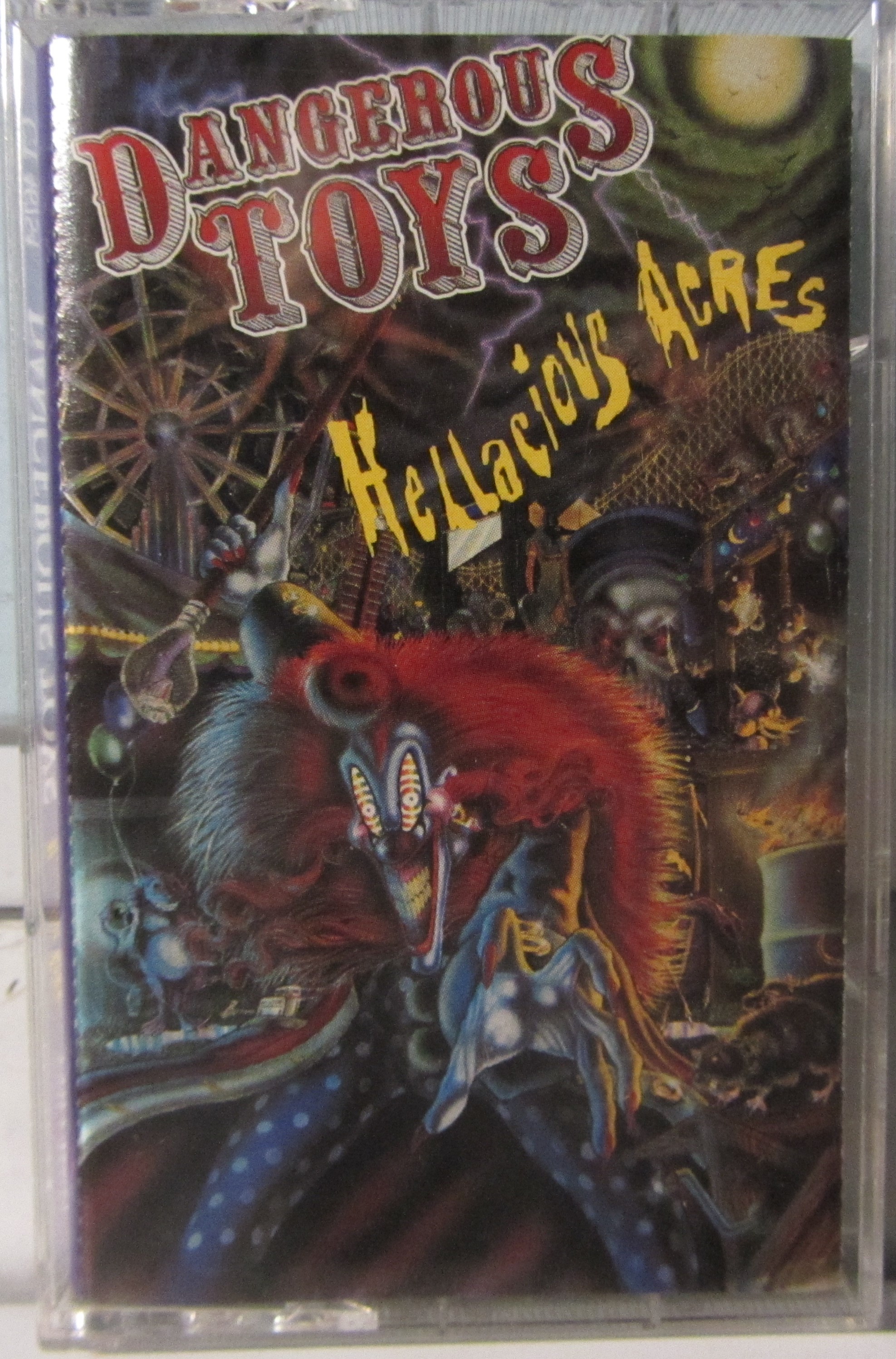
DANGEROUS TOYS – HELLACIOUS ACRES (1991)

More than four years ago, I wrote an article in The Cassette Chronicles series on the self-titled debut album from Dangerous Toys. And while I loved the three hit tracks and one other song a lot, I felt most of the rest of the tracks on the album fell a bit short.

I don’t recall that I ever owned the Hellacious Acres (which is just a great album title!) when it was first released. So it didn’t surprise me when I looked at the track listing on the back cover of the cassette liner notes and discovered I didn’t automatically remember any of the songs.

Of course, that proved to be somewhat inaccurate as I listened to the album. The second song on Side One of the album is “Gimme No Lip” and given that it was released as a single and had a video made for it, I know that I had to have seen and heard it back then. I guess I’ll have to chalk it up to just not hearing it much over the years and I’d forgotten that the song was on this album.

That was the only faulty memory problem with the album however. I didn’t recall hearing any of the other songs and that’s a pretty good thing because it let me discover that Hellacious Acres had plenty of great material to offer.

Side One opened with “Gunfighter” which might conjure up some kind of Old West image in your mind. And given the mood setting style of the song’s intro, you would at first be proven right. But after that intro, the song pretty much explodes into a hard hitting rocker that is about as far away from the days of dueling in the streets as you can get. Combine the relentless pace of the music with vocalist Jason McMaster’s rapid fire vocal delivery and you have just a fantastic song on your hands.

The rest of Side One seemed to channel an underlying sense of chaos as the band would continue on their hard driving pace with songs like “Sticks & Stones” and “On Top”. The latter song is fueled by sex-drenched lyrics but it is a pretty good track all around. While the band was on fire on the side closing “Sugar, Leather & The Nail”, I didn’t quite find myself drawn to the song that much.

When Dangerous Toys slowed down the pace a little for the song “Best Of Friends”, it still had a bit of an edge to the music. The song dealt with memories of a lost friend and while it did capture that nostalgic kind of feeling, it left out much of the sappiness and kept the song from being a full-on ballad.

The second side of the album opened with the song “Angel N U”. Tempo wise, the majority of the track moved from a mid-to-up tempo kind of groove. And it wasn’t bad. But when the song blows up into an almost out of control fiery pace over the last portion of the song, it didn’t work that much for me. It felt like having a bucket of cold water thrown on you. Up until that over-the-top ending, I was enjoying the song.

When a band covers a classic track, they seem to always feel a need to do something that puts their own stamp on it. Hearing Dangerous Toys cover Bad Company’s “Feel Like Making Love” had me wondering what they were thinking. What made that song such a classic was just how perfectly constructed the song was and how the finished track sounded. But this version of the song is just BAD! The band completely overplayed the music and took any kind of charm the original had. Feel like making love? No, this cover made me feel like fast forwarding the tape.

Thankfully, the last three songs of Side Two did a solid job of redeeming those two mistakes. A video was made for the album’s second single “Line ‘Em Up”, a fast paced rocker that catches your ear pretty quickly and you ride the wave of enthusiasm the band has in their performance. You can say the same thing for “Gypsy (Black-N-Blue Valentine) which just conjures up this cool vibe when I listened to it.

The album’s closing song “Bad Guy” is an amped up rocker that leaves you both exhilarated and exhausted with how the band attacks on all fronts.

While the self-titled Dangerous Toys album may have had the “hits”, I think Hellacious Acres might just have offered more when it comes to the top-to-bottom track listing. Yes, there were some tracks that didn’t really do it for me, but for the songs I did like…just WOW! It’s the 30th anniversary of the album’s release and you’ll find Hellacious Acres is just jam-packed with fiery aggressive rock and roll that will have you rocking out hard and fast!

NOTES OF INTEREST: After not playing on the first album but being pictured on the back cover, guitarist Danny Aaron did play on Hellacious Acres. However, it would be the only Dangerous Toys release he appeared on as he left the band during the tour for this album.

With the self-titled album having enjoyed some mainstream success (it would eventually be certified gold, the disappointing sales of Hellacious Acres found the band’s record label dropping them while they were out on the Operation Rock & Roll tour with Judas Priest, Alice Cooper, Motorhead and Metal Church.

While there had been previous statements from Jason McMaster that there wouldn’t be any new music from Dangerous Toys, according to Wikipedia guitarist Scott Dalhover said in 2018 that they were working on new music. Also, in 2019 the band performed their first new music, the song “Hold Your Horses”, in 24 years. Still, there’s been no new officially released music made available. The band is still playing the occasional live show, though I imagine that like most bands they didn’t do any shows in 2020.

THE CASSETTE CHRONICLES – CULTURE CLUB’S ‘COLOUR BY NUMBERS’

By JAY ROBERTS

The Cassette Chronicles is a continuing series of mini reviews and reflections on albums from the 1980’s and 1990’s. The aim of this series is to highlight both known and underappreciated albums from rock, pop and metal genres from this time period through the cassette editions of their releases. Some of the albums I have known about and loved for years, while others are new to me and were music I’ve always wanted to hear. There will be some review analysis and my own personal stories about my connection with various albums. These opinions are strictly my own and do not reflect the views of anyone else at Limelight Magazine.

CULTURE CLUB – COLOUR BY NUMBERS (1983)

First off let me just type the following: guitarist Roy Hay, bassist Mike Craig and drummer Jon Moss. It might seem a strange way to start off an article about Culture Club’s smash hit second album Colour By Numbers, but I think it is worth mentioning the three members of the band who aren’t Boy George. Let’s face it, when it comes to Culture Club, despite the heavy contributions to the songwriting and the actual playing of the music, it is no great statement of fact that Hay, Craig and Moss are deeply overshadowed by the monolithic figure Boy George became in the early and mid-1980’s.

When this album was released in 1983, I was still thoroughly mixed up in my love of all things Top 40 pop music. Sunday mornings were given over to Casey Kasem’s American Top 40 countdown radio show and I had my big notebook full of week-to-week listings of each week’s chart.

And I have no problem admitting that I loved the song “Karma Chameleon”. That song still has to be seen even to this day as the group’s signature hit song. The funny thing thought is that despite loving the song and the other singles from the album, I never bought Colour By Numbers at the time. I can’t remember my reasoning for that but it never found its way into my collection until I started buying cassettes for this series.

While listening to the album, I was quickly reminded of the four hit singles. But when I first pulled the cassette out of the box, I took a quick peak at the track listing and I really only recognized two of the songs. Besides “Karma Chameleon” (which leads off the first side of the album and rose to #1), the song “Church Of The Poison Mind” (which was a Top 10 hit) is the only other song I remembered solely from the title. I find that strange for me because the song “Miss Me Blind” was a Top 5 single and “It’s A Miracle” peaked at #13. However, I don’t think either of those songs really gets much airplay on the safe for work radio station that I listen to at my job and so they seemingly faded just a bit from my memory. But as soon as they started playing on my cassette, I remembered them quite well.

For “Church Of The Poisoned Mind”, I loved the raucously upbeat tempo of the song. For “Miss Me Blind”, the fast pace and the overall construction of the song made me enjoy it. Both of those tracks are on the album’s second side. “Karma Chameleon” and “It’s A Miracle” are the two lead tracks on Side One and both are fast moving numbers as well.

As for the rest of the “album tracks” on Side One, I thought the ballad “Black Money” and “Changing Every Day” were okay. Nothing to really write home about but certainly not a drag on the album either. But the last track on Side One is a piano-centric track called “That’s The Way (I’m Only Trying To Help You)” was phenomenal! As I said, I’d never heard the remaining six songs that weren’t singles in the US before now, so this was a big surprising discovery for me. If I’m not mistaken, pretty much the entire musical soundtrack for the song came from the piano (performed by Roy Hay, if the online material is correct). But the vocal performance from Boy George and I’m assuming Helen Terry (the only female musician credited in the liner notes) was so impressive.

And that’s the thing, isn’t it? For all the handwringing that Boy George’s image brought from everyone that wasn’t the music’s target audience, he had one hell of a voice for the band’s material. I know that British new wave pop music isn’t exactly what most people would expect me to be writing about but I did quite enjoy getting to focus not only  on the music of Culture Club but hearing the breadth of Boy George’s singing was kind of impressive to me.

After Side Two of Colour By Numbers opened with the two songs that would become big singles, the remaining songs didn’t quite capture my imagination like Side One did. “Mister Man” and “Stormkeeper” trod the mid-tempo road but each song kind of just fell flat. My more metal music outlook couldn’t help see the song title “Stormkeeper” and think of it being some kind of dark and intense rocker. Yep, you guessed it, that couldn’t be further from the truth if it tried.

The closing song “Victims” was never released as a single in the US but the ballad did get released that way in both the UK and Australia. However, I can understand why a US release didn’t happen. It is just a flat out pedestrian at best song. Without couching my opinion, I didn’t really like it at all.

That said, I do have to admit that as I finally got to listen to Colour By Numbers for the first time,  I was surprised at just how much I liked most of the album. By the time this article is published, it will be just three days short of 38 years since the release of this benchmark Culture Club album. I think that any pop music fan would do well to avail themselves of the anniversary to take the opportunity and give Colour By Numbers a new listen. You just might be surprised to discover that it still holds up remarkably well all these decades later.

NOTES OF INTEREST: The Colour By Numbers album has sold more than 10 million copies since it was first released, including more than 4 million in the US. It peaked at #2 on the Billboard albums chart, stuck behind Michael Jackson’s Thriller album.

When the album was reissued in 2003 it came with five additional bonus tracks.

Singer Helen Terry performs backing and/or accompanying vocals on five Colour By Number tracks. She had a Top 10 hit of her own in 1984 called “Love Lies Lost” and released the album Blue Notes in 1986. She would go on to become the executive producer of the BRIT Awards TV show.

My cassette copy of Colour By Numbers just barely made it through the listening process, so I’m likely to find myself upgrading to a CD copy of the album at the earliest opportunity.