Category Archives: Features & Interviews

Flight of Fire takes off on the ‘Path of the Phoenix’

BY JULIA CIRIGNANO

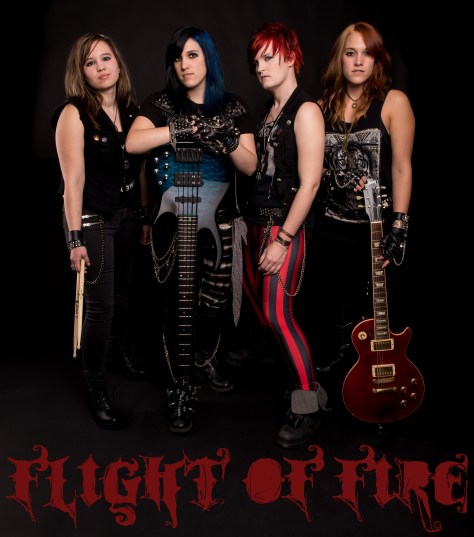
Fight of Fire (Submitted Photo)
Fight of Fire won Limelight Magazine and the Narrows Center for the Arts “Opening Act Contest” on Sept. 8th. (Submitted Photo)

Consisting of Dorian Maverick, Tanya Venom, Tia Mayhem, and Kat Dukeshire, Flight of Fire brought 110 percent to their performance at the “Opening Act Contest” which was hosted at the Narrows Center for the Arts in Fall River Mass., on Sept. 8th. Every crazy thing they could think of doing on a stage, they did — and they did it extremely well.

Although there were many other talented acts, they were the clear winners of the contest before it was even announced. As a result, they will get to open for Limelight Magazines 10th Anniversary Bash with Lita Ford at the Narrows Center on Nov. 1, 2016. This show is almost sold out. Remaining tickets can be purchased HERE.

In typical rock ‘n roll clothes, Flight of Fire entered the stage. The lights were dim, but the four women on stage had twinkles in their eyes. Only they knew what’s in store and it was truly something to be excited about.

Without any warning, lead singer Maverick spontaneously combusted into an acapella/screamo intro to their first song, “Rockstar Life.” Within seconds, Venom (lead guitar), Mayhem (bass) and Dukeshire (drums) joined into the chaos. During their nearly fifteen minutes on stage, the band unleashed every last drop of angst and emotion boiling within them — resulting in the pure eruption of everything the audience expected them to be and more.

Flight of Fire took the audience through hell and back. There wasn’t one moment where I was bored, since they put their all into every note they played. The band played as one organism — feeling each beat from their feet to their fingertips. With ear to ear smiles, each band member showed their true passion and love for what they were doing.

With bright red hair and empowering confidence, Maverick rocked the stage with charisma and attitude. She showed both strength and vulnerability. After rocking out during their first song, the band surprised the audience by toning it down. They played one acoustic song where all four girls laid out their emotions and love for folk music.

Venom and Mayhem also rocked the stage with an undeniable connection to both the music and each other. This was the result of being identical twins. Rocking different instruments and hair colors, their special bond was still evident, especially when they suddenly dropped their instruments and jumped onto the drum set together. Holding hands, and each holding one drum stick, the twins played the last half of “My Last Gamble” playing twin drums. During this, Dukeshire left the kit and casually picked up the bass and Maverick picked up the guitar, as it’s totally normal for rock bands to completely switch instruments during a song.

Flight of Fire left The Narrows stage a pile of ashes, frankly, making it difficult for the band’s playing after them.

As a judge for the contest and also a newfound Flight of Fire fan myself, I was given the opportunity to sit down with Maverick and Mayhem to talk about the contest, their thoughts about their careers, and their plans for the future.

“That was amazing,” said Maverick about winning the contest. “There were some really good musicians there that night and it was an honor to be a part of it at all. Then winning was just totally amazing.”

Flight of Fire shocked their audience at The Narrows with their performance and are also known for many other excellent shows. Maverick talked about the twin drumming they performed.

“The twin drumming was actually my idea,” she said. “The twins do so many amazing things together all the time. They seem to read each other’s minds basically and in practices they do this crazy stuff and I’m like ‘wow, that could be something really cool on stage’.”

“So we thought of doing the twin drumming and it was so easy for them. It was just ridiculous,” she continued. “We decided to work it into ‘My Last Gamble’ and have Kat take the bass there and do the whole switch off which is really fun for people to watch. We always get a good response.”

Mayhem talked about playing with her twin Tanya and the special bond they have.

“I love it honestly, playing with my sister,” she said. “We have such a unique bond. Like, not everyone is close to their siblings, but Tanya and I have always been close. We grew up together, we did almost everything together. Pretty much everything we could do together, we did.”

Mayhem goes on to explain that while their bond is exceptional in their day-to-day lives, they have also managed to use this connection to their advantage on stage.

“We don’t have that intense competition, we just have like, we build each other up and we work together,” she said. “I play bass, she plays guitar, and so we’re assisting each other in that way and playing off each other. It’s really fun. And yeah, we have this kind of connection. I just feel like we always know what each other’s kind of thinking. You know, you can sense what they’re feeling and kind of assume if you feel one way, she feels that way too. We kind of use that vibe while making music.”

Although Flight of Fire is purely a rock band, they have been inspired by folk and many other types of music.

“Our variety’s really important to us. When I met the twins at Berklee, they came from a pure classic rock background, and, at the time, I was actually coming from a singer/songwriter kind of background. So when we started collaborating together, we got a lot of different sub-genres in there,” Maverick said.

Maverick talked about one genre that has especially inspired the band.

“As far as folk artists that inspire Flight of Fire and me, I’m hugely inspired by Paul Simon and Simon & Garfunkel,” she said. “Also, Zeppelin has been a huge inspiration because they have so many acoustic and folk songs and I think that is where ‘My Last Gamble’ came out of. [It] was the combination of those two things. It’s got some of the southern, foot stompin’ thing going on.”

With Flight of Fire excelling at a rock and rock, what’s next? Surprisingly enough, all members of the band, except for Dukeshire, went to Berklee College of Music. They studied classical music and enjoyed their studies due to their natural love for gaining knowledge.

“Me and the twins are all classically trained,” said Maverick. “I played violin, Tia played bass clarinet, and Tanya played flute.”

While those instruments and classical sounds were incorporated into some of their earlier songs, Flight of Fire is now purely rock.

Maverick also talked about their majors at Berklee.

“The twins both majored in film scoring, writing music for movies and songs, and digital media,” she said. “Then, I double majored in songwriting and composition, composition being classical composition. I think that’s what definitely influenced us.”

Although Maverick makes it clear that they use the knowledge they gained from Berklee, she doesn’t believe that you need to go to Berklee to become a successful rock musician. She explained how she and the twins decided to go to Berklee not necessarily because they wanted to be rock stars, but because they wanted to learn as much as they could about their number one passion in life: music.

 “We all honestly love school. I don’t think many people who see us live would assume that we’re geeks, but we’re pretty much geeks,” Maverick admitted. “For us, it made sense because we’re all fascinated by every aspect of music on a technical scale, so we wanted to learn everything we could. But you certainly do not need to do that to play rock. We like to have a marriage of both worlds – the technical side and the pure passion side.”

Mayhem explained the band’s main message.

“The main message we want to send with our music is that no matter who you are, where you come from, or what you do, you can achieve whatever you want if you set your mind to it and you never give up,” she said.

Mayhem continued to say that they want to inspire people to, “do what they want to do in life, because that’s a good life.”

“If you’re doing what you want and you’re being who you what to be, then you’re not wasting time, you’re not wasting life. Even if you might not ever get there, just striving for that makes you feel more like yourself,” she said.

Flight of Fire’s favorite and so far biggest show they have every played was when they opened up for Bon Jovi at Ford Field Stadium in Detroit. Since then, they have become addicted to big stages. The band feels more comfortable the bigger the stage is because they can do so much more with their performances.

Maverick reminisced about the Bon Jovi football stadium stage.

“To hear our voices and instruments echoing off the back of the stadium…We love to run around and be crazy and do the exciting stuff that we do,” she said.

Flight of Fire plans to release their newest album titled Path of the Phoenix next weekend.

Flight of Fire will release "Path to the Phoenix" on Oct. 1, 2016.
Flight of Fire will release “Path to the Phoenix” on Oct. 1, 2016, with a CD release party at Zobra Music Hall in Lowell, Mass.

 “It’s going to be released on October 1st and the release party is at Olympia’s Zorba Music Hall (located at 439 Market St.) in Lowell, Mass. We are having a reunion show of the amazing ‘80’s, all female band Lizzie Borden and the Axes are playing with us that night. Very, very cool.”

 To purchase tickets to this show, click HERE.

“The album itself is a concept album. It tells the story of a woman who goes through tons of trials and horrible things, finds her own inner strength, and is re-born through the strength of that fire. It’s pretty cool,” said Maverick about Path of the Phoenix. “We have tons of concept art that we’re going to be releasing along with the album. Each song has a tarot card that was created by our amazing artist Lucas Seven.”

Produced by Liz Borden, the album will have seven tracks, two which have already been released: “Better Off Without You” and their newest single “My Last Gamble”.

Limelight Magazine is the first to premiere their newest music video for the song “My Last Gamble.” Please watch it below and spread the word about this amazing band!
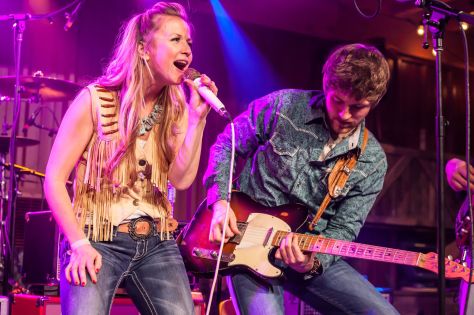
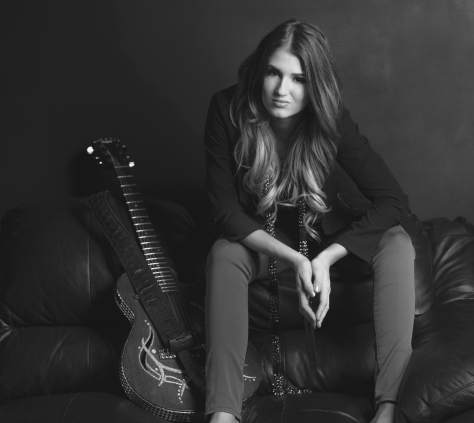
Martin & Kelly: A duo that bridges the gap between traditional and modern country music

Martin & Kelly (Photo by Rob Wile Photogrpahy. Submitted photo by Martin & Kelly.)

BY JULIA CIRIGNANO

Martin & Kelly are a country duo from New England consisting of Jilly Martin and Ryan Brooks Kelly. With a combination of modern country and traditional twang, these musicians have stunned the country music industry. This duo has reached new heights by combining their talents. They both had success as solo acts, but have received an even better reaction as a duo.

Along with their obvious talent, Martin & Kelly also have youthful energy and pretty smiles. They released their debut self-titled EP. this April and grabbed the attention of many country fans.

In a phone interview with Limelight Magazine, Martin explained how Martin & Kelly formed.

“We started playing together when Ryan was doing an EP and he needed a female part to sing a debut that he had written,” she said. “When we were in the studio, we decided that we really liked how our voices blended together. So, I started going out to a couple shows with him and we got a pretty good response when we were playing together. We figured we might as well try that and it kind of just highlights both of our strong points when we’re on stage together.”

Martin explained why she feels they work so well together as a duo.

“Our harmonies blend really well together, so both of our voices and Ryan’s guitar playing is great,” she said. “I think he’s the best around; he’s definitely the best that I’ve played with.”

Kelly talked about the joys of working together on their first EP as a duo.

“A collaborative effort is always fun,” he said. “Both of us come from a little bit different backgrounds where I typically play stuff that’s geared towards guitar players or singer/songwriter. I really like very traditional country singers. So, I think it was nice to finally work with someone where I was enjoying everything. You know, you can bounce ideas off one another.”

Both Martin and Kelly are inspired by modern and traditional country music and cited Buck Owens, Loretta Lynn, Brad Paisley and Miranda Lambert as major influences on them. This becomes evident in their music which bridges the gap between new and traditional country music.

“I think we both really like traditional country,” said Kelly. “I think that’s why it worked out so well when we started playing together. We both had very similar musical backgrounds.”

On September 1st, Martin & Kelly opened up for Lorrie Morgan at Blue Ocean Music Hall in Salisbury, Mass. Jilly shred her memories of that night.

“That was a great show. We love playing at the Blue Ocean. It’s fun to be able to play our original music and that crowd was really awesome for Lorrie,” she said.

Both Martin and Kelly have gained a tremendous amount of success through their years of opening up for big name country musicians. Kelly talked how grateful he is to have met these musicians, and to be part of such a wonderful genre.

“Country’s a good genre to be in, because there isn’t really that many fake artists,” he said.

Kelly talked about one show in particular that stuck out to them. This summer, they opened up for The Band Perry and played a great show because both band’s music created such a great contrast when played back-to-back.

“It worked out well because their stuff is not necessarily along the lines of traditional country,” he said. “We played some of the traditional stuff and then they played their stuff. So it really worked out well.”

For more information about Martin & Kelly, visit their website, martinkellymusic.com.

MB Padfield’s Bedazzled Road to Recovery

MB Padield (Photo by Eric Snyder of EAS Photography. Submitted photo by MB Padfield.)
MB Padfield (Photo by Eric Snyder of EAS Photography. Submitted photo by MB Padfield.)

BY JULIA CIRIGNANO

MB Padfield is a singer-songwriter from New Hampshire with a passion for rhinestones and every type of music imaginable. Her music is a mixture of grunge, R&B, hip-hop, pop, funk, and blues. MB Padfield is known for adding her own unique sparkle to covers of popular songs. She covers songs from an array of different artist such as Eminem, Fetty Wap, T.I., Nick Jonas, Beyonce, Rhianna, Drake, Queen, Amy Winehouse, Dr. Dre, Dropkick Murphys, Awolnation, Imagine Draons, Hall & Oates, Katy Perry, Led Zeppelin, Daft Punk, and Ingrid Michaelson, and creates one-of-a-kind medleys.

Her covers become much more than just a copy of a song, but a masterpiece of her own once she adds her magic touch. She often jokes about bedazzling everything, and this is true both in terms of her physical and musical endeavors.

Padfield’s got swag and soul, her voice has a slight twang, and her songs are edgy and funky. She’s got a gypsy heart — can’t stay in one genre for too long, even when it comes to her own songs. Along with her covers, Padfield also performs her exceptional, sassy, originals songs such as “Why Do I Love”. Due to the lyrics, she has to introduce the song with the disclaimer that she never harmed an animal. Why’s that? Check out the lyrics:

“I want to light your cat on fire

And I don’t care what your mom thinks about me either

’Cause I’m just a nut and

You know that you’re screwed and

You know that this relationship is completely doomed so

Why the hell do I love you?

You’re completely insane but I guess that I find that sexy

But I can’t complain because rehab is where you met me.”

Padfield is a one woman band. She doesn’t need help from anyone else; besides maybe her loop pedal so, like a magician, she can be in two places at once. She often uses a loop pedal to give her vocals and guitar a full band feeling, and to give herself the freedom to explore more complex guitar parts.

Even off stage, Padfield is independent and self-sufficient. She has basically no management, but has managed to make herself a full-time touring artist. Along with her stellar, unique vocals, Padfield is an excellent guitarist both when she is playing lead, or when she is playing the bass line over her own loop. Padfield is bad-ass and pure, all wrapped up into a true rockstar — with a matte black Harley 1200 Nightster and all.

Padfield is everything you would expect from a rock star. Yet unfortunately, even some of the negative stereotypes to the rock star life have come true for her too. Throughout Padfield’s entire life, she has dealt with emotional issues such as depression and anxiety due to childhood trauma such as bullying. At the age of 16, she picked up her first drink, and found alcohol to be the perfect bandage to cover up a troubled past. Only one year into drinking, she realized she had a problem far bigger than the alcohol consumption she saw from her peers.

“I knew I was an alcoholic by age 17. I identified the things that I felt with someone who told me they were an alcoholic,” she said. “The loneliness, self-destruction, self-medication, self-loathing. I was also a habitual drunk driver to the point it was a hobby but I was never caught or hurt anyone. I’ve never been arrested nor had any legal ramifications to my actions. That was a barrier to me identifying myself as an alcoholic.”

It took Padfield awhile to realize that she wasn’t drinking in a normal or healthy way. She thought everyone her age abused alcohol in the ways she did.

“I just thought I was young and that is how everyone drank,” she said. “The reality is that my personality drastically changed and I blacked out because I couldn’t stop once I started. Normal drinkers don’t black out.”

Padfield has a very addictive personality, which is why she finds herself lucky that she never got into any drugs besides alcohol. She said ironically, that she was always too drunk to go out looking for drugs.

“I’ve only smoked weed once and I didn’t even get high. I was extremely lucky,” she admitted.  “My personality gets addicted to everything. I also drank in seclusion. I didn’t like people seeing me drunk because I knew what I became. I think that almost prevented me from networking for drug connections. I would actively drug seek but ironically I was too drunk to get out my door.”

Padfield has a positive way at looking at her situation. “Alcoholism isn’t a death sentence, I see it as a life sentence. As crazy as it sounds, I am so thankful and grateful that I have the disease of alcoholism because today I have a solution for the real problem– which is me.”

Padfield has grown stronger through her struggle with alcohol. She has successfully been sober since March 17, 2014. Although she has overcome her alcoholism, most importantly, she has also resolved her underlying issues.

“I had childhood trauma and I believe that I have a genetic competent as well,” she said. “My whole life I lived with anxiety, depression, nonverbal learning disorder, and complex PTSD.”

Once Padfield stripped away the bandage, alcohol, she still needed to fix the real problem.

“I was sober for an entire year by just not drinking and I was miserable. The anxiety, depression, and irritability came back ten-fold. Alcohol was my solution; the problems were still there and now sober without a solution. I felt trapped, I became suicidal. What I had was untreated alcoholism.  It wasn’t until I found a twelve step program is when I finally found relief.”

Today, Padfield finds herself in a better place than she has ever been, but she still struggles. Diseases such as anxiety and depression don’t ever go away, but Padfield has found ways to cope without needing alcohol.

“I will always be an alcoholic. That is to say that I’ll never be able to drink safely. However, I don’t suffer from my disease,” said Padfield. “Some days are easier than others, especially when musicians face more rejection, scrutiny, and self-doubt than most. The fact that I don’t have to wake up and drink every day is a miracle, but I still dealt with the hard wired emotions long before I picked up my first drink. Today I have a solution for that too. The way I immediately experience the world probably won’t change but I don’t have to suffer because of it.”

Struggling with alcoholism and underlying emotional issues is hard enough without being a musician. Yet, surprisingly, Padfield says that performing at bars, or shows where alcohol is served, hasn’t been too much of a problem for her.

“Every once in a long while I might get a ‘bright idea’ that somehow this time drinking would work out better. That’s when I have to utilize my recovery network that I’ve built. I call my sponsor or another person who has gone through this experience. I have learned to be aware of myself,” she said.

Padfield has found ways around alcohol, without totally excluding herself from parties.

“I got sober at age 18, did 21 shots of Red Bull for my 21st birthday. There are LOTS of young people getting sober, they even have twelve steps specifically for us,” she said. “For me, sobriety is freedom from alcohol. Recovery is freedom from all the things that made my use in the first place. Sobriety means nothing to me without recovery.”

Padfield is now comfortable in her own skin, yet she is faced with many challenges due to her career. She explains her stage as “a double edged sword”. Padfield believes that many people expect musicians to use drugs to enhance their creativity. She expressed how grateful she is to have learned how untrue this really is.

“I think there were a lot of lies that I told myself I had to be as musician, in terms of my sobriety,” said Padfield. “The biggest being that I had to be some big irreparable tortured soul in order to write and produce the music I do. I justified my use as lots of musicians drank and used drugs to enhance their creativity. For me, it couldn’t have been farther from the truth. I didn’t write or release anything for four years because of it.”

Padfield has also struggled with the social aspect of being a musician, such as trying to network and navigate herself through the complicated social world that is the music industry. She no longer feels the need to be Keith Richards or Lil’ Wayne, and sees that drugs lead to destruction not success.

“I also thought that being an experienced partier was a job requirement for networking in the music industry,” she said. “I’m not chained to church basements and staying home on the weekends for the rest of my life. I go out to venues and bars to see my friends play or to network and I do it sober. It’s much more effective when I’m not being a drunken asshole.”

Padfield recalls a moment when she first learned this lesson. “I remember one time I somehow managed to get backstage with one of my favorite guitar playing idols and his crew. They wanted me to drink with them and that stung immediately but then I played the situation though. I would much rather tell him I had a great time at the show and I respect what he does than getting shitfaced and trying to act cool. Trust me. It seemed like a big deal in my head to turn down alcohol at the time but the truth is the person who offered: A. doesn’t care, B. won’t think twice about you saying no, [and] C. would much rather prefer to remember you as that chill musician than the sloppy crazy chick.”

This story shows Padfield’s introspective intelligence, and also her strength as a woman. Many women feel the need to impress men by drinking with them, and by drinking more than them. If Padfield can turn down a drink from a rockstar, you can turn down a drink from anybody.

Padfield wants to show the world that both women and men can be great musicians without destroying themselves. Padfield highlights the many other sober musicians and actors who have achieved success, including “Eminem, Sia, Lana Del Rey, Clapton, SRV, Joe Walsh, Elton John, Trent Reznor (of NIN), Bradley Cooper, Robert Downey Jr, Leona Lewis, Bowie, Anthony Kiedis of RHCP, Christina Perri, Slash, Nikki Sixx, Macklemore, Calvin Harris, Ozzy, James Hetfield, [and] Keith Urban.”

Padfield has learned that drugs do not lead to creativity. There may be a connection between the two. This connection is a genetic component called DRD4. Padfield says that many, “Musicians and other artistic types are theorized to have a genetic component called DRD4. It supposedly links behavioral disorders, mental health issues, and addictions to creativity and artistry. [….] They estimate 1/10 have that genetic marker. That’s a lot of people.”

Padfield uses her unique position as an artist to both help understand addiction, and help people who are struggling with addiction. Padfield doesn’t see herself as a role model, and takes “absolutely no credit for helping others get sober”.  With this being said, she has been part of many people’s journey to recovery, and they have in turn, been part of hers. Padfield doesn’t wish to praise herself or be praised. She views herself and her friends as a supportive community who is working together to feel better and live better lives.

“I’m just an alcoholic who was introduced to a solution by someone who did the same for them.  I’m just grateful to be a part of their journey and to have them in mine. We’re all in the same boat,” she said.

Padfield is close with many fellow addicts such as the late Cody Sanborn, “I lost my original bass player, Cody Sanborn a little over eight months ago to heroin and suicide. His death put the ax to the grinder to get active and open in recovery for me. His mom actually has a foundation in his honor (The CHOOSE Foundation) that helps provide financial scholarships to those looking for treatment.”

Padfield speaks of her own, unique path to recovering, “I needed more than just twelve step meetings to get sober. I went to professional counseling, I take medication that helps balance the chemicals in my brain. I also have to work out and eat right, which I’ve recently been slacking on…I love pasta. Oh well.”

Padfield is still working to keep her life moving in a positive direction, but no matter what she says, she is a great role model for people who are in a similar situation. Recovery is a personal experience, but also a group struggle. Padfield has a message to those who are still struggling with addiction.

“First off, you’re not alone. Even though that’s what the disease of addiction tells you,” she said. “Second, find me on Facebook, Instagram, Snapchat, or e-mail, whatever and let’s talk. I always have time to talk recovery. Ask me anything, I’m an open book.”

Padfield is a genuine person with a big heart. She isn’t perfect, but has grown in leaps and bounds since her 16 year old self picked up her first glass of alcohol. She may not have all the answers just yet, but even her story is bound to help others in similar situations.

Narrows Center celebrates 15 years of art and music in Fall River

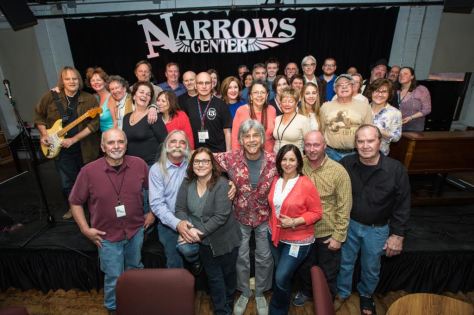
The Narrows Center for the Arts in Fall River, MA, is celebrating its 15th anniversary this year. Pictured is all of the dedicated volunteers and staff with performer Walter Trout at their 1,500th show. (Photo by Rick Farrell)
The Narrows Center for the Arts in Fall River, MA, is celebrating its 15th anniversary this year. Pictured above are all of the dedicated volunteers and staff of the venue with performer Walter Trout at their 1,500th show. (Photo by Rick Farrell)

BY JULIA CIRIGNANO

The Narrows Center for the Arts is a unique concert venue accompanied by two visual art galleries and visual art studios. The Narrows is a non-profit organization with an intimate, casual setting. It is located at 16 Anawan Street on Fall River’s historical waterfront, and hosts concerts for bands within various musical genres. The Narrows annually hosts around 140 concerts per year — attended by about 30,000 music fans annually. The Narrows Center is currently celebrating its 15th Anniversary.

The Narrows Center is run by three full time employees, many volunteers, and last but certainly not least, Executive Director Patrick Norton, who co-founded the Narrows with Burt Harlow 15 years ago. He has held the position of Executive Director for the last nine years. While the center now has some full-time employees, Norton said, “We were an all-volunteer organization for the first eight years of our existence.”

Norton discussed his vision when he founded The Narrows.

“We have a vision, it’s always been to bring great music and art to the Southeast and Massachusetts and beyond,” he said. “We had very modest goals when we started, you know, make it sustainable. We’ve been able to achieve the sustainability piece [….] we had a large vision but we wanted to do it modestly. Meaning that, we didn’t go into debt to build our facility. It’s been a slow build right from the get-go. We improved every year, a little bit. And now we have a state of the art rec center. You know, it started ground up, bricks and mortar, modest…”

Norton explained that The Narrows is known for being a concert hall, but they are also passionate about their Arts and Education Center.

“School districts bring kids in to look at our art exhibits, give them tours,” he said. “Art has really been minimized in the public schools.”

He explained his frustration by saying, “I think it’s a short sighted view of the universe.”

Norton hopes to fix what he, and many other people, believe is a flaw within today’s education system.

“The Narrows has been able to pick up some of that slack, on some level. We always want to do more, because we think music and arts education is good for the brain, it’s good for kids,” he said.

The Narrows is known for its casual atmosphere. The setting is intimate, the parking is free and everyone can bring their own food and drink. The Narrows is both a place to party, and a safe, family-friendly concert venue.

Norton reflects on The Narrows success, “I think it’s always been the unique combination of the visual and the performing arts [….] music is a much more accessible art than the visual arts. Music is a universal language. I think everyone can agree with that. ” Norton proves his point by saying, “When little kids hear music, you can see them get excited.”

Norton is aware that the visual arts are less accessible to everyone. Although, Norton is proud to say that the people who come to The Narrows Center for concerts, are typically into the visual art too.

The Narrows is very unique because they have managed to sell rock shows as family-friendly events. They have also managed to draw in music fans from far and wide, and to host concerts within many different musical genres.

“I think it’s the mix of shows that’s been one of the reasons we have been so successful. Because we’re blues, rock, country, folk, jazz, whatever. We’re not genre based,” said Norton. “I always say, we’re quality based.”

Norton is proud to say that The Narrows hosts concerts for all types of music, but the music is always good. “There’s two kinds of music, good music and bad music.”

Norton believes in the arts, and also the sacredness of live music. “Live music is so unique, it’s hard to replicate in your living room. So I think we will be able to be alive and well for a long time. [….] music is such a unique experience. So I think people want to be in a room with other likeminded individuals and listen to music.”

Norton talked a little about how he picks each act for The Narrows to host. He admits that anyone in his position would be influenced by his/her own personal preference, but he followed up with, “I think the preference is good versus bad. I think it’s just quality control.”

Norton explained that a wide variety of music genres, bring in a wide variety of people to come watch the shows. The more diverse and all-inclusive The Narrows shows are, the more people will come, and the more shows can be put on.

“We try to attract the widest group of music people as we can,” he said. “We’ve been doing comedy for a while. It’s just another way to broaden the brand, get new people in the door, and we always say, ‘if we can get you to come to one show, we can get you to come to many shows.’”

Norton endorsed The Narrows by saying, “We’ve got a great product, the emphasis is on music, it’s family friendly, it’s mild to wild!”

After hosting 1,500 shows, Norton said one of his favorite shows was when The Narrows hosted the late Richie Havens in 2004. He talked about how important this show was not only for himself, but also for the venue as a whole. Before this show, The Narrows had only been hosting bands that were regional, and not well known. This was due to their lack of money. But when they hosted Havens, things changed. The Narrows chose to take a risk, and were successful in their mission to put The Narrows on the map.

“With Richie Havens, he was kind of a big shot,” said Norton. “$5,000 for him guaranteed the first time, and the most we had done previously to that was $1,000. So it was definitely a leap of faith.”

That concert was just what The Narrows needed. The show sold out, and many music lovers first stepped foot into what would soon become their favorite venue.

“I think it gave our venue a jumpstart. Kind of put it on the map for some people,” he said.

After the Richie Haven show, The Narrows Center had finally made a name for itself.

“And Richie, as a human being is such a beautiful man, [….] he’s all about peace, love, and honor. And that’s kind of some of the qualities that we try to portray here too.”

Since 2004 and his death in 2013, Haven’s played at The Narrows many times. “He brought a certain spirit. He captured what we were trying to exude,” said Norton.

Another important show The Narrows hosted was when the Continental Drifters played there. Although the band wasn’t as big an act as Havens, they played an important role within the creation of The Narrows.

“The very first show we had here was a band called the Continental Drifters. And what was special about that was we had just been kicked out of our previous home, and within a couple of months we had a new place. And I can tell you, from the very first note, I had a good feeling because it sounded really good,” said Norton.

This was a very important moment, because Norton, up until that moment, was not aware of The Narrows excellent acoustics within the building.

“We’re known for having really good sound, and really good presentation at our shows,” he said.

The Narrows is also known for attracting many volunteers and donors. “What we didn’t have in financial resources, we try to make up for in human resources.”

Norton talked about how The Narrows has managed to acquire and keep so many volunteers.

“We have a great commodity. [….] It’s great music. Volunteers get to come here and enjoy some great music. And then, I think, as it grows, it’s the comradery. We’re like a family now. You know, all the volunteers. We probably get about 40 volunteers now. Many of whom, have been here for over five years.”

Norton also talked about how The Narrows, being a non-profit organization, has gained such a significant group of generous donors, “When people give money to The Narrows, they get to see firsthand, that the money’s being used wisely.”

The Narrows Center has an annual drive and commonly receives grants, but a big portion of their money comes from generous donors.

Norton explained a situation he once found himself in. For the first seven years of The Narrows existence in their current building, they didn’t have a passenger elevator. Norton was saddened by the people who couldn’t attend the shows because they couldn’t get up the stairs.

“If you couldn’t climb 27 stairs, unfortunately, you couldn’t come to the show, which was hard for us, you know, on a bunch of levels,” he said.

Norton explained that when he chose to raise money for this specific item, and was public about what the money would be used for, The Narrows were successful in raising the amount they needed since it was clear that the money was going towards something important.

Norton also talked about raising money for an air conditioning system. Once again, the need was obvious, and the donors all saw immediate results due to their generosity. Norton has built trust and solid relationships between his donors and The Narrows. It has, “a track record of doing what we say we’re going to do,” and a handful of donors who are willing to help their cause.

The Narrows Center will be hosting two 15th Anniversary shows this November. The first show features headliner Samantha Fish on November 9th, while the second features Girls, Guns & Glory and Big Sandy & His Fly-Rite Boys on November 11th. Norton said he found these artists to be a good representation of The Narrows, and they have all played there before. He said that he chose these bands because they’re great acts, and they are bands that he and his associates love. He also said that he will be adding more acts to those events, and those names should be up on their website soon.

Additionally, The Narrows will be hosting their 15th Annual Narrows Festival of the Arts this Sunday, September 11th, from 11 a.m. to 7 p.m. This year’s lineup includes headliner Amy Helm, Paul Cebar and Tomorrow Sound, Alexis Suter Band, Tim Ray Trio, Roy Sludge, Ghosts of Paul Revere, Butch McCarthy, and TJ’s Music Allstars. This event is free to the public.

“What people can look forward to is a good time,” said Norton. “The Narrows Festival is the one day of a month we show people what we do here all the time. It’s a mix. We’ve got eight bands, and those bands are a mix of blues, rock, jazz, folky, bluegrass kind of stuff. We have the art vendors. We got food trucks. Stuff for the kids. So it’s family-friendly. It’s a dance party. We show some fun dance bands that are playing. And you know, it’s free. It’s our kind of thank you to our fans and the City of Fall River.”

As to his future goals for the Narrows, Norton said, “We would like to purchase the building and expand our offerings. If you’re not growing you’re dying. You really have to hustle this thing because there’s a lot of competition out there.”

For more information about the Narrows Center, visit narrowscenter.org.


Canada’s Motion Device ‘eternalizes’ heavy metal music

Motion Device (Submitted Photo)
Motion Device is a heavy, hard rockin’ band from Canada consisting of three siblings and one cousin. (Submitted Photo)

BY JULIA CIRIGNANO

Their lead singer is 14 years old. Their last album was titled Eternalize. They are from Canada. They are all related. Their new music video is titled “Doves + Snakes”. Who are they?

Motion Device is a band from Canada consisting of Sara Menoudakis (vocals), Andrea Menoudakis (bass & keyboards), David Menoudakis (drums), and Josh Marrocco (electric & acoustic guitars). They started playing together in 2010 when Sara (at the time only nine years old!) was busy covering heavy metal songs from bands such as Black Sabbath, Iron Maiden, Dream Theater, Led Zeppelin, and Rush. Soon, the band started playing original songs, and ended up raising $32,000 to record their debut album Eternalize that was released last year.

Motion Device is not your typical rock band. The band consists of three siblings (Sara, Andrea and David) and one cousin (Josh). They go on the road with their parents instead of groupies. Being with your family this much has to be difficult, especially through these musicians teen and early adult years. Although this band is younger and closer than typical rock bands, Josh talks about the positives aspect to their unique set-up.

“The fact that we’re all family has been a huge plus since the very beginning of Motion Device,” he said. “We’ve always had great relationships with each other and our families as well and I don’t ever see that changing. We spend a lot of time with each other outside of music so that makes us even tighter.”

Sara perhaps may have spent some of the most difficult years of a young girl’s life, facing stardom with her family. Through the journey though, Sara has managed to embrace the positive aspects of her life. Sara shares how a nine-year old grew to love heavy metal.

“[….] my parents got me into rock music at a very young age,” she said. “I’ve always listened to all kinds of music, not just rock and metal, but the heavier stuff has always been my preference from the first moment I picked up a microphone.”

Sara says that her age hasn’t been a problem. She has actually managed to live a normal life, for the most part, “I go to school and have friends like everyone else. The only difference is I happen to be in a rock band and you might know my face from all our YouTube videos.”

Sara loves what she does and seems genuinely happy. Being a young vocalist must be hard since a nine-year old’s vocals are physically less developed, but Sara has pushed through, and become an extremely successful singer — better than many of her elders.

“I’ve been to quite a few vocal teachers and each one of them has taught me something new that helps me be a better singer and performer,” she said. “I also have been playing guitar for quite a few years and that helps me a lot when it comes to writing vocal melodies for our music. Playing in a band with older members has really helped me develop my own unique style as well.”

As the members of Motion Device grow and mature, so does the band as a whole. Like fine wine, these four band member have developed a great deal since 2010. Josh talks about the band’s “natural and necessary” transition from playing covers, to writing and recording original tunes.

“I feel like the transition from covers to originals is a great reflection of how Motion Device has grown as a band,” Josh said. “Working on covers and playing covers live was a time to not only become tighter as a band technically, but also a time to find our identity among our inspirations. On our Eternalize album and in our new material currently being written, I feel like we are really starting to develop our own sound.”

As the band refines their own sound, they are also getting to know themselves and each other better. The band agrees that there isn’t one main songwriter. David explains the relaxed way in which the band writes their music.

“We all work together and feed off each other’s ideas to create our music,” he said. “Most songs come from an individual or a jam session and start as instrumentals with vocals and lyrics getting added at the end.”

Lyrics are very important to Motion Device. Unlike typical musicians at their age, they are socially aware, and prepared to use the stage they have to their advantage. They have something important to say.

“We want our music to have a deeper message than most songs out there today,” offered Andrea. “We like to write about what’s going on in the world, whether it’s positive or not, and how it affects us as a society and individually.”

Motion Device has definitely touched and affected some people, since they were able to raise $32,000 through a crowd-funding campaign to record Eternalize. Once recorded, the album received a very positive response from fans the band weren’t even sure they had. David talks about their surprise over the money they raised.

“It was hard to predict how successful our crowd-funding would be. We actually were only looking for half that amount but fans all over the world kept donating,” he said. “It was great to know that people are really listening to us and the positive feedback and comments just make us want to work that much harder.”

Around this time, Motion Device discovered that their fan base spread throughout their country and also throughout the world. Because of this, the band has begun to make their way out of Canada. They made their U.S. live debut at Brother’s Lounge in Cleveland, OH, on July 25, 2015.

“Playing in Cleveland, Ohio was our best gig yet,” said Andrea. “Meeting our fans and seeing how passionate they are towards this band and our music was amazing. People came from all over the U.S. and Canada with one family coming from as far as Norway for a meet and greet. It was really fun to perform in front of people who know and love what we do.”

Their success in America has shown them how many fans they really do have all over the world. David talks about their plans for the future saying, “More shows in Canada, the U.S. and the world hopefully. We have a ton of fans in Europe, South America and Australia as well.”

Along with a tour, fans should also keep an eye out for new music from Motion Device next year.

“Right now our main focus has been on writing new songs for a 2017 concept album and developing Motion Device’s sound,” said Josh about the band’s immediate future. “We’re always pushing to become better technically and our new material will have a lot of twists and turns that I’m sure our fans will love!”

For more information about Motion Device, visit their website HERE.

Eternalize is Motion Device's full-length debut album.
Eternalize is Motion Device’s full-length debut album.

Robert Reed finds his ‘Sanctuary’ in paying homage to Mike Oldfield

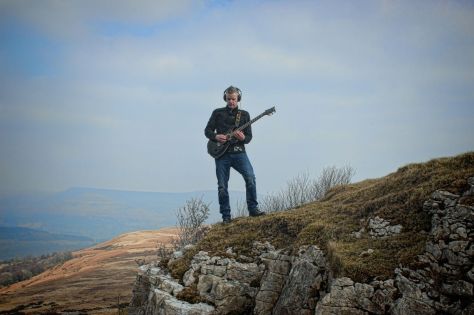
Robert Reed (Submitted Photo)
Robert Reed is a multi-instrumentalist, composer and producer who released two back-to-back solo albums that pay homage to Mike Oldfield (Submitted Photo)

BY J. KENNEY

Although he may not be a household name in the United States, Robert Reed is a man of diverse musical talent. A multi-instrumentalist, composer and producer, Reed is best known throughout Europe as the founder of the Welch progressive rock band Magenta. Before that, he was creating equally compelling music with his band Cyan and side project Trippa. A self-proclaimed fan of 70s progressive rock music, Reed recently decided to salute his music hero, Mike Oldfield, by recording a solo album, called Sanctuary, in the style of Oldfield’s 1973 masterpiece Tubular Bells. Like Oldfield, Reed played every single instrument on Sanctuary and structured it exactly like Tubular Bells with two movement instrumental pieces. He was even aided by Tom Newman and Simon Heyworth who were members of the Tubular Bells production team.

Never one to shy away from a challenge, Reed immediately followed up his debut solo album with Sanctuary II. While he once again played almost every single instrument, this time he was joined by drummer Simon Phillips (Toto/Hiromi), who previously worked with Oldfield on four of his solo albums. The album was released this past June to critical acclaim.

Currently, Reed is rehearsing with a 10 piece band for a special Sanctuary Live performance on October 8th at the Big Room at Peter Gabriel’s Real World Studios. The performance will be recorded for a future CD and DVD release. Despite his busy schedule, Reed was gracious to grant us an interview where he offered in-depth and insightful answers to our questions.

LIMELIGHT MAGAZINE (LM): In order to put the following questions in context for our readers, could you briefly explain the impact legendary multi-instrumentalist Mike Oldfield has had on you as a musician, particularly in your formative years?

RORBERT REED (REED): Tubular Bells was the first album I had bought for me at the age of 7. I had heard a funky version of it on an album of horror film themes. I was captivated by it and played it to death. I then discovered the rest of M.O. (Mike Oldfield’s) catalogue. I just became inspired to learn to play all the various instruments, like my hero. I found in M.O. music a deep emotional content. The ability to move you with music without lyrics. There is something very special in M.O. guitar playing. It’s almost like a vocal connecting with you. I then became a massive fan of all his work and went to see him many times.

LM: Now moving ahead to 2014, you released your critically acclaimed solo album, Sanctuary, which pays homage to Oldfield in a big way. You structured the album exactly like Oldfield’s masterpiece, Tubular Bells, with two-movement instrumental pieces and played every single instrument. Why did you decide to tackle a solo project of this magnitude at this point in your music career?

REED: Alongside my career in music with my various bands Magenta/Komepndium, I have done lots of TV and film music. But I’ve always had a yearning to do a long form album like Tub(ular) Bells. Lots of people knew my influence which shows itself in my other projects and always asked when I would do the album. Then, at the beginning of 2013, on the first day of the New Year, I sat in the studio and asked myself what I really wanted to do, and started what became Sanctuary. The music just flowed for the following months. It was the most enjoyable album I have ever made, as it came from the heart. I knew I wanted it all to be played by hand, real instruments and using the long form template of classical music and Tub(ular) Bells. I also knew that I wanted vocals, but not lyrics. So I had to find singers who understood this. I was lucky to work with Synergy Vocals, a vocal group who work with Philip Glass and Steve Reich, so they knew exactly what I wanted.

LM: Sanctuary was co-produced by Tom Newman and mastered by Simon Heyworth who were both part of Oldfield’s 1973 Tubular Bells production team. How did you get them to assist you with this project?

REED: When I finished the first Sanctuary album, I really liked it, but wasn’t confident that it worked as a standalone album. It had been a labour of love, but wanted to check that it was NOT just a “clone” album that couldn’t be taken seriously.

So I thought I needed to put it to the test, musically, and who better than Tom Newman, who had made the original album.  I know he is a very straight talking man and would say the truth. So I sent him a copy and asked his opinion. He replied and gave it his blessing and was really complimentary. There are loads of fan versions of M.O. material, and people who do YouTube demos in their bedrooms of M.O. music. Tom said that he is sent loads of these, but Sanctuary was different. It was actually NEW music, written in a similar style, but had managed to capture the spirit of what M.O. had done on those first four albums of his.

I also sent a copy to Simon Heyworth to ask a similar question of the music. He also replied and said the same, but also that he could close his eyes when listening to Sanctuary and he was back in the Manor Studios in 1973, and offered to master it. I was so pleased and had the confidence to go forward.

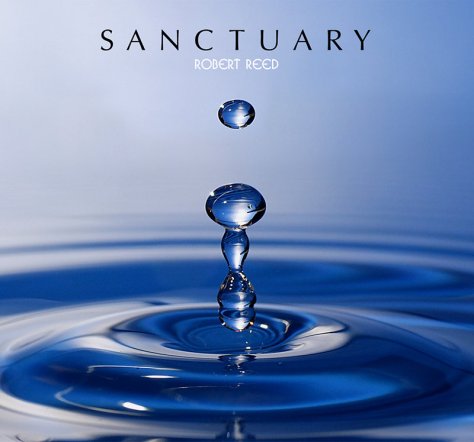
Robert Reed released Sanctuary in 2014.

LM: What was it like working with them, especially since they come from a different era of recording, and how much input did they have on the finished album?

REED: Tom was such a help, he lives in Ireland so we had to do the collaboration via the internet. I had done a lot of the work already, so I sent him the individual tracks of the music, so he could extend, change the order and sound of each part. He had loads of suggestions. On the first album, he said that I was putting too much into the music, cramming too many themes. This is because these days I worry that people haven’t got the attention span, to listen to things and want everything changing and exciting all the time. Tom is the opposite and kept telling me to let the music breath. Also, I was going to add shorter tracks to the first album, to make the album longer, and to have “single” type songs to help promote it. Tom hatted this idea and just said that it spoilt the atmosphere created by the two long pieces… He was of course right.

On the new album Sanctuary II, Tom had even more of an input. I had finished the album and was about to send it be mastered. I thought I had better send Tom the finished mixes, for one last check, as I hadn’t spoken to him for a few months whilst doing the final mixes. I had a reply, where he said I had made the most perfect album in history BUT I had taken out all of the soul of the demos! I was devastated, but went back and checked some of the guide mixes Tom had done and he was right. Computers allow you to repair every mistake, everything in time, make everything sound perfect…but it’s not what we should be trying to achieve in music. It should be about soul and emotion and sometimes the little mistakes are what make it human. So I spent the next four weeks, mixing from a different perspective. To Tom, I owe a lot and am so grateful to have his input.

From left, legendary producer Tom Newman and Robert Reed. Newman co-produced Mike Oldfield's masterpiece Tubular Bells. He also worked with Reed on both Sanctuary albums.
From left, legendary producer Tom Newman and Robert Reed. Newman produced Mike Oldfield’s Tubular Bells. He worked with Reed on both Sanctuary albums. (Submitted Photo)

LM: After Sanctuary was released, you wasted no time and spent most of 2015 recording Sanctuary II. Was it your plan from the start to structure this follow-up album the same way as the first, which is also what Oldfield did on his second studio album Hergest Ridge?

REED: As I said, the first album was such a joy to make, also the reaction to it was so positive, that I really wanted to make a second album as soon as I could. There was no need to change the song format as it had worked so well on the first. I was also a lot more confident, so I could be more bold. I had also learnt lessons from Tom that I could bring to the new album, though he still would complain that I was squeezing too many ideas into the music.

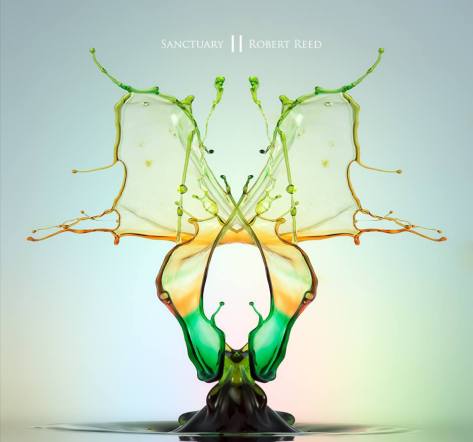
Sanctuary II is Robert Reed's follow-up solo album to Sanctuary that was released this past June.
Sanctuary II is Robert Reed’s follow-up solo album to Sanctuary. It was released this past June.

LM: Unlike Sanctuary, you were aided by legendary drummer Simon Phillips on Sanctuary II who worked with Oldfield on four of his studio albums (Crisis, Discovery, Islands, and Heaven’s Open). Why did you decide to use a drummer this time around? Was it always your plan to work with Phillips? Were other drummers considered?

REED: With Sanctuary II, I wanted to add something new. I had avoided drums on the first album, as it really changes the atmosphere of the music, but thought it would be a challenge to use them on the second album, but tastefully. I had a wish list of drummers I thought who would understand the music. Simon was at the top, but I never dreamt that I would get him. I tracked him down and sent him an email, explaining what I had done and working with Tom and Simon and asked if he would listen to the demos. This he did, and he was really complimentary about how nobody was making this type of music anymore, so he agreed to play. He lives in America, so I sent him the backing tracks and he sent me his drums. The moment I played them against the music, I knew I had something special. Simon is also an amazing engineer and producer, so the drums sounded amazing and what he played was perfect. I never thought, back in 1984 watching Simon play drums at Wembley with Mike Oldfield, that years later he would be playing on my album. That was special.

LM: I’ve been listening to Sanctuary II non-stop since I ordered it online. While this album again pay tribute to Oldfield’s early works, the influence of some of his later releases shines through, particularly Platinum and Five Miles Out. Did this naturally progress this way or was this what you were aiming for when you started writing and recording the album?

REED: Yes, there are definitely more of the Platinum era. That’s because of the drums and how they make the music move. For me, there is a lot more influence of David Bedford the composer who M.O. worked with a lot in the 1970’s. David’s albums like The Odyssey was a huge influence. But again, there is a lot of me. The whole “influence v. plagiarism” debate is a weird one. When I released the first album, I split the M.O. fans down the middle. Half saying that they loved that I was bringing new music in a style they liked; the other half were very of protective of M.O. and hatted what I was doing. I remember M.O. saying how disappointed he was that after Tub(ular) Bells nobody else was inspired to make long form instrumental music. This is exactly what I am doing. Also, EVERYBODY has influences and brings them into their music. M.O. music is very stylized because of the instruments used, but so is classical music. Beethoven sounds like Bach, sounds like Mozart, because they all use the same instruments. It’s the melodies that set them apart. ELO (Electric Light Orchestra) sound like The Beatles. Steve Wilson [sounds like] King Crimson. Genesis took their sound from King Crimson, Marillion and Genesis….we all have influences. In the end it comes to this. IS THE MUSIC well written and performed and does it move you emotionally????? If it does then I have succeeded.

LM: Do you know if Oldfield has heard either of the Sanctuary albums?

REED: I’m not sure he has heard it. He must be aware of it, as it’s all over Facebook and YouTube. I’m not sure if M.O. is interested in anybody else’s music. I just hope he appreciates the spirit in which I made it, and the reason why I made these albums.

LM: Now that the album is out, you’ve been busy rehearsing for your Sanctuary Live shows on October 8th at the Big Room at Peter Gabriel’s Real World Studios. How are rehearsals going?

REED: I always wanted to play these albums live, but knew it would be a challenge, for obvious reasons. So, after the new album, I just put a date in the book, and forced myself to make it happen. We are in the middle of rehearsals, and it’s sounding fantastic, a little different than the record. It’s very had to play, as everybody has to play the right thing at all times for it to fit together like a jigsaw puzzle.

LM: You’re going to be performing with a 10-piece band. Since you performed almost every instrument yourself on both Sanctuary albums, how did you select these musicians to bring these albums to life?

REED: I had to find people who I could trust to be able to bring the right style of playing to each part. I also wanted people who I can get on with and feel comfortable around. We have two guitarists, two keyboard players, bass play, drummer, percussionist playing tub bells, times, marimba, etc., and three singers. It would have been very easy for me to play piano through it all, as that’s my main instrument, but I thought people would expect to see playing various instruments, so currently I’m playing a lot of guitar, some bass, and various percussion instruments…Its’ a real challenge, but fun.

Robert Reed is currently rehearsing with a 10-piece band to perform Sanctuary Live on October 8, 2016.
Robert Reed is currently rehearsing with a 10-piece band to perform Sanctuary Live on October 8, 2016, at Peter Gabriel’s Real World Studios. (Submitted Photo)

LM: You’re recording the concerts for a future CD and DVD release. When do you expect them to be released?

REED: Not sure really, hopefully mid-2017. The concert is going to be very intimate, as Real World Studios is not really a venue. We can get 75 people in for each of the two shows, so I hope it’s going to be great for the audience to be surrounded by the band, visually and sonically. The plan is them to play more shows in more traditional venues, possibly with the same band or smaller, with different line ups. It’s weird I remember seeing M.O. perform Tub(ular) Bells II at Edinburgh He had a massive band and it was perfect, but it was a little too safe and boring. Then I saw him with a five-piece band and the music was completely different to the albums, but was so much more exciting. So you have to strike a balance when playing live.

LM: Speaking of the future, Oldfield concluded his two-movement trilogy of albums with Ommadawn in 1975. Are there plans for a third and final Sanctuary III album?

REED: I’d love to do a third album, but I need to find a sound in my head, and have a few ideas of what new to bring to it. At the moment, I’m completely consumed with the live shows. Though, I am planning a special E.P. for early 2017 that is the early stages of recording.


Jenna Lotti: The Good Girl with ‘Bad Habits’

BY JULIA CIRIGNANO

Jenna Lotti is a 26 year old singer/songwriter from Boston. Lotti has pursued a career both in interior design and music, and has found a way to combine both of her skill sets. Lotti is hard working and self-critical in a constructive way. Since the release of her first album Tunnel Vision, she has greatly improved as a musician, vocalist, and songwriter. She has big plans for the future release of her EP titled Bad Habits, and announced the track-list during our recent talk together.

It is clear that Jenna Lotti was destined to be a musician. She is a very hard worker, yet her road to success was almost inevitable. Here’s the story.

Jenna Lotti (full name Jenna Bortolotti) was raised in a creative environment, yet didn’t actively pursue her dreams of being a musician until after college.

“I was so shy and would only sing in front of my roommates,” she said. “I was always involved in the arts and grew up in an artistic household with my mother being an artist/seamstress.”

Lotti attended Endicott College in Beverly, Mass., where she majored in interior design. For Lotti, being a musician always seemed an unattainable dream, yet she managed to prove herself wrong.

Lotti always had a passion for both music and writing, but after school she continued to pursue her career in interior design. While she is grateful for the lessons and years of hardship, Lotti eventually realized that interior design wasn’t the life for her.

“I always felt out of place, like I wasn’t where I was supposed to be while working in the design world. I literally would cry in the bathroom almost every day because all I wanted to do was music and I felt trapped,” she revealed.

Luckily, Lotti followed her heart. Five years after graduating, she decided to dedicate all of her time to music. Lotti is satisfied with her decision, and still uses many of the skills that she learned at Endicott.

“I don’t regret any of my experiences working in design because I learned so much and met some amazing people along the way,” she said. “I feel lucky now because I can apply my skills in Photoshop, etc., to my music branding. I am able to create most of my artist artwork, posters, websites because of my skill set from Endicott.”

Lotti is best known for her music, yet interesting enough, she was a writer before she was a musician. While Lotti’s road to success may have been rough due to personal struggle, her practiced writing skills have greatly benefited her.

“I have depression so I would keep journals and write a ton of poetry for self-medication,” she shared.

While it’s in Lotti’s nature to write by herself, she recently chose to step out of her comfort zone and try co-writing. Lotti talked about this experience when she said, “Co-writing is great. You get to see how another person’s mind works while writing and their perspectives. It’s a great learning experience as well. This EP, is all co-writes. I wrote three of the songs with my good friend/producer, Susan Cattaneo, and the other two with my fiancé, Chris Facey.”

Lotti shows maturity in her decision to co-write. This experience helped her grow as a songwriter and also as a generally shy and introverted person in the chaotic world of musicians.

Lotti’s new musical exploration has led to her newest EP titled Bad Habits which is due to be released on October 20th. It consists of five tracks: “Bad Habits” (written by Lotti and Cattaneo), “My Oh My” (Lotti and Facey), “Drive” (Lotti and Facey), “Simple Man” (Lotti and Cattaneo), and “Passenger’s Seat” (Lotti and Cattaneo).

This EP was produced by Cattaneo, and Lotti is thrilled to announce that she is having a CD release show at Thunder Road in Somerville, Mass, on Oct. 20th. Dan and the Wildfire and Now for Ages open the show.

While talking about Bad Habits, Lotti especially expressed excitement over how diverse the songs are.

“The new album is VERY diverse. Every song on this is so different from one another,” she said. “I want people to be able to dance and groove to this album as well as connecting with it on a deeper level.”

With Bad Habits, Lotti wants to show the world who she is and what she is capable of. She isn’t shy about critiquing her first album, Tunnel Vision, saying “These new songs are so much better than Tunnel Vision. They are better written and more mature. I’ve learned a lot since writing Tunnel Vision and I think that is obvious once you listen to Bad Habits. Also, vocally, I’ve grown so much and that is also very obvious.”

Lotti is thriving in the world of music, which includes her recent tour of the country.

“We toured with our friend, Keelan Donovan, who has been touring for quite some time now,” she said. “We learned a lot from him and had so much fun on the road! My favorite part was just being in a different place each day. We were exhausted by the end but it was so worth it!”

All those exclamation marks are evidence enough that Lotti is happier than ever with the new experiences she is having. She finally has an outlet for her creativity, and a solid fan base to appreciate it. Lotti is enjoying her success, and has more exciting things to come. Once Bad Habits is released, Lotti will be going on tour. The dates aren’t up yet, but they should be up soon on her website www.jennalotti.com.

Grab a copy of Bad Habits at her CD release party and peel back the different layers of Jenna Lotti. Tickets available HERE.

Photo by Kiera Slye Photography

Jimmy Bez: Keeping the blues alive

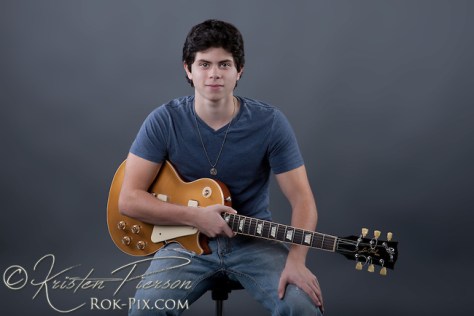
Photo by Kristen Pierson

BY J. KENNEY

At the young age of 17, Jimmy Bez is an up-and-coming blues rock guitarist. He was already a prominent guitar player on the original rock scene in Boston with the 21st Century Fugitives. A songwriter and blues fan, he formed the Jimmy Bez Blues Band in 2015 and won the under 21 category at the Boston Blues Society’s Blues Challenge that same year. He also represented Boston in the International Blues Challenge in Memphis, TN, to rave reviews. His style is often compared to a young Joe Bonamassa with strains of early Eric Clapton and the late Mike Bloomfield. He recently released his debut EP Lies of a Sinner and will be opening for Tinsley Ellis at Thunder Road Music Club and Rock n’ Roll Bistro in Somerville, MA, on July 15th. We recently caught up with Bez who is planning to make music his career after high school.

Limelight Magazine (LM): You released your debut EP Lies of a Sinner on May 16, 2016. When did you start recording the album? Are you pleased with the final product?

Jimmy Bez: The 17th and 18th of April were the two main recording days.  We were all very pleased with the outcome.

LM: Four of the songs on the EP are originals written by you. Can you walk us through your personal song writing process?

Jimmy Bez: It always starts with the music for me…the lyrics come later.

LM: The last song on the EP is a cover of “Have You Ever Loved A Woman” by Billy Myles. Why did you select that song to cover?

Jimmy Bez: “Have You Ever Loved A Woman” is an old blues classic written by Billy Myles and first recorded by Freddie King. Besides the fact that it’s a great tune, I’ve always loved the Derek and the Dominos version.

LM: Did you consider covering any other songs for the EP and, if so, what were they?

Jimmy Bez: Recently we’ve been playing “If I Had Possession Over Judgment Day” by Robert Johnson, “Killing Floor” by Howlin’ Wolf, and a few B.B. King tunes but I knew right away I wanted “Have You Ever Loved a Woman” on the EP.

LM: The name of the EP is an interesting choice. Why did you select that title?

Jimmy Bez: The title track “Lies of a Sinner” is one of our favorites to play and people seem to dig it.

LM: You’re opening for Tinsley Ellis at Thunder Road Music Club & Rock n’ Roll Bistro in Somerville, MA, on Friday, July 15th. Are you looking forward to this show? Will you be playing most of the songs off your new CD at this show?

Jimmy Bez: Really looking forward to it. Tinsley Ellis is awesome and Thunder Road is a great new venue with a great stage and sound system. We should be doing most or all of the songs from the EP at the show.

LM: You’re also a member of the award-winning 21st Century Fugitives who previously opened for The Dropkick Murphys. Why did you decide to pursue a solo project separate from them?

Jimmy Bez: I got really into the blues last summer and started a blues band for fun and it just ended up doing pretty well.

LM: The style of music for the Jimmy Bez Blues Band is different than 21st Century Fugitives. Are you influenced by all styles of music? Who are some of your biggest influences?

Jimmy Bez: I was originally influenced the most by Slash, Jimmy Page, and Tony Iommi when I was younger. Getting into the blues really got me hooked on guys like Mick Taylor, [Eric] Clapton, and Gary Moore.

LM: Last year, you won the under 21 youth category in the Boston Blues Society’s Blues Challenge. How did you feel about winning that award, especially since you just started the band around that time?

Jimmy Bez: We were shocked to have won but very excited to get to go play on Beale Street in Memphis.  It’s an incredibly cool place….just one blues club after the other.

LM: You’re currently 17 years old. What are your plans for the future?

Jimmy Bez: I’m hoping to make a career of this as an adult.

LM: Is there anything else you’d like to add?

Jimmy Bez: Thank you for always being such big supporters of local music. I really appreciate you guys checking out my new stuff and I’d like to also thank all the DJs that have been playing the EP.

For more information about Bez and upcoming tour dates, visit his website by clicking HERE.

Phoebe Legere bringing Cajun music and more to Orleans, Mass.

Phoebe Legere (Submitted Photo)

By JAY KENNEY

If there’s anyone who could be classified as a “Renaissance Woman,” it’s Phoebe Legere. The Maine native who is of Acadian and Abenaki (First Nations) descent, sings, plays a number of instruments (piano, accordion, cello, Native American flute, organ, buffalo drum, synthesizer, guitar and cavaquinho), stared in several films (Mondo New York and Toxic Avenger 2 & 3), paints, draws, sculpts, and writes movies and musicals. She also founded the New York Underground Museum in 2006 and was nominated for the Pulitzer Prize in Music in 2000. She’s released over 15 CDs of original music and will be appearing at Brick Hill House Concerts on Sunday, Aug. 30th, in Orleans, MA. We recently caught up with Legere who didn’t hold back in her answers to our questions.

Limelight Magazine (LM): You’re going to be performing at Brick Hill House Concerts on Aug. 30th in Orleans, MA. For anyone who has not seen you perform live before, what can they expect at this show?
Phoebe Legere: This is an excellent and fair question, but it is impossible for me to answer. I cannot see myself when I am performing, nor can I predict how I will be perceived by others. I can only tell you what I feel when I play music. I go on a journey inside myself into a cosmos of memory, desire and ideal beauty. There are spirits there, spirits of my ancestors and of animals. These spirits seem to hover near! They are very interested in the music. Spirit voices suggest things to me, ideas about color, pitch, timbre, re-harmonization and expression. My eyes may appear to be seeing the audience, but in fact, I am looking into a place beyond space and time. I feel deep love and compassion for my audience. I read them with my heart as I play.

I play rhythms and notes and what I feel will soften hard places in their hearts and heal sad places in their minds. My job is to bring the music medicine to the people. That is why my native name is Phoebe Songbundle. I can be very photogenic, but cameras do not see very well. In person, I hover between pretty and ugly, male and female, young and old, white and Native. That is a good place to be. People soon forget how I look and they begin to go on the journey with me.

Music is a magic canoe that can take you down the river of your own dreams. In that journey you will find your own ancestors and spirits of animals who can guide you to heal yourself. I channel the music of my ancestors – French Acadians, Abenaki Native Americans, Wampanoag ancestors who ran to Maine and Canada and joined the Abenaki during the Massachusetts holocaust, and yes, my Mayflower Puritan ancestors too. I’m descended from a few of the travelers including Bradford and a young woman named Remember Allerton. They named her Remember so we would never forget how the Puritans were treated by the English.

I have to heal the pain of those ancestors who are still grieving because of the territorial and linguistic incursions of Imperialist England into North America at that time. You will also hear elements of church music in my note choices. I grew up in a small colonial town in Massachusetts where I sang in the choir and played the organ in the church.

LM: Will you be performing solo or with a band and do you have a preference for one over the other?
Legere: I have invited musical friends from the area to play with me. Notably, my friend singer-songwriter George Leonard, a 2015 inductee into the Rhode Island Music Hall of Fame, will play fiddle with me. I love to be part of a team. When we play together we are than the sum of our parts – music is prayer – everyone knows it’s easier to get the Lord’s attention if there’s a crowd praying the same song.

LM: You’ve released 15 CDs of original music. How do you go about deciding on a set list for your shows?
Legere: I use my intuition in everything I do. On the Cape I will play more of my maritime songs: “Big Sperm Whale,” (click on song title) “Heart of the Summer,” (click on song title) and “Sailing on the Sound.” When I am in French Canada, I do mostly French, but this far south I’ll sing mostly English.

LM: In some of your promotional materials, it says you “reinvented Cajun music in your own image, mixing New York City jazz funk with New Orleans blues, down-home Acadian bluegrass, story-telling and melody.” How would you describe your music to someone else?
Legere: I play North American music. An oyster makes a pearl from the pain of a grain of sand. Similarly, my music grows from the pain of forced human migration. What do I mean? Well, in 1755 the Acadians were deported to Louisiana – that’s how we get Cajun music at the same time Africans were being moved, forcefully, in chains, from beautiful Africa to places where they were treated like animals. The Cajuns (Acadians) were an underclass everywhere they went, since social status is all about territory and having a big house and an established business. The English had burned our houses and took our land. All we had was family and music. The Cajuns intermarried with the Africans and that’s when the music started to get really interesting. It’s called jazz. This is the vein I am working. Where Acadian music meets Black music. I like it and I feel right at home in this type of groove. To this Jambalya, I add plenty of Native American, French and classical elements. Yes, I went to Juilliard. Yes, I sing at Lincoln Center and Carnegie Hall. Yes, I write for and conduct Symphony Orchestras. Yes, I was nominated for the Pulitzer Prize in Music. But when I play folk music at a house concert, I am just that. I am a woman of the people, a down to earth, real person born on the 4th of July.

LM: You sing, play several instruments including the piano, accordion, cello, Native American flute, organ, buffalo drum, synthesizer, guitar and cavaquinho, as well as write memorable songs. When did you take an interest in music?
Legere: I started playing the piano before age three. I reached up and could feel the keys. That is when I started. I began composing at six and I’ve been professional since age nine.

LM: What was the first instrument you learned how to play and why did you decide to pursue other instruments?
Legere: In those days there was a strict division of instruments into “male” and “female.” The piano was feminine, a nice thing for a little girl to learn. My mother forbid me to play guitar. They directed me instead, to the cello, which was my main instrument for many years. My sister wanted to play drums and vibes. She was forced to play the flute. My other sisters played violin and viola so naturally I picked those up and started playing them. My grandfather played accordion. The accordion had fallen out of favor by the time I reached adolescence, but I found one in the attic. The minute I squeezed it I was hooked. The expressiveness of the reeds is like the sighting of the sun, the cries of immigrant populations! The accordion is the true instrument of the people! And what’s more, you can move while you play it. I love to hear the sound waves swirling around me as I stroll with my accordion.

When I got involved with performance art many of the galleries and museums where I played did not have a piano. The accordion was perfect.

I was signed to Epic records at 16. They said “Phoebe, don’t let anyone see you carrying THAT THING!” (the accordion was that thing). Now, as with so many of my visionary ideas, everyone realizes I was right all along. The whole world now knows the accordion is the hippest instrument. I have much more to say about the accordion and music as a mind control tool of government BTW

LM: You have a very impressive biography. Of all of your accomplishments, what was your proudest moment so far?
Legere: Singing my poem, The Waterclown, with the Cleveland Chamber Symphony in 2000. (Pulitzer Nomination 2000). The topic, water, the privatization of water and the importance of water in climate change has become one of the hottest topics in enviro-politics now. You can listen free to the mp3 on my website: http://www.phoebelegere.com/waterclown.html. Also hear me conducting and singing my classical chamber trio called STARS on the same page.

LM: Outside of music, you’ve also appeared in several cult films including Mondo New York and Toxic Avenger 2 & 3. Did you like your experience working on these films? Are you still actively pursuing film projects?
Legere: I write movies and I make my living writing music for movies. I have a degree in film scoring from NYU. As my late friend Roger Vadim once said, “Film is a perfect synthesis of sound and image.”

I direct and produce all of my music videos. My movie The Shamancycle Story, (about my 15 person rideable eagle sculpture made from up cycled and re-purposed junk), had a limited run in art houses last year. It could be viewed as a 20 minute extended music video for my song “Love is Your Power,” but you can also hear me singing the traditional, 10,000 year old Creation Hymn in there too.

My early music videos, “Marilyn” and “Trust Me,” were collaborations with Nile Southern, Terry Southern’s son. I was very influenced by Terry Southern. Terry wrote Easy Rider, Doctor Strangelove, Candy, The Magic Christian, and most of Barbarella. He was an important writer until Nixon put him on the Enemies List after which he could not work in Hollywood.

Nile and I lived with Terry in an old farmhouse in Connecticut. Terry’s ideas about movies and writings were a profound influence.

LM: You’re also a painter who founded the New York Underground Museum in 2006 to preserve the works of artists whose works are not held by major institutions. Why is preserving these works so important to you?
Legere: NYUM presents, preserves and curates the work of visionary artists whose work is not held by major institutions. In 2006 there was a show called the East Village show. I could not help but notice that women, artists of color, handicapped artists, ethic artists and Native Americans were not represented in this show. However, Madonna and Debbie Harry were in the show. This showed me how corporate culture not so subtly invades the world of high art. I wanted to create a zone of beauty and vision that was protected from the dominant money culture.

LM: What artists do you currently listen to?
Legere: Daniel Lavoie, Congolese hip hop such as Baloji but also the hip hop made by 12 year old soldiers in the Congo.

I listen CDs made by families who sing the old Acadian songs, like “C’est d’même que ça commencé” by La famille Doiron who sang with me on my Canadian tour 2015, I listen to George Leonard and Ray Legere my cousin.

I listen to CD’s I made from Brown Wax cylinders created at the turn of the century by someone who went in and recorded the oldest Abenaki/Penobscot elders singing the old medicine songs, (the cylinders were in a flood so they were covered with mildew, hard to listen to, but I was (able to extract some basic Abenaki medicine motifs later, when I went to visit the Maliseet, who speak a very similar language to us, they had the same songs and we understood each other, you can hear me singing in this (language on “Blue Canoe Blues” (click on song title) on Soundcloud.)

I listen to the very old gospel recorded before it all became a business, I listen to the Smithsonian Folkways recordings.

I listen to the radio just to see how bad it is. Yes. I listen to Top 40 and I realize with horror that somebody has now created computer program to determine the words and images from the top three songs in each year for the past 30 years and that is how the music is being made now. You think a song was written by an inspired artist songwriter? No. Music is now ghost written by teams of writers who market test the lyrics on subject fitted with electrodes. I was on a major label for three years. Epic/Sony. I know how these people operate and they are beyond scared shitless. They leave nothing to chance. How about that song “Shut Up and Dance.” Yes consumers listen closely.

I listen closely to the top 10 songs to hear the subliminal messages embedded behind the lyrics. I listen to the machines used in the productions. Your consent is engineered.

I listen to RFI the French global internet radio station. They play a lot of African music that interests me. I play with an African drummer named Joachim Lartey. He knows 2000 West African shamanic drum beats. It’s kind of cool and sad that the Zulus are now doing house music. It sounds better than the crap I have to listen wherever I go in America, but African rhythms are one of the cultural treasures of the worlds and it’s tragic to see the Zulus handing their power to a machine. Africans used to say: “The drum is the voice of God!”

How do I know so much about Africa? I went to Africa in 1987 with Nile. We lived at Peter Beard’s Hog Ranch. We visited the Masai Mara. We lived with the Kikuyu tribesmen who had lived with Karen Blixen. I learned many things [such as] creativity, music, dance and costume.

That is how I got the idea for Hello Mrs. President, [which was] my musical about the first black woman President of the USA starring Rock ‘n’ Roll Hall of Famer LaVerne Baker and me as (the First Partner).

I listen to early early blues artists like Howling Wolf, Big Bill Broonzy, Robert Johnson, Son House, John Lee Hooker, Sunnyland Slim…you want me to go on? I was the Blues DJ on Sirius Radio for two years.’

I had a friend named Boris Rose who recorded all the radio broadcasts of the 40’s. That was when radio had good music. The major labels were still signing musical geniuses.

Boris made me cassettes of the broadcasts from the Royal Roost and the big ballrooms. He made tapes of the great boogie boogie and blues pianists who came through New York City and that’s how I developed my blues piano style, as well as spending a great deal of time in Louisiana with my grandmother. We are connected to all the Legere’s and Trahans in Eunice and Lafayette, LA. I listen to early New Orleans R&B. I love the period just after World War 2 when jazz was just morphing into rock ‘n roll. I love it.

I can’t get enough music. I never tire of it. I studied jazz piano with John Lewis of the Modern Jazz Quartet but I have also hung out with and played with the best modern piano players from Nola’s great blind Henry Butler to my friend Billy Joel. Do I listen to Frank Sinatra, Billy Holiday, Big Joe Turner, Charles Trenet and Jacques Brel? You bet I do. I am an ear person. I listen to poetry being read by poets too. It is amazing what is available on YouTube.

My best listening time is when I am not listening. In the silence I hear my own symphonies, melodies, ideas and songs.

LM: Is there anything else you’d like to add for those reading this?
Legere: I like music, I like musicians and I like people who like music. I like to listen in a group. Music is more important than people think. Music is the vibration that is creating the illusion of reality and music is the telescope that lets you see through the illusion. That is why, in the old days, before industrial music and machine music, music was the glue that held families together. That’s why they call it music harmony. I have created a free art and music camp for the high poverty at risk children of New York City. This is my passion. I am a natural teacher and that my greatest love is nurturing the visionary artists and musicians of the future.

Did you see the drums I made – White Eagle Drum and Golden Wolf Drum with Abenaki symbols? I’ll be playing them at Brick Hill House.

For more information about Legere, please visit www.phoebelegere.com.

Phoebe Legere
Phoebe Legere will be playing the custom drums she created at the Brick Hill House Concerts in Orleans, Mass., on Sunday, Aug. 30th.

Waxwork Records brings horror soundtracks to life on vinyl

By J. KENNEY

Any horror movie fan knows the score is an essential component of the film. Can anyone picture watching Psycho without Bernard’s Herrmann’s string score, Halloween without the music of John Carpenter, or more recently It Follows without the electronic sounds of Disasterpeace (see related story HERE). Over the past few years, the resurgence of vinyl has given rise to a number of production companies that specialize in releasing horror soundtracks solely on vinyl. These companies include Mondo/Death Waltz Records, One Way Static Records, and Waxwork Records, among others. Unlike many soundtracks that were released in the past, these companies spend an extraordinary amount of time on the sound quality and mastering, as well as the artwork and packaging, making them a must have for genre fans, vinyl collectors, and people looking to hear great music that may not ordinarily see the light of day!!!

This month, Waxwork Records is celebrating its second anniversary. Their first release was the soundtrack to Re-Animator by composer Richard Howard Band in July 2013 and, since then, they have released 10 other soundtracks, including Day of the Dead (September 2013), Rosemary’s Baby (January 2014), Creepshow (April 2014), Chopping Mall (May 2014), Friday the 13th (September 2014), Trick ‘r Treat (October 2014), Phase IV (March 2015), Starry Eyes (May 2015), Friday the 13th Part 2 (July 2015) and Nightbreed (July 2015).

We recently caught up with its founder and CEO, Kevin Bergeron, who graciously took time out of his busy schedule to do a Q&A with us. In our interview, he discussed why he founded Waxwork Records, how titles are chosen, the meticulous amount of detail that goes into creating each record, and a sneak peak of what future releases are in the pipeline, including additional Friday the 13th titles and The Babadook.

Richard Horner Band's soundtrack to Re-Animator was the first album released on vinyl by Waxwork Records
Richard Howard Band’s soundtrack to Re-Animator was the first album released on vinyl by Waxwork Records in June 2013. The company is celebrating its 2nd anniversary this month.

Limelight Magazine (LM): Your label was launched in 2013 and is celebrating its second anniversary this month. How did the decision to start a record label focusing on vinyl horror movie soundtracks come about?
Kevin Bergeron (Bergeron): I already had experience recording music and pressing records. I’m really fascinated by the process. I’m also a massive fan of horror movies, but also of just classic cinema in general. I decided to marry the two things I’m most interested in, vinyl and horror.
I had just come off of a tour in Cuba with my old band, and it was quite evident that the break up was coming. I was toying with the idea of starting a label. It was this really special time, and a really organic thing. There was a start-up period where no one knew about us for six months, and I really enjoyed that time. Just getting it rolling. I love brainstorming and diving into new projects.

LM: How much of an impact did the resurgence of vinyl sales across the country have on the decision to form Waxwork Records?
Bergeron: When I started the label, I only had a vague notion as to the resurgence of vinyl and record sales numbers. I was honestly very nervous that we wouldn’t sell many records.

LM: You’ve now released 11 soundtracks on vinyl since July 2013. Bergeron: How do you go about selecting titles to release?
We are pretty selective with the titles we seek out. From an outsider looking in, it would be easy to peg Waxwork as a label that’s all over the map because we will release a B-Movie, and then the next month we’ll release something in the Criterion Collection. If we like it, and the music is interesting, we’ll go for it.

Photo - Nightbreek
Danny Elfman’s score to Clive Barker’s Nightbreed was Waxwork Records most recent release on vinyl. The company has released over 11 albums over the past two years.

LM: Mondo Tees/Death Waltz also specialize in releasing horror movie soundtracks on vinyl. Do you consult with them so you’re not trying to license the same titles?
Bergeron: No. Although, we’ve done a trade with Mondo before, and we may co-release something in the future, but that’s all in its infancy right now. It could be fun.

LM: Part of the reason for the popularity of your catalog has a lot to do with the meticulous detail that goes into the sound quality. Can you discuss the process for how these records come to be?
Bergeron: The Waxwork standard is seeking out original master tapes as our source material. Often times, these original masters are thought to be lost, or destroyed. So, it’s not always easy. We located the masters for Rosemary’s Baby in Australia and the masters for Creepshow in an attic in Pittsburgh. We really go for it and play detective. So, we get those original masters, and then transfer them, mix them down, and master for vinyl.

LM: How much involvement does the composer have on the finished product?
Bergeron: Composers are usually very cool and give us the reigns to do our thing with the music. They’ll sometimes have specific requests, but nothing major. No one breaths down our backs, surprisingly. I feel like I’d be that way if the tables were turned.

LM: Another reason why genre fans love your releases is the collectible aspect of them. Most of the titles come out in limited edition variants and include breathtaking artwork and inserts. Why is the visual aspect of your releases equally as important as the sound quality?
Bergeron: Vinyl gives you a playground to do a lot of really great things visually. With CD’s and especially MP3’s you don’t get any of that. So, we like to go crazy with vinyl colors, and commission new artwork from prominent artists that we feel can tackle the film and its score, but through their artwork.

A limited batch of black and burgundy haze variants were randomly inserted into orders for the Waxwork Records release of Rosemary's Baby on vinyl.
A limited batch of black and burgundy haze variants were randomly inserted into orders for the Waxwork Records release of Rosemary’s Baby on vinyl.

LM: How are the artists chosen to design the artwork for your releases?
Bergeron: We discuss this in pretty great depth. “Who can nail something like Rosemary’s Baby? Friday the 13th? The Warriors?” You can’t stick Gary Pullin on something like Phase IV or Jay Shaw on something like Chopping Mall. That might actually be really interesting, though.

LM: Are all of your releases limited runs? What is the reasoning behind the limited availability?
Bergeron: Yes. Our releases are all limited. We don’t press tens of thousands of units. Not yet. I like giving people what they want though, so if there are people out there that want this music, we will keep re-pressing records. I don’t like the idea of keeping things so limited that honest to goodness fans cannot have it. I also don’t like the idea of denying anyone art or music.

All releases on Waxwork Records are limited editions.

LM: A few of your releases (i.e. Day of the Dead, Creepshow, Friday the 13th and Trick ‘r Treat) were previously released on CD by La-La Land Records which is based out of Burbank, CA. Are they ever consulted on any of your releases?
Bergeron: La La Land has a few of the same titles in their catalog as ours. It just turned out that way. We had questions when we were getting started and they were very helpful.

LM: Speaking of Friday the 13th, Waxwork released the soundtracks to the original film and its first sequel. We were at composer Harry Manfredini’s signing of Friday the 13th at Dark Delicacies in Burbank last year and he was thrilled to have it released on vinyl. Since he also composed the music to the next four sequels in the franchise, can we expect future Friday the 13th releases?
Bergeron: We are releasing all of the Friday the 13th scores that Harry Manfredini composed. He’s been great to work with. He’s really into what we’re doing and it feels good to have him 100 percent on board with what we are trying to accomplish.

Friday the 13th film composer Harry Manfredini signs Warwork Records release of the album on vinyl last September at Dark Delicacies in Burbank, CA. Waxwork plays to release more Friday the 13th titles that Manfredini composed in the future.
Friday the 13th film composer Harry Manfredini signs the Waxwork Records vinyl release of the soundtrack at Dark Delicacies in Burbank, CA, on  Sept. 28, 2014. Waxwork plans to release more Friday the 13th titles that Manfredini composed in the future. (Photo by Jay Kenney)

LM: You also have a subscription service. Can you elaborate on that aspect of your business for those who may not be familiar with it?
Bergeron: The subscription is fairly limited. You sign up when it goes live on our website, and that guarantees you five releases on vinyl from Waxwork throughout that year. Sometimes a digital download is offered depending on the title. The subscribers get special, limited colored vinyl that isn’t available via retail. You get 18 percent off anything Waxwork has available for sale, and that’s a pretty good deal. I don’t know of another label that offers that much of discount with a subscription service. You also get cool merchandise mailed to you randomly throughout the year. Like, you’ll randomly get a Waxwork Records slip-mat, stickers, or patches delivered with one of your records. Exclusive stuff! You also don’t have to worry about missing out on a record by it selling out before you have the chance to get a copy. You’re guaranteed that record (if it’s part of the subscription) being delivered to your doorstep. No refreshing our website non-stop on pre-order days. Shipping is all factored in already for subscribers. It’s just very convenient.

Waxwork Records slipmats are just some of the goodies you may receive by signing up for the company's subscription service.
Waxwork Records slip-mats are some of the goodies you may receive by signing up for the company’s subscription service.

LM: About 10 weeks ago you teased the release of Jennifer Kent’s phenomenal film The Babadook. Is that still in the pipeline and, if so, when can we expect a release date?
Bergeron: Yep, that’s happening. That’s coming out in 2016. We have some cool stuff we’re planning for the packaging.

LM: You’ve also had a few posts on your Facebook page about another great movie We Are Still Here that was released earlier this year. Can you reveal if this is another title in the pipeline?
Bergeron: I can’t give out any details, yet. But We Are Still Here is great, and the score is really atmospheric and interesting.

LM: Thanks for taking the time to answer our questions. You’re doing an amazing job and it’s so exciting every time a new title is announced and released. Is there anything else you’d like to add?
Bergeron: Thank you. Really. We love doing this. It’s still crazy to us how much of an impact our label has on fans of vinyl and movies.

For more information about Waxwork Records or to make a purchase, visit http://www.waxworkrecords.com.