Category Archives: Features & Interviews

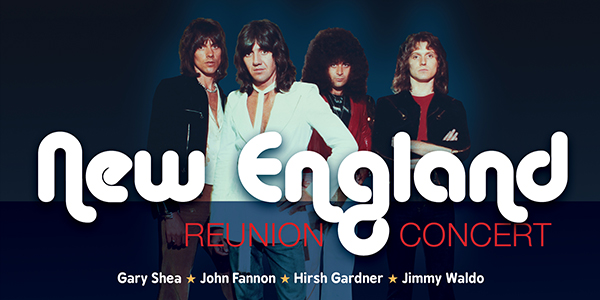
New England to perform first full-length concert since 1983

Photo - New England banner

By JAY KENNEY

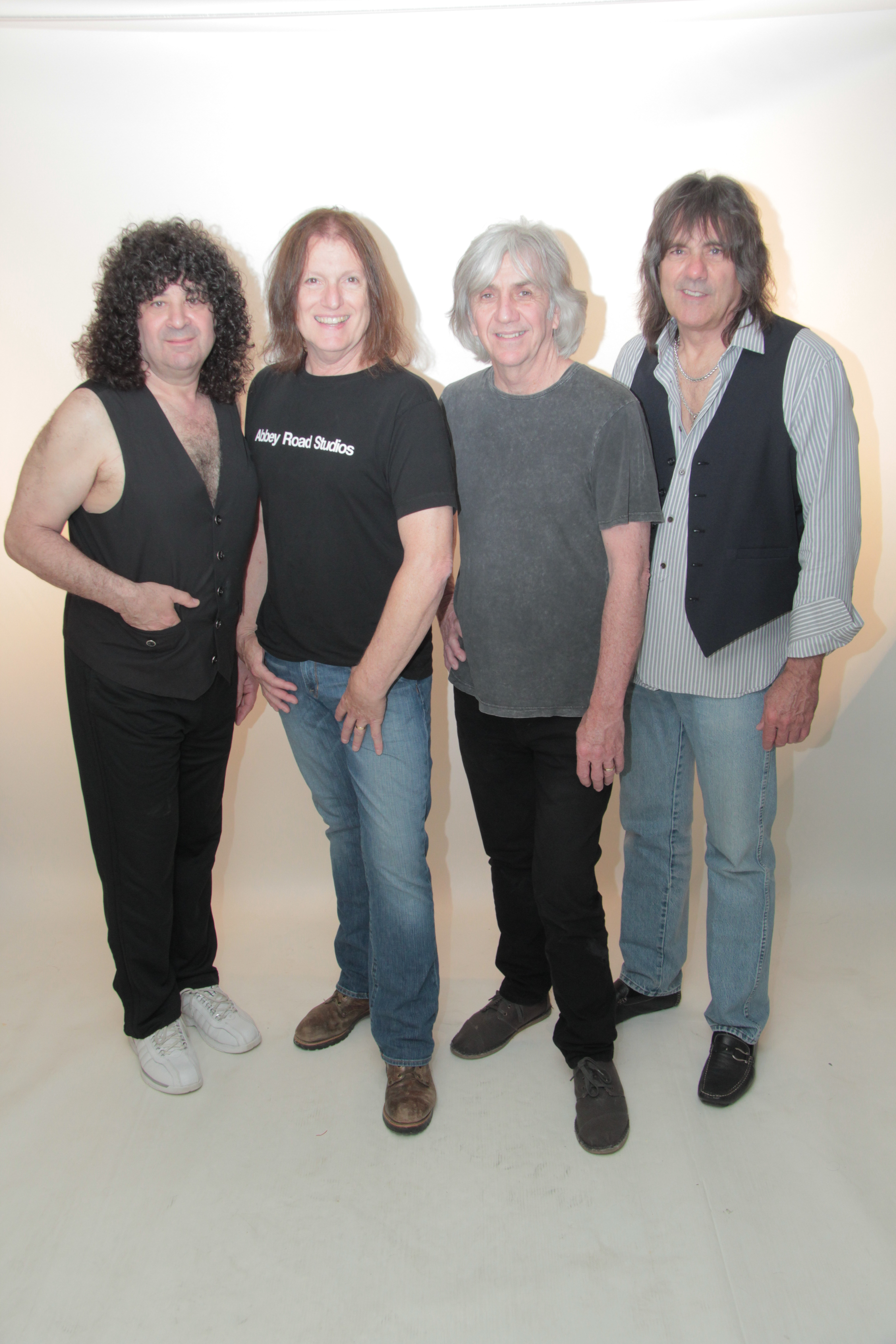
New England is a four-piece rock band from Boston, Mass. The lineup includes John Fannon (guitar and vocals), Hirsh Gardner (drums and vocals), Gary Shea (bass), and Jimmy Waldo (keyboards and vocals). The band released their self-titled debut album, New England, on Infinity/MCA Records in 1979. It was produced by Mike Stone and Paul Stanley of KISS and contained the Top 40 single “Don’t Ever Wanna Lose Ya.” After touring throughout most of 1979, they released their second album Explorer Suite in 1980 and their third album Waking Wild in 1981. The band also spent a lot of time on the road, touring with bands such as AC/DC, Journey, Kiss, Rush, among others. They eventually broke up due to a lack of support from their record label. While the band reunited for a few short sets since then, New England is reuniting for their first full length concert since 1983 at the Regent Theatre in Arlington, Mass., on August 15, 2014. We recently caught up with the band during rehearsals for this show in Boston. We’re very grateful that every band member answered all of our questions and we look forward to catching the show on August 15th. For tickets, click HERE.

Limelight Magazine (LM): New England is performing its first full length show since 1983 with all four original members at the Regent Theatre in Arlington, MA, on August 15. How did this reunion concert come about?
John Fannon: Although this will be our first full headline show in over 30 years, we did a charity event last year playing about six songs and it was like we were frozen in time. Rocking like it was 1979! We knew we had to play more and here we are.
Hirsch Gardner: We’ve done a couple of shows over the years, usually just a short set of some of our most popular tunes. We had such a great time playing together and hanging out that we thought a full show would be great for us and the fans.
Gary Shea: We had played a few benefit shows over the past few years the most recent one being last summer at The Cafe Royal. We decided it was time to have fun playing more than the occasional gig.
Jimmy Waldo: We have actually been playing every year since 2005 in Boston, but not a full show.

LM: Did you ever expect to perform again with all four original members?
John Fannon: Yes, I always knew we would. It took a long time traveling down many individual, artistic paths but we have come full circle and are having a great time hanging out together and most important playing music!
Hirsch Gardner: Yeah…it was inevitable. Not only do we love playing together but the comments from the fans on the social media sites were inspiring.
Gary Shea: There has never been talk of performing with anyone else. It would never be the same. We are lucky that we all are very involved in the music business live as well as in the studio.
Jimmy Waldo: Yes, we have always been good friends and worked on each other’s projects. It was always in our minds to get together and start playing again.

LM: This past week you’ve been rehearsing in Boston. How have rehearsals been going?
John Fannon: Rehearsals were great. We could feel that same energy we always had. Playing these songs I think we all felt, “wow we were pretty dam good!”
Hirsch Gardner: Once we stopped laughing, joking and horsing around, rehearsals went great. It takes a lot of work to get some of that muscle memory back in shape, and just getting in shape physically is a challenge. New England is a very powerful and intense musical endeavor.
Gary Shea: Again this is not our first get together, that was back in 2005. The rehearsals went very well and this concert is the first time we will be headlining again and doing our whole show and we are very excited about that.
Jimmy Waldo: These rehearsals have gone great. We’ve had a blast playing songs from all three albums. The chemistry we’ve always had was there.

LM: What can fans expect from New England at this show?
John Fannon: Everything they remember and more. Playing live, New England has always sounded just like the “record” coming through a giant stereo.
Hirsch Gardner: Like I said, it is very powerful and intense. We play the same now as we did back in the day. This ain’t no mamby pamby cover band and we ain’t taking any prisoners.
Gary Shea: We are going to perform some material that was recorded on our albums but never done live in concert. It`s going to be a blast for us musically and hopefully our fans will really enjoy it. Also, it’s a very audience friendly venue where we will all be up close and in person. No bad seats or sound.
Jimmy Waldo: A lot of energy. The songs we have picked for this show are really rockin’ and we will be doing some totally acoustic songs as well.

LM: Is this a one-off show or is there a possibility of additional tour dates in the future?
John Fannon: There will definitely be more dates coming. We are committed to playing new and old music together into the future and beyond!
Hirsch Gardner: We’ll play as opportunities arise.
Gary Shea: We have been back together for a few years and logistics are now prevailing that allow us to play together much more than before. We are very excited about that. We hope to get around the country again, as well as Europe and Japan where we also have fans.
Jimmy Waldo: We will be doing more shows as well as some European and Japanese shows.

LM: Has there been any consideration yet to recording new music?
John Fannon: Yes we are working on some new material and will be playing a new song at the show.
Hirsch Gardner: We have and hope to release some by the time we gig.
Gary Shea: Yes, we have been working on new music over the years and may do a new tune live. Playing a new song live before recording it always hones the arrangement and content.
Jimmy Waldo: Yes, we have been working on new material for the last year or so. We all have studios which makes it very easy to collaborate on new material.

Photo - New England debut album
New England’s self-titled debut album

LM: Your debut album, New England, contained the Top 40 single “Don’t Ever Wanna Lose Ya,” which is the song most people associate with the band. What was it like for the band having success right from the start?
John Fannon: It was a dream come true…I remember our caravan of truck, cars and tour bus driving to one of our first headline shows in Denver and “Don’t Ever Wanna Lose Ya” came on the radio. We all stopped on the side of the road, got out and were dancing in the streets. It was such an awesome feeling. We knew “Don’t Ever Wanna Lose Ya” was playing all around the world and there it was in real life!
Hirsch Gardner: Dream come true. Touring with the likes of ACDC, Journey, Rush, Cheap Trick, Kiss and headlining venues like Santa Monica Civic, The Fox Theater in Atlanta. It couldn’t have been more fun.
Gary Shea: Ha! This band was together for 10 years under a few different names, playing all over the Northeast, Canada and the Midwest. There was no overnight success. We actually broke up in 1975 and reformed in recording only mode for three years to get a record deal. That`s when we had six major label presidents and managers coming to our studio in Braintree, Mass. It was then that we chose to call ourselves New England, for musical influences and knowing that if any band around here dared to use that name the had better be damn good. It was very exciting to tour all the arenas in North America and be accepted as a peer to many of the great bands of the time. Very rewarding and humbling. We also made some amazing fans over the years that are coming across the country to this show.
Jimmy Waldo: It was amazing. We grew into it very quickly with all the touring we did following that record. Our first 20 or 30 shows were all headline shows in 2,000 to 4,000 seaters.

LM: That album was produced by Mike Stone (Queen, Asia) and Paul Stanley of KISS. What was it like working with both producers?
John Fannon: It was awesome! Mike was recommended to us by Brian May and we all loved how the Queen records sounded so we obviously said “bring him on” and he did not disappoint. Mike was not only an incredible engineer, but also a wonderful person to be around. We became great friends. Paul Stanley brought star power and confidence to the project. Even though our music was 99 percent developed and arranged going into the recording sessions, his input and presence was invaluable! Paul also gave us a taste of celebrity status just hanging out with him in L.A., NYC, and London. It was a magical time for the band.
Hirsch Gardner: Mike was a genius at the board. The sound of our first two albums still stands up with some of the best productions today. Paul was also great to work with.
Gary Shea: It was very inspirational to have a team with major experience recording and a successful track record making heavy rock music. We had other offers but we chose Mike and Paul for their commitment and love of our music. We had a great time recording in L.A. New York, and London. When the album came out, it was very rewarding after so much sweat, tribulations, vision, and hard work to see it do well for us.
Jimmy Waldo: Mike was an amazing engineer who had done some of the best bands on the planet. Paul came from a more musical place as a writer and performer.

LM: Does anyone in the band still keep in touch with Paul Stanley?
John Fannon: No, we don’t. I wish we could.
Hirsch Gardner: I stayed in touch with the KISS guys after New England for a short while. Jimmy, Gary and I put together a band with Vinnie Vincent when Gene (Simmons) suggested we get together with him. Other than that there has been no contact.
Gary Shea: Over the years we have seen each other on and off. I last saw Paul last summer in Detroit on the Kiss/Motley Crue tour. We share the pride in knowing we all did a great job together and made some enduring music.
Jimmy Waldo: Not really.

New England's second album Explorer Suite
New England’s second album Explorer Suite

LM: When bands have success right out of the gate, there’s usually pressure from the record label to create another hit single. How much pressure was placed on the band when you recorded your sophomore effort, Explorer Suite?
John Fannon: I wouldn’t say we felt any pressure. I think the timing was a bit sudden and surprising because we were having so much success touring. Once we were home we just continued to do what we loved to do. Create new music. I will say with great regrets, I don’t think the record or management company knew what they had with Explorer Suite. It went right over their heads and yet this is still critically acclaimed as one of the best classic albums of all time. Kind of bitter sweet.
Hirsch Gardner: Well if there was pressure from the record company there was as much amongst the band but not pressure in a negative way. We wanted a hit single and worked very hard to achieve that.
Gary Shea: Every band is faced with the second album pressure. We were lucky in that we had a lot of material plus new songs we were working on at that time. Of course the label wants success again, we all do. Our problem was never the music. It was the roller coaster of the music business itself.
Jimmy Waldo: Elektra wasn’t as involved in the process as much as we would have liked. They really liked and accepted the record that we delivered and decided on “Explorer Suite” as a single, based on Queen’s success with “Bohemian Rhapsody.”
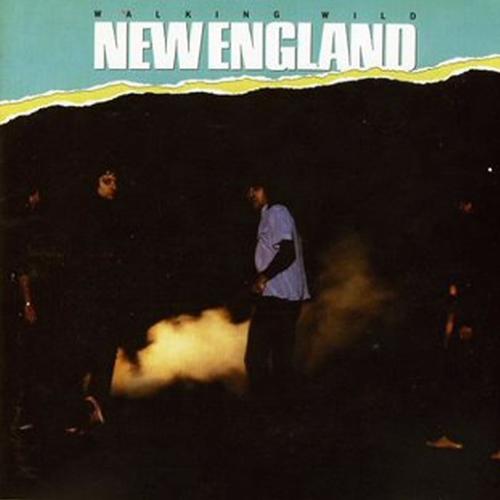
New England's third album Waking Wild
New England’s third album Waking Wild

LM: Your third album, Walking Wild, was produced by another big name musician, Todd Rundgren, who stripped the layered production of the first two albums. Was this a conscious effort by him and the band to go in a “leaner” direction or did it just evolve during the recording process?
John Fannon: That was a conscious effort of Todd’s. He had a very different style of production and sound. He did have some great musical ideas and direction for the songs especially vocal harmonies and string parts. We made this record in two weeks. Pretty amazing! I remember him telling me, “This is a great record. Don’t let Elektra F. it up.”
Hirsch Gardner: We had always loved Todd’s production and songwriting skills so I think that is what brought us to him. The album reflects all of that: his production style, songwriting and arrangements.
Gary Shea: We hired Todd because we were all big Nazz fans and having a very musical producer really appealed to us. There was no leaner decision, it was just how that music at that time needed to be built. There are still big vocal parts and strings bit like you say, it was just the evolution of the recording. That whole album by the way was written in two weeks at Todd`s Utopia Warehouse and recorded and mixed in under two weeks at his home studio in Woodstock. We are very proud of our achievement in pulling that off. The band had been playing together every day, all day, for over six years at that point and we were very tight musically.
Jimmy Waldo: I think it was a bit of both. We did a few songs, which had a more layered production on that record, which Todd really liked. But we also did songs like “Holdin’ Out on Me” and “Be My Dirty Dream,” which were basic rock and roll. They just didn’t need as much of a heavy layered approach as our first two records.

LM: Sadly, New England didn’t get much label support after your debut album. How much of an influence did that have on the band’s breakup at the time?
John Fannon: I think it had everything to do with the breakup.
Hirsch Gardner: By the end of the third album and tour we had played together since 1973. I think we were all pretty beat at that point.
Gary Shea: It was a huge factor. On both the second and third albums that were released on Elektra Records, the label picked singles that were not what we had envisioned. We chose “Conversation” on our second album for a single, but they said they wanted to showcase our musicality with “Explorer Suite.” Along with Todd on our third album, Walking Wild, we chose “Don`t Ever Let Me Go” which also featured Todd playing a guitar solo harmony with John. They chose “DDT” instead and a lot of female radio people didn`t like the humor and refused to play it.
Jimmy Waldo: We couldn’t continue making records and touring without a label’s financial support, so we decided to all pursue other projects. We didn’t stop working together because of personal issues – we had no way to make records or tour anymore. In those days there was no Protools, or high quality home recording. It was very expensive to make a record.

LM: Out of three albums you recorded, which one is your personal favorite?
John Fannon: Although I love all three albums, Explorer Suite is my personal favorite. My goal was to write songs that would give each of us even more space to showcase our creativity and diversity as musicians. I think we got there.
Hirsch Gardner: All of them. I still marvel over the playing, songwriting, sound of those albums. I’m a pretty big fan of New England!!!
Gary Shea: I like all three for many various reasons, whether it’s the song, the parts I played, or what was happening at the time. They are all great little stories and we gave them all our love and attention.
Jimmy Waldo: That’s a tough question. I really like all three for different reasons. All the songs on all three were really good. As a keyboard player, each album brought new challenges for me, which I loved.

LM: For anyone out there who is on the fence about coming to the show on August 15, what’s the number one reason why they should attend this show?
John Fannon: Rehearsals have been ROCKIN’. We still have that same powerful melodic sound and energy wrapped around great songs that has always been New England, and we are looking forward to debuting a new song! Come join us on August 15 at the Regent Theater in Arlington, Mass., strap on your seat belt and get ready for AN HISTORIC NIGHT OF POWER ROCK!!!
Hirsch Gardner: Who’s on the fence?!?!?! Give me there name and address!!!!!!
Gary Shea: Come down and see a real rock band that can play and sing its ass off melodically without sounding wimpy. No auto tune, no pre-recorded backing tracks, just four guys that have devoted their lives for that two hour moment in the limelight. We won`t disappoint.
Jimmy Waldo: We are a great band, that has great songs, and plays them live with lots of energy. We all love playing together and it shows. It’s a great show with lots of dynamics.
New England
New England


The Spire: Plymouth’s new home for inspiration

The Spire (Photo by Allison DiMaggio)

By LEAH ASTORE

Before the Spire Center for Performing Arts began drawing people to downtown Plymouth, Mass., the large spire atop the building was used to guide ships into Plymouth Harbor. Now, audiences and artists alike are sailing their way into The Spire for music, theater, dance and other performing arts activities.

After three years and countless hours of work, The Spire received an overwhelming response to their opening night gala in early April with a sold out crowd.

“From the very beginning, the community was behind this,” said Robert Hollis, president of the performing arts center’s board of directors.

The Spire’s goal is right in its name: to inspire and aspire.

“Opening weekend was just amazing,” Hollis said. “It suddenly hit me how great it was.”

The Spire has already been a draw for talented musicians, bringing in The Sea The Sea on opening night and Plymouth native and musician, Hayley Sabella, on April 18 for her CD release party.

“It was an honor to have my CD release party there, and I have a difficult time imagining a more perfect place for folk music and performance art to take place” Sabella said.

Along with playing regional, national, and local acts, The Spire will host theater about a third of the time.

“Our goal is to treat performers how they should be treated,” said Hollis “They put a lot of themselves in what they do and we owe it back to them.”

The intimate setting is also a unique aspect of the venue that musicians find appealing, Hollis added.

“The acoustics are incredible, the ambiance is haunting, and overall structure makes it a captivating listening room,” Sabella said. “It wouldn’t surprise me if the venue eventually gains national attention.”

As a long time musician and member of the arts community himself, Hollis is greatly invested in the arts in Plymouth. Over the last four years, Hollis has easily worked 80 to 100 hours a week to make The Spire what it is today, he said.

From renovations to generous donations, The Spire has come a long way and will continue to improve, Hollis said, adding that they will continue to put profits towards improvements to the sound system and outside renovations, such as repairs to the roof and steeple.

Since the beginning, it has been a project for the community, Hollis explained. After receiving $360,000 from the town, $285,000 for renovations, Hollis and the members of the Plymouth Performing Arts Center raised an additional $120,000 for a state of the art sound system, bar, and expansive stage. They were able to expand the building three times its original size.

Currently in the works is adding the ability to record the live performances for the musicians who play. This would give musicians the opportunity to sell live performance CDs of their concerts at The Spire.

A performing arts school is in the works, as well. The goal for the performing arts school is to have a place where people can learn musical theater, acting, and most importantly how to apply what they are learning, Hollis said.

The Spire is also proving itself as an economic draw for Plymouth by encouraging nearby communities to see shows in Plymouth and by encouraging Plymouth natives to spend more time in the center.

As the former Beth Jacob Community Center, The Spire is more than an arts center and an economic draw for the town it is a historical preservation.

“If the town didn’t take it then it would be apartments or condos,” Hollis said. “This way we preserve the building in the form it is now.”

The venue currently has performances booked through June, including a diverse line-up of pop, folk, jazz and theater productions.

For more information about The Spire or to purchase tickets to upcoming events, visit http://www.spirecenter.org.

EDITOR’S NOTE: Our publisher will present folk icon Tom Rush at The Spire on Friday, June 6, 2014, at 8 p.m. Tickets can be purchased HERE.

No regrets for 21st Century Fugitives

21st Century Fugitives (Photo by Kristen Pierson)

By LEAH ASTORE

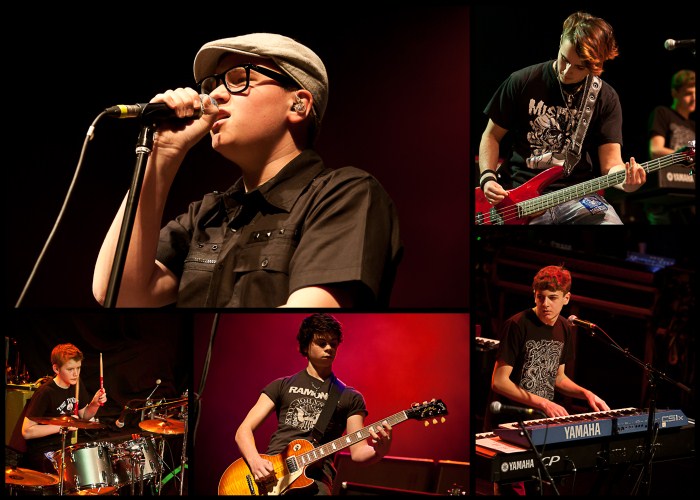
Not a lot of bands travel between gigs and high school, but the 21st Century Fugitives do.

Vocalist John Lucas, 15, guitar player Jimmy Bezreh, 15, bass player Jaden Mendola, 16, keyboardist Jackson Kehoe, 15, and drummer Gavin Burke, 14, make up the Boston based band known as the 21st Century Fugitives.

Since their start in 2011, the boys have grown, quite literally. At the time of the band’s creation, the oldest member was only 13 years-old. Now, all the bandmates are in their teens and continuing to prove that age doesn’t matter when it comes to playing pure rock and roll.

For the Fugitives, the difficult balancing act between music and school hasn’t hindered their success. Just in the last month the 21st Century Fugitives opened for the Dropkick Murphys at the House of Blues in Boston and won “Young Performer of the Year” at the 6th Annual Limelight Magazine Music Awards held on March 22 at South Shore Music Hall in Quincy, Mass.

Playing their music at the House of Blues in Boston for the Dropkick Murphys concert was an experience Lucas described as “unreal.” The band also had the opportunity to meet the lead singer of the Dropkick Murphys, Ken Casey, and even used some of the band’s equipment.

“I actually got to use [Casey’s] monitor pack” Lucas said. “I remember thinking to myself, I’m using Ken Casey’s monitor pack at the House of Blues, how can this get any more weird.”

Along with their performance at the House of Blues the 21st Century Fugitives were surprised and elated to win “Young Performer of the Year” on March 22nd.

“Some of the other people nominated were also really good,” Mendola said. “We were the youngest band, so we had that going against us.”

When they won, Lucas said, they didn’t even realize their name was called.

“When they pointed to us that was really a shock,” Lucas said.

Earlier this year, the Fugitives also released a new album aptly titled Regret Nothing. The album, which consists of seven tracks, was released on December 2013 with the help of Taylor Barefoot of Boston, who recorded the album with the Fugitives.

“Recording the album was really fun,” Lucas said. “[Barefoot] let us mess around a bit and experiment.”

Some of their experimentation for the album included playing a 12 string guitar in one of their songs and it seems their experimentation and passion paid off by gaining them national attention for some of their original songs including “Balls to the Wall” and “Epic Fail.”

The Fugitives already plan on releasing a new album sometime around September 2014, Lucas said. In the meantime, they’re spending their free time writing and practicing at their band space in Wakefield, Mass., with their manager and mentor Billy Jenks. The writing process for each song is collaborative and each member brings something unique to the band’s sound. Influenced by each of their individual music tastes, the boys are able to incorporate the best of hard rock, classics, and even the blues.

Bezreh’s inspirations include Stevie Ray Vaughn, Slash, and blues guitar, while Mendola is influenced by the opposite.

“I try to bring an old school vibe and a heaviness to the band,” Mendola said.

Other influences they listed include The Beatles, Lenny Kravitz, and Eddie Vedder.

To learn more about the 21st Century Fugitives, visit http://www.reverbnation.com/21stcenturyfugitives. You can also like them on Facebook at http://www.facebook.com/21stCenturyFugitives.

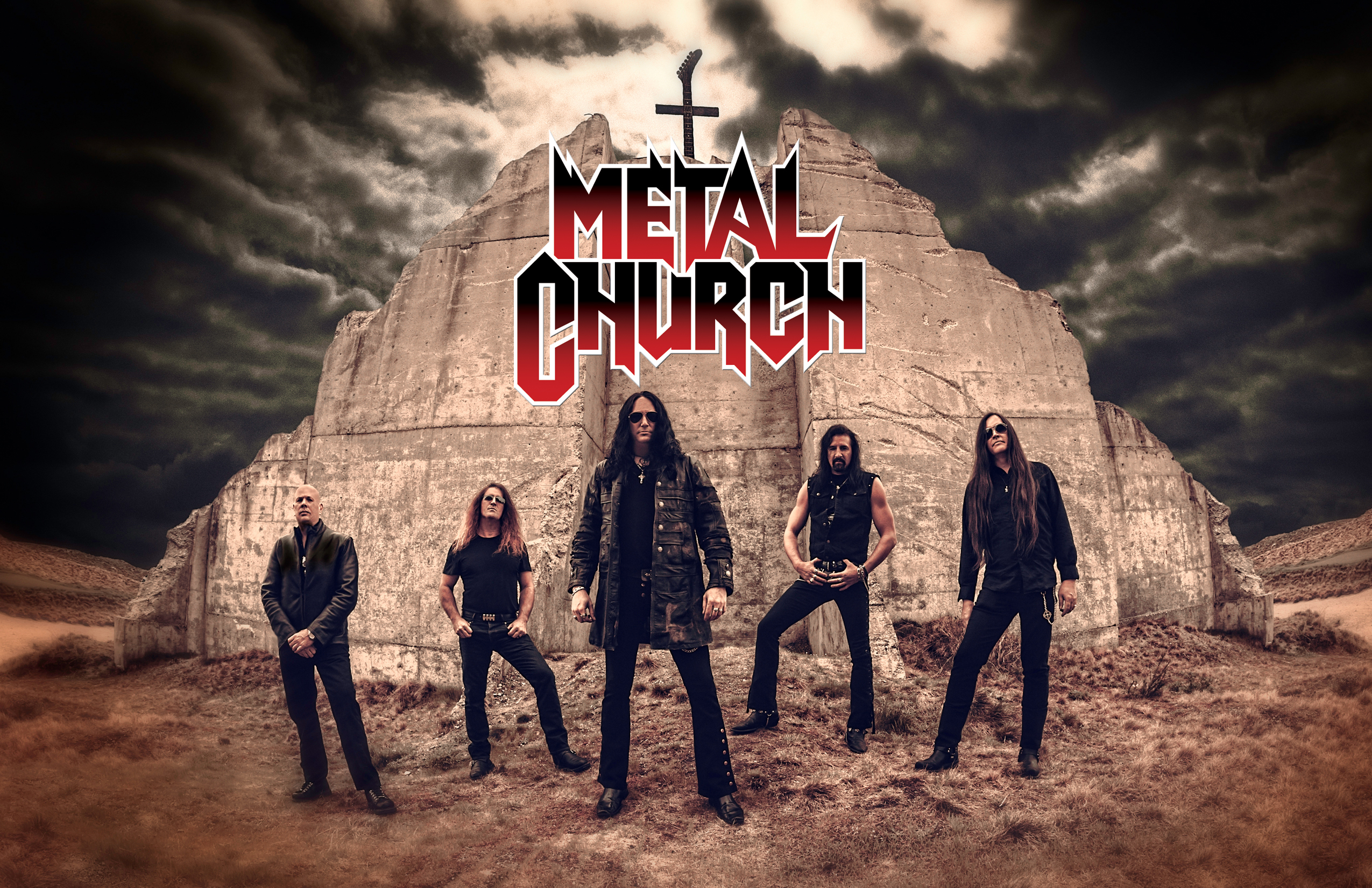
Metal Church ‘ready to bring it’

Metal Church
Metal Church

By JAY KENNEY

After seemingly calling it quits forever in 2009, veteran heavy metal band Metal Church reunited last year and released their 10th studio album Generation Nothing. The album marked a return to the classic metal sound of the band’s first two studio albums, Metal Church (1984) and The Dark (1986), while still sounding contemporary. We recently caught up with vocalist Ronny Munroe just days before their month long tour of the United States.

Limelight Magazine (LM): In 2009, Metal Church announced on its website that they were “calling it quits” due to a number of industry-related factors. What was the chain of events that brought the band back together again?

Ronny Munroe (RM): Basically [Metal Church founder and lead guitarist] Kurdt [Vanderhoff] called and said we had an offer from 70000 Tons of Metal (a heavy metal festival that takes place annually aboard the cruise ship the MS Majesty of the Seas] and what did I think about putting the band back together and I said, “of course, let’s do it.”

LM: Did you ever expect to be working with Metal Church again?

RM: Yes, I knew it would happen when it was supposed to happen and it did.

LM: You’re now the longest serving vocalist for Metal Church with four studio albums under your belt. How did you end up getting the position a decade ago?

RM: I went to audition for Kurdt’s “Vanderhoof” project actually and then I mentioned “hey why don’t we do Metal Church?” And after a lot of thought on Kurdt’s part he finally called me and said, “so you wanna do Metal Chuch, let’s do it.”

LM: Metal Church could have easily rested on its laurels and went out on the road playing material from their previous studio albums, but the band decided to record a new album. Was that always the plan when the band reformed?

RM: Yes, it was. We figured if we were to do the cruise show and have all that exposure that it would be a good time to do a new record. But more importantly, we wanted to give the fans the best possible record we could and I think we did that with Generation Nothing

LM: Reaction to Generation Nothing has been nothing short of stellar. We didn’t think it could get any better than your last studio album This Present Wasteland but it did. Are you pleased with the reaction to it?

RM: I am very pleased with the outcome and the reaction of the true fans of the band, but I am eager to do the next one.

LM: Can you share with us a little about the recording process for the album?

RM: It starts with Kurdt writing and recording demos and then sending them to me to listen too and then write too. We work out the harmony lines and collaborate on the lyrics. But it has always started with Kurdt. He’s a great writer.

LM: What’s your favorite song off Generation Nothing and why?

RM: I dig the whole record which is odd for me to say because I usually don’t listen to my own recordings, but this one I do. I’ll pick ‘Bulletproof’ because it’s about growing thick skin so the B.S. just bounces off.

LM: Metal Church is about to embark on a month long tour of the U.S. Are you looking forward to being on the road again?

RM: It’s going to be great to get out there and see and play for the fans again. It’s been a few years but we have the metal burning in our veins and were ready to bring it!

LM: What can your fans expect from this tour?

RM: A great night of music first off and just a bunch of guys having a great time playing and singing their asses off.

LM: Given the bands extensive catalog of music with three different singers, how does the band decide on a set list?

RM: We just pick what has always worked best and then throw in a couple different ones just to change it up a bit.

LM: Every member of the band is involved with a lot of different side projects. Will the band members continue with their side projects now that Metal Church is back together?

RM: Metal Church is a main priority for each and every one of us, but let’s be real. We’re not big enough to just survive on what this band makes. It’s more for the love of music. So yes we will continue doing our side stuff.

LM: One thing that really stands out about this band is that you are actively engaged with your fans, especially on your personal Facebook pages. What do you like most about engaging with your fans?

RM: The fans are everything to me/us. If we don’t have the fans then we’re just playing to ourselves. More importantly, it’s good to talk with people and find out what they’re about and how our music has touched or helped them.

LM: What’s the best part about being in this band for you personally?

RM: Getting to sing such thrash metal classics and having the opportunity to spread the metal love around the world and do some good.

LM: Apart from music, what do you do in your free time?

RM: Spend time with the kids and take wildlife pictures. When I’m not devouring the stage, I like to relax.

LM: Any final thoughts or comments?

RM: Thank you for the time and I hope to see all of you on the road one day soon!

For more information about Metal Church and to view their current tour schedule, please visit www.metalchurchmusic.com or www.facebook.com/officialmetalchurch.

Gundriver delivers the hard rock goods

Tom Potter of Gundriver (Photo by John Endow)

Consisting of four talented musicians who joined forces in Los Angeles, California, Gundriver is a rip-roaring, all gas-no brakes rock ‘n’ roll band who are influenced by Black Sabbath and AC/DC. The band recently released their debut album No. 1, which was recorded in less than three weeks. The album features nine tracks, comprised of the four basic elements that make up all great rock music: riffs, grooves, thunderous beats and soaring vocals. They are currently on the road supporting Michael Schenker on most dates of his Bridge the Gap tour. We recently checked in with Tom Potter, the band’s founder and guitarist, who was gracious enough to answer our questions while on the road.

Limelight Magazine (LM): You’re currently on the road supporting the legendary Michael Schenker. How’s the tour going so far?

Tom Potter (TP):  The tour’s going great!  It’s a real pleasure to be out on the road with such a great group of professionals, and we’re enjoying watching Michael Schenker perform every night.  Can’t say enough about the experience.     

LM: Were you fans of Michael Schenker prior to going on this tour?

TP: Definitely! But, I can personally say that I really enjoy live music and getting to watch one of rock’s great guitar players perform every night has been one heck of an experience. We’re all bigger fans now! Michael’s playing is brilliant and [vocalist] Doogie [White] sounds like a million dollars – those guys are the real deal! 

LM: You’ve received a lot of positive feedback on several social media sites about your live performances. What do you like most about performing live on stage?

TP: That’s great to hear!  Rock ‘n’ roll is a real organic thing and the connection with fans live is what we’re after.  Even though we’re all very proud of our first album, we think that our music translates live even better than in the studio and we love being able to bring it to people who love rock.

LM: Who came up with the name of the band? Why was Gundriver selected?

TP: I came up with the name, or actually took it from my time in the Army flying apaches. It’s a term used for people who fly gunships – and after going through the trademarking/domain name search it fit best. 

LM: You’re music is heavily influenced by bands such as AC/DC and Black Sabbath. What are some of the other bands that inspire you?

TP: Zeppelin, Pantera, Metallica, Megadeth, Guns N’ Roses – Jimmy Page had a huge impact on me with regards to song structure and the concept of tension and release so that’s evident in some of the songs. Stevie Ray Vaughn basically taught me to play the guitar, even though it was only through his music I learned how really digging into the guitar can bring out the various colors the instrument has to offer – the growls and screams if you will. 

LM: Your debut album Gundriver No. 1 was released a couple of months ago. How long did it take you to make the record? Are you pleased with the finished product?

TP: It took us six weeks of writing, rehearsing and recording to get it completed.  Those sessions took place in February and June of 2013 in Los Angeles. It was a really cool experience, basically to start things out [vocalist] Scott [Siegel], [bassist/vocalist Crazy] Tomes [and I would work out the basic song sections and vocal arrangements in Scott’s living room. After that, the songs got the final treatment when Alex [Rivas] brought drums into the mix – which usually included some final arrangements; for instance, the bass/drum solo section in “Nothing to Lose” was developed by Alex and Tomes in rehearsals only several days before we went into the studio and it came out great.

We’re pleased with it – obviously your first album teaches you quite a bit from the writing, arranging, recording and producing perspective, so, even though we love it, I would just expect things to get better as we progress. 

LM: Do you have any favorite songs off of it? What makes them your favorite?

TP: [We] all [like] “Against the Darkness.” There’s a funny story attached to that one. Tomes, Scott and I were writing at his house and I had recorded the main riff and we were listening to it.  Scott fell asleep on the couch and, while he was racked out, Tomes came up with that amazing vocal line and I wrote the lyrics while listening to the basic vocal line.  As the song went through the rehearsal/recording process it just got better.  We all are really proud of it. 

LM: The song “Outta My Head” from this album was picked up by the Local MusiCafe on WMVY radio that airs on Tuesday nights from 9 – 10 p.m. Since you’re a California band, how do you feel about it being picked up by a Massachusetts station located across the country?

TP: It’s great that anyone would play our music and we’re appreciative of that anywhere it occurs.  Scott’s the only Californian in the band, I’m a Virginian, Alex is from Illinois and Crazy Tomes is from Israel.  L.A. is great place to make a rock record and it’s where we all met, and since we travel so much it’s what we’re currently claiming as home. 

LM: What are your plans after the tour ends?

TP: Sleep, and then get back to writing songs.  We have a few in the can for our next album and want to push forward towards a strong follow up to No.1.

LM: How can fans purchase your music?

TP: It’s available on a wide variety of digital platforms such as iTunes, Amazon.com, etc., or you can pick up a CD at one of the shows! 

LM: Is there anything you’d like to add for anyone reading this?

TP: We’re really glad to see firsthand that the rock n roll public is still very supportive of the genre and we’re having a blast supporting Michael Schenker on this tour – don’t miss it! 

‘Silent Night, Deadly Night’ returns to the big screen

Silent-Night-Deadly-Night-Poster

By ADAM P. CRAY

Horror magazine Fangoria is partnering with Screenvision to bring 1984‘s controversial movie, SILENT NIGHT, DEADLY NIGHT back to the big screen beginning today, Dec. 4th,  and running through the 17th. The film will be fully uncut and re-mastered using a high definition transfer.

The film tells the tale of Billy Chapmen, orphaned at age five after witnessing the murder of his parents at the hands of a Santa suit-clad madman on Christmas Eve. Now 18 and out of the brutal grip of orphanage nuns, Billy is forced to confront his greatest fear, sending him on a rampage, leaving a crimson trail in the snow behind

When SILENT NIGHT, DEADLY NIGHT was originally released, angered parents picketed theaters where it was being screened, and asked oncoming patrons to sign petitions to have the film removed from theaters. Two weeks later, the film had been withdrawn. Now, it’s getting its most widespread release in nearly three decades.

We recently caught up with writer Michael Hickey, editor/second unit director Michael Spence, and producer Scott Schneid for an exclusive interview with Limelight Magazine.

ADAM P. CRAY: Scott-SILENT NIGHT, DEADLY NIGHT is getting re-released in theatres in a stunning new HD transfer. Did you ever expect the film to get such a widespread re-release?

SCOTT J. SCHNEID: Ummmm…no. (laughs). I had had hopes a few years ago that perhaps. Michael Spence and I were talking about this on the phone a few days ago. We saw the picture at a revival theatre in Los Angeles back in 2006 or 2007. 400 people lined up around the block! It was kind of like being at a ROCKY HORROR PICTURE SHOW screening and we just had a blast! It was like a revival meeting. Hooting and hollering and laughing just having a great time. At that point I was thinking “Wow, maybe there’s a market for SNDN as kind of almost like a ROCKY HORROR PICTURE SHOW item you could show at post-Thanksgiving up until New Years. Maybe on weekends in college towns for young people at revival theatres.” So that’s kind of where I was thinking.

ADAM P. CRAY: Wow!

SCOTT J. SCHNEID:  I did not expect distribution entities like Fangoria were going to come forward and actually get it out there on this many screens. No, I did not, and I am thrilled.

ADAM P. CRAY: Yeah, me too! Michael Hickey, question for you: how did the story first come about (the original screenplay)? And did the script evolve much from early drafts to the final shooting script?

MICHAEL HICKEY: The story had its original genesis in a script that was given to Scott by somebody whose name shall go unmentioned. Scott found the script useless except for the central idea of a slasher movie about Santa Claus. He never used any part of that script. I’ve never read it. Nobody’s ever described it to me, but he ran with the concept. Scott and his producing partner Dennis Whitehead brought me on board based on a spec script that I had written. We worked out the basic beats of the brand new story together then I went off and wrote a 30-page treatment fleshing out the plot and the structure and characters and some of the dialogue. On the basis of that treatment they got some money together to buy a screenplay and fortunately they bought it from me. I went off for I guess a couple of months and wrote the screenplay based on my treatment which was based on the story we’d worked out together. Of course with each step in that process the story became more elaborate and more completely fleshed and detailed. Once I handed in my screenplay, I would say that the movie changed virtually not at all on its way to the screen. So, the movie that you see this week is identical to about 99 percent of the screenplay that I turned in. All of the dialogue except a couple lines is word for word. Mr. (Charles) Sellier, the director, was very faithful to the written script when he made the film.

ADAM P. CRAY: And that leads into my next question for Michael Spence: so everything in the script was filmed and included in the final cut? Is there any of SILENT NIGHT, DEADLY NIGHT that we did not see? Any scenes or shots end up on the cutting room floor?

MICHAEL SPENCE: Nothing that I remember, nothing significant. This was a very low budget picture with a fairly short shooting schedule. You don’t really have the opportunity a lot of times to overshoot stuff. As far as my memory is that virtually everything that was in the script ended up in the movie.

ADAM P. CRAY: Beautiful!

SCOTT J. SCHNEID: I just want to chime in for one second. Michael Hickey you might remember this as well. There were two short scenes in Michael Hickey’s original screenplay which did not make it into the movie. Michael-remember when the family first arrived at the mental hospital? There was a scene where they were walking down the corridor and some crazy old lady grabs Billy and says “He’s the dopey one, Doctor. Lock him in the room!” or something like that. Is that a scene we originally had in our script?

MICHAEL HICKEY: I don’t remember…There’s a extended edition out on video which has some footage in it that was not in the theatrical release. But having looked that version over on Youtube you can tell the new footage because it’s “work print” or something. Quality goes bad when the added footage comes up. It seems to me (and it’s been a few years since I wrote that) there were no complete scenes. There were trims and ends. It was just some stuff that was tightened for pace.

ADAM P. CRAY: And Scott: as producer, what was the biggest challenge during pre-production and then into production?

SCOTT J. SCHNEID: I wish I could answer that question because Dennis Whitehead and I had co-executive producer credits on the movie. We developed the script with Michael from inception. However, we brought the script to a gentleman who had a deal at Tri Star Pictures in 1984 named Ira Barmak who had a deal at Tri Star to make some low budget films. What ended up happening unfortunately for Dennis and I was that once we made a deal with Barmak, he got the picture funded by Tri Star. We were just young guys 26 or 27 years old and this was our first Hollywood experience and we were kind of frozen out of the production. So, Dennis Whitehead and I developed “the baby”. Michael was the writer. Dennis and I also raised approximately $40,000 at that time for seed money to hire Michael, to pay Michael. Part of that was Michael and we did a lot of the hard work and unfortunately did not get to see our “baby birth”. We were basically locked out of the situation which was sad for us. So, Dennis and I had developed it, raised a huge amount of money, came up with the concept. Michael did all the writing then we did not get to see it come to life. A lot of first time Hollywood people have that kind of experience. It does happen.

ADAM P. CRAY: Oh yeah. I’ve heard stories. (laughs) Scott-what was your reaction to the public’s reaction during the film’s initial release? Did you ever expect parents picketing theatres?

SCOTT J. SCHNEID: No, I did not. I don’t think Michael Hickey or I or Dennis were [when] developing the script. We were just psyched that we were in the middle of this maelstrom of genre movies getting made. Our horror movie/slasher movie seemed a little bit better than your then-typical formulaic slasher movie with a back story told in two minutes somewhere about halfway through the movie. You know the killer is anonymous and the back story is told in two minutes. We decided as we developed the treatment and the script that the back story was actually a really fascinating part of the story. We wanted to get to know this character and see what happened to him from when he was a child. How he was traumatized. So we were just excited about developing this cool script. We knew we were developing an R-rated movie for the teen audience at the time. I can’t speak for Michael but I never thought for one second that there was going to be that kind of backlash.

MICHAEL HICKEY: We’re often asked if we ever expected any of that and since it happened in such a big way there’s a feeling that it must have been inevitable, that you must have seen it coming. But, in reality, to my knowledge, nothing like that ever happened before. It was completely unpredictable. Completely unexpected by Scott and me and Dennis. I’m sure that Tri Star didn’t expect this because their hair caught fire when it happened. It was a total surprise. And who could’ve imagined that the CBS Evening News would cover the opening of a movie like this. What they were covering of course was the controversy. But it just took hold and the fire spread and it got completely out of control…which I thought was hilarious and wonderful. I think Scott did too. Up until Tri Star pulled it. But the movie’s still alive. It was the #3 top grossing movie the weekend that it opened.

SCOTT J. SCHNEID: The picture was made for $1,065,000 I believe it was a negative pickup and in ten days it grossed almost $4,000,000 or a little more at the box office and that was only really on about one-third of the screens in the country. Tri Star was going to release the picture wide to the rest of the country two weeks later but because of the controversy…It was my understanding that Coca Cola (which was a part owner of Tri Star at that time along with CBS and HBO) said “we want this picture out of theaters”.

MICHAEL HICKEY: I guess we showed them didn’t we! (laughs)

ADAM P. CRAY: For sure! Question for Michael Hickey: as you were writing the script, had you thought, or any of you, thought of a future franchise? With sequels being so prevalent today, you can plan for two or three films if the first is successful. Were you guys thinking ahead like this as you were producing the original?

MICHAEL HICKEY: As you can tell if you watch the last minute of SNDN, a sequel was very much on our mind. Basically our movie hands the sequel concept off to whoever would take it up. By setting up the character of Ricky, that last moment in which he looks at the axe on the floor and he has this demonic look on his face and he says “Naughty”. That moment is the reason that there is a younger brother Ricky in the movie at all. That’s the reason the infant is present in the car at the beginning (although his screaming in the night was effective). Yes, we had it in mind although I think that just the implication that there was something more to follow probably is an idea that fulfills itself just by making the suggestion. It could’ve stopped there without a sequel. I think that would’ve been just fine

SCOTT J. SCHNEID: When we were developing the material with Michael Hickey, Dennis Whitehead and I always felt this premise, the script developed and the treatment were something that yes, absolutely was franchiseable. It was going to lend itself to multiple sequels hopefully and we knew that we were pretty certain of that. Unfortunately, as I was telling earlier in the conversation, Dennis and I ended up getting frozen out not only in the production of the film but of any future involvement of any sequels. Had we had future involvement, we would’ve gone back to Michael (Hickey) to write SNDN2 and God knows how many other SNDN’s. (laughs)

MICHAEL HICKEY: Whoever it was that made the sequel clearly had no interest in a new script, a new thought, a new idea. 80 percent of the package is footage that they recycled from the original.

SCOTT J. SCHNEID: 3, 4 and 5 which were all made by LIVE Home Video had nothing to do with our movie. They just used the title: SILENT NIGHT, DEADLY NIGHT Part 3, Part 4, Part 5. I don’t even think there was a Santa Claus character. They were just capitalizing on the title and the video boom of the mid-to-late 80’s and they were using the title just knocking out these crappy made for video sequels that have nothing to do with the original. For me it was a sad day in a way. Michael certainly would’ve loved to have a hand in steering the ship in the future for SILENT NIGHT’s “children” and he didn’t get a chance to do that.

MICHAEL HICKEY: I definitely would’ve. I don’t think we have anything more to do with the concept once SNDN is over. What can you do that’s not just a repetition?

SCOTT J. SCHNEID: Collect your royalties, Michael! (laughs)

MICHAEL HICKEY: Yeah, that’s true.

ADAM P. CRAY: I think Part 3 actually had the Ricky character, but didn’t have any other resemblance to the first film. That was about it.

MICHAEL HICKEY: I never saw any of them so I suppose I shouldn’t comment on their quality (which I think was atrocious).

SCOTT J. SCHNEID: I’m probably one of the few people in the world that saw Part 2 theatrically. It was released at the Egyptian Theatre on Hollywood Blvd. in the back theatre. You know, the Egyptian has the main theatre, then two small theatre bunkers in the back and I was there with three people I think and I could not believe what I was watching. Half, if not more of the movie, was footage from our movie. And I heard that they did it for like $250,000 and just shot the new footage and wrapped the footage from our movie around the new footage.

MICHAEL HICKEY: Let’s talk about ours some more.

SCOTT J. SCHNEID: Yeah, I was amazed.

ADAM P. CRAY: (laughs) I heard that with that second film, they were just going to recut the first film and not even have new footage so that could’ve been much worse. (laughs)

SCOTT J. SCHNEID: (laughs)

ADAM P. CRAY: Why do you guys think the original film has become such a cult classic among horror fans? What do you think sets it apart?

SCOTT J. SCHNEID: Now that all that craziness from the mid-1980s is long gone (all the mothers and the madness and publicity) people can watch it now and appreciate what Michael said before. There’s a real edge of black humor to the movie and satire. A black humor edge to the movie that really comes across when you remove it from all that craziness that was going on in the maelstrom of publicity and craziness that was going on when it came out. And now all these years later you look at it and wow there’s actually a story there that’s a cut above (excuse the bad pun) the typical boring formulaic slasher movie from that era. And on top of it, it’s got that fantastic edge of black humor that Michael brought to the project. I think that’s the big reason it’s lived on.

ADAM P. CRAY: I remember watching it as a young kid and even thinking that the scenes are logical. Everything in the film is logical. How he becomes the killer. It’s organic and I appreciated that even back then. Not just being a cut ‘em up from the beginning. I really like the backstory and what you all did.

SCOTT J. SCHNEID: Thank you.

MICHAEL HICKEY: Thank you. That was really the challenge. That the film presented to us: how do you end up in a Santa suit with an axe in your hand? (laughs)

ADAM P. CRAY: Right!

MICHAEL HICKEY: And so we backed out of that. I’m glad to hear you say that it struck you as logical because that was really a big part of the effort: to sort of line up the dominoes in a way that is sequential. It’s not just the first one but then it’s always fun to watch them fall. You know they’re gonna fall. You know how it’s gonna end up. I always assumed the audience for this movie knew where it was going from the beginning. So watching it get there, watching what happens to Billy and how his descent into Santa Claus-clad madness is pretty ordained. It’s inevitable. He can’t extricate himself from his fate. And so we’re watching fate play itself out on him and I actually think it’s funny. It all is a little bit over the top, tongue in cheek and the audience seems to respond to it which is what I was going for.

SCOTT J. SCHNEID: It’s funny that you say that Michael because when we were trying to set the film up, with Dennis Whitehead, my partner, and get money prior to Tri Star coming into it, I had a meeting with a Canadian producer that had read the script. He said “It was kind of boring in the first half. I really like the second half when Santa goes on his rampage. Why do you have to have all that backstory in the beginning and all that?” I said, “That’s what’s different about it. That’s what’s interesting about it. So you almost sympathize with the character and you understand what that character went through. How the character became and why he became what he became.” I was just getting Formula Slasher 101 back from this money person. That’s not what Michael, Dennis, and I wanted.

ADAM P. CRAY: I remember watching it for the first time paired with HALLOWEEN I & II. At the end of SNDN when Billy dies, I felt terrible. Because of that back story, you understand him. You understand where he was coming from. Maybe over the top, but still very effective.

For a complete listings of screenings in New England, visit http://www.screenvision.com/cinema-events/sndn/#theaters_list.

Adam P. Cray is a Los Angeles-based filmmaker and entertainment correspondent. His work includes killerfilm.com and morehorror.com and he has worked at various capacities for MGM and 20th Century Fox studios. His film work can be seen at facebook.com/cinemastarproductions and youtube.com/cinemastarprods.

http://www.youtube.com/watch?v=8H2XzS0j4CU

Guitar virtuoso Vinnie Moore helps ground UFO

UFO
UFO

By PAUL BIELATOWICZ

As British hard rock pioneers UFO prepare to bring their show to the Narrows Center for the Arts in Fall River, Mass., on Oct. 14, guitar hero Vinnie Moore took time out to chat with Paul Bielatowicz about his life-long love affair with music.

The name Vinnie Moore was revered in guitar circles long before he joined veteran British rockers UFO.  Moore began playing guitar at the age of 12, “I got my first guitar for Christmas. I was really into guitar bands and wanted to play because of Jimmy Page, Ritchie Blackmore and Brian May.” However, his first encounter with the instrument almost proved to be his last, “It was much more difficult than I had expected, and I almost quit.” Thankfully, Moore persevered, “There was a love, and that kept me going. As I progressed it seemed to become easier and more natural.  At about the two-year mark I got more serious and started practicing for a couple of hours a day. Soon after that I became obsessed, and at that point I couldn’t stop because the guitar owned my soul!”

Moore began playing in local bands and, a few years later, a major guitar magazine featured him as an up-and-coming star. It was this article that led to his first big break, “A production company in Los Angeles was casting for a Pepsi TV ad which featured a rock guitarist. They saw my write up in Guitar Player Magazine and gave me a call one January evening. The next morning I was on a plane to L.A. I went through the audition process and was chosen to do the music for 30 and 60 second versions of the commercial. It was just amazing for me, hearing my playing on national television a few times a day. The ad was a great kick starter for my career as it helped create a bit of a buzz before my first record came out.” The ‘buzz’ did the trick, and his debut solo album was a huge success – seemingly overnight, Vinnie Moore had arrived! 

Over the years, Moore has enjoyed a long and varied career. “Being a solo artist, a member of UFO, playing with Alice Cooper, guesting on several projects… man, it’s all been great and I feel very fortunate. There have been many highlights but I think that maybe the journey itself has been the best part.”

Aside from his reputation as a performer, Moore has also earned a name for himself as a world-class teacher.  His two tuition videos, released back in the 80s, provided guitarists with an insight to the closely guarded secrets of a virtuoso guitarist.  Today, Moore is still involved in teaching – when he’s not on tour or in the studio he can often be found giving guitar master classes.  Asked what advice he gives to students, he responds, “I think that love and passion are the most important things. If you have those first, then all the other things will somehow fall into place. Listen to as much music as you can because you will learn from it all.  Find a teacher because that will help you learn things more quickly. And find a group of friends who play, because you will learn from one another. Just play as much as you can. I learnt a lot from my teacher, listening to records and from playing in bands with guys who were more accomplished than I was. But nothing helps as much as sitting in the bedroom and putting the time in.”

Speaking to Moore, it’s clear that his childhood love and passion for the guitar is still very much alive. He remains hungry for musical development and the continued perfection of his art, “If I didn’t feel like I was making some sort of progression I would probably quit. This is what keeps it exciting for me. Music is so incredibly infinite and there is always something new to learn and explore. It’s not something where you learn it all and then you’re done. There always seems to be something that you didn’t know about before; it’s amazing what can be done with 12 notes.”

UFO is a band with a rich heritage of guitar players – Michael Schenker (Scorpions), Bernie Marsden (Whitesnake), and bassist Billy Sheehan (David Lee Roth, Mr. Big, The Winery Dogs) count among Moore’s predecessors. Moore has been a permanent fixture in their line-up for the past decade, appearing on four studio albums, including last year’s critically acclaimed release Seven Deadly that returned the band back to the charts. Although UFO boast a serious pedigree and have indelibly carved their name into rock history, one can’t help but notice their desire to have fun and enjoy the ride.  This goodtime attitude is evident in their music and performance. Concertgoers can expect,A lot of energy and inspiration. We do this because we still love expressing ourselves in front of an audience. The day that I don’t feel that, then I don’t want to do it anymore. We give every show our all and feed off the energy from the crowd.  Song-wise you will hear something old, something new, something borrowed, something blue.”

With a career spanning 30 years and counting, Moore’s eyes remain fixed firmly on the future, aiming to, ”Continue doing what I love, keep being inspired and fascinated by music and keep playing for people.” With a new solo album in the pipeline, Moore’s hunger and love for his art continues to propel him forward on his musical journey, as he wows audiences worldwide.

Louis St. August and Gene D’Itria of the Revere-based rock band MASS, who received considerable airplay on MTV and radio with their single “Do You Love Me” in the 1980s, will open the show with a rare acoustic set.

The Narrows Center for the Arts is located at 16 Anawan Street. Tickets can be purchased online at www.narrowscenter.org, by calling 508-324-1926, or in person at the box office. Hours are Wednesday through Saturday, noon to 5 p.m. and during all shows.

Howie to have his ‘Day’ at Narrows on Sept. 20

Howie Day
Howie Day

By JESSICA A. BOTELHO

With two Top 10 hits and more than a million albums sold, singer-songwriter Howie Day will be performing at the Narrows Center for the Arts in Fall River, Mass., on Sept. 20th as part of a northeast tour. Rebecca Correia, a singer-songwriter from Rochester, Mass., opens the show.

Along with a keyboardist, cellist and percussionist, Day plans to treat fans to an unplugged gig of new material yet to be released, plus his platinum single “Collide” and “She Says.”

“We call it ‘living room acoustic,’” said Day. “The four of us got together and were like, ‘if we can’t rehearse this in my living room then it’s going to be too much.’ It’s pretty laid back.”

Between shows, he’s been visiting Boston to record what will be his fourth studio release, an album that will likely be available in late 2013 or early 2014. While it’s yet to be titled, he’s laid down a few tracks and said having the opportunity to perform a majority of the songs before recording them has been a unique experience, as getting the chance to test the music on the road allows him to make adjustments in the studio.

“It’s the reverse of the way most people do it and makes it a lot more fun to play live,” Day said. “In the past, I’ve made albums and then I have to try to figure out how to play it live, whereas this one will be ready because we’re already playing it live. And it reflects a live show, which is great.”

He decided to record the album in Boston partly due to his longtime friendship with producer, Mike Denneen, who is based in Bean Town and produced most of Day’s music. Day trusts Denneen and often seeks his advice.

“He’s like my oracle,” said Day.

The writing process, he said, has been different to past albums. He’s done a great deal of collaborative writing, but he’s doing most of this one solo.

“With this album, I’m trying to write on my own a bit more, which is more difficult because you have to be disciplined about it,” he said, noting that singer-songwriter Sam Bisbee has encouraged and inspired him via “off the cuff” social meetings. “It’s like having a trainer at the gym: you have to show up. And you want to record and do things as best you can and not look back. It’s tough to not look back, but you have to just let each recording have it’s own moment. You have to keep evolving and move forward.”

During one of his trips to Boston, he performed with the Boston Pops at the Esplanade on the Fourth of July. He was flattered – and excited – when they reached out to him and asked him to join them for the show.

“It was one of the greatest days of my life and that’s not an exaggeration,” Day said. “It was amazing and fun.”

When he’s not writing, recording or performing, Day is taking pictures. He loves photography, and “is a sucker” for snapping shots of landscapes. Having a creative outlet he is able to explore is important for him as an artist.

“I’m really not good at it, but it’s soothing,” he said. “When you have a camera, you see everything differently because you’re looking for something to take a picture of. It makes you more aware of the world around you. Somehow that augments the whole writing process because you see things a bit more objectively than you would in your own bubble or routine.”

He often takes photos while on tour, noting that he enjoyed capturing special moments during a few visits to Iceland last year. These experiences creep their way into his music.

“I love it because when I play songs I think about, ‘this is when I was on that beach and it was snowing,’” he said. “It comes through to the audience.”

And while some audiences have enjoyed his cover of the “Game of Thrones” theme song at solo shows, it’s not played every night.

“We do that because we think it’s funny,” said Day. “It’s an icebreaker. If it seems a little tense, we’ll play that and it changes the whole direction. I like to make people laugh.”

But fans at the Narrows are sure to experience his charming and witty banter, as well as his use of effects pedals and loop-sampling techniques, a style he typically turns to at solo gigs. The band is working on injecting it into performances, along with a cover of Elton John’s “Come Down in Time.”

“It’s a very underrated Elton John song,” Day said. “We’ve been having a lot of fun with that one, too.”

Meanwhile, Correia, a guitarist and piano player who spends half her time in Nashville and the rest in her hometown of Rochester, said she can’t wait to open for Day.

 “I’m super psyched,” said Correia, who has also opened for an array of notable musicians such as Natasha Bedingfield, Shawn Colvin, and Livingston Taylor. “I got to see him play in Nashville about a year and a half ago and I’m thrilled to be playing with someone who makes music similar to mine.”

The Narrows Center for the Arts is located at 16 Anawan Street in Fall River. Tickets can be purchased online at www.narrowscenter.org, by calling 508-324-1926, or in person at the box office from Wednesday through Saturday, 12 noon to 5 p.m. Tickets will also be available at the door on the day of show.

Inspired by Josh Groban, Jordan Paiva lives the dream

Jordan Paiva
Jordan Paiva

By KATIE BOTELHO & JAY KENNEY

Jordan Paiva, of Dartmouth, Mass., is a 21-year-old musician and DJ who is living the dream. Since he was 11, he has been singing and teaching himself to sing in different languages. For many years, his idol was Josh Groban who he listened to for inspiration. In November 2011, he had the opportunity of a lifetime when Groban asked Paiva to come on stage with him and sing “You Raise Me Up” in front of thousands of people at the Dunkin Donuts Center in Providence, R.I. He also runs a successful DJ business called Music of Our Lives. We recently caught up with Pavia who was gracious enough to answer our questions.

Limelight Magazine (LM): Please introduce yourself to our readers. Where did you grow up and when did you decide to get involved in the music business?

Jordan Paiva (JP): My Name is Jordan Paiva. I’m 21 years old. I was born in the Azores, which means I am 100% Portuguese. I have always been an entertainer ever since I was a little boy, but I started to grow into classical music and opera when I was just 11 years old. Classical music is now one of my biggest genres of music that I sing.

LM: On your last CD, you have a song that you sung in Italian, how many languages do you speak?

JP: On my first album called AMOR I sing in Italian and Latin as well as English, but I only speak English. I enjoy learning different languages when singing and that is one of my biggest hobbies. I am proud to say that I can sing in English, Portuguese, Spanish, French, Italian, and Latin.

LM: You also won an award last year at the Portuguese Music Awards that were held in New Bedford. What award did you receive? How did you feel after receiving it?

JP: Back in February winning the award for BEST CLASSICAL MUSIC was absolutely SHOCKING! I never thought that in front of the whole Portuguese community around the globe that I would have won that award! It was such an honor and I cannot wait for next year! It made my Portuguese family proud that someone with NEW TALENT would take the award for such a beautiful song in Italian!

LM: According to your Facebook page, your next studio album is coming out in 2014. Have you begun recording the album yet? What can we expect?

JP: The next album that I will be releasing in 2014 is called International. This album is going to be my biggest challenge yet. I will begin recording in October. Facing the challenge of squeezing six languages (English, Portuguese, Spanish, French, Italian, and Latin) and the right songs to be “internationally” known for singing in the most popular languages so that I can one day perform them for different cultures.

LM: Do you plan to record the songs for your new album with a band?

JP: The music that each track comes from is beautifully made through different orchestras recorded then I sing to the music. I hope to one day get to record with an actual orchestra in the studio.

LM: Although it’s been covered already by local news outlets, you had the opportunity of a lifetime when you were asked by Josh Groban to come on stage and sing “You Raise Me Up” with him at the Dunkin Donuts Center in Providence, RI, in November 2011. How did you get that chance? What was that experience like? Was that the largest crowd you ever sang in front of?

JP: Back in November of 2011, I attended a Josh Groban concert who is one of my BIGGEST IDOLS!! They had a Q&A section where you could ask Josh any question you wanted. So, at 19 years old, I told myself that I wanted to SING with my idol Josh Groban. Shortly after the last question out of 50,000 people, my question was answered with a YES!! The experience was more than overwhelming. I couldn’t stop smiling for the longest time. My DREAM had come true and to sing in front of all those people was my biggest audience yet and the crowd went WILD! I wasn’t nervous I was extremely happy! Hope to do it again at his next concert in October 2013 at the TD Garden in Boston.

LM: Other than Josh Groban, what other artists do you listen to for inspiration?

JP: Other than Josh Groban I enjoy singing classical music from Andrea Bocelli, Michael Buble, Frank Sinatra, Elton John, Elvis Presley, Nat King Cole and so much more to go on!

LM: You also run a DJ business and have quite a following. How did you get involved with that? What do you enjoy about that type of work?

JP: Being a DJ is a fun job. When people book their parties with me, they don’t just get a DJ that stands behind his table and presses play…they get an entertainer!! I get out there and I dance with the crowd, teach them some new dances and get everyone active and playing games and making it a never ending party of FUN! So if anyone ever needs a fun and outgoing DJ they can always visit us at  www.musicofourlives.us

LM: Where would you like to see yourself in the next five years?

JP: In the next five years I hope to have the world know my story and how much passion I have in my music and my singing!

LM: How can our readers reach out to you?

JP: I can be found on Facebook at www.facebook.com/JordanPaiva247 or as a DJ by going to www.musicofourlives.us. People can also go to www.reverbanation.com and search “Jordan Paiva” where they can buy my album. If they get bored one day, they can go to YouTube and key in “Jordan Paiva” and they’ll have over 400 videos to watch.

Organic farming inspires Hayley Sabella

Hayley Sabella (Photo by Leah Astore)

By LEAH ASTORE

With music as fresh as the vegetables she harvests, local singer-songwriter and organic farmer Hayley Sabella is proving her “farm fingers” are just as good at strumming a guitar as they are at picking tomatoes.

Bright and cheerful, Sabella seems to have the unlikely rough edge you’d expect from a farmer, but Sabella isn’t afraid to roll up her sleeves and get her hands dirty, which she has done now for three summers. Alongside her music, Sabella works at both Holmes Farm in Manomet, Mass. and Soule Homestead in Middleboro, Mass.

On August 3, Sabella took a break from farming and played an intimate outdoor concert alongside local singer-songwriter Hayley Reardon at the Homestead. Seeing her perform at the farm where she works, it was clear where Sabella’s music gets its raw, honest quality.

“It was cool to look around and see [Soule Homestead] in a different context…it definitely cast the place in a different light,” she said.

Although farming began as a seasonal job while she was an English major at Bridgewater State University, it has become a passion and inspiration for her. This inspiration can be heard in her 2012 EP Farm Fingers.

Along with playing intimate local venues and house shows, Sabella is preparing to record her first full length album to be titled King Solomon, after one of her songs on her Farm Fingers EP.

In October, Sabella will travel to Minot, Maine, to record for the second time with Josh Ray at Owl Head Studios.

“I want to invite a lot of friends to come up and play their instruments and I think overall it’s going to be great and people are going to want to see what it’s like,” Sabella said.

To fund the album and a “behind the scenes” documentary, Sabella said she plans to launch a Kickstarter campaign.

“I’m looking for minimally $10,000,” Sabella said. “I want to record the record and also hire a film crew to document it because it’s in the middle of the woods…and it’s going to be a really cool process.”

In the meantime, Sabella is playing around three shows a week at intimate venues throughout New England, including Sarah Blacker’s upcoming CD release concert at Club Passim in Cambridge, Mass., on August 22, 2013, at 7 p.m.

“[Blacker’s] delightful – she’s just such a nice, warm person,” Sabella said.

Along with encouragement and advice, Sabella said Blacker has helped to introduce her into the music community in Boston. After the projected release of King Solomon in February 2014, Sabella hopes to tour and spread her roots even “further and wider”.

“I’m very excited and I’m pleased that I am so busy, it means I’m on the right track,” she said.

For more details about Sabella and her King Solomon album, visit facebook.com/hayleysabellamusic.