The Cassette Chronicles – FASTER PUSSYCAT’S ‘WAKE ME WHEN IT’S OVER’

By JAY ROBERTS

The Cassette Chronicles is a continuing series of mini reviews and reflections on albums from the 1980’s and 1990’s. The aim of this series is to highlight both known and underappreciated albums from rock, pop and metal genres from this time period through the cassette editions of their releases. Some of the albums I have known about and loved for years, while others are new to me and were music I’ve always wanted to hear. There will be some review analysis and my own personal stories about my connection with various albums. These opinions are strictly my own and do not reflect the views of anyone else at Limelight Magazine.

FASTER PUSSYCAT – WAKE ME WHEN IT’S OVER (1989)

I swear if you had asked me to name any Faster Pussycat songs other than “Bathroom Wall” from their first album and “House of Pain” from this album, I wouldn’t have been able to come up with an answer.

For me, Faster Pussycat was just a band that I was never all that interested in. Other than those two songs, I never felt the urge to delve further into their back catalog. And this is with having a friend who thinks singer Taime Downe is like the second coming or something.

So when I pulled Wake Me When It’s Over out of the Big Box of Cassettes, I couldn’t help but think that this could end up being a slog of an album for me to get through and then turn around and write about.

You could’ve knocked me over with a feather after I finished listening to the album however because I was really quite taken with the majority of what I heard. And I realized that I actually did know a couple of other songs without even realizing it.

The band’s second album found their sound seemingly becoming more blues rock based as opposed to the more straight up glam sound of their debut record. And though I never paid much attention to it in the past, I found that this new kind of sound was a killer road for them to take.

The album features twelve songs on it and nine of them are straight out foot to the floor rockers. Of course, as I said before, the album is best remembered for the hit ballad “House Of Pain”. And as I thought about it, I think the ballad is kind of why I never really got into the band. Or at least in part. I just didn’t like the vocal on the track. It struck me then and it still kind of strikes me now as being entirely too “whiny” in the execution of the vocal performance. I know that power ballads were a requirement and all, but this one just doesn’t sit well with me at all. The album also closes with another ballad, “Please Dear”, which is only marginally better.

But I found that when the band is just sending out one six string riff and pounding rhythm to the heart after another, this is a powerfully cool sounding collection of tunes.

The song “Where There’s A Whip, There’s A Way” is probably a theme song for any number of BDSM themed parties these days but listening to it straight out got the album off to a great start. The song “Little Dove” was also quite the cool little rocker too.

Those two songs I mentioned that it turned out I did know despite my failure to remember them were “Poison Ivy” and “Tattoo”. As each of the two tracks played, I almost immediately remembered them and could even hear myself humming the music in my head along with the tape. And I could actually remember the chorus to each song, which really surprised me.

Other than drummer Mark Michals, the band members each had at least one co-writing credit for the songs on the album. In varying combinations it was Downe and guitarists Brent Muscat and Greg Steele who did the heaviest lifting in the writing though.

The best part of the album was discovering new-to-me tracks like “Slip of the Tongue”, which I found to be one of the best tracks and probably a song that those of us who have to this day missed out on the band would point to as an “undiscovered gem”.

I’m not sure that I was totally sold on the song “Arizona Indian Doll” but it was rather intriguing nonetheless. Instead of a blues rock foundation, this one is more of a swampy bluesy song that delivers a much slower pace and lighter tone than all the other rock tracks. It takes a little bit of work to really get into the song so I’m not quite sure how to take it even as I write this article. But it does make an impression, so it can’t be that bad!

Okay, I admit it! I seem to have really missed the boat on this particular Faster Pussycat album. Taken on its own merits, this is a stunningly entertaining release. It might not fuel my desire to take in the entire discography of the band, but Wake Me When It’s Over has officially woken me up to the possibility that I may need to do more to familiarize myself with the band’s music to have a better formed opinion about them.

NOTES OF INTEREST: Drummer Mark Michals was fired from the band during the supporting tour for Wake Me When It’s Over. Quiet Riot drummer Frankie Banali filled in to play the rest of the dates.

The band broke up in 1993 but got back together in 2001. The reunion tour saw guitarist Greg Steele leave the band halfway through the concert trek and his place was temporarily filled by L.A. Guns guitarist Tracii Guns.

The video for “House of Pain” was directed by the now quite famous movie director Michael Bay.

The Cassette Chronicles – Quiet Riot’s ‘Condition Critical’

By JAY ROBERTS

The Cassette Chronicles is a continuing series of mini reviews and reflections on albums from the 1980’s and 1990’s. The aim of this series is to highlight both known and underappreciated albums from rock, pop and metal genres from this time period through the cassette editions of their releases. Some of the albums I have known about and loved for years, while others are new to me and were music I’ve always wanted to hear. There will be some review analysis and my own personal stories about my connection with various albums. These opinions are strictly my own and do not reflect the views of anyone else at Limelight Magazine.

QUIET RIOT – CONDITION CRITICAL – (1984)

It is no easy thing to follow up a big hit album. It is even more difficult to follow up said hit album when it reached the levels of success that Quiet Riot’s Metal Health did.

The sales and acclaim that followed that album broke down a number of barriers for other metal bands. Unfortunately for Quiet Riot themselves, it also kind of left them forever reaching for that same kind of status but never quite getting back to the top of the mountain.

I can remember eagerly waiting to hear the new Quiet Riot song. Like many fans, I was quite taken by “Cum On Feel The Noize” and “Metal Health (Bang Your Head)”, so I definitely wanted to see what Quiet Riot would do next.

While their cover of the Slade song “Mama Weer All Crazee Now” got radio and video airplay, it was really the only song on the album that got any reaction at all. I know that beyond that song, I failed to pay attention to anything else from this album. Heck, I never even bought Condition Critical back then. I only got it when I picked it up to do this article.

It would seem I wasn’t alone in this regard either. Looking up the sales information, Condition Critical did end up going platinum but that’s about 1/6th what the Metal Health album sold and thus the bloom was off the rose.

But in retrospect, was the album as bad as the original reaction to it would have you believe? I guess that would depend on just what you were looking for. I think it is obvious that the 2nd Slade cover was a bid to keep that particular vein of success open. And it is probably their most recognizable song other than their two biggest hits.

In hindsight that stretches back nearly 35 years, I think the problem with the album lays in the first side. Besides the “Mama” song, there’s not much to get all that fired up about. The album opens with a song called “Sign Of The Times” and while it would seem to have the requisite components to represent a Quiet Riot song (loud guitar, screaming vocal, big backing vocal sound, etc.), it felt to me like it was a paint by numbers track. There was just nothing inspiring about it at all. The same can be said about “Party All Night” and “Winners Take All”.

I will say that “Clap Your Feet, Stomp Your Hands” had a really ear grabbing rhythmic swing to it. Surrounding that with a whole lot of rocking power made the song a pretty good listen.

But I’d imagine by the time the first side of the album ended, many fans had sort of tuned out. And unfortunately, that might’ve been a mistake.

I was kind of dreading the second side of the album myself but I have to say that I really did like Side Two. The title track had an edgy darker feel to it. I’ve never heard the song before now and I really want to go back and listen a few more times because it just has something that grabs you.

The foot rarely leaves the gas pedal with rockers like “Red Alert” and “Bad Boy”. The anthem “(We Were) Born To Rock” features that huge backing vocal sound and that helps readily infuse the song with an extra bit of metallic fuel.

But if you really want to catch what I think is the stand out track on Condition Critical, you have got to check out “Scream and Shout”. It’s all frenzy and fury on the song as the band really seems to cut loose without the slightest hesitation. It is likely a track that not a lot of people paid much attention to, but for me I’d throw it out there as one of Quiet Riot’s best songs.

Judging Condition Critical as a whole is definitely not an easy thing. It is by no means perfect and at times, you can really see where the band went wrong with the songs that were put on the album. As you look back, you can definitely understand why this album, despite the platinum level sales, is seen as a bit of a failure for the band.

However, maybe after the passage of so much time, fans need to take another look at the album to realize that when it actually hit its mark, there are a number of rock solid songs to enjoy and as a whole, the album isn’t quite as bad as it was originally thought.

NOTES OF INTEREST: Bassist Chuck Wright was not a member of Quiet Riot at the time of Condition Critical but he did provide backing vocals for the album. He’s been in and out of the official lineup a number of times over the years but he has been a part of the latest incarnation of Quiet Riot since 2010.

The 2012 Rock Candy Records remastered release of the album had four live songs included as bonus tracks

For those in the same local area as I am, Quiet Riot is set to play The Vault Music Hall & Pub in New Bedford, MA on July 25th, 2019.

King’s X bring the ‘groove machine” to the Vault in New Bedford, Ma

The mighty rock trio King’s X return to the road this summer with a date at The Vault Music Hall at Greasy Luck in New Bedford, MA, on July 9, 2019. blindspot and Analog Heart open the show. This concert is presented by JKB Management & Booking.  Purchase tickets HERE.

Few hard rock bands are as widely respected yet criminally overlooked as King’s X. The band, which combines progressive rock and soul with vocal arrangements influenced by gospel, blues and British Invasion groups, still features original members Doug Pinnick (vocals/bass), Ty Tabor (guitar) and Jerry Gaskill (drums). They were ranked #83 on VH1’s 100 Greatest Artists of Hard Rock and released over a dozen albums featuring the radio hits “Over My Head,” “It’s Love,” “Black Flag” and “Dogman.”

King’s X released their first studio album, “Out of the Silent Planet,” in 1988. Despite being hailed by music critics, the album didn’t fare well commercially, peaking at #144 on the Billboard album charts. The band’s 1989 sophomore release, “Gretchen Goes to Nebraska,” fared slightly better from a commercial standpoint. Significantly, the song “Over My Head” received moderate airplay on MTV and radio. The increase in exposure would prove beneficial when the band released their third album, “Faith, Hope, Love,” in the fall of 1990.

“Faith, Hope, Love” was the group’s first album to crack the US Top 100, with the help of the successful single “It’s Love”. The band landed a gig opening for AC/DC in the U.S. and Europe for the first half of 1991. They also toured with Living Colour and were nearing the peak of their popularity.

King’s X signed with major label Atlantic Records for their next self-titled release. After parting ways with their longtime manager, the band enlisted veteran producer Brendan O’Brien, who had previously produced albums for Stone Temple Pilots and Pearl Jam. The ensuing release, “Dogman,” performed respectfully on the charts. This success resulted in the band opening shows for Pearl Jam and a show-stopping performance on the opening night of the mammoth Woodstock ’94 festival

King’s X completed their contract with Atlantic Records with “Ear Candy” in 1996, before moving to Metal Blade Records where they released four studio albums and one live release. The band’s latest studio albums, “Ogre Tones” (2005) and “XV” (2008), were released on the InsideOut label. “XV” was their first album since “Ear Candy” to chart on the Billboard Top 200. A book, called “King’s X: The Oral History,” was recently released and the band will enter the studio to record a new album this spring.

The Vault Music Hall at Greasy Luck is located at 791 Purchase Street in New Bedford. The venue is set within a former bank building featuring original vault doors and a truly historic feel. Patrons have raved about the superior acoustics and intimate setting.

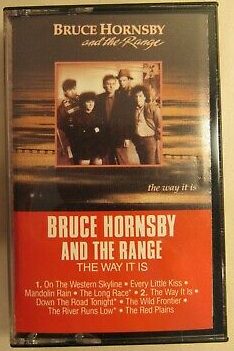
The Cassette Chronicles – BRUCE HORNSBY AND THE RANGE ‘THE WAY IT IS’

By JAY ROBERTS

The Cassette Chronicles is a continuing series of mini reviews and reflections on albums from the 1980’s and 1990’s. The aim of this series is to highlight both known and underappreciated albums from rock, pop and metal genres from this time period through the cassette editions of their releases. Some of the albums I have known about and loved for years, while others are new to me and were music I’ve always wanted to hear. There will be some review analysis and my own personal stories about my connection with various albums. These opinions are strictly my own and do not reflect the views of anyone else at Limelight Magazine.

BRUCE HORNSBY AND THE RANGE – THE WAY IT IS (1986)

It has always seemed strange to me that Bruce Hornsby and the Range had such a stellar out of the gates start to their career with their debut release and yet for all intents and purposes never came close to duplicating their success with any of their future releases. I know that sales are not the only determining factor for the quality of an album but I always wondered how this album could go triple platinum in the US and then nothing else that the group released seemed to strike the same chord with listeners.

I was even more surprised to learn that when doing a bit of research for this piece, the album pop music listeners heard was actually the second version of the album. The Way It Is was apparently originally marketed towards the New Age market and the album had different artwork along with a couple songs having different versions that didn’t make it to the remixed edition that most people who actually bought the album ended up hearing.

The strength of the album’s success is found in three songs that found success as singles. This would include the all-time classic title cut. The song “The Way It Is” (which hit #1) is one of the first pop music tracks I can recall hearing that had what is now referred to as “socially conscious” lyrics. Of course, there are probably many songs from earlier days that would fit this description but this is the first one that comes to mind for my own personal experience. And there is no doubt that it is a great song. Even now when it comes on the radio station I listen to at work, I still find myself humming along to the song.

There was also the song “Every Little Kiss”, a more uptempo track that broke the Top 20 at #14. And though it wasn’t quite as successful as the title track, the #3 charting “Mandolin Rain” is my favorite song from the band. Though I have to make sure others aren’t in range of my terrible singing voice, whenever I get the chance to listen to the song, I sing along…badly, but I sing along.

Now, those are the songs that I can honestly recall from listening to on the radio back in 1986. I never actually owned the album, so I was happy to note that there were a few other tracks I really got to enjoy as if I was hearing them for the first time. The album opener “On The Western Skyline” is a real fast paced song that is likely one of the group’s more rocking numbers and it kicked things off in a grand fashion. I vaguely recalled the chorus for “The Long Race” but couldn’t tell you why or where I’d ever heard it before.

The second side of the album had a couple of songs that hit like a thud for me but then you had “The River Runs Low” which featured a slightly spare musical arrangement to accompany Hornsby’s remarkably assured and smooth singing. Also, the band got a little fiery in their performance for the song “The Wild Frontier” another rocking cut.

The funny thing about this album is that I’d been looking to add it to my music collection on CD. I was finally able to get it when I was offered a copy of it from a fellow member of a group I belong to on Facebook for fans of the compact disc. But then I discovered I’d purchased a cassette version of the album and forgotten all about it. So I was pretty happy to pull it out of the big box I store the albums for this series in. Pure happenstance but when you get to listen to a remarkable sounding collection of tunes like those on The Way It Is, owning two copies doesn’t seem like such a bad thing.

NOTES OF INTEREST: The band won the Grammy for Best New Artist on the strength of this album.

Huey Lewis produced three of the songs on The Way It Is. They were “The River Runs Low”, “The Long Race” and “Down The Road Tonight”. The latter song also featured Lewis playing harmonica and making a vocal appearance as well.