By JAY ROBERTS
The Cassette Chronicles is a continuing series of mini reviews and reflections on albums from the 1980’s and 1990’s. The aim of this series is to highlight both known and underappreciated albums from rock, pop and metal genres from this time period through the cassette editions of their releases. Some of the albums I have known about and loved for years, while others are new to me and were music I’ve always wanted to hear. There will be some review analysis and my own personal stories about my connection with various albums. These opinions are strictly my own and do not reflect the views of anyone else at Limelight Magazine.
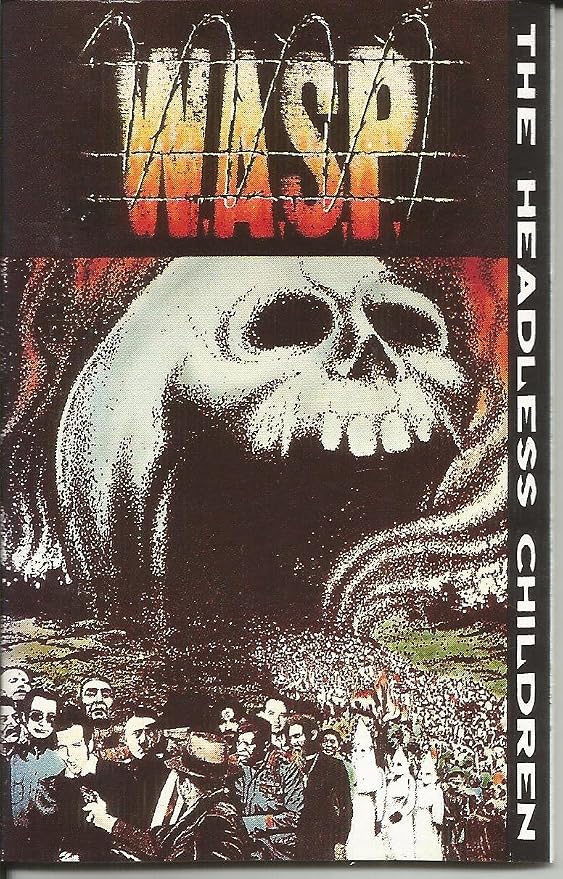
W.A.S.P. – THE HEADLESS CHILDREN (1989)
Just a couple days before this article posts, W.A.S.P. played a show in Boston, MA. I could’ve been there. My buddy George offered me a ticket but recent changes in my work schedule made me leery of going out in the midweek when I knew I’d be getting home late and have to get up early. Gawd I’m old.
So while I wasn’t able to see W.A.S.P. this time around, I thought I’d write about the album that was the one time I actually did see the band in concert. Yes, back in 1989 I saw W.A.S.P. at the Citi Club which was located right next door to Fenway Park. Oddly enough, that’s where they played their show from a couple of days ago. Although now the place has been expanded and is known as the Citizen House of Blues.
But more on that show from long ago a little later.
The Headless Children album is the fourth W.A.S.P. album and the first that showcased a different songwriting style in maturity and direction. Songs looked at social and political topics instead of the more common “Sex, drugs & rock ‘n’ roll” material on the band’s first three albums. It was the start of a new era for the band.
The first side of the album features just four songs of the ten on the release. The album opens with the song “The Heretic” (The Lost Child)” and the band wasted no time in establishing themselves in this new musical direction. The intro sets the immediate tone that always seemed a bit doom-laden to open things up but then started ramping up soon thereafter and by the time the full musical explosion was bouncing around your brain, you find yourself so keyed up that if you were watching it live, you’d be aching to release the energy the song builds up in you.
Blackie’s vocals are instantly identifiable and so perfectly cast with this new material that you almost feel like this is what he should’ve been doing all along.
The band’s cover of The Who track “The Real Me” is actually quite phenomenal to me. The original track comes from The Who’s concept album Quadrophenia, but still manages to fit into the overall theme of The Headless Children album perfectly even if the album isn’t a conceptual release. As for the performance of the song, it’s highly energetic and a full blown metallic attack. Quite different from the original version but W.A.S.P.’s version does a good job of making the song their own.
The title track has another, albeit briefer, tone setting intro setting up the rest of the song. Frankie Banali’s drums get a nice little showcase for the pounding rhythmic foundation he establishes. And then, the boot stomping methodical precision of the full band sound comes into full focus. Once the vocal performance comes in, it’s like Blackie Lawless is in full on preacher form for the recounting of various ills of the world that are mentioned in the lyrics. The way his phrasing on some of the lines in the song come through are intensely satisfying. Lines like “Time bombs in the hands of all the wicked war babies” are delivered with an intensity that just gets into your bones. The extended solo and outro are fabulous as well.
The first side of the album closes out with the song “Thunderhead”, which takes a look at drug addiction. The keyboard heavy intro helps give the song an almost gothic horror kind of vibe before the song becomes more of a full on rocker. Midway through the song when Lawless portrays the titular “Thunderhead” answering back to the addiction itself is chilling.
Before I move on to Side Two of the album, I should talk a bit about that W.A.S.P. concert I attended back in 1989. As I said, I saw them at the Citi Club. But the show was originally supposed to be at the Orpheum Theater in Boston. However, from what I recall the show didn’t sell well enough and thus the location change.
The tour featured W.A.S.P. as the headliners over opening band Metal Church (me and my friends got to meet most of them before the show) and middle act Accept who had David Reece on vocals at the time.
I loved both of those band’s sets but when it came time for W.A.S.P., I was laser focused on their show. And it was a freaking blast to say the least. Oh, and I managed to get one of the drumsticks Frankie Banali tossed into the crowd during the show. As well as a piece of the towel Blackie Lawless used on stage.
The funny thing was that there was a Red Sox game going on that night and it must’ve gone late because the game and the concert let out at the same time so you had the sports fans mixing with the heavy metal fans, which at that time had the potential to break out into fights given the divide between those two factions.
I may have had to miss W.A.S.P.’s concert earlier this week, but I hope that should they come back around on their next tour, I’m able to make it work so that I can once again see them live.
The second side of the album opens with the song “Mean Man”. The balls-out rocker is about guitarist Chris Holmes and is even dedicated to him in the liner notes. The best part is that the song is fantastic and has a killer chorus which is both instantly memorable and of course, highly profane at the same time.
For the song “Neutron Bomber”, it was established that the song was about Ronald Reagan and all the power he wielded when he was president. And while the lyrics clearly do lean towards that story, Blackie Lawless has changed his story about the song’s origins in the years that followed. I’ll let you look that info up on the album’s Wikipedia page and you can decide which origin story for the song you think is the true one. I really dug the rapid fire rat-a-tat-tat drums at the start of the song. The song is heavy but fast moving and you can just sit back as the music carries you across the full sonic soundscape.
“The Mephisto Waltz” is a short instrumental that sets the table for you as the listener as it leads into The Headless Children‘s ballad track “Forever Free”. The song is reputed to be an homage to Lynyrd Skynyrd’s “Free Bird” (according to the Wikipedia page) but I don’t know if that’s true or not and I don’t really see that connection myself. Whatever the case, that brief instrumental is kind of cool and the “Forever Free” manages to once again cast a W.A.S.P. ballad as one that ages well after nearly forty years.
The song “Maneater” is a straightforward high flying and energetic rocker. It’s probably the one song that harkens back to the band’s material on the first three albums.
The album closes out on the song “Rebel in the F.D.G.” which stands for “Fucking Decadent Generation”. It’s a full burn rocker track and concludes the album on yet another musical high. Lawless once again shines vocally and the fast paced rocker just burns into your brain hard and fast.
When The Headless Children album came out, I was blown away. It was my favorite W.A.S.P. album for a good while too. All the talk about the band’s newfound musical maturity wasn’t just smoke being blown up your ass either. The songs and lyrics are beautifully crafted, the production was fantastic and the performances were electrifying. There’s another W.A.S.P. album that rivals this one as my own personal favorite album from the band, but there’s no denying that The Headless Children is a true high water mark from W.A.S.P., to say the least!
NOTES OF INTEREST: The album got a reissue in 1998 that included six bonus tracks. Three of them were new songs that didn’t make the original album. There was a couple of live tracks and a cover of the Jethro Tull song “Locomotive Breath”.
While The Headless Children was the first album where Frankie Banali played drums for W.A.S.P., he was actually listed as an “additional musician” not a full member of the band. Guitarist Chris Holmes left the band after this album, though he did come back six years later. Bassist Johnny Rod also left the band after the album.
The keyboards on the album were performed by Ken Hensley who was best known for his work with Uriah Heep.
Lita Ford, who was at one time married to Chris Holmes, is one of a number of people credited for backing vocals on the song “Thunderhead”.