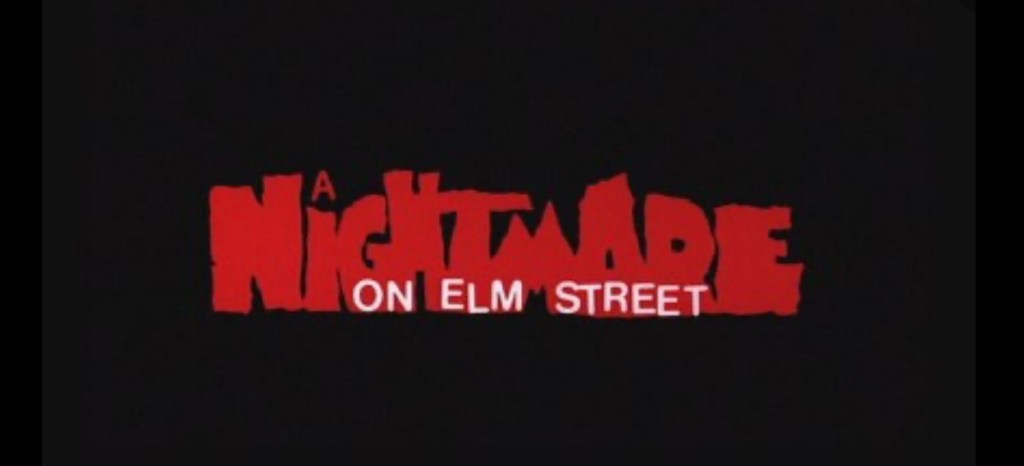
On the second and fourth Friday of every month in 2020, Limelight Magazine spotlights the filming location site(s) we visited for some of our favorite (and not so favorite) films. Today we spotlight some of the filming locations for A Nightmare on Elm Street. The film, which was directed by the late Wes Craven, was released in 1984. The top photo is a screen shot taken from the movie while the photo underneath is what the location looks like when we visited during the area.
The filming locations for those featured below were taken at the following addresses:
Photo 1 – Nancy Thompson’s (played by Heather Langencamp) home is located at 1427 Genessee Avenue, West Hollywood, Los Angeles, CA.
Photo 2 – Nancy Thompson’s boyfriend Glenn Lantz’s (played by Johnny Depp) home is located at 1419 Genessee Avenue, West Hollywood, Los Angeles, CA.
Photo 3 – The funeral of Rod Lane (played by Jsu Garcia, credited as Nick Corri) is located at Evergreen Cemetery, 204 North Evergreen Avenue, Los Angeles, CA.
The Cassette Chronicles is a continuing series of mini reviews and reflections on albums from the 1980’s and 1990’s. The aim of this series is to highlight both known and underappreciated albums from rock, pop and metal genres from this time period through the cassette editions of their releases. Some of the albums I have known about and loved for years, while others are new to me and were music I’ve always wanted to hear. There will be some review analysis and my own personal stories about my connection with various albums. These opinions are strictly my own and do not reflect the views of anyone else at Limelight Magazine.
SLADE – KEEP YOUR HANDS OF MY POWER SUPPLY (1984)
What’s that saying about life is what happens when you are busy making other plans. For all the success that the band Slade had in the 1970s (after forming in 1966), they were really only big in the UK and Europe. They hadn’t achieved much of any kind of breakthrough in the US.
And then came their huge smash hit song “Cum On Feel The Noize”…well sort of. While the song was a huge hit (reaching #1 in 1973) in the UK, it wasn’t until Quiet Riot recorded their own version of the song in 1983 that Slade became an accidental household name in America.
The Quiet Riot version of the song rose to #5 on the US charts and made their Metal Health album a worldwide smash. Also in 1983, Slade released an album called The Amazing Kamikaze Syndrome in the UK. Wanting to capture whatever bit of lightning in a bottle it could given the band’s sudden rise in profile in the US, CBS Records signed Slade to a US deal to release that album here in the US.
Funny how things work out though, right? By the time the album made its way onto shelves in the States, it was a far different version of itself. The album had been renamed obviously. But the track listing had been re-ordered from the UK version as well. Two songs (“Cocky Rock Boys (Rule O.K.)” and “Razzle Dazzle Man”) had been replaced by different songs (“Keep Your Hands Off My Power Supply” and “Can’t Tame A Hurricane”) that had been used as B-sides for the UK single version of “My Oh My”.
I should point out that while I did love the two singles released from this album, I never got around to owning any version of the album until I found this particular cassette in a newly purchased batch of albums at my friend’s record shop. I had tried to avoid spending any more money at the shop one day but couldn’t resist the lure of new albums I never owned before and ended up leaving with three more cassettes for the Big Box. But I did own a Slade compilation on CD called Get Yer Boots On, so I had the songs in my collection at least. Sadly, I don’t typically listen to that album as often as I probably should.
The album itself opens up with those two singles that helped break Slade big in the US. “Run Runaway” had been a big hit when released in the UK, but it made the Top 20 in the US and the video for the song was in heavy rotation on MTV. It’s a bouncy Scottish jig with a heavy rock soundtrack. Even now, whenever I hear the song I just get a feeling of fun that the song creates. Heavily melodic, it catches your ear and it always makes me smile.
The second single was “My Oh My” and it made the Top 40 chart as well. It’s a power ballad but it shows off Noddy Holder’s voice pretty nicely. The main lyrical passages are subdued a bit musically and then the song’s chorus is where it gets a bit more heavy sounding.
And for me, that’s it. I really don’t remember much about any other songs on the album. Apparently the song “Slam The Hammer Down” (a song that really does live up to its name), was released as a single as well but didn’t make any dent in the charts. This is a sad thing because it sure as heck showed off the band’s heavier side.
Given that Slade is best remembered for the more glam rock aspects of their 1970’s work, the more metallic (however melodically influenced) sound the band had for this album, you might think they were just going along for the ride with the trends of the early 80’s rock scene. But they had some serious chops going on here.
With all the music written by Holder and Lea, the album doesn’t suffer from a lack of focus. The other two songs on the first side of the album are “High and Dry” and “In The Doghouse”. Both of those songs are hard-hitting rock numbers and make the opening side of Keep Your Hands Off My Power Supply a rousing success in my eyes.
I have to say that I was a little less taken with some of the material on the second side of the album though. The title track opens up Side Two and while it’s decent enough lyrically, I thought the music came off a bit overdone and kind of spacey.
While both “Cheap ‘N’ Nasty Luv” and “Can’t Tame A Hurricane” were both pretty speedy numbers, I couldn’t help feeling they were just kind of “THERE” without really doing much to set themselves apart from any number of tracks out there at the time.
“(And Now – The Waltz) C’est La Vie” was another power ballad for the band and it featured the requisite rise-and-fall tempo in the main lyrics versus the chorus. But again, it just didn’t endear itself to me.
Okay, I know you get it. I just didn’t get into the second side of the album that much. But I will say that the album’s closing track “Ready To Explode” was a monster track for me. It does indeed “explode” out of your speakers. The song is over eight minutes long and it is an ode to a love of motor racing. The song is technically divided into four sections (“The Warm Up”, “The Grid”, “The Race” and “The Dream”). It is a glorious cacophony of rock and despite the presence of an annoying spoken word call of a race breaking things up, this song was a real big winner for me.
Overall, I like the album despite what I feel is a significantly weaker batch of songs on Side Two. But that’s just my opinion and it’s not like I’ve never been wrong before. Still, on the strength of those two singles that lead off Keep Your Hands Off My Power Supply, I can’t help but feel a bit of joyous nostalgia whenever I hear the songs. Slade may have been best known for being the band that accidentally made it possible for Quiet Riot to become kings of the heavy metal world for a time, but this album does show off the band in their own right and just how good they were themselves.
NOTES OF INTEREST – According to the album’s Wikipedia page, the band was supposed to hit the tour trail in America opening for Ozzy Osbourne. However, when bassist Jim Lea collapsed after the first night of said tour and was found to have hepatitis, the band ended up cancelling the rest of their dates with Ozzy. It was said Lea’s condition combined with the end of singer Noddy Holder’s marriage were cited as the reason for the cancellation.
The Keep Your Hands Off My Power Supply album made it to #33 on the Billboard album charts. In 2007, there was a remastered version of The Amazing Kamikaze Syndrome released with 6 bonus tracks which would likely give fans the most complete version of the two individual releases.
The Cassette Chronicles is a continuing series of mini reviews and reflections on albums from the 1980’s and 1990’s. The aim of this series is to highlight both known and underappreciated albums from rock, pop and metal genres from this time period through the cassette editions of their releases. Some of the albums I have known about and loved for years, while others are new to me and were music I’ve always wanted to hear. There will be some review analysis and my own personal stories about my connection with various albums. These opinions are strictly my own and do not reflect the views of anyone else at Limelight Magazine.
SCANDAL FEATURING PATTY SMYTH – WARRIOR (1984)
To file the band Scandal under the “one-hit wonder” category might be strictly accurate, but it also does the band a bit of disservice. Or at least so I have now discovered for myself.
In 1984, the Warrior album was released and based on the title track being used as the lead single, the album would go on to achieve the platinum sales mark. The song “The Warrior” was a huge hit both on the radio and on MTV. The radio airplay saw the song become a top-10 hit while the video was in heavy rotation on the video channel. The fact that there was such a striking visual component in the video makes it memorable even now. (Though I think I remember seeing on that VH-1 Pop-Up Video program that the band hated the way they were done up for the video shoot.)
While I was a huge fan of the song, I never really thought much more about the band. I would venture to say that a lot of people thought the same way because when the band released the songs “Hands Tied” and “Beat Of A Heart”, neither one made the Top-40 chart.
Scandal quickly disappeared from my radar after “The Warrior” song had faded from the pop charts. As it turned out, due to band and label issues, the band broke up after a tour that ended in 1985.
So I think it is understandable that it wasn’t until just recently that I even owned a copy of this album. I found it in a stack of cassettes at a record shop and couldn’t resist picking it up.
Not having heard the album or any of the songs besides the title track before, I don’t know what I was expecting as I popped the cassette in my player. What I found out was that Scandal’s only full album is one hell of an enjoyable melodic rock album.
After the title track opens up the album, the rest of side one is pretty intriguing. The music for “Beat Of A Heart” is pretty fast moving but there is a dramatic shading to the way Patty Smyth’s vocals are presented on the song that gives the song a much more intriguing feel to it than I would’ve expected. I loved the lyrical line “Sometimes the innocent pay for an old man’s sins”. I also liked the way “Hands Tied” sounded.
Those were the three singles from the album so every other song essentially became “album tracks”, but it doesn’t lessen their impact to me. I know that it is 36 years after the fact but the catchy uptempo drive of “Less Than Half” got my feet tapping. The vocal track for the song is really good.
Now, I had said just a bit earlier in this article that I hadn’t heard any of the other songs besides “The Warrior” before. However, that was kind of a half-truth. See, the last song on side one is “Only The Young”. If you recognize that title and wonder if it is a cover of the Journey song, you’d be kind of right. The song was written and recorded by Journey in 1983 but got pulled from their album Frontiers. The band apparently sold it to Scandal who recorded their own version and released it for the Warrior album. But Journey did an about face and released their version in 1985 on the Vision Quest movie soundtrack and saw the song become a Top-10 hit.
Scandal’s version of the song might be pretty much lost in the shuffle these days but there’s enough of a twist (particularly given the vocal differences between Smyth and Steve Perry) that I loved this version of the track as well.
Side Two of the album opens with “All I Want” and “Talk To Me”. Both songs feature the band putting forth a very rocking sound with each track and truth be told, they are two of my favorite songs on the release.
Surprisingly enough, the one pure ballad track on the album, “Say What You Will” was a decent performer. The song pulls on just the right emotive strings for the listener without making you cringe. The album closes with two more rocking numbers in “Tonight” and “Maybe We Went Too Far”. Each of those tracks helps provide a solid sense of satisfaction with the album as a whole.
There may not be a whole lot to write about Scandal giving how brief their actual recording career was. I mean, an EP and one studio album don’t generally make for a legendary career. But despite the small output and various conflicts for the band, once you listen to Warrior, you will realize (however belatedly) that it is an AOR classic!
NOTES OF INTEREST: Rock Candy Records reissued the album on CD in 2014 and included the original Scandal EP as bonus tracks.
Despite breaking up in 1985, the band got back together in 2004 (prompted by an appearance on the VH-1 series Bands Reunited) and have been performing together since then. However, they’ve released no new music save a cover of the Christmas song “Silent Night” in 2011.
Three of Scandal’s original members have died over the years. Bassist Ivan Elias (cancer in 1995), drummer Frankie LaRocka (after surgery in 2005) and keyboardist Benjy King (car accident 2012). The current lineup of Scandal features only Patty Smyth and guitarist Keith Mack from the original lineup. While guitarist Zack Smith started the band, he was only a part of the reunion period from 2004-2006.
From where Cody Carpenter lives in Los Angeles, he can see the dark shadow cast by the ash from the wildfires as they continue raging nearby. It’s a real-life horror show, as opposed to the fictitious ones for which he and his father, Director/Composer John Carpenter, have created riveting soundtracks.
In addition to helping his dad score the 2018 reboot of Halloween, Cody composed the music for Vampires (1998, starring James Woods) and Ghosts of Mars (2001, with Ice Cube and Pam Grier). He also scored and performed the soundtracks to a pair of films in Showtime’s Masters of Horror series (2005).
But the smoky view from his perch in L.A. doesn’t exactly fill his head with musical ideas. “It’s hard to see the sun,” he said.
Despite the ominous look of the California sky on the day we speak, Carpenter is generally upbeat, not unlike the tone of his new solo release, Control (Blue Canoe Records). It’s the third installment in a triptych, preceded by Cody Carpenter’s Interdependence (2018) and Force of Nature (2019). Each of the three has a distinctive feel, but there are threads of musical personality running through that unify the projects as a series.
Control brims with contagious, propulsive energy thanks, in part, to a powerhouse cast of rhythm players like Jimmy Haslip and Junior Braguinh on bass, and Scott Seiver, Jimmy Branly, and Virgil Donati on drums. While it has no accompanying film, the album has an unshakably cinematic feel that showcases how the younger Carpenter’s visual imagination is never far behind his music.
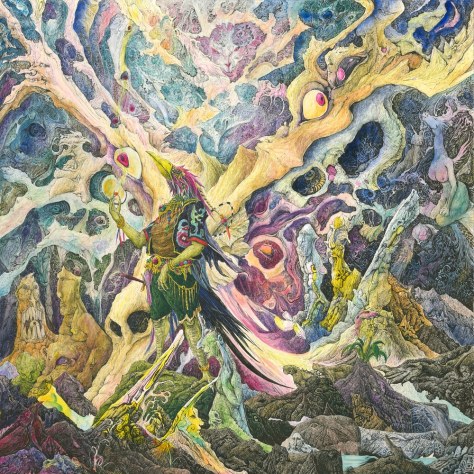
“Control” is the new studio album by Cody Carpenter.
Creativity took hold early for Cody, born John Cody Carpenter, in 1984. He says his dad always encouraged him to investigate music and there were instruments strewn throughout the house.
“My dad also played me the movies that were most important to him when I was young,” he said. “He didn’t want me watching the horror stuff too early on, but he made sure I saw other films that he considered important and influential.”
Likewise, his mom, actress/singer Adrienne Barbeau (Maude, The Fog), had him take piano lessons at a young age and encouraged him to find his singing voice.
Now 36, he’s admirably accomplished, having released music under various names since his teens, including a pair of mighty accessible, vocal-synth-pop albums attributed to Ludrium.
For the current series, the music is instrumental and significantly more complex, but not bogged down by gravity. Much of Control is exuberant — even breezy, in parts — when compared to the dark, Tolkienesque feel that stereotypes prog-rock. From the joyous “Unconditional” to the percussive, Latin-inflected track, “Badger’s Wedding,” the album makes for an energizing listen.
“I’m aware that progressive rock has been associated with severe moods, but this kind of adventurous music doesn’t have to be in that box,” he said. “And I don’t necessarily think it should be. Compared to the music I make with my dad, this is more out of leftfield. The earliest music of my own that I recorded was far more similar to what people think of as stereotypical prog: incredibly introspective, lots of dark elements. Then I started listening to more jazz fusion. When I was younger, I really didn’t like it; I couldn’t wrap my mind around it. But over the years, my ears relaxed and I could let it in. It definitely influences my writing.”
A multi-instrumentalist focusing on keyboards, Carpenter thrives in the ‘no rules’ environment that his solo projects afford him. It’s a much roomier approach to composing than his film score work, which requires a different sort of discipline. But when father and son work together, they still manage to incorporate a large degree of creative freedom.
“Every film score project is different,” he said. “When you’re working with an image, you take cues from the director as far as what part they want the music to play, what emotion they want it to elicit in the viewer, etc. You’re serving the viewer and enhancing their experience. The way my dad and I do things is still highly improvisational, though. We sit down with an image; we play to it and see the ways we can make it work with what’s happening on the screen.”
For their pre-Halloween reboot collaborative releases, Lost Themes (2015) and Lost Themes II (2016), the Carpenter duo crafted cinematic tunes to an imaginary film. For these recordings and the ensuing tour dates, they were joined by longtime family friend, Daniel Davies, son of The Kinks’ Dave Davies.
“Daniel and I grew up together,” Cody explained. “At one point, he moved into my dad’s house, so we lived as brothers for a little while. Lost Themes began with just my dad and me sitting down at the computer and playing around with some new gear. I ended up moving to Tokyo afterward, and while I was there, my dad emailed me to say there was interest in releasing the material we’d worked on, so Daniel stepped in to write some more and help finish it up. For Lost Themes II, we actively worked as a trio. The concept was the same for both: we weren’t scoring a specific image, but rather, the film in your mind. The music encourages the listener to create their own scenes.”
Even with his various solo achievements, Cody says that touring with his dad — when the Lost Themes trio expands to a muscular 6-piece — is his proudest moment. It’s the culmination of a longstanding creative relationship that isn’t weighed down by rivalry or unnecessary expectations.
“I’m so happy to have the opportunity to work with him and to know that he wants to do it and can use me in these projects,” he said. “There’s never been this concept of stepping out of someone’s shadow. Maybe it’s because the music I make on my own is so different, or maybe it’s just because I have a good working relationship with him. Either way, when we go on tour, to perform my dad’s music for his fans is a great feeling. I’m incredibly lucky.”
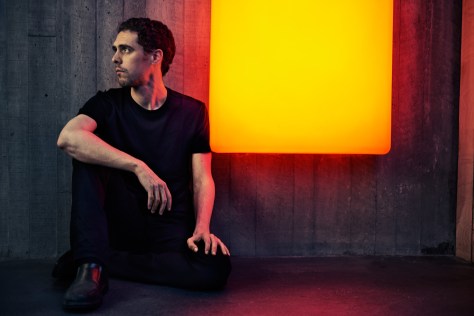
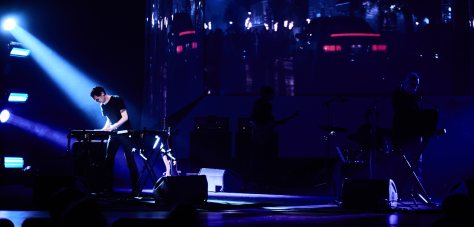
Cody Carpenter, left, says that touring with his dad (far right) is his proudest moment. (Photo by Joakim Reimer)
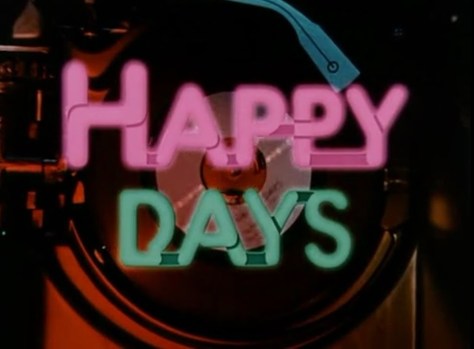
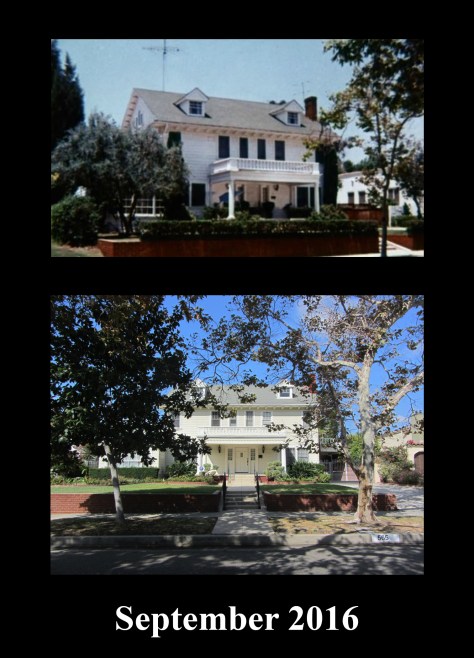
On the second and fourth Friday of every month in 2020, Limelight Magazine spotlights the filming location site(s) we visited for some of our favorite (and not so favorite) films and TV shows. Today we spotlight one of the filming locations for Happy Days, which aired on ABC from January 15, 1974, to September 24, 1984. The top photo is a screen shot taken from the TV show while the photo underneath is what the location looks like when we visited the location.
This filming location used for the Cunningham house is located at 565 North Cahuenga Boulevard in Los Angeles, CA.
The Cassette Chronicles is a continuing series of mini reviews and reflections on albums from the 1980’s and 1990’s. The aim of this series is to highlight both known and underappreciated albums from rock, pop and metal genres from this time period through the cassette editions of their releases. Some of the albums I have known about and loved for years, while others are new to me and were music I’ve always wanted to hear. There will be some review analysis and my own personal stories about my connection with various albums. These opinions are strictly my own and do not reflect the views of anyone else at Limelight Magazine.
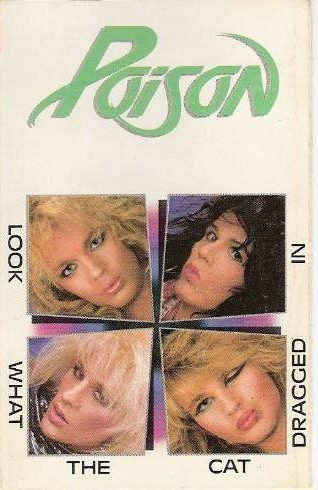
POISON – LOOK WHAT THE CAT DRAGGED IN (1986)
My personal renaissance with Poison continues this week! I’ve looked at both the Open Up and Say…Ahh! and Flesh & Blood albums in the series in recent weeks. I had planned to write about this album sooner than this but the two previous cassette copies I’d purchased were damaged beyond use so I had to dig to find another copy before I could finally write about the album.
The first thing I realized when looking at the liner notes was that it was released the same year as Iron Maiden’s Somewhere In Time album. This struck me a little funny because it at least explains why I definitely gave Look What The Cat Dragged In such short shrift when it was released. Well, at least in part anyway. I’d venture to say the excessive makeup the band wore probably played a part in why I didn’t really become an overly vocal fan early on.
But I will say that as I listened to the album here, I can recall how I would listen to the various songs from the album (when they’d play either on radio or MTV) in the comforts of my house and sing along to the lyrics. This would be a good thing for all involved since I can’t carry a tune in a bucket.
Since I never owned this album before now, it was a bit of a surprise to me to see how front loaded the album is. The album saw four songs released as singles and three of those tracks are the first three songs in the album’s running order. Also surprising is the fact that the album is barely more than 30 minutes long.
While “Cry Tough” didn’t chart as a single, it’s lead slot on the album is noteworthy because it is a damn good song. I actually found that I enjoy it better than some of the band’s more successful songs. “I Want Action” was moderately more successful but still wasn’t on the Top 40 singles chart. Still, that song could pretty much sum up the early part of Poison’s career and songwriting focus if you wanted to do so. As with all bands in the decade of “hair metal”, Poison had a big ballad track on the album and that was “I Won’t Forget You”. It was the fourth of the four singles and ended up going to #13 on the singles chart.
Taking just those three songs alone, you’d have a solid album side for sure. Of course, you had two more tracks to go on Side One. I thought the rocker “Play Dirty” was energetic enough but there was something about the song that just didn’t really jibe well with me. But the album’s title track is a different matter. I wonder why the song wasn’t chosen as a single because the fast rocking pace and incredibly catchy chorus seems tailor made for chart success in the 1980’s. To this day, I still here it on specialty radio shows and it brings back many memories of growing up in the decade where metal ruled the world.
The second side of the album kicks off with one of Poison’s biggest hits “Talk Dirty To Me”. If there’s one song to single out as grabbing the public’s attention, I’m sure this song is the one that would be chosen to represent Look What The Cat Dragged In. I may not have been too effusive in my love of the song when it was released but I’m sure my 15 year old brain couldn’t get enough of this one.
Since I never owned the album before, it was particularly noteworthy to me when I realized that after “Talk Dirty To Me”, the rest of Side Two featured songs I can’t recall ever hearing before. These “new-to-me” discoveries included “Want Some, Need Some”, “Blame It On You”, “#1 Bad Boy” and “Let Me Go To The Show”. The first three of those songs are pretty good rockers but I can understand why they are pretty much album tracks. But I thought the really speedy delivery of “Let Me Go To The Show” had a little something extra working for it. It’s got that necessary driving rhythm but tons of melody with an almost tongue-in-cheek set of lyrics. I think if I’d heard it before now, I would’ve really enjoyed it a lot.
According to the Wikipedia page for the Look What The Cat Dragged In album, singer Bret Michaels called or calls the album a “glorified demo”. I can kind of see what he means because there is definitely a slightly rawer cast to the band’s sound as opposed to their later releases. But I think it works to the band’s favor, even nearly 35 years later.
The story of Poison is extremely well known by this point but it is definitely worth the look back at their beginnings to see just where it all started for them. And if you are like me and only really knew the stuff that saw airtime on radio and MTV, you get a fuller picture of all the material on the album. For me, that paid off quite handsomely as I got to see just what they had to offer from the get-go.
This renaissance I’ve been on with the band has proven to be a rather exhilarating experience and I’m glad that I’ve taken the time to do it. What did that cat drag in? One of the better representatives of the entire 80’s metal genre it would seem!
NOTE OF INTEREST: The album has sold over four million copies since its release. A 20th anniversary edition was released in 2006 with three bonus tracks including a cover of the Jim Croce song “You Don’t Mess Around With Jim”.
The Cassette Chronicles is a continuing series of mini reviews and reflections on albums from the 1980’s and 1990’s. The aim of this series is to highlight both known and underappreciated albums from rock, pop and metal genres from this time period through the cassette editions of their releases. Some of the albums I have known about and loved for years, while others are new to me and were music I’ve always wanted to hear. There will be some review analysis and my own personal stories about my connection with various albums. These opinions are strictly my own and do not reflect the views of anyone else at Limelight Magazine.
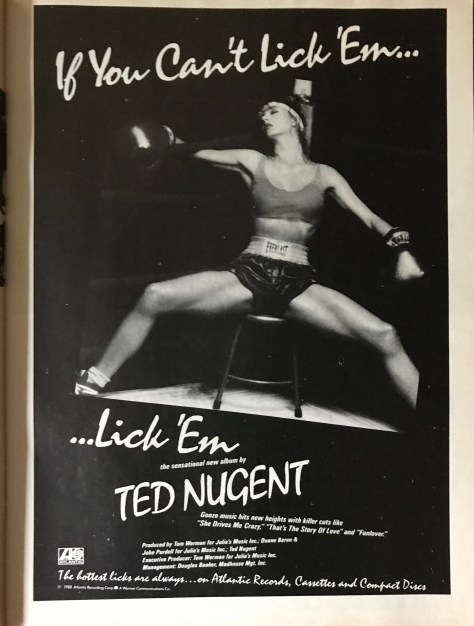
Full page magazine advertisement for Ted Nugent’s “If You Can’t Lick ‘Em…Lick ‘Em”
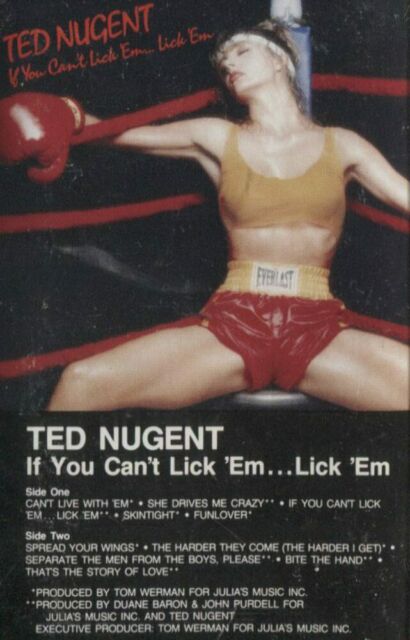
TED NUGENT – IF YOU CAN’T LICK ‘EM…LICK ‘EM (1988)
After talking about the Ted Nugent album Penetrator a little while back in this series as a means of paying tribute to singer Brian Howe, I wasn’t sure if (or when) I might hear another album from “Uncle Ted”. But then I was sent a copy of this album and I knew that sooner or later I’d get around to writing about it. Obviously now is that time.
The album was released in 1988 and would end up being his last solo album for seven years. It was just two years later, in 1990, that the first of the two Damn Yankees albums would come out and Nugent was occupied with that band for a while.
We all know that Nugent’s reputation as a wild man of the guitar probably leads us to assume that his music is all kinds of over-the-top guitar driven histrionics with a host of single and double entendres thrown in as song titles and lyrics.
While the latter half of that statement still rings true with If You Can’t Lick ‘Em…Lick ‘Em, I was kind of surprised that the album was less like his 1970’s output and instead featured a distinctly directed focus on the more melody driven rock you would later hear Nugent be a part of with Damn Yankees. There’s plenty of guitar driven uptempo rockers here but you can hear far more melody than you might expect if you mostly know Nugent by reputation rather than a deep knowledge of his catalog.
The first side of the album is a bit hit and miss for me overall but there are some rather outstanding tracks at the same time. The opening song “Can’t Live With ‘Em” seemed a bit muted to me on first listen but when I listened again, I really found myself getting into the uptempo rocker and that feeling that the song was somehow muted and just waiting to bust loose disappeared.
“She Drives Me Crazy” was another rocking bit of music but I didn’t quite connect with the track all that much. As for the album’s title cut, I loved the long guitar solo that played out over the end of the song but if the song was meant to be some kind of anthem, it missed the mark a bit and came off sounding somewhat half-assed. It didn’t work for me at all, which is a shame since I thought the guitar playing was top notch.
But that slight disappointment was overcome by the last couple of songs on Side One. The more riotous feel you might expect from Nugent is amply evident in “Skintight”. The lyrics are not the least bit subtle and yet the song is simply marvelous.
The sex-drenched aspect of Nugent’s songs and lyrics are on full display with the song “Funlover”. That song has a lyrical line that would seem to sum up his philosophy with a nice little bow on it. I mean, there isn’t a whole lot of hidden meaning in a line like “Explicit sex /It ain’t my cup of tea / unless of course/ it’s happening to me”. And yet, between the totally unapologetic lyrics and the incredible soundtrack the vocals are combined with, I can’t help but absolutely love this song.
As for the second side of the album, the biggest shock for me was the first song “Spread Your Wings”. It’s a straight up ballad from start to finish. I kept waiting for a ballbusting burst of rock and roll to change the song’s tempo but Nugent played it straight. His vocal performance was pretty interesting too. Here again, he played it straight. Now, I don’t know if there was some hidden double entendre to the songs lyrics or title that I missed (which I suspect is entirely possible) but I really enjoyed this track a lot because it seemed to show that Nugent can go a little deeper than I would’ve expected. The fact that the song doesn’t go for the more wimpy side of balladry is another strong point in its favor.
Of course, that potential softer and straighter side of Nugent is just a brief moment when you consider the last four songs on the album are straight up rockers. There’s the breakneck speedy rocker “The Harder They Come (The Harder I Get)”. The guitar playing gets your blood pumping and Ted’s vocal growl enlivens the lyrics like “You’ve got 31 flavors…they’re all good enough to eat”. I almost feel ashamed of myself for just how much I loved this song. Pure lust driven rock and roll to liven up your musical playlist, that’s for sure.
“Separate The Men From The Boys Please” is solid but it is the last two songs that really capped off this listening experience for me. “Bite The Hand” has some fantastic guitar work and really got me jazzed up as I listened to the song. The closing track is “That’s The Story Of Love”. It’s a hard rocking song with a very cool vibe to it and there is a great chorus that really helps sell the song to the listener.
However you may feel about Ted Nugent the person, you can’t help but recognize his talents as a musician. I know that Nugent’s work from the 70’s is his bread and butter and that it seems like this period of his music catalog is pretty much ignored but I can’t help but say that I actually quite enjoyed the If You Can’t Lick ‘Em…Lick ‘Em album. It’s a great rock and roll album with an ample dose of pure melody and despite a couple of tracks that didn’t work for me, it was an eye-opening experience for me. Discovering more about this side of Nugent’s musical personality kind of makes me want to explore more of this part of his career to see what else there might be waiting to jump out at me.
NOTES OF INTEREST: The album closing song “That’s The Story Of Love” was co-written by Ted Nugent with Jon Bon Jovi and Richie Sambora.
The If You Can’t Lick ‘Em…Lick ‘Em album was the first album to feature Ted Nugent as the sole lead vocalist. He also played the bass part on the title track.
Chuck Wright, who is best known as the bassist for Quiet Riot, played bass on eight of the album’s songs. The late Pat Torpey (Mr. Big) played the drums for the album. Rhythm guitarist Dave Amato would go on to play with Jimmy Barnes, REO Speedwagon, Cher, Richie Sambora among others.
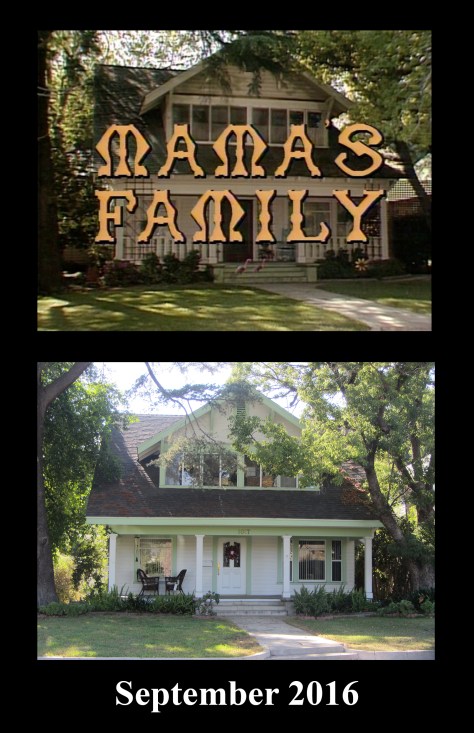
On the second and fourth Friday of every month in 2020, Limelight Magazine spotlights the filming location site(s) we visited for some of our favorite (and not so favorite) films and TV shows. Today we spotlight the filming location for the TV show Mama’s Family, which originally aired on NBC from January 22, 1983, to April 7, 1984. Two years later, it was relaunched in first-run syndication and aired until 1990. The top photo is a screen shot taken from the TV show while the photo underneath is what the location looks like when we visited the location. Pictured below is Thelma’s Harper’s residence during the first-run syndication of Mama’s Family. It is located at 1027 Montrose Avenue, South Pasadena, CA.
Note – The “Mama’s Family” house was also the home of Lynda’s character in John Carpenter’s Halloween. It was only featured briefly in the film where Lynda walks toward the front door.
Note – The Mama’s Family house was also the home of Lynda’s character in John Carpenter’s Halloween. It was only featured briefly in the film where Lynda walks toward the front door.
The Cassette Chronicles is a continuing series of mini reviews and reflections on albums from the 1980’s and 1990’s. The aim of this series is to highlight both known and underappreciated albums from rock, pop and metal genres from this time period through the cassette editions of their releases. Some of the albums I have known about and loved for years, while others are new to me and were music I’ve always wanted to hear. There will be some review analysis and my own personal stories about my connection with various albums. These opinions are strictly my own and do not reflect the views of anyone else at Limelight Magazine.
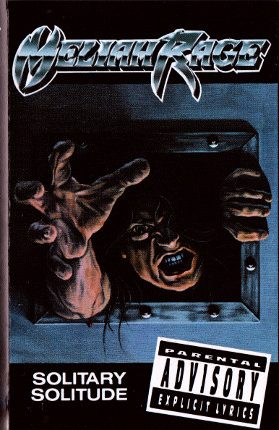
MELIAH RAGE – SOLITARY SOLITUDE (1990)
When I wrote about Meliah Rage’s debut album Kill To Survive a couple weeks ago, I was immediately taken with the album. I got into the music from the first song’s intro and kept being drawn back with each successive track.
In the case of Solitary Solitude, I found that a little more work was required for me to have a really good grasp on what I thought about the album.
This was the band’s second studio album but it was actuallly their third release following the 1989 EP Live Kill. It starts out with the title track and while I was pretty impressed with how the music sounded for the song, I had some trouble getting into the vocal take from singer Mike Munro. I’m not quite able to put my finger on why the vocals initially felt off to me, but it is definitely a failing on my part. I say that because after a few plays of the album, the song does grow on you and the vocals do blend in rather seamlessly with the music.
The album’s second track is “No Mind” and that one was just a killer track. Fast and powerfully thrashing about, there was no holding back on how much I loved the track at all.
While all bands are almost assuredly hoping that their music stands the passage of time, I can’t think they expect individual songs to be so completely relevant three decades later. Since 2020 is the 30th anniversary of Solitary Solitude, I think even Meliah Rage would be surprised that the lyrical content of “Decline Of Rule” would be so powerfully connected by what is going on in the world today. The song is still chock fully of thrash metal goodness but there’s also a notable methodical feel to the music at the same time. A lot of the credit for how good the album sounds has to be credited to the guitar work from both Anthony Nichols and Jim Koury.
The final song on the first side of the album is “Deliver Me” and it is an outlier of sorts given the makeup of the rest of the material on the album. This track is pretty slow moving with a sparse musical soundtrack. The somewhat understated feel to the song made it quite intriguing to me.
The second side of the album starts off with the spectacular song “The Witching”. I found it to be more of a straight forward heavy metal song as opposed to more of thrashing neckbreaking tour-de-force. Replete with lyrics that seem straight out of horror movie, this was the song that the band made a video for in order to promote the album.
I wasn’t crazy about the first part of the album’s closing song “Razor Ribbon”, there’s some spoken word set up in the intro and then the lyrics are kind of whispered until FINALLY, the song breaks out in a more frenetic explosion. The second half of the song is really great but it has to work pretty hard to overcome the first part which made me want to hit the fast forward button on my player.
Still, songs like the anti-drug rant of “Lost Life” and the burning metallic rhythms of “Swallow Your Soul” (which features a pretty strong and enveloping lyrical chorus) help tilt the balance of the album towards the positive side of the ledger.
While I had to work a little harder with this one, overall I think Solitary Solitude is a damn good follow up to the band’s debut album. It had a couple of bumps in the road but I still loved hearing the album for the first time. And while I don’t have any more cassettes from the band to write future articles about, I am going to track down the rest of their albums on CD because I find myself becoming quickly enamored with the music of Boston’s own Meliah Rage!
NOTE OF INTEREST: Solitary Solitude was co-produced by Meliah Rage, Tony Moussali and Tom Soares. Tom Soares worked as either a producer, mixer or engineer with other bands such as Pro-Pain, Scatterbrain, Merauder and Wargasm.
The Cassette Chronicles is a continuing series of mini reviews and reflections on albums from the 1980’s and 1990’s. The aim of this series is to highlight both known and underappreciated albums from rock, pop and metal genres from this time period through the cassette editions of their releases. Some of the albums I have known about and loved for years, while others are new to me and were music I’ve always wanted to hear. There will be some review analysis and my own personal stories about my connection with various albums. These opinions are strictly my own and do not reflect the views of anyone else at Limelight Magazine.
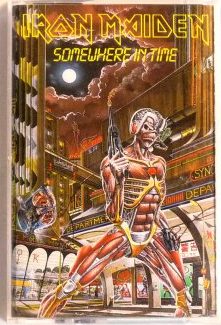
IRON MAIDEN – SOMEWHERE IN TIME (1986)
By the time I discovered Iron Maiden, the band had already released five studio albums and completed the massive and exhausting “World Slavery Tour” in support of the Powerslave album.
Then came album number six and the band hit my radar and has never left it since. The Somewhere In Time album is where it all began for me and while I have gone backwards and forwards regarding their recorded output, this album remains an important touchstone in my evolution as a metal fan.
It’s no spoiler alert or anything but I absolutely love this album! Iron Maiden is my favorite active band and for me, “the boys” remain as vital today as they have ever been.
So what was it about this album that struck such an enduring nerve with me? I think it was the first time I’d heard stuff that featured such a sense of the thematic. While the album isn’t a conceptual piece, there is a recurring theme about space and time woven into a number of the tracks.
But since I have a love of stories, I loved the way they drew from myths, books and history to tell the stories in their songs. This album might’ve been the awakening point for me for lyrics that went beyond sex, drugs and rock and roll. They adapted the book (that was later turned into a film) The Loneliness of the Long-Distance Runner into a song for this album which was just a new experience for me.
The majority of the eight songs are full on metallic crunchers, relentlessly paced in execution. Some of the songs start off a bit slow by way of an intro but then kick off into that break-neck pacing. The songs are hard-hitting from start to finish and from 1986 to now, the impact each track made on me remains constant.
The nominal title track “Caught Somewhere In Time” kicks things off and from there the band just grows stronger with each passing song on the album. The band had discovered and employed guitar synthesizers for the first time which gave a new dimension to what they could do.
The funny thing to me is that Iron Maiden has always been a huge international success despite enjoying little, if any, radio airplay (in the US at least). The band may not have made the singles chart their home, but they did release two tracks from Somewhere In Time as singles. The first was the song “Wasted Years”, which oddly enough is the only song on the album that doesn’t use those synthesizers I mentioned. It’s a phenomenal song that still manages to find its way into Iron Maiden’s concert set list from time to time. It was written by guitarist Adrian Smith. The other single was “Stranger In A Strange Land”, which anyone familiar with the works of science fiction author Robert Heinlein would think was another literary inspiration for an Iron Maiden song. But this time, you’d be wrong. The song shares the title but has nothing to do with the book. Still, the admittedly incorrect assumption that I made when I saw the title when I first got this release was still an eye-opener for me.
The band may have been more than a little burned out after the previous tour but once they got rested, they seemed to be firing on all cylinders. Except maybe singer Bruce Dickinson who had no writing credits for the album. I looked up the album online to learn some history about it and apparently whatever material Dickinson wrote got rejected by the band. The bulk of the writing came down to bassist Steve Harris and Adrian Smith. Guitarist Dave Murray co-wrote “Deja-Vu” as well. But regardless of who wrote what, as a unit the band was as one in the finished product. Dickinson sang his ass off and there isn’t a song on the album that feels like filler. While most of the songs aren’t played live anymore, I still hope to hear any (or even all of them) when I attend a Maiden show.
Everyone knows that Steve Harris founded Iron Maiden and is the driving force of the band. I’m no musical expert but I love when I can pick out his contributions in a song. The way his bass lines in “Sea of Madness” help imbue the song with a galloping across the landscape feel deepened the musical soundscape for me.
As for the last song on Side One, I always thought “Heaven Can Wait” would’ve been a pretty good single for the band.
It wasn’t just the music that drew me to the band. Yes, it was the primary reason but the band’s artwork is so visually striking that you can’t help but be drawn into it. I remember sitting in the lunch room in high school and talking to this guy I knew (I think his name was John but don’t hold me to that) and he was the one who told me about what we now call “Easter eggs” in the cover art for the Somewhere in Time album. As if the main image itself wasn’t enough of an eye-catcher, if you look deep you can find so many little nods to the band members, their past albums and songs, and a whole lot more. I never really bothered to look up what John was telling me about back then. But as I was researching the album I discovered that the Wikipedia entry for the album has a very extensive listing for all the various hidden images within the finished artwork. The legend that is the band’s mascot Eddie has been a key component of the band’s history.
For me, even though I love all the songs on Somewhere In Time, the one track that I connect with the most is the album’s closing number. “Alexander The Great” is the band’s musical history lesson about the Macedonian king and general. I mean how many bands could pull something like this off and make it both interesting and musically relevant? I don’t think there are many that could do it. Iron Maiden has written many songs that draw from historical events or people in those events but for me “Alexander The Great” is the best of them.
It’s almost a full thirty-four years since the release of Somewhere In Time and I still think it holds up as one of the band’s best albums. I know that it is certainly one of my personal favorites and the fact that it was my first experience with Iron Maiden makes it that much more special for me. In the ensuing three plus decades, I’ve seen the band four or five times, reviewed both albums and concerts they’ve done and pretty much bought any album (studio, live or compilation) they’ve put out. Hell, I remember watching a report on the news magazine show 20/20 back in 1987 about heavy metal that featured Iron Maiden! The video can still be found on YouTube I believe.
Iron Maiden is the preeminent heavy metal band to this day and the Somewhere In Time album is a great example of why they have not only reached the pinnacle but maintained their rule of the roost for so many years. I know that as long as Bruce Dickinson exhorts fans to do so, I will always Scream for Iron Maiden!
NOTES OF INTEREST: According to the Wikipedia page, the Somewhere in Time album has been certified platinum. I don’t know how accurate that is. I would’ve thought the album would’ve sold a lot more than that over the ensuing years from its release.
The 1995 reissue of the album included a bonus disc that contained four songs. Three were straight up cover songs while the track “Sheriff of Huddersfield” is listed as being based on the Urchin song “Life In The City” but the five members of Iron Maiden are credited as the writers of the “Sheriff” song itself.
One of the cover songs on that bonus disc is called “Reach Out”. It was originally done by a short-lived group called The Entire Population of Hackney. This group was a brief side project that featured Maiden’s drummer Nicko McBrain and guitarist Adrian Smith. It was Smith who actually sings on the track that was released on the Somewhere In Time bonus disc.
That “Reach Out” song was written by guitarist Dave “Bucket” Colwell, who was a part of that The Entire Population of Hackney project. Colwell has had an extensive career, playing with the early incarnation of FM, as well as the ASAP group founded by Adrian Smith. He played with Samson and recorded and toured with Humble Pie too. However, his most notable work for my own personal take was as a member of Bad Company. He had two stints with the band, appearing on four releases between 1993 and 2002.
The tour for the album was called “Somewhere On Tour” and it ran for a little over eight months. W.A.S.P. opened the tour during two months of dates in November and December 1986.
Bringing great entertainment to New England since 2011!




 Limelight Magazine