Category Archives: Cassette Chronicles

The Cassette Chronicles – SCORPIONS’ ‘SAVAGE AMUSEMENT’

By JAY ROBERTS

The Cassette Chronicles is a continuing series of mini reviews and reflections on albums from the 1980’s and 1990’s. The aim of this series is to highlight both known and underappreciated albums from rock, pop and metal genres from this time period through the cassette editions of their releases. Some of the albums I have known about and loved for years, while others are new to me and were music I’ve always wanted to hear. There will be some review analysis and my own personal stories about my connection with various albums. These opinions are strictly my own and do not reflect the views of anyone else at Limelight Magazine.

SCORPIONS – SAVAGE AMUSEMENT (1988)

“Welcome to a trip into my hurt feelings.” – Klaus Meine

That opening line to the song “Walking On The Edge” sums up my reaction to the research I did on the Savage Amusement album as I prepared to write this article.

I say hurt feelings because it seems that this album is not all that fondly looked upon at all. Which is a mystery to me because I love it. Coming off the twin successes of Love At First Sting and the World Wide Live releases, I think Savage Amusement is a phenomenal follow-up. But it sold less than its immediate predecessors and seems to suffer from claims that it was chasing the trends in metal that ruled the day back in 1988.

To that, I say “PHOOEY!”.

When the album opens up with the rocking “Don’t Stop At The Top” track, the band has a song that pretty much sums up their place in the metal pecking order at the time. The Scorpions had everything going for them.

The first single released from the album was “Rhythm of Love”. While it isn’t all that bad of a song overall, it is rather bland compared to some of the other material on the album.

Meanwhile, “Passion Rules The Game” featured lyrics that could get anyone up for a challenge and it lends itself well to me on a personal level as a way to sum up the passion I once had for coaching basketball. You can’t try to do something and be good at it without a hefty dose of passion.

I know that the Scorpions aren’t looked to for in-depth lyrical exploration of themes, but sometimes you can find some meaning or equivalency to a real world situation. Case in point, check out the lyrics for the rocker “Media Overkill”. Those lyrics are insanely on point for today’s world. When you combine it with a strong music score, you have a great song. I bought the album when it was originally released and I noted that I always loved the kind of clipped delivery that Klaus Meine had when saying the song title. It’s just a small thing that bears no real significance but it has always stuck with me for some reason. Plus, it is just a really cool sounding song.

While the band found huge chart success with the album closing ballad “Believe In Love”, I thought it was actually the aforementioned “Walking On The Edge” that was the better of the two power ballad tracks on the album.

I thought the lyrical slant of “Every Minute Every Day” was overdone but I liked the music portion of the song which helped overcome that weaker set of lyrics.

The second side of the album is where the band seems to cut loose in terms of all out musical fury. “We Let It Rock…You Let It Roll” is lightning fast and really gets your blood pumping. And the song “Love On The Run” keeps that blood pressure rising with it’s relentlessly fast pacing.

And that’s kind of what I remember most about Savage Amusement, it is just a hard rocking album that has great hooks to draw you in and it is the total package you could desire for a metal album of its day. I’ve never been able to see The Scorpions in concert but I do think Savage Amusement is an album that coincides with my hopes for the band’s live show where the band just leaves you feeling fully satisfied and thoroughly entertained!

NOTES OF INTEREST: When the band reissued a large chunk of their catalog to celebrate their 50th anniversary, Savage Amusement contained seven bonus tracks. There were six demo tracks and the band’s cover of The Who’s “I Can’t Explain”. (By the way, if anyone knows where I can get a copy of this version of the CD release without breaking the bank, let me know.)

Canadian rocker Lee Aaron provided backing vocals on the song “Rhythm of Love”. Ex-Accept bassist Peter Baltes did the intro vocals on “Every Minute Every Day”.

The Cassette Chronicles – Quiet Riot’s ‘QR III’

By JAY ROBERTS

The Cassette Chronicles is a continuing series of mini reviews and reflections on albums from the 1980’s and 1990’s. The aim of this series is to highlight both known and underappreciated albums from rock, pop and metal genres from this time period through the cassette editions of their releases. Some of the albums I have known about and loved for years, while others are new to me and were music I’ve always wanted to hear. There will be some review analysis and my own personal stories about my connection with various albums. These opinions are strictly my own and do not reflect the views of anyone else at Limelight Magazine.

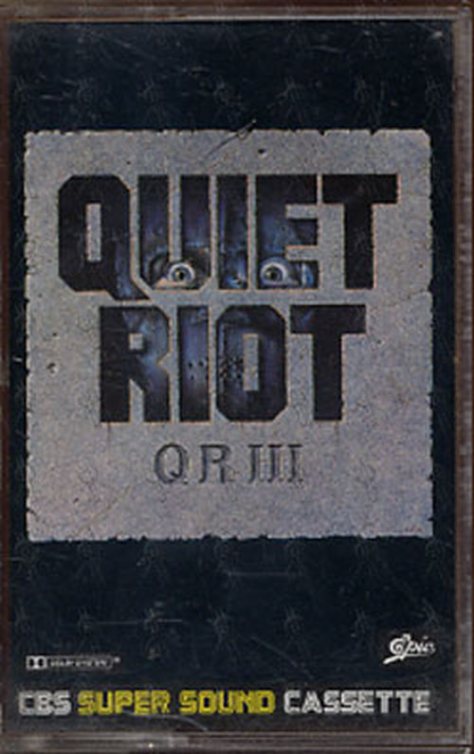
QUIET RIOT – QRIII (1986)

Though this album is titled as if it were the third release from Quiet Riot, QRIII is actually the fifth album the band put out. Confusing I’m sure but I think fans have had plenty of time to figure things out considering this album was released just about 34 years ago.

QRIII is an album that I have never heard before now. I am vaguely familiar with the song “The Wild And The Young” though. It was released as the album’s single but I don’t really recall hearing the song at the time of the original release. I’m pretty sure that the reason I know the song is because I’ve heard it on various specialty heavy metal radio shows.

The first thing I noticed about the song when listening to it is that while I like the track, it does seem to go out of its way to ruin itself about midway through with some cutesy but ineffective studio tricks. It’s a bit heavier and obviously anthemic in nature. There’s a decent hook but the production on the song kind of echoes throughout each of the songs on the album.

By that I mean the sound of the album is very overproduced. It isn’t just that it has that “80’s sound” that is so identifiable to many records released in the decade. When I started playing the album, the first song “Main Attraction” made me think that the production stripped away a lot of the more metallic side of Quiet Riot’s sound. The weird sounding keyboard intro to the song didn’t help matters either.

Regular readers of this series will recall that I do seem retroactively down on a lot of ballads for the albums featured. Would it surprise you to learn that the two ballads on QRIII struck me as being surprisingly decent? Side One’s “Twilight Hotel” does pick up the pace during the song’s running time but it is definitely a ballad. The song “Still Of The Night” is on Side Two and I really enjoyed that one a lot.

The last two songs on Side One of the album are “Down And Dirty” and “Rise Or Fall”. Both tracks are straightforward rockers.

The second side of the album was interesting for a number of reasons. It opens strongly with another action-packed rocker in “Put Up Or Shut Up”. I thought it was one of the better songs on the album. That was followed by the “Still of the Night” ballad.

Following a brief instrumental called “Bass Case”, the song “The Pump” was an uptempo song that got ruined by what seemed to me a muffled sound. “Slave To Love” was pretty good and “Helping Hands” closed out the album on an anthemic high.

The “Helping Hands” song was also interesting for being the song playing when the tape slot in my stereo decided to crap the bed. It was about halfway through the song. Thankfully it is a double tape deck so I switched slots and finished the album. But it was still a bummer that another piece of equipment died on me.

The QRIII album kind of finished off Quiet Riot as a major force in the music world. Sales were bad and after listening to the album myself, I can see why it didn’t generate much buzz. I liked a bunch of the songs but the way the album was produced made it seem like the band was chasing trends instead of charting their own course, sonically speaking. It is by no means a bad album but things just felt “off” with it at times. Still, it is worth a listen if for no other reason than for you to make up your own mind about where QRIII stands in the band’s catalog.

NOTES OF INTEREST: The comings and goings for this band were particularly intriguing. This album was the last to feature singer Kevin Dubrow before he returned to the lineup for the Terrified album. Also, this was the first album where bassist Chuck Wright, whose previous contributions to the band came as more of a hired gun, was an official member of the group.

In the liner notes, Bobby Kimball (best known for singing with Toto) is credited with backing vocals on the song “Still Of The Night”. Meanwhile, “Weird Al” Yankovic is listed in the album’s Thank You section.


The Cassette Chronicles – Tora Tora’s ‘Wild America’

By JAY ROBERTS

The Cassette Chronicles is a continuing series of mini reviews and reflections on albums from the 1980’s and 1990’s. The aim of this series is to highlight both known and underappreciated albums from rock, pop and metal genres from this time period through the cassette editions of their releases. Some of the albums I have known about and loved for years, while others are new to me and were music I’ve always wanted to hear. There will be some review analysis and my own personal stories about my connection with various albums. These opinions are strictly my own and do not reflect the views of anyone else at Limelight Magazine.

TORA TORA – WILD AMERICA (1992)

It has been a pretty long and winding road that led me to finally hearing Tora Tora’s second album Wild America.

I’d written about their debut album Surprise Attack for The Cassette Chronicles back in early 2018. In doing so I actually discovered that the band had released Wild America and recorded a third album (Revolution Day) which ended up not being released until 2011. But I didn’t know any of that before writing that first article on the band. Then in 2019, Tora Tora released the phenomenal album Bastards of Beale and I got to see them live in concert (and met them before the show) in August 2019. I had such a great experience reviewing both that album and show that I started seeking out the two missing albums. I thought that I’d had a line on getting CD editions for both releases but that fell through on me. And the online auction sites either had them for a big cost or not at all.

And then comes my record shop owning friend Roger. He purchased a large collection of CDs and cassettes recently and sent me some photos of cassettes he got and there in the bottom of one stack was Wild America! I HAD TO HAVE IT!!!

The day after I picked up the cassette, I got up and once I puttered around the house for a bit I popped the cassette in the stereo to get my first listen to an album I’d been eagerly anticipating to say the least.

Let’s just say I was not disappointed. I vaguely recall reading something online that said Wild America showed the band in a much more mature light in terms of songwriting. I’d be hard-pressed to argue with that contention because the album is just marvelous.

Seriously, the band kicks off the album with the title track and never really lets up from there. The “Wild America” song is a fast rocking and butt-kicking track that gives the listener a jolt of energy which is continually replenished throughout the album’s 11 tracks.

The mix of hard rock with bluesy soulfulness blends together seamlessly as the singer Anthony Corder’s vocals range from shout it out loud to a whiskey soaked inflection depending on the needs of the song. Guitarist Keith Douglas, bassist Patrick Francis and drummer John Patterson can rock out with a metallic fist or a velvet glove and do so effortlessly.

I loved the song “Amnesia” which has an up-tempo kind of swinging rhythmic feel to it. Corder’s vocals and the big backing vocal sound on the song’s chorus help enhance the song as a whole.

The Memphis Horns are featured on the song “Dead Man’s Hand” and that really gives the song an extra edge to it. There’s a sweetly rocking groove to the song and the solo from Keith Douglas is fantastic.

While most of the material on Wild America leans towards the more rocking side of the band’s nature, when the slow things down on songs like the lyrically contemplative “As Time Goes By” or the heavily bluesy sounding “Nowwhere To Go But Down”, I found them to be just as intense even if they were lacking in the pure adrenaline feel of their faster material. On “Nowhere To Go But Down”, I loved the way the opening verse was a spare musical arrangement with Corder’s vocals before the full musical soundtrack kicked in.

That blues rock side of the band gets more of a spotlight throughout the album but I thought the intro that fueled “Lay Your Money Down”, combined with a rather impressive vocal take made the song one of the stronger highlights for the album. There’s a strong rocking groove on songs like “Dirty Little Secrets” and “Faith Healer” as well.

And though I don’t want to be seen as diminishing any of those songs in the least (because I’m not), I really came away impressed when the band just fed the listener a blazing rock number too.

You had songs like “Shattered” which hit that benchmark but I think it really all came together on that particular songwriting front with the song “Cold Fever”. It is an aggressively rocking tempo that finds Tora Tora bleeding fiery fury. The killer chorus for the song also ups the amperage on the song too.

I really can’t say anything bad about this album. I didn’t have any kind of nitpicky issue with any of the eleven songs and the performances are seamlessly blended together to show just exactly what Tora Tora had going for them at the time. I know that I say this with the benefit of being nearly three decades removed from the original release of the album but good is good no matter when you hear it. And I find that Wild America surpasses the “good” designation with barely a sweat broken. Instead, this is a GREAT album and I’m glad that I’ve finally gotten to hear it because it has only increased my ever-growing fandom for the band.

NOTES OF INTEREST: Stan Lynch, best known for his work as part of Tom Petty and the Heartbreakers co-wrote the songs “Dead Man’s Hand” and “Nowhere To Go But Down”.

The late Jimi Jamison contributed backing vocals to the Wild America album. However, he’s credited as Jim Jamison in the liner notes.


The Cassette Chronicles – Accept’s ‘Death Row’

By JAY ROBERTS

The Cassette Chronicles is a continuing series of mini reviews and reflections on albums from the 1980’s and 1990’s. The aim of this series is to highlight both known and underappreciated albums from rock, pop and metal genres from this time period through the cassette editions of their releases. Some of the albums I have known about and loved for years, while others are new to me and were music I’ve always wanted to hear. There will be some review analysis and my own personal stories about my connection with various albums. These opinions are strictly my own and do not reflect the views of anyone else at Limelight Magazine.

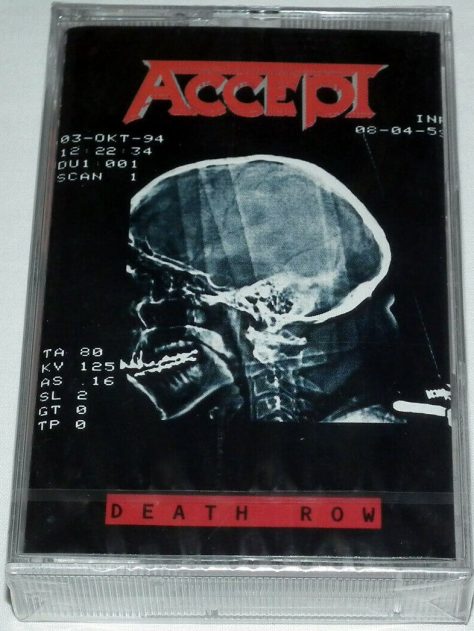
ACCEPT – DEATH ROW (1994)

The Death Row album is the 10th studio album from Accept and it is jam packed with a lot of music. This is both good and bad in my view. When this album came out I wouldn’t have said that I would count myself as anything more than perhaps a casual fan of the band. Despite loving the song “Balls To The Wall”, it took me a while to get around to becoming a full-fledged member of the Accept fan base.

But now that I am a huge fan of the band, I’ve acquired most of their studio albums and get to enjoy what I may have missed out on the first time around. What I found with Death Row and its 15 song track listing is that much like a novelist who turns in a book that is entirely overwritten, the band could’ve used an editor to prune the album of its weakest parts.

The album does get off to a strong start. The title track opens the album with a relentlessly pounding soundtrack and there is an oddly effective kind of rhythmic swing to singer Udo Dirkschneider’s vocal performance on the track.

On the rest of side one, songs like the rocket-fueled “Sodom & Gomorra” and “Guns ‘R’ Us” help give the album some of its highest points. On “Guns ‘R’ Us”, guitarist Wolf Hoffman has a particularly fantastic solo.

But then you have songs like “Dead On!” and “Like A Loaded Gun” which never felt all that fully-formed to my ears.

Still, the side closing “What Else” is a pretty solid track and I love the song “The Beast Inside”. That particular song starts out with a slow intro that helps establish a moodier atmosphere to the track. Even as the pace of the song picks ups, that ominous tone remains throughout and helps give the song that much more of an epic feeling.

Side two of the album found me discovering it is probably not a good idea to listen to an album first thing in the morning when you had a mediocre night of sleep. I actually nodded off in the middle of the music and had to rewind the tape to listen to the two songs I missed.

Side two opens strongly with aggressively attacking numbers like “Stone Evil” and “Prejudice”. The lyrics for the latter song are anti-racism in nature but while the sentiment is strong that message doesn’t detract from the song as a whole. That is the true sign of a great song in my book.

Death Row features just one slow song that might be mistaken as a ballad. For all their metal bonafides and the gravelly rip your throat out vocals from Dirkschneider, I almost always find myself impressed when they pull out a song that is slow and dramatic in presentation. The focused clarity of the vocal performance on “Writing On The Wall” is pretty affecting.

The song “Generation Clash II” felt like a stab at a sci-fi angle to the band’s songwriting but it came off for me a bit pedestrian. I can live with that but I am utterly confused about the decision to close out the album with the instrumentals “Drifting Away” and “Pomp And Circumstance” (yes, the music you hear played at high school graduations). Neither song is particularly intriguing and these are definitely songs I would’ve cut from the release.

The volcanic rocking from Accept is best demonstrated on Side Two with the songs “Bad Habits Die Hard” and “Bad Religion”. Fast paced and relentless, you will not get a second’s rest.

I suppose that when you have 15 songs on an album, there’d bound to be a clunker or two. It is likely the nature of the beast when it comes to songwriting. But in the final analysis, Death Row is a solid album that could’ve been even greater if Accept had been a bit more judicious selecting what songs they included on this release.

NOTES OF INTEREST: On the cassette edition of the album, the song “Bad Religion” is listed on the physical cassette but is eliminated from the track listing on the liner notes. On the CD edition, it is included in the printed track listing. The lyrics are included in the CD booklet but not on the cassette insert.

Stefan Kaufmann recorded the album’s drum tracks except for the songs “Bad Habits Die Hard” and “Prejudice”. Those were done by Stefan Schwarzmann, who took over as the drummer for the tour supporting the Death Row album when Kaufmann stepped down due to health problems.

Drummer Carmine Appice is mentioned in the thank you section of the liner notes.

The Cassette Chronicles – Journey’s ‘Evolution’

By JAY ROBERTS

The Cassette Chronicles is a continuing series of mini reviews and reflections on albums from the 1980’s and 1990’s. The aim of this series is to highlight both known and underappreciated albums from rock, pop and metal genres from this time period through the cassette editions of their releases. Some of the albums I have known about and loved for years, while others are new to me and were music I’ve always wanted to hear. There will be some review analysis and my own personal stories about my connection with various albums. These opinions are strictly my own and do not reflect the views of anyone else at Limelight Magazine.

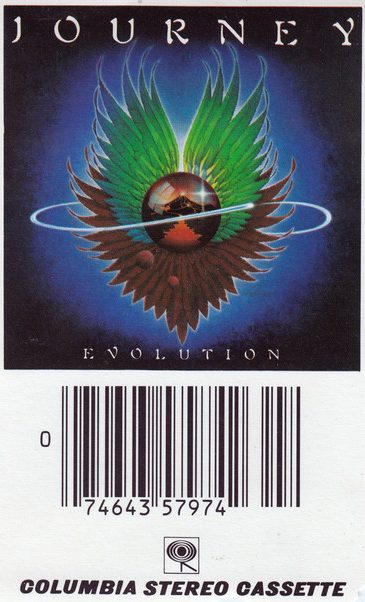
JOURNEY – EVOLUTION (1979)

This week’s random draw out of “The Big Box of Cassettes” was a bit of a surprise for me. I actually already owned a copy of Evolution on cassette but this copy came to me courtesy of my friend Jeff from Georgia.

The funny thing about this copy for me was that it had never been opened. The plastic wrapping was intact and still had the $4.99 bargain bin price tag on it from a Woolworth’s store. Of course, there was a $2.99 price tag on the front of the album so you know this came cheap.

But hey, a brand new copy to listen to for this article is always a good thing in my book. And it is pretty hard to go wrong with a Journey album once they started writing some hit songs. And let’s face it, Steve Perry has one of the signature vocal sounds of all time. When you hear him sing, you KNOW it is him!

I know that this album’s release year of 1979 falls just outside of my usual range of material to cover but it does show what was to come when the band really took flight in the 1980’s. While I started my musical love for the band’s music with the Frontiers album, I went back and bought as much of their earlier albums as I could find at the time. But the further back you go, the less interesting the music was to me. The earliest Journey albums are ones that I don’t think I’ve listened to after initially buying them. They just weren’t my cup of tea.

But when Steve Perry joined up for the Infinity album, the band’s sound became much more accessible and the hits started coming. That lead into Evolution and a bit of a re-discovery for me.

Whenever I hear a Journey song on the radio, it is a welcome few minutes. But because I hear them on the radio all the time, I kind of forget what songs come from what albums. While I’m really familiar with Evolution songs like “Lovin’, Touchin’, Squeezin'” and “Just The Same Way” given their standing as all-time great Journey tracks, it was finding out (again) that so many of the songs on the album were songs that I just loved. Oh, and I’d forgotten that Gregg Rolie sang the majority of the lead vocals on “Just The Same Way”.

The album opens with the one song I didn’t care for, the instrumental track “Majestic”. I found myself thinking, “Come on…get on with it willya?”

But after that speedbump, boy did the fun kick off! I think I’d forgotten about the song “Too Late” but I loved hearing it and being reminded of just how much I enjoyed the song. And I think that I’d classify “City of Angels” as one of the more underappreciated songs in the band’s catalog.

But what I really liked about the first side of the album was the last two tracks. “When You’re Alone (It Ain’t Easy)” is a pretty up-tempo track that got me pumped up and though I know I’ve heard it before, “Sweet and Simple” felt like a brand new song to me and I really got into that track a lot.

The band’s more in-your-face rocking style on the opening track of side two gave “Lovin’ You Is Easy” an extra bit of heft for me. I thought the guitar work on this song as well as “Just The Same Way” was pretty striking.

While both “Daydream” and “Lady Luck” are solid tracks that I enjoyed a lot, the song “Do You Recall” was a song that I quite frankly didn’t recall much at all. But the fast pacing and just pure song craft got me to invest in the song a lot. It was like hearing the song for the first time and liking it right from the start.

There’s no denying that I am a huge fan of the band’s glory days. They gave you some of the best rock and roll has to offer. The version of the band that exists today is an utter embarrassment of public pissing contests and dueling lawsuits that have left more than a little tarnish on their legacy. However, Journey defined what was once “arena rock” and is now mostly referred to as classic rock. Evolution is a pretty good representation of all that the band had to offer and a great starting point for both new and old fans alike.

NOTES OF INTEREST: Evolution sold over three million copies and was the highest charting album for the band at that point in time. The album was the first to feature Steve Smith on drums. He was hired to replace Aynsley Dunbar who had performed on the first four Journey albums.

Roy Thomas Baker produced Evolution as well as its immediate predecessor Infinity. He’s had a legendary career working with Free, Queen, Nazareth, Foreigner, The Cars and many more acts.

The Cassette Chronicles – JOHN CAFFERTY AND THE BEAVER BROWN BAND’s ‘TOUGH ALL OVER’

By JAY ROBERTS

The Cassette Chronicles is a continuing series of mini reviews and reflections on albums from the 1980’s and 1990’s. The aim of this series is to highlight both known and underappreciated albums from rock, pop and metal genres from this time period through the cassette editions of their releases. Some of the albums I have known about and loved for years, while others are new to me and were music I’ve always wanted to hear. There will be some review analysis and my own personal stories about my connection with various albums. These opinions are strictly my own and do not reflect the views of anyone else at Limelight Magazine.

JOHN CAFFERTY AND THE BEAVER BROWN BAND – TOUGH ALL OVER (1985)

Back in 2018, I wrote an article in this series about the John Cafferty and the Beaver Brown Band album Roadhouse. As I said then, I know that they will always be most famous for the song “On The Dark Side” from the first Eddie and the Cruisers movie. But then again most musicians would kill to have even one song that stands the test of time.

I admit that I come to my own fandom for the band because of the movie soundtracks but hearing the stuff not tied to those films, I can see just what people seem to have missed out on. After the smash success of the first movie soundtrack, the band’s second album might not have had the same level of commercial success but Tough All Over is a pretty damn solid piece of music.

The pure rock and roll sound the band captures in their music always seems to grab me whenever I listen to their music. The soulful and powerful vocals and the driving rhythms and pounding beat are further enhanced with that sweet saxophone sound cutting through the mix. The keyboards give the material an added dimension and when you mix in that all-female backing chorus employed on a couple of the album’s songs, the material on Tough All Over just becomes a bit of magic.

Side One opens with three of the four singles that were released in support of the album. “Voice of America’s Sons” has a quick up-tempo pace and there is a strikingly good guitar solo. In fact, the guitar work from Gary Gramolini is pretty damn enticing throughout the album.

The title track became a Top 40 hit for the band as a single and it is one of those “story” type songs that lets the band’s ability as chroniclers of “small town hopes and dreams” shine bright. I know that is the bread and butter of Springsteen but surely there’s always room for more than one artist to mine that particular vein of songwriting, yes?

The third song on Side One is “C-I-T-Y” which was a Top 20 hit for the band on the singles chart and believe me, the zesty driving beat to the song is all you could ever hope for when it comes to a fun, get the party started rock and roll anthem.

The entire first side of the album is actually chock full of one upbeat and up-tempo rock and roll song. Cafferty’s vocals are always the immediate draw. He’s got a sound that becomes imprinted on the listener and whenever you hear him sing, you immediately recognize that sound. Those first three songs may be the hits but when you listen to “Where The Action Is” and “Dixieland”, you understand just how good he is at making the lyrics come alive for you.

The second side of the album is a bit of a different breed in comparison to the first side. It opens with a rocking “Strangers In Paradise” but then things kind of slow down. The material hits the only real speedbump for me on “Small Town Girl”. The song was the fourth single from the album and I just really couldn’t find any way to appreciate the track. I was bored, plain and simple.

On “More Than Just One Of The Boys”, the songwriting-slash-storytelling comes to the forefront once more. I’ve said before how much I like stories of any kind and this is the band once again proving they’ve got those authorial chops.

After being fueled up with all the rocking anthems and stories, I think the slow pace of “Small Town Girl” was part of what made me dislike the song. But given that Tough All Over‘s closing song “Tex-Mex (Crystal Blue)” was similarly paced, I was a bit flabbergasted that the song drew me in far more than the other track. It may not have been an adrenaline burst in terms of pacing but the band’s focused musicianship melded together with Cafferty’s emotive vocal take to envelop the listener and transport them to the Lone Star State.

You may dismiss John Cafferty and the Beaver Brown band as a Springsteen substitute or as a soundtrack band, but you are doing both them and yourself a huge disservice. They have a rock and roll sound that draws in the listener and Tough All Over shows that they are more than just their career highlights.

NOTES OF INTEREST: The song “Voice of America’s Sons” was used on the soundtrack to the Sylvester Stallone movie Cobra. John Cafferty had a solo track called “Heart’s On Fire” on the Rocky IV soundtrack. The band’s music has also been used for movies like There’s Something About Mary and Dumb and Dumber To.

While the original release of album featured a cover shot of the band standing on a street, the album was given a reissue with a new cover that featured artwork from the Eddie and the Cruisers movie as well as the added tagline “The Voice of Eddie and the Cruisers”.

The Cassette Chronicles – Ted Nugent’s ‘Penetrator’

By JAY ROBERTS

The Cassette Chronicles is a continuing series of mini reviews and reflections on albums from the 1980’s and 1990’s. The aim of this series is to highlight both known and underappreciated albums from rock, pop and metal genres from this time period through the cassette editions of their releases. Some of the albums I have known about and loved for years, while others are new to me and were music I’ve always wanted to hear. There will be some review analysis and my own personal stories about my connection with various albums. These opinions are strictly my own and do not reflect the views of anyone else at Limelight Magazine.

TED NUGENT – PENETRATOR (1984)

The recent passing of vocalist Brian Howe made me want to seek out the one bit of his discography that I had never heard before. This was an idea easier said than done however. The Ted Nugent album Penetrator was Howe’s first US gig and judging by what I’ve read online, this album is not looked upon all that fondly by the press or Ted Nugent’s fanbase. Making matters worse, when I tried to find a CD edition of the album online, it seemed I would have to give up an arm or a leg to afford the asking prices.

But the day was saved by my friend Roger. He arranged to drop off his cassette copy of the album in my mailbox (social distancing, don’t you know) so that I could listen to it.

I know you might wonder why I’ve never heard this album before now. Much like a lot of what I’m going to write about this release, I find myself going a bit against the grain when it comes to Ted Nugent. The truth of the matter is, I wouldn’t say that I’m all that much of a fan. Sure, I like the stuff you hear on the radio like “Stranglehold”, “Free For All”, “Wango Tango” and “Cat Scratch Fever”. I even liked the title track to the Little Miss Dangerous album. But I’ve never once felt the need to buy any of his solo music. In fact, the only material I own that features Ted Nugent are the two Damn Yankees albums.

The fact that I’m a huge fan of Brian Howe’s voice compelled me to finally listen to this album and while the research I did for this article suggests that it isn’t all that good and suffers from trying to sound like everything else coming out in the mid 1980’s and not quite getting there, I found that I kind of liked the Penetrator album. I suppose I shouldn’t be surprised by that feeling though. So often I hate stuff other people like and then when everyone is hating on something, it turns out that I like it. I guess that’s just a bit of my contrarian nature coming through.

I will admit that the album does sound a little dated. It is pretty easy to realize that it was released in the 1980’s. It has “that” sound which marks the era. But from the start, there’s a wildly reckless energy to a lot of the songs.

That sense of the energetic starts right at the top with “Tied Up In Love”. Given Nugent’s predilection for sex, it is no surprise that most of the material could be seen as having plenty of double entendres. But the smoking hot guitar and Howe’s vocals keep this song rocking from start to finish.

The first four songs on Side One of the album are all pretty fast-paced. I really liked the solo on “(Where Do You) Draw The Line” but I thought the keyboards through the song off a bit. That song was written by Bryan Adams and Jim Vallance, which made me chuckle to think of the guy who sings balladry like “Heaven” having one of his compositions performed by the Motor City Madman. I also liked the solo in the expressively up-tempo “Don’t You Want My Love”. Say whatever you want about Ted Nugent, the man can shred his butt off on the guitar.

I think my favorite song on Side One might just be the rocker “Knockin’ At Your Door” which was written by Andy Fraser, the bassist for Free. I don’t know what it was but this was just a really cool track to me.

The closing song on the first side features a slightly slower pace as they seem to be going for a bigger sense of the dramatic. The keyboards (from Billy Squier’s Alan St. Jon) heavily influence the song here.

Brian Howe’s vocals graced the tracks on Side One, but when you flip the tape over you are immediately hit in the face as Ted himself once again steps up to the mike. You might tend to forget that you are listening to a Ted Nugent album when it is someone else singing the lyrics. But then Ted’s vocals kick in and you remember it’s “Uncle Ted’s” world and we’re all just witnesses to it.

While the Side Two opener “Thunder Thighs” pushes right against the line that marks when a song crosses over into a comedic self-parody, the maniacal guitar playing and ballsy vocal take elevate this song into a kind of interesting full-blown rocker. There is absolutely no sense of subtlety here but I have to admit that as the song played through, I didn’t care.

I did care more about the song “Blame It On The Night” though. Brian Howe was back on vocals for this song but it didn’t quite work for me because I thought the track could’ve done without the keyboards in the mix. That could just be me, but I thought it held the song back from reaching for what could’ve made it a potentially better song.

I loved the down and dirty grind of “No Man’s Land” and the self-congratulatory nature of the blazing “Lean Mean R&R Machine”. Both of the songs are flat out rockers and I thought they came out pretty damn fantastic.

And in a bit of a reversal, there was some restraint and subtlety on the album’s closing song “Take Me Home”. It is the only song that could legitimately be considered a ballad. While the tempo does increase a bit during the course of the song, it really does surprise that you. The funny thing is I went looking for the official lyrics only to find that none of the online lyric websites seems to have them. A few of them simply say “We’re sorry but the artist has decided not to disclose the lyrics for this song”. I don’t know if there’s some kind of story behind that decision or not but given the lyrics that are online for some of Nugent’s other songs, it was a bit amusing.

My entire reason for wanting to hear this album was because Brian Howe sang the majority of the songs on it. As I stated when I wrote about the Bad Company album Holy Water, I’m a huge fan of his voice. I wasn’t quite sure what to expect to find when I started listening to Penetrator given my less than full-throated support for Ted Nugent’s career. I know that the prevailing opinion about this album seems to veer towards being overwhelmingly negative, but Howe’s vocals and the fantastic music from Ted and company gave me a different opinion.

After listening to this album, even with it’s hiccups, I found the album to be surprisingly enjoyable. You could’ve probably knocked me over with a feather when I realized that fact. Now if I can just find myself a copy of my own that doesn’t require me to sell off a body part to afford it.

NOTES OF INTEREST: The album and the tour for it were the beginning and end of Brian Howe’s time with Ted Nugent. According to Howe’s Wikipedia page, a dispute over the lack of writing credits on the album (The song “Tied Up In Love” is specified) and financial matters led to his departure.

The drums on Penetrator were performed by Billy Squier drummer Bobby Chouinard who also played with Cher, Alice Cooper and Peter Wolf amongst his credits. Peter Wolf is credited on the Penetrator album as providing percussion and sequencing. The artwork was done by noted fantasy artist Boris Vallejo.

While I’ve never seen Ted Nugent in a solo concert, I did see him live as a part of Damn Yankees when they toured for their self-titled debut album. I remember being pretty impressed by his playing then. I wrote about that album for a previous article in The Cassette Chronicles series.

The Cassette Chronicles – Bad Company’s ‘Holy Water’

By JAY ROBERTS

The Cassette Chronicles is a continuing series of mini reviews and reflections on albums from the 1980’s and 1990’s. The aim of this series is to highlight both known and underappreciated albums from rock, pop and metal genres from this time period through the cassette editions of their releases. Some of the albums I have known about and loved for years, while others are new to me and were music I’ve always wanted to hear. There will be some review analysis and my own personal stories about my connection with various albums. These opinions are strictly my own and do not reflect the views of anyone else at Limelight Magazine.

WRITER’S NOTE: On May 6th, 2020, singer Brian Howe died as the result of a heart attack. I woke up that morning to discover the news and it hit me like a gut punch. I just loved his voice and the job he did fronting Bad Company between 1986 – 1994. While the band has virtually wiped out Howe’s time with them from their official history, the four studio albums he recorded with them are among the finest melodic rock albums one could hope to hear.

Howe was a pretty darn good songwriter, managing to come up with any number of hard driving rock numbers, the heart-rending ballad and every song style in between. Hell, the guy even co-wrote the lyrics for the song “I’ll Get Even” on Megadeth’s Cryptic Writings album!

The 2010 solo album Circus Bar is one of the best albums I’ve ever heard and it was among my favorites of the year upon its release. You can check out what I wrote about that album HERE.

The death of Brian Howe is a huge loss to his family and friends. The loss to those of us who are fans of his music is markedly different of course, but no less a profound sadness. I can only hope that anyone who hasn’t heard his work before now will soon discover that Howe’s voice was one of the great highlights of rock and roll.

BAD COMPANY – HOLY WATER (1990)

Depending on who you ask, opinions vary about the best of the four studio albums that Bad Company recorded with Brian Howe as the group’s lead singer. A lot of people will say it is Dangerous Age and it would be hard to argue with that choice. It’s a great album and I love it a lot myself.

But if I’m the one making the call, I have to go with Holy Water. The album was the most successful release in terms of sales (it went platinum) during the Howe era and I pretty much consider it their masterwork for this part of their history.

There are thirteen songs on the album and there isn’t a bad one in the lot. As I was listening to the album ahead of writing this piece, I even got to get a new perspective on a trio of the “album track” songs. They didn’t get the airplay as a single release but I got to enjoy them anew as songs that give the album the depth of quality it has.

The first side of the album wastes no time in kicking off things in a rocking fashion with the title track. It bursts out of your speakers and really grabs your attention. It’s the kind of declarative statement that makes you sit up and take notice. As I was researching some information about the album online, I saw that when the “Holy Water” song was released as a single, it became the #1 rock track for a couple of weeks. I’ve listened to this album a lot since it was released but as I listened to the track again, I could definitely recall how I felt when I would hear it playing on the radio as I would listen to 94 HJY out of Providence, Rhode Island.

That song was followed up by “Walk Through Fire” which became a Top 40 single for the band. It’s another pure rocker that gets the blood flowing through your veins. The band had a huge hit with the power ballad “If You Needed Somebody”, which made it into the Top 20. While it does have what would be considered the standard requirements for a song of its nature, I can listen to that track over and over and not get bored with it.

While the remaining three songs on the first side of the album weren’t released as singles, they still give you plenty of bang for your buck. “Stranger Stranger” has an amazing riff that runs through the song. The song rocks but with a slyly seductive groove to it.

The Mick Ralphs-written song “Lay Your Love On Me” closes out the first side with a driving tempo. However, the most surprising discovery for me was actually rediscovering the song “Fearless”. It’s a blast of pure hard rock rhythm that is so surprisingly effective that I found myself singing along to the lyrics.

There’s been a lot of talk over the years about what led to the split and acrimony between Brian Howe and both Simon Kirke and Mick Ralphs. A lot of that talk centers around the songwriting for the band. However, I don’t see how the credits for this album could be such a breaking point for the band. Brian Howe co-wrote seven of the Holy Water‘s thirteen songs. Meanwhile, Simon Kirke wrote one song on his own and co-wrote another. Mick Ralphs had “Lay Your Love On Me” on his own and co-wrote three other songs.

But regardless of who wrote what, I have never been able to understand why the band grew apart. I mean, the album is full of great material. Yes, it is a dramatically different sound than the classic rock origins of the band. But as a confirmed fan of the more melodic rock stylings, this album is one of the highlights of that genre.

If you can’t take my word for, then just flip the album over to side two and check out songs like “With You In A Heartbeat”, “I Don’t Care” and “Never Too Late”. While the album is chock full of great straight up rockers, it closes on a decidedly more mellow note. Simon Kirke sings lead and plays the acoustic guitar on “100 Miles”. It’s a decidedly upbeat song and it kind of gives you a preview of the direction of his songwriting would go on the solo albums he did in 2011 (Filling The Void) and 2017 (All Because of You).

Much like “Fearless”, the songs “Dead of the Night” and “I Can’t Live Without You” became moments of re-discovery for me as I listened to the album. They are both hard rocking numbers with explosively melodic choruses heightened by a big backing vocal sound. Once again, I found myself singing along to these tracks.

I’m a fan of storytelling, whether it be in a book or through song. And the opening song on side two feeds my love of story. “Boys Cry Tough” was a monstrously successful song on the rock charts (it went to #3) even without being released as an official single. The story of Bobby and Mary has a clearly defined narrative. As a listener, you become involved in the storyline. It’s a prime example of how to tell a story through song and when you add in the fantastic music that backs up Brian Howe’s superb vocal performance on the song, you have the showcase track of Holy Water.

While it may have taken the death of Brian Howe to get me to write about this album for The Cassette Chronicles, what matters most is that I get to share my love of the album with people. This year marks the 30th anniversary of it’s release and for my money the Holy Water album is one of the finest albums I have in my collection.

NOTES OF INTEREST: Terry Thomas produced Holy Water but he was deeply involved in all aspects of the recording as well. He co-wrote eleven of the songs and played guitar and keyboards (the cassette liner notes list it as Hammond organ) and added backing vocals as well. He and Brian Howe had worked together on Howe’s 1997 solo album Tangled In Blue and he was also the producer for the Bad Company albums Dangerous Age and Here Comes Trouble.

Brian Howe re-recorded the song “Holy Water” for his Circus Bar album but gave it a significant re-do for an entirely different spin on the track. I love the original song as I said, but if you hear the new version he did, you’ll be shocked to discover how powerful it is.

I have only seen Bad Company in concert once but it was with Brian Howe on vocals. It was during the tour for the Dangerous Age album. I can still remember the T-shirt I bought when I saw them play the Orpheum Theatre in Boston. They had Winger as their opening act.


The Cassette Chronicles – Accept’s ‘Restless and Wild’

By JAY ROBERTS

The Cassette Chronicles is a continuing series of mini reviews and reflections on albums from the 1980’s and 1990’s. The aim of this series is to highlight both known and underappreciated albums from rock, pop and metal genres from this time period through the cassette editions of their releases. Some of the albums I have known about and loved for years, while others are new to me and were music I’ve always wanted to hear. There will be some review analysis and my own personal stories about my connection with various albums. These opinions are strictly my own and do not reflect the views of anyone else at Limelight Magazine.

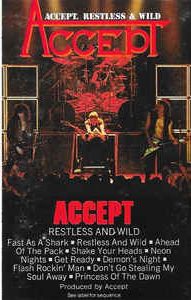
ACCEPT – RESTLESS AND WILD (1983)

When it comes to opinions about German metallers Accept and their music, it does seem to be that a lot of the time, people kind of just start with their best known song “Balls To The Wall” (from the album of the same name). The stuff that comes before tends to be at least a little bit forgotten for some reason.

It is a considerably strange notion considering how many songs the band came up with prior the “Balls To The Wall” track that are still thought of as classic tracks to this day. I’d written about the band’s self-titled debut album in a previous article in this series. However, I thought it might be time to get around to writing a little bit about one of the other Accept albums I have in the Big Box of Cassettes.

Released in the US in 1983, the Restless and Wild album is the immediate predecessor to the Balls To The Wall album. It wastes little time in blowing the doors off your expectations with the song “Fast As A Shark”. Considered one of the earliest and best examples of “speed metal”, this bull in a china shop kind of song continually throttles the listener with an intensely relentless pace.

The title track is another classic track for the band. In fact, the first four songs (including “Ahead of the Pack” and “Shake Your Heads”) are all some of the band’s finest early work. It is songs like these that make a deep dive into the band’s discography a great treasure hunt for any metal fan. As I was listening anew to “Shake Your Heads”, I was struck by the slight similarity in the lyrics to Quiet Riot’s “Metal Health (Bang Your Head)”. Not the exact lyrics per se but the similarity in the celebration of fan reaction to metal music in general. Given that both songs were released in 1983, it just struck me as a great potentially unrealized coincidence.

But for me, the band kind of lost the plot a little bit after those first four songs. While there is a bit more artistic depth in the songwriting to “Neon Nights” (not a cover of the Black Sabbath song), it just was kind of mediocre to me. When you flip the cassette over to Side Two, that sense of the mediocre continues with “Get Ready”. “Demon’s Night” and “Don’t Go Stealing My Soul Away” are decent enough rockers but I don’t think they’d be spotlighted as amongst the best the band has to offer.

I had listened to the CD version of the album back in the middle of 2019 and thought “Flash Rockin’ Man” was a little bit of a mis-step too. But when I listened to the album for this article, I actually found myself enjoying it more than I did in the past. There’s a driving sense of urgency to the music that made the song a bit more catchy to my ears this time around.

The album closes with “Princess Of The Dawn”. The song has a kind of claustrophic feel to it. The song is one of the better known songs from the album. I like it, as it definitely highlights the band’s increased songwriting craft. But the thoroughly abrupt way the track ends will leave you wondering what the hell they were thinking. It doesn’t feel like the track had reached its natural endpoint but rather someone had shut off the recording machines at the most inopportune of times.

I’ve long considered myself an Accept fan. However, like a lot of people I first became aware of them because of the “Balls To The Wall” song. In my defense though, I didn’t just stop there. That song served as the catalyst for me as I’ve done many a deep dive into the band’s entire catalog. I own most of their albums and there are so many gems to check out. I was actually going through my music collection a few weeks back and I spent most of a day pulling out all the Accept material I own and found myself with a sense of renewal as I went through the albums in chronological order.

Accept has earned their place in metal history and while I found at least a couple of tracks on Restless and Wild to be decidedly problematic for my tastes, you can bet your ass that when you listen to this album, you will come to understand just how important the album is in the evolution of the band’s career.

NOTES OF INTEREST: The Restless and Wild album has two different covers. The version that was originally released in Europe in 1982 has a photo of two guitars on fire. When the album was released in the US and UK in 1983, that album art had been replaced by a live shot of the band. I own the band shot on cassette and I have a CD version of the album that features the guitars aflame.

The guitar work on the album has a bit of a story to it. Accept had hired guitarist Jan Koemmet before they recorded Restless and Wild. However, his tenure with the band was very short and he didn’t play a note on the album. The album’s liner notes list Herman Frank as part of the lineup, but while he was the replacement for Koemmet, he didn’t actually play on the album either. Instead, Wolf Hoffman was responsible for all the guitar tracks.

In 2018, I saw Udo Dirkscheider (under the band name ‘Dirkschneider’) performing a full set of Accept songs with his U.D.O. band. They played “Princess Of The Dawn” and “Fast As A Shark” from the Restless And Wild album during the set.


The Cassette Chronicles – Quiet Riot’s ‘Quiet Riot’ (1988)

By JAY ROBERTS

The Cassette Chronicles is a continuing series of mini reviews and reflections on albums from the 1980’s and 1990’s. The aim of this series is to highlight both known and underappreciated albums from rock, pop and metal genres from this time period through the cassette editions of their releases. Some of the albums I have known about and loved for years, while others are new to me and were music I’ve always wanted to hear. There will be some review analysis and my own personal stories about my connection with various albums. These opinions are strictly my own and do not reflect the views of anyone else at Limelight Magazine.

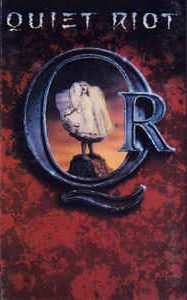
QUIET RIOT – QUIET RIOT (1988)

In 1983, Quiet Riot rose to the top of the metal world on the basis of their Metal Health album. They were, so to speak, the “kings of the world”. Great things seemed to lay ahead for them.

By 1988, the metal world had pretty much passed them by. The decade where metal ruled the world had pretty much left the band in the dust. This would be due in large part to the fans moving on from them and other bands sick and tired of listening to vocalist Kevin DuBrow badmouth them in the press.

But 1988 also saw the other members of Quiet Riot firing of Kevin DuBrow from his own band and the hiring of former Rough Cutt vocalist Paul Shortino. This lineup switch brought about a very different sound for the band on the Quiet Riot album. Gone was the bombastic metal explosiveness. Instead, when you listen to this album, you find that this is more of a bluesy hard rock sound for the band.

I’ll be the first to admit that I’d long moved on from Quiet Riot at this point. I vaguely recall seeing a video that I think came from this album and when I heard the music in 1988, I found myself thinking, “What the hell is this?” and never bothered to check out the album itself. It was deciding to write this article that brought about my first time listening to the release.

And I’ve got to say that I was pretty surprised to find myself really liking a lot of what they had to offer here. Yes, the sound is completely different and those who only want “Cum On Feel The Noize” are sure to never give this album its due.

The song “Stay With Me Tonight” was the single released and it leads off Side One. I can’t say that this was the song I saw the video for, but it does seem likely that it was. I may not have thought much of it three decades ago but as I listened to it now, it was a pretty effective song. Yes, time changes and so did my opinion.

I wasn’t crazy about how the production sound on Shortino’s vocals were done on “Callin’ The Shots”. They were overproduced and made it sound kind of fake and poorly edited together or something. The song “Run To You” really drives home that bluesy sound with it’s slow burn tempo. However, the addition of a big backing vocal part on the chorus threw the song’s balance off for me.

But then Side One closes out with a couple of really solid rockers. “I’m Fallin'” is a damn good song but the band really cuts loose on the song “King of the Hill” which has a pretty vibrant sound and vibe to it even now. By the way, the latter song was co-written by former Yes guitarist Trevor Rabin.

With the addition of Shortino to the lineup, he was pretty involved with the songwriting along with drummer Frankie Banali, guitarist Carlos Cavazo and producer Spencer Proffer. While there were other contributors along the way, this was the main grouping of songwriters for the album. However, with change being the only sure thing when it comes to the Quiet Riot lineup, Shortino was not the only new addition to the group’s lineup. Chuck Wright had left the band and they replaced him with Sean McNabb.

The second side of the album features a brief instrumental called “Lunar Obsession”. It is less than two minutes long and sadly, it just felt out of place to me and it really didn’t seem to need to be included.

Other than that, Side 2 ROCKED! Songs like “The Joker” and “Empty Promises” were electrifying, just pure burn rockers. The band was on fire with “In A Rush”, a song that saw the pacing match the title but in a good way.

The power ballad influence was felt most strongly with the song “Don’t Wanna Be Your Fool”. It starts off as you might expect with a slow but steady tempo. But it gradually gets stronger and faster. By the end of the song it is more of a straight ahead rocker and you kind of forget the ballad like beginning.

In 1988, the lyrics for “Coppin’ A Feel” might’ve raised an eye or two but most likely would’ve been overlooked for the most part. These days, the lyrics are slightly more problematic. Still, as a whole the song is just a killer.

I was looking up the album online and while this one did seem to do slightly better than the QR III album, it was still seen as a big disappointment. I guess I can understand that if we were still in 1988. But in the here and now, I really have to say that despite a couple of speed bump tracks the Quiet Riot album is actually a damn fine piece of work. It may be unappreciated by the majority of metal fans, but you can count me in as one who will tout the positives from this album from this point forward.

NOTES OF INTEREST: Drummer Frankie Banali is the one mainstay of the group to this day. Currently, he’s battling Stage 4 pancreatic cancer and just recently a GoFundMe page has been set up to help pay for his medical bills.

Quiet Riot split up after touring for this album. There was a live release coinciding with the tour for the album called ’89 Live In Japan. There’s been some confusion about the true name of this album as well. It is the second album from the band to be self-titled. It has apparently also been called QR IV. Meanwhile, Paul Shortino has said the title is just QR.

This was the only studio album that Paul Shortino recorded with the band. He’s gone on to play in variety of bands including King Kobra and Appice. He’s also got his own band, Shortino. If the global health crisis that is going on at the time of this article’s publication doesn’t cancel it, Shortino (the band) will be part of the first day lineup at the New England Rock Fest in Chicopee, MA on Friday August 14th , 2020 and feature ex-Dio guitarist Rowan Robertson in the lineup.

Sean McNabb has had a prolific music career following his time with Quiet Riot. He’s played with House of Lords, XYZ and Dokken. He was also with Great White for three separate stints including recording the Can’t Get There From Here album, my personal favorite Great White album. He’s also done acting work including appearing on the Sons of Anarchy and Mayans M.C. TV series.