Category Archives: Cassette Chronicles

THE CASSETTE CHRONICLES – GREAT WHITE’S ‘…TWICE SHY’

By JAY ROBERTS

The Cassette Chronicles is a continuing series of mini reviews and reflections on albums from the 1980’s and 1990’s. The aim of this series is to highlight both known and underappreciated albums from rock, pop and metal genres from this time period through the cassette editions of their releases. Some of the albums I have known about and loved for years, while others are new to me and were music I’ve always wanted to hear. There will be some review analysis and my own personal stories about my connection with various albums. These opinions are strictly my own and do not reflect the views of anyone else at Limelight Magazine.

GREAT WHITE – …TWICE SHY (1989)

When I first decided that I was going to write about Great White albums in back-to-back articles, I was planning it as a tribute to singer Jack Russell. And while the first article (on the Once Bitten album) certainly came out that way, I think part of why I kept the plan to write about …Twice Shy this time around was because of the group’s manager Alan Niven.

The streaming service Paramount+ released a 3-part documentary back on September 17th, 2024 called Nothin’ But a Good Time: The Uncensored Story of ’80s Hair Metal. While the documentary series had plenty of talking head appearances from people that were in bands back in the day, I thought it was Alan Niven who made the biggest impression for me. Because he didn’t seem to give a rat’s ass about looking back at the 1980s decade with rose-colored glasses at all. He was witty and profane and didn’t hold back all that much it seemed. There were a couple times when I burst out laughing at something he said.

Take that and add in the fact that along with being the band’s manager, he also co-wrote and co-produced the album (with keyboardist Michael Lardie) and it seems fitting that writing about the album can be seen in part due to his involvement.

(By the way, Jack Russell was in the documentary as well. I’m not quite sure when his parts were filmed but of all the rockers featured in the series, he just looked and sounded awful. Seeing him like that reminds you of his passing and how it came about.)

The first thing I noticed when I was looking up information about the album is that the track listing online for the standard version includes the song “Wasted Rock Ranger” as the album’s closing track. Well, I don’t know what happened but the cassette copy of the album that I’ve had since it was originally released doesn’t have that song on the album. It ends after nine songs, not ten. I don’t know if that is a mistake online or not.

The …Twice Shy album featured three songs that were released as singles. And the first two ended up being the two most successful charting songs of the band’s career.

The 2nd single was the ballad “The Angel Song”. While I don’t think it has quite the staying power that the song “Save Your Love” does, it did end up hitting #30 on the singles chart. The piano-based ballad has a soft pedal delivery through the first part of the song. It combines quite nicely with a great vocal turn from Jack Russell. The song’s tempo picks up at the point of the guitar solo when the band comes in fully then. It’s a good song and in 1989 definitely fit the mold of the “power ballad”.

Of course, I mentioned “The Angel Song” first despite it being the 2nd single (and side One closing track” because anyone who was listening back in the day knows that the cover of Ian Hunter’s “Once Bitten, Twice Shy” became one of the biggest hits of the decade. It hit #5 on the singles chart and when I first heard it back then I really liked the song. It was quite a lively delivery and had that killer hook that drew you in. But like a lot of hits, it became less of a favored song for me because it was being played to death! Between radio play and MTV putting the video in rotation so heavily, I don’t mind saying that I ended up being sick of the song. In fact, it’s been a while since I listened to the …Twice Shy album and it is probably because I just didn’t want to listen to this song close out the album’s second side.

However, I will say that as I listened to the album in order to write about it, that deliberate distance I put between me and the album ended up allowing me to enjoy the song again for the first time in a while. I’m not going to be putting the song into a regular rotation or anything but I had that same initial thrill of hearing the song as I did back in 1989.

Going back to the first side of the album, the song “Move It” opens up the album and it is a pretty vibrant rocker that made me think of it as a driving kind of song…a road trip track if you will. That rocking vibe continued on “Heart the Hunter”, which pretty much bleeds in from “Move It” without that expected brief pause in between tracks.

Great White really brought the higher intensity rocking soundtrack to open up …Twice Shy as the album’s third track “Hiway Nights” doubled down on that road trip driving song feel and intent that I mentioned with “Move It”.

On the second side of the album, you get “Mista Bone” as the opening song. It’s a got a down and dirty kind of bluesy and grittier edge to it. It doesn’t quite go full throttle in terms of pacing but I have always liked the way the song (including Russell’s vocal) draws you into the song.

The guitar playing is pretty good throughout the album but I liked the way the song “Baby’s On Fire” was heavy on the guitar in the intro of the song and then kept those six-string fireworks going on throughout the rocker! Mark Kendall was on fire with this song.

“House of Broken Love”, which was about the break-ups Kendall and Russell were going through at the time, is a bluesy slow ballad that once again opens up musically when the band hits the guitar solo portion of the song.

For a more straight up ballad that keeps the slower and more dramatic presentation from start to finish, you get the song “She Only”. In all honesty, I kind of forgot about this song. I liked it when I listened to it for this piece but it you’d asked me to name all of the songs on the …Twice Shy album, I probably never would’ve been able to remember this one.

I was graduating from high school in 1989, so this album which was released a little more than a month before I was out of school was probably very important to me when it came out. I mean, it is filled with some great songs, whether my own personal favorites or the ones that Great White’s fan base have embraced at some of the band’s best work. Given that the ’80s metal movement was still at its peak during 1989, Great White gave fans a heck of an album to represent that time and era.

NOTES OF INTEREST: The …Twice Shy album went double platinum, officially recognized so in September 1989.  The Japan and UK editions of the album at the time included two bonus tracks. One of them is “Wasted Rock Ranger”, so I don’t know what’s going on with it being listed as a track on the standard version for the US edition. The other song was called “Bitches and Other Women” which is a medley of The Rolling Stones song “Bitch” and the Foreigner track “Women”. The 2005 Japanese remaster features the bonus track “Slow Ride”.

While he appeared in a video during the Once Bitten album promotional period, this album was the first to feature contributions from bassist Tony Montana. He is credited with co-writing the song “Mista Bone”.

The models featured on the …Twice Shy album art were Traci Martinson (who was on the Once Bitten album cover) and Bobbie Brown, who we all probably best remember for being in Warrant’s “Cherry Pie” video.

THE CASSETTE CHRONICLES – GREAT WHITE’S ‘ONCE BITTEN’

By JAY ROBERTS

The Cassette Chronicles is a continuing series of mini reviews and reflections on albums from the 1980’s and 1990’s. The aim of this series is to highlight both known and underappreciated albums from rock, pop and metal genres from this time period through the cassette editions of their releases. Some of the albums I have known about and loved for years, while others are new to me and were music I’ve always wanted to hear. There will be some review analysis and my own personal stories about my connection with various albums. These opinions are strictly my own and do not reflect the views of anyone else at Limelight Magazine.

GREAT WHITE – ONCE BITTEN (1987)

I’ve written about two Great White albums in the past (Shot in the Dark and Hooked) but I’ve kind of purposely avoided writing about the band’s two biggest albums. The reason I decided to tackle one of them now is to pay tribute to singer Jack Russell who passed away on August 7th, 2024 (RIP).

I’m not sure how many people were into Great White prior to this album but Once Bitten was definitely my entry point to the band. There were any number of mega-selling classic albums that came out in 1987 and while I love a lot of them, I would be remiss if I didn’t include Once Bitten as one of my favorites of that year.

The band’s 3rd studio album features nine songs on it and I would challenge anyone to name any song that is less than stellar in conception and execution. I’ve listened to the album a lot over the years but when I pulled this one out of one of my holders, I ended up realizing something I hadn’t noticed before.

For an era that seemed as if it was focusing on 4-minute songs that would get plenty of airplay, Great White had four songs that topped well over five minutes in length. And their big hit “Rock Me” was over seven minutes long!

But it isn’t like length was a problem here. Instead, it let the band have some room to establish themselves and/or establish a mood or atmosphere within some of the songs.

I was a little surprised that there were only two tracks officially released as singles. “Rock Me” which was on Side One of the album is still one of the band’s best known tracks. Even the edited version used for radio play was superb despite the cuts. Surprisingly enough, the song never cracked the Top 40 Singles chart. It actually peaked at #60. I don’t spend a lot of time looking that information up so I was a bit surprised the single didn’t do better.

The other single was, no surprise for the era, the band’s ballad “Save Your Love”, which was the closing song on Side Two. And yet, this one barely did much better on the singles chart for the band. This really amazes me that the two songs that are their best known songs weren’t technically “hits”.

Not that that affects how much I like either song. For “Rock Me”, even though it is best classified as a rocker track, it actually starts out rather understated and it has a real bluesy feel and undertone to the start of the track. In fact, the more rocking side of the track doesn’t really come in until the song’s chorus. But once it cuts loose, it is like a switch was thrown to give it an entirely new dynamic. And the guitar playing from Mark Kendall is phenomenal.

As for “Save Your Love”, it’s got everything you could want or expect from a power ballad of the 1980s era. Of course, one of the main reasons I still like the song is I carry the memory of the performance I saw when Great White played a show at the Great Woods Center for the Performing Arts in Mansfield, MA.

When the song started, the lighters came out as was tradition back then, but Jack Russell’s performance on that night made the song something otherworldly. He was absolutely in the groove on that night and delivered a performance that got a rousing standing ovation when the song finished. I know Russell had numerous issues over the years but I will never forget that singular performance he gave that night. It was like a magic spell had been cast or something.

I mentioned the guitar playing from Mark Kendall a couple paragraphs back. And it should be noted that any number of the songs featured some incredible shredding on his part.

On Side One, the album opening song “Lady Red Light” has this fantastic opening riff that always manages to make me take notice when I play the album. The fast moving track feeds off Kendall’s guitar playing no doubt.

Another thing I noticed while preparing to write about the album is how the album tracks are so good AND so overlooked. Side One has “Gonna Getcha” which may not strike anyone’s fancy based off the song title alone but there’s such a great vibe and style to this track, I found myself somehow gaining a new appreciation for it.

The side closing “All Over Now” was a song that I thought might’ve been a single before I started researching information for this piece. I have a strong memory of it for some reason but I don’t know why. Or maybe it is because the song is just a full throttle rocker that finds all five members of Great White utterly locked in unison for the track.

On the second side of Once Bitten, Kendall’s playing once again comes to the forefront on the song “Mistreater”. There’s a bit of that bluesier feel in the song intro but that soon gives way to a hard driving and rocking rhythmic style. You can almost see Kendall’s facial expressions in your mind as he just wails on the guitar for this song.

Another one of the album tracks that is far more than you’d think is “Never Change Heart”. The difference for me this time is that I’ve loved this song all along. It is definitely one of my favorite songs on the album.

There’s a slow burn start to the song that grows into more of a hard rocking tempo. And there’s something about the way Jack Russell’s phrasing on the song’s chorus that tickles my fancy every time I hear it.

I was struck anew by the song “On The Edge” which is a pretty straight ahead rock song. As for “Fast Road”, that song sure lives up to the first half of its title. The musical performance has a relentlessly set pace from start to finish and you almost feel out of breath once it comes to an end.

I’ve only seen Great White that single time in concert and it is doubtful that I’ll ever see them again since they never seem to play the Northeast anymore (for reasons that are pretty obvious, I’m sure). But whenever I put on one of their albums, I am pleased with just how much well their music holds up. I have slowly built up my collection of their latter day albums recently and I’m looking forward to checking them out. But for my money, the Once Bitten album is the perfect way to demonstrate how good the band was in their heyday.

NOTES OF INTEREST: The Once Bitten album peaked at #23 on the album charts when it was originally released. It would end up achieving platinum sales status. There are two different track listings for the UK and International versions of the album. The former drastically alters the release by using a number of songs that had been used for the Shot in the Dark album. The International version flips the running order a bit but with all the same songs as the US edition.

This was the first album where keyboardist/guitarist Michael Lardie was listed as an official member of the band. Meanwhile, this would be the last album to feature bassist Lorne Black. However, new bassist Tony Montana appeared in the video for “Save Your Love”, not Black.

Alan Niven, who co-produced and co-arranged the album with Michael Lardie and Mark Kendall, also co-wrote all of the songs except “Save Your Love”.

THE CASSETTE CHRONICLES – KINGDOM COME’S SELF-TITLED DEBUT

By JAY ROBERTS

The Cassette Chronicles is a continuing series of mini reviews and reflections on albums from the 1980’s and 1990’s. The aim of this series is to highlight both known and underappreciated albums from rock, pop and metal genres from this time period through the cassette editions of their releases. Some of the albums I have known about and loved for years, while others are new to me and were music I’ve always wanted to hear. There will be some review analysis and my own personal stories about my connection with various albums. These opinions are strictly my own and do not reflect the views of anyone else at Limelight Magazine.

KINGDOM COME – KINGDOM COME (1988)

If you include all the studio albums, plus a live album, compilation album and a box set, there are a total of 16 releases under the Kingdom Come banner.

But I don’t know if any of those other releases made anywhere near the impact that the band’s self-titled debut album (and it’s big single “Get It On”) had on the music world. Hell, when I pulled this out of the Big Box of Cassettes to write about, I discovered I had another one of their albums in there as well…and never realized it!

When I looked up the Kingdom Come discography online, I had no memory of any of the album titles. And when you add in the fact that I’ve never listened to this album as a whole, I found myself rather looking forward to what was going to be a mostly new experience for me.

Now, I know all about the crap the band took for essentially trying to sound like Led Zeppelin so let’s just acknowledge that right here and now so I hopefully don’t have to go back to that kind of commentary too often for the rest of the article. They did it, we know it, let’s move on (for now).

Featuring the lineup of Lenny Wolf on vocals, Danny Stag and Rick Steier on guitar (Steier also played keyboards), Johnny B. Frank on bass and James Kottak on drums, the Kingdom Come album knew how to make you play the waiting game if you had bought the album simply for the “Get It On” song. That’s because it is the opening song on the second side of the album.

For the album’s first side, things kick off with the song “Living Out of Touch”, a track that opens with a killer sounding guitar riff and fiery opening salvo from the band as a whole. That guitar sound continues throughout the uptempo track and I love the way it sounds. 

But I did immediately notice one thing that bothered me…Lenny Wolf’s vocals. Not the vocals themselves, but rather how they are recorded. During the main lyrical passages of the song, his vocals sound as if they are recorded in an echo chamber or something. You can hear the echo or whatever the effect might be. I can’t decide if it ages the song badly or what but the only respite in “Living Out of Touch” from that feeling is during the chorus when the music swells up and it levels out that echoing sound a bit more. It’s a shame that the vocals distracted me so much because musically, the song really gets you fired up.

The fast moving tempo continues on the song “Pushin’ Hard”. James Kottak’s drumming has a brief spotlight in the intro to the song and then I noticed that my ears kept seeking out his contributions to the song from that point onward. 

And yes, you can hear the high pitched vocal style, patterns and phrasing from Wolf that definitely recalls Robert Plant’s work. That’s something you can say about the song “What Love Can Be” as well. The track’s opening smoky, bluesy guitar sound combined with the various yelping and yowls from Wolf will make you feel as if you are either sitting in a bar room at 1am with your “last call” drink or in a courtroom being sued for plagiarism.

I know I said I was trying to avoid mentioning Led Zeppelin too much earlier in the article, but given that I’ve never heard most of these tracks, I can’t help but shake my head as I was listening to the album thinking, “What the hell?” to myself. Greta Van Fleet is getting all the crap in the here and now (deservedly so) but you can’t avoid the Zeppelin comparisons with Kingdome Come no matter how much you’d like to. And you certainly can’t blame the other musicians in the band because except for two co-writing credits, Lenny Wolf wrote all the music. And only one of those co-writes was by a member of the band. In fact, the other band members had more credits for co-writing the lyrics than the music.

The song “17” has an extended musical intro before the vocals come in. The song is a fast moving thumper and I did rather enjoy how the track sounded.

The first side of the album closed out with “The Shuffle”. The band comes out firing on this one. The guitar work is pretty damn good and the way you can feel your blood pumping and your foot tapping sure made this song one you’d remember.

For the second side, as I said previously, the band’s best known song “Get It On” opens things up. Now I have heard the song before. And when it got regular radio airplay, I heard it a lot. But it has been years since I can rightfully recall hearing the song. So you’ll understand how as I listened to the song for this article, I was struck almost anew by just how much this sounds like a Zeppelin song. Many years too late, I have to sit here and wonder how the members of Led Zeppelin didn’t sue. I have to admit that I sort of liked the song back in the day but this realization now sort of taints the song for me. 

The song “Now Forever After”, is an uptempo rocker. It’s got a nice kind of groove to it and kind of washes away a bit of that newfound disappointment in “Get It On”. It let me just enjoy the song which is something I strangely found myself in need of doing as I listened. 

For “Hideaway”, you get another fast moving number. I really liked the guitar work on this song, particularly during the song’s chorus when there’s a bit of a quick step added to the playing. “Loving You” takes the opposite direction, slowing down for the most part. And musically, at least for the first part of the song, it is mostly fueled by guitars only. Wolf’s vocals do get a bit strident at certain points but overall, the way the band steps back to more of an acoustic driven style lets this track turn out pretty well.

Aiming to go out on a high and rocking point, the song “Shout It Out” does that pretty effectively. Full of vim and vigor, the song starts out rocking and stays that way right through the last notes of the track.

I guess you could say that I found that it is just impossible to ignore just how much the Kingdom Come debut album sounds like a Led Zeppelin release. And the criticism the band received would seem to be well-earned even if a lot of critics did go a wee bit overboard in said criticism. But does that mean you can’t enjoy the album for what it is? Well, no. You can enjoy it. I can say that I did like a lot of the music, regardless of its real origins. But would I be listening to this all the time now that I’ve finally heard the whole thing? Eh…maybe, maybe not. That echo chamber effect on Lenny Wolf’s vocals is a real annoyance. But if I pop this album back into the cassette player every once in a great while, I think I would end up sitting back and just taking it all in for what it is.

NOTES OF INTEREST: The Kingdom Come album peaked at #12 on the Billboard album chart and was certified Gold. There was a CD remastered edition released in 2004 that contained the 12″ promo mix of the song “Get It On” as a bonus track.

While “Get It On” and “What Love Can Be” were released worldwide as singles, the song “Loving You” was released as a single in Japan only.

Drummer James Kottak, who was on the first two albums Kingdom Come put out before departing the band, passed away on January 9th, 2024. He’d been back in the band lineup since 2018 after playing with Scorpions (and a bunch of other acts) for a number of years.

THE CASSETTE CHRONICLES #250 – SAVATAGE’S ‘EDGE OF THORNS”

By JAY ROBERTS

The Cassette Chronicles is a continuing series of mini reviews and reflections on albums from the 1980’s and 1990’s. The aim of this series is to highlight both known and underappreciated albums from rock, pop and metal genres from this time period through the cassette editions of their releases. Some of the albums I have known about and loved for years, while others are new to me and were music I’ve always wanted to hear. There will be some review analysis and my own personal stories about my connection with various albums. These opinions are strictly my own and do not reflect the views of anyone else at Limelight Magazine.

SAVATAGE – EDGE OF THORNS (1993)

The 7th studio album for Savatage was a bit of a sea change from the two previous releases the band had put out. While Savatage had aimed for a more progressive rock/metal sound on those albums, the arrival of singer Zachary Stevens saw the band’s sound edge (no pun intended) towards a more straightforward metal sound. Yes, there were moments that recalled those other recent records but for the most part, it was straight ahead metal.

On a despairing note, the other big change for Savatage came six months after the album was released. Guitarist extraordinaire Criss Oliva was killed in a car crash with a drunk driver (his wife Dawn was critically injured as well). Edge of Thorns tracks like “Exit Music”, “Conversation Piece” and “Sleep” took on unintended additional overtones for me when I learned of the news.

And how did I learn about the news? Believe it or not, 31 years ago I didn’t have such great access to online information. Instead, I was reading a magazine that had an interview with someone in the band. I think it was an issue of Hit Parader but don’t hold me to that. Anyway, I didn’t notice it on the first read, but when I read the interview a second time, I saw a little box that included the information that the interview had been conducted before Criss was killed in a car crash. UGH! What a terrible way for anyone to find out that information. And since Criss Oliva had become my favorite guitar player (my photo with him on the Gutter Ballet tour remains a prized possession), it was particularly gutting for me on a fan level.

Just last weekend I was listening to my CD edition of this album as I was traveling around doing errands and I was even wearing my album cover artwork T-shirt. So on the occasion of the 250th article in The Cassette Chronicles series, I thought it was fitting that I take a look at the Edge of Thorns album.

Having written about the Hall of the Mountain King, Gutter Ballet and Handful of Rain albums, I’ve had a lot to say about the band, but with Savatage being my favorite band, there’s always more to add to the conversation.

The album opens with the title track and that opening piano riff does immediately lend itself to a very haunting thematic sensibility. As the vocals kick in, the song maintains a steady methodical pacing until just before the lead in to the guitar solo. The vocals from Zachary Stevens immediately make you sit up and take notice. I know there is somewhat of a split between Jon and Zach vocal loyalists but for me, I don’t differentiate that way. I enjoy both styles so it is all Savatage to me. As the song moves in a far more lively direction through the guitar solo and beyond, I liked how the band brought things back to a more direct conclusion by bringing back the keyboard/piano riff to wrap up the song. This was also the single release (with an accompanying video) from the album.

The immensely rocking track “He Carves His Stone” starts out rather understated but quite soon enough, the band explodes into a molten bit of music that is only further fueled by the aggressive vocal take from Stevens. But listening to Criss Oliva riff his way through this song also helps make it one of my favorite tracks on the album. I love that song’s third lyrical stanza when the music first bursts forth from the speakers: “Well a man’s got to do what a man’s got to do / But I’ll never give my soul to you / No fallen angel’s prophecy / Will ever take hold of the man you see”. And the leads that Oliva is playing at the end of the song…AWESOME.

There’s not much of a table setting intro on the song “Lights Out”. It’s fast and furious, a relentless sonic assault, from start to finish. The way the band sounds on this one only further deepened my appreciation for the ability Criss Oliva had. He’s an underrappreciated guitar maestro in my book and this song has always struck me as a fury-filled example of that belief.

On “Skraggy’s Tomb”, you get a brief little set piece in the opening as you hear someone opening a bottle (of whiskey it would seem by the theme of the song) and taking a swig before the song kicks off in full. The song isn’t quite as fast as the previous two tracks but it is still has a pretty lively uptempo pace to it for the most part.

The first side of the album comes to a dramatic conclusion with its last three songs. Two of the songs are instrumentals. The first is “Labyrinths” which is only about 90 seconds long. It’s got a soft and gentle almost ethereal feel to it at the start but then the guitar comes in over the piano and you get a much more dramatic vibe coming off the song. As the song looks to wind down, the music briefly gets even more intense as it leads into one of Savatage’s most incredible tracks.

That song is called “Follow Me” and it starts off in a bit of a restrained manner but good gawd, when the band kicks up the musical intensity, it is a thing of beauty. “A man only sees what he wants to see/ When he’s in his mind/ Where he is what he wants to be / Living in a world where he’s safe from reality / Won’t you take a chance on this night child and follow ME”. There’s a stupendous amount of standout lyrical lines in this song and between the way Stevens sells those lines and the way the music weaves in and out to enhance those vocals is incredible. As the song hits the solo and then as the vocals come in over the top as the song heads to its finish, the music is absolutely shredding and I love the way Stevens sings about the “new weekly bible, his modern TV Guide”. A monster track in every respect.

And then comes the side-closing instrumental “Exit Music”. I mentioned above how this track took on added significance for me after learning about Criss Oliva’s death. No matter how many times I listen to the song, I am reminded not only of his passing but somehow the music also serves to kind of uplift my spirits as well. If I was going to select a soundtrack for when I depart, this would be a song I would feel compelled to add in. I don’t know how others might feel about this song but it always hits home with me.

The second side of the Edge of Thorns album opens with the song “Degrees of Sanity”. There’s a strong undercurrent of barely restrained electricity running throughout the first lyrical portion of the song. The vocals from Stevens are a bit underplayed but there is a bit of an edge at the same time, a hidden knife waiting to be plunged into your heart if you will. When the song’s tempo rises higher for the chorus, you get a bit more fire and fury from the band, but the song really takes off as the solo kicks in and suddenly you are pummelled by one wave of heavier tones after another.

The Edge of Thorns album is chock-full of great songs but one of the best is “Conversation Piece”. As I said before, it took on a bit more feeling to me after learning of Criss Oliva’s death. But this song doesn’t quite have the same kind of emotional feel to it in that respect as “Exit Music” or “Sleep”. Instead, this song gets interpreted in my head these days as me looking back at my own personal appreciation for Criss and how whenever (however rare that is these days) I have a conversation about music with people, I like to bring him up as an example of greatness. Lyrically, the song doesn’t match up with that feeling I get but I don’t think it has to be a perfect alignment. I take and/or get from this song what I get outside of simply enjoying the great music and lyrical content separately as its own perfect beast. 

Can you imagine what Savatage would’ve been doing if one of their ballad tracks had had the chance to be a big hit? The song “All That I Bleed” is probably one of the better candidates for that had Savatage gotten the acclaim it deserves. The song is keyed for its first half by a gentle vocal and piano soundtrack. Zachary Stevens delivers a great performance as this is a ballad that doesn’t age or get worse as time goes by. And in the tradition of “power ballads”, when the song blows up into more of a sonic animal, the full band delivers a great burst of music over that piano and the vocals from Stevens take on a heavier yet more emotional component. This is the kind of “ballad” that I can always love and appreciate.

For the song “Damien”, I can’t help think that this song would’ve been just as interesting to me if it had been on an earlier Savatage album with Jon Oliva singing. It has the feel and perhaps the phrasing that Oliva would’ve been just as perfect at capturing in his own vocal performance. It’s got that kind of dark and evil vibe to it. That said, I think Zachary Stevens does a fantastic job of making the song his own (remember he didn’t have anything to do with the writing of the material for this album). When I saw Savatage with him in the band, I only got to very briefly meet Stevens so I never got to ask him anything of substance. I would’ve loved to have talked to him about this song in particular. Yes, I know I kind of abhor doing interviews with musicians I like but there is a small list of people I would want to interview if I could. Stevens is on that list. (As is Jon Oliva, in case you were wondering.)

Along with “All That I Bleed”, the song “Miles Away” is the final song that Jon Oliva wrote with Criss Oliva. According to the album’s Wikipedia entry, it is one of Jon’s favorites on the Edge of Thorns album. And as I listen to the song, I can see why this would be. It’s got everything you could want in a Savatage song. You’ve got a softer lead in that builds to a kinetic explosion of hard driving metal music, a machine gun firing delivery for the drums and a smoking hot vocal take. The guitar playing when the music takes on that faster tempo is amazing! And I love the way Criss Oliva solos on this song. “Armed and gunning / I’ve been running / Through a world that’s in decay / Let them thunder stare and wonder / Cause I’m already miles away” with that rapid fire drumming echoing through that part of the song is pure gold.

For all of their metal bonafides, Savatage knows how to deliver when it comes to the softer side of things. The Edge of Thorns album comes to a close with the song “Sleep” which for the most part gives listeners a bit of a respite from all that came before. With mostly just the vocals and guitar, I thought the lyrics felt as if it was a kind of goodbye from Criss Oliva. Now of course it wasn’t because the song was written well before his passing but again, some songs on this album took on a different tone and meaning for me after the fact. The song pretty much maintains its pacing from start to finish and as I was listening to it for this article, when it ended I kind of sat for a moment without really doing anything…just pausing for a moment of reflection I guess you could say.

Of course, the pause couldn’t last that long because I had to actually write said article.

There are 13 songs on Edge of Thorns and not a single track could be seen as a “lesser light”. Rather, the album should stand with the rest of the band’s catalog as a prime example of one of the singularly great metal bands of all time!

NOTE OF INTEREST: The Edge of Thorns album not only has a Japanese version that was released on CD, but the album has been reissued three other times as well. Each of these reissue has different bonus tracks than the others.

The piano riff that opens the album’s title cut found a secondary life as the music used during episodes of The Real World: San Francisco.

Jon Oliva, the mastermind behind Savatage wasn’t an official member of the band during this album’s time period. He was instead credited as an “additional musician”. Despite that off-handed credit, he co-wrote all the music with Criss Oliva and producer Paul O’Neill. He co-wrote all the lyrics with O’Neill. In addition, he co-produced the album, played keyboards and piano on the album. He also played drums on two tracks.

While Steve Wacholz played drums on the majority of the Edge of Thorns album, the tour saw Andy James added as a touring member of the band behind the kit.

It’s been a couple decades and more since Savatage released an album. In an interview last year, Jon Oliva said he was working on what he called a “final” Savatage album and that it was going to be out this year. However, numerous issues including his health have cropped up and now the earliest us Savafanatics can hope for a new album is in 2025. But hope springs eternal that we will get this new album…Hey Jon…we’re out here waiting…believe me!

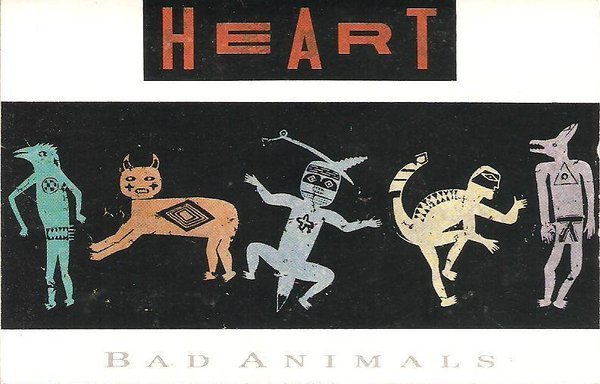
THE CASSETTE CHRONICLES – HEART’S ‘BAD ANIMALS’

By JAY ROBERTS

The Cassette Chronicles is a continuing series of mini reviews and reflections on albums from the 1980’s and 1990’s. The aim of this series is to highlight both known and underappreciated albums from rock, pop and metal genres from this time period through the cassette editions of their releases. Some of the albums I have known about and loved for years, while others are new to me and were music I’ve always wanted to hear. There will be some review analysis and my own personal stories about my connection with various albums. These opinions are strictly my own and do not reflect the views of anyone else at Limelight Magazine.

HEART – BAD ANIMALS (1987)

After the quintuple platinum success of their 1985 self-titled album, it should’ve come as no surprise that Heart would lean just as heavily (if not even moreso) on the new glammed up image and sound that had turned around their commercial fortunes.

And that’s just what they did for their 9th studio album Bad Animals. The material does sound similar to what was on the Heart album in terms of the production and glitzier pop/rock material. Of course, with producer Ron Nevison back behind the control board, that is, as I said, not much of a surprise.

But…don’t let that fool you. There’s more stone cold classic tracks on this album as well. After becoming an ardent fan with the previous album, I was definitely all in for Bad Animals.

The funny thing is that while I’ve listened to the album a number of times over the years, I found myself digging into the album in a way I hadn’t expected when I first popped it in to check out for this article. The biggest thing is that I realized I’ve never done much of a deep dive on the credits for this album. And while I knew of three singles being released from the album, I didn’t know there’d been a fourth one as well.

And there are a host of writing credits for people other than the actual band members. On the Heart album, there were a number of co-writers as well. But there seemed to be even more outside work on Bad Animals. Noted hit songwriter Diane Warren wrote “Who Will You Run To”, “Alone” was a cover of a song written by the i-Ten duo Tom Kelly and Billy Steinberg. They also wrote “I Want You So Bad”. In fact, the only song that was written by the band themselves was the album’s title track. Ann and Nancy Wilson co-wrote “Easy Target” and “RSVP” with Sue Ennis while Nancy co-wrote “There’s The Girl”. Beyond that, all the writing is by people NOT in the band.

I don’t know if it was planned this way but those four singles were also the first four songs on the album’s first side.

The song “Who Will You Run To” was the second single to be released from Bad Animals but leads off the album. It ended up hitting #7 on the singles chart. It sets the album off on a high note as it is a lively rocker with plenty of melodic hooks. I still hear this on the radio every so often and I find myself getting a bit jazzed when I hear it. I like the guitar lines threaded through the song.

Next up in the running order is the song “Alone”. If you have ever heard the song, you’ll automatically know it every time you hear it after that. The song hit #1 on the singles chart and the big almost bombastic power ballad has everything you could want from a song of it’s type. It kicks off with a slow almost lilting piano and Ann Wilson’s restrained vocal delivery. But man, when it gets to that first chorus, the music amps up the energy and explodes through the speakers. And with Ann’s voice switching from restrained to a more fiery and intense delivery, you get to hear everything that makes her such a fantastic singer both then and now. 

While she will always be known more for her guitar playing, after the success of “These Dreams” on the Heart album, Nancy Wilson found herself back behind the microphone for “There’s the Girl”. I remember loving this song back in the day. It might’ve even been my personal favorite from this album. It’s got a rocking pace but Nancy’s vocals are less intense than Ann’s which gave the song a different point-counterpoint between the music and vocal performance. I was surprised that this song peaked at just #12 on the singles chart because I thought so highly of it and likely thought it had been more successful. 

While it didn’t even crack the Top 40 as a single, the song “I Want You So Bad” is pretty interesting. While it is more of a ballad in terms of the lyrical content, the music never really settles into a “slower” delivery. In fact, the song pretty much employs a mid-tempo pacing from start to finish. I also noted that Ann’s vocals avoid going into the stratosphere in terms of audio intensity. Instead you get a straightforward vocal take that fits the overall musical scheme of the track.

The closing song on Side One of Bad Animals is “Wait For An Answer”. It changes pace from the mid-tempo and softer vocal delivery pretty quickly too. While it starts off kind of subdued, you can hear the differences almost immediately. The intro hints at something more ominous and you can hear the vocals have more of an edge to them. And that’s whether the song is a bit slower or as it grows into more of a balls-out rocker. And about halfway through the song, there’s no stopping the rising power from Ann’s vocals. 

This was one of the songs that really surprised me as I listened to it for the article. It was almost like hearing it for the first time as I noticed the way things were coming together in the song.

The second side of Bad Animals kicks off with the title track, which reportedly is about the band themselves, has a weird little vocal in the intro that I have to admit that I am not all that crazy about. However, other than that, I love this track! There’s a bit of edgy darkness to the music for most of the track, though it does get a bit more lively towards the end. And this definitely a vocal showcase for Ann Wilson. She alternates between a slightly softened tone in spots with an almost growling delivery and edginess to the vocals in other spots.

If I was going to select a song from Bad Animals that should’ve been a single release, I think I’d have to go with “You Ain’t So Tough”. It’s a solidly uptempo number that has a great chorus with a deft touch of melody woven in.  And lyrically, it struck me anew that this is song is a bit of an empowerment story. I mean there’s not much room for any other interpretation with a lyric like this one is there? – “Loving you was an endless fight / I was wrong and you were always right / but look what happened when I called your bluff/ when the truth comes out, you ain’t so tough”.

“Strangers of the Heart” is a ballad. The first lyrical stanza is pure soft delivery but as the song hits the first chorus, the intensity grows. And when the second lyrical stanza starts, you can feel the song start to grow a bit “heavier” with the drums getting just a bit more play at that point in the song. I was kind of surprised to find myself really enjoying this one all over again. It’s a ballad that hits hard and doesn’t seem so sweet as to age badly.

The song “Easy Target” gets off to a rocking start with some tasty guitar lines before the vocals come into play. The song rocks from start to finish but I did like that opening flourish a lot. The chorus flows smoothly and there is a great melodic feel and hook to things. The one thing that throws me off is just how abruptly the song ends.

The album closes with the song “RSVP”. While the song moves at a slower pace for the first half of its running time, there is quite a good deal of power in the musical score. Ann Wilson’s vocals help give it an even more dramatically intense feel too. After that first half, the song gets demonstrably quicker in pace. And there’s a cool guitar solo to enjoy as well.

I wrote about the self-titled Heart album in the most recent article before this one. In that piece I mentioned that the Heart album was my gateway into becoming a fan of the band. With Bad Animals that fandom became forever cemented. The album follows the path carved by the band’s previous release and delivered some fantastic songs and performances that still resonate with me to this day.

NOTES OF INTEREST: The Bad Animals album was a bit less successful than the Heart album in terms of sales but they did end up selling three million copies of the release. I’d call that a success no matter how you look at it.

The “Alone” song ended up getting Heart a Grammy nomination, though they didn’t win the award.

While Heart had been either going on a new tour or was already out there touring this summer, due to some serious health issues for Ann Wilson, the tour has been cancelled. My best wishes go out to Ann Wilson for a full and speedy recovery.

THE CASSETTE CHRONICLES – IRON MAIDEN’S ‘SEVENTH SON OF A SEVENTH SON’

By JAY ROBERTS


The Cassette Chronicles is a continuing series of mini reviews and reflections on albums from the 1980’s and 1990’s. The aim of this series is to highlight both known and underappreciated albums from rock, pop and metal genres from this time period through the cassette editions of their releases. Some of the albums I have known about and loved for years, while others are new to me and were music I’ve always wanted to hear. There will be some review analysis and my own personal stories about my connection with various albums. These opinions are strictly my own and do not reflect the views of anyone else at Limelight Magazine.

IRON MAIDEN – SEVENTH SON OF A SEVENTH SON (1988)

“Seven deadly sins
Seven ways to win
Seven holy paths to hell
and your trip begins”

As a relatively soft vocal turn from singer Bruce Dickinson intones that opening quartet of lines, Iron Maiden launches into what turned out to be an incredible concept album that still rings true to this day.

The Seventh Son of a Seventh Son album was the band’s seventh studio album and while a lot of their songs prior to this point had dealt with the back and forth battle between good and evil, this was the first time Maiden had stretched the concept to a full length recording.

Looking back, what impresses me even more about the album was how the main storyline for the release is based off a book from author Orson Scott Card. But instead of writing songs to various points of the book’s storyline, works from others like Aleister Crowley and the death of a noted psychic served as inspirations for other individual tracks. Yet they were all fitted in to form a cohesive storyline all its own.

The quoted lyrics above open up the lead track “Moonchild” but after that softer delivery from Dickinson and the instrumental introduction, the song explodes into this hammer and tongs bit of heavy rock with the vocals soaring over the top as Bruce really digs into the track to provide the more well known side of his vocal abilities…the massive and always ear-catching roar!

The album’s writing credits show that while bassist Steve Harris was involved in the writing of seven of the album’s eight tracks (three he wrote on his own), “Moonchild” was the baby for Dickinson and guitarist Adrian Smith. I was looking stuff up online for the article and the album’s Wikipedia page made note of the more collaborative writing process for this album as opposed to the previous album Somewhere in Time.

On the song “Infinite Dreams”, I liked the way the song opens in such an understated manner. The instrumentation displays a lighter touch to begin with and then about a minute into the song, the pace picks up a bit. The lyrical content on this song is great but I really like the section that starts off with the couplet, “Even though its reached new heights / I rather like the restless nights…”

Around the 3:15 mark, the album really picks up the pace dramatically as it heads into the solo accompanied by an ungodly scream from Dickinson that could easily fit into the song’s narrative as well as just displaying his “Air Raid Siren” capabilities.

While any number of Iron Maiden songs have become staples amongst their live shows and their fan base, they really haven’t had anything resembling a “hit” single. Thanks to Seventh Son of a Seventh Son though, the closest they ever came is with the song “Can I Play with Madness”. It was released as a single and while it didn’t chart, it has everything you could expect from a chart topping track from the 1980s. There’s that big expressive overture vocal at the start, a superb musical soundtrack that has a hook embedded throughout as well as giving listeners the full breadth of a heavy metal riff laden score as well. And the chorus is pretty addicting as well. It has been a number of years since I’ve watched the video but I do remember it being rather striking in how it was put together. And once again, some amazing lyrical lines are threaded throughout the song as well. “Your soul’s gonna burn in a lake of fire” is a line that instantly hit home for me when I first heard the song back in the day. It is probably a combination of the forceful delivery from Dickinson and just the great way the line was written that caused it to stick in my brain even now.

The video for the song “The Evil That Men Do” (which is the closing song of the first side of the cassette) is a live performance and it is a case where the video concept really fits the song because when I hear that intro, for reasons passing understanding, I always get this feeling like the show is about to start even as I listen to the studio album. It’s got a galloping pace to the delivery throughout and remains one of the stand out tracks in my mind. It is so ingrained in me that whenever I hear someone just say that phrase “the evil that men do”, I think of the song.

The album’s second side opens with the title track. It’s the longest track on the album at nearly 10 minutes in length. And as you listen, you can see how if the song had been just another track on a different Iron Maiden album, you’d still find yourself engrossed in the story the band was laying out. With the song being the centerpiece of a whole conceptual album, it just cements to me how strong the Seventh Son of a Seventh Son album is as a whole.

I like the way the song sets itself up at the beginning as the audio version of a cinematic score. You can hear the overture intro at the start, the admittedly not that lyrically interesting chorus that drives home the song title like a jackhammer, that spoken word performance piece mid-song and just that overly long yet not boring wide swatch of instrumental music. You can picture the entire story in your head through this song.

For “The Prophecy”, the storyline takes its dramatic turn towards its climactic conclusion. While still setting a pretty lively pace, the music score does have its moments of restraint. But when the band cuts loose, you get this feeling of being carried along an unstoppable sonic wave. As I was listening to the album for this piece, I found myself really digging into the performance of the lyrics as Dickinson set about embodying the main character…and doing it so well with the rising and falling emotions of what was going on in the story at this junction.

In the penultimate track “The Clairvoyant”, everything is keyed off of that opening Steve Harris bass intro. I still get amped up when I hear that start to play. And then when the band comes in full force, I found myself paying a lot more attention to what drummer Nicko McBrain was doing back behind the kit. It’s not like he wasn’t outstanding throughout, but as I was listening this time around, he was just on fire throughout. The song has a superb chorus, that captures a ferocious Dickinson, well he’s got a real edge throughout this track but the chorus seems to have something just a little extra to it to my ears.

The album closes out on the song “Only the Good Die Young” and no, it isn’t a cover of that Billy Joel hit song. Iron Maiden brings the story and the album to a fitting conclusion with a song that hits you with a relentlessly concussive blast of fiery metal. And lyrically, there is so much to explore but suffice to say, it has an amazing collection of lyrics. And as the song ends, it harkens back to the beginning with a similarly themed coda that resembles that lyric I quoted at the start of this article:

“Seven deadly sins
Seven ways to win
Seven bloody paths to hell”

Seven downward slopes
Seven bloody hopes
Seven are your burning fires
Seven your desires….”

In the decades since the Seventh Son of a Seventh Son album first released, there’s been any number of revisionist reviews that don’t quite give the album the love it deserves. Hell, even the band has some different views on the album from what I read online. Which is sad because it was pretty well received (as far as I remember, though apparently not as well in the U.S. as Somewhere in Time had been) when it originally came out. But for me, this was still the era where I was discovering Iron Maiden for the first time. With Somewhere In Time being my first Maiden album and then it being follow up by this one, my fandom was cemented pretty quickly. Add in the fact that with me being a huge “story guy”, there’s just no way I could ever see Seventh Son of a Seventh Son as anything that pure greatness!

NOTES OF INTEREST: The Seventh Son of a Seventh Son album was a big hit for Iron Maiden in the UK. It debuted atop the album chart there and the single “Can I Play With Madness” peaked at #3 on the British singles chart. In the US, the album peaked at #12.

The album was reissued in 1995 with a bonus disc featuring 9 tracks. Four of them were studio tracks with the remaining five songs being live recordings. And if I’m not mistaken the album was reissued again in 2015, though I don’t believe anything new was added to that version of the album.

Though three singles from the album were officially released, none of them made a dent in the US singles chart. Not that that was much of a surprise since Iron Maiden’s appeal has never been based on how far they rise on the charts. The song “Only the Good Die Young” was featured in an episode of the TV series Miami Vice.

This was the first Iron Maiden album to feature keyboards. It was the last to feature guitarist Adrian Smith until he rejoined the band in 1999. He left the band in 1990, reportedly unhappy with the direction the No Prayer for the Dying album was taking.

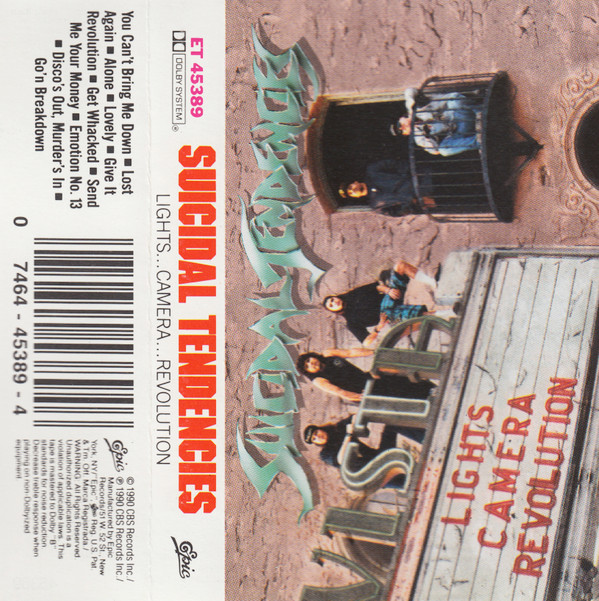
THE CASSETTE CHRONICLES – SUICIDAL TENDENCIES ‘LIGHTS…CAMERA… REVOLUTION’

By JAY ROBERTS

The Cassette Chronicles is a continuing series of mini reviews and reflections on albums from the 1980’s and 1990’s. The aim of this series is to highlight both known and underappreciated albums from rock, pop and metal genres from this time period through the cassette editions of their releases. Some of the albums I have known about and loved for years, while others are new to me and were music I’ve always wanted to hear. There will be some review analysis and my own personal stories about my connection with various albums. These opinions are strictly my own and do not reflect the views of anyone else at Limelight Magazine.

SUICIDAL TENDENCIES – LIGHTS…CAMERA…REVOLUTION (1990)

Before the release of the Lights…Camera…Revolution album, Suicidal Tendencies was merely a blip of sorts on my own personal musical radar screen. My knowledge of them pretty much consisted of a couple songs from their previous album How Will I Laugh Tomorrow When I Can’t Even Smile Today and that they’d been banned from playing shows in Los Angeles either for being perceived as being a gang or for having gang relations.

But all that changed when this album, their 5th studio release, came out. While the band was known more for being a punk/thrash crossover act beforehand, Lights…Camera…Revolution pretty much took the band fully into the thrash metal genre.

That is made pretty clear with the album’s opening track “You Can’t Bring Me Down”, a brutally effective song that while it never made a dent in the charts as a single release, it is still considered a successful track. The band ended up being nominated for a Grammy for “Best Metal Performance” in 1991.

The song starts out with a slow building intro before singer Mike Muir comes in with a shouted “What the hell’s going on around here!” and then the band just explodes into the aggressive, assaulting cacophony led by guitarists Rocky George (who co-wrote the song) and Mike Clark. It’s a furious blitzkrieg of rage and the accompanying video is apparently in answer to that Los Angeles ban I mentioned above. What’s more is that after the guitar solo, Mike Muir cuts back in with an absolutely astonishing and perfectly written rant that encapsulated the band’s feelings. Unfortunately, because of some profanity, it tended to get cut or bleeped when you heard it on the radio and from the video itself. I also don’t know how Muir manages the rapid fire delivery of the vocals. I used to try to sing along (badly) to this track and I always ended up with a sore jaw because of the pace of his performance.

After the fury of the lead track, the song “Lost Again” ends up being far slower moving but still has a heavier vibe to the music with an extra sharp edge to the vocal performance.

The album had a total of four singles released from it and the last two were on the album’s first side. The first of that latter duo is the song “Alone”. In the beginning you get a softer delivery and a more clean vocal style from Mike Muir that serves as a set up for the more uptempo pace of the song after the first lyrical stanza. As the song proceeds, the music keeps growing more relentless and the vocals match that style too.

The last single was the song “Lovely” which is the first song that seems to fully incorporate some of the funk influences brought in to the band’s sound by their new bassist Robert Trujillo. The funk style is merged rather nicely with the more aggressive rocking side of things.

The first side of the album closes out with the song “Give It Revolution”. The song mixes tempos with a heavy mid-tempo groove that gets faster over the course of the song. The lyrical content on this song is superb and I’ve always loved the line “You can put a bullet in my head, but you can’t kill a word I’ve said.” What I’ve read online about this album is that the band’s lyrical content got a lot more sophisticated beginning with Lights…Camera…Revolution and I’d say this song in particular is a good demonstration of that.

The first side of the album remains a stone cold classic collection of songs nearly 35 years after it was released. You might expect a bit of a letdown when you flip the cassette over to Side Two, but Suicidal Tendencies keeps up the intensity right from the start.

The opening track on Side Two is “Get Whacked” and after an opening overture that sounds something like you’d hear in a royal ceremony, the music becomes an infectiously foot-stomping masher with Muir’s insanely catchy raw vocals drawing you in AND slapping you in the face.

The next song is “Send Me Your Money” which might be the one track most metal fans have heard of the most. Or at least saw the video back in the day on Headbanger’s Ball. It’s a hard-hitting funky-slash-rocking number that sees the band deliver a brutally hilarious though sincere takedown of those preachers you see on TV begging for your money.

After “Send Me Your Money” the band switches gears and delivers a gripping number with “Emotion No. 13”. Musically, the song is pretty relentless. And when you sit back and listen to the lyrics, there’s some incredible lines in it. Even after all these years, I was flabbergasted to “finally” hear the line “I wonder if I’ll ever do the things you want the way you want / When I don’t even know what I want yet.” That may not resonate quite the same with me now as it would’ve back when the album was first released but I can grasp the significance at least.

I always thought the song title “Disco’s Out, Murder’s In” was a little weird and I’m not sure I have ever gotten what this song means. That said, it is an incredibly involving song with the song title repeated a lot and a music score that is like getting hit by a 2X4.

The album closes out with the song “Go’n Breakdown” has a nice twist in Muir’s vocal delivery in front of a blazing musical soundtrack. And they go out with a kind of sneering unbreakable attitude right to the very last lyric line and musical note.

I actually got to see Suicidal Tendencies opening for Queensryche on their Empire Tour. Sadly, as much as I love this album I hated their performance. I don’t have blood tests from that night but their show was ruined by Mike Muir who seemed either drunk, high or both. He was nearly unintelligible whether singing or speaking and it just cast a disappointing shadow on the entire band’s set.

That said, it can’t take away from just how incredible the Lights…Camera…Revolution is. Thirty-four years after its release and every time I play the album, I get amped up. Whatever sense of contrarian attitude that remains within me is fueled by that still astonishing “You Can’t Bring Me Down” song. The album remains a turning point in the band’s evolution and for me it stands head and shoulders above the rest of their catalog.

NOTES OF INTEREST: While the Lights…Camera…Revolution album only peaked at #101 on the album chart, it remains my personal favorite and it seems to be one of the more critically acclaimed releases for the band.
The album was the first that featured Robert Trujillo who would later go on to join Metallica years later. However, it was the last album that featured drummer R.J. Herrerra.

THE CASSETTE CHRONICLES – MR. MISTER’S ‘WELCOME TO THE REAL WORLD’

By JAY ROBERTS

The Cassette Chronicles is a continuing series of mini reviews and reflections on albums from the 1980’s and 1990’s. The aim of this series is to highlight both known and under-appreciated albums from rock, pop and metal genres from this time period through the cassette editions of their releases. Some of the albums I have known about and loved for years, while others are new to me and were music I’ve always wanted to hear. There will be some review analysis and my own personal stories about my connection with various albums. These opinions are strictly my own and do not reflect the views of anyone else at Limelight Magazine.

MR. MISTER – WELCOME TO THE REAL WORLD (1985)

The first Mr. Mister album I Wear The Face didn’t exactly set the world on fire in terms of commercial success. So when the band’s second album, Welcome to the Real World, I’m not sure that anyone saw the success that was about to find the band.

That said, other than hearing the band’s three singles from the album, I’d never listened to this album in full before now. Maybe that’s why I was surprised to see that those three singles that made such a big impact on the charts were on the second side of the album. From what I remember of the pop albums I bought back in the day, at least one of the hit singles always seemed to be on Side One. 

That’s okay though, it gave me time to really dig into the first side of the album with those five songs I’d never heard before now. And while I’m way more of a hard rock and heavy metal aficionado, I have to say that I was rather strongly surprised or maybe I should say impressed with the first side of this album.

Things kick off with the song “Black/White” the first of three straight higher tempo tracks. The vocals from Richard Page are strong throughout the album but what really caught my ear on this particular track was the guitar playing from Steve Farris. There was some delicious moments of fretwork and I was sold on the song pretty quickly.

The track “Uniform of Youth” moves at the same faster pace but instead of the guitar, I thought the keyboards were the fuel that powered the song here. Meanwhile, “Don’t Slow Down” had a lively pace to it but it did have a bit more of a slowdown than the first two songs. I really liked the way this song was constructed. It had the kind of cinematic tone to it that would make you think it would work perfectly on a soundtrack for some kind of movie or TV show that had a road trip as the key part of the plot.

I will say that I found the song “Run To Her” rather annoying. It is a ballad track but the sleepy and meandering way the track was performed had me wishing it would end sooner rather than later.

I may not have liked that song but the first side bounced back with the closing number “Into My Own Hands”, which ranged from mid-to-uptempo in terms of delivery.

I heard one of the band’s singles on the radio station I listen to at work and that prompted me to write this piece. I remember listening to the songs on American Top 40 (and likely during regular airplay on 92 Pro-FM out of Rhode Island as well). I always liked the two singles I remembered most and whenever I hear them on the radio now, I find myself either humming or singing (badly) along to the songs.

But as I flipped the album over to Side Two, I was struck by the fact that until I got to the chorus of “Is This Love”, I didn’t really remember the song at all. Considering it went to #8 on the singles chart, it is kind of amusing to me that I had such a moment of forgetfulness. As I listened to it for this article I got to rediscover those main lyrical passages that led to the song’s chorus. I found myself enjoying the song anew.

It is at this point in researching things for the article that I discovered something I had never known before. According to Wikipedia, all the songs that appear on Welcome to the Real World appear to feature lyrics written by John Lang. Who’s he? Well, he’s not a member of the band. I had to do a further search to learn that he’s apparently the cousin of singer/bassist Richard Page (assuming the Internet is accurate). I’m not quite sure if he wrote all of the lyrics but he gets co-writing credits on each song so it seems likely. 

After “Is This Love”, the band’s two most successful songs follow in quick succession. Both “Kyrie” and “Broken Wings” hit #1 on the singles chart and even now I can understand why. They are just fantastic songs that really capture your ear even now. I vaguely remember that the song had a religious connotation from back when the song was first released but it wasn’t until now that I looked it up and learned that singer Richard Page said the song is essentially a prayer. Funny that. I mean, since I have no use for religion and yet “Kyrie” remains one of the better remembered 80’s pop songs in my mind.

As for “Broken Wings”, man that is still a powerfully addicting song here in 2024. While the song does have a tendency towards an uptempo pace, it’s like someone is riding the brake at the same time as it never quite spills over into a full on highly energetic number. That’s okay though because the song came out about as perfectly as you could’ve hoped for.

The album closes out with the songs “Tangent Tears” and the album’s title track. Both have a livelier than usual performance to hear. While there’s nothing really wrong with either track, I can’t say that they made too much of an impression on me though. Definitely album tracks for me as opposed to wishing they’d been singles or anything.

Before I started off my fandom for rock and metal, I was definitely a pop music fan. I loved a lot of those 1980s pop bands and Mr. Mister was one of them. And while it has taken nearly four decades for me to listen to the album in full, I would have to say that Welcome to the Real World was well worth checking out. It’s got some great music throughout the album and it will remind pop music fans of just how good they had it back in the early to mid-1980s.

NOTES OF INTEREST: Welcome to the Real World went platinum in the US and triple platinum in Canada. The album got a reissued edition in 2015 with an additional six bonus tracks made up of live cuts, different mixes and extended editions. The album hit #1 on the charts.

Singer Richard Page turned down offers to join both Toto and Chicago after the band’s first album was released. Guitarist Steve Farris left the band in 1988.

Mr. Mister’s fourth and final album was called Pull. It was originally recorded in 1990 but the label didn’t release it and the band broke up shortly thereafter. It was finally released in 2010.

THE CASSETTE CHRONICLES – EUROPE’S ‘THE FINAL COUNTDOWN’

By JAY ROBERTS

The Cassette Chronicles is a continuing series of mini reviews and reflections on albums from the 1980’s and 1990’s. The aim of this series is to highlight both known and underappreciated albums from rock, pop and metal genres from this time period through the cassette editions of their releases. Some of the albums I have known about and loved for years, while others are new to me and were music I’ve always wanted to hear. There will be some review analysis and my own personal stories about my connection with various albums. These opinions are strictly my own and do not reflect the views of anyone else at Limelight Magazine.

EUROPE – THE FINAL COUNTDOWN (1986)

For an album that would spawn five single releases including two that made the Top 10 chart, you’d think Europe’s most commercially successful album would get a little more respect. Instead, The Final Countdown seems to get dumped on a lot. Hell, the album’s own Wikipedia page has a whole section on some of the crappy reviews it got then and even more modern day reviews.

I remember reading a concert review in the Boston Herald many years ago where Europe was the opening act (for Bon Jovi I think) where the reviewer summed them up as a 2nd rate Bon Jovi which made them a 4th rate act.

WOW!

I like a lot of this album so I don’t see why it gets all this invective thrown at it. I’ve written about Europe three previous times in The Cassette Chronicles series so this week I decided it was time to weigh in on the band’s most successful release.

This was the band’s 3rd studio album and the first one to feature drummer Ian Haughland and keyboardist Mic Michaeli (who co-wrote the ballad “Carrie”).

I mentioned that there were five singles from the album but what was interesting to me was how the three biggest ones were the first three tracks on The Final Countdown.

The title track opens up the album and it remains Europe’s signature track. With the opening intro trumpeting out of your speakers with a now instantly identifiable musical salvo and the science fiction style lyrics, I can’t imagine how anyone wouldn’t be taken in by this song. And over the ensuing decades since the song was released, the track has been used in a variety of other mediums (including as an anthem for sporting events). While it did end up getting wildly overplayed back in the day, I maintain that this is still one of the best remembered tracks from the entire 80s metal heyday.

The song “Rock The Night” is one of those “get your butts out of your seats” fist pumping anthemic rockers. While I’ve heard the song any number of times over the years, I have to admit that every time I hear it I still get a surge of adrenaline flowing through my veins. It may have only reached the Top 30 as a single but I think the song still rocks!

The final song in the opening trio doubles as Europe’s most commercially successful single. And I don’t think anyone will be all that surprised that it is the power ballad “Carrie”. It hit #3 on the singles chart. Given that we’re talking about 1986, a power ballad being the biggest hit for a band isn’t all that surprising. I know that the song was a pretty popular one with me back in the day. But as it was also overplayed, it became a song that I dreaded hearing for a good long while. I still like the song overall but it isn’t a stretch to imagine the repetition of the song title and the increasing level of overwrought vocal performance from singer Joey Tempest as the song plays through increasingly annoying.

That kind of annoyance is pretty quickly dispersed when you get to the song “Danger on the Track”. A straight up rocker from start to finish, I loved the way it gets your blood pumping. And the keyboards in the song get some solo time in the spotlight. Your mileage may vary when it comes to a strong keyboard sound but I thought they fit perfectly with how they were composed for this track.

I’m sure it was before the time that The Final Countdown album was released but at some point in my younger days like many others, I had a fascination with ninjas. Between the movies in theaters and the one season show The Master starring Lee Van Cleef and Sho Kosugi, I loved the whole mystique of these covert assassins. I even remember going to Dwyer’s magazine store in North Dartmouth, MA and buying various issues of what I believe was called Ninja magazine. So the Side One closing track “Ninja” always made me think of those movies and magazines even when I first heard the track. Much like “Danger on the Track”, this song is a fast burning rocker.

The opening song on Side Two is “Cherokee” which is another song that got released as a single. This means there was a video produced as well. I have no memory of ever seeing the video but when I looked up information about the song, it was noted that the video was stunningly inaccurate in terms of historical fact. Not that I would’ve expected Europe or whoever put the video concept together to put forth the detail historical research that Iron Maiden or Sabaton would put into their songs but I have a feeling if this video was made today, you would hear the caterwauling from miles away.

What makes the timing of this article so perfect in regards to “Cherokee” is that I was reading a book that used the Cherokee people and the Trail of Tears (mentioned in the song as well) as part of the plot. The book is called Blood Sisters by Vanessa Lillie and I was reading it as part of the Mystery Book Club that I co-run at my local library. When I pulled the album so I could write this article I read the track listing, saw “Cherokee” and thought, “hmm…how’s that for timing?”

For the song “Time Has Come”, the track starts off with a softer delivery in its intro. Light music and a restrained vocal from Tempest. But you can feel the intensity building up quickly and as the track hits the first chorus, the band comes on in full. This turns the track towards a far more rocking tempo. I like the way the band hits as it gets heavier sounding. I know this is more of an album track in the overall scheme of things but I find that each time I give the album a full listen, I enjoy the song a lot.

“Heart of Stone” is a really cool rocker as well. What I like the most is how the chorus flows. It might be one of the best choruses of any of the songs on the album. “On The Loose” also finds Europe going full bore, rocking out with a blazing speed. I liked the way the guitar solo came off as a bit of frenzied chaos.

The album closes out with the song “Love Chaser”. It is another uptempo track but not quite as fast playing as the previous two songs. It was released as a single but apparently only in Japan.

Clearly I have a different opinion about this album than any of those other “name” reviewers quoted on the album’s Wikipedia page. I’ve always liked Europe even if there may have been a song here or there that didn’t quite do it for me. But in the case of The Final Countdown album, there’s nary a negative thought for me to express. The album is of its era, but since I happen to have grown up during that era, is it really all that much of a shock that I would love the album?

NOTES OF INTEREST: The Final Countdown album went all the way to #8 on the Billboard album charts. It would go on to sell more than three million copies. It was just as successful in a number of countries around the world.

The album has been given at least two reissues. The first one came in 2001 from Sony Records and featured 3 live bonus tracks (I own this version of the CD). In 2019, Rock Candy Records reissued the album with three more bonus cuts added onto the release. Originally, I had owned the album on a cassette I had dubbed from a friend’s official copy.

Guitarist John Norum left the band shortly before the band was to head out on tour. He was replaced by Kee Marcello. He would not appear on another Europe album until he rejoined the band for the 2004 album Start from the Dark.

THE CASSETTE CHRONICLES – CHEAP TRICK’S ‘DREAM POLICE’

By JAY ROBERTS

The Cassette Chronicles is a continuing series of mini reviews and reflections on albums from the 1980’s and 1990’s. The aim of this series is to highlight both known and underappreciated albums from rock, pop and metal genres from this time period through the cassette editions of their releases. Some of the albums I have known about and loved for years, while others are new to me and were music I’ve always wanted to hear. There will be some review analysis and my own personal stories about my connection with various albums. These opinions are strictly my own and do not reflect the views of anyone else at Limelight Magazine.

CHEAP TRICK – DREAM POLICE (1979)

It was a random choice that led to me writing about Cheap Trick’s fourth studio album Dream Police this week. I was trying to pick an album and I just walked over to the case hanging on the wall and did a blind draw.

But the interesting thing for me in picking the album is that 2024 is the 45th anniversary of the Dream Police release. I wish I could be so lucky in all my blind picks.

The album was done in the early part of 1979 but with the band still riding high off of the surprise success of the live album At Budokan, it got held until later in the year.

In all, the Dream Police amply demonstrates that Cheap Trick wasn’t just “getting lucky” with their delayed success. I say this because the album is chock full of some incredible songs with great performances all around from singer Robin Zander, guitarist Rick Nielsen, bassist Tom Petersson and drummer Bun E. Carlos.

Having written about Cheap Trick twice already in this series, it should come as no surprise that I consider myself a rather big fan of the band. Maybe I don’t reach the fandom heights of my friend Dave (a CT FANATIC…in a good way). But I know when a new Cheap Trick album is announced, I am very excited to add it to my collection.

That said, I found myself somewhat amused by the fact that I like this album and yet I’m still turned off by a couple of tracks that just grate on my ears (and nerves).

But we’ll get to that later.

The first side of the Dream Police album opens with the title track. It’s a song that finds everything you might know about Cheap Trick (killer music fueled by hard driving guitar work, great melodies that get  you hooked and some really harmonious vocals that are instantly memorable and highly addictive) combining to serve up what has become one of the band’s biggest hit songs. There’s an all-out frenetic pace to the music and, when you take the lyrics at straight up face value, some intensely paranoid sounding lyrics.

The song “Way of the World” follows that up with more energetic rock and roll. The melody here has an undeniable hook that quickly endears the track to the listener.

Now, I have pretty much all of Cheap Trick’s albums and while I do listen to them as I rotate through my music collection, I sometimes forget what songs are on any given album (save the biggest hits, of course). So I was pleasantly surprised to find myself rocking out to the song “The House Is Rockin’ (With Domestic Problems)”. There’s a furious and fiery delivery to the music and a fierceness to Robin Zander’s vocals. What really struck me almost as if I was discovering it for the first time was the ballsy guitar soloing from Rick Nielsen. I caught myself thinking, “This freaking rocks!” at the time I was giving this album another listen before sitting down to write the article.

On Side Two, Bun E. Carlos lays down some crashing thunder with the drumming on the opening track “I’ll Be with You Tonight”. A straight up rocker from start to finish and highly enjoyable. But I loved how I really heard what the drums were doing on the song this time around.

While “Voices” does have a couple brief moments where the music gets a bit of a rising flourish, for the most part, the track employs more of a midtempo pace. Zander’s vocals are a lot softer in their delivery too. It’s a nice brief respite from the more in-your-face rocker tracks but the song kicks butt in its own way.

Cheap Trick then follows that song up with a couple of smoking hot rockers. “Writing on the Wall” is a straight on burner number. Meanwhile, “I Know What I Want” has a killer vibe to it. The vocal delivery is dramatically different and not just because it is bassist Tom Petersson on lead vocals for the track. I loved the way the delivery of the vocals were shaded so that there was an edge to them that I’d forgotten about.

Now, if you’ve been paying attention, I’ve had nothing but nice things to say so far. So you may be wondering what it was that I don’t really like about the Dream Police album.

I hesitate to say this because it will probably make me a pariah should I ever get the chance to meet the band and someone in their camp reads this article, but I really don’t care much for “Need Your Love”. Okay, maybe that’s not entirely accurate though. See I do like the song a bit. The guitar playing is superb and the way the music rises to the challenge at the end does at least endear the song to me a bit. But that endless repetition of the song title in the lyrics tends to grate pretty hard on my nerves. The song is more than seven minutes long and it just annoys by the end of the vocal track.

Of course, by way of comparison “Need Your Love” is a strong track compared to “Gonna Raise Hell”. The song is over nine minutes long and it feels interminably longer than that. To describe this one as annoying is being generous. It’s almost like Cheap Trick just forgot to stop playing and the tape just kept recording until it ran out.

Yep, despite my immense love for the band and risking being banned from meeting the band someday, I really just don’t like “Gonna Raise Hell” at all.

But you can’t like everything, right? With that small bit of negative reaction aside, I just love the rest of the Dream Police album a whole lot. Forty-five years on, the album continually gets your blood pumping and shows the band at just one of their high peaks of creativity!

NOTES OF INTEREST: The Dream Police album has been certified platinum at last check. It went as high as #6 on the album chart while the “Dream Police” song went to #26 on the singles chart. The song “Voices” hit #32 as a single.

The album was reissued in 2006 with four bonus tracks . According to the album’s Wikipedia page there are five songs that were listed as “unreleased outtakes”. Two of those songs did end up being recorded and released later on down the line. One was “Next Position Please” that Cheap Trick re-recorded and had it serve as the title cut of their 1983 album. The song “It Must Be Love” was recorded by Rick Derringer in 1979. There also appears to have been a Japanese reissue in 2017.

Toto’s Steve Lukather played guitar on the “Voices” track. Jai Winding played the organ, piano, keyboards and synths on the Dream Police album.