Category Archives: Cassette Chronicles

THE CASSETTE CHRONICLES – SURVIVOR’S ‘WHEN SECONDS COUNT’

By JAY ROBERTS

The Cassette Chronicles is a continuing series of mini reviews and reflections on albums from the 1980’s and 1990’s. The aim of this series is to highlight both known and underappreciated albums from rock, pop and metal genres from this time period through the cassette editions of their releases. Some of the albums I have known about and loved for years, while others are new to me and were music I’ve always wanted to hear. There will be some review analysis and my own personal stories about my connection with various albums. These opinions are strictly my own and do not reflect the views of anyone else at Limelight Magazine.

SURVIVOR – WHEN SECONDS COUNT (1986)

In 1986, when I was still too young to have a license, Survivor released their sixth studio album When Seconds Count. As luck would have it, their subsequent tour included a stop at a venue I could get to…if I could convince my father to take me. With him not being a rock music fan, this wasn’t all that easy to finagle.

But he knew I wanted to see the band and while I’d seen a country music act in concert before, this would be my first rock concert. So, two tickets were purchased and off we went. I remember that I had a Chicago Bears baseball hat and was wearing that because the band’s hometown was in fact Chicago, Illinois. In my completely naive thinking, I thought maybe that would get me somewhere so that I could maybe meet them or something. I also brought a camera so I could take photos and I still have them to this day. Not that they are very good shots but still, I’ve got live photos from the one and only time I saw the band in concert.

But before the tale of that concert continues, what about the music? Well, much like the majority of Survivor’s first seven albums, When Seconds Count is a standard bearer for the best of what the melodic rock (then called pop rock, I believe) had to offer. Great hooks, big choruses, exciting uptemp rock songs and powerful ballads. Add in a powerhouse dynamic singer like Jimi Jamison and it is no surprise that I was so eager to get my hands on the album. While I was in well into my heavy metal awakening by this point in 1986, Survivor was still one of my favorite bands.

The album opens with “How Much Love”, the first of three singles that were released to promote the album. The strange thing is that despite it having a high energy driving tempo and an incredible melodic hook, the song didn’t do much on the singles chart. It’s too bad too because it is a fantastic song in total and really gets you pumped up as the album opener.

The next song is “Keep It Right Here” and it starts off more like a ballad with a keyboard intro from Jim Peterik with only spare instrumentation to go along with it. The opening portion of the song is more about Jimi Jamsion’s vocals setting the stage for more of a dramatic presentation of the song. But as the song progresses, things grow more upbeat and at one point, the song bursts out in full force as Jamison cuts loose vocally.

The song “Is This Love” was the first single from the album and it was the only one that actually charted. It ended up reaching #9 on the charts and the article I read said it was the last Top 10 hit for the band. The song’s title could give the impression that this is a ballad track but instead, the music is rocking right from the start. The keyboards and guitars blend together perfectly. And I like the way Jamison’s vocals are shown to be both melodically soaring at times and then there’s more of a gritty vibe to other parts of his performance.

Now, if you want your first taste of a ballad, you have to check out the song “Man Against The World”. While it didn’t chart as When Seconds Count’s third solo, I have always loved this song and think of it as one of my personal favorites on the album. It starts off slow with that hook-filled piano/keyboard sound. But as with most power ballads, the song grows far more intense and the slow delivery picks up and becomes far more in-your-face for the majority of the track’s run time. The bridge for the song is killer as well.

The first side of the album closes out with the song “Rebel Son” and back when I was dumb enough to think I was “a rebel” (spoiler alert, really not the case), I loved the title and the song as a whole even if the lyrics might not be a perfect fit for my delusions of being a grand rebel. Like a couple other songs on the first side, the song starts out slow with just a smattering of music, led by the keyboards. But then like being shot out of a cannon, the music explodes out of your speakers and you find yourself treated to one hell of a great rock track!

Before we get on to Side Two of the album, I should get back to telling you a bit more about that concert I attended. If I remember correctly, the opening act was a keyboardist named Steve Mullen. I do remember that I liked his set and I think I met him after he finished. I tried looking him up online but I can’t be sure if I have the right guy or not.

Anyway, then Survivor came on stage and man it was fantastic. Well, for me anyway. At one point, my dad took a break and went outside the venue. When he came back, some seats had opened up as people moved around. And that’s when drummer Marc Droubay tossed a drumstick in my direction. It landed in my dad’s seat. Or rather where his original seat was. When he came back, he had moved over a couple of seats and it just landed in the empty seat where someone else was faster than me at grabbing it.

ARGGGGH! I can’t pretend I was mad or anything it was just funny considering how I like to get stuff like that when I go to concerts nowadays. But hey, I got my Survivor T-shirt at the merch stand so I was happy regardless.

Survivor’s show was fantastic as the band ran through a slew of hits and teenage me was having a ball. And then came the encore…which I’ll talk about after Side Two of the album!

I’ve always wondered how the song “Oceans” came into being. If I ever meet Jim Peterik, I’ll have to ask him that. Not that it isn’t a damn good song, but it has always struck me as being a bit different than the other songs on the album. It’s got a great little sound and it is not quite as keyboard-heavy as other songs, so maybe that’s why it seems so markedly different to me.

The album’s title track is an absolute killer track! While the song’s uptempo throughout (at times it has a nice thump to it thanks to bassist Stephan Ellis and drummer Marc Droubay), the main lyrical passages are just slightly slower in delivery than the chorus. When said chorus kicks in, you can hear that extra heft infused into the band’s performance. Plus I love the line, “Funny how you speak of forever / Only to wind up restless and bored” a lot. I don’t presume to know how other Survivor fans feel about this song but I would’ve loved to see this song as a single. It’s another of my personal favorites.

“Backstreet Love Affair” features that slightly slower start that ramps up to something more akin to a full on rock and roll track. Peterik’s keyboards feature a lot on this song and there’s one part of his playing that I really found myself drawn to as I listened to it for this article.

As for “In Good Faith”, it is a power ballad of the first order. Initially fueled by Peterik’s keyboard playing and that more dramatic vocal presentation from Jamison, the “ballad” gives way to the “power” for the song’s chorus. Survivor always seemed to have the ability to write great ballads back in the day but the best way to know how good this song is will be realizing just how well it holds up more than thirty-five years later.

The album closes out with the song “Can’t Let You Go”. And it is gritty little number. It opens with a cool sounding guitar riff and then goes on to deliver a great dose of rock and roll. Jamison’s vocals have more of a gritty tone to them which I think helps give the song a different edge. And Frankie Sullivan’s guitar work is excellent. If I’d been able to see the band more than once, this would’ve been a song I would’ve been very excited to hear if it had been included in the set list.

Oh about that encore, I’m sure you can imagine what song the band saved until then. Yes, big surprise, it was “Eye of the Tiger”. And the crowd actually left their seats to get closer to the in-the-round stage. Eventually I worked my way down as well. I ended up getting close enough that when Jimi Jamison was in front of me, he looked down and gave me a high five. I pretended that it was because he saw the Bears hat on me even though he wasn’t from there. Still it was SO COOL for teenage me at my first rock concert to get that high five of acknowledgement from Jamison.

So as you might’ve guessed long before now, I remain a staunch fan of Survivor’s music to this day. And the myriad of reasons why are amply demonstrated on the When Seconds Count album. I play this album a lot and each time I do, it just brings me joy as I listen to each song. I can’t think of a better endorsement than that.

NOTES OF INTEREST: Here’s something I didn’t know until I started looking up information for this article online: Along with other albums from Survivor’s catalog, When Seconds Count went out of print for a brief time in 2009. However, the band’s catalog was then reissued and remastered by Rock Candy Records. The Rock Candy edition contains the song “Burning Heart” as a bonus track. It was originally released on the Rocky IV movie soundtrack. As a single, the track peaked at #2 on the Billboard chart.

While there were only three singles released in the U.S., a fourth song (“In Good Faith”) was apparently released as a single in Germany.

Since he was brought in late in the process for the previous album Vital Signs, singer Jimi Jamison had no writing credits on that album. But for When Seconds Count, he co-wrote four of the songs with Survivor’s main writing team of keyboardist Jim Peterik and guitarist Frankie Sullivan.

Styx guitarist Tommy Shaw is credited with providing backing vocals on When Seconds Count.

THE CASSETTE CHRONICLES – HERETIC’S ‘BREAKING POINT’

By JAY ROBERTS

The Cassette Chronicles is a continuing series of mini reviews and reflections on albums from the 1980’s and 1990’s. The aim of this series is to highlight both known and underappreciated albums from rock, pop and metal genres from this time period through the cassette editions of their releases. Some of the albums I have known about and loved for years, while others are new to me and were music I’ve always wanted to hear. There will be some review analysis and my own personal stories about my connection with various albums. These opinions are strictly my own and do not reflect the views of anyone else at Limelight Magazine.

HERETIC – BREAKING POINT (1988)

It’s kind of funny how things work out sometimes. You see, I didn’t actually intend to write about an album featuring the late vocalist Mike Howe just three days after what would’ve been his birthday.

But I guess the universe decided it had other plans. But it sure took a roundabout way of getting me to write about the Heretic album Breaking Point. I’ve had a copy of the album on vinyl for I can’t remember how long. And while I had listened to it when I first got it, I can’t remember playing it much since that point. The fact that I don’t have a great record player was certainly a factor, but I just simply never got around to it much in the first place.

But then I saw Metal Church in concert a couple months ago. And the night before that show, the band did a signing at the local record shop, Purchase Street Records [in New Bedford, MA]. Because Metal Church guitarist Kurdt Vanderhoof had co-produced this Heretic album, I decided to bring it with me to have him sign.

And yet, that still isn’t why you are about to read this article. Instead, it is because a couple weeks ago, the record shop posted a photo online of some cassettes they’d just gotten into the store. And there in the lower right hand corner, just barely able to be read, was a cassette edition of Breaking Point. As soon as I was able to get to the store, I grabbed up the cassette because I knew I wanted to write about it. And thus, here we are.

Two years prior to the 1988 release of this album, Heretic had released an EP called Torture Knows No Boundary. But Mike Howe wasn’t in the lineup yet, though he did join the band sometime soon after the EP was put out. And while he does lend his vocals to Breaking Point, you can be forgiven for seeing this as kind of his audition for Metal Church because he ended up leaving Heretic for Metal Church before 1988 was out.

Now, I had said I hadn’t listened to the album in a while. And while my original listen to it when I got the vinyl left me thinking the album was good, I don’t remember being overly blown away by it either.
Funny how time changes an opinion though.

The first side of the album opens up with the band’s namesake song “Heretic”. The opening serves as a bit of a mood setter before the song kicks into a much higher (and relentlessly faster) gear. The tempo becomes explosive, the sound of the song immediately gripping you and Mike Howe’s vocals shine through quite nicely.

The lineup for the band on this album also included the founding guitarist Brian Korban (who wrote eight of the album’s ten tracks), bassist Dennis O’Hara (who wrote “The Enemy Within” and “Shifting Time”), plus Bob Marquez on guitar and Ricky Merick on drums.
Korban certainly sounds great on a lot of the guitar work he’s involved with on the album. The opening track of Side Two is the instrumental “Pale Fire” and it is one hell of a track. It has an acoustic vibe to it and it is deceptively sedate. You can feel the intensity of the playing as you listen along. I did think it an odd placement in the track listing for an instrumental to open a side of an album, but “Pale Fire” really works.
But getting back to the first side of the album, after “Heretic” the next three tracks follow a roughly similar path in regards to tempo. They are all fast-paced rockers designed to not really let you catch your breath. What makes each track individually is how the band varies them up just enough so they don’t all run together.

On “…And Kingdoms Fall”, the song’s tempo is offset by a killer set of lyrics that when you read them now take on a slightly more somber tone as it relates to just how Mike Howe passed away. If you can, look up the lyrics. I know when I did, my sadness over his passing washed over me once again.

I think my biggest issue upon re-listening to Breaking Point was how some of the songs had some really mediocre lyrics in the chorus. Case in point: While I really liked the main lyrical passages of “The Circle”, the chorus mind-numbingly pedestrian.

But I got over that when the next song on Side One, “The Enemy Within” started playing. As I said, it is a fast-moving number that just really seemed to hit the mark perfectly with me.

As for the closing track on Side One, “Time Runs Short” was featured more of a deliberate take in the delivery…for the most part at least. In the main portions of the vocals, the song is almost like a set piece type of song. The anchor track to tie the side together with a sense of drama thrown in the mix. The delivery does get a bit harder-edged during the chorus but then switches back to the more methodical style. It is just a darn good song in my book.

Of course, then we move on to Side Two. After that “Pale Fire” instrumental opening things up in a more measured tone, Heretic slips into full throttle mode with the song “Shifting Fire”. There’s a grittier feel to the delivery and the overall style of this song made for another track I felt came off like a winner for me.

Of course as fast as that track was, “Let ‘Em Bleed” took things up a few more notches. The pacing for the song is viciously intense. The entire band is just shredding on this killer track.

You’ve heard of that movie I Spit on Your Grave, right? Well, despite a kind of boring chorus, the song “Evil For Evil” serves up lyrical content of a woman getting her revenge on whomever done her wrong. Well, at least that’s what I got out of listening to and reading the lyrics as the fast-paced track rolled along.

While Side Two opened relatively slowly, those next three tracks all had quite a sense of pulse-pounding metal rhythms. But much like the first side of the album, the closing track (“The Search”) of Side Two was more of a methodically delivered and filled with dramatic tension set piece. The lyrics are plentiful (it is one of the album’s longest songs in terms of just how many lyrics there are) and you get the sense that you are being taken on a musical journey.

I can’t lie to you. The first time I heard Breaking Point, it was fine. But even with the added interest of Mike Howe on vocals, I just didn’t quite get into the album as much as I would’ve perhaps liked to have done. But all these years later, I’ve found a new outlook on the album and while Heretic might not have been successful with the album, Breaking Point does indeed have some pretty great sounding material you’d be remiss to not go give another listen to for yourself.

NOTES OF INTEREST: After Heretic broke up, Brian Korban and Dennis O’Hara would go on to form the band Reverend with, oddly enough, ex-Metal Church frontman David Wayne. However, in 2011 Korban and O’Hara would reunite Heretic bringing back former frontman Julian Mendez (the singer Mike Howe replaced back in 1986. Stranger still, the Breaking Point album contains a dedication to Mendez. O’Hara only stayed with the reformed band for 2011, but the band is still active today. They released two albums 2011’s A Time of Crisis and 2017’s A Game You Cannot Win.

In 2013, Metal Blade Records released a 3-CD box set called From The Vault…Broken and Tortured that included the Breaking Point album, the Torture Knows No Boundary EP as well as bonus tracks and a live DVD of the band.

The current lineup of the band includes guitarist Stuart Fuji. He’s been with the reformed lineup since 2014. However, he appeared on the Breaking Point album as a session keyboard player. However, he was credited as Stu Fujinami.

THE CASSETTE CHRONICLES – DON HENLEY’S ‘THE END OF THE INNOCENCE’

By JAY ROBERTS

The Cassette Chronicles is a continuing series of mini reviews and reflections on albums from the 1980’s and 1990’s. The aim of this series is to highlight both known and underappreciated albums from rock, pop and metal genres from this time period through the cassette editions of their releases. Some of the albums I have known about and loved for years, while others are new to me and were music I’ve always wanted to hear. There will be some review analysis and my own personal stories about my connection with various albums. These opinions are strictly my own and do not reflect the views of anyone else at Limelight Magazine.

DON HENLEY – THE END OF THE INNOCENCE (1989)

It has been nearly 3 1/2 years since I first wrote about a Don Henley solo album for The Cassette Chronicles series. That first article was about his first solo album I Can’t Stand Still and while there were some great songs on the album, I was not overly thrilled with some of the other material that release had to offer.

Such is not the case with Don Henley’s third solo album (I’m skipping over solo album #2 Building The Perfect Beast for now) The End of the Innocence. But before I dig into the album and each of the songs on it, there’s some housekeeping to take care of regarding my fandom for Don Henley.

See, I’m not exactly sure when it began. Yes, I’m a big fan of his solo albums and his work with the Eagles. But I can’t remember if I had heard the Eagles music before his solo work or the other way round. I know the song “Dirty Laundry” from that first solo disc is the one I remember as my earliest confirmed memory but I’m not sure if my mind is blanking out previously hearing anything from the Eagles. It’s rather annoying that I can’t be sure of this.

Regardless of that lapse in memory, what I can say is that I loved the album when I first heard it and I still love it to this day.

The album opens with the title track and much like with I Can’t Stand Still, Henley doesn’t shy away from embracing more topical concerns with the lyrics. “The End of the Innocence” is unsparingly political in nature but it is somewhat easy to forget about that when you wrap yourself in the music. It’s got an almost pastoral sound in the opening with the piano playing a giant role in the song. Henley manages to be directly on point without being strident about things. The juxtaposition of pointed lyrics with a gentle music score really works here and since it went to #8 on the singles chart, plenty of others seemed to agree at the time.

Next up came the song “How Bad Do You Want It?” which forgoes that more sedate style of the title track and instead opens up with a nice solid drum beat in the intro and a far more uptempo pace the the track overall. Your foot will be tapping with this one.

The song “I Will Not Go Quietly” is a pretty rocking song in its own right, with Don Henley’s vocals fitting together with the music rather perfectly. But what makes this song stand out that much more is the fact that Guns ‘N Roses singer Axl Rose provides harmony vocals for the track as well. And given the difference in the way the two singers sound, it makes for an interesting point-counterpoint style when their vocals become intertwined with each other. I like the gritty/dirty sound from the guitar track on the song as well.

I’ve always liked the song “The Last Worthless Evening”, but for all that enjoyment, I never knew the origins of the song until doing a little research for the article. It was apparently inspired by Henley meeting actress Michelle Pfeiffer at a party and things not exactly going well. It’s not quite a ballad because despite having a slightly softer delivery, it still moves along at a decent clip. Of course, it makes me wonder how this song resonates with Don Henley more than three decades later.

With “New York Minute”, you get a killer opening that seems to set the stage for any kind of dramatic presentation you could want. That intro is incredible all by itself because you can almost picture the opening shot of movie or something. And as is the case with a lot of the songs on The End of the Innocence, you’ve got some incredible lyrical lines. The song’s main portions are more softly delivered while the chorus amps up the music. It’s not really a ballad but you can probably see how it might be mistaken for that. Of course, once you listen to the lyrics, the “story” conveyed there brings all that dramatic tension forth for sure.

On the second side of the album, you get the song “Shangri-La” as the opening track. It’s got a very spare opening but once the music kicks in, there’s this uptempo kind of funky feel to it. At first listen back in the day, I wasn’t quite sure what I thought of the song but as I listened to it a number of times, I really dug how this song was put together and that opinion remains in place nowadays too.

On the song “Little Tin God”, Henley delves back into more topical lyrics but as is usually the case when he does this, the message doesn’t overwhelm the song itself. Plus, as Henley puts fake religious people on blast, he does it with a lyrical panache that makes you able to hum along to the song. And oddly enough, this song is still pretty relevant in the here and now if you pay even the least little bit of attention to real world stuff.

The song “Gimme What You Got” is a nicely paced rocker. The guitar work (from album co-producer Danny Kortchmar) is fantastic and with lines like “Cause a man with a briefcase can steal more money / than any man with a gun”, you can’t help but appreciate the cynical tone of the song throughout.

The materialistic nature of today’s society is the focus of “If Dirt Were Dollars” might seem like it could put people off with the somewhat nihilistic outlook. But you’ve got a bouncy musical score and the way Henley has with the lyrics here are just GREAT! “She should’ve have the Oscar, she must have been miscast / her 15 minutes went by so fast” is such a killer line (among many).

The album closes with the song “The Heart of the Matter” and it is a killer pop ballad. “The more I know, the less I understand”… man that is such a great line. The song went to #21 on the singles chart which kind of surprises me because I think I still here this one on the radio every so often. I would’ve thought it had charted higher. It’s sweet and reflective without being cloying, which isn’t easy to do given how many ballads don’t hold up thirty years later. But this one certainly does.

As you can see, I don’t think there is a bad song on this album. From first track to last with the varied song styles and a sharp set of incisive lyrics, The End of the Innocence album proves to be a standout release in every conceivable way.

NOTES OF INTEREST: The End of the Innocence album ended up selling six million copies in the US and peaked at #8 on the Billboard album chart. Don Henley ended up winning the Grammy for Best Male Rock Vocal Performance for this album.

Though the album featured three Top 40 singles, it actually had a total of five singles released from it. However, the songs “How Bad Do You Want it?” and “New York Minute” did not chart. The latter song does have an interesting second life beyond the album though. It has been used on three different TV shows: Friends, Black Monday and The West Wing, where a line from the song was used as the episode’s title.

Besides the previously mentioned Axl Rose guest appearance, the album was packed with a number of other notable guest musicians including Bruce Hornsby, Toto’s David Paich and Jeff Porcaro, Mike Campbell and Stan Lynch from Tom Petty & The Heartbreakers, Melissa Etheridge, Sheryl Crow, Patty Smyth and Edie Brickell plus more than a few others as well.

When I saw Don Henley on tour for the album back in 1989, it was Edie Brickell & New Bohemians that opened up the show for him.

THE CASSETTE CHRONICLES – GENESIS’ ‘INVISIBLE TOUCH’

By JAY ROBERTS

The Cassette Chronicles is a continuing series of mini reviews and reflections on albums from the 1980’s and 1990’s. The aim of this series is to highlight both known and underappreciated albums from rock, pop and metal genres from this time period through the cassette editions of their releases. Some of the albums I have known about and loved for years, while others are new to me and were music I’ve always wanted to hear. There will be some review analysis and my own personal stories about my connection with various albums. These opinions are strictly my own and do not reflect the views of anyone else at Limelight Magazine.

GENESIS – INVISIBLE TOUCH (1986)

I figure it has been a while since I’ve run straight forward into another act of musical blasphemy…so why not get it out of the way this week!
You know there are two distinct styles to the music of Genesis, right? There’s the pop hits edition that sold millions of albums and led hit videos as well. Of course, that means critics mostly deride this version of the band. And then there’s the art-rock version of the band that was led by Peter Gabriel that seems to still endear itself to the fan base and critics alike.

The thing is, I’ve NEVER really gotten into that art-rock version of the band. See…MUSICAL BLASPHEMY!

Nope, for my own personal tastes it is all about the version of Genesis that featured singer/drummer Phil Collins, guitarist Mike Rutherford and keyboardist Tony Banks (the latter two played the bass parts on the Invisible Touch album.) Whether rock and metal or pop music, the music of the 1980s is what has always hit home the most for me.

And the Invisible Touch album definitely hits all the right notes for me. But what kind of amazed me as I researched the album is that the band went into the studio with nothing in the way of advance material written for what would become a six times platinum release in the US. That is just incredible, especially when you are always reading or hearing about how bands will usually go into a studio with at least some material ready to work on. (By the way, check out the Wikipedia page for the Invisible Touch album. It is incredibly detailed about the creation of the album.)

There are only eight songs on the album (nine if you count the fact that “Domino” is a song in two parts) and amazingly enough, Genesis released five songs as singles. More eye-opening is that all five of the songs hit the Top 5 on the singles charts. Four of those singles make up the first side of the album.

The leader of that particular pack of songs is the album’s title track. It hit #1 (the band’s only #1 hit) and it leads off the album. Phil Collins has reportedly said it is his favorite Genesis track and while I’m sure there are other contenders in my own personal song ranking, this one has to be near the top at least. It’s got this fun bouncy hook-laden sound to it that just gets my foot tapping every time I’ve heard the song over the ensuing years since I first heard it. I also like how uptempo the music is. Not just speedy for a pop song but there’s some real fast moving music going on here and I love the way the vocals come together with the music to give you just a great pop -rock song!

The song “Tonight, Tonight, Tonight” has an almost eerie kind of tone to it as the song starts but over the course of its relatively long run time, the song grows into more of a rocker with a coinciding intensity coming into play as well.

“Land of Confusion” is a pretty damn good song all on its own. It’s got a fast beat to it with some pretty interesting guitar work (from Mike Rutherford) on it. And the lyrics are pretty pointed here as well. Of course, the song drew more interest because of the video that was made for the track. It was all done with puppets including versions of the band members themselves. Even all these years later, that video remains a superbly done bit of film work.

The first side of the album comes to a close with the ballad “In Too Deep”. Now, this is where I’d typically write about my disdain for ballads of the 1980’s because they don’t hold up. But not this time. In fact, not only does the song still remind me of when I first heard it, I actually found myself humming along during the chorus when I was listening to the album for this article. It is just damn good and even a cranky SOB like me can admit it.

The second side of the album opens with what I think is one of the band’s better, in completely unappreciated rock songs. Seriously…”Anything She Does” just has a full-throttle feel to it with the band running through the song in almost a fast and furious kind of way. It bursts out of the speakers right from the start, with an additional bit of musical fuel provided by a horns sound deepening the sound. It’s got a driving hook to the song throughout, but I loved the way Phil Collins attacked the lyrics with his vocal performance on this one. And that chorus…KILLER!
The song “Domino” has two parts to it and it is a song that is almost certainly overlooked a lot because the combined running time for the song is over 10 minutes long. You definitely weren’t going to hear this one on the radio or see a video for it on MTV.

According to the Wikipedia page, guitarist Mike Rutherford thinks it is one of the best things Genesis ever did. And kudos have to go out to Tony Banks who wrote the lyrics. Because this is some really deep sounding stuff the band is saying here. It sweeps you up as a listener and carries you along throughout the song(s) as a whole. The first part, “In The Glow of the Night” starts off a bit slow then drops a killer thump on you powered by the drums. The tempo switches back and forth throughout before fading out as soft as it started. And then the 2nd half of the track, “The Last Domino” kicks in and it has a smoking delivery to it. So good that you almost forget it is part of a bigger whole and not simply a song that stands out on its own. When I listen to this song, I can’t help but get caught up in it.

After that, Genesis slows things down a bit with the hit ballad “Throwing It All Away”. Now I can’t remember exactly why but when this was getting a lot of airplay back in the day, I remember really liking it a lot. I can recall singing along to the song. Not that it is any kind of groundbreaking track or anything. It’s pretty much a straight up love song. But I loved the intro on the song and I remember just thinking the song sounded great back then. As I listened to it in the here and now, I can’t say anything has changed about my thoughts on the song. It’s just a really solid ballad track that still holds up well.

Now, in the 1980’s, I wasn’t really much of a fan of instrumental tracks. And the first time I head “The Brazilian”, the final track on Invisible Touch, my thoughts were something akin to “Why the hell are they putting an instrumental track on the album?” I didn’t know much about the band’s past at that point so I think it might be understandable that I would ask that question. I just really didn’t get the song initially. But over the years, as I played the song through each time I put the album on, something happened and I found myself getting into the track more and more. Back in the day, Dokken’s “Mr. Scary” was probably the only instrumental I could honestly say I liked right off. But time has made “The Brazilian” a track I greatly enjoy when I hear it.

So while I’m likely to face some slings and arrows for not being much of a fan of the first part of the Genesis musical journey, I’m okay with that. I am an unashamed fan of their more radio friendly pop music and the Invisible Touch album is undoubtedly a master class of how to make classy hit music/songs and have them stand the test of time!

NOTES OF INTEREST: As mentioned above, the Invisible Touch album sold 6 million copies in the U.S. The album got reissued in 2007 with a couple of different mixes added.

While all three members of the band co-wrote the music together, each of them provide lyrics for various songs on their own. They had three songs that got cut from the album (“Do The Neurotic”, “Feeding The Fire” and “I’d Rather Be You”) that were used as B-sides for the singles that were released and later included on a couple of Genesis box sets.

While “Invisible Touch” hit #1 on the singles chart, “Tonight, Tonight Tonight” hit #3, “Land of Confusion” hit #4 and “In Too Deep” hit #3 on the chart. Oh, and the video for “Land of Confusion” won a Grammy Award.

While it wasn’t officially released as a single, there was apparently a video made for the song “Anything She Does” as well. At the time of the writing this article, I hadn’t yet gone online to find it but I’m sure I will have done so by the time the article posts.

THE CASSETTE CHRONICLES –DIO’S ‘THE LAST IN LINE’

By JAY ROBERTS

The Cassette Chronicles is a continuing series of mini reviews and reflections on albums from the 1980’s and 1990’s. The aim of this series is to highlight both known and underappreciated albums from rock, pop and metal genres from this time period through the cassette editions of their releases. Some of the albums I have known about and loved for years, while others are new to me and were music I’ve always wanted to hear. There will be some review analysis and my own personal stories about my connection with various albums. These opinions are strictly my own and do not reflect the views of anyone else at Limelight Magazine.

DIO – THE LAST IN LINE (1984)

At the time this article posts, it will be three days past what would’ve been the 81st birthday of Ronnie James Dio. And it will have been more than thirteen years since he passed away.

He is ever missed, and still the best.

And in that spirit, I thought I’d mark the occasion of his birthday by writing about the second Dio album The Last in Line.  I didn’t come to my Dio fandom until 1987’s Dream Evil album, so clearly I had to go back in time to get my hands on his catalog once my love of Dio was born.

It didn’t take me long to get into this album back when I first bought it. I was familiar with two of the songs from hearing on the radio (again, after the fact). But what gets me is just how well this album holds up. I guess you can attribute it not only to the great songwriting employed, but the great performances from everyone involved as well. I mean, the album is almost 40 years old and yet it still pulls you in with the force of a black hole.

The album opens up with the song “We Rock”. It is a perfect song to kick off any album with because it is just a relentlessly fast song that is powered not just by a great vocal turn from Dio  but the guitar riff employed here is just insanely good. It’s funny how the song opens up this album but I’ve heard it used as a show closer on live performances from that time.

The album’s title track came up next and man this is such a classic song. It was the first one released as a single from the album and it still resonates strongly today. I love the way the song starts off in a far softer style before the track just explodes into a far heavier rock sound. Dio shines particularly bright on this song. I realize that’s stating the obvious of course, but when you take his performance along with the lyrics…this is amazing. Plus the line from the chorus that reads “We’ll know for the first time. If we’re evil or divine” is just EPIC!

And while there are songs on the album that play as maybe a little deeper in the subject matter than others, I love it when the band goes full throttle with a straightforward rocker like “Breathless”.

Of course, the band knows how to create an atmosphere to set up their songs as well. The intro to the song “I Speed at Night” actually feels like a revving engine. The song is a blazing sonic attack and the guitar solo from Vivian Campbell is just flat out great.

The closing track on Side One is “One Night in the City” and while the rest of the first side is pretty much all uptempo, this track employs more of a methodically precise pacing even during the song’s faster portions.

The second side of The Last in Line has only four songs on it. And two of them, like “Breathless” are more geared towards that flat out rock your socks off style. “Evil Eyes” is the first song on the 2nd side which gets you as the listener ready to pump your fists in the air in lightning quick fashion. As for “Eat Your Heart Out”, I really hope it never gets dismissed as simply an “album track” because it is a killer track as well.

That said, I found the other two tracks to be a little more involving for me. That’s back in the day and as I listened to the album to write this piece. “Mystery” was the third of the three singles released from the album. If I’m being honest, it is also the one that probably sounded the most like a song geared towards being played on the radio a lot. The song’s intro leans heavily on the keyboards. As the song progresses, it has a great hook while still keeping itself as a pretty uptempo number. The melodies here are great. The funny thing is that while I’ve heard this song so many times over the years, as I was listening this time around I was struck by how much I liked the lyrics. Lines like “And is the wise man always right. No, he can play the fool” just hit me different for some reason. Stone cold classic cut in my eyes.

The album wraps up with Dio’s epic jaunt “Egypt (The Chains Are On)”. The band establishes a mood pretty quickly. In the intro, you hear sounds that make you feel like you can hear the wind blowing across a desert. Once the band comes in fully, musically speaking, the song tempo ranges all over the place. This gives the song a depth and scope that feels bigger than its just under 7-minute running time. I loved when the drums (from Vinny Appice) kicked off the song into a more aggressive gear complete with a lights out guitar solo.

It’s not breaking any new ground to say that Dio’s The Last in Line album is a flat out classic record. But when you get to the chance to appreciate a master at work, how can you not follow through on doing just that? Ronnie James Dio may have left this world, but every day you can listen to his music is one to celebrate fully. So go ahead and give The Last in Line another listen. It’s a great way to honor Dio’s legacy and just give you some fantastic metal music that will always leave you better than before you started listening to it. What more needs being said?

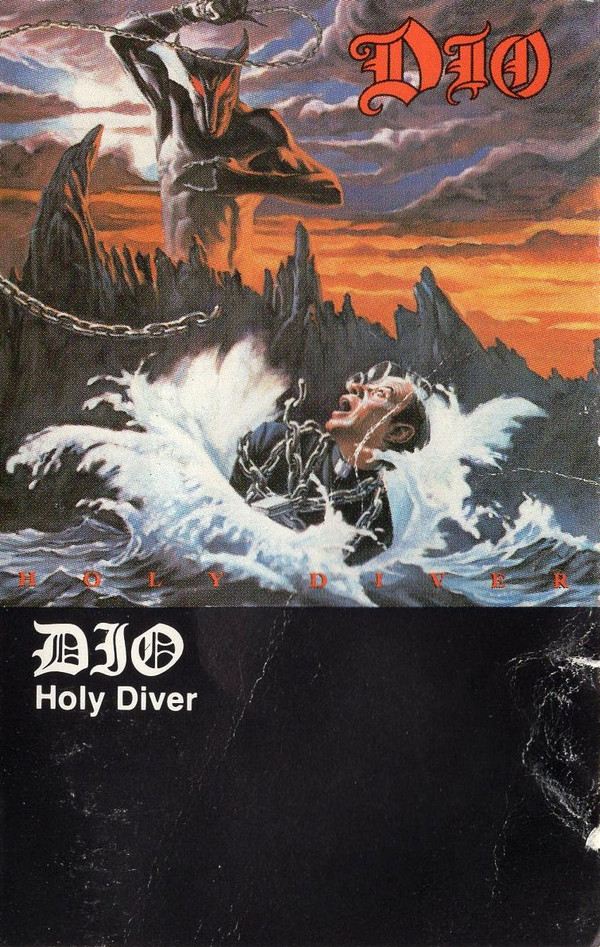
NOTES OF INTEREST: The Last In Line album, which peaked at #23 on the Billboard album chart is one of two Dio albums that was certified platinum (Holy Diver was the other one). It got a 2 CD reissue in 2012. The second disc had 12 live tracks on it.

The songs on the album had music written by Dio in varying combinations with guitarist Vivian Campbell and bassist Jimmy Bain. The lyrics were all written by Dio, who also produced the album himself.

Though he played on the tour for Holy Diver, keyboardist Claude Schnell (ex-Rough Cutt) didn’t appear on a Dio release until The Last in Line. He spent seven years with the band. He’s appeared on albums by Y&T, Neil Turbin, Gary Hoey, Loudness and Doro as well.

THE CASSETTE CHRONICLES – JUDAS PRIEST’S ‘PAINKILLER’

By JAY ROBERTS

The Cassette Chronicles is a continuing series of mini reviews and reflections on albums from the 1980’s and 1990’s. The aim of this series is to highlight both known and underappreciated albums from rock, pop and metal genres from this time period through the cassette editions of their releases. Some of the albums I have known about and loved for years, while others are new to me and were music I’ve always wanted to hear. There will be some review analysis and my own personal stories about my connection with various albums. These opinions are strictly my own and do not reflect the views of anyone else at Limelight Magazine.

JUDAS PRIEST – PAINKILLER (1990)

The Judas Priest album Painkiller album came out in September 1990. This was despite the recording sessions being completed by March of that year, but at the time they were still dealing with a civil lawsuit against them regarding two men who killed themselves and subliminal messages allegations. The suit, dismissed in August 1990, ended up delaying the release date.

However, once the release hit shelves…HOLY CRAP!!! If fans had been unhappy with the past few releases (and that’s a BIG if considering I actually like those albums) from the band, Painkiller wasted no time in letting people know just how aggressive and heavy this album was going to be.

The Painkiller album was the first to feature former Racer X drummer Scott Travis behind the kit and when the album explodes forth from your speakers, it is his molten hot drum intro that powers the opening of the album’s title track. It has been 33 years since the album came out and I still get both chills and simultaneously amped up when I hear that killer drum intro.

Then the guitars kick in to give the track an even bigger jolt and finally the band is joined by a viciously vivacious vocal performance from Rob Halford. I don’t remember how the song was received by others back in the day, but over the passage of time, I’ve found this to be one of my all-time favorite Judas Priest songs. It is just a monstrously powerful sonic track that gives you precious little time to catch your breath before continuing its wildly frenetic attack on your eardrums.

Fast moving and creating a somewhat darker feel given the lyrical content, “Hell Patrol” continues that hard-hitting feel from the title track. I love the way Halford performs the vocal on this one. You can almost imagine this track as the title credits for a movie or TV series about said Hell Patrol.

You could probably say the same for “All Guns Blazing” but even more than that similar frenzied delivery from Judas Priest, I just love the way this one comes across as you listen to it. It is as explosive as the ending sounds included in the song itself.

While “Leather Rebel” didn’t last long in the band’s live set past the Painkiller tour, that’s not any kind of indictment against the song. The way the song opens with a killer guitar riff and builds the song around that selfsame riff is quite incredible. There’s no chance to rest on your laurels here.

In fact, it would be kind of foolish of me not to spotlight for a moment the duo of Glenn Tipton and K.K. Downing. I mean, we all know that they are/were the power behind the band in terms of songwriting (along with Rob Halford), but their writing and playing for Painkiller is something altogether different. Each song is a master class in metal guitar. And both of them are absolutely on fire throughout each song.

Think I’m kidding? Just check out “Metal Meltdown” which serves as the closing track on Side One of the album. Not that Judas Priest would ever do some kind of lovey-dovey power ballad, but man this song is just another example of how tuned in the band was to provide over the top power driven metal on Painkiller.

The second side of the album kicks off with the song “Night Crawler”. It’s funnier how it is one of the “slower” tracks on the album and yet it is still pretty much a full bore rocker.

Judas Priest follows that up with “Between the Hammer & the Anvil” which is again mainly a way for the fleet fingers of everyone involved musically to showcase just how speedy they can play. But thankfully, it’s not just that. It’s a solid song and the guitar solo is really cool!

The song “Touch of Evil” has a very cinematic quality to it. While it is still an uptempo rocker, this one plays more as a hard rock track as opposed to a full on metal number. It may be a little slower in tempo than other songs here but man, this is a track you can really sink your teeth into. I like the way it lets at least my imagination run with the notion that this song is the “point of entry” for a horror story or something. I’m not sure how I would’ve ranked this song back when I first bought the album but as I listened to it for this article, I think it has ended up becoming one of my favorites overall.

The instrumental “Battle Hymn” is just under a minute long and serves as kind of an extended intro for the closing number on Painkiller, “One Shot at Glory”. The instrumental is fine but in all honesty, I kind of forget that it is a separate track when listening to the album unless I’m looking directly at the track listing.

But man, once the “One Shot at Glory” track kicks off in full, you are in for a treat! This is one hell of a song. I don’t know if it is considered a true “anthem” track or not but as I listened, I was struck by how I could just imagine shouting out the song title when it appears in the lyrics. It’s a great way to wrap up the album and fully cements just how on point Judas Priest was for this release.

Here in 2023,  Judas Priest is putting together a new album. Guitarist Richie Faulkner has a new side project called Elegant Weapons that just recently released an album. And while he’s been out of the band for quite a long time, former guitarist K.K. Downing (who’s spent the past few years publicly whining every chance he gets about not being asked to rejoin the band) has his own project called K.K.’s Priest.

The lineup has changed a bit, but the band is still active and thriving. But they may have quite possibly hit one of their highest points with 1990’s Painkiller album. It’s just one powerful track after another and shows the band at one of the peaks of their creativity. It is simply one of the best Judas Priest albums ever.

NOTES OF INTEREST: The Painkiller album was certified gold in 1991. I don’t know if it has passed any other sales mark for further certifications in the 30 plus years since its original release.

The 2001 CD reissue of the album has a previously unreleased track called “Living Bad Dreams” and a live recording of “Leather Rebel” included as bonus tracks. I have that reissued version and while the live cut is fine if relatively unremarkable, the song “Living Bad Dreams” is almost meditative in nature for the song’s immediate opening. But it does get a bit more of an in-your-face in its delivery pretty quickly after that. It’s a pretty good song but because it is so different in tone from everything else on Painkiller, I think I understand why it didn’t make the cut for the original album release.

Current Deep Purple keyboardist Don Airey played keyboards on the song “Touch of Evil” and according to the album’s page on Wikipedia, he doubled the bass parts on most of the album’s tracks with a synthesizer.

The Swedish power metal band Sabaton included a cover of “All Guns Blazing” as a bonus track on their 2016 album The Last Stand. I’ve heard it a number of times and I can vouch for how good their version is as well.

THE CASSETTE CHRONICLES –YNGWIE J. MALMSTEEN’S RISING FORCE ‘ODYSSEY’

By JAY ROBERTS

The Cassette Chronicles is a continuing series of mini reviews and reflections on albums from the 1980’s and 1990’s. The aim of this series is to highlight both known and underappreciated albums from rock, pop and metal genres from this time period through the cassette editions of their releases. Some of the albums I have known about and loved for years, while others are new to me and were music I’ve always wanted to hear. There will be some review analysis and my own personal stories about my connection with various albums. These opinions are strictly my own and do not reflect the views of anyone else at Limelight Magazine.

YNGWIE J. MALMSTEEN’S RISING FORCE – ODYSSEY (1988)

While I’m sure it would give me some kind of “street cred” to say that I was in from the start when it comes to listening to the work of Yngwie Malmsteen, whether it be from his time with Steeler and Alcatrazz or even his first three solo albums, I have to admit that it was with this Odyssey album that I first discovered the “neoclassical” heavy metal guitar player.

You probably have the video for the song “Heaven Tonight” playing on Headbanger’s Ball to thank for me not only discovering Malmsteen but I’d lay odds that it was the first time I’d heard singer Joe Lynn Turner as well.

Now I’ve long since gathered as much of the Malmsteen catalog from before this release and going forward from Odyssey but for my money, this is still my favorite release. And even thirty-five years later, the album holds up in rather fantastic fashion.

My first experience owning the album was actually a dubbed cassette copy of the album that I taped off of a friend of mine. That copy is long gone so the one I listened to for this article is an officially released copy.

The album wastes no time drawing you in. The opening track of Side One is “Rising Force” and it comes out of your speakers with an immediately dramatic effect to heighten your anticipation. Then the drums Anders Johansson kick in first to add to the song’s bottom end. But soon after, the full musical score explodes the song into a full bore rocker that gets your blood racing. It’s a fast-moving track that sees Joe Lynn Turner’s vocal delivery coming just as fast as the music. There’s a ton of melodic hooks woven into the song’s knock-out pacing and you can easily understand the notion that Odyssey was geared towards capturing the more radio-friendly sound that held sway in 1988.

With the song “Hold On”, you can hear just how much the music is changed from the first song. While the track is still uptempo in nature, it isn’t nearly as fast as what came before. That doesn’t affect the overall quality of the song though. It has a really good sound as it amply demonstrates how Malmsteen varies his playing and songwriting from track to track.

As I said, the song “Heaven Tonight” was my introduction to Malmsteen and the song is still the best known song from his repertoire. This continually strikes me funny because over the years, Malmsteen has done interviews where he rips the song (and Joe Lynn Turner, for that matter). But he can say whatever he wants, it won’t change my love of this anthemic hit.

There is a ballad on the album. It’s called “Dreaming (Tell Me)” and it starts out just how you might expect a 1980s ballad to sound. It’s not a bad song but even when the pace picks up a bit, it still kind of sits in the pocket of balladry.

Since Malmsteen is an acknowledged shredder, it should come as no surprise that Odyssey features three instrumental tracks. But what always gets me is that two of them are rather brief numbers. Still, the song “Bite The Bullet” may have been about 90 seconds long but it quickly drew me in. 

Of course, I wonder if that’s because in my mind it serves as a prelude to the Side One closing track “Riot In The Dungeons”. I am a huge fan of this song. It was the B-side to the “Heaven Tonight” single but I first heard it when I had the full album. And it just clicked with me right from the start. Much like “Rising Force”, the song is a relentlessly invigorating song with melody a-plenty. It takes you on a journey and then out of the blue it just comes to a note perfect, yet still abrupt, end that leaves you wanting more.

The album’s second side COULD be consider the album tracks side of the release if you wanted to be quick about things. But you’d be missing out on some quality music. The songs “Deju Vu”, “Crystal Ball” and “Now Is The Time” are all straight ahead rockers to open up the side. The band is on fire and I thought Joe Lynn Turner was particularly outstanding with his vocals for “Deju Vu” and “Crystal Ball”. That isn’t to give short shrift to “Now Is The Time” however. I just happened to like those two tracks just a bit more.

But the real standout cut on Odyssey‘s second side is the song “Faster Than The Speed Of Light”. The song’s pacing lives up the hype of the song’s title with a very aggresive musical attack that is deepened by another superb vocal turn from Turner. I’ve never seen Yngwie Malmsteen in concert but I think this song would be a fantastic track to either open or close a live set with.

While the brief instrumental “Memories” closes out the album feeling almost as if it was a postscript to a letter or something, the lengthier instrumental piece “Krakatau” takes the vocals out of the equation so you can just focus on Malmsteen’s playing. And it is rather fantastic on this song. The thing that really struck me odd was that at least during the first half of the song, I could kind of hear in my mind where vocals might’ve fit if the track had called for them. The second half of the song was a bit harder to find that feeling but it didn’t lessen my enjoyment of the track.

Okay, I know this is technically considered a solo album but it is billed like it’s a band and for my money, it might be one of the best examples of what Yngie Malmsteen’s playing can be like when it is inside of that more commercially accessible song structure and sound. The Swedish guitarist may have had plenty to say about this album over the years. I mean it’s not like he’s ever been shy about sharing his opinions about his material or the people who have sung for him.

But what I know is that Odyssey took me on quite the musical quest and it remains an album I love to come back to over and over. It’s got just the right blend of six-string histrionics and melodic hooks to draw in fans from across the spectrum of musical fandom . This remains my favorite Malmsteen album, period.

NOTES OF INTEREST: The Odyssey album remains the highest charting release from Yngwie Malmsteen. While he wrote all of the music for the album, Joe Lynn Turner is credited with writing all the lyrics.

Odyssey is the only original studio album that Joe Lynn Turner recorded with Yngwie Malmsteen. He was part of the live album Trial By Fire: Live In Leningrad that served as the Odyssey tour document. In 1996, he appeared on three tracks for the Malmsteen covers album Inspiration

Former Ozzy Osbourne bassist Bob Daisley played bass on the songs “Rising Force”, “Hold On”, “Crystal Ball” and “Now Is The Time”.

Steve Thompson and Michael Barbiero mixed the Odyssey album. The duo have worked together on the mixing of albums by Tesla and Guns N’ Roses. Thompson is credited with mixing Metallica’s …And Justice For All.

THE CASSETTE CHRONICLES – HELLOWEEN’S ‘KEEPER OF THE SEVEN KEYS: PART II’

By JAY ROBERTS

The Cassette Chronicles is a continuing series of mini reviews and reflections on albums from the 1980’s and 1990’s. The aim of this series is to highlight both known and underappreciated albums from rock, pop and metal genres from this time period through the cassette editions of their releases. Some of the albums I have known about and loved for years, while others are new to me and were music I’ve always wanted to hear. There will be some review analysis and my own personal stories about my connection with various albums. These opinions are strictly my own and do not reflect the views of anyone else at Limelight Magazine.

HELLOWEEN – KEEPER OF THE SEVEN KEYS: PART II (1988)

When I wrote about the Helloween album Keeper of the Seven Keys: Part 1 two weeks back I hadn’t really planned on writing about this follow up album as the next article in The Cassette Chronicles series. However, as I mentioned at the very end of the article, Helloween was scheduled to play the Worcester Palladium (here in Massachusetts) a few days after that first article was posted online. It was part of their “United Forces” tour with the band HammerFall. I did indeed go to the show and once again, Helloween (as well as HammerFall) put on one hell of a show! And while loving both sets and running into some friends at the show (plus new Metal Church singer Marc Lopes) certainly made for a great night out, what really keyed my decision to write about Keeper of the Seven Keys: Part II was the fact that five songs from the album still factor heavily into the band’s setlist even after nearly 35 years since the original release of the album.

So while I don’t make it a general practice to write about the same group in back-to-back installments, I felt I just had to do it here. And considering my cassette copy of Keeper of the Seven Keys: Part 1 died a tragic death when I went to play it again after submitting that article, time was wasting away I’d say.

When I first heard the album, I was still mightily opposed to instrumentals. So my first impression of the opening track “Invitation” was something like, “Will you please finish so I can get to the “real” songs?” Of course, my thoughts have evolved over the years and when I played the album this time, I’d come to see how the song served as the introductory overture, setting the stage for what was to come with the rest of the album. And while it is just barely over a minute in length, the song sure does its job. It sets you up for all the music to come. The songs aren’t necessarily all tied together but “Invitation” sure makes you feel like you are about to listen to a massive theatrical presentation.

The first side of the album features two of the tracks that remain in the band’s live set. “Eagle Fly Free” hits you like a blitzkrieg. The musical attack is fast and furious and the way singer Michael Kiske delivers a rapid fire performance lyrically, the song made a great impression on me when I first heard the song and continues to set me back on my heels when I hear it in the present day.

The other song on this side that features in Helloween shows is “Dr. Stein”. And while the song lyrics are based on the Frankenstein novel, the lyrics are almost comedic in nature with Helloween giving us their own slightly twisted take on the story. “Dr. Stein makes funny creatures, they become great rock musicians” is a brilliantly self referential line to say the least.

As for the rest of Side One, that going slightly mad style of lyric writing comes around a second time with the song “Rise and Fall”. It might be easy to dismiss songs that, whether intentional or unintentional, make you chuckle at the sometimes absurdist lyrics but I don’t find that the case with Helloween’s songs. They may make me smile or whatever, but when you combine those lyrics (plus Kiske’s heightened performance of them) with the band’s explosive power metal soundtrack, you never feel like they are shortchanging you. Such is the case with “Rise and Fall” because the band delivers a fiery musical background that leaves you wanting more.

The song “You Always Walk Alone” could serve as a personal motto depending on your own outlook on things but as a whole, the song is another fast paced number that leaves you breathless.

The side’s closing track is “We Got The Right”. It is the slowest starting song on the first side but that more deliberate opening lasts just a brief time before almost immediately bursting into a more high energy and over-the-top metallic number. It’s got a heavier thump to it in spots and  much like the rest of the material on Side One, leaves me (and hopefully you) just trying to catch your breath.

As you can see, I love the first side of the album. And just to let you in on a big spoiler, that’s pretty much how I would sum up my experience with the second side of Keeper of the Seven Keys: Part II as well.

The song “Save Us” opens up the second side and it is just a musical punch in the face for the listener. The delivery doesn’t give you much of a respite throughout its run time. There’s something to the song as well because it is still in the band’s set list, even though I don’t think it is nearly as popular as a lot of other Helloween tracks. Much like “Eagle Fly Free” the song “March of Time” is an unstoppable blitzkrieg. For me, I think it is a very underrated track for the band.

The final two tracks on the album are two more songs that feature in Helloween’s live set pretty much every show and tour. And that isn’t much of a surprise when you consider the song “I Want Out” is likely the band’s best known song. I know I remember seeing the video for the song on TV often when it was first released. And the band usually saves it as the song to close out their shows.

And then of course comes the dramatic set piece of the album and the Helloween live set. The album’s title track “Keeper of the Seven Keys” is a massive thirteen plus minute undertaking that is a whole album’s worth of moments all by itself. You’ve got a slightly slower moving overture to open things up but once the band kicks things into a higher gear they start revealing the story part of the song through the Kiske’s singing. As that story progresses, the band’s music ebbs and flows as needed to highlight and enhance those lyrics (the song was written by Michael Weikath). There’s a mid-song tempo switch that will let your heart rest for a minute before revving things back up until the song’s fade out which brings things full circle as it sounds like the opening part of the track.

The song is truly something special and when the band starts playing it live, you can’t help but feel that anticipation about what you are about to hear and see. And that would pretty much apply to the Keeper of the Seven Keys: Part II album as a whole. It not only serves as yet another grand statement from Helloween but is such a bold and boisterous undertaking that it sounds as fresh today as in did back in 1988.

NOTES OF INTEREST: “I Want Out” may be Helloween’s most well known song but the song being essentially about Kai Hansen wanting to leave the band provides a bit of irony for the track.

I can’t seem to find any sales figures for the album other than Germany, where Keeper of the Seven Keys: Part II went gold. The album’s writing credits had two songs written by Michael Kiske, three songs from Kai Hansen and five song from guitarist Michael Weikath. It is the last album to feature Kai Hansen until the band released the Helloween album in 2021.

When the album was first released, the song “Save Us” was Track #7 for the North American editions. According to Wikipedia, the original CD release has the song being listed as a bonus track but my CD version has the song in the same running order as the cassette. The expanded edition came with five bonus tracks.

By the way, there is a full show video on YouTube of that May 21st, 2023, Helloween show from the Worcester Palladium.

THE CASSETTE CHRONICLES – HELLOWEEN’S ‘KEEPER OF THE SEVEN KEYS: PART 1’

BY JAY ROBERTS

The Cassette Chronicles is a continuing series of mini reviews and reflections on albums from the 1980’s and 1990’s. The aim of this series is to highlight both known and underappreciated albums from rock, pop and metal genres from this time period through the cassette editions of their releases. Some of the albums I have known about and loved for years, while others are new to me and were music I’ve always wanted to hear. There will be some review analysis and my own personal stories about my connection with various albums. These opinions are strictly my own and do not reflect the views of anyone else at Limelight Magazine.

HELLOWEEN – KEEPER OF THE SEVEN KEYS: PART 1 (1987)

According to Loudwire, Helloween’s Keeper of the Seven Keys: Part 1 is “perhaps the first genuine power metal album.”

Now, I don’t know if that is true or not, but it sure would be hard to argue with their assessment of the album being one of the Top 25 Power Metal Albums of All Time.

The 2nd full-length studio album from the German metal band took a pretty big leap forward from their debut release Walls of Jericho. Not that the first album is bad, but with the addition of singer Michael Kiske (taking over the vocal duties from guitarist Kai Hansen, who had been the singer beforehand), the band really hit their stride here.

I don’t remember exactly how I discovered Helloween but it was likely through Headbanger’s Ball. It didn’t take me long to get the album in my hands after first hearing the band’s music and what an incredible ride I was in for when I first popped Keeper of the Seven Keys: Part 1 in my cassette player. (Side Note: The cassette I listened to for this article is the one I bought way back then.)

The album opens up with the instrumental overture track “Initiation” and it is a well-named song. Because it serves not only the purpose of setting the table for the rest of the album to come but it immediately ups the dramatic expectations you might’ve had going into that first listen.

There’s no real break in between that opening number and the song “I’m Alive” and Helloween wastes zero time in unleashing a full bore sonic attack. Between the striking and soaring vocal turn from Michael Kiske, the six string blitzkrieg and the insistent and ever relentless drumming from Ingo Schwichtenberg, the song will not only kick your butt from start to finish but even all these years later, remains a track that will resonate with you each and every time you hear it.

While still moving a pretty speedy tempo, the song “A Little Time” is a demonstrably slower track compared to “I’m Alive”. It gives you a chance to catch your breath. But only just. There’s a bit of a sense of the theatrical at the midpoint of the song and then Helloween seems to catch fire towards the end. Overall, a damn solid track.

Of course, then comes the song “Twilight of the Gods” which just explodes from the speakers musically. The song’s tempo feels like the band is playing like they are in a race for their lives or something. But that sense of urgency ends up transferring over to you and there you are figuratively by their side for another amped up killer track.

The first side of the album closes out with the song “A Tale That Wasn’t Right”, which again feels like a perfectly apt song title because the song does indeed feel like a story being told. The music starts out moody and contemplative with Michael Kiske’s vocals serving as a drama-filled yet calming presence to start. The band kicks in after the first lyrical verse but in a restrained manner. It’s only as the song moves towards its conclusion that things begin to take on a more grandiose feel as both the music and vocal performances take on the kind of presentation you’d tend to find more on a theater stage than a metal concert. I’ve always liked the song both because of the title and the way it is constructed.

The second side of Keeper of the Seven Keys: Part 1 features just three songs but two of them are still in the band’s setlist even now. This shouldn’t be much of a surprise because “Future World” was the album’s single and the more than thirteen minute epic “Halloween” continues to be a standard bearer track for Helloween.

I can still remember how I immediately took to “Future World” based off of simply how the song starts. That riff that opens the track is an immediate ear grabber and then you fly off on a soaring musical take as Hansen, guitarist Michael Weikath, bassist Markus Grosskopf and Schwichtenberg give life to that proposed future world that Kiske sings to you about.

And then you get to “Halloween”. And all I can remember when I first heard the full-length track was my reaction to the song being “Wow!”. From the song overture leading into an explosively paced first “act”, you can’t help but be glued to the speakers. You didn’t know where they were going to take you next but you knew you didn’t want to miss a second of the audio version of a cinematic experience.

The song “Follow The Sign” closes out the album but I’m not sure “song” is the right description for the track. It plays more of a performance piece set to a bit of a musical soundtrack. I’ve always felt the track served to put a fine point to the “Halloween” track. I’m not sure if that is an accurate assessment on my part but it is the impression I had the first time I heard the track and it has always stuck with me that way.

It’s been almost exactly 40 years since Helloween released Keeper of the Seven Keys: Part 1 and in the ensuing four decades the power of this album has never diminished for me. It launched the band’s fortunes higher than ever and they’ve kept right on through to this very day providing metal fans with any number of incredible albums and songs with each successive release. If you are a power metal fan, Helloween is a band that should occupy a big spot in your collection and Keeper of the Seven Keys is a must-have release, period.

NOTES OF INTEREST: While he stepped back from singing the lead vocals for the album, Kai Hansen still wrote the majority of the songs. He wrote six of the eight tracks on his own and co-wrote another with guitarist Michael Weikath (who wrote another track on his own). Michael Kiske wrote the song “A Little Time”.

Keeper of the Seven Keys: Part 1 has been reissued at least twice over the years. The first reissue was an expanded edition that added 5 bonus tracks. In 1993, the album was combined with Keeper of the Seven Keys: Part 2 which kept those 5 bonus tracks and added two additional tracks as well.

The song “Future World” was released as a single and had an accompanying video. Helloween also had a video made for the song “Halloween” but it cut somewhere around eight minutes from the song’s running time.

I’ve seen Helloween in concert twice over the years. The first time was when they were the middle act on the Headbanger’s Ball tour with headliners Anthrax. Exodus was the opening act on that bill. And then about 4 1/2 years ago, they played Worcester, MA without an opening act on the Pumpkins United tour. The band returns to Worcester on Sunday May 21st, 2023 with Hammerfall as the opening act and I hope to be in attendance once more!

THE CASSETTE CHRONICLES – TESLA’S ‘MECHANICAL RESONANCE’

BY JAY ROBERTS

The Cassette Chronicles is a continuing series of mini reviews and reflections on albums from the 1980’s and 1990’s. The aim of this series is to highlight both known and underappreciated albums from rock, pop and metal genres from this time period through the cassette editions of their releases. Some of the albums I have known about and loved for years, while others are new to me and were music I’ve always wanted to hear. There will be some review analysis and my own personal stories about my connection with various albums. These opinions are strictly my own and do not reflect the views of anyone else at Limelight Magazine.

TESLA – MECHANICAL RESONANCE (1986)

When I wrote about the Tesla album The Great Radio Controversy for The Cassette Chronicles series back in September 2021 I mentioned that it was the album that had kickstarted my fandom for Tesla. I had heard the songs they played on the radio from Mechanical Resonance, which is the band’s debut album, but I had never gotten around to buying the album even though I really liked the music.

Of course, once I became a full-fledged fan of the band, I made sure to go back and get their debut release. And now seems like the perfect time to write about it.

As I said, I heard songs on the radio so I certainly knew of the band’s music. Officially, there were three singles released from the album. While none of them really made an impact on the Billboard singles chart, they certainly hit home on rock radio and the associated lists for the rock genre.

With twelve songs on the album, there’s a wealth of material to dig into so let’s get started, shall we?

Side One of the album opens with “EZ Come EZ Go”, which the band brings forth on kind of a slow boil. The song opens relatively calmly with brief instrumentation, then the vocals from Jeff Keith break in but the tempo still remains relatively sedate. But man, after Tesla hits that first break after the opening lyrical stanza, they are just cooking with fire on this song. You get this explosion of energetic rock that leaves no doubt that the band can bring down some heavy and thunderous rock and roll.

For the song “Cumin’ Atcha Live”, I have a vague recollection of hearing the song on the radio, even though it wasn’t released as a single. There’s an excellent guitar-driven intro to the song that definitely piques your interest before the band comes on in full. It’s a fiery display and the song pretty much soars along as the more rocking pace takes over.

“2 Late 4 Love” is a solid track but I really enjoyed the song “Gettin’ Better” a whole lot as well. The track was the third of the three singles released from Mechanical Resonance and it always gets me the way this song turned out. It starts off as more of a ballad, the softer music and the more restrained, almost brittle-sounding vocal turn from Jeff Keith. But then you get a more vibrantly aggressive turn in the music and suddenly the song becomes powered by Frank Hannon’s and Tommy Skeoch’s guitar lines and raises the stakes for the song.

Of course, if you are looking for more of that fleet-fingered fretwork, you just have to wait until the next song in the track listing because “Rock Me To The Top” is a full bore rocker right from the start. It shines the spotlight on Hannon and Skeoch but powering out that underlying rhythmic foundation is Troy Luccketa behind the kit and Brian Wheat on bass. If you can’t feel yourself getting amped up by this song, you might just be dead.

The first side of the album ends with the song “We’re No Good Together”. This song is definitely more of a ballad throughout most of the song. But towards the end, the power driven side of Tesla’s music rears its head and makes it more of a rocker. Thus, you could probably get away with calling this a “power ballad”. Oh, and I should mention that I really liked how the guitars came out on the end of the track. There was a great sound there and it helped me get into the song that much more by the end of the song.

As for Side Two,  Tesla really hit the nail on the head with the song “Modern Day Cowboy”. It’s not only a monster track in and of itself, but it stands as one of their classic tracks as well. Not bad for a song from your first album. The opening still gives me a jolt when I hear it and though I did hear them perform the song when I saw them in concert, I’m hoping to get to see them live once again in the near future because I definitely want to hear them do it again!

The song “Changes” has a bit of back and forth to it. Starting off kind of slow, the tempo rises up into more of a full on rocker during the song’s chorus before settling back into a more measured delivery for the next main lyrical passage. But man, when Tesla wants to rock out, they do it quite well on this track.

Tesla next ramps up the volume with a double shot of killer rock songs with “Love Me” and “Little Suzi”. With “Love Me”, it’s just a bouncy burst of rock-n-roll that keeps you feet tapping and your fist in the air. But on “Little Suzi”, things are a bit more interesting. The main reason for that interest is that it is actually a cover song. It was originally done by a group called Ph.D. Now, that information is readily available online but for whatever reason, I’m always forgetting that. The reason for that is because the band does such a great job of making this track their own. Rocked up and in-your-face, “Little Suzi” was released as a single as well. It may not have made a mark on the charts but I’ll be damned if this isn’t another of the band’s standout tracks…even if said track isn’t their own original work.

By the way, when I said it was a double shot of killer rock, I was forgetting about the song “Cover Queen”. It’s another uptempo and lively rocker. Oddly enough, it is a song that I rather enjoy. But I’m not sure just how appreciated this particular song is by the fanbase overall. It isn’t like I took a survey or anything. But every time I do listen to the album, I get reminded how much I like the song. And yet despite that, I never really seem to notice anyone mentioning the song if there is a Tesla conversation going on. I’d love to find out more about that just for my own personal knowledge.

The album closes out on the song “Before My Eyes” and this is the one song that really seems to set itself up as a bit of a challenge. Was Tesla going for the idea of creating something just a bit different than the rest of the music they were offering up on Mechanical Resonance? There seems to be more of a concerted effort to make the song sound like it is being done as more of a dramatic presentation. And is it me or is there some kind of extra effect mixed in on Jeff Keith’s vocal track? It sounds a bit off. Okay, the song overall isn’t bad, just a bit different. It may not be the first song I think about when I want to hear some Tesla music but I like that even on their debut album, Tesla wasn’t afraid to mix things up a bit.

Clearly as you’ve been reading this piece, you can tell that I like the album. Once I went back and got my hands on it back in the day, I was indeed quite taken with it. But what really interests me the most is how the music still holds up so strongly today. And not just the songs that everyone will recognize (though that is always good too) but the more album oriented numbers stand out fine on their own as well.

NOTES OF INTEREST – The Mechanical Resonance album has been certified platinum. My copy of the cassette includes in the liner notes, the story of how Tesla and then the Mechanical Resonance album came into existence.

With the exception of the cover of “Little Suzi”, the remaining eleven songs on the album feature co-writing credits (in varying combinations) from all five members of the band.

Drummer Troy Luccketta is currently absent from the Tesla lineup. Given what I’ve read in online interviews with bassist Brian Wheat, it doesn’t appear he’s going to rejoin the band any time soon, if at all.