Category Archives: Cassette Chronicles

THE CASSETTE CHRONICLES – CINDERELLA’S ‘HEARTBREAK STATION’

By JAY ROBERTS

The Cassette Chronicles is a continuing series of mini reviews and reflections on albums from the 1980’s and 1990’s. The aim of this series is to highlight both known and underappreciated albums from rock, pop and metal genres from this time period through the cassette editions of their releases. Some of the albums I have known about and loved for years, while others are new to me and were music I’ve always wanted to hear. There will be some review analysis and my own personal stories about my connection with various albums. These opinions are strictly my own and do not reflect the views of anyone else at Limelight Magazine.

CINDERELLA – HEARTBREAK STATION (1990)

Spoiler alert! The Cinderella Heartbreak Station album is by far my favorite album from the band.

Now originally, that statement of fact was because I didn’t much care for the band’s first two albums (other than the hit singles) when they were first released. The Night Songs and Long Cold Winter releases never really found a home in my music-loving heart back in the day.

Of course, that changed when I wrote about both of those albums for this series back in 2018. As I listened to both of them for the pieces I was writing, I finally made the connection with the material that I wish I’d had back in the 1980s. Suddenly, I loved both albums a LOT!

But Heartbreak Station was still at the top of my album rankings for the band. However, it has been a little while since I took the time to listen to the album. I still own the original cassette I bought back in 1990 (though I also recently bought the album on CD as well), so I decided it was time to pull it off the wall mounted cassette rack and immerse myself once again in the album that found the band’s reconfigured sound compared to both Aerosmith and The Rolling Stones.

Any thoughts that I might feel differently about Heartbreak Station than I had in the past were pretty much immediately laid to rest. The side one opening “The More Things Change” was everywhere when the album was first released and it is an explosive hard rocking number that gets you fired up and sets the stage for what’s to come on the rest of the album. The pure stomp of “Sick For The Cure” also gets your heart racing too!

Meanwhile, the song “Shelter Me” was the band’s hit single from the album. It hit #36 overall and I loved the way the song was propelled by a solid musical score and some great incisive lyrics. The song started off a bit low key but then hits you with much more of a whallop as the song played through.

I mentioned that the album’s sound got compared to Aerosmith before and I think the strongest evidence of that is on the song “Love’s Got Me Doin’ Time”. It’s got a lively step to the music but there’s a funky vibe at the same time. And Tom Keifer’s vocals really do give off that Steven Tyler flare for the dramatic delivery too.

The other two songs on Side One lean more into the soft pedal delivery. The album’s title track is a power ballad of sorts. But with a solid sense of style and lacking in the watered down muck that is power ballad lyricism, the song remains both beautiful and strong even now. About halfway through the song, the music gets more intense but carries through with the reflective sounding lyrics to the end.

That kind of lyrical looking back is also infused into the song “One For Rock And Roll”. It’s not remotely a ballad, featuring a slightly restrained yet uptempo pace. The song just gives off a great vibe and the lyrics are a clear case of looking back at what was.

All in all, a strong six songs before you flip the cassette over and head on in to Side Two.

 If you were expecting Cinderella to kick off that second side of the album with another fists in the air hard rocking anthem, you would find yourself in for a bit of a twist. Instead, the band gives you “Dead Man’s Road”. And if you close  your eyes after hitting the play button, you will almost certainly find yourself feeling like you were listening to that music with a side of twang that features in almost every western movie. You can feel the wind blowing and the tumbleweeds passing by throughout the song, even though the music does change to a more uptempo style after the first lyrical verse of the track.

But if it is that electric charge of rock and roll you want, you are going to get it in spades on the song “Make Your Own Way”. Fast moving from the start, I loved the guitar work that fueled the music as a whole and the chorus was outstanding here.

While I still like  the song “Electric Love”, I found that as I listened to it for this article, the groove based rocker didn’t quite hit home with me as it has done in the past. I don’t know why I thought that way when I listened to the song but there it is.

Still, the album does close out high on the hog with two songs that really shine bright. You’ve got the blazing rocker “Love Gone Bad”. This one is made magic by the perfect combination of some smoking hot music and the biting and vicious sounding vocal delivery from Tom Keifer. Not that I didn’t love the song before now, but this one probably rose up in my favorite songs list because of how it came off to me now.

And then comes the song “Winds of Change”. It is similar in tone and style to the album’s title track. It’s got a restrained feel to it at first, kind of slow and deliberately paced. But the song draws you in. There’s a bit more musical drama set forth towards the end of the song but nothing that really calls to mind the word “rocking”. Instead, the album just fades out on a softer note but yet you feel satisfied nonetheless. It’s a great song and shows off (yet again) the balancing act Cinderella had down pat between their various song styles.

As I said at the start, the Heartbreak Station release is my favorite Cinderella album. While it may essentially cast off the glam rock stylings that were at least mostly prevalent from the first two albums, the blues rock sound that is threaded throughout this album is just plain badass in my eyes. Cinderella really hit their peak on this album and the album is still a great listen to this day. I agree with what Tom Keifer sings on “One For Rock and Roll”…”as long as I’ve got rock and roll, I’m forever young!”

NOTES OF INTEREST: The Heartbreak Station album ended up being certified platinum and hit #19 on the album chart. Singer Tom Keifer wrote all of the songs on his own except for the song “Love’s Got Me Doin’ Time”, which has a co-write credit for bassist Eric Brittingham.

Former Uriah Heep keyboardist Ken Hensley is credited for playing the organ on the songs “Sick For The Cure”, “Make Your Own Way” and “Love Gone Bad”.

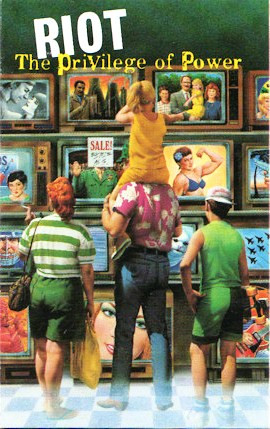
THE CASSETTE CHRONICLES – RIOT’S ‘THE PRIVILEGE OF POWER’

By JAY ROBERTS

The Cassette Chronicles is a continuing series of mini reviews and reflections on albums from the 1980’s and 1990’s. The aim of this series is to highlight both known and underappreciated albums from rock, pop and metal genres from this time period through the cassette editions of their releases. Some of the albums I have known about and loved for years, while others are new to me and were music I’ve always wanted to hear. There will be some review analysis and my own personal stories about my connection with various albums. These opinions are strictly my own and do not reflect the views of anyone else at Limelight Magazine.

RIOT – THE PRIVILEGE OF POWER (1990)

After releasing the Born in America album in 1983, Riot was absent from the metal scene until the 1988 album Thundersteel. But the band turned right around after that with the release of The Privilege of Power in 1990.

I’ve had only a passing acquaintance with most of the band’s catalog. Besides this and the Thundersteel album, the only Riot releases I’ve heard have been 1997’s Inishmore and 1999’s Sons of Society. And if I’m being honest, Inishmore was the only one I well and truly liked start to finish.

I had never heard The Privilege of Power before listening to it for this article. According to the Wikipedia listing, the album’s material is considered a bit more experimental than their past material and a bit of a concept album. Adding a horn section to a couple of songs doesn’t seem overly experimental to me but I guess I’ll let that slide. But as for the notion of this album being a concept album, I’m a bit mystified as to how. Riot does use a variety of audio clips to set the stage for most of the songs, but I’m not quite sure how that by itself makes it a concept release.

Side One features five songs bookended by tracks that showcase Riot’s ability to craft explosively fast metallic fury. On the opening track “On Your Knees”, the long audio clip intro was kind of wearying but once the music bursts out of your speakers, you are in for one hell of a ride musically. I loved the way this track got me pumped up big time. Sadly, I was brought back down to Earth a little bit because I wasn’t all that taken with singer Tony Moore’s vocals on this track.

For me, it seemed the soaring vocals were kind of lost in the mix at times and I found it a bit distracting.

But things quickly turned around with the next track “Metal Soldiers”. The pacing is a bit slower but still uptempo. The sound delivers quite a musical thump than an all-out blitkrieg. In all you get kind of an anthemic vibe from the track. And Tony Moore’s vocals are far more definitive here.

“Runaway” impressed me. The song starts off much, much slower. The guitar line accompanying the song through the first verse is incredible and it recurs throughout the song. After that first verse, the song moves towards a more uptempo peace with an impressive vocal turn.

Guitarist Mark Reale, who also produced and co-wrote seven of the ten tracks on The Privilege of Power is a beast on this record. The song “Killer” features a sizzling edgy riff. If that wasn’t enough to make the song cool, the use of the horn section gives an added heft to the musical score and the guest vocal appearance from Joe Lynn Turner further enlivens the track.

As I said, the first side of the album is bookended by songs that are similar in structure. “Dance of Death” is lightning fast. Much like “On Your Knees”, the music is just amazing. But once again, Tony Moore’s vocals gets lost in the mix again. I like his vocals in general but it seems whenever he had to hit the upper stratosphere of his vocal range, the music buried what he was singing at times.

The second side of The Privilege of Power opens with the song “Storming The Gates of Hell” and if ever a song lived up to its title, it would be this one. The pacing is relentless as Riot attacks every note of the song like it was actually storming those gates. I have to say I was getting a little psyched up as I listened to the song.

While Riot was exactly trying to court the reiging musical sound in 1990, I thought the track “Maryanne” came closest to sounding like a power ballad that you’d hear from any band that had struck it big with a similar type song. There’s a great sounding hook to the music and I thought the song’s lyrical content was pretty darn good as well. While “Little Miss Death” employed a far quicker pace, much like “Maryanne”, the song was made that much better with a strong vocal turn.

The last two songs on the album are both over 7 minutes long but not a note is wasted nor feels drawn out in the least. “Black Leather and Glittering Steel” starts off with an attacking tempo at the start and continues that non-stop explosiveness until the very last note. If you can’t feel yourself getting amped up as the song hits your eardrums, you have to get yourself checked out.

The closing song is actually an instrumental cover song. When I first read the song on the album’s track listing, I wondered how it would be serving as part of this supposed conceptual piece that The Privilege of Power is reputed to be. Well, I’m still not sold on that aspect of the album but I know that I found that Riot’s cover of the Al Di Meola song “Racing With the Devil On A Spanish Highway (Revisited)” made me worry less about a concept album and just jam out to how monstrously good this song sounded. I’m not exactly the biggest instrumental fan in the world but when I find a piece that I actually like, it really has struck a chord with me. Such is the case with this song. I’m going to seek out the original version so I can compare the two versions.

So in the final analysis, I had a slight issue with how singer Tony Moore’s vocals came out on a couple of the songs. Other than that, I would say that with The Privilege of Power, I have now found a companion piece to their Inishmore album. Yes, in a totally cliched way of complimenting the album, this was an album that was a privilege to listen to at long last.

NOTES OF INTEREST: The Privilege of Power has been reissued twice. The first time came in 2003. The second reissue was as a vinyl combo with the Thundersteel album in 2013.

Drummer Bobby Jarzombek has played with a who’s who of metal bands including Fates Warning, Halford, Iced Earth and Sebastian Bach. He is currently part of country megastar George Strait’s Ace in the Hole backing band.

Guitarist Mark Reale passed away in 2011 due to complications from Crohn’s disease. The band has continued onward but they are currently known under the name Riot V.

THE CASSETTE CHRONICLES – GREAT WHITE’S ‘SHOT IN THE DARK’

BY JAY ROBERTS

The Cassette Chronicles is a continuing series of mini reviews and reflections on albums from the 1980’s and 1990’s. The aim of this series is to highlight both known and underappreciated albums from rock, pop and metal genres from this time period through the cassette editions of their releases. Some of the albums I have known about and loved for years, while others are new to me and were music I’ve always wanted to hear. There will be some review analysis and my own personal stories about my connection with various albums. These opinions are strictly my own and do not reflect the views of anyone else at Limelight Magazine.

(WRITER’S NOTE: Welcome to the 7th year of The Cassette Chronicles series! I hope you enjoy this year’s batch of articles as much as the previous years and thanks for continuing to come back and read with each new published piece.)

GREAT WHITE – SHOT IN THE DARK (1986)

It was nearly three years ago when I featured the Great White album Hooked for The Cassette Chronicles series. I had thought about doing another album from their discography but never quite got around to it.

But I finally got the urge to write about the band once again and I have a big purchase of CDs to thank for it. My local independent record shop has been making some huge CD collection purchases in recent months and I’ve been buying up a lot of what I could find that interested me. It’s a case of filling in holes in my collection. One of those buying trips saw me grabbing up a bunch of the Great White albums that I didn’t have beforehand. After I had wiped out what the shop had, I had a good portion of the band’s music. But I was missing their first two releases (as well as their last two). I really wanted to check out the early two so I wandered over to the cassette wall in the store and as luck would have it I found a copy of Shot in the Dark.

My memory may be playing tricks on me but I have a vague recollection of having once had a dubbed cassette copy of this album. But I don’t really remember thinking much of it at the time other than the song “Face The Day”. And it is long gone from the collection. So I now had the chance to give a much better listen to the album nearly 37 years after its original release.

What did I think? Well…it’s much, much better than I gave it credit for back in the 1980s.

The first side of the album opens with the song “She Shakes Me” and while I did think there was a bit too much of an echo chamber sound with the vocals from Jack Russell, it still comes out as a pretty hot rocking song. Fast paced and fuel injected, the song gets you fired up from the get-go.

As I was listening to “What Do You Do” I had a bit of trouble the first time around. I didn’t really get into the song. But on successive listens, I liked the way the song flowed rhythmically. It has a great uptempo drive to it and there’s a bit of a swinging swagger to the overall performance. This track ended up growing on me quickly.

Great White closed out the first side of Shot in the Dark with two cover tracks. The first is “Face The Day” which was originally done by The Angels. I don’t think I’ve ever heard the original version but I know that I love Great White’s version. It’s starts off a bit slow in the intro but the band quickly turns up the volume and pacing. Everything came together nicely and the song turned out to be an early classic track for them.

The second cover was of the Spencer Davis Group song “Gimme Some Lovin'”. I actually like the original version so I usually find that covers of songs I already like sometimes annoy me. That was not the case here though. While Great White’s version is seemingly a lot faster paced and way more “rocked” up, I think the band did a great job making their own version of the song.

For the second side of Shot in the Dark, the band kicks things off with the title track. And I thought it was kind of cool that the song’s intro is constructed so that it kind of reflects the album’s cover art. There’s a bit of a musical flourish after that before a slightly slower delivery is used for the vocals in the main lyrical sections. Of course, when the chorus comes in, so does a faster paced delivery of the vocals behind a musical score that gets more intense as well.

Though the song does feature more of an uptempo feel musically, the way the vocals are done for “Is Anybody There” give the song a darker and cinematic feel. It made for an interesting mix and therefore I was really digging the song a lot as I listened.

While “Run Away” starts off with more of a midtempo beat, the song grows into a much faster paced rocker over the course of the song.

The closing number is “Waiting For Love”. Now, I’m sure you will think this song is a ballad based on the song title. I know that I did. That might’ve given me some pause before the song started coming out of my speakers.

I’m a big fan of Great White’s “Save Your Love” and find it very hard for them to top that one with any other ballad track. (Though a couple of songs on the 1999 Can’t Get There From Here album comes pretty damn close.) The one time I saw Great White live, when they played “Save Your Love”, Jack Russell delivered such a performance that he held the crowd in his thrall and got a standing ovation for that rendition alone.

So you can understand my feelings of reluctance regarding “Waiting For Love”. And the song does start off in a ballad-like fashion. But after the first verse, instead of going towards the traditional and/or expected power ballad territory, the song abandons the balladry for a surprisingly effective mid-to-uptempo rocker. The lyrical content is still what you would find in a ballad but the more powerful soundtrack accompanying the vocals makes it a far better track than I was expecting at the start.

The liner notes for Shot in the Dark make note of the fact that the album was recorded in just 15 days. That probably accounts for the rawer feel to the sound of the release. But the quick recording process doesn’t diminish how good the songs turned out to be. I know that is speaking with a whole bunch of hindsight since I didn’t think much of the album when I first heard it back in the day. But time can help change an opinion when you have distance and a better grasp on things. And that’s definitely how I came to find that Great White’s Shot in the Dark is a fabulous listen, a look at the early days of the band just before they were about to explode in full on the music scene!

NOTES OF INTEREST: The version of the album I have is from Capitol Records. But Shot in the Dark was originally released by Telegraph Records. There are some differences between the two including slight title changes, different mixes and some slightly different music on certain songs. (Look up the album’s Wikipedia page for full details). The album got a remastered release on CD through Razor & Tie. The Japanese version of the CD has a cover of the Jimi Hendrix song “Red House” as a bonus track.

While Michael Lardie has been a longtime member of Great White, he’s only credited as an “additional musician” on Shot in the Dark with the band officially being a four piece at the time. This album was the debut of Audie Desbrow on drums.

THE BEST OF THE CASSETTE CHRONICLES – YEAR 6

BY JAY ROBERTS

How was your 2022? For me, there were some challenges. Those challenges ended up affecting just how much content I could produce for The Cassette Chronicles during my 6th year of writing the series here at Limelight Magazine.

The good news is that the albums I did get to write about provided some great musical experiences that I already knew and a bunch of a new experiences with albums I’d never heard until I decided to write about them for the series.

I’m hoping that 2023 sees not only a return to being able to produce some more articles and I get to head back to the concert halls as well. But until then, take a look back at ten albums I spotlighted this past year.

The Cassette Chronicles will return in January 2023 and once again, I thank everyone for taking the time to read the articles!

Please click on the cassette title to read the article.

#1. SAVATAGE – HALL OF THE MOUNTAIN KING

#2. SURVIVOR – VITAL SIGNS

#3. SASS JORDAN – RACINE

#4. BADLANDS – VOODOO HIGHWAY

#5. LEATHER – SHOCK WAVES

#6. TWISTED SISTER – LOVE IS FOR SUCKERS

#7. Y&T – CONTAGIOUS

#8. BRUCE DICKINSON – TATTOOED MILLIONAIRE

#9. MARCHELLO – DESTINY

#10. ALICE COOPER – CONSTRICTOR

THE CASSETTE CHRONICLES – Y&T’S ‘ENDANGERED SPECIES’

By JAY ROBERTS

The Cassette Chronicles is a continuing series of mini reviews and reflections on albums from the 1980’s and 1990’s. The aim of this series is to highlight both known and underappreciated albums from rock, pop and metal genres from this time period through the cassette editions of their releases. Some of the albums I have known about and loved for years, while others are new to me and were music I’ve always wanted to hear. There will be some review analysis and my own personal stories about my connection with various albums. These opinions are strictly my own and do not reflect the views of anyone else at Limelight Magazine.

Y&T – ENDANGERED SPECIES (1997)

Since I hadn’t heard Y&T’s Endangered Species album before now, I wasn’t all that surprised that it took me a couple of listens before I came around to appreciating the album in full. But don’t think that means I didn’t like some of the material on the album from the start, it is just that there were a couple of songs that took that extra time to grow on me.

Of course, that doesn’t apply to the opening track “Hello, Hello (I’m Back Again)”. That is a full-on powerful monster rock track. When the song is in full gear, the full band is ready to blow the metaphorical roof of the place, and Dave Meniketti’s vocals get right up in your face. It’s just a killer track and given Meniketti’s recent health issues, I would love to see this song as an opening number for a concert tour. A kind of serving notice to the rock world kind of thing.

The follow-up track “Black Gold” is another ballsy sounding rocker but rather than a full out blitz of a musical soundtrack, this one develops more of a burning groove sound that endears itself to the listener pretty quickly. The song’s extended musical outro was fantastically interesting to me. Of course, the more full-on rocking style returns on “Gimme The Beat” with Y&T as a whole simply on fire from start to finish.

“God Only Knows” is a power ballad type of song, but I thought it had more of an emphasis on the “power” side of things throughout most of the track. I liked the song but definitely found myself enjoying it more when the band was more forthright in their delivery.

I’m not sure if it is my ears playing tricks on me or not but when the band gets to rocking out on the song “Sumthin’ 4 Nuth’n”, I thought the sound had a little extra bit of grittiness to not only the music but to Meniketti’s vocals as well. Whatever it was, this was definitely one of my favorite tracks on the album. It’s just got a great feel overall and I liked the way everything just seemed to come together perfectly for this one.

As for the Side One closer “Still Falling”, the band did mess with expectations a bit. The song does start off as a ballad, but Y&T quickly turn away from the slower feel and turn the track into a crushing rocker.

Side 2 of Endangered Species wastes no time in getting down to the business of rocking your socks off! The song “Voices” explodes from your speakers and if you were expecting to experience any kind of doldrums, abandon those hopes. Because Y&T is just on fire throughout this song.

The song “I Wanna Cry” was one of the songs that took me a bit to appreciate. The song has a mid-tempo pace throughout. Almost as if Y&T were trying to play the song under the radar or something. But when the chorus for the song comes around, the intensity of the delivery increases and suddenly, even if for just a few seconds here and there, the track just bursts with a fireball of intensity.

The song “Sail On By” was the one song from Endangered Species that was played during the Y&T concert I saw back in 2019, the show that converted me into a fan.  I described it in a review of the show I did as being very cool. And as I listened to the studio version here, I was once again struck by just how cool the song sounded to me. It bounces along in a mid-to-uptempo style and that slightly nostalgic set of lyrics really grabs me each time I hear the song. I just can’t get enough of this song.

Y&T gets back into their more explosive rock and roll side with “Can’t Stop The Rain”. There’s a great guitar sound and there is just a killer feel to the song in its entirety. My notes for this article included the notation “Killer Track” and there’s just no better way to sum it up.

The song “Try To Believe” starts off a little slower in tempo but that changes as the song plays out. It has a great feel to it and I found myself enjoying quite a bit. But what really surprised me was the album closing “Rocco”. It’s listed as a bonus track online but there’s no indication of it on the cassette itself. However, the fact that this is an instrumental track that actually really “worked” for me was perhaps the biggest surprise of them all for me.

I am continually amazed on two fronts when it comes to Y&T. The first part is that I spent so much time pretty much ignoring the band’s music. And the second part is that each time I check out one of their studio albums, I come away just that much more impressed with what they accomplished. And that ends up being the case once again with Endangered Species. Yes, it did take me a couple listens to really sink my teeth into the album as a whole, but once I got there…DAMN this is such a fantastic album!

NOTES OF INTEREST: The Endangered Species album would be the last studio release for Y&T until 2010’s Facemelter.

The UK version of the album has the track listing in a different order than the US release. The Japanese edition has a thirteenth track, an acoustic rendition of “Hands Of Time”, listed as a bonus track.

Bassist Phil Kennemore, who passed away in 2011, wrote the track-by-track notes for each song on the Endangered Species liner notes.

THE CASSETTE CHRONICLES – KIK TRACEE ‘NO RULES’

By JAY ROBERTS

The Cassette Chronicles is a continuing series of mini reviews and reflections on albums from the 1980’s and 1990’s. The aim of this series is to highlight both known and underappreciated albums from rock, pop and metal genres from this time period through the cassette editions of their releases. Some of the albums I have known about and loved for years, while others are new to me and were music I’ve always wanted to hear. There will be some review analysis and my own personal stories about my connection with various albums. These opinions are strictly my own and do not reflect the views of anyone else at Limelight Magazine.


KIK TRACEE – NO RULES (1991)

You would think I’d stop being surprised by this, but after listening to the Kik Tracee album No Rules for the first time ever, I was struck by how good this turned out to be. Of course, since they were among the third generation of glam bands in the 1980s / early 1990s heyday of metal music, they pretty much disappeared without a trace once grunge took over the music scene.

But that doesn’t invalidate No Rules as a damn fine album. In fact, the album had enough going for it that had it been released earlier in the 80s, they just might have made a far greater impression on the scene.

The first side of the album opens with the song “Don’t Need Rules”, which a a humdinger of a rock and roll number with which to kick things off with. I found myself loving the vocals from Stephen Shareaux from the start. He had both grit and gravitas threaded throughout his performance. And the guitar work on a bunch of the songs was phenomenal. The song “You’re So Strange” starts off with more of a moderate pace but grows into more of a blown out rocker and the solo in the song really stands out. Guitarist Michael Marquis had some chops!

The song that really got me fully embedded with the band’s sound was the full bore rocker “Trash City”. There’s something about the way this song flows that really had me wanting to pump my fists in the air. “Hard Time” is another fantastic rocker that kept my energy level flying high throughout the song.

Sadly,  the first side of No Rules has a catastrophic mis-step on it that initially had me wondering what the hell the band was thinking…and then what the label people were thinking by letting the band record and release their cover of Simon & Garfunkel’s “Mrs. Robinson”. I’ll give the song some credit by having a compelling twist to the upgraded tempo of the music, but I hated the way the vocals came out and no matter how much I might have appreciated the music, it was just a total failure to my ears overall.

But that’s the only mistake I felt Kik Tracee had on the first side of the album. Hell, even their ballad is amazing. It’s called “Big Western Sky” and I thought it was just an instant ear grabbing track for me. It has a scope and death to the music that fits the images conjured in my mind by the song’s title. And since Kik Tracee had been referred to as a clone of Guns N’ Roses, I thought this song was where I first heard Shareaux’s vocals sound significantly like Axl Rose. But I didn’t consider it a bad thing necessarily because the song is just so damn good.

As for Side Two, I did tend to enjoy the music here as well. But the closing track, the 43 second “Fade Dunaway”, was kind of useless piffle for me.

But the album side did start out rather nicely. The song “Generation Express” has a brief slow intro that then launches into a fast moving and blazingly paced rocking soundtrack. And it is DAMN CATCHY too!

I have to admit, I got a little distracted the first time I listened to the album so I had to go back and listen to the next three songs on Side Two again. I was at work and my attention to detail had to be a little more focused on a task I was doing while listening to the album. But once I gave those songs my full attention, I found that “Soul Shaker” was a stunningly great track. It actually does showcase more of soulful vocal turn (combined with the requisite rock and roll fuel mixed in of course). It’s a song that has a lot going for it and it needs to be heard by a larger audience. I loved the rocker “Tangerine Man” a lot as well.

The song “Lost” goes for more of a midtempo feel, though I wouldn’t quite call it a ballad. The song starts out mostly with vocals and guitars and pretty much stays that way the whole way through. But the more in-your-face rock returns with “Velvet Crush”, a song that has a real hard driving stomp to it. And the song “Rattlesnake Eyes (Strawberry Jam)” was a blazing rocker that caught my ear right from the start. Definitely one of the best individual tracks on the album.

Kik Tracee may not have made too much of a mark on the latter part of heavy metal’s decade of dominance but looking back at the No Rules album with the benefit of three decades of hindsight, this album has almost everything you could possibly want in rock/metal release of the early 1990s. And the band does it with almost effortless aplomb. Yes, I’d like to wipe their cover of “Mrs. Robinson” from my brain but otherwise, there is no doubt here that No Rules is a flat out fantastic album that definitely should be given a new listen by many a music fan.

NOTES OF INTEREST – The album was produced by Slaughter bassist Dana Strum. While the No Rules album was the band’s only official studio release, they had been working on an album called Center of a Tension when they broke up in 1993. The album remains unfinished.

There was a 2-disc compilation called Big Western Sky (recycling a song title on No Rules for the album’s title) released in 1997 that had demos, rarities and B-sides. There was also an EP called Field Trip that had been released in 1992.

Kik Tracee bassist Rob Grad appeared (with his new band Superfine) on a 1997 episode of Buffy the Vampire Slayer.

THE CASSETTE CHRONICLES – ALICE COOPER’S ‘CONSTRICTOR’

By JAY ROBERTS

The Cassette Chronicles is a continuing series of mini reviews and reflections on albums from the 1980’s and 1990’s. The aim of this series is to highlight both known and underappreciated albums from rock, pop and metal genres from this time period through the cassette editions of their releases. Some of the albums I have known about and loved for years, while others are new to me and were music I’ve always wanted to hear. There will be some review analysis and my own personal stories about my connection with various albums. These opinions are strictly my own and do not reflect the views of anyone else at Limelight Magazine.

ALICE COOPER – CONSTRICTOR (1986)

For an exceedingly long time now I’ve found that while I liked the various Alice Cooper songs that got airplay either on classic rock radio stations like 94 HJY in Providence, RI or had their big moment in the sun as videos on MTV during the 1980s, I had never found my way to actually owning any Alice Cooper albums. I had even seen him twice in concert without picking up any releases.

That changed when the album Paranormal was released back in 2017. I had reviewed that album for another website and had a blast listening to it. Then I had gotten a copy of The Last Temptation release on cassette for an as yet unwritten article in this series.

Recently, I bought some CDs from an online friend and the Trash and Hey Stoopid albums were included in that small lot.

So it was kind of funny when Limelight co-grand poobah Jay Kenney picked up the Constrictor album on a buying trip and sent it to me with the suggestion to write about it to coincide with Halloween. I mean, it is kind of perfect. The ultimate “shock rocker” fits the whole Halloween vibe. And this piece is going live four days before the big sugar rush day.

Since I had never heard the album before, I wasn’t sure if I’d ever heard anything from it. As it turned out I had heard a couple of tracks in the past but certainly not in a large number of years.

In fact, I think the most notable thing about this album for me back in the day would’ve been the addition of guitarist Kane Roberts. Constrictor was his first album with the band, and given how muscle bound he was, Roberts (no relation by the way) certainly would’ve made quite the visual impression. But what I didn’t know until I looked at the album’s track listing online is that he co-wrote all the songs on Constrictor with Alice Cooper. There were four songs that included one other co-writer as well but essentially the album was a Cooper/Roberts creation.

But how were the songs in terms of quality? The answer is: Pretty Damn Good!

The album opens with the song “Teenage Frankenstein”. It’s one of the two tracks I remembered and it kickstarts the album off quite nicely. The rocking track has a great hook and I really enjoyed the flow of the lyrical content as well. It’s one of two songs that were featured on the Friday The 13th Part VI: Jason Lives soundtrack but stands on its own superbly.

The entire album is a full-on rocking affair, no ballads need apply here. And that’s a good thing. I really liked how the band just kept the adrenaline flowing from track to track and kept me as a listener on a high flying level of enjoyment.

As for the other songs on Side One, I thought “Give It Up” was a pure blazing number with its racing tempo. Meanwhile, “Life And Death Of The Party” and “Simple Disobedience” both were fueled by an electric sense of attitude. 

I will say that I thought the title of “Thrill My Gorilla” was silly and/or stupid sounding but there’s something about the performance and how charged it is that found me rocking out each time I listened to the track.

Moving on to Side Two of Constrictor, the song “The World Needs Guts” has a seemingly very pointed lyrical take combined with a fantastic soundtrack behind Alice Cooper’s vocals. This killer track is further enhanced by an incredible sounding guitar solo that I really dug.

The song “Trick Bag” was a fast moving number that has its moments but it was the song “Crawlin'” that really caught my ear. It resonated strongly with me for some reason. It’s an impassioned rocker that grabbed me and wouldn’t let go. It has a simple yet catchy chorus and I played this track a few extra times above and beyond playing through the album to write this article.

The song “The Great American Success Story” is relentlessly paced with Alice Cooper and company just bursting out of the speakers like a bomb and doing their own kind of shake, rattling and rolling through this track. 

And then comes the closing track which is the second of the two tracks I was previously familiar with beforehand. “He’s Back (The Man Behind The Mask)” served as the theme for the Friday The 13th Part VI: Jason Lives movie and I’m pretty sure that’s where I had actually heard it from. Either that or I saw the video for it. Either way, I remember liking the song back in the day. While I do still like it now, I noticed that while the other songs on Constrictor are strongly defined by an aggressive and all-out guitar driven attack, this track is completely different in construction and tone. It is almost out of place here because the song is driven more by keyboards than guitar. Again, it isn’t a bad song but after nine songs of guitar rock, the track just took me by surprise with the change in song style.

While I haven’t launched a full fledged campaign to purchase every album from Alice Cooper, I have now found that every time I pick up one of the band’s releases (at long last), I go for one hell of a damn good musical ride. Constrictor easily continues that streak with a solid combination of a great performance from both Alice Cooper himself as well as the hot new guitarist (back in 1986, I mean) Kane Roberts. In short, I loved this album!

NOTES OF INTEREST: This was the 9th studio album from Alice Cooper and besides the introduction of guitarist Kane Roberts, Constrictor was the first album to feature Kip Winger on bass. Also, drummer David Rosenberg made his first and only recording appearance with the band too.

“Teenage Frankenstein” and “He’s Back (The Man Behind The Mask)” were the two songs featured on that Friday The 13th movie but there was a third song written for the movie called “Hard Rock Summer”. However, it was never commercially released until the 1999 release The Life And Crimes Of Alice Cooper.

“The Great American Success Story” track was supposed to be for the Rodney Dangerfield movie Back To School, but the song ended up not being used for the soundtrack.

THE CASSETTE CHRONICLES – JOHN PARR’S SELF-TITLED DEBUT

By JAY ROBERTS

The Cassette Chronicles is a continuing series of mini reviews and reflections on albums from the 1980’s and 1990’s. The aim of this series is to highlight both known and underappreciated albums from rock, pop and metal genres from this time period through the cassette editions of their releases. Some of the albums I have known about and loved for years, while others are new to me and were music I’ve always wanted to hear. There will be some review analysis and my own personal stories about my connection with various albums. These opinions are strictly my own and do not reflect the views of anyone else at Limelight Magazine.

JOHN PARR – JOHN PARR (1984)

A little over five years ago, I wrote about John Parr’s second album Running The Endless Mile. In that piece, I mentioned that my plan had been to write about Parr’s self-titled debut album instead but the player ate the tape before I could hear the whole album.

Wouldn’t you know it, I tracked down a new copy of the album on cassette (at long last) and can finally do the article I had planned on five years ago. The funny thing is as I was preparing to listen to the album, even with the deadline looming, I wasn’t sure if I was quite ready to do the piece. I had considered pushing the article back and just write about a different album. And then Parr’s monster hit “St. Elmo’s Fire (Man In Motion)” came on the radio station I have to listen to at work. I took it as a sign to cowboy up and get busy listening and writing.

There were three songs that were released as singles from the John Parr album and the sequencing was such that they are the first three songs on the album as well.

I think anyone that was listening to Top-40 radio in the 1980’s is likely quite familiar with the song “Naughty Naughty”, but before we get to that one I thought the other two singles would be interesting to talk about. Neither “Magical” or “Love Grammar” made much of a dent on the singles chart so it’s not surprising that I can’t recall ever hearing either song.

But they do both prove worthwhile some 38 years after they were originally released. “Magical” was co-written by Meatloaf (who Parr had worked with on the former’s Bad Attitude album. It’s a lively little number drenched in part with sexual imagery and a pretty strong vocal take from John Parr. It took me a couple of listens but I really got into the song’s rocking tempo.

As for “Love Grammar”, I found it to be an interesting yet weird song. It starts off as a ballad but as the song launches into the chorus, Parr almost seems like he’s yelling that part of the track. Keyboards play a big role throughout the album but their presence here is immense. It’s also the first song I can ever remember hearing that used actual rules of grammar as song lyrics (not counting “Weird” Al Yankovic’s song “Word Crimes”). While the song overall was decent, I thought it worked much better when the pacing was more uptempo.

And now we can talk about “Naughty Naughty”. The odd thing is that while I’ve heard this song many times over the past four decades, I thought it was a bit more successful than it actually was. Sure, it was a Top-40 hit, but I never realized that it only hit #23 as a single. Given how much I liked the song then and still get a charge whenever I hear it now, I was surprised to say the least. The song has a great hook to it and a solidly rocking driving beat. Even as I was listening to it for this article, I got a charge when the opening part of the song started playing. It’s just a damn good song that brings me back to a particular time and place when I listen to the track.

The last two songs on the first side of the album proved to be another kind of challenge for me. That’s because the start of both “Treat Me Like An Animal” and “She’s Gonna Love You To Death” started out in kind of a mid-paced groove. And neither song was proving all that intriguing to me. But a funny thing happened along the way. Each track got more upbeat as it progressed and the soundtrack for each one started drawing me back in. It took a little work but I ended up liking each track.

And then you flip over the cassette for Side Two and come to a screeching halt right off the bat. While the song “Revenge” is pretty much a rocking style of song, this one simply never came together for me and it would definitely be a skip track for me on any future plays of the album.

As for the song “Heartbreaker”, I liked a good majority of the song. The main lyrical passages really grab your ear. But I was left utterly cold by the song’s chorus. It falls flat largely due to the way John Parr’s vocals are performed. They seem entirely too soft in comparison to the rest of the song. I should point out that I did love the guitar solo in “Heartbreaker” though.

Call me crazy but if I’d heard this album back in 1984, I would’ve been all over the song “Somebody Stole My Thunder”. The intro is a very driving rock sound. As the vocals kick in, the pace slows down a bit before getting a little more fiery for the chorus and packing another great rock punch. I’d call this one of my favorites for sure.

The album closes with the song “Don’t Leave Your Mark On Me”. This track really seemed to be going on a different path than the rest of the songs on the album. It’s got a slightly darker tone to both the music and the lyrical content and as the song plays, Parr’s vocals enliven the song that much more. I’m not quite sure I know what the intent of the song and the lyrics were, even after looking them up online. But what I do know is that the song definitely made its mark on me.

While I wasn’t crazy about the whole package that was the Running The Endless Mile album, John Parr’s self-titled debut album sure seemed to have a lot going for it. It may have run completely under the radar save for the hit single “Naughty Naughty” but there’s plenty of solid music throughout the album and I think fans of 80’s pop rock will find it time well spent if they give this album a spin.

NOTES OF INTEREST: The 1985 UK release of the John Parr album added the “St. Elmo’s Fire (Man In Motion)” track to the album. It doesn’t appear on the US release that I have given that the song wasn’t even recorded at the time, so far as I know.

Toto’s Simon Phillips plays drums on two songs while his bandmates Steve Lukather, David Paich and Steve Porcaro all make guest appearances as well.

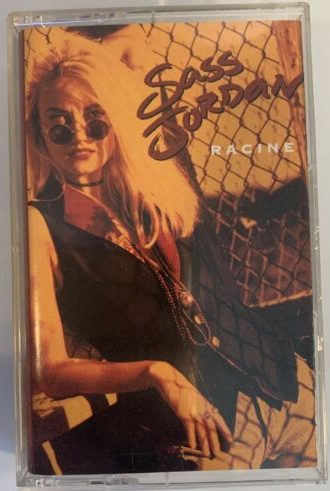
THE CASSETTE CHRONICLES – SASS JORDAN’S ‘RACINE’

By JAY ROBERTS

The Cassette Chronicles is a continuing series of mini reviews and reflections on albums from the 1980’s and 1990’s. The aim of this series is to highlight both known and underappreciated albums from rock, pop and metal genres from this time period through the cassette editions of their releases. Some of the albums I have known about and loved for years, while others are new to me and were music I’ve always wanted to hear. There will be some review analysis and my own personal stories about my connection with various albums. These opinions are strictly my own and do not reflect the views of anyone else at Limelight Magazine.

SASS JORDAN – RACINE (1992)

The second album from Canadian rocker Sass Jordan is where I “discovered” her. Thanks to the album’s lead track “Make You A Believer” getting a concerted radio station push, I heard the song on 94 WHJY out of Providence, RI. I distinctly remember hearing the song and then having the DJs (I’m a bit fuzzy on who they were but I’m pretty sure it was the morning team of Paul and Al) rave about the song afterwards.

Sadly, I don’t remember the album getting any more of a push after the hype about “Make You A Believer” died down but I was as jazzed up about that song as the DJs were and that led me to going out and buying the Racine album. It is that cassette copy I bought that I’m listening to for the purposes of writing this article. (I have the album on CD now as well.)

But what was it about the Racine album that struck such a chord with me that I love it anew each and every time I listen to the album? Well, it’s just got this incredible rocking vibe to it. The songs that rock do so with quite an authenticity to them and the songs that are more geared towards tickling those emotional cues do it without being maudlin or sappy.

As I said, the album opens with “Make You A Believer” and let me tell you when you hear that introductory riff, you still get amped up. Then Jordan’s vocals, which drip with a bluesy edge, cut in and man you just feel like you are sitting in the middle of the song and letting it wash over you. It’s a bar room rocker combined with a southern rock edginess that does indeed make it seem like this song is straight from the 1970s. That’s only further fueled by the backing vocals on the chorus as well.

That song is followed by “If You’re Gonna Love Me” is another hard rocking track that at the very least will leave you with a foot bouncing in time to the music. (Seriously, as I type this, my leg is going up and down as I get into the groove of the song.)

The song “You Don’t Have To Remind Me” was co-written by Jordan, Stevie Salas and Parthenon Huxley. Huxley was part of two off-shoot projects from ELO. The song starts off with a slower intro and first lyrical passage. The chorus is more of an intense delivery before it settles into that more midtempo delivery. I loved the opening two lines of the song a lot: “Wind blows through this room / Like blood from an open wound”. That creates one hell of a visual in my mind. There was a video made for this song and I’m glad that it got at least some kind of “single” release because Jordan’s vocal performance alone is phenomenal.

There’s a rocking boogie feel to “Who Do You Think You Are” that gets me quite pumped up. As for “Windin’ Me Up”, there’s a slower delivery to the start of the song that feels but when Jordan and the band kick the energy level up, you get a killer rocking track and the guitar solo is excellent.

I mentioned above that the slower songs on Racine manage to avoid being maudlin or sappy and the Side One closer “I Want To Believe” is the perfect example of this. As much as I’ve come to be annoyed by a lot of ballads of the era because they don’t age well (and I’m something far short of a romantic), this song which is delivered mainly as a vocal and acoustic guitar soundtrack (there’s more instrumentation later in the song). And it is beautiful. Jordan’s vocals deliver the somewhat philosophical lyrics in about a purely perfect manner as one could hope for. I’ve long thought that this is the kind of ballad that was written and recorded simply for music’s sake rather than as a calculated move to sell more records. And perhaps that is why it still makes its mark on me three decades after its original release.

When you flip the cassette over to Side Two, the album kicks off with “Goin’ Back Again”, a rollicking rock and roll romp. I don’t know how others react to this song but when I hear it, I can’t help but sing along for some reason, particularly the chorus. (Imagine if I could actually carry a tune properly…)

Jordan kicks on the afterburners with the song “Do What You Want” and the song takes off because of that. But the strange thing for me is I had cause to look up the song lyrics online and realized that besides the title, the lyrics are definitely an argument for being your own individualistic self rather than simply being like everyone else in the crowd. I’ve spent all these years listening to the song and it is only now that I took a deeper dive into this tracks’s full set of lyrics. Putting them inside such an explosive soundtrack may have obscured me from doing so before but it suddenly became an even more important track for me.

“Cry Baby” alternates between a slower, more methodical delivery in the main lyrical passages but then there’s a brief lead into the song’s chorus where the music becomes a full-on rocker that’s for more direct and in-your-face, pacing-wise.

There’s a kind of playful guitar lead playing in the intro to “Where There’s A Will”, and Sass Jordan’s vocals in that intro are pretty much that same kind of playful delivery. But then the song breaks out in full and with the full band playing, the song becomes much harder rocking. The keyboards help flesh out a lot of the music on Racine but I really like what they do for the overall sound on this one a lot.

The album closing “Time Flies” is a flat out great rock and roll song! The music starts off uptempo but with a zesty fire to it. The keyboards are once again a key component of the soundtrack and the overall performance lifts you up and brings you along on the song’s journey. You almost have a sad feeling when the track, and thus the album, ends.

This year marks the 30th anniversary of the release of Sass Jordan’s Racine and in those three decades, the greatness of this album has not diminished. It’s got everything you could possibly want in a rock album. Powerful vocals from a fantastic singer, great music and material that is worth its weight in gold. As you’ve read this article, it’s hardly a secret that I am a massive fan of the release. Like I said at the start, each time I listen to Racine, it’s like I get to experience the album anew and each time I am just blown away by just how good it is. Sass Jordan really hit the bulls-eye with Racine and if you haven’t learned that by now, you are missing out on one truly special record. What greater summation can there be than that?

NOTES OF INTEREST: In 1994, Sass Jordan released the Rats album. I have that album and it’s great. Perhaps even more rocking than Racine but it didn’t build on the audience Sass Jordan established with Racine. Because of that, she was dropped by her label and I admittedly lost track of her solo releases. But in 2020, I finally got to pick up a new Sass Jordan release when she put out her first blues album called Rebel Moon Blues.

Stevie Salas played lead and rhythm guitar on the album. He co-wrote three of the songs as well. The Hooters’ Eric Bazilian plays mandolin on Racine.

In 2011, Sass Jordan was a part of the S.U.N. (Something Unto Nothing) project with drummer Brian Tichy (who played on the Rats album). That was one incredible album to say the least. When I met Brian Tichy after a Dead Daisies show, I asked him about the possibility of a 2nd S.U.N. album. Sass was also the guest singer on the best song (“Redeem Me”) on the 2014 self-titled debut album from Jake E. Lee’s Red Dragon Cartel.

In 2017, to mark the 25th anniversary of the Racine album, Sass Jordan released Racine Revisited which reimagined the songs as if they’d been recorded in the 1970s. Jordan has recorded nine albums under her name including the most recent released Bitches Blues which came out in June 2022.

Sass Jordan is involved in two alcohol ventures: Rebel Moon Whiskey and Kick Ass Sass Wine. She’s also done acting roles and been a judge on Canadian Idol.

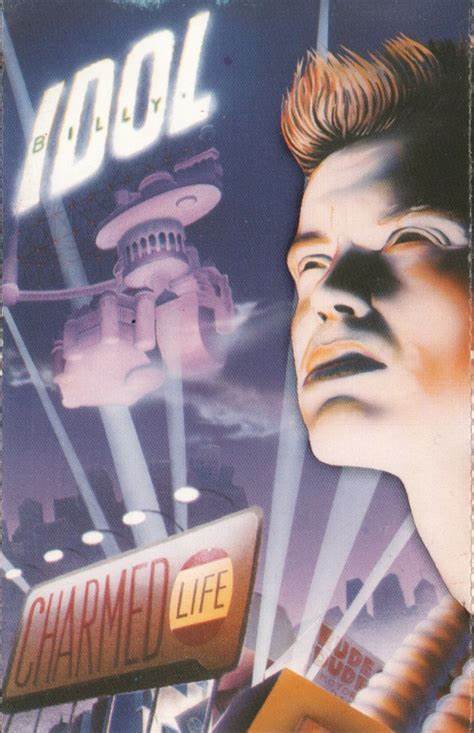
THE CASSETTE CHRONICLES – BILLY IDOL’S ‘CHARMED LIFE’

By JAY ROBERTS

The Cassette Chronicles is a continuing series of mini reviews and reflections on albums from the 1980’s and 1990’s. The aim of this series is to highlight both known and underappreciated albums from rock, pop and metal genres from this time period through the cassette editions of their releases. Some of the albums I have known about and loved for years, while others are new to me and were music I’ve always wanted to hear. There will be some review analysis and my own personal stories about my connection with various albums. These opinions are strictly my own and do not reflect the views of anyone else at Limelight Magazine.

BILLY IDOL – CHARMED LIFE (1990)

Here’s the thing for me about Billy Idol. I love his big hit singles from the 1980’s and very early 90’s. But I’ve never been so in love with them that I went out and bought any of the albums those songs appeared on. Then last year, I bought his new EP The Roadside and was blown away by how good each of those four songs were.

In my head, I wanted to get around to investigating the Billy Idol back catalog but still never got around to it. Then a guy who is part of the same music message forum that I am started listing some of his collection that he’s putting up for sale. And there were three Idol albums of interest to me so I’m making plans to purchase them.

But I wasn’t content with just doing that. Just this past weekend, I was visiting my friend’s record shop and saw that he had the Charmed Life album on cassette. It seemed perfect timing for me to pick it up and take a listen to it (for the first time ever) so that I could write an article about it. And that’s how we got to where you are now reading these words.

In looking at the album’s track listing before playing the album, I realized that there is only one real hit single on the album. The song “Cradle Of Love” was just a monster hit for Idol when it came out as a single and you can definitely understand why. It is the opening song on the 2nd side of the album and it has an incredibly infectious feel to the music.

But while that was a great track, let’s go back and focus on the first side of the album for the moment.

The album opens with the song “The Loveless” and it is an intriguing song. At first, while the song’s delivery is still a bit uptempo, it feels like the first verse of the track is a bit restrained or even slightly hushed in tone. But as the song progresses, the song gets a bit more amped up so you get a more pronounced rock and roll vibe. And Idol’s vocals are what you might expect if you have any kind of passing familiarity with him. There’s always this kind of sneering attitude in his delivery that helps give a slightly more edgy feel to his overall performance.

With the song “Pumping On Steel”, there’s once more a kind of slower introductory delivery that gives way to a more full throated rock delivery for the song’s chorus. The slower pace returns when the chorus ends but towards the end of the song, it goes full bore rock and gets right up in your face. I’m not sure I’m all that crazy about the song as a whole, but I do like the music when it is more uptempo in nature.

Other than the relatively brief guitar solo, the song “Prodigal Blues” maintained a steady midtempo pacing from start to finish. The song was the third and final single released from Charmed Life and while it didn’t get any real kind of traction as a single, I found that I actually really enjoyed the kind of sedate delivery of the song. I thought Billy Idol playing this one about as straightforward as you could gave the song a kind of depth that really hit home for me. I definitely really got into this a lot more than I expected to.

I’m not going to fool anyone into thinking I’m some kind of major fan of The Doors. I’m pretty much just the hits kind of fan when it comes to them. I do love that “Riders On The Storm” song but otherwise, I’m good with any of the hits that play on the radio station in my car. So while I do like the “L.A. Woman” song, I’m not all that invested in judging the original versus a cover version. That said, this is a far faster version of the song and I would say that given Idol’s delivery can at least momentarily let you imagine what Jim Morrison might’ve been like if he’d been an 80’s rocker. There’s a lot of energy running through the song so you surely get pumped up by it, even if you aren’t totally sold on the need for the cover to be done in the first place.

The closing track on Side One of Charmed Life, “Trouble With The Sweet Stuff”, didn’t do a whole lot for me. Instead, it just felt like the song droned on and on without really doing much to distinguish itself as all that memorable.

As I said above, “Cradle Of Love” opens up Side Two of the album. The song was also featured in the movie The Adventures Of Ford Fairlane. I actually own the soundtrack for the movie on cassette and it is a case of the soundtrack being far better than the trash movie it came from. I’d honestly forgotten that the song was on the soundtrack. I’d bought it because Queensryche had a song on it and then quickly forgot about the entire album anyway. But as I listened to the song here and now, “Cradle Of Love” still manages to hold up quite nicely. It’s got a quick moving pace, a nice melodic hook and a solid rock groove that is as infectious as I described it before.

As for the rest of Side Two, the song “Mark Of Caine” left me a little confused while “Endless Sleep” had a drawn out feeling to it. While the latter song (which is a cover of a 1957 song by Jody Reynolds) had slower paced delivery, I was left trying to get into it by any means necessary and I just couldn’t do it. So each of these two songs just left me a bit cold.

But you know what song was damn good? It’s the “Love Unchained” track that got the album back on track. It’s got a lively feel with a great rocking sound and I think Billy Idol really delivers the goods vocally on this one. I also loved “The Right Way”. Idol’s vocals are pushed a up a bit in the mix during the main lyrical verses. And when the song’s chorus kicks in, the music blows up into a much harder edge rock style that had me really sitting up and taking notice. It’s a killer track for me!

The album closes with “License To Thrill”, which was a bit hit and miss for me. In the early going, the song’s slower pace didn’t really lend itself well to me. But towards the end of the song, there is a section where the music gets all riled up and goes for the throat. It’s there where I really enjoyed what was going on. It might not be a complete winning number for me but that particular section of “License To Thrill” did at least make me willing to listen to it again.

It has been 32 years since the original release of Charmed Life and it took all those years before I got around to listening to the album for the first time. But while there are definitely tracks that didn’t quite make the grade for me, there are any number of songs that ended up surprising me with how much I did end up enjoying them. And anytime I can find a new appreciation for an album I’m only just now getting around to, that’s going to be considered a good thing.

NOTES OF INTEREST: The Charmed Life album peaked at #11 on the charts. Billy Idol is credited with designing the album’s cover. The album has been certified platinum.

The “Cradle Of Love” song was Idol’s last big hit in the US, peaking at #2 on the singles chart. The video for the song won a MTV Video Music Award. It was directed by David Fincher who would go on to direct a number of feature films including Seven, Alien 3, Fight Club, Panic Room and The Social Network.

Idol’s longtime collaborator, guitarist Steve Stevens, does not appear on Charmed Life. The album does feature guest appearances from bassist Phil Soussan (Ozzy Osbourne) and drummer Mike Baird (Hall & Oates, The Pointer Sisters, Richard Marx).