MB Padfield’s Bedazzled Road to Recovery

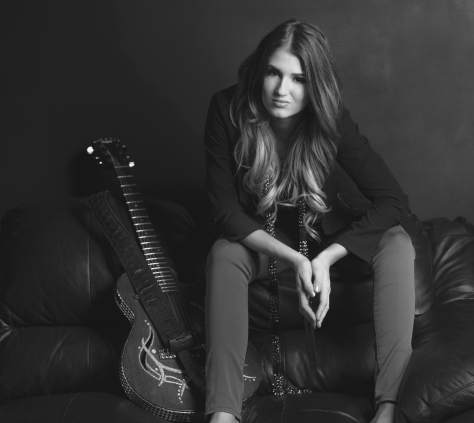
MB Padield (Photo by Eric Snyder of EAS Photography. Submitted photo by MB Padfield.)
MB Padfield (Photo by Eric Snyder of EAS Photography. Submitted photo by MB Padfield.)

BY JULIA CIRIGNANO

MB Padfield is a singer-songwriter from New Hampshire with a passion for rhinestones and every type of music imaginable. Her music is a mixture of grunge, R&B, hip-hop, pop, funk, and blues. MB Padfield is known for adding her own unique sparkle to covers of popular songs. She covers songs from an array of different artist such as Eminem, Fetty Wap, T.I., Nick Jonas, Beyonce, Rhianna, Drake, Queen, Amy Winehouse, Dr. Dre, Dropkick Murphys, Awolnation, Imagine Draons, Hall & Oates, Katy Perry, Led Zeppelin, Daft Punk, and Ingrid Michaelson, and creates one-of-a-kind medleys.

Her covers become much more than just a copy of a song, but a masterpiece of her own once she adds her magic touch. She often jokes about bedazzling everything, and this is true both in terms of her physical and musical endeavors.

Padfield’s got swag and soul, her voice has a slight twang, and her songs are edgy and funky. She’s got a gypsy heart — can’t stay in one genre for too long, even when it comes to her own songs. Along with her covers, Padfield also performs her exceptional, sassy, originals songs such as “Why Do I Love”. Due to the lyrics, she has to introduce the song with the disclaimer that she never harmed an animal. Why’s that? Check out the lyrics:

“I want to light your cat on fire

And I don’t care what your mom thinks about me either

’Cause I’m just a nut and

You know that you’re screwed and

You know that this relationship is completely doomed so

Why the hell do I love you?

You’re completely insane but I guess that I find that sexy

But I can’t complain because rehab is where you met me.”

Padfield is a one woman band. She doesn’t need help from anyone else; besides maybe her loop pedal so, like a magician, she can be in two places at once. She often uses a loop pedal to give her vocals and guitar a full band feeling, and to give herself the freedom to explore more complex guitar parts.

Even off stage, Padfield is independent and self-sufficient. She has basically no management, but has managed to make herself a full-time touring artist. Along with her stellar, unique vocals, Padfield is an excellent guitarist both when she is playing lead, or when she is playing the bass line over her own loop. Padfield is bad-ass and pure, all wrapped up into a true rockstar — with a matte black Harley 1200 Nightster and all.

Padfield is everything you would expect from a rock star. Yet unfortunately, even some of the negative stereotypes to the rock star life have come true for her too. Throughout Padfield’s entire life, she has dealt with emotional issues such as depression and anxiety due to childhood trauma such as bullying. At the age of 16, she picked up her first drink, and found alcohol to be the perfect bandage to cover up a troubled past. Only one year into drinking, she realized she had a problem far bigger than the alcohol consumption she saw from her peers.

“I knew I was an alcoholic by age 17. I identified the things that I felt with someone who told me they were an alcoholic,” she said. “The loneliness, self-destruction, self-medication, self-loathing. I was also a habitual drunk driver to the point it was a hobby but I was never caught or hurt anyone. I’ve never been arrested nor had any legal ramifications to my actions. That was a barrier to me identifying myself as an alcoholic.”

It took Padfield awhile to realize that she wasn’t drinking in a normal or healthy way. She thought everyone her age abused alcohol in the ways she did.

“I just thought I was young and that is how everyone drank,” she said. “The reality is that my personality drastically changed and I blacked out because I couldn’t stop once I started. Normal drinkers don’t black out.”

Padfield has a very addictive personality, which is why she finds herself lucky that she never got into any drugs besides alcohol. She said ironically, that she was always too drunk to go out looking for drugs.

“I’ve only smoked weed once and I didn’t even get high. I was extremely lucky,” she admitted.  “My personality gets addicted to everything. I also drank in seclusion. I didn’t like people seeing me drunk because I knew what I became. I think that almost prevented me from networking for drug connections. I would actively drug seek but ironically I was too drunk to get out my door.”

Padfield has a positive way at looking at her situation. “Alcoholism isn’t a death sentence, I see it as a life sentence. As crazy as it sounds, I am so thankful and grateful that I have the disease of alcoholism because today I have a solution for the real problem– which is me.”

Padfield has grown stronger through her struggle with alcohol. She has successfully been sober since March 17, 2014. Although she has overcome her alcoholism, most importantly, she has also resolved her underlying issues.

“I had childhood trauma and I believe that I have a genetic competent as well,” she said. “My whole life I lived with anxiety, depression, nonverbal learning disorder, and complex PTSD.”

Once Padfield stripped away the bandage, alcohol, she still needed to fix the real problem.

“I was sober for an entire year by just not drinking and I was miserable. The anxiety, depression, and irritability came back ten-fold. Alcohol was my solution; the problems were still there and now sober without a solution. I felt trapped, I became suicidal. What I had was untreated alcoholism.  It wasn’t until I found a twelve step program is when I finally found relief.”

Today, Padfield finds herself in a better place than she has ever been, but she still struggles. Diseases such as anxiety and depression don’t ever go away, but Padfield has found ways to cope without needing alcohol.

“I will always be an alcoholic. That is to say that I’ll never be able to drink safely. However, I don’t suffer from my disease,” said Padfield. “Some days are easier than others, especially when musicians face more rejection, scrutiny, and self-doubt than most. The fact that I don’t have to wake up and drink every day is a miracle, but I still dealt with the hard wired emotions long before I picked up my first drink. Today I have a solution for that too. The way I immediately experience the world probably won’t change but I don’t have to suffer because of it.”

Struggling with alcoholism and underlying emotional issues is hard enough without being a musician. Yet, surprisingly, Padfield says that performing at bars, or shows where alcohol is served, hasn’t been too much of a problem for her.

“Every once in a long while I might get a ‘bright idea’ that somehow this time drinking would work out better. That’s when I have to utilize my recovery network that I’ve built. I call my sponsor or another person who has gone through this experience. I have learned to be aware of myself,” she said.

Padfield has found ways around alcohol, without totally excluding herself from parties.

“I got sober at age 18, did 21 shots of Red Bull for my 21st birthday. There are LOTS of young people getting sober, they even have twelve steps specifically for us,” she said. “For me, sobriety is freedom from alcohol. Recovery is freedom from all the things that made my use in the first place. Sobriety means nothing to me without recovery.”

Padfield is now comfortable in her own skin, yet she is faced with many challenges due to her career. She explains her stage as “a double edged sword”. Padfield believes that many people expect musicians to use drugs to enhance their creativity. She expressed how grateful she is to have learned how untrue this really is.

“I think there were a lot of lies that I told myself I had to be as musician, in terms of my sobriety,” said Padfield. “The biggest being that I had to be some big irreparable tortured soul in order to write and produce the music I do. I justified my use as lots of musicians drank and used drugs to enhance their creativity. For me, it couldn’t have been farther from the truth. I didn’t write or release anything for four years because of it.”

Padfield has also struggled with the social aspect of being a musician, such as trying to network and navigate herself through the complicated social world that is the music industry. She no longer feels the need to be Keith Richards or Lil’ Wayne, and sees that drugs lead to destruction not success.

“I also thought that being an experienced partier was a job requirement for networking in the music industry,” she said. “I’m not chained to church basements and staying home on the weekends for the rest of my life. I go out to venues and bars to see my friends play or to network and I do it sober. It’s much more effective when I’m not being a drunken asshole.”

Padfield recalls a moment when she first learned this lesson. “I remember one time I somehow managed to get backstage with one of my favorite guitar playing idols and his crew. They wanted me to drink with them and that stung immediately but then I played the situation though. I would much rather tell him I had a great time at the show and I respect what he does than getting shitfaced and trying to act cool. Trust me. It seemed like a big deal in my head to turn down alcohol at the time but the truth is the person who offered: A. doesn’t care, B. won’t think twice about you saying no, [and] C. would much rather prefer to remember you as that chill musician than the sloppy crazy chick.”

This story shows Padfield’s introspective intelligence, and also her strength as a woman. Many women feel the need to impress men by drinking with them, and by drinking more than them. If Padfield can turn down a drink from a rockstar, you can turn down a drink from anybody.

Padfield wants to show the world that both women and men can be great musicians without destroying themselves. Padfield highlights the many other sober musicians and actors who have achieved success, including “Eminem, Sia, Lana Del Rey, Clapton, SRV, Joe Walsh, Elton John, Trent Reznor (of NIN), Bradley Cooper, Robert Downey Jr, Leona Lewis, Bowie, Anthony Kiedis of RHCP, Christina Perri, Slash, Nikki Sixx, Macklemore, Calvin Harris, Ozzy, James Hetfield, [and] Keith Urban.”

Padfield has learned that drugs do not lead to creativity. There may be a connection between the two. This connection is a genetic component called DRD4. Padfield says that many, “Musicians and other artistic types are theorized to have a genetic component called DRD4. It supposedly links behavioral disorders, mental health issues, and addictions to creativity and artistry. [….] They estimate 1/10 have that genetic marker. That’s a lot of people.”

Padfield uses her unique position as an artist to both help understand addiction, and help people who are struggling with addiction. Padfield doesn’t see herself as a role model, and takes “absolutely no credit for helping others get sober”.  With this being said, she has been part of many people’s journey to recovery, and they have in turn, been part of hers. Padfield doesn’t wish to praise herself or be praised. She views herself and her friends as a supportive community who is working together to feel better and live better lives.

“I’m just an alcoholic who was introduced to a solution by someone who did the same for them.  I’m just grateful to be a part of their journey and to have them in mine. We’re all in the same boat,” she said.

Padfield is close with many fellow addicts such as the late Cody Sanborn, “I lost my original bass player, Cody Sanborn a little over eight months ago to heroin and suicide. His death put the ax to the grinder to get active and open in recovery for me. His mom actually has a foundation in his honor (The CHOOSE Foundation) that helps provide financial scholarships to those looking for treatment.”

Padfield speaks of her own, unique path to recovering, “I needed more than just twelve step meetings to get sober. I went to professional counseling, I take medication that helps balance the chemicals in my brain. I also have to work out and eat right, which I’ve recently been slacking on…I love pasta. Oh well.”

Padfield is still working to keep her life moving in a positive direction, but no matter what she says, she is a great role model for people who are in a similar situation. Recovery is a personal experience, but also a group struggle. Padfield has a message to those who are still struggling with addiction.

“First off, you’re not alone. Even though that’s what the disease of addiction tells you,” she said. “Second, find me on Facebook, Instagram, Snapchat, or e-mail, whatever and let’s talk. I always have time to talk recovery. Ask me anything, I’m an open book.”

Padfield is a genuine person with a big heart. She isn’t perfect, but has grown in leaps and bounds since her 16 year old self picked up her first glass of alcohol. She may not have all the answers just yet, but even her story is bound to help others in similar situations.
Narrows Center celebrates 15 years of art and music in Fall River

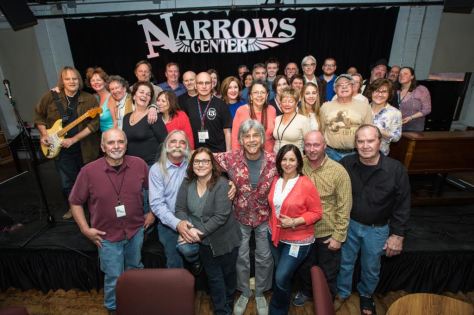
The Narrows Center for the Arts in Fall River, MA, is celebrating its 15th anniversary this year. Pictured is all of the dedicated volunteers and staff with performer Walter Trout at their 1,500th show. (Photo by Rick Farrell)
The Narrows Center for the Arts in Fall River, MA, is celebrating its 15th anniversary this year. Pictured above are all of the dedicated volunteers and staff of the venue with performer Walter Trout at their 1,500th show. (Photo by Rick Farrell)

BY JULIA CIRIGNANO

The Narrows Center for the Arts is a unique concert venue accompanied by two visual art galleries and visual art studios. The Narrows is a non-profit organization with an intimate, casual setting. It is located at 16 Anawan Street on Fall River’s historical waterfront, and hosts concerts for bands within various musical genres. The Narrows annually hosts around 140 concerts per year — attended by about 30,000 music fans annually. The Narrows Center is currently celebrating its 15th Anniversary.

The Narrows Center is run by three full time employees, many volunteers, and last but certainly not least, Executive Director Patrick Norton, who co-founded the Narrows with Burt Harlow 15 years ago. He has held the position of Executive Director for the last nine years. While the center now has some full-time employees, Norton said, “We were an all-volunteer organization for the first eight years of our existence.”

Norton discussed his vision when he founded The Narrows.

“We have a vision, it’s always been to bring great music and art to the Southeast and Massachusetts and beyond,” he said. “We had very modest goals when we started, you know, make it sustainable. We’ve been able to achieve the sustainability piece [….] we had a large vision but we wanted to do it modestly. Meaning that, we didn’t go into debt to build our facility. It’s been a slow build right from the get-go. We improved every year, a little bit. And now we have a state of the art rec center. You know, it started ground up, bricks and mortar, modest…”

Norton explained that The Narrows is known for being a concert hall, but they are also passionate about their Arts and Education Center.

“School districts bring kids in to look at our art exhibits, give them tours,” he said. “Art has really been minimized in the public schools.”

He explained his frustration by saying, “I think it’s a short sighted view of the universe.”

Norton hopes to fix what he, and many other people, believe is a flaw within today’s education system.

“The Narrows has been able to pick up some of that slack, on some level. We always want to do more, because we think music and arts education is good for the brain, it’s good for kids,” he said.

The Narrows is known for its casual atmosphere. The setting is intimate, the parking is free and everyone can bring their own food and drink. The Narrows is both a place to party, and a safe, family-friendly concert venue.

Norton reflects on The Narrows success, “I think it’s always been the unique combination of the visual and the performing arts [….] music is a much more accessible art than the visual arts. Music is a universal language. I think everyone can agree with that. ” Norton proves his point by saying, “When little kids hear music, you can see them get excited.”

Norton is aware that the visual arts are less accessible to everyone. Although, Norton is proud to say that the people who come to The Narrows Center for concerts, are typically into the visual art too.

The Narrows is very unique because they have managed to sell rock shows as family-friendly events. They have also managed to draw in music fans from far and wide, and to host concerts within many different musical genres.

“I think it’s the mix of shows that’s been one of the reasons we have been so successful. Because we’re blues, rock, country, folk, jazz, whatever. We’re not genre based,” said Norton. “I always say, we’re quality based.”

Norton is proud to say that The Narrows hosts concerts for all types of music, but the music is always good. “There’s two kinds of music, good music and bad music.”

Norton believes in the arts, and also the sacredness of live music. “Live music is so unique, it’s hard to replicate in your living room. So I think we will be able to be alive and well for a long time. [….] music is such a unique experience. So I think people want to be in a room with other likeminded individuals and listen to music.”

Norton talked a little about how he picks each act for The Narrows to host. He admits that anyone in his position would be influenced by his/her own personal preference, but he followed up with, “I think the preference is good versus bad. I think it’s just quality control.”

Norton explained that a wide variety of music genres, bring in a wide variety of people to come watch the shows. The more diverse and all-inclusive The Narrows shows are, the more people will come, and the more shows can be put on.

“We try to attract the widest group of music people as we can,” he said. “We’ve been doing comedy for a while. It’s just another way to broaden the brand, get new people in the door, and we always say, ‘if we can get you to come to one show, we can get you to come to many shows.’”

Norton endorsed The Narrows by saying, “We’ve got a great product, the emphasis is on music, it’s family friendly, it’s mild to wild!”

After hosting 1,500 shows, Norton said one of his favorite shows was when The Narrows hosted the late Richie Havens in 2004. He talked about how important this show was not only for himself, but also for the venue as a whole. Before this show, The Narrows had only been hosting bands that were regional, and not well known. This was due to their lack of money. But when they hosted Havens, things changed. The Narrows chose to take a risk, and were successful in their mission to put The Narrows on the map.

“With Richie Havens, he was kind of a big shot,” said Norton. “$5,000 for him guaranteed the first time, and the most we had done previously to that was $1,000. So it was definitely a leap of faith.”

That concert was just what The Narrows needed. The show sold out, and many music lovers first stepped foot into what would soon become their favorite venue.

“I think it gave our venue a jumpstart. Kind of put it on the map for some people,” he said.

After the Richie Haven show, The Narrows Center had finally made a name for itself.

“And Richie, as a human being is such a beautiful man, [….] he’s all about peace, love, and honor. And that’s kind of some of the qualities that we try to portray here too.”

Since 2004 and his death in 2013, Haven’s played at The Narrows many times. “He brought a certain spirit. He captured what we were trying to exude,” said Norton.

Another important show The Narrows hosted was when the Continental Drifters played there. Although the band wasn’t as big an act as Havens, they played an important role within the creation of The Narrows.

“The very first show we had here was a band called the Continental Drifters. And what was special about that was we had just been kicked out of our previous home, and within a couple of months we had a new place. And I can tell you, from the very first note, I had a good feeling because it sounded really good,” said Norton.

This was a very important moment, because Norton, up until that moment, was not aware of The Narrows excellent acoustics within the building.

“We’re known for having really good sound, and really good presentation at our shows,” he said.

The Narrows is also known for attracting many volunteers and donors. “What we didn’t have in financial resources, we try to make up for in human resources.”

Norton talked about how The Narrows has managed to acquire and keep so many volunteers.

“We have a great commodity. [….] It’s great music. Volunteers get to come here and enjoy some great music. And then, I think, as it grows, it’s the comradery. We’re like a family now. You know, all the volunteers. We probably get about 40 volunteers now. Many of whom, have been here for over five years.”

Norton also talked about how The Narrows, being a non-profit organization, has gained such a significant group of generous donors, “When people give money to The Narrows, they get to see firsthand, that the money’s being used wisely.”

The Narrows Center has an annual drive and commonly receives grants, but a big portion of their money comes from generous donors.

Norton explained a situation he once found himself in. For the first seven years of The Narrows existence in their current building, they didn’t have a passenger elevator. Norton was saddened by the people who couldn’t attend the shows because they couldn’t get up the stairs.

“If you couldn’t climb 27 stairs, unfortunately, you couldn’t come to the show, which was hard for us, you know, on a bunch of levels,” he said.

Norton explained that when he chose to raise money for this specific item, and was public about what the money would be used for, The Narrows were successful in raising the amount they needed since it was clear that the money was going towards something important.

Norton also talked about raising money for an air conditioning system. Once again, the need was obvious, and the donors all saw immediate results due to their generosity. Norton has built trust and solid relationships between his donors and The Narrows. It has, “a track record of doing what we say we’re going to do,” and a handful of donors who are willing to help their cause.

The Narrows Center will be hosting two 15th Anniversary shows this November. The first show features headliner Samantha Fish on November 9th, while the second features Girls, Guns & Glory and Big Sandy & His Fly-Rite Boys on November 11th. Norton said he found these artists to be a good representation of The Narrows, and they have all played there before. He said that he chose these bands because they’re great acts, and they are bands that he and his associates love. He also said that he will be adding more acts to those events, and those names should be up on their website soon.

Additionally, The Narrows will be hosting their 15th Annual Narrows Festival of the Arts this Sunday, September 11th, from 11 a.m. to 7 p.m. This year’s lineup includes headliner Amy Helm, Paul Cebar and Tomorrow Sound, Alexis Suter Band, Tim Ray Trio, Roy Sludge, Ghosts of Paul Revere, Butch McCarthy, and TJ’s Music Allstars. This event is free to the public.

“What people can look forward to is a good time,” said Norton. “The Narrows Festival is the one day of a month we show people what we do here all the time. It’s a mix. We’ve got eight bands, and those bands are a mix of blues, rock, jazz, folky, bluegrass kind of stuff. We have the art vendors. We got food trucks. Stuff for the kids. So it’s family-friendly. It’s a dance party. We show some fun dance bands that are playing. And you know, it’s free. It’s our kind of thank you to our fans and the City of Fall River.”

As to his future goals for the Narrows, Norton said, “We would like to purchase the building and expand our offerings. If you’re not growing you’re dying. You really have to hustle this thing because there’s a lot of competition out there.”

For more information about the Narrows Center, visit narrowscenter.org.


Canada’s Motion Device ‘eternalizes’ heavy metal music

Motion Device (Submitted Photo)
Motion Device is a heavy, hard rockin’ band from Canada consisting of three siblings and one cousin. (Submitted Photo)

BY JULIA CIRIGNANO

Their lead singer is 14 years old. Their last album was titled Eternalize. They are from Canada. They are all related. Their new music video is titled “Doves + Snakes”. Who are they?

Motion Device is a band from Canada consisting of Sara Menoudakis (vocals), Andrea Menoudakis (bass & keyboards), David Menoudakis (drums), and Josh Marrocco (electric & acoustic guitars). They started playing together in 2010 when Sara (at the time only nine years old!) was busy covering heavy metal songs from bands such as Black Sabbath, Iron Maiden, Dream Theater, Led Zeppelin, and Rush. Soon, the band started playing original songs, and ended up raising $32,000 to record their debut album Eternalize that was released last year.

Motion Device is not your typical rock band. The band consists of three siblings (Sara, Andrea and David) and one cousin (Josh). They go on the road with their parents instead of groupies. Being with your family this much has to be difficult, especially through these musicians teen and early adult years. Although this band is younger and closer than typical rock bands, Josh talks about the positives aspect to their unique set-up.

“The fact that we’re all family has been a huge plus since the very beginning of Motion Device,” he said. “We’ve always had great relationships with each other and our families as well and I don’t ever see that changing. We spend a lot of time with each other outside of music so that makes us even tighter.”

Sara perhaps may have spent some of the most difficult years of a young girl’s life, facing stardom with her family. Through the journey though, Sara has managed to embrace the positive aspects of her life. Sara shares how a nine-year old grew to love heavy metal.

“[….] my parents got me into rock music at a very young age,” she said. “I’ve always listened to all kinds of music, not just rock and metal, but the heavier stuff has always been my preference from the first moment I picked up a microphone.”

Sara says that her age hasn’t been a problem. She has actually managed to live a normal life, for the most part, “I go to school and have friends like everyone else. The only difference is I happen to be in a rock band and you might know my face from all our YouTube videos.”

Sara loves what she does and seems genuinely happy. Being a young vocalist must be hard since a nine-year old’s vocals are physically less developed, but Sara has pushed through, and become an extremely successful singer — better than many of her elders.

“I’ve been to quite a few vocal teachers and each one of them has taught me something new that helps me be a better singer and performer,” she said. “I also have been playing guitar for quite a few years and that helps me a lot when it comes to writing vocal melodies for our music. Playing in a band with older members has really helped me develop my own unique style as well.”

As the members of Motion Device grow and mature, so does the band as a whole. Like fine wine, these four band member have developed a great deal since 2010. Josh talks about the band’s “natural and necessary” transition from playing covers, to writing and recording original tunes.

“I feel like the transition from covers to originals is a great reflection of how Motion Device has grown as a band,” Josh said. “Working on covers and playing covers live was a time to not only become tighter as a band technically, but also a time to find our identity among our inspirations. On our Eternalize album and in our new material currently being written, I feel like we are really starting to develop our own sound.”

As the band refines their own sound, they are also getting to know themselves and each other better. The band agrees that there isn’t one main songwriter. David explains the relaxed way in which the band writes their music.

“We all work together and feed off each other’s ideas to create our music,” he said. “Most songs come from an individual or a jam session and start as instrumentals with vocals and lyrics getting added at the end.”

Lyrics are very important to Motion Device. Unlike typical musicians at their age, they are socially aware, and prepared to use the stage they have to their advantage. They have something important to say.

“We want our music to have a deeper message than most songs out there today,” offered Andrea. “We like to write about what’s going on in the world, whether it’s positive or not, and how it affects us as a society and individually.”

Motion Device has definitely touched and affected some people, since they were able to raise $32,000 through a crowd-funding campaign to record Eternalize. Once recorded, the album received a very positive response from fans the band weren’t even sure they had. David talks about their surprise over the money they raised.

“It was hard to predict how successful our crowd-funding would be. We actually were only looking for half that amount but fans all over the world kept donating,” he said. “It was great to know that people are really listening to us and the positive feedback and comments just make us want to work that much harder.”

Around this time, Motion Device discovered that their fan base spread throughout their country and also throughout the world. Because of this, the band has begun to make their way out of Canada. They made their U.S. live debut at Brother’s Lounge in Cleveland, OH, on July 25, 2015.

“Playing in Cleveland, Ohio was our best gig yet,” said Andrea. “Meeting our fans and seeing how passionate they are towards this band and our music was amazing. People came from all over the U.S. and Canada with one family coming from as far as Norway for a meet and greet. It was really fun to perform in front of people who know and love what we do.”

Their success in America has shown them how many fans they really do have all over the world. David talks about their plans for the future saying, “More shows in Canada, the U.S. and the world hopefully. We have a ton of fans in Europe, South America and Australia as well.”

Along with a tour, fans should also keep an eye out for new music from Motion Device next year.

“Right now our main focus has been on writing new songs for a 2017 concept album and developing Motion Device’s sound,” said Josh about the band’s immediate future. “We’re always pushing to become better technically and our new material will have a lot of twists and turns that I’m sure our fans will love!”

For more information about Motion Device, visit their website HERE.

Eternalize is Motion Device's full-length debut album.
Eternalize is Motion Device’s full-length debut album.

Robert Reed finds his ‘Sanctuary’ in paying homage to Mike Oldfield

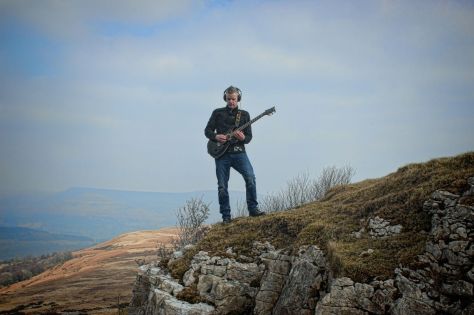
Robert Reed (Submitted Photo)
Robert Reed is a multi-instrumentalist, composer and producer who released two back-to-back solo albums that pay homage to Mike Oldfield (Submitted Photo)

BY J. KENNEY

Although he may not be a household name in the United States, Robert Reed is a man of diverse musical talent. A multi-instrumentalist, composer and producer, Reed is best known throughout Europe as the founder of the Welch progressive rock band Magenta. Before that, he was creating equally compelling music with his band Cyan and side project Trippa. A self-proclaimed fan of 70s progressive rock music, Reed recently decided to salute his music hero, Mike Oldfield, by recording a solo album, called Sanctuary, in the style of Oldfield’s 1973 masterpiece Tubular Bells. Like Oldfield, Reed played every single instrument on Sanctuary and structured it exactly like Tubular Bells with two movement instrumental pieces. He was even aided by Tom Newman and Simon Heyworth who were members of the Tubular Bells production team.

Never one to shy away from a challenge, Reed immediately followed up his debut solo album with Sanctuary II. While he once again played almost every single instrument, this time he was joined by drummer Simon Phillips (Toto/Hiromi), who previously worked with Oldfield on four of his solo albums. The album was released this past June to critical acclaim.

Currently, Reed is rehearsing with a 10 piece band for a special Sanctuary Live performance on October 8th at the Big Room at Peter Gabriel’s Real World Studios. The performance will be recorded for a future CD and DVD release. Despite his busy schedule, Reed was gracious to grant us an interview where he offered in-depth and insightful answers to our questions.

LIMELIGHT MAGAZINE (LM): In order to put the following questions in context for our readers, could you briefly explain the impact legendary multi-instrumentalist Mike Oldfield has had on you as a musician, particularly in your formative years?

RORBERT REED (REED): Tubular Bells was the first album I had bought for me at the age of 7. I had heard a funky version of it on an album of horror film themes. I was captivated by it and played it to death. I then discovered the rest of M.O. (Mike Oldfield’s) catalogue. I just became inspired to learn to play all the various instruments, like my hero. I found in M.O. music a deep emotional content. The ability to move you with music without lyrics. There is something very special in M.O. guitar playing. It’s almost like a vocal connecting with you. I then became a massive fan of all his work and went to see him many times.

LM: Now moving ahead to 2014, you released your critically acclaimed solo album, Sanctuary, which pays homage to Oldfield in a big way. You structured the album exactly like Oldfield’s masterpiece, Tubular Bells, with two-movement instrumental pieces and played every single instrument. Why did you decide to tackle a solo project of this magnitude at this point in your music career?

REED: Alongside my career in music with my various bands Magenta/Komepndium, I have done lots of TV and film music. But I’ve always had a yearning to do a long form album like Tub(ular) Bells. Lots of people knew my influence which shows itself in my other projects and always asked when I would do the album. Then, at the beginning of 2013, on the first day of the New Year, I sat in the studio and asked myself what I really wanted to do, and started what became Sanctuary. The music just flowed for the following months. It was the most enjoyable album I have ever made, as it came from the heart. I knew I wanted it all to be played by hand, real instruments and using the long form template of classical music and Tub(ular) Bells. I also knew that I wanted vocals, but not lyrics. So I had to find singers who understood this. I was lucky to work with Synergy Vocals, a vocal group who work with Philip Glass and Steve Reich, so they knew exactly what I wanted.

LM: Sanctuary was co-produced by Tom Newman and mastered by Simon Heyworth who were both part of Oldfield’s 1973 Tubular Bells production team. How did you get them to assist you with this project?

REED: When I finished the first Sanctuary album, I really liked it, but wasn’t confident that it worked as a standalone album. It had been a labour of love, but wanted to check that it was NOT just a “clone” album that couldn’t be taken seriously.

So I thought I needed to put it to the test, musically, and who better than Tom Newman, who had made the original album.  I know he is a very straight talking man and would say the truth. So I sent him a copy and asked his opinion. He replied and gave it his blessing and was really complimentary. There are loads of fan versions of M.O. material, and people who do YouTube demos in their bedrooms of M.O. music. Tom said that he is sent loads of these, but Sanctuary was different. It was actually NEW music, written in a similar style, but had managed to capture the spirit of what M.O. had done on those first four albums of his.

I also sent a copy to Simon Heyworth to ask a similar question of the music. He also replied and said the same, but also that he could close his eyes when listening to Sanctuary and he was back in the Manor Studios in 1973, and offered to master it. I was so pleased and had the confidence to go forward.

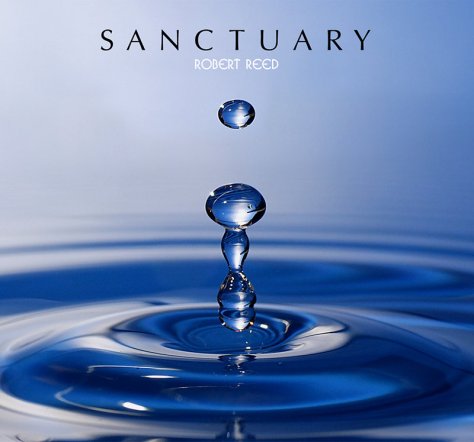
Robert Reed released Sanctuary in 2014.

LM: What was it like working with them, especially since they come from a different era of recording, and how much input did they have on the finished album?

REED: Tom was such a help, he lives in Ireland so we had to do the collaboration via the internet. I had done a lot of the work already, so I sent him the individual tracks of the music, so he could extend, change the order and sound of each part. He had loads of suggestions. On the first album, he said that I was putting too much into the music, cramming too many themes. This is because these days I worry that people haven’t got the attention span, to listen to things and want everything changing and exciting all the time. Tom is the opposite and kept telling me to let the music breath. Also, I was going to add shorter tracks to the first album, to make the album longer, and to have “single” type songs to help promote it. Tom hatted this idea and just said that it spoilt the atmosphere created by the two long pieces… He was of course right.

On the new album Sanctuary II, Tom had even more of an input. I had finished the album and was about to send it be mastered. I thought I had better send Tom the finished mixes, for one last check, as I hadn’t spoken to him for a few months whilst doing the final mixes. I had a reply, where he said I had made the most perfect album in history BUT I had taken out all of the soul of the demos! I was devastated, but went back and checked some of the guide mixes Tom had done and he was right. Computers allow you to repair every mistake, everything in time, make everything sound perfect…but it’s not what we should be trying to achieve in music. It should be about soul and emotion and sometimes the little mistakes are what make it human. So I spent the next four weeks, mixing from a different perspective. To Tom, I owe a lot and am so grateful to have his input.

From left, legendary producer Tom Newman and Robert Reed. Newman co-produced Mike Oldfield's masterpiece Tubular Bells. He also worked with Reed on both Sanctuary albums.
From left, legendary producer Tom Newman and Robert Reed. Newman produced Mike Oldfield’s Tubular Bells. He worked with Reed on both Sanctuary albums. (Submitted Photo)

LM: After Sanctuary was released, you wasted no time and spent most of 2015 recording Sanctuary II. Was it your plan from the start to structure this follow-up album the same way as the first, which is also what Oldfield did on his second studio album Hergest Ridge?

REED: As I said, the first album was such a joy to make, also the reaction to it was so positive, that I really wanted to make a second album as soon as I could. There was no need to change the song format as it had worked so well on the first. I was also a lot more confident, so I could be more bold. I had also learnt lessons from Tom that I could bring to the new album, though he still would complain that I was squeezing too many ideas into the music.

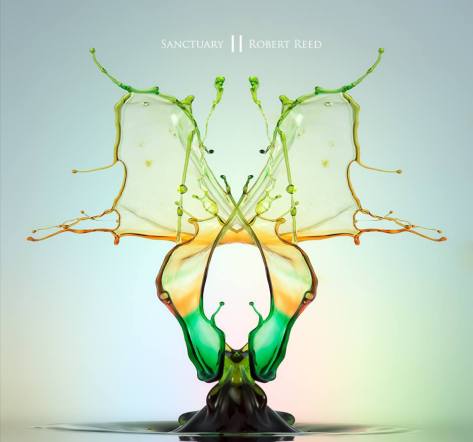
Sanctuary II is Robert Reed's follow-up solo album to Sanctuary that was released this past June.
Sanctuary II is Robert Reed’s follow-up solo album to Sanctuary. It was released this past June.

LM: Unlike Sanctuary, you were aided by legendary drummer Simon Phillips on Sanctuary II who worked with Oldfield on four of his studio albums (Crisis, Discovery, Islands, and Heaven’s Open). Why did you decide to use a drummer this time around? Was it always your plan to work with Phillips? Were other drummers considered?

REED: With Sanctuary II, I wanted to add something new. I had avoided drums on the first album, as it really changes the atmosphere of the music, but thought it would be a challenge to use them on the second album, but tastefully. I had a wish list of drummers I thought who would understand the music. Simon was at the top, but I never dreamt that I would get him. I tracked him down and sent him an email, explaining what I had done and working with Tom and Simon and asked if he would listen to the demos. This he did, and he was really complimentary about how nobody was making this type of music anymore, so he agreed to play. He lives in America, so I sent him the backing tracks and he sent me his drums. The moment I played them against the music, I knew I had something special. Simon is also an amazing engineer and producer, so the drums sounded amazing and what he played was perfect. I never thought, back in 1984 watching Simon play drums at Wembley with Mike Oldfield, that years later he would be playing on my album. That was special.

LM: I’ve been listening to Sanctuary II non-stop since I ordered it online. While this album again pay tribute to Oldfield’s early works, the influence of some of his later releases shines through, particularly Platinum and Five Miles Out. Did this naturally progress this way or was this what you were aiming for when you started writing and recording the album?

REED: Yes, there are definitely more of the Platinum era. That’s because of the drums and how they make the music move. For me, there is a lot more influence of David Bedford the composer who M.O. worked with a lot in the 1970’s. David’s albums like The Odyssey was a huge influence. But again, there is a lot of me. The whole “influence v. plagiarism” debate is a weird one. When I released the first album, I split the M.O. fans down the middle. Half saying that they loved that I was bringing new music in a style they liked; the other half were very of protective of M.O. and hatted what I was doing. I remember M.O. saying how disappointed he was that after Tub(ular) Bells nobody else was inspired to make long form instrumental music. This is exactly what I am doing. Also, EVERYBODY has influences and brings them into their music. M.O. music is very stylized because of the instruments used, but so is classical music. Beethoven sounds like Bach, sounds like Mozart, because they all use the same instruments. It’s the melodies that set them apart. ELO (Electric Light Orchestra) sound like The Beatles. Steve Wilson [sounds like] King Crimson. Genesis took their sound from King Crimson, Marillion and Genesis….we all have influences. In the end it comes to this. IS THE MUSIC well written and performed and does it move you emotionally????? If it does then I have succeeded.

LM: Do you know if Oldfield has heard either of the Sanctuary albums?

REED: I’m not sure he has heard it. He must be aware of it, as it’s all over Facebook and YouTube. I’m not sure if M.O. is interested in anybody else’s music. I just hope he appreciates the spirit in which I made it, and the reason why I made these albums.

LM: Now that the album is out, you’ve been busy rehearsing for your Sanctuary Live shows on October 8th at the Big Room at Peter Gabriel’s Real World Studios. How are rehearsals going?

REED: I always wanted to play these albums live, but knew it would be a challenge, for obvious reasons. So, after the new album, I just put a date in the book, and forced myself to make it happen. We are in the middle of rehearsals, and it’s sounding fantastic, a little different than the record. It’s very had to play, as everybody has to play the right thing at all times for it to fit together like a jigsaw puzzle.

LM: You’re going to be performing with a 10-piece band. Since you performed almost every instrument yourself on both Sanctuary albums, how did you select these musicians to bring these albums to life?

REED: I had to find people who I could trust to be able to bring the right style of playing to each part. I also wanted people who I can get on with and feel comfortable around. We have two guitarists, two keyboard players, bass play, drummer, percussionist playing tub bells, times, marimba, etc., and three singers. It would have been very easy for me to play piano through it all, as that’s my main instrument, but I thought people would expect to see playing various instruments, so currently I’m playing a lot of guitar, some bass, and various percussion instruments…Its’ a real challenge, but fun.

Robert Reed is currently rehearsing with a 10-piece band to perform Sanctuary Live on October 8, 2016.
Robert Reed is currently rehearsing with a 10-piece band to perform Sanctuary Live on October 8, 2016, at Peter Gabriel’s Real World Studios. (Submitted Photo)

LM: You’re recording the concerts for a future CD and DVD release. When do you expect them to be released?

REED: Not sure really, hopefully mid-2017. The concert is going to be very intimate, as Real World Studios is not really a venue. We can get 75 people in for each of the two shows, so I hope it’s going to be great for the audience to be surrounded by the band, visually and sonically. The plan is them to play more shows in more traditional venues, possibly with the same band or smaller, with different line ups. It’s weird I remember seeing M.O. perform Tub(ular) Bells II at Edinburgh He had a massive band and it was perfect, but it was a little too safe and boring. Then I saw him with a five-piece band and the music was completely different to the albums, but was so much more exciting. So you have to strike a balance when playing live.

LM: Speaking of the future, Oldfield concluded his two-movement trilogy of albums with Ommadawn in 1975. Are there plans for a third and final Sanctuary III album?

REED: I’d love to do a third album, but I need to find a sound in my head, and have a few ideas of what new to bring to it. At the moment, I’m completely consumed with the live shows. Though, I am planning a special E.P. for early 2017 that is the early stages of recording.


Jenna Lotti: The Good Girl with ‘Bad Habits’

BY JULIA CIRIGNANO

Jenna Lotti is a 26 year old singer/songwriter from Boston. Lotti has pursued a career both in interior design and music, and has found a way to combine both of her skill sets. Lotti is hard working and self-critical in a constructive way. Since the release of her first album Tunnel Vision, she has greatly improved as a musician, vocalist, and songwriter. She has big plans for the future release of her EP titled Bad Habits, and announced the track-list during our recent talk together.

It is clear that Jenna Lotti was destined to be a musician. She is a very hard worker, yet her road to success was almost inevitable. Here’s the story.

Jenna Lotti (full name Jenna Bortolotti) was raised in a creative environment, yet didn’t actively pursue her dreams of being a musician until after college.

“I was so shy and would only sing in front of my roommates,” she said. “I was always involved in the arts and grew up in an artistic household with my mother being an artist/seamstress.”

Lotti attended Endicott College in Beverly, Mass., where she majored in interior design. For Lotti, being a musician always seemed an unattainable dream, yet she managed to prove herself wrong.

Lotti always had a passion for both music and writing, but after school she continued to pursue her career in interior design. While she is grateful for the lessons and years of hardship, Lotti eventually realized that interior design wasn’t the life for her.

“I always felt out of place, like I wasn’t where I was supposed to be while working in the design world. I literally would cry in the bathroom almost every day because all I wanted to do was music and I felt trapped,” she revealed.

Luckily, Lotti followed her heart. Five years after graduating, she decided to dedicate all of her time to music. Lotti is satisfied with her decision, and still uses many of the skills that she learned at Endicott.

“I don’t regret any of my experiences working in design because I learned so much and met some amazing people along the way,” she said. “I feel lucky now because I can apply my skills in Photoshop, etc., to my music branding. I am able to create most of my artist artwork, posters, websites because of my skill set from Endicott.”

Lotti is best known for her music, yet interesting enough, she was a writer before she was a musician. While Lotti’s road to success may have been rough due to personal struggle, her practiced writing skills have greatly benefited her.

“I have depression so I would keep journals and write a ton of poetry for self-medication,” she shared.

While it’s in Lotti’s nature to write by herself, she recently chose to step out of her comfort zone and try co-writing. Lotti talked about this experience when she said, “Co-writing is great. You get to see how another person’s mind works while writing and their perspectives. It’s a great learning experience as well. This EP, is all co-writes. I wrote three of the songs with my good friend/producer, Susan Cattaneo, and the other two with my fiancé, Chris Facey.”

Lotti shows maturity in her decision to co-write. This experience helped her grow as a songwriter and also as a generally shy and introverted person in the chaotic world of musicians.

Lotti’s new musical exploration has led to her newest EP titled Bad Habits which is due to be released on October 20th. It consists of five tracks: “Bad Habits” (written by Lotti and Cattaneo), “My Oh My” (Lotti and Facey), “Drive” (Lotti and Facey), “Simple Man” (Lotti and Cattaneo), and “Passenger’s Seat” (Lotti and Cattaneo).

This EP was produced by Cattaneo, and Lotti is thrilled to announce that she is having a CD release show at Thunder Road in Somerville, Mass, on Oct. 20th. Dan and the Wildfire and Now for Ages open the show.

While talking about Bad Habits, Lotti especially expressed excitement over how diverse the songs are.

“The new album is VERY diverse. Every song on this is so different from one another,” she said. “I want people to be able to dance and groove to this album as well as connecting with it on a deeper level.”

With Bad Habits, Lotti wants to show the world who she is and what she is capable of. She isn’t shy about critiquing her first album, Tunnel Vision, saying “These new songs are so much better than Tunnel Vision. They are better written and more mature. I’ve learned a lot since writing Tunnel Vision and I think that is obvious once you listen to Bad Habits. Also, vocally, I’ve grown so much and that is also very obvious.”

Lotti is thriving in the world of music, which includes her recent tour of the country.

“We toured with our friend, Keelan Donovan, who has been touring for quite some time now,” she said. “We learned a lot from him and had so much fun on the road! My favorite part was just being in a different place each day. We were exhausted by the end but it was so worth it!”

All those exclamation marks are evidence enough that Lotti is happier than ever with the new experiences she is having. She finally has an outlet for her creativity, and a solid fan base to appreciate it. Lotti is enjoying her success, and has more exciting things to come. Once Bad Habits is released, Lotti will be going on tour. The dates aren’t up yet, but they should be up soon on her website www.jennalotti.com.

Grab a copy of Bad Habits at her CD release party and peel back the different layers of Jenna Lotti. Tickets available HERE.

Photo by Kiera Slye Photography

Lita Ford to perform at Narrows Center in Fall River, Mass.

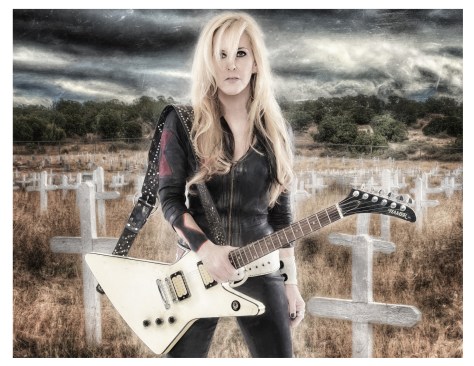
Lita Graveyard_8x10

Lita Ford, who played lead guitar in the groundbreaking band, The Runaways, before launching a successful, Grammy-nominated, solo career in the 80s, will make her debut performance at the Narrows Center for the Arts in Fall River, Mass., on November 1st. Click HERE for tickets!

Born in London, and growing up in Long Beach, California, Ford began playing guitar when she was 11 years old; starting out on a nylon-string acoustic that she received as a birthday present from her mother. For Christmas, she received an upgrade: a steel-string acoustic that she played for the next two years. She saved her money from an after-school job to buy a chocolate Gibson SG that finally allowed her to play Black Sabbath and Deep Purple riffs the way they were meant to sound. It was this guitar with which she joined The Runaways. The band released four studio albums and one live set during their late ‘70s run. Among their best-known songs are “Cherry Bomb,” “Hollywood,” and “Queens of Noise.”

Following the demise of The Runaways in 1979, Ford concentrated on her own career and now looks back on many memorable hits including: the Top 10 duet with Ozzy Osbourne “Close My Eyes Forever,” “Kiss Me Deadly,” “Falling In and Out of Love,” “Shot of Poison,” “What Do Ya Know About Love,” “and “Larger Than Life.”

This year has been particularly busy and productive for Ford. In February, she published her long-awaited autobiography, Living Like A Runaway. Two months later, she released Time Capsule, a compilation of previously unreleased songs from the 1980s that she discovered in a collection of analog tapes in her home.

For her performance at the Narrows, Ford will be playing with a full electric band. Expect to hear the hits and fan favorites from her entire storied career.

The Narrows Center is located at 16 Anawan Street. Tickets to her show can be purchased online at www.narrowscenter.org or by calling the box office at 508-324-1926. For those wanting to purchase tickets in person, box office hours are Wednesday through Saturday, 12 noon to 5 p.m.

Limelight Magazine & Narrows Center Launch ‘Opening Act’ Contest

JKB Entertainment Group/Limelight Magazine, in partnership with the Narrows Center for the Arts, is hosting an “Opening Act” Contest on September 8, 2016, at 7 PM. A portion of the proceeds will be given to a local no kill animal shelter.

The “Opening Act” Contest will spotlight local, up-and-coming musicians, giving them an opportunity to be the support act for a show booked by JKB Entertainment Group/Limelight Magazine in 2017, as well as the Narrows Center for the Arts in Fall River, MA, also in 2017. On top of that, the winner will be the featured artist on a segment of WATD’s “Almost Famous” and be given the opportunity to play a live set on their Tiny Stage. While the winner will be guaranteed a support act slot, all participants will be the only acts considered to open up for any show  booked by JKB Entertainment Group/Limelight Magazine in 2017 when a national touring act requests a local opener.

Registration

All musicians wishing to register for the “Opening Act” Contest must read and accept the following rules and regulations before completing the registration form. Please note there is NO entry fee for this contest, but we need you to submit your completed registration form, along with a five minute or less YouTube link of you or your band performing original, live music (no covers) to jkbbooking@gmail.com by Friday, July 22, 2016, at 5 PM. (For those unable to scan the registration form as a PDF, it can be mailed to us at JKB Entertainment Group, P.O. Box 79263, Dartmouth, MA 02747).

Click HERE for the entry form.

Summary of Rules, Regulations, and Scoring Criteria

  1. This contest is for any band or solo musician from New England performing any genre of original music. Since this opportunity is aimed at up and coming bands and artists, entrants cannot be signed to a contract or a label at the time of entry through the duration of the contest.
  1. After the co-owners of JKB Entertainment Group have reviewed the entry materials, six to eight finalists will be selected and contacted on Saturday, July 23, 2016.
  1. The finalists will perform at Narrows Center, located at 16 Anawan Street in Fall River, MA, on September 8, 2016, beginning at 7 PM. Each band will be allotted 15 minutes to perform. (For every minute exceeding the 15 minute limit, the band will be penalized 5 points from their total score.) All musicians should be at the venue by 5 p.m. to draw their time slots. We ask that everyone stays until the end of the event to support the other musicians.
  1. The songs must not include profanity. All songs and performances must be family-friendly. Only original songs will be permitted.
  1. There is no limit to the number of bands who wish to apply for the competition, but no more than eight will be chosen.
  1. Each competing band will receive two complementary tickets in order to gain awareness and build their fan-base for the show. All other tickets will be full price at $12 general admission.
  1. Judging is done on a 1-20 scale by up to three qualified judges. The criteria on which the bands will be judged are explained below. The final criteria, however, is a vote of the audience. Each band will be pro-rated points based on how they rank by the audience vote. (First place = 20 points, second place = 18 points, third place = 16 points, etc.).
  1. A backline drum kit, bass amp, and vocal mics will be provided that the artists must use to move the event along quickly. Bands must provide their own instruments, guitar amps, and pedal effects. Drummers must supply their own snare and cymbals. Vocalists may supply their own mic if desired.

Judging Scale and Criteria

1) Music (This criteria is based on clarity, lyrical content and overall musical performance) 1-20

2) Stage Presence and Crowd Interaction (This criteria is based on how well the band “rocks out” and how well the band connects with the crowd) 1-20

3) Appearance and Personality (This criteria is based on the overall look and personality. If you want to be a rock star, you need to look the part) 1-20

4) Original Material (This criteria judges the most important part of your act, your original material! Musicians want to show originality in both their lyrical and instrumental performance to impress the judges) 1-20

5) Audience Vote (The key ingredient to rock stardom: THE FANS!) 1-20

Disclaimer

JKB Entertainment Group/Limelight Magazine and the Narrows Center for the Arts will determine what national touring act the winner opens for. Support act slots always need final approval by the artist’s manager. We also need to make sure the winner’s genre of music fits the national act they will be appearing with.

Click HERE for the entry form.

Opening Act Contest 2016

The Yardbirds to land in Fall River

Photo - The Yardbirds hi-res

Legendary rock band The Yardbirds, who were inducted into the Rock & Roll Hall of Fame in 1992, will be making their debut performance at the Narrows Center for the Arts in Fall River, MA, on Saturday, October 15th. Purchase tickets HERE.

The Yardbirds are more than a rock band…they are an institution…which, in the brief period from 1963 to 1968, made an indelible mark on the shapes of things to come. To the casual music fan, The Yardbirds are best known as the band that honed the skills of future “Guitar Gods” Eric Clapton, Jeff Beck, and Jimmy Page; and for their slew of chart hits, including “For Your Love,” “Heart Full of Soul,” “I’m a Man,” and “Over Under Sideways Down.”

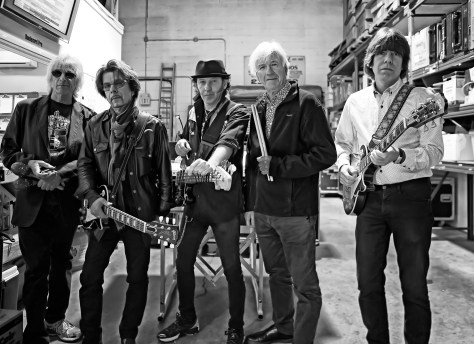
Led by core members and songwriters Jim McCarty (drums), The Yardbirds debuted a new touring line-up in 2015, consisting of guitarist Johnny A, bassist Kenny Aaronson, singer/harpist/percussionist Myke Scavone, and guitarist/singer John Idan to rave reviews. As Goldmine Magazine stated, “The band’s hallmark of top-notch musicianship remains. There are no passengers in this band.”

The Yardbirds – electrifying, eclectic, and way ahead of their time – melded heavy rock, wild jams, and an improvisatory feel, and continue to influence generations of bands. Watching The Yarbirds in action is experiencing rock and roll history.

The Narrows Center is located at 16 Anawan Street. Tickets to his show can be purchased online at www.narrowscenter.org or by calling the box office at 508-324-1926. For those wanting to purchase tickets in person, box office hours are Wednesday through Saturday, 12 noon to 5 p.m.

Jimmy Bez: Keeping the blues alive

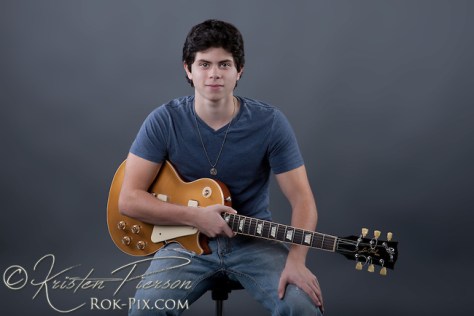
Photo by Kristen Pierson

BY J. KENNEY

At the young age of 17, Jimmy Bez is an up-and-coming blues rock guitarist. He was already a prominent guitar player on the original rock scene in Boston with the 21st Century Fugitives. A songwriter and blues fan, he formed the Jimmy Bez Blues Band in 2015 and won the under 21 category at the Boston Blues Society’s Blues Challenge that same year. He also represented Boston in the International Blues Challenge in Memphis, TN, to rave reviews. His style is often compared to a young Joe Bonamassa with strains of early Eric Clapton and the late Mike Bloomfield. He recently released his debut EP Lies of a Sinner and will be opening for Tinsley Ellis at Thunder Road Music Club and Rock n’ Roll Bistro in Somerville, MA, on July 15th. We recently caught up with Bez who is planning to make music his career after high school.

Limelight Magazine (LM): You released your debut EP Lies of a Sinner on May 16, 2016. When did you start recording the album? Are you pleased with the final product?

Jimmy Bez: The 17th and 18th of April were the two main recording days.  We were all very pleased with the outcome.

LM: Four of the songs on the EP are originals written by you. Can you walk us through your personal song writing process?

Jimmy Bez: It always starts with the music for me…the lyrics come later.

LM: The last song on the EP is a cover of “Have You Ever Loved A Woman” by Billy Myles. Why did you select that song to cover?

Jimmy Bez: “Have You Ever Loved A Woman” is an old blues classic written by Billy Myles and first recorded by Freddie King. Besides the fact that it’s a great tune, I’ve always loved the Derek and the Dominos version.

LM: Did you consider covering any other songs for the EP and, if so, what were they?

Jimmy Bez: Recently we’ve been playing “If I Had Possession Over Judgment Day” by Robert Johnson, “Killing Floor” by Howlin’ Wolf, and a few B.B. King tunes but I knew right away I wanted “Have You Ever Loved a Woman” on the EP.

LM: The name of the EP is an interesting choice. Why did you select that title?

Jimmy Bez: The title track “Lies of a Sinner” is one of our favorites to play and people seem to dig it.

LM: You’re opening for Tinsley Ellis at Thunder Road Music Club & Rock n’ Roll Bistro in Somerville, MA, on Friday, July 15th. Are you looking forward to this show? Will you be playing most of the songs off your new CD at this show?

Jimmy Bez: Really looking forward to it. Tinsley Ellis is awesome and Thunder Road is a great new venue with a great stage and sound system. We should be doing most or all of the songs from the EP at the show.

LM: You’re also a member of the award-winning 21st Century Fugitives who previously opened for The Dropkick Murphys. Why did you decide to pursue a solo project separate from them?

Jimmy Bez: I got really into the blues last summer and started a blues band for fun and it just ended up doing pretty well.

LM: The style of music for the Jimmy Bez Blues Band is different than 21st Century Fugitives. Are you influenced by all styles of music? Who are some of your biggest influences?

Jimmy Bez: I was originally influenced the most by Slash, Jimmy Page, and Tony Iommi when I was younger. Getting into the blues really got me hooked on guys like Mick Taylor, [Eric] Clapton, and Gary Moore.

LM: Last year, you won the under 21 youth category in the Boston Blues Society’s Blues Challenge. How did you feel about winning that award, especially since you just started the band around that time?

Jimmy Bez: We were shocked to have won but very excited to get to go play on Beale Street in Memphis.  It’s an incredibly cool place….just one blues club after the other.

LM: You’re currently 17 years old. What are your plans for the future?

Jimmy Bez: I’m hoping to make a career of this as an adult.

LM: Is there anything else you’d like to add?

Jimmy Bez: Thank you for always being such big supporters of local music. I really appreciate you guys checking out my new stuff and I’d like to also thank all the DJs that have been playing the EP.

For more information about Bez and upcoming tour dates, visit his website by clicking HERE.

Make Music Boston After Party on June 21st

UNION SQUARE, SOMERVILLE – This year, Boston music enthusiasts have questioned the vitality of the local music scene. Johnny D’s Uptown and T.T. the Bear’s Place have closed, leaving local performers and listeners two venues short. Events like Rock Shop Boston’s The State of Live Music Open Forum have been flush with residents demanding the scene’s revitalization.

Some organizations, like Make Music Boston, are working to flip the script by offering Boston’s music scene a new sense of festivity and community.

A global festival that takes place every year on the summer solstice, Make Music Day was launched in 1982 in France and now takes place in 700 cities worldwide. Combining local artists with venues of all sorts – churches, public parks, restaurants, and more – the free festival brings community members together in a celebration of live local music. A wide variety of Boston locations, ranging from Cambridge’s Magazine Beach to Newbury Street’s clothing store All Saints, have signed up to host musicians during the 2016 festival on June 21.

Thought the festival “officially” ends at 8 p.m., a selection of three local music advocates – Make Music Boston, Emerging Boston Area Singer-Songwriters (EBASS), and Thunder Road – have planned a post-festival celebration to highlight the vibrancy of the community. Taking the participating musicians throughout the city and pulling them together that evening at Somerville’s Thunder Road, located at 379 Somerville Ave., the Make Music Boston After Party will feature a diverse selection of renowned local Boston talent including pop soloist HEMA, indie-folk duo Jack and Katie, R&B artist Dan Cristo, pop/rock singer-songwriter Aaron Shadwell, and headlining funk band Proper Company. The event begins at 7 p.m. and will be free and open to the public.

“Boston has a little bit of everything to offer…There is an insanely awesome community of musicians and music-lovers in this city,” said Proper Company band leader George Woods. Angele Hema reciprocated the sentiment, explaining that “as someone who’s still relatively new (to Boston), I’m constantly overwhelmed by how simultaneously talented and welcoming the people in the Boston music community are. There’s a beautiful humility and honesty to the way people make music here.”

After a long year of uncertainty, performers and music-appreciators deserve a pure, unadulterated celebration of Boston’s local talent. Held on June 21, the Make Music Boston After Party will be free and open to the public.

To learn more or RSVP, visit www.ebassmusic.com.


Bringing great entertainment to New England since 2011!