Category Archives: Cassette Chronicles

The Cassette Chronicles – Maria McKee’s self-titled debut

By JAY ROBERTS

The Cassette Chronicles is a continuing series of mini reviews and reflections on albums from the 1980’s and 1990’s. The aim of this series is to highlight both known and underappreciated albums from rock, pop and metal genres from this time period through the cassette editions of their releases. Some of the albums I have known about and loved for years, while others are new to me and were music I’ve always wanted to hear. There will be some review analysis and my own personal stories about my connection with various albums. These opinions are strictly my own and do not reflect the views of anyone else at Limelight Magazine.

MARIA MCKEE – MARIA MCKEE (1989)

If a picture is worth a thousand words, then the cover art to Maria McKee’s self-titled debut album is being undervalued.

The art is a simple portrait photo of the singer but the composition kind of makes it seem like it is a bit of an old-time photo. It’s visually striking and I know that when I first saw it, I was captivated by the picture alone. I actually had no earthly idea who Maria McKee was when I came across the cassette in the racks of the record shop I found myself perusing for some new music.

I had gone out to dinner with my family at one of the Ponderosa steakhouses. Right next door was a record shop so after dinner I went over and did some looking around. I ended up picking up two albums that night. The first was an album by the metal band Hallows Eve called Monument. Let’s just say there wasn’t anything all that memorable about that album other than the fact I bought it the same day as the Maria McKee album.

I was working my way through the racks of cassettes and I came across this album. I pulled it out because I didn’t recognize the name. And like a bolt of lightning, I saw the cover art. Again, I was totally captivated. I put it back on the rack as I continued shopping but I kept coming back to it because of the hauntingly beautiful nature of the cover art.

Despite not knowing what kind of music she played, I had to make the purchase. And then I got to hear her sing…

McKee’s solo debut came after the end of her band Lone Justice. They were what has been described at various junctures as cowpunk, Americana, country-rock and even alt-country if I’m not mistaken. The band released two albums but despite a stellar live reputation, the sales didn’t follow for whatever reason. I went back and got those albums and personally think they are spectacular but that’s just me being years too late once more.

As captivating as the cover art is, it didn’t prepare me in the least for what I was in for as I discovered McKee’s voice. She can sing like very few people I’ve ever heard in my life. She can rip out your throat with a ballsy rock style, soar to the angels with a powerful ethereal style for a ballad and pretty much anything in between those two points. Add in the fact that she’s an amazing lyricist and you have the initial idea of just how amazing I think she is.

The first side of the album opens with the jaunty uptempo number “I’ve Forgotten What It Was In You (That Put The Need In Me)”. Okay, brevity in choice of song titles is probably not one of her strong points but the song is fantastic.

Honestly, let’s just skip to the point. Each of the ten songs on the cassette is amazing. It is a rare thing for me to become so besotted with a performer from the very first time I hear them. Off the top of my head, I can only think of one other performer who did that for me and that was Beth Hart. And anyone who knows me knows how much I adore her. You can definitely include Maria McKee in that group too.

“To Miss Someone” is a cracker of tune where McKee’s ability to break your heart first comes into play. The material on the album ranges from that rocking upbeat sound to the balladry which stands out without being cloying. And then there are the pieces that seem like something out a stage musical or at least just a set piece that evokes a kind of place and time for the listener.

“Nobody’s Child” feels like that to me. It grabs you and transports you to some other place where it is just you and the song. I’m not sure if I can quite come up with a better description than that. If you listen, I think you’ll understand.

The last song on the first side of the album is called “Panic Beach” and no matter how many times I hear it, it feels like the first time. It is by far my favorite song from McKee’s solo career and it just strikes me as a kind of nostalgic look back to the days when you went off on a summer trip that marks a turning point in your life. The lyrics to this song are strangely poetic to me and tell a story that makes me wish it was the baseline for a movie. I’d love to see the characters come alive in person that inhabit the song.

Side two kicks off with “Can’t Pull The Wool Down (Over The Little Lamb’s Eyes)”, a song that finds McKee cutting loose vocally to a more rocking soundtrack. “More Than A Heart Can Hold” and “This Property Is Condemned” strike a chord with the vocals seeming both calm and strainingly intense at the same time.

Remember how I said McKee’s vocals feel like she is soaring to the angels? The song “Breathe” is probably the best example of that statement. On this song, McKee is ethereal beauty given form and voice. If I was to tie the cover art to one song on the album, this would be the one. It is just perfect.

The album closes with a cover of Richard Thompson’s “Has He Got A Friend For Me?” On the song, McKee is enthrallingly dynamic as she plays piano and captures a longing sense of desire or maybe desperation throughout the song.

I know that the majority of the albums that I write about in this series fall on the rock or metal side of the ledger. I will always consider myself a rock and metal fan first and foremost. But I like being able to showcase, on occasion, the other aspects of my musical fandom. And for me, there’s no better way to do so than to talk/write about the greatness of Maria McKee. She is without a doubt one of my favorite musical artists and if you check out this debut album from her, I think you will agree with that testimonial.

All that…from just a photo. Yes, a thousand words is definitely not enough.

NOTES OF INTEREST: I own this album not only on cassettte, but on vinyl and CD as well. The CD edition comes with a bonus track called “Drinkin’ In My Sunday Dress”. It’s an uptempo track that finds McKee inhabiting kind of a dissolute character as the song’s narrator. It’s a killer track that I always thought was slyly comedic as well.

Among the guests on the Maria McKee album are Robbie Robertson (he co-wrote the lyrics for “Nobody’s Child”), Richard Thompson who played guitar and mandolin and bassist Tony Levin from King Crimson and Peter Gabriel.

I have never seen McKee in live performance, the one time I had the chance the show was cancelled. McKee has acted in movies, composed soundtracks for those movies and done work as a writer. She’s worked with or had her songs covered by acts like U2, Robbie Robertson, The Dixie Chicks, Bette Midler and many more.

Maria McKee’s latest album came out on March 13th, 2020, and is called La Vita Nuova.

The Cassette Chronicles – Styx’s “Kilroy Was Here’

By JAY ROBERTS

The Cassette Chronicles is a continuing series of mini reviews and reflections on albums from the 1980’s and 1990’s. The aim of this series is to highlight both known and underappreciated albums from rock, pop and metal genres from this time period through the cassette editions of their releases. Some of the albums I have known about and loved for years, while others are new to me and were music I’ve always wanted to hear. There will be some review analysis and my own personal stories about my connection with various albums. These opinions are strictly my own and do not reflect the views of anyone else at Limelight Magazine.

STYX – KILROY WAS HERE (1983)

The 11th album to be released by Styx made a really big impression on me back in 1983. More accurately, it was the lead single from the album that left its mark on me.

If you were a music fan at that time, you’ll probably remember just how ingrained the song “Mr. Roboto” was on the radio. Given that it made it all the way to #3 on the singles chart, you probably couldn’t get away from the song.

But that was okay with me. I was 12, and in the relative infancy of my music appreciation. I didn’t own a lot of music of my own yet so I was always listening to the radio, including American Top 40 with Casey Kasem, to hear songs…and hoping to hear the ones I really liked again and again. This would included “Mr. Roboto”. I really loved everything about the song.

But I never owned the actual album. Heck, it wasn’t until many years later that I even knew that the album was a concept album. The notion of an album telling a single story across each song wasn’t something I was aware of at that particular age and level of musical experience.

So despite this album being a big seller, it wasn’t until I bought the cassettes that make up “The Big Box of Cassettes” from which I pull the material for this series that I had the chance to listen to Kilroy Was Here in full.

Now that I have, I’m left feeling kind of underwhelmed by the experience. The storyline revolves around a future time where rock music is outlawed. Okay, it might not be the most original story but when the album was created, music was under it’s latest siege by those who hated rock music. So it was at least a timely response upon the album’s original release.

But the nine tracks varied wildly in quality for me. I still love “Mr. Roboto”, but as I listened to the song before writing this piece, I think a little of the shine has come off the track for me. It conjured up more of a warm feeling of nostalgia for when I first heard the song, rather than making me think more along the lines of “Oh wow! This is still such a great song!” I’m not hating on the song but I don’t think I feel the same kind of love for it as I did when I heard it on 92 Pro-FM out of Providence, R.I., back in the day.

As for the rest of the music, I know that I’ve heard “Don’t Let It End”, one of the band’s more signature power ballad type tracks, over the years. But I didn’t realize that it was on Kilroy Was Here. And while I’m normally loathe to appreciate this type of song these days, I have to say that it seems to have stood the test of time (for me, at least). I really enjoyed the song and thought of just how finely crafted it seemed.

I wish I could say the same for the other two tracks on the first side of the album. I listened to “Cold War” and “High Times” and just had no emotional attachment to either song at all. The former was pretty uptempo in its pacing but it didn’t get my blood pumping in the least. And for whatever reason, the latter song damn near caused me to fall back to sleep.

Side Two opened up with the strongly rocking “Heavy Metal Poisoning”. I liked the song as a whole, but I really liked the guitar solo on the track in particular. The song “Double Life” was pretty interesting as well.

However, once again I was left cold and unimpressed by songs like “Haven’t We Been Here Before” and “Just Get Through This Night”, a track that made me think about how I just wanted to get through the album.

While there are some individually great songs on the album, I can’t hide the fact that as an overall experience, I found Kilroy Was Here a bit of a disappointment. I don’t see me rushing to throw the album back in the tape deck any time soon. I kind of wonder if I’d have had a different opinion had I actually heard the album when it was originally released.

NOTES OF INTEREST: Back in August of 2019, I wrote about the band’s 1990 album Edge of the Century for this series. I’d probably listen to that one (particularly the album’s fantastic second side) more often than Kilroy Was Here.

This was the last album that was recorded by the classic Styx lineup of Dennis DeYoung, James “J.Y.” Young, Tommy Shaw and John and Chuck Panozzo.

Much like “Mr. Roboto”, the song “Don’t Let It End” enjoyed chart success as a single. It went to #6, giving the band two Top-10 hits from the album. The album itself went platinum, the last of the band’s releases to mark that achievement.

The Cassette Chronicles – TNT’s ‘Tell No Tales’

By JAY ROBERTS

The Cassette Chronicles is a continuing series of mini reviews and reflections on albums from the 1980’s and 1990’s. The aim of this series is to highlight both known and underappreciated albums from rock, pop and metal genres from this time period through the cassette editions of their releases. Some of the albums I have known about and loved for years, while others are new to me and were music I’ve always wanted to hear. There will be some review analysis and my own personal stories about my connection with various albums. These opinions are strictly my own and do not reflect the views of anyone else at Limelight Magazine.

(Writer’s Note: Singer Tony Harnell will be teaming up with Stryper’s Michael Sweet for “Tour 1987” a run of dates in Fall 2020 that is the first time they’ve teamed since the Stryper/TNT tour of 1987. The tour will hit The Vault Music Hall & Pub in New Bedford, MA, on October 3, 2020. Purchase tickets HERE).

 TNT – TELL NO TALES (1987)

My initial introduction to TNT came through the eye-catching artwork for the band’s album Intuition in a magazine ad that I saw. I like that kind of artwork that makes you stop on a dime to drink it all in. This was back in 1989 when I still had little in the way of regular bills to pay and could just run out and grab whatever music struck my fancy.

And that’s what I did. I bought Intuition, but I also grabbed up TNT’s two previous albums which is the one I’m going to be writing about in this article plus Knights of the New Thunder. But whatever I thought going into the albums, I found myself sorely disappointed upon those initial listens. I really never connected with the band’s music for some reason. And so, the band kind of faded from my radar only popping up whenever they made news for splitting with singer Tony Harnell or the ensuing welcoming him back to the fold over the years.

The albums exited my collection and I didn’t think much about them until it turned out I bought a couple of them as part of “The Big Box of Cassettes”. This is how it came to be that I pulled Tell No Tales out of the box this week and decided to give it a listen. (A side note here: The cassette was still in its original wrapping.) Could my reservations about the release have evolved over the ensuing three decades plus? Well, surprisingly enough they did.

Say what you want, but TNT certainly wastes no time noodling around to add length to the songs. The album is just a little over 30 minutes long including three admittedly unnecessary instrumentals amongst the eleven tracks. (There’s a 12th song listed on the album’s Wikipedia page, but “Destiny” is listed as a bonus track and I’m guessing that’s only on the CD version.)

The thing I found the most interesting upon my re-evaluation of the album is hearing just how much fiery rock and roll the band laid out. It is on the more uptempo tracks where they shine the most. For all the seemingly mercurial nature of guitars Ronni Le Tekro, the man can blaze on a guitar. Morty Black and Diesel Dahl made for a killer rhythm section as well.

I think part of the reason that I didn’t get into TNT as much as I might’ve wished for back in the day is that I wasn’t crazy about Harnell’s high pitched vocals at the time. Suffice to say, I’ve evolved on that as well. I’ve heard a bit of his work in other projects and enjoyed his performances.

That enjoyment has worked its way backwards through his catalog because I found myself rocking out as he sang the songs “Everyone’s A Star” and what is arguably the band’s best known song, “10,000 Lovers (In One)”. When you add in “As Far As The Eye Can See”, it turns out that Tell No Tales actually had a killer three track opening to the album.

I mentioned the album includes three instrumentals. Thankfully they are mercifully brief because they don’t really add a thing to the release. Two of them are on Side One and when you add in the annoyingly distracting balladry of “Child’s Play”, the last half of the first side of the album goes out like a lamb.

But things immediately take a turn for the more rocking side of the ledger on Side Two with the tracks “Listen To Your Heart” and “Desperate Night”. Both songs are fast paced in nature and really spotlight my newly formed belief that they are at their best when they put the pedal to the mettle.

“Northern Lights” started off a bit slow for me, but when the pacing picked up, I enjoyed the song a lot more. The title track closes out the album and it just blazes a fiery path. While there is a ton of melody to it, the song is so fast that you’d think they were going head to head with a thrash band to see who could play faster. Still, the song is pretty invigorating and it actually left me wanting more.

It is always strange when my notions about an album or band undergo this kind of evolution of opinion. It leaves me wondering just why I didn’t connect with an album the first time around. I don’t have an answer to that question but I do know that the story of Tell No Tales now has a different kind of ending for this music lover and I’m almost certainly going to have to go back and check out the other albums I had to see if they leave me with a changed opinion as well.

NOTES OF INTEREST: I write CD reviews for another website and in 2018, I got to review the TNT release XIII. It was the first album to feature new singer Baol Bardot Bulsara. The album was a bit strange because Tony Harnell had once again departed the band but was credited with co-writing six of the songs on the disc and sang backing vocals on one song.

Among the solo projects and band projects that Tony Harnell has done over the years are bands like Westworld, Starbreaker, Morning Wood and a brief stint in Skid Row, he’s also done a number of tracks for the Sonic The Hedgehog video game series. Two of the recordings were done with Danger Danger singer Ted Poley.

The Cassette Chronicles – Frehley’s Comet’s ‘Second Sighting’

By JAY ROBERTS

The Cassette Chronicles is a continuing series of mini reviews and reflections on albums from the 1980’s and 1990’s. The aim of this series is to highlight both known and underappreciated albums from rock, pop and metal genres from this time period through the cassette editions of their releases. Some of the albums I have known about and loved for years, while others are new to me and were music I’ve always wanted to hear. There will be some review analysis and my own personal stories about my connection with various albums. These opinions are strictly my own and do not reflect the views of anyone else at Limelight Magazine.

FREHLEY’S COMET – SECOND SIGHTING (1988)

While I do consider myself a fan of the band Kiss, I’ve never really been all that particular enamored of the various solo and/or side projects from the original members. The exception to that has been a few songs here and there from guitarist Ace Frehley.

If you can’t like a song like “Rock Soldiers”, there’s just something wrong with you. But that’s a song off the first Frehley’s Comet album and this article is taking a look at the second (and last) studio album to bear the “Frehley’s Comet” banner.

While I didn’t buy the album when it was originally released, I do have pretty clear memories of hearing “Insane” and “It’s Over Now”, the two tracks that were released as singles. Of course, it probably had something to do with seeing the accompanying videos for the songs more than radio airplay, since neither song was a hit on the charts.

But what I do remember is how much I loved “Insane”. It opens the album and it is a real ball-busting rock and roll song that grabs you right from the start. As for “It’s Over Now”, it’s a power ballad sung by guitarist/singer Tod Howarth. It hits all the right notes of sentimentality without crossing over into self-parody so I rather enjoyed it once again when I played the cassette.

Speaking of Frehley and Howarth, they broke down the lead vocals quite equally. Ace sang four songs, Howarth did the other four and they teamed up on the Side One closer “Loser In A Fight”. That was a real corker of a song, a fully engaged rock tempo to the music there.

The song “Time Ain’t Runnin’ Out” was okay but of the five songs on Side One, it was probably the one I enjoyed the least. The fast pacing of the song “Dancin’ With Danger” was pretty entertaining though. It’s a cover of a song originally done by the band Streetheart. I was looking at the writing credits and Streetheart is credited but there seems to have been some kind of re-write because both Ace Frehley and Dana Strum (the bassist for Slaughter) have co-writing credits on the song as well.

I liked the first side of the album, but I think Side Two was even better. It kicks off with the heaviest sounding song on Second Sighting, “Juvenile Delinquent”, and finds Ace not only ripping it up musically but putting in a really good vocal performance as well.

The rest of Side Two is pretty rocking as well. “New Kind of Lover” is sung by Howarth, but also showcases the band’s fiery musical chops in a brilliant light too. I loved the chorus for “Separate” a lot.

The most intriguing song to me was the album closing “The Acorn Is Spinning”. It’s an instrumental and I’m just crazy enough to think it could’ve been just as memorable as say, “Mr. Scary” from Dokken. It struck me as being just that kind of level of cool. The only thing holding it back was the annoying dialogue sprinkled throughout the song. I hated the interruptions because I just wanted to hear the music they were playing.

I’ve never seen Frehley in concert, whether when he was with Kiss or as a solo artist. I’ve only recently even had the opportunity anyway. I’ve got a music related friend named Troy who has met him a number of times and even worked on Frehley’s crew for a few shows. I’m not jealous (much) but I know that after listening to Second Sighting, if I get the opportunity to see Ace in concert, I’m not going to be quite so damn foolish as to pass up that chance again.

For me, Second Sighting was an eye, or perhaps, ear opening experience because while I’ve liked individual Ace songs before, this was my first full album listen and I thought it was smashingly great!

NOTES OF INTEREST: The album was reissued by Rock Candy Records in 2014. According to the liner notes, radio DJ and TV host Eddie Trunk served as an executive producer for Second Sighting.

Jamie Oldaker was the drummer for this album, he had previously played with Eric Clapton, Bob Seger and Peter Frampton. He would go on to become a member of The Tractors.

Bassist John Regan, who played the bass tracks on the first three songs on the Michael Monroe album Not Fakin’ It (that was featured in The Cassette Chronicles series a few weeks ago, reunited with singer/guitarist Tod Howarth in 2016 for a new band called Four By Fate. They were joined by ex-Skid Row drummer Rob Affuso and release an album called Relentless.

The Cassette Chronicles – Queensryche’s ‘Rage for Order’

By JAY ROBERTS

The Cassette Chronicles is a continuing series of mini reviews and reflections on albums from the 1980’s and 1990’s. The aim of this series is to highlight both known and underappreciated albums from rock, pop and metal genres from this time period through the cassette editions of their releases. Some of the albums I have known about and loved for years, while others are new to me and were music I’ve always wanted to hear. There will be some review analysis and my own personal stories about my connection with various albums. These opinions are strictly my own and do not reflect the views of anyone else at Limelight Magazine.

[WRITER’S NOTE: Geoff Tate will be performing the entire Rage for Order and Empire albums when he plays a sold-out show at The Vault Music Hall & Pub in New Bedford, MA on Tuesday March 3rd, 2020.]

 QUEENSRYCHE – RAGE FOR ORDER (1986)

If you are like me and agree with the notion that the Queensryche album Operation:mindcrime is the band’s magnum opus, then I think it is probably a pretty good bet that you might also agree that the band’s 2nd full-length album (and third overall release) Rage For Order is the thematic precursor to that anarchy driven tale of conspiracy and death.

I didn’t own this album prior to getting Operation:mindcrime as a Christmas gift, but I obviously went back and snapped up all the band’s previous releases once my fandom was given full reign.

Rage For Order is not an actual concept album but it isn’t hard to notice the similarity each song has. If you have any kind of imagination, you can see this album as a kind of dystopian science fiction story where technology has won and the government rules over all…sound familiar anyone?

Regardless of how true the stories behind the songs might feel these days, in 1986 this had to be a real burst of creativity for the band because the album holds up so well now. A lot of these songs became staples for the band and remain incredible recordings even now.

The album opens with “Walk In The Shadows” which from the get-go shows the band in their most attacking metallic light. This is a style that pretty much threads its way on most of the eleven songs. While the band is usually portrayed as “the thinking man’s metal band” because of their lack of sex, drugs and rock and roll lyrics, they had no trouble making the metal here. This is demonstrated amply of Side One with songs like “I Dream In Infrared”, “The Whisper” and the incredibly balls out rocking “Surgical Strike”.

The band was never really known for doing many cover songs but their cover of the Dalbello song “Gonna Get Close To You” was a bit intriguing. I am not completely sure I am remembering this correctly but I think the song was not all that well received when it was released as a single. I know I didn’t hate it when I first heard it but I still don’t consider it one of their best songs. It’s okay but that’s about it. That being said, it certainly does tie in thematically with the rest of the material.

When I first heard Rage For Order, I was still at the age where I labored under the delusion that I was a rebel against the world. While time has revealed that I was more rebel without a clue than anything else, the opening two songs on Side Two of the album fueled those delusions. “Neue Regel” (which is German from New Rule or New Reign”, according to Google translate) and “Chemical Youth (We Are Rebellion)” might not stand up as great representations of who I thought I was at the time, but they are great songs regardless. I still get a crackle of electricity running through me during the line “If we don’t stand together, we stand to lose the future” in the latter song. Again, the lyrics are incredibly accurate for modern day it would seem.

On “London”, the music moves a bit slower but Geoff Tate’s emotional vocal take is superb on the song and when the backing vocals come in during the chorus, the song takes on a bigger sense of grandeur to me.

Of course, then you have “Screaming In Digital” which to me plays like the concluding chapter to the story that plays in my head as I listen to the album. And it is one of the band’s best songs in my opinion. Just a killer collaboration between each member of the band to elevate the song into something that will be long remembered.

However, that’s not the end of the album. No, there’s “I Will Remember” which plays as kind of a post-script to the story and while it moves in a much more deliberate fashion than the more hard driving nature of most of the other material on the album, it brings things to a close quite perfectly.

As I said in the beginning, Rage For Order does seem to be a kind of thematic predecessor to Operation:mindcrime even if it isn’t a direct line concept album itself. Think about it, this album closes with “I Will Remember” while Operation:mindcrime opens with “I Remember Now”!

It is perfectly possible that I’m putting way too much thought into the motivations, meanings and themes behind the album but what I do know is that Rage For Order was a stunningly creative venture for the band and it raised their profile at the time and provided the launch pad for what was to come with their next album. So when Geoff Tate steps on stage at The Vault Music Hall on March 3, 2020, I will be hyped up with anticipation to screaming my affirmation for the album…in digital or otherwise!

NOTES OF INTEREST: How much do I love this album? It is one of those rare albums that I own on vinyl, cassette and CD. In fact, I have the original CD release and the 2003 remastered edition from the Revolution Calling boxed set that has four bonus tracks included.

What I didn’t know is that there are two demos out there from the time this album was recorded that I want to hear now. The songs were called “From The Dark Side” and “The Dream”. I don’t know if they’ve ever gotten any kind of official release.

The band recorded at title track for the Rage For Order album but it was never used. According to the Wikipedia entry for the album, the main riff eventually became the Operation:mindcrime track “Anarchy-X”.

The Cassette Chronicles – MICHAEL MONROE’s ‘NOT FAKIN’ IT’

By JAY ROBERTS

The Cassette Chronicles is a continuing series of mini reviews and reflections on albums from the 1980’s and 1990’s. The aim of this series is to highlight both known and underappreciated albums from rock, pop and metal genres from this time period through the cassette editions of their releases. Some of the albums I have known about and loved for years, while others are new to me and were music I’ve always wanted to hear. There will be some review analysis and my own personal stories about my connection with various albums. These opinions are strictly my own and do not reflect the views of anyone else at Limelight Magazine.

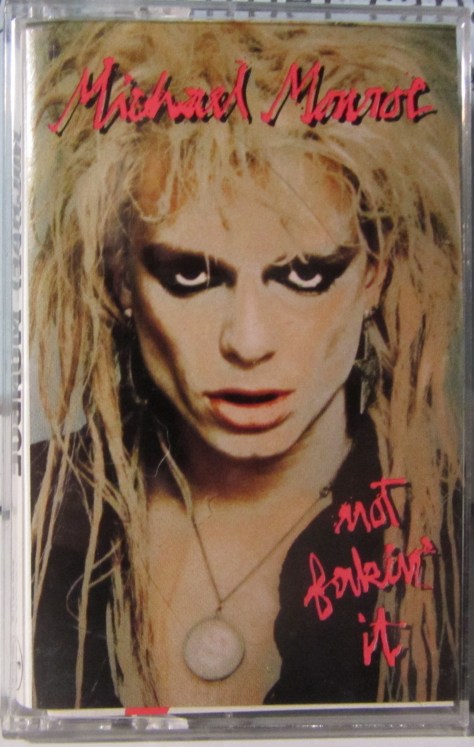
MICHAEL MONROE – NOT FAKIN’ IT (1989)

While most people hear the name Hanoi Rocks probably think of their music, for me the name just makes me think of their drummer who was killed by Motley Crue singer Vince Neil in that infamous car accident.

That would be due to the fact that I never really heard any of the band’s material. They were just yet another one of those bands that slipped by me when they were together. I can’t even say that I discovered them long after the fact. But I’ve long been aware of singer Michael Monroe, even if I hadn’t bothered to get off my butt and listen to any of his solo material either. Sometimes I wonder just what I was thinking back in the day. I know that there’s only so much time to check out music but as this series has shown, I’ve invariably missed out on quite a lot in the genre of music I once considered myself well-versed.

Not Fakin’ It is the second solo album from Monroe and it is his most successful in terms of both sales. My initial thought was that I’d never heard any of the music from this album before, but the lead track on Side One is “Dead, Jail or Rock ‘N’ Roll” and it so happens that a few weeks back I heard the song on the Dee Snider radio show The House of Hair.

But that track was the only song I had the least little bit of passing familiarity with amongst the ten track running order. The balls out rocking anthem certainly got me interested in what the rest of the album had to offer me and boy was I in for a musical joyride!

Seriously, this is an incredible album. It’s filled with one fiery rocking track after another. This fact will certainly keep anyone’s blood pumping but I was both amped up and repeatedly shocked at just how good the music was.

“While You Were Looking At Me” was another fast paced track that for 1989 had a somewhat topical for the times set of lyrics. “She’s No Angel” (a cover of the Heavy Metal Kids song) also burns fast and hard but the lyrics take a slightly typical turn. But don’t think that means I didn’t like the song. It was quite enjoyable. In truth, the only song that really didn’t grab me was “All Night Long With The Lights On”. I’m sure that there’s a part of Monroe’s fanbase that loves the song of course, but it just felt like a filler track for me.

The title track closes out Side One and learning that it is actually a cover of a Nazareth song was interesting. I’m going to have to check out the original version to see how it compares because the electrically charged and ripping rendition that Monroe did kicked my butt.

The album’s second side opens with probably the speediest tempo song “Shakedown”. The vocal performance from Monroe helped elevate the track in my mind. He had the rat-a-tat-tat spitfire delivery that leaves one to wonder how any performer manages to pull that song off in the studio (without editing various parts together) much less in a live setting.

I really got into both “Love Is Thicker Than Blood” and the closing number “Thrill Me” for the full throttle rocking nature of each track.

The second side’s material was great but what really did it for me was the way the songwriting gave a different slant on the more straightforward rock and roll you quickly become accustomed to on Not Fakin’ It.

The song that comes closest to being lumped into the ballad category is “Smoke Screen” and that is mostly due to it being a slower pace to the music than anything else. It’s just a cool song that ramps up the energy level when you hit the guitar solo through to the end of the song.

But I was both taken with and blown away by “Man With No Eyes”. Like “Smoke Screen”, it has a slightly less frantic pace to it. But if you listen to the lyrics as they combine with the musical soundtrack, it sounds (particularly the chorus) like it belongs as the end credits song for a horror movie. The funny thing is that the song has a pretty upbeat feel to its musical score. It just struck me as all kinds of a creative triumph.

Michael Monroe’s Not Fakin’ It was an immensely huge and stunningly welcome surprise to me. I am way behind in appreciating what Monroe has been offering for years but with this album, I’m finally there. It is just a superb set of pure rock and roll that I’m going to be playing a lot for the foreseeable future.

NOTES OF INTEREST: The creative lineup for the album (which got a remastered release in 2003) is amazing. Monroe’s Hanoi Rocks bandmate Nasty Suicide played guitar on the first three songs on the album as well as co-writing the lead track and “Smoke Screen”. Ian Hunter (Mott The Hoople) played piano on “She’s No Angel”.

Little Steven (from The E Street Band) played big creative role on Not Fakin’ It. He co-wrote two songs and was the sole writer on “While You Were Looking At Me”. He sang backing vocals on four tracks and helped with the arrangement on four tracks as well. You can look up the album’s entry on Wikipedia for the rest of the “name” players who showed up in guest spots.

The video for “Dead, Jail Or Rock ‘N’ Roll” featured an appearance by Axl Rose.

The Cassette Chronicles – Don Henley’s ‘I Can’t Stand Still’

By JAY ROBERTS

The Cassette Chronicles is a continuing series of mini reviews and reflections on albums from the 1980’s and 1990’s. The aim of this series is to highlight both known and underappreciated albums from rock, pop and metal genres from this time period through the cassette editions of their releases. Some of the albums I have known about and loved for years, while others are new to me and were music I’ve always wanted to hear. There will be some review analysis and my own personal stories about my connection with various albums. These opinions are strictly my own and do not reflect the views of anyone else at Limelight Magazine.

DON HENLEY – I CAN’T STAND STILL (1982)

In a case of “the first shall be last”, Don Henley’s debut solo album I Can’t Stand Still is the last album of his five solo releases that I added to my collection. I’d heard the stone cold killer track “Dirty Laundry” when it was a big hit on the singles chart, but I’d never gotten around to hearing or buying the full album. I’m a big fan of both The Eagles and his solo work, so it is kind of a surprise that I had his other solo albums but not this one.

(Brief Interruption: As I typed that last sentence, the Eagles song “Desperado” started playing on the radio station I listen to at work, where I composed this week’s article.)

Despite being the biggest hit (and truthfully only hit) from the album, “Dirty Laundry” is held off in the track listing until Side Two. This gives me the whole first side to see what the beginnings of Henley’s solo career had to offer as a completely new experience.

Unfortunately, things didn’t quite get off on the right foot for me. The title track opens the album and it just kind of left me wanting something more. I could say the same for the two ballads that appear on Side One as well. I just couldn’t find my way to a real appreciation for either “Long Way Home” or “Talking To The Moon”.

This gave me pause and I tried to puzzle out why neither song did it for me, particularly since I’ve found the ballads from The Eagles were always some of my favorite tracks. The only thing I could come up with is that neither of these two songs seemed all that lyrically potent in comparison to both his work with the Eagles and the latter solo releases.

Side one isn’t a total loss for me though. “You Better Hang Up” features a stronger uptempo pacing and “Nobody’s Business” (co-written by Henley, Bob Seger and J.D. Souther) is a flat out rocker!

If you’ve been a fan of Henley for any length of time, you are well aware that his various beliefs on social topics make their way into his lyrics. As side two opens with “Dirty Laundry”, he goes full on at the media for the sensationalistic way they covered the news. Of course, seeing how the news is covered now, Henley’s complaints about the 1982-era news media seems both quaint and newly timely all at the same time.

He follows that up with the song “Johnny Can’t Read” where Henley takes the educational system to task. It’s noteworthy because he once again capably couches his message inside a great sounding musical soundtrack.

While I wasn’t crazy about “Them and Us”, the album closed out strongly with the last three tracks starting off with a traditional instrumental called “La Eile”. It’s relatively brief but sounded great. And despite not liking the ballads on Side One of the album, the slower paced “Lilah” was a big hit with me because it had the lyrical potency I look for in his work and/or pretty much any ballad looking to be a worthwhile listening experience.

The biggest surprise to me was the final track “The Unclouded Day”. I’m not one for religion but when I looked up to find that this was a gospel song originally written in 1879, you could’ve knocked me over with a feather. Adding to the surprise factor is that Henley’s version is just amazing!

While this album wasn’t quite the home run I was hoping for when I popped it into the cassette player, there are a number of great songs on the album and I Can’t Stand Still laid the foundation for what was to come from Henley on his other great solo albums to come.

NOTES OF INTEREST – Despite this being Henley’s first solo album, Joe Walsh and Timothy B. Schmit from the Eagles make appearances on “Dirty Laundry”. Schmit also guests on four other tracks on the album.

The list of famous musicians who made guest appearances on I Can’t Stand Still (which achieved Gold sales status) includes Jeff and Steve Porcaro and Steve Lukather (all from Toto), Benmont Tench from Tom Petty & The Heartbreakers and Bill Withers. One of my all-time favorite musicians is Warren Zevon who provides backing vocals on “Them and Us”.

The album is dedicated to Henley’s girlfriend at the time, Maren Jensen. She sang on the song “Johnny Can’t Read”. She is best known from her time as an actress where she played “Athena” on the original Battlestar Galactica TV series.

While I’ve never seen Don Henley in concert with The Eagles, I did get to catch a show at Great Woods in Mansfield, MA, back in 1989 when he was touring in support of his The End of the Innocence album. It was a fantastic performance.

The Cassette Chronicles – KISS’s ‘Revenge’

By JAY ROBERTS

The Cassette Chronicles is a continuing series of mini reviews and reflections on albums from the 1980’s and 1990’s. The aim of this series is to highlight both known and underappreciated albums from rock, pop and metal genres from this time period through the cassette editions of their releases. Some of the albums I have known about and loved for years, while others are new to me and were music I’ve always wanted to hear. There will be some review analysis and my own personal stories about my connection with various albums. These opinions are strictly my own and do not reflect the views of anyone else at Limelight Magazine.

KISS – REVENGE (1992)

This week’s article is once again courtesy of me having listened to this album first on CD. I have been slowly acquiring the Kiss catalog on CD and my friend Jeff from Georgia had found me a copy of Revenge on disc on one of his many jaunts to the various record shops where he finds material.

When I played the CD version of the album, I was just kind of listening for fun. I had the cassette edition in the Big Box of Cassettes and planned to listen to that in order to write this article. When I mentioned to Jeff that I was listening to Revenge, he responded by saying that he liked half the album which meant that I would probably like the stuff he didn’t like. (It would seem everyone has discovered my contrarian musical nature by now.)

The album is jam-packed with 12 songs but the song “God Gave Rock ‘n Roll To You II” (a remake of the song originally done by British band Argent) was actually released in 1991 as part of the soundtrack for the movie Bill & Ted’s Bogus Journey. However, when Revenge came out about a year later, the song was included on the album’s first side.

I’m pretty sure that I liked the song when it was originally released but over the years I’ve come to find it rather annoying. I don’t know, it just seems to be a little over the top (even for Kiss) and overplayed as well. This is a sad realization for me because apparently Gene Simmons considers the song as a testament to drummer Eric Carr, who died soon after the song was released on the movie soundtrack.

Still, the album does start off pretty strongly. The song “Unholy” opens up things and I loved the heavier feeling to the music and the vocal performance from Simmons. The songs “Spit” and “Domino” are outstanding heavy rockers as well. The latter song is one of my “latter day” favorite tracks from the band.

The other two songs on Side One are “Take It Off” and “Tough Love”. Since I hadn’t heard the album in full before now, most of the material including these tracks are new to me. I loved the guitar work from Bruce Kulick on “Take It Off” in particular. While I thought “Tough Love” certainly captured the energetic feeling you get from pretty much any Kiss rocker, I ended up not being fully crazy about the song as a whole. I’m not quite sure why it didn’t hit home with me though.

The second side of Revenge an almost entirely new listening experience for me. The band kept up their high-wire rocking pace for most of the songs on the album but they did go the ballad route with “Every Time I Look At You”. However, I really wish they hadn’t because I didn’t care for the song at all.

Other than that though, Side Two was chock full of some great songs. Some of the vocals on side opener “Heart of Chrome” seemed to get swallowed up in the mix but the song was good enough that I didn’t really get too upset about that. The closing track was an instrumental by Eric Carr called “Carr Jam 1981”. It was pretty good overall and I wonder how it would’ve progressed had it been intended for a full song.

In between those tracks, the band hit full bore rocking with songs like “Thou Shalt Not”, which was a killer track. However, “Paralyzed” topped that with an even more intensely blazing intensity. And the one song that I had at least a passing familiarity with was “I Just Wanna” which tickled all sorts of buttons for me.

While there were a couple of tracks that I didn’t like all that much, Revenge is definitely an enjoyable album for me. Much to what I’m sure will be my friend Jeff’s chagrin, I liked fully more than half the album and I think this will be one of the Kiss albums that I end up playing a lot more as time goes by.

NOTES OF INTEREST: The album went gold for the band. It is the final album to feature any contributions from drummer Eric Carr. As noted earlier in the article, he had passed away before the album was released. Revenge is dedicated to him. While he was in the video for the “God Gave Rock ‘n Roll To You II”, he didn’t actually record the drum tracks for the song (he did contribute backing vocals). Instead, it was Eric Singer behind the kit and when Carr died, Kiss hired Singer full-time and he performed the material on Revenge with the exception of the song “Take It Off” and of course, “Carr Jam 1981”. Guitarist Bruce Kulick re-recorded the guitar parts on the “Carr Jam 1981” instrumental which had been originally played by Ace Frehley. Oddly enough, the riff in the song (according to the album’s write up on Wikipedia) ended up being used by Frehley for his 1987 Frehley’s Comet song “Breakout”.

Before Revenge was recorded, guitarist Vinnie Vincent had made up with both Gene Simmons and Paul Stanley. He wrote songs with both of them. But before the album’s release he’d fallen out with the band again and his only credit on the album turned out to be the co-write on “Unholy”. Paul Stanley co-wrote “Take It Off” with producer Bob Ezrin and Alice Cooper guitarist Kane Roberts. Meanwhile, the solo in the song “Every Time I Look At You” was played by Dick Wagner, who also played guitar with Alice Cooper.

The Cassette Chronicles – Great White’s ‘Hooked’

By JAY ROBERTS

The Cassette Chronicles is a continuing series of mini reviews and reflections on albums from the 1980’s and 1990’s. The aim of this series is to highlight both known and underappreciated albums from rock, pop and metal genres from this time period through the cassette editions of their releases. Some of the albums I have known about and loved for years, while others are new to me and were music I’ve always wanted to hear. There will be some review analysis and my own personal stories about my connection with various albums. These opinions are strictly my own and do not reflect the views of anyone else at Limelight Magazine.

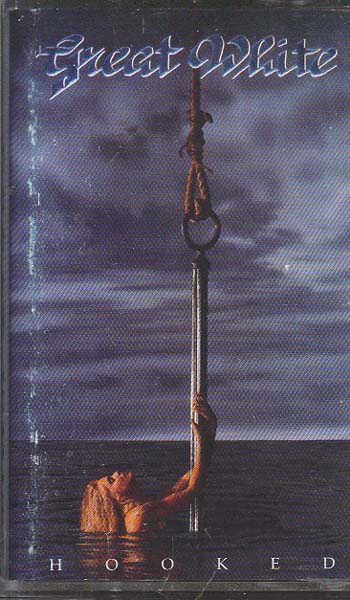
GREAT WHITE – HOOKED (1991)

The impetus for selecting Great White’s Hooked album for this week’s article came not from reaching into the Big Box of Cassettes like so many other pieces in this series. No, this time it actually came about from a big bag of CDs that I bought at a flea market a year or so ago.

I hadn’t gotten around to listening to many of those purchases yet but in the midst of doing some straightening up of my various CDs, I looked into the bag and realized that I had a copy of Hooked on disc. I’d completely forgotten that I bought it but I ended up listening to it and was going to write about it for a message board where I post brief CD reviews.

But then I remembered that I have a cassette copy of the album. I bought the cassette edition of the album when it originally came out so I dug it out and thanks to some unscheduled down time at the day job, gave it another listen in order to turn it into the article you are now reading.

After the big success of 1987’s Once Bitten and 1989’s …Twice Shy, I know that I was really looking forward to Hooked being released. I remember seeing ads in the magazines I read at the time. When I got my hands on the album, I really enjoyed it but only played it a few times for reasons that have slipped my mind by now.

1991 was well into the fading commercial fortunes of 80’s metal and Hooked was far less successful for Great White than its two album predecessors, even though the album did get pretty good critical reviews. By giving the album a new listen (or three) I came to realize that Hooked was a damn good album that rivals the band’s two best known releases and might even surpass them in some respects (if you add in their spectacular 1999 album Can’t Get There From Here, you’ve got the quartet of what I think is their best material).

The album opens up with a couple of stone cold killer rockers in “Call It Rock N’ Roll” and “The Original Queen of Sheba”. The latter of those two songs is just a ballsy rocker that you can really sink your teeth into. However, “Call It Rock N’ Roll” perfectly encapsulates all that made Great White such a hot band for the latter part of the “Metal Years”.

While “Cold-Hearted Lovin'” has a uptempo groove to it, there’s also a sly bluesier side to the music that makes it that much more of an endearing song to me. The first of the two cover songs on the album is “Shake It” from The Angels but Great White did a fantastic job of making the song it’s own.

Say what you want about the band’s Led Zeppelin pretensions but the combination of Jack Russell’s voice and the strong guitar work from Mark Kendall (as well as Michael Lardie, who co-wrote six of the ten tracks on the album as well as co-producing it) gave the band a signature sound in their own right. You couldn’t hear Jack Russell singing and not think, “That’s a Great White song!”

The first side of the album closes out with a shockingly good ballad called “Lovin’ Kind”. It’s good songwriting from start to finish that comes alive with Russell’s vocal performance and a chorus that resonates with the listener.

“Heartbreaker” opens side two of the album and the song mixes a slower pace with more of a rocking beat back and forth during the song. But it was the next song up that really scored big with me. “Congo Square” has a great rhythmic vibe to it while simultaneously feeling as if the band was purposely restraining their full power until they unleashed it as the song moved towards its ending. There’s a long guitar solo on the outro that is just COOL!

“Desert Moon” might be the album’s best remembered song given that it served as their concert opener for a number of years. The strengths of the song haven’t faded over time and if I was to ever see the band live again (I saw them on the …Twice Shy tour) I would love to hear the song performed.

An ode to one’s hometown makes for a fun, slick and playful party atmosphere on “South Bay Cities”. Even when I first heard the song when the album came out, this song stood out to me for some reason.

A cover of The Small Faces song “Afterglow” closes out the album and while it is a much more mellow fade out than I normally prefer, this song was just amazingly done here and I couldn’t fault anything about the choice in song or placement in the running order.

My fandom for Great White didn’t start until I first heard “Rock Me” from the Once Bitten album. I eventually heard their earliest stuff but I found that stuff just OK. Nothing wrong with it per se, but it never stuck with me as much as their more noteworthy releases. I understand the reasons for the band’s fading commercial fortunes with the changing musical climate and then later their involvement with the nightclub fire and bitter breakups with singer Jack Russell. But if you go back and listen now, you will find that Hooked is a great rock and roll album that deserved a far better fate than it ended up getting.

NOTES OF INTEREST: While less successful commercially, the album did eventually get certified gold. More impressive is that they did it without a bonafide hit single. “Desert Moon” got some single airplay but nothing that made a real dent in the charts or anything.

The original cover art featured the full naked female model on a hook over water. However, it was eventually replaced by a version that showed just the model’s head and arms on the hook.

The 2005 Japanese remastered release included 4 bonus tracks as well as an 11-track live CD.

Hooked was the last album to feature Tony Montana as the band’s bassist.

The Cassette Chronicles – The Firm’s ‘Mean Business”

By JAY ROBERTS

The Cassette Chronicles is a continuing series of mini reviews and reflections on albums from the 1980’s and 1990’s. The aim of this series is to highlight both known and underappreciated albums from rock, pop and metal genres from this time period through the cassette editions of their releases. Some of the albums I have known about and loved for years, while others are new to me and were music I’ve always wanted to hear. There will be some review analysis and my own personal stories about my connection with various albums. These opinions are strictly my own and do not reflect the views of anyone else at Limelight Magazine.

THE FIRM – MEAN BUSINESS (1986)

After having a gold album with their self-titled debut album and a big radio hit with the song “Radioactive”, it shouldn’t be much of a surprise that the “super group” put together by Bad Company singer Paul Rodgers and Led Zeppelin guitarist Jimmy Page would regroup for another release.

And yet despite that pedigree, it seems to me that on a personal level and in the grander musical scheme of things, The Firm never did quite get too much of a big deal made out of them. The personal angle for me comes about because while I remember loving the hell out that “Radioactive” song, I never heard anything else by the band. Or at least so I thought.

And that’s where Mean Business comes into play. Hell, I don’t think I even realized that the band had done a second album until I was sent a copy of it from my friend Jeff in Georgia. As I listened to it, I realized that I actually had heard “All The King’s Horses” before. But since I didn’t own the album until recently, I’m pretty sure that I must’ve just heard it on the radio over the past few…ahem…decades.

That song is on the first side of the eight song album and while it is the most recognizable track, there’s actually quite a good mix of bluesy rock and roll to discover here. The band’s leadership came from Page and Rodgers but with Tony Franklin on bass and Chris Slade on drums, all the musical bases were covered with the lineup. While Page and Rodgers wrote and/or co-wrote the majority of this album together, Franklin is credited with writing the song “Dreaming”.

The album opens with a stone cold killer in the rocking number “Fortune Hunter”. Musically, it just burns from start to finish. I was a tiny bit unhappy with the production sound on the vocal track though. At first I thought that maybe the tape was warped or something but as it turns out, it was the track itself. Whatever decision was decided on to put a slightly heavier bit of production layering on the vocals, it wasn’t quite as successful as one might’ve hoped for. Still, leaving that aside, even Rodgers vocals come up pretty strong.

I wasn’t crazy however about the music for “Cadillac”. The slow and plodding tempo may have lent itself to the track sounding a bit heavier but it just didn’t really work for me overall. I will say that I did like the drums from Slade on this track, they got a bit more spotlight here.

Meanwhile, “Live In Peace” has a finely crafted solo at the end of the track that amplifies it as a whole.

Side two has a rocking opener in “Tear Down The Walls” and I liked “Free To Live” well enough as well. But I really enjoyed the album’s final song “Spirit Of Love”. It already had everything you could’ve asked for with an uptempo pace but throw in some great guitar playing (naturally), an impressive vocal take (again, naturally) and then enhance all that with an accompanying choir providing backing vocals and this song just soars.

I’m a huge fan of Paul Rodgers from his time with Bad Company and Free. That’s not much of a surprise. Neither is the fact that I love Jimmy Page from his Led Zeppelin days. But I think it is safe to say that I’ve really not given any of their other projects nearly the look-see that they definitely deserve. The fact that they are together on this album shows that they not only worked well together but put out some quality music in their brief collaboration. It is definitely in my and your best interests to reconsider taking the time to check out what they have to offer outside of the bands that made them famous. Mean Business is a pretty good place to start.

NOTES OF INTEREST: This album was the final studio album for The Firm. Drummer Chris Slade would go on to play for AC/DC while Tony Franklin would join up with John Sykes and Carmine Appice in the band Blue Murder. Meanwhile, Rodgers and Page have done far too many things for me to list here but if you look them up online, you will find a wealth of material to check out.

The song “Live In Peace” was originally recorded for the Paul Rodgers solo album Cut Loose. The version on this album is different than that version. Oh, and the Cut Loose album will be a future Cassette Chronicles article.

“Fortune Hunter” was initially written by Jimmy Page and Yes bassist Chris Squire for a project they were working on in the early 80’s. The project got shelved and Page resurrected the song for this album. However, this version of the song is credited as a co-write between Page and Paul Rodgers, not Chris Squire.