Category Archives: Cassette Chronicles

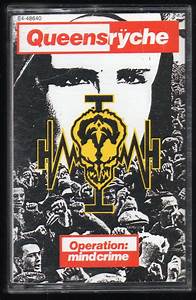
The Cassette Chronicles – Queensryche’s ‘Operation Mindcrime’

By JAY ROBERTS

The Cassette Chronicles is a continuing series of mini reviews and reflections on albums from the 1980’s and 1990’s. The aim of this series is to highlight both known and underappreciated albums from rock, pop and metal genres from this time period through the cassette editions of their releases. Some of the albums I have known about and loved for years, while others are new to me and were music I’ve always wanted to hear. There will be some review analysis and my own personal stories about my connection with various albums. These opinions are strictly my own and do not reflect the views of anyone else at Limelight Magazine.

QUEENSRYCHE – Operation: mindcrime (1988)

I love stories. I’ve always been interested in reading or hearing stories, especially when a long thoroughly conceived tale is to be had. TV’s Babylon 5 was described as a five year novel for television, there’s the entire Star Wars movie franchise and in my mild-mannered guise as a reviewer for the noted Mystery Scene magazine, I get the chance to read and review a number of stories. So you can imagine that the notion of a concept album where all the songs are geared towards telling one single story would be right up my alley.

There’s been many examples of great concept albums over the years, with metal being a primary source of this for my own personal enjoyment. Iron Maiden’s Seventh Son of a Seventh Son and W.A.S.P.’s The Crimson Idol being two album that immediately come to mind.

But for what started my love of conceptual rock and metal albums, it really begins and ends with Queensryche’s Operation: mindcrime. It’s been nearly 31 years now, and I still get goosebumps whenever I play the album. And I’m kind of obsessed with it as well.

Before I get to that, let’s go back a bit further in time. The fandom I have for Queensryche (even a bit tattered as it is given all the controversies surrounding the splitting of the band a few years back), can first be traced to before I was a metal fan. I had a much older uncle on my father’s side. He lived in Vermont and was married to a woman that had an adult son that was in the armed services. The son was home on a weekend that my family was visiting the state for a summer vacation. After everyone else had gone to bed, he put on an album that I’d never heard before. I was yet to experience the birth of my metal fandom so I didn’t think much of it at first. But once my metal nature came to the forefront, I thought back and it turned out he had been playing the Queensryche EP that night.

But let’s get back to Operation: mindcrime, shall we? Spoken word intros, set pieces, actors performing roles of the characters “Nikki”, “Dr. X” and “Sister Mary” in the stories combined with some incredible metal music, how could you not like this album?

I was about 17 or so when the album came out and I remember that I received the cassette (which I still have and was listening to for the purposes of this article) as a Christmas present from my parents. (A far cry from when my mother wouldn’t buy me metal albums for gifts, no?) Anyway, I remember everything about that first listen in the mid-morning of Christmas Day. The way my bed was situated in the room I shared with my younger brother at the time, the shelf on the bookcase where my stereo of the moment sat and reading along to the lyrics sheet as Queensryche rocked their way through a dark and somewhat apocalyptic tale of conspiracy, corruption, death and destruction and murder and mayhem. For me, it was the best present I could’ve received.

The album’s production, the songwriting and the performances from singer Geoff Tate, guitarists Chris DeGarmo and Michael Wilton, bassist Eddie Jackson and drummer Scott Rockenfield fueled the story and provided this lover of stories with a tale that I just can’t ever seem to get enough of.

I mentioned that I’m kind of obsessed with the album. Hell, for a long time I identified Queensryche as my favorite band. I would listen to Operation: mindcrime as often as possible. I own it on LP, cassette and I have both the original CD release and the 2003 reissued edition as well, plus the version that came with their Revolution Calling box set. Hell, as a member of their official fan club, I was even able to buy a cassette tape that they were selling that contained an update from “Dr. X” himself on the state of the campaign. I still have that too. I still have the bumper stickers that came when you joined the fan club, for goodness sake! I even had a separate jean jacket that was dedicated solely to Queensryche with an Operation: mindcrime backpatch as the focal point along with the band’s name done on the shoulder blades of the jacket by my mother.

When the band announced that they were going to perform the entire album on their tour for the Empire album, I knew that I HAD to be there! And I was…TWICE! It is still one of the greatest concerts I’ve ever seen. They were simply on fire at this point in their career. When they released the live album Operation: Livecrime I bought both the cassette and CD editions because I just HAD to have them both!

I’ve imagined a movie for the story (writing the screenplay would be the ideal for me) and as a Dungeons & Dragons player, my friend Fred and I even started coming up with a game setting where the Operation: mindcrime setting was a reality, we were in the middle of it and Geoff Tate was actually revealed to be an elf! Remember, I did cop to this particular obsession!

Most of my articles in The Cassette Chronicles contain some bit of review analysis about what I did and did not like about the album. But a song by song breakdown isn’t really necessary for this album. From “I Remember Now” to “Eyes of A Stranger”, I love it all! Every bit of music and lyrics serves the story and heightens my appreciation even to this day. I can’t walk away now…nor would I want to.

Of course, due to a bitter split between Geoff Tate and the rest of the band, the lineup that recorded the album no longer exists and it is a case of where I believe there will never be any possibility of a reunion. But that doesn’t sour the greatness Queensryche achieved in their heyday.

Simply put, this is my story and I am sticking with it: Operation: mindcrime is my all-time favorite album ever…period…end of discussion!

NOTES OF INTEREST: Geoff Tate has been performing the entire album on tour as part of the 30th anniversary of the release. He’ll be playing the The Vault Music Hall & Pub on June 23rd and 24th (just a few days after this article goes live) in New Bedford, MA. He’s announced plans to perform the Queensryche album Empire in its entirety during his tour for 2020.

Queensryche recorded a sequel album in 2006, Operation: mindcrime II. Ronnie James Dio performed the role of “Dr. X” on that album. The live release Mindcrime at the Moore is the only live recording of Dio performing the role on the song “The Chase”.

The Cassette Chronicles – Bad English’s ‘Backlash’

By JAY ROBERTS

The Cassette Chronicles is a continuing series of mini reviews and reflections on albums from the 1980’s and 1990’s. The aim of this series is to highlight both known and underappreciated albums from rock, pop and metal genres from this time period through the cassette editions of their releases. Some of the albums I have known about and loved for years, while others are new to me and were music I’ve always wanted to hear. There will be some review analysis and my own personal stories about my connection with various albums. These opinions are strictly my own and do not reflect the views of anyone else at Limelight Magazine.

BAD ENGLISH – BACKLASH (1991)

You’d think when an assembled supergroup releases a smash hit (and platinum selling) debut album that when they released a second album, there’d be some expected fanfare for the follow up release.

The self-titled debut album from Bad English was a big hit spawning two big hit singles and making the lineup of singer John Waite, guitarist Neal Schon, keyboardist Jonathan Cain, bassist Ricky Phillips and drummer Deen Castronovo into a pretty famous act of their own accord. Yes, the members (except Castronovo) all had pretty big careers in their own right prior to Bad English with stints in The Babys and Journey. All that has been well covered. But these supergroup projects rarely make much of an impact. Whether you like AOR (or melodic rock as it is now known as) or not, Bad English was damn impressive when they first hit the scene.

And that’s what makes it weird that their second and final album Backlash was a total failure. I couldn’t remember why I had no memory of the album before now. I know I never bought it but was stumped as to the reasons why. I did a little searching on the Net and as it turns out, I think I just didn’t bother because there was no point in continuing with the band. Apparently, they broke up before Backlash was even MIXED. I mean if the band isn’t going to stand behind the album, why should I? At least, that’s what I think I must’ve been thinking back then.

For all the back room stuff going on that led to the band’s derailment, when I pulled the album out of The Big Box of Cassettes, I was really intrigued to give it a listen and see if I’d missed out on anything big.

It turns out that I did. There’s a pretty good selection of material on the album and it definitely represents the musical genre well.

The opening cut on Backlash is “So This Is Eden”. It’s a pretty fast paced rocking kind of song that gets you amped up pretty quickly. The song is good but I did make note of how the guitar featured in the song seemed a bit edgier than I remember from their first album.

“Straight To Your Heart” was the only song to be released as a single (It’s didn’t make the Top 40) but it’s another good honest slice of AOR rock and roll.

The album’s biggest failing for me was the inclusion of back to back ballad tracks on Side One. Now, I should say that “Time Stood Still” has a pretty interesting guitar line throughout the song. Unlike “The Time Alone With You”, which was far too sugary in its sentimental nature, “Time Stood Still” isn’t a BAD song. But neither song really does much to rise above the expected conventions of a power ballad from the 1980’s – early 1990’s. And since that’s the case, I found both songs otherwise kind of run of the mill.

But don’t despair music fans! The first side of the album closes out with a killer rocking song in “Dancing Off The Edge”. There’s a great hook and John Waite really sells the lyrics with his vocal performance. It is probably my favorite song of the entire album.

Speaking of John Waite’s singing, the opening track on Side Two, “Rebel Say A Prayer”, really gives him a spotlight. Musically, this rocker is pretty spectacular. When you combine that with another epic vocal delivery from Waite as he sings about a guy going on the run from a crime he committed and his woman standing by and going with him, the song just takes off. While the storyline of the lyrics isn’t quite the same, this song reminded me quite nicely of the Bad Company song “Boys Cry Tough” from their Holy Water album.

“Savage Blue” may sound like the title of a police thriller novel but the song has a compelling guitar solo to mix with the song’s mid to uptempo groove. Neal Schon’s guitar work really got the most interesting to me on “Pray For Rain”. The lines and solo he plays are outstanding and further serve to fuel the song when combined with the slightly darker tone or dramatic phrasing of the vocals by John Waite.

As you might expect by the title, the song “Make Love Last” starts out as another typical ballad. However, the song quickly sheds the softer side of itself for a more intense in your face approach and suddenly you find yourself in the midst of a strongly constructed rock number.

It’s a little odd to hear a song with a sarcastic take on the nature of fame when you are a famous/successful rock band but the Backlash closing song “Life At The Top” somehow manages to work around what would seem to be an insurmountable impediment. Plus the way it rocks out to the end gives the listener once last whipsaw rush of adrenaline at the end of things.

The searching I did led me to mentions that Schon and Phillips didn’t like the commercial nature of the music the band was doing and that John Waite wasn’t all that happy with the “corporate” rock image Bad English had.

But for me, since the band wrote or co-wrote the material on the album so I don’t quite understand what their problem with the songs were. It wasn’t like the songs were foisted off on them or something.

I’m not going to say that I think Backlash is a better album than Bad English. I’m just a huge fan of the latter album. But now that I’ve finally given the band’s second album a fair chance by actually listening to it instead of outright dismissing it (like the band and general public seemed to do back in 1991), I found myself confronted with a pretty entertaining slice of melodic rock that deserves far better than being consigned to the bargain bin of music’s memory.

NOTES OF INTEREST: Despite the band having released just two albums, there was a greatest hits compilation released in 1995.

Their self-titled debut album was given a remastered release by Rock Candy Records in 2017. It contained remixes of the songs “Price of Love” and “Forget Me Not” as bonus tracks.

John Waite still enjoys a solo career while Neal Schon and Jonathan Cain remain mainstays in Journey (despite recent well publicized acrimony between the two of them), Ricky Phillips has been with Styx since 2003 and Deen Castronovo spent 17 years in Journey before being fired and is currently part of the lineup of The Dead Daisies.


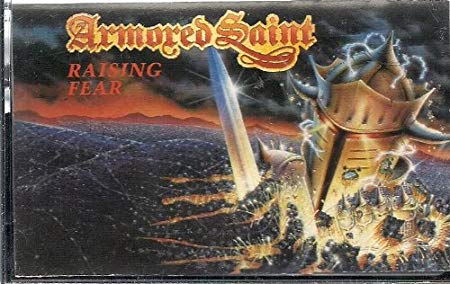
The Cassette Chronicles – Armored Saint’s ‘Raising Fear’

BY JAY ROBERTS

The Cassette Chronicles is a continuing series of mini reviews and reflections on albums from the 1980’s and 1990’s. The aim of this series is to highlight both known and underappreciated albums from rock, pop and metal genres from this time period through the cassette editions of their releases. Some of the albums I have known about and loved for years, while others are new to me and were music I’ve always wanted to hear. There will be some review analysis and my own personal stories about my connection with various albums. These opinions are strictly my own and do not reflect the views of anyone else at Limelight Magazine.

ARMORED SAINT – RAISING FEAR (1987)

When I think back to how I became aware of Armored Saint’s third album Raising Fear, I am pretty sure that it was from an ad in one of the many music magazines I read back in the day. Since this was 1987, there was no online way for me to discover their music beforehand. I certainly had never even heard of their March of the Saint or Delirious Nomad albums that were released prior to Raising Fear.

So I essentially picked up this album on spec. I know that can be hit or miss, but in this case it turned out perfectly as I came to regard this album as one of the band’s best releases and it still stands the test of time.

While the album certainly wasn’t all that successful in terms of sales figures, from start to finish it shines a light on Armored Saint’s combined talents in such a way that you can’t help but love the album.

The title track opens up the album and you are immediately plunged into a sizzling metallic guitar driven song. Guitarist Dave Prichard made a big impression on me when I was first listening to the album and when you combine that with the vocal work from John Bush, it wasn’t long before I was hooked.

Now, I don’t know how others feel about the cover of the Lynyrd Skynyrd song “Saturday Night Special” but while the song is obviously amped up, I found it retained the charm of the original track.

The song “Out On A Limb” crackles with a surplus of energy, much like the album closing “Underdogs”. Each song gets your pulse pounding with the fast paced blazing intensity.

It’s not all in your face rockers though. “Isolation” is decidedly slower in pacing but there’s a real dramatic presentation to the song. The intensity of the performance grows throughout and the phrasing on Bush’s vocals gives the track even more heft.

While the song “Crisis Of Life” has the expected metal soundtrack, Armored Saint crosses that sound with a rhythmic swinging vibe at the same time. I’m not sure if my description does full justice to the song but when you listen to it, I think you’ll get my meaning.

The second side of the album opens up “Frozen Will / Legacy”. The first part is a relatively brief instrumental highlighting Dave Prichard before the screaming fire of “Legacy” kicks in. The track has a great guitar line throughout and it’s a flat out winning number for me.

There’s a decidedly more vicious sound to the vocals on “Human Vulture”. This gives an added edge to the song. You can apply that opinion to “Terror” as well. John Bush has a quality to his voice that lets him sound really “evil” as the situation calls for.

With “Book Of Blood”, it was the title that first attracted me to the song. I read the title on the back of the cassette and instantly wanted to hear it. I suppose having an expectation for a song based on its title is a bad way of doing business but it ended up living up to those admittedly ridiculous teenage rebel without a clue expectations

As you can see by now, I just love the Raising Fear album. But as much as all the other songs appeal to me, it is the one song I haven’t mentioned yet that cements that love. “Chemical Euphoria” is bar none my favorite Armored Saint song. It’s a killer metal anthem from start to finish. The pace blisters your ears and I’d daresay that this track is where the band melds together in perfect fashion.

When I saw the band live in the summer of 2018, this was the one song I hoped to hear performed. It did make the set list and it blew me away. When I listen to the album and “Chemical Euphoria” starts to play, I still get the same feel of my blood pumping that much faster through my veins. That’s how I felt the first time I listened to it and that feeling continues no matter how many times I listen to it.

Raising Fear may not be recognized as a must have album for your collection by the large portion of the metal audience, but for me anyone that doesn’t appreciate the overwhelming greatness of this release just doesn’t realize what they are missing out on. It’s a great example of just how to put together an album that, as I said before, stands the test of time more than three decades after its original release.

NOTES OF INTEREST: This was the last album that guitarist Dave Prichard recorded with the band. He passed away in 1990 before Armored Saint recorded their Symbol of Salvation album.

The band was dropped by Chrysalis Records after Raising Fear was released.

Though the song “Crisis Of Life” appears as the last song on the first side of the cassette release I own, the Wikipedia page lists it as a CD-only bonus track.

The Cassette Chronicles – Reo Speedwagon’s ‘Hi Infidelity’

By JAY ROBERTS

The Cassette Chronicles is a continuing series of mini reviews and reflections on albums from the 1980’s and 1990’s. The aim of this series is to highlight both known and underappreciated albums from rock, pop and metal genres from this time period through the cassette editions of their releases. Some of the albums I have known about and loved for years, while others are new to me and were music I’ve always wanted to hear. There will be some review analysis and my own personal stories about my connection with various albums. These opinions are strictly my own and do not reflect the views of anyone else at Limelight Magazine.

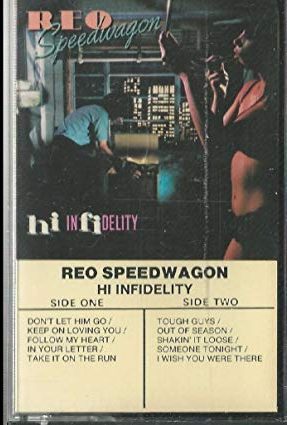
REO SPEEDWAGON – HI INFIDELITY (1980)

While this series is called The Cassette Chronicles, if you were to file this particular article under a sub-heading it would likely be “Albums My Mother Wouldn’t Buy For Me When I Was A Kid Because of the Cover Art”. I think if you look at the cover art and remember the time that it came out, you can probably understand why a parent wouldn’t buy the album for her nine year old. I actually had to hear the album in full for the first time at a friend’s house because he had it while I was out of luck until a few years later when I got my first job and could buy whatever music I wanted.

The funny thing is, the album art actually didn’t make any impression on me at that age. Instead, it was the song “Tough Guys” that made me want to have the album. Between the audio snippet from the “Our Gang” serials (“The Little Rascals” for those who don’t recall the other name) that fronted the song to Kevin Cronin singing “She thinks they’re full of shit”, to a nine year old who loved the “The Little Rascals” and didn’t quite yet have fluency in profanity, this was just a COOL song!

Of course, without strong songs the album wouldn’t have gone anywhere. However, a lack of material wasn’t a problem for REO Speedwagon on this album. The songs ranged from straight up rockers, power ballads and even songs that sounded as if they belonged in another era (The song “In Your Letter” stirs up echoes of 60’s pop music).

The first side of the album features the most recognizable of the band’s songs. Kicking off with the sublime rocker “Don’t Let Him Go”, the band moved with ease from one song to the next and keeps things on an electrifying high throughout. I think anyone who grew up in the 80’s has to know the #1 hit “Keep On Loving You”. This was back when the ballads were part of the whole instead of that calculated “We Need A Love Song” type of track so I actually still rather enjoy the song.

As for “Follow My Heart”, it’s got a huge hook to it but at the same time it’s a dynamically powerful vocal performance set to a killer rock sound as well. “Take It On The Run” was another big hit for the band and it remains one of the songs I remember liking right away when I first heard it.

The second side of the album kicks off with “Tough Guys” and like I said, I really love the song for reasons explained above, plus the fact that it’s just a damn fine rocker. As for the rest of the song on Side Two, I think it is probably less remembered than Side One because it has more album tracks than singles but the song “Out of Season” is an outright underappreciated classic. It’s a burning bright rocker and I have to say that I probably forgot how much I liked it until listening to the album again for this article. “Shakin’ It Loose” also rocks out pretty fast. “Someone Tonight” isn’t quite as fast, but still moves to a quicker beat. The album closes with “I Wish You Were There” which despite the notion the song’s title might give you, isn’t quite the same kind of ballad that “Keep On Loving You” is. However, like that song, “I Wish You Were There” is a rather appealing number (the backing chorus helps give an extra dimension of depth to the song) and actually does a pretty remarkable job of straddling the line between rocker and ballad to bring the album to a fully satisfying conclusion.

While these days the band occupies the classic rock package tours you see going out every summer, REO Speedwagon was arguably the hottest band in the country in the early 80’s on the strength of the Hi Infidelity. If this album was released today, it would be filed under the “melodic rock” banner. However you think of the band, this was a huge high point for them and for my money, the album still resonates as strongly today as it did back then.

NOTES OF INTEREST: Hi Infidelity has been certified ten times platinum and hit #1 on the album chart when it was released. The album was reissued in 2011 for the 30th anniversary and included a second disc that had demo tracks from the original recording sessions.

Guitarist Gary Richrath, who passed away in 2015, left the band in 1989.

Mr. Mister’s Richard Page is credited with providing backing vocals on the album.


The Cassette Chronicles – Dio’s ‘Dream Evil’

By JAY ROBERTS

The Cassette Chronicles is a continuing series of mini reviews and reflections on albums from the 1980’s and 1990’s. The aim of this series is to highlight both known and underappreciated albums from rock, pop and metal genres from this time period through the cassette editions of their releases. Some of the albums I have known about and loved for years, while others are new to me and were music I’ve always wanted to hear. There will be some review analysis and my own personal stories about my connection with various albums. These opinions are strictly my own and do not reflect the views of anyone else at Limelight Magazine.

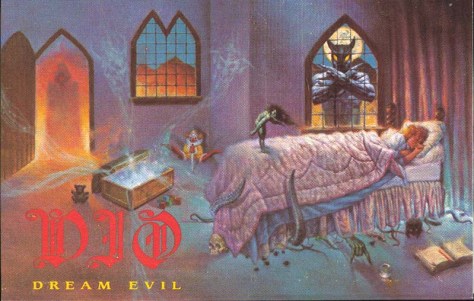
DIO – DREAM EVIL (1987)

I’d like to say that I can remember exactly where I picked up the cassette edition of Dio’s Dream Evil album, but I simply have no idea. What I do remember was the reasons I bought it when I saw it. I know that I never saw an ad for it in one of the many music magazines I read back in 1987. Instead, I stumbled upon the album while searching through the wall display at whichever record store I was standing in at the time.

There’s a couple of reasons why the album appealed to me. The first is that at the time I was still a relative newbie to rock and metal fandom and my love of comic books made the song title “Sunset Superman” stand out to me. Yes, it’s a bit silly of a reason to be interested in buying something sight unseen but it’s true. The other reason is that as a new metal fan, I loved the album title and creepy seemingly evil cover art. Again, I know it sounds rather a trite reason but there you go.

Of course, you might be wondering why the simple fact of it being a Dio release wasn’t the reason I bought it. Well, sad to say this but until this album, I really didn’t have any exposure to Ronnie James Dio. I know, right? Living in this world and not knowing who Dio is? I feel a bit ashamed to even admit that fact.

But I think I’ve more than made up for that musical blunder on my part, which I’ll get to later.

As for the album, I know that most people likely prefer Dio’s first three solo album Holy Diver, The Last In Line and Sacred Heart but for me, Dream Evil remains an album that I completely adore.

The album is mostly a fast paced rocking affair. The nine songs on the album all stand out in some way or another. The title track is appropriately themed and the opening song “Night People” gets things off in a rousing fashion.

I’d say that there is a lot more keyboard in the overall sound on this album but I think it helps rather than hurts the material. Of course, there are varying degrees of tempo even within the rocking tracks. “Overlove” (which for some reason appears in bold type on the cassette liner notes while the rest of the songs are printed in normal type) is pretty hard driving, particularly with Craig Goldy’s guitars screaming alongside Dio’s vocals.

When Dio and company (Goldy, drummer Vinnie Appice, bassist Jimmy Bain and keyboardist Claude Schnell) do take their foot off the gas, the tracks “All The Fools Sail Away” and “I Could Have Been A Dreamer” are the result. Each song is simply an epic in and of itself.  On the former, I loved the way Dio sang the lyric line “We bring you fantasy” with a clean and clear delivery and then followed that up with “We bring you pain” with a really dark sounding growl added to the vocal. It’s those small little things that made me instantly love the album.

Now, I mentioned how I didn’t know about Dio before buying this album. It’s been a quite a turnaround for me in that regard. I am a huge fan of Dio these days, to the point of being rather protective of his music whenever I heard a cover band playing one of his tracks. I guess you could say I’m kind of bitchy about it actually. I’ve heard versions where the singer doesn’t quite hit the mark and I can feel the misplaced ire rising inside of me. It’s sad, but true.

I’ve bought everything I could get my hands on as well. Whether it is The Elves, Elf, Rainbow, Black Sabbath, Heaven and Hell or his solo material, if it features Dio (and I’ve heard of it) I’ve picked it up. I can’t get enough of his vocals, of which I am an unabashed fan. I had a friend of mine mention that Dio is the best pure singer that rock and metal has ever had and while there are plenty of other singers I both like and love, I find it hard to disagree with that assertion.

I should mention that the cassette I bought back in 1987 is the one that I listened to in advance of writing this article. It still works fine and the music sounds as great as the first time I listened to it. I tried to see if there was something I didn’t like but I came up empty.

Last week marked nine years since the death of Ronnie James Dio, and yet his legacy remains not only intact but it still seems to be growing. While there is much to celebrate from his career, Dream Evil is not only the starting point for my love of Dio, but it is the benchmark to which I always find myself returning to over and over again.

NOTES OF INTEREST: The Dio Disciples band, which is officially endorsed by Dio’s widow features Craig Goldy in that lineup. They played a show in New Bedford, MA, last summer that I attended. I had purchased a CD edition of Dream Evil prior to that show and it now bears Goldy’s signature.

Meanwhile, bassist Jimmy Bain, drummer Vinny Appice and keyboardist Claude Schnell formed Last In Line in 2012 following Dio’s death in 2010 with original Dio guitarist Vivian Campbell and released the album Heavy Crown in 2016, though Schnell was out of the band before the album was recorded. Jimmy Bain died in 2016 after the album was released. Last in Line has played two shows in New Bedford in the last year or so.

Dream Evil is the last album that featured the mascot Murray on the album cover art.

The Cassette Chronicles – McAuley-Schenker’s ‘Save Yourself’

By JAY ROBERTS

The Cassette Chronicles is a continuing series of mini reviews and reflections on albums from the 1980’s and 1990’s. The aim of this series is to highlight both known and underappreciated albums from rock, pop and metal genres from this time period through the cassette editions of their releases. Some of the albums I have known about and loved for years, while others are new to me and were music I’ve always wanted to hear. There will be some review analysis and my own personal stories about my connection with various albums. These opinions are strictly my own and do not reflect the views of anyone else at Limelight Magazine.

McAULEY-SCHENKER GROUP – SAVE YOURSELF (1989)

Though this article is about the second McAuley-Schenker Group album, I first need to go back to the group’s 1987 debut album Perfect Timing album.

In ’87, I was 16 and had a job where I was making my own money. I had very little in the way of bills and could spend the money I made any way I wanted to. Since this was before the Internet and the idea of hearing songs before the album was even released, I would on occasion buy albums just from seeing an advertisement in a magazine. And yes, you could go to the record store knowing that they’d have the album in stock, imagine that!

So I saw the ad for Perfect Timing and was struck by how cool the guy with the guitar looked with his long flowing hair (This would be at the time when I still thought that I could grow my hair long to fit in more with the look of the day). I say “the guy” because I had no idea who Michael Schenker was at the time. As you recover from that bit of musical blasphemy, let’s just say once I did get the album, I was blown away. The album sounded like everything I loved at the time. Commercially accessible sound full of flying guitar work, killer rock tracks and believe it or not, really great ballad tracks. I was hooked!

So when I saw the news that the band was releasing a second album, it went to the top of my list. And with Save Yourself, they didn’t disappoint in the least.

The album kicked off with the title track. The song opens with a kind of mood setting lone bell ringing in the background before Schenker lets loose with a killer opening riff/solo. The song then bursts into flames as waves of pure energetic rock flow over you. Describing the song as fast paced fails to do justice to how relentless it is. Unsurprisingly, the band shreds throughout the song and McAuley’s vocals are not only on point with rapid fire they are in the delivery, but they are also really gritty in the vocal inflections. I’l say that by this point, he’d become a singer I greatly admired at the time. I thought he was just a fantastic vocalist!

While “Bad Boys” is slightly less frantic in the delivery, it is still a pretty uptempo anthem that kept me on the edge of my seat.

When talking about Perfect Timing earlier in the article, I mentioned how I loved the power ballad tracks on the album. You can say that about those type of tracks on Save Yourself as well. The song “Anytime” gave the band their most successful track of their three album run in terms of chart recognition. And while I’m really down on ballads these days, it is a highly enjoyable song.

The more rocking side of the band returns with “Get Down To Bizness”. The first side of the album comes to a killer conclusion with more of a mid-tempo rocker called “Shadow of the Night”. The track settles quickly into a groove quickly and locks it in for the length of the song.

Every song on the first side of the album is superb, and it sets the stage for more rocking good music on side two. I will say that while the instrumental “There Has To Be Another Way” wasn’t quite necessary to be included, it is a pretty decent run through by Schenker and company.

Otherwise, the second side of the album features five more songs that further cemented my opinion of just how great the band was at the time. “What We Need” kicks things off, rocking its way into your head. The title of “I Am Your Radio” might seem a bit silly, but when you listen to the song, it’s an undeniable rocker that captures the imagination and if you are like me, it kind of served as a personal anthem at the time you first heard it.

“This Is My Heart” definitely falls under the power ballad classification but it has far more of an uptempo feel to it at the same time. The lyrical sentiments are what gives it the ballad feel, but I really appreciated the lack of complete slowdown musically.

Two more adrenalized rockers close out Save Yourself with “Destiny” being a blazingly fast and intense track and “Take Me Back” sealing the deal for just how great the McAuley-Schenker Group was. The musical partnership between singer and guitarist was a fertile mix of great guitar and vocals and had both the songs and musical chops to pull off this vastly commercial sounding project that is flush with great music that doesn’t give you the feeling that they were “selling out” for more of a chance at monetary success.

At the beginning of the McAuley-Schenker Group’s run, I didn’t realize that this more mainstream hook laden sound was not what Schenker was best known for. I know that the majority of his fans comes from Schenker’s time with the Scorpions, UFO and the Michael Schenker Group. But for me, the three McAuley-Schenker albums will always be what I most remember him for. My love for Robin McAuley’s vocals remains unabated as well.

If you love great guitar work with the more accessible sound of the mid-to-late 80’s rock and metal, you’d be doing yourself a great service by picking up Save Yourself and diving headlong into some of the most entertaining rock of the day.

NOTES OF INTEREST: I attended the May 10th, 2019, Michael Schenker Fest concert in Worcester, MA. The show featured Michael Schenker playing songs from throughout his career and included Robin McAuley singing three songs from Save Yourself (plus one from Perfect Timing) during the course of the show. In fact, given the band lineup for this tour, four-fifths of the lineup that recorded the Save Yourself album (including drummer Bodo Schopf and guitarist Steve Mann) were onstage during the performance! It was utterly awesome for me!

The album got a Japanese reissue in 2000 that included three bonus tracks. Two of them were the radio single edits of “Save Yourself” and “Anytime” but the third bonus cut was a previously unreleased song called “Vicious”.

The album was produced by Frank Fillepetti, who had produced Survivor’s Too Hot To Sleep album in 1988. Singer Robin McAuley would go on to front Survivor for five years between 2006-2011, though he never recorded any music with the band.

The Cassette Chronicles – BONNIE TYLER’S ‘SECRET DREAMS AND FORBIDDEN FIRE’

By JAY ROBERTS

The Cassette Chronicles is a continuing series of mini reviews and reflections on albums from the 1980’s and 1990’s. The aim of this series is to highlight both known and underappreciated albums from rock, pop and metal genres from this time period through the cassette editions of their releases. Some of the albums I have known about and loved for years, while others are new to me and were music I’ve always wanted to hear. There will be some review analysis and my own personal stories about my connection with various albums. These opinions are strictly my own and do not reflect the views of anyone else at Limelight Magazine.

BONNIE TYLER – SECRET DREAMS AND FORBIDDEN FIRE (1986)

The sixth solo album from Bonnie Tyler was the follow up release to her platinum selling Faster Than The Speed Of Night release that featured her mega-hit “Total Eclipse of the Heart”. Like many, this is pretty much the main connection I ever had with Tyler’s music. Yes, there’s one other song of hers that I remember, but essentially it was all about “Total Eclipse of the Heart”. As with the Faster album, this release was produced by Jim Steinman (best known for his work with Meatloaf). Unfortunately for both Tyler and Steinman, this album wasn’t the commercial hit they probably hoped for. Instead, it actually became the last Tyler album to make any kind of dent in the US and the reviews were apparently mixed at best.

After listening to the album, I can kind of see why it turned out this way. There’s an undeniable sense of time and place given the production of the music. At first, I was kind of annoyed by just how dated the music sounded. I liked some stuff, but it was like Steinman and company couldn’t resist the urge to toss in flourishes that failed to enhance the songs at all.

It’s kind of a sad thing too. I know that there was a certain way the pop/rock music of the 1980’s was “supposed” to sound but I think if at least some of the songs on this album hadn’t been buried underneath all the studio wizardry, opinions might’ve been different.

The makeup of the album depended on the format you chose to listen to. The vinyl release had just eight songs, the CD had one bonus track. But with the cassette version of the album, there were two bonus tracks to go along with the original eight tracks.

The album did have a big hit in “Holding Out For A Hero” but technically that came two years before the release of the album. The song was used for the soundtrack to the movie Footloose, which is where it became a hit. It’s the only other song I really ever remember hearing from Tyler. It closes out the second half of the album and remains a song that I find hard to resist the urge to hum along to it.

But what about the rest of the songs? Well, it is a bit hit and miss but I think there are a number of songs that might be better than people thought back then. The first side of the album opens with “Ravishing” which has a catchy musical sound but the decision to make Tyler’s endearingly husky vocals sound as if they were recorded inside of an echo chamber kind of killed the momentum.

I will say that the song “If You Were A Woman (And I Was A Man)” fared better than I thought it would. Decidedly uptempo, it had a nice pop sensibility to it. So did “No Way To Treat A Lady”.

As for “Loving You’s A Dirty Job But Somebody’s Gotta Do It”, it’s an intriguing mix. The track is a duet with Todd Rundgren and at first the song was overly sappy. You’d need to check your blood sugar levels for the beginning of the song. But I was kind of surprised that the song began to grow on me as it progressed. The performances left sappy behind and grew more intense. It developed somewhat of an edge to it and ended up being far more enjoyable than I would’ve ever given it credit for considering how it started off.

The first of the two bonus tracks on the cassette was the song “Before This Night Is Through”. It closes out the first side and is a ballad thought a bit faster in the performance than is standard. Unfortunately, that’s about all I can really say about it as it wasn’t much more than a trifle.

The second side of the album opens with a cover of the hit song “Band of Gold”. That song was first recorded by Freda Payne but unlike the original version, Tyler’s version didn’t become a hit single. The song moves pretty quickly but other than having familiarity with the song, I didn’t really think much of this version. I could say the same about the song “Lovers Again”. The ballad is backed with a slight musical score but is just flat.

The song “Under Suspicion” is the second of the two bonus tracks and the slightly hushed performance gives the song an air of mystery to it musically. I really got into the song as a whole. As for the song “Rebel Without A Clue”, the most straight up rocker on the album, things started off great. I found myself immersed in the song. But the song is over eight minutes long and features a long instrumental outro that makes the track feel as if it is meandering along trying to find an end to itself. If they’d cut at least a couple of minutes from the song’s running time, I’d be talking more positively about it for sure.

I can’t say that critics back in the mid-80’s were completely wrong to dump all over Secret Dreams and Forbidden Fire for the inability to resist the more pompous aspects of the decade’s pop music indulgences. However, there are certain tracks that are way better than they were ever given credit for. For me, that makes the album an interesting one to take a look back on. I get to discover more about an artist that I never really paid much attention to and realize that there was more to her than just her one big hit.

NOTES OF INTEREST: Of the ten songs on the album, Bonnie Tyler had just a sole co-writing credit on the song “Under Suspicion”. Meanwhile, Jim Steinman wrote or co-wrote four songs. Noted 80’s pop writer Desmond Child wrote “Lovers Again” and “If You Were A Woman (And I Was A Man)”. Bryan Adams and Jim Vallance wrote “No Way To Treat A Lady”.

Roy Bittan and Max Weinberg from The E Street Band were some of the featured players who recorded the music for the album.


The Cassette Chronicles – SLEEZE BEEZ’S ‘SCREWED BLUED & TATTOOED’

By JAY ROBERTS

The Cassette Chronicles is a continuing series of mini reviews and reflections on albums from the 1980’s and 1990’s. The aim of this series is to highlight both known and underappreciated albums from rock, pop and metal genres from this time period through the cassette editions of their releases. Some of the albums I have known about and loved for years, while others are new to me and were music I’ve always wanted to hear. There will be some review analysis and my own personal stories about my connection with various albums. These opinions are strictly my own and do not reflect the views of anyone else at Limelight Magazine.

SLEEZE BEEZ – SCREWED BLUED & TATTOOED (1990)

Hailing from The Netherlands, Sleeze Beez released a debut album Look Like Hell in 1987 with a different singer. But for this 2nd album they recruited English singer Andrew Elt. It was a fortuitous decision on the band’s part because Screwed Blued & Tattooed is the band’s most recognizable release.

While it didn’t make them platinum superstars or anything, the relative success landed the band a slot opening for Skid Row on the touring cycle for this album and had a hit single with the song “Stranger Than Paradise”.

I had never listened to the band before now so I really had no familiarity with the material. I was kind of surprised to find it pretty enjoyable. Living up to the first half of their name, the band’s sound has a sleazy rock sound to it. A coworker that heard the album while I was listening to it said that the singer reminded him of Axl Rose. I don’t hear that myself but regardless, Elt’s vocals are usually pretty strong on the album.

The opening number, “Rock In The Western World” kicks things off in rousing rocking fashion. The lyrics are an ode to what would be considered the modern day lifestyle of rock stars back in 1990. Of course, the song resonates now because the lyrics can serve as a look back at time when they were actually true to the statement they make. It’s nice to have that kind of second life in a song written nearly 30 years ago I guess.

As for the rest of the first side of the album, it’s not bad at all. The previously mentioned “Strangers In Paradise” is a very strong track. While most of the songs are straight out rockers, on this particular track the band still rocks out but there’s more of a dark edgy feel to the song in the main lyrical verses. It made the song seem that much cooler.

At first, I was iffy on “Damned If We Do, Damned If We Don’t”, but the song ended up growing on me by the time it was over.

The first side was really good as it crackled with a rock and roll energy throughout. I wish that had carried over a bit more for side two of Screwed Blued & Tattooed though.

It opens with a weird little intro for “Heroes Die Young”. The song is a bit of anthemic rock done as an ode to those heroes from our collective past. This lyrical tact would normally be something I was completely into but this song just didn’t do it for me. And while I don’t typically have any kind of problem with a song like “Girls Girls, Nasty Nasty” the song was constructed in such a manner that there was just nothing worthy of listening to it again.

Missing from the first side of the album was any kind of ballad track. If that had continued on side two it might’ve been a good move. But as was the custom of the time, Sleeze Beez put “This Time” on the album. While the music establishes a moody atmosphere, the song is, at best, mediocre claptrap.

It wasn’t all bad though, because I loved a couple of songs on the second side. “When The Brains Go To The Balls” might lack any sense of subtlety but it is actually a invigorating rocker. The chorus does get buried a bit in the mixing but doesn’t affect my overall enjoyment of the song that much

As for “Don’t Talk About Roses”, I first thought it was going to be another ballad when I saw the title on the album booklet. Therefore, I was pretty happy to find that it was a pure rocker that got me tapping my foot to the rhythm. I would say that it is my favorite song on the album and I can’t wait to listen to it over and over again.

While Screwed Blued & Tattooed might not have made the band into global rock stars, it remains their most successful release. There was some cutting room floor material that made it onto the album but for the stuff that really shined, Sleeze Beez sure found a nice solid groove to slide into at the tail end of “The Metal Years”.

NOTE OF INTEREST: The band released a total of four studio albums and a live album before splitting up in 1996. They got back together in 2010 for two reunion shows and released the live album Screwed Live! In 2017, the band were interviewed by Limelight Magazine to celebrate their 30th anniversary. (Click HERE to read this story.) Singer Andrew Elt is now fronting the band 7 Miles to Pittsburgh whose debut made Limelight Magazine’s top 10 albums of 2017. They recently released their second studio album earlier this month.

The Cassette Chronicles – Kiss’s ‘Hot In The Shade’

By JAY ROBERTS

The Cassette Chronicles is a continuing series of mini reviews and reflections on albums from the 1980’s and 1990’s. The aim of this series is to highlight both known and underappreciated albums from rock, pop and metal genres from this time period through the cassette editions of their releases. Some of the albums I have known about and loved for years, while others are new to me and were music I’ve always wanted to hear. There will be some review analysis and my own personal stories about my connection with various albums. These opinions are strictly my own and do not reflect the views of anyone else at Limelight Magazine.

Magazine advertisement for “Hot In The Shade”

 KISS – HOT IN THE SHADE (1989)

As I wrote in my Cassette Chronicles article about the Kiss album Animalize, I really have never owned that many albums from the band. I’ve started to gather up a few of them here and there but still haven’t fully committed to owning their studio album discography. Well, that is until a recent opportunity came up that will likely allow me to scoop a number of the albums up on CD at a relatively inexpensive cost.

But until that happens, I still have one more cassette album of the band that I can write about for this series and that is their 1989 album Hot In The Shade. The album came out the year I graduated from high school but other than the two best known songs on the album, I never paid any attention to this one.

Those two hit songs would be the rocker “Hide Your Heart” and the big power ballad “Forever”. I still find myself quite entertained on the rare occasion that I hear “Hide Your Heart” on the radio. I can’t lie and say I didn’t enjoy “Forever” when it was released as a single but hearing it now kind of makes my teeth grind against themselves. Still, it was a pretty successful single for the band, hitting #8 on the chart.

Of course, restraint has never been a huge part of the Kiss vocabulary. This comes into play when I realized that Hot In The Shade has a total of 15 songs on the album. And I don’t mean a couple of brief instrumentals padding the album either. These are all full-length songs. Of course, given how pedestrian to outright unappealing some of the songs turned out to be, perhaps a little restraint would’ve been a better choice for the band to make.

The first side of the album starts out with “Rise To It”. The song was the third of three singles released from Hot In The Shade. Though I don’t remember having ever heard the song before, I can see why it was chosen as a single. The intro to the song is a cool little piece of music in its own right, but as the song gets fully underway, you can feel your blood pumping to the rhythm of this rocking anthem.

For me, I loved the pacing of “Betrayed” but I also found that the song kind of grated on my ears after a while. Still, it is better than the three songs that followed in in the track listing. I found “Prisoner of Love”, “Read My Body” and “Love’s A Slap In The Face” to be completely inane and would’ve been better served being left in the band’s archive for all time. All three songs had a more uptempo style but that didn’t save them from making me want to fast forward through them.

I will say that the closing song on side one, “Silver Spoon”, was fantastic. It’s a real rocking number that made me want to play it over and over again a few times.

The second side of the album started off in superb fashion with another rocker in the form of “Cadillac Dreams”. The guitar work on “The Street Giveth and the Street Taketh Away” but found the song as a whole merely just “OK”. I’d probably describe my reaction of “King of Hearts” and “Little Caesar” the same way.

But I loved the song “Somewhere Between Heaven and Hell” a lot. The chorus was especially catchy. As for the closing track “Boomerang”, that was a killer rock track. When I was researching the album for this article, I saw that the song is described as flirting with speed metal. I’m not completely sold on that particular designation but the way it blazed with it’s race to the finish pace, I can’t discount it completely. If I was to pick a song from the album for the band to do on what is being billed as the final concert tour, I’d love to see this one performed just to see how hard it would come across in a live setting.

The album’s initial sales figures got it a gold certification in the US. And I think that overall it is a pretty good album. But if they’d eliminated four songs from the release and cut the track listing down to a more reasonable/manageable eleven songs, it would’ve been that much stronger collective whole. There’s plenty here to keep your fandom for the band burning bright and while I’m not an official member of the Kiss Army, the good outweighs the bad on Hot In The Shade and shows that the band still had some songwriting chops even in the days of their sound being more commercially accessible.

NOTES OF INTEREST: Current Kiss guitarist Tommy Thayer co-wrote the songs “Betrayed” and “The Street Giveth and the Street Taketh Away”.

As I’m sure most Kiss fans know, the song “Forever” was co-written by Paul Stanley and pop crooner Michael Bolton.

Eric Carr sang the lead vocal on the song “Little Caesar”. It was the first time he sang lead on an original track. He had song the lead vocal on a remake of “Beth” that appeared on the Smashes, Thrashes & Hits compilation.

The Cassette Chronicles – Baton Rouge’s ‘Shake Your Soul’

By JAY ROBERTS

The Cassette Chronicles is a continuing series of mini reviews and reflections on albums from the 1980’s and 1990’s. The aim of this series is to highlight both known and underappreciated albums from rock, pop and metal genres from this time period through the cassette editions of their releases. Some of the albums I have known about and loved for years, while others are new to me and were music I’ve always wanted to hear. There will be some review analysis and my own personal stories about my connection with various albums. These opinions are strictly my own and do not reflect the views of anyone else at Limelight Magazine.

BATON ROUGE – SHAKE YOUR SOUL (1990)

The debut album from Baton Rouge came about after the band moved from Louisiana to Los Angeles and had gone through a number of name changes.

I’d like to say that I remember this album fondly but you can chalk this up to yet another latter day metal years album that I completely missed the boat on. I’d heard the band’s name back then but I wouldn’t lay odds on whether or not I ever heard their music.

The funny thing is, this is actually a better than average album for its time. The reason I say that it is funny is because while I liked the music after now having “discovered” the band, the reported reason the band ended up breaking up was due in large part to singer Kelly Keeling being unhappy with the music and the band.

Such a shame too, because Baton Rouge sure did seem to have a lot going for it on this first album. They had some really great rocking tracks featuring huge instantly memorable hook filled choruses, some great riffs from guitarist Lance Bulen and an overall sound that even now just grabs you by the ears and won’t let go.

The first side of the album did take me a bit longer to fully appreciate but the big chorus, driven by a gang backing vocal, really kicked off lead track “Doctor” nicely. That could also be said about “Bad Time Coming Down”, a rhythmic rocker that just oozes a cool vibe from start to finish.

The requisite power ballad was “It’s About Time” and while the tempo of the track tended to lean more towards the faster portions of the song, this one just didn’t do much for me at all. The brief instrumental “The Midge” was pretty inconsequential in my book too.

That said, the stand out cut on the first side of the album has to be “Walks Like A Woman”. I loved this song. Fast paced with a strong melodic hook to it, the song also has a killer chorus that darn near had me singing out loud where other people could hear me. I did manage to hold off on doing that so embarrassment at my bad singing was avoided. Still, it is a killer track!

Now when we get to the second side of the album things just get exponentially better. The second power ballad, “There Was A Time (The Storm)” follows the expected course for a song of its kind but happily enough, I found it to be halfway decent.

And that’s the only criticism I had with the second half of Shake Your Soul. The rest of the songs are all pure adrenaline fueled six string blitzes. “Baby’s So Cool” and “Young Hearts” are amazingly catchy. The choruses are memorable and Keeling’s vocals are striking. I was surprised to find that the song “Melenie” was also pretty darn memorable as well.

The album closes out with a double shot of premium rock and roll. “Spread Like Fire” was a white hot number and the song “Hot Blood Movin'” was my other favorite track (alongside “Walks Like A Woman”) on the album.

If you go strictly by sales, the album was a commercial failure. Still, the overall enjoyment of the music is not tied to how many people bought the album. Rather, the under-the-radar nature of the Shake Your Soul album will become a pleasant surprise to your ears.

 NOTES OF INTEREST – The band disbanded after two albums but a subsequent third album, which was self-titled, was released in 1997. However, according to the band’s Wikipedia page, though vocalist Kelly Keeling appears on the album as a vocalist he doesn’t consider that an official reunion of the band. He was the only original member to appear on that release. The original lineup did reunite to play the Rocklahoma festival in 2009 but never did a full reunion.

Kelly Keeling would go on to work with Blue Murder, Dokken, George Lynch and Trans-Siberian Orchestra.

Among the guest musicians on Shake Your Soul are drummers Joey Franco from Twisted Sister and Frankie LaRocka from Company of Wolves (a recent Cassette Chronicles featured band).