Category Archives: Cassette Chronicles

The Cassette Chronicles – Accept’s self-titled debut

By JAY ROBERTS

The Cassette Chronicles is a continuing series of mini reviews and reflections on albums from the 1980’s and 1990’s. The aim of this series is to highlight both known and underappreciated albums from rock, pop and metal genres from this time period through the cassette editions of their releases. Some of the albums I have known about and loved for years, while others are new to me and were music I’ve always wanted to hear. There will be some review analysis and my own personal stories about my connection with various albums. These opinions are strictly my own and do not reflect the views of anyone else at Limelight Magazine.

ACCEPT – ACCEPT  (1979)

While the stated time span of this series is the 80’s and ’90s, you’ll note that this article on the self-titled debut album from Accept dates to 1979. So it falls just outside of the parameters, but since the cassette edition I have appears to be a bargain basement reissue from 1986 (there’s even a “special bargain price” stamped onto the cover art), I’m fine with this slight exception. 

Now, it should be noted from the top that I’m a huge fan of the band. Three of their last four albums have ended up as my top album of the year they were released, and the fourth one came in at #2.

But in the interest of full disclosure, my Accept fandom didn’t start until the first time I heard the “Balls To The Wall” song. Given that came off the album of the same name, the band was on their fifth release before I was even aware of their existence.

Unlike a lot of bands that I “discover”, I have never really gone back to Accept’s earliest days to explore where they came from musically to where they are now. Until now that is.

The band’s first album has been less than charitably described by both singer Udo Dirkschneider and Wolf Hoffman. The common refrain seems to be that while it gave the band the ability to further their career, the songs weren’t really all that focused in one direction and the production was less than ideal.

I can see what they mean but at the same time, there are some rather interesting songs on the album. The first thing you notice at the start of the release is that the band has more of a straight up rock and roll sound as opposed to the more metallic nature fans have come to know in the last three plus decades. 

The first two songs, “Lady Lou” and “Tired Of Me”, are both quickly paced numbers. Both songs are good enough in their own right I suppose but truthfully they don’t really seem to have much staying power. It was actually track three, “Seawinds”, that struck me as the first strong track on the album. It’s a ballad but I found it rather a cool sounding track. It’s not like Accept has never done a ballad before and they do tend to have some good ones. For me, I’d add “Seawinds” to that list.

But never fear metal fans, because the rock and roll sound soon starts to give way to a heavier, more metal sound with “Take Him In My Heart”. The vocal performance on the song might strike you a bit odd at first because it seems totally out of character with what you might know of Udo’s vocal style but in the end this is just a very interesting song. And the scream from Udo at the end is a prime metal howl. As for the last song on the first side of the album, “Sounds Of War” really kicks in with a more metallic overtone as it races from start to finish.

Side two really has something going for it as the songwriting gets faster, heavier and far more aggressive. “Free Me Now” and “That’s Rock ‘N’ Roll” are straight up metal songs and if I could still headbang like a madman, that’s what I would’ve been doing.

I wasn’t crazy about the song “Glad To Be Alone”. It’s a plodding slog of a track at the start and while it does get faster as the song progresses, if I was to pick one song that best defines the band’s dissatisfaction with the album, it would be this one. It’s just a momentum killer for me.

Thankfully, the last two songs are once again fast paced and give an electrical charge to the ears and hearts of metal fans. “Helldriver” and “Street Fighter” are simple straight forward rockers with attitude to spare.

It’s funny to think that I liked this album better than the people who created it. But if beauty is in the eye of the beholder, then music must be in the ears of the listener. For me, Accept is where the nascent band first started showing signs of the future that was to come for them. The production may be raw and the songwriting may be less focused than what the band would’ve liked as they look back on it. However, for me this was one heck of an entertaining look at the very earliest days of one of my favorite bands.

NOTES OF INTEREST: Frank Friedrich played drums on Accept but according to Wikipedia, he decided against a career as a professional musician. Stefan Kaufmann was hired as his replacement before the album was released.

Bassist Peter Baltes sang lead on “Seawinds” and “Sounds Of War”.  


The Cassette Chronicles – CINDERELLA’S ‘NIGHT SONGS’

By JAY ROBERTS

The Cassette Chronicles is a continuing series of mini reviews and reflections on albums from the 1980’s and 1990’s. The aim of this series is to highlight both known and underappreciated albums from rock, pop and metal genres from this time period through the cassette editions of their releases. Some of the albums I have known about and loved for years, while others are new to me and were music I’ve always wanted to hear. There will be some review analysis and my own personal stories about my connection with various albums. These opinions are strictly my own and do not reflect the views of anyone else at Limelight Magazine.

CINDERELLA – NIGHT SONGS (1986)

It has been 32 years since the release of Cinderella’s debut album Night Songs and with the benefit of all that time having passed, hindsight is indeed 20/20. 

I owned the album back when it was released but I have to say that beyond the three best known songs on the album (“Shake Me”, “Nobody’s Fool” and “Somebody Save Me”), I remember being rather unimpressed by the material. The album just sat in my collection gathering dust until I got rid of it. For me, it was their third album, Heartbreak Station, that did the trick for me. That album remains my favorite release from the group.

But on a recent music buying excursion, I came across both Night Songs and Long Cold Winter on cassette and figured I had to pick them up and give a new listen to the album to see what I thought. What I found was that time has seemingly improved my taste because I have a newfound love of Night Songs.

Despite having a classic rock and straight up metal sound, the band was cast alongside the rest of the 80’s glam metal era. It might just have been a function of the prevailing tastes of the time, but it does strike me now as a big mistake.

The title track opens the album and while the uptempo pacing of the track gives an immediate jolt of energy to the listener, I wasn’t blown away by it. I thought it wasn’t the song to best represent the band.  But the next two songs were “Shake Me” and “Nobody’s Fool”, so suddenly the album was kicked into a higher gear. “Shake Me” was the first single released off the album and though it didn’t make the singles chart, it is simply a great in your face rocker. As for “Nobody’s Fool”, that was a monster hit on the charts and is pretty much the main reason why the album is now certified triple platinum. It’s the only song that can legitimately be thought of as a “power ballad”, but it is actually quite a bit more weighty than the more cloying aspects of the song genre.

I really dug the album track “Nothin’ For Nothin'”, which was another quickly paced song. The first side of the album closed out with “Once Around The Ride”. It’s another rocker and musically speaking, I really loved the track. It’s got a really good guitar solo. The only thing that holds back a full throated endorsement of the song from me is that I didn’t like the phrasing on the vocals during the chorus.

The second side of Night Songs opens with two hugely entertaining rockers. “Hell On Wheels” may not be a “greatest hit” track for the band, but I loved it. And “Somebody Save Me” might be one of the best known songs the band has but listening to it for this article gave me a newfound appreciation and love of the song.

All the songs on the album are written by frontman Tom Keifer and this new spin of the album has also opened my eyes more than I could’ve expected to his songwriting ability. This aspect of his talent may have gotten overshadowed in the 80’s metal era of excess, but the guy can write!

Side two of the album is actually all killer, no filler if you really want to know the truth. I loved the bouncy rhythm to “In From The Outside”, the straight up rocking nature of “Push, Push” and I think the closing “Back Home Again” is the best example of the direction the band would take for Heartbreak Station. The more focused bluesy sound shines through a lot on this track and left me wondering how I managed to not clearly see what the band was all about the first time around.

I’m not a fan of change. I like being in a rut and freely acknowledge that I’m a creature of habit. But on occasion, change is a good thing when it opens your eyes to something you should’ve seen the first time around. When it was originally released I didn’t think all that much of Night Songs. After three plus decades, I’ve found that I’ve come around and have to declare that I was apparently everybody’s fool all these years because this album is chock full of prime rock and roll. If you haven’t heard the album in years or never listened to it at all, you’d be doing yourself a favor by discovering for yourself exactly what I’m talking about here.

NOTES OF INTEREST: Drummer Fred Coury joined the band after the recording of the album. All drum tracks for the album were played by Jody Cortez. Cortez has played with the liked of Boz Scaggs, David Crosby, Christopher Cross and a host of other acts since his time in Cinderella.

The keyboards on the album were played by Jeff Paris. Among his credits, he co-wrote Vixen’s two biggest hits “Edge of a Broken Heart” and “Cryin'”.

Jon Bon Jovi provided backing vocals on “Nothin’ For Nothin'” and “In From The Outside”.

The Cassette Chronicles – Kiss’ ‘Animalize’

By JAY ROBERTS

The Cassette Chronicles is a continuing series of mini reviews and reflections on albums from the 1980’s and 1990’s. The aim of this series is to highlight both known and underappreciated albums from rock, pop and metal genres from this time period through the cassette editions of their releases. Some of the albums I have known about and loved for years, while others are new to me and were music I’ve always wanted to hear. There will be some review analysis and my own personal stories about my connection with various albums. These opinions are strictly my own and do not reflect the views of anyone else at Limelight Magazine.

KISS – ANIMALIZE (1984)

It may come as a bit of a surprise but I never really owned many Kiss albums growing up. As a kid, it wasn’t like I was allowed to listen to the band’s output in the 70’s. But even when I started making my own musical choices, I really only owned the Crazy Nights album.

This isn’t to say that I didn’t hear some the songs but the band really wasn’t a priority to start getting their albums. I’ve got a friend down in Texas that would probably consider that last sentence a rather large piece of blasphemy but there it is. 

Recently though, I’ve started picking up some of the cheap remastered editions of a few albums. I’ve liked a lot of what I’ve heard but the most recent CD I picked up was the Rock And Roll Over album. That one has the classic track “Calling Dr. Love”. Unfortunately, it is really the only song that stood out to me. I was quite disappointed in the album.

So when I picked up this cassette edition of Animalize, I had hopes that it would get the sour taste of Rock And Roll Over out of my mouth. I wouldn’t say this was a total success, but the album certainly had far more high points than the other album.

The first side opens strongly with “I’ve Had Enough (Into The Fire)”, a fast paced rocker that certainly does the job of capturing the attention of listeners. That leads into the big hit track from the album “Heaven’s On Fire”. This is a huge song for me. I love it. It remains one of my all-time favorite Kiss songs. It did pretty well on the charts as a single but that aside, it is just the best example of combining a standout rock soundtrack and a big commercial hook and chorus.

The rest of side one was a bit more of a slog for me though. Musically speaking, “Burn Bitch Burn” is pretty interesting but lyrically it was just a demonstration of the band’s inability to grasp the notion of subtlety. The last two songs were simply not what I would consider all that great.

Side two opens with a blazingly aggressive “Under The Gun”. I don’t recall having ever heard the  song before but now that I have, I really love it. Seriously, this one really got me all fired up. “Thrills In The Night” was another uptempo track and I liked this one as well. I thought the chorus was a bit better than the main lyrical passages but still, it was a fun listen. 

Of course, things went downhill for me on “While The City Sleeps” which is just flat in all respects. The album closed out with “Murder In High Heels” which was the second song on the album to fall under the banner of “musically interesting” but lacked the cohesive whole because of the lyrics.

At the time of this album’s recording, Gene Simmons was off chasing acting dreams. This left Paul Stanley in the lead position for the album’s direction. Whether this was for the good or the bad, you can decide for yourself. I know there are a lot of detractors for this particular time in the band’s career as they moved more towards the prevailing trend of glam metal that was growing in the mid 80’s but I’ve always liked the era so that might be a pretty good explanation for why I enjoyed the album’s better songs. Sure you can wish all the songs were uniformly great but you can’t have everything, right?

Still, Animalize was a decent album and considering it was certified platinum in the US, a lot of people seemed to enjoy what Kiss offered as heaven burned.

NOTES OF INTEREST: Mark St. John was the lead guitarist on Animalize. It is his only recorded music with the band as he left the band due to health issues in November 1984.

Bruce Kulick, who would replace St. John as the band’s lead guitarist, actually played lead on two of the songs on Animalize, “Lonely Is The Hunter” and “Murder In High Heels”.

The Cassette Chronicles – Kix’s self-titled debut

By JAY ROBERTS

The Cassette Chronicles is a continuing series of mini reviews and reflections on albums from the 1980’s and 1990’s. The aim of this series is to highlight both known and underappreciated albums from rock, pop and metal genres from this time period through the cassette editions of their releases. Some of the albums I have known about and loved for years, while others are new to me and were music I’ve always wanted to hear. There will be some review analysis and my own personal stories about my connection with various albums. These opinions are strictly my own and do not reflect the views of anyone else at Limelight Magazine.

KIX – KIX (1981)

The self-titled debut album from Kix certainly does illustrate the notion that greatness can come from humble beginnings. 

Leading up to this album, the band gigged constantly and became one of the best live acts in the state of Maryland. The lineup of Steve Whiteman (vocals), Ronnie Younkins (guitar), Brian Forsythe (guitar), Donnie Purnell (bass) and Jimmy Chalfant (drums) had to be one of the most in sync lineups you could possibly imagine by the time they got around to recording this album.

Unfortunately for me, that doesn’t necessarily translate into that great of an album. I’ve never heard the Kix album until listening to it for this article. Hell, when it was released I was still two or three years away from even being a rock/metal fan. But if I’d heard it back then, I’m pretty sure I would not have liked it.

The first side of the album struck me as just being mostly abysmal. This strikes me funny as the songs “Atomic Bomb”, “Love At First Sight” and “The Itch” were considered live favorites in the band’s concerts at the time. I suppose “Love At First Sight” would’ve been a better song for me if the vocals from Whiteman during the chorus hadn’t been rather annoyingly too high pitched. As for the other two songs, they may have had the requisite uptempo pacing but they both just felt flat. Meanwhile, “Heartache” sounded like a pure pop song (in the most negative connotation) that added some rock guitar in a bid to sound more macho. To put in modern day terms, imagine Justin Bieber trying to gain even a shred of musical credibility, and you have this song.

All is not lost on Side One though as I did find the song “Poison” rather enjoyable.

By the time the first side of the album finished playing, I was kind of dreading finishing listening to this album. I just really didn’t like most of what I was hearing. Article be damned, I didn’t want to punish my ear drums for no good reason. But I flipped the cassette over and soldiered on.

This act of musical “bravery” on my part paid off handsomely though as Side Two was a far better representation of what Kix can do when they are on the mark.  The second half of the album opens up with the best song on the release, “Kix Are For Kids”. I know that the song title incorporating the two breakfast cereals (Kix and Trix) might lend a certain corniness to the song, but this is one kick ass rocker! The band follows that up with another great rocker in “Contrary Mary”. “The Kid” is a slightly less potent sounding rocker, but still pretty decent. The album closes with “Yeah Yeah Yeah”. It’s another song that was a favorite in the band’s live set at the time. It starts out great but the spoken word section in the middle of the song robs the track of a lot of its energy. This is an opinion I’m sure is not shared by all, but for me it closes things out on a sour note.

As the saying goes, you have to start somewhere. And while I’m not overly enamored with this first Kix album, it is an interesting experience to go through. I can’t say I enjoyed most of the music, but when the band really nabbed my interest on certain songs, I could see the origins for their later releases that I’ve come to love.

NOTE OF INTEREST: The album was produced by Tom Allom, who is perhaps best known for being the producer of 11 albums by Judas Priest.

PUBLISHER’S NOTE: Kix will perform in The Vault at Greasy Luck in New Bedford, MA, on April 6, 2019. Purchase tickets HERE.


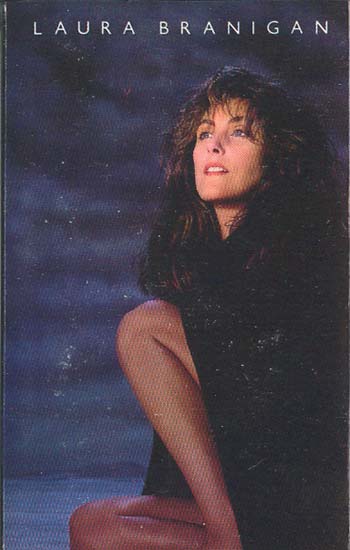
THE CASSETTE CHRONICLES – LAURA BRANIGAN’S self-titled release

By JAY ROBERTS

The Cassette Chronicles is a continuing series of mini reviews and reflections on albums from the 1980’s and 1990’s. The aim of this series is to highlight both known and underappreciated albums from rock, pop and metal genres from this time period through the cassette editions of their releases. Some of the albums I have known about and loved for years, while others are new to me and were music I’ve always wanted to hear. There will be some review analysis and my own personal stories about my connection with various albums. These opinions are strictly my own and do not reflect the views of anyone else at Limelight Magazine.

LAURA BRANIGAN – LAURA BRANIGAN (1990)

Laura Branigan is a guilty pleasure of mine that I don’t really feel all that guilty about liking. On this 1990 release, she finds herself once again mining a decidedly more adult contemporary musical bent, though she doesn’t completely abandon the pop/dance type sound that made her famous in the early 80’s either.

In fact, the album’s first two singles managed to give her a bit of a hit on both of those musical charts. The first single, “Moonlight On The Water”, kicked off the album and despite my opinion that it felt more like an adult pop song with a style that worked, it actually turned out to be a dance hit for Branigan. 

Meanwhile, “Never In A Million Years” did hit the Adult Contemporary charts. After listening to that song, I can understand why. The song is a ballad and given how picky I am about those songs these days, it is always a tricky needle to thread to get me to enjoy them. But this song was immensely enjoyable. Branigan’s vocal performance on this song is my favorite on the album. She put every possible ounce of emotion into the work and came out with one of the best songs of her catalog. 

I wish that I could say more nice things about the rest of the songs on Side One of the album but sadly, the increased level of maturity in how the album sounds didn’t necessarily lend itself to the material itself being all great all the time. The one remaining noteworthy thing about Side One was the pounding beat in “Let Me In” (which was originally recorded by Eddie Money). However, I can’t decide if it should be considered hypnotic or just sleep inducing. I have to admit, I felt myself nodding off during this one.

As for Side Two, Branigan gets things started with a cover of the Vicki Sue Robinson disco hit “Turn The Beat Around”. I don’t know how much of my metal cred I will lose for saying this but I really did quite enjoy Branigan’s rendition. The song “Unison” took a bit for me to get into it but it does grow on you. I was somewhat disappointed in the two ballads on Side Two. “No Promise, No Guarantee” was rather ineffective throughout the song’s running time. The more forceful approach at the end of the song did little to improve my thoughts on the track. As for Branigan’s cover of the Bryan Adams song “The Best Was Yet To Come”, it just didn’t really come together fully for me. The slow nature of the song did lend itself to Branigan’s vocals but despite the dramatic assist from a boys choir as backing vocalists, the song felt antiseptic to me.

Of course then you have a song like “Reverse Psychology” which is a fast paced number with a pure pop song delivery. I liked the track and despite its problematic title for what you’d expect for a song on the pop charts, this really could’ve been a breakout hit in my book.

This was the second to last full length album from Laura Branigan and it continues the trend of Branigan being more involved in the creation of the songs she’s singing. At times, she’s turning out some great work and then there are the songs that really didn’t work for me. It is a little disappointing that there wasn’t more to like but I do really enjoy those songs where she is at the top of her game.

NOTES OF INTEREST: This was the first album of Branigan’s that did not produce a top 40 single for the Billboard chart.  The singer co-produced three of the songs on the album. They were “Let Me In”, “Turn The Beat Around” and “The Best Was Yet To Come”. 

“Unison” was also covered by Celine Dion the same year that Branigan did it and it became a big hit off her first English language album.

Peter Wolf produced “Never In A Million Years” and “No Promise, No Guarantee”. He played all the instruments on both songs except for the guitars.

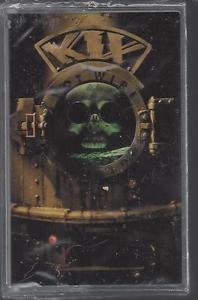
The Cassette Chronicles – Kix’s ‘Hot Wire’

By JAY ROBERTS

The Cassette Chronicles is a continuing series of mini reviews and reflections on albums from the 1980’s and 1990’s. The aim of this series is to highlight both known and underappreciated albums from rock, pop and metal genres from this time period through the cassette editions of their releases. Some of the albums I have known about and loved for years, while others are new to me and were music I’ve always wanted to hear. There will be some review analysis and my own personal stories about my connection with various albums. These opinions are strictly my own and do not reflect the views of anyone else at Limelight Magazine.

KIX – HOT WIRE (1991)

Following up on the platinum success of 1988’s Blow My Fuse, the Kix album Hot Wire ended up being a commercial failure when it sold only 1/5 of what the previous album had sold. So you must be thinking that the album was garbage right?

WRONG!

It’s funny, really didn’t pay that much attention to Kix until I saw that killer video for the song “Cold Blood” and fell in love with the song and the super fine model in said video. I did get out to see them open for Whitesnake in 1990 based on their reputation as a sterling live act. But like a lot of people, I also kind of abandoned the band after the Blow My Fuse album too. I have no explanation or defense for this, it is simply a statement of fact. 

Truthfully, other than the outstanding single “Girl Money”, I have never heard any of the songs on this album until I listened to it for this article. More’s the pity because it is chock full of fantastic rock and roll. The Maryland rockers mesh bluesy rock and roll with a bit of an AC/DC bent and turn out some great music.

The songs on the album were written or co-written by bassist Donnie Purnell with no other band members receiving writing credits. Instead, producer Taylor Rhodes co-wrote half the songs. Other outside collaborators were used as well.

But the lack of input from the majority of the band didn’t affect the overall performance from the band. The first side of the album opened with the title track which got the blood flowing and led into “Girl Money”, with an eminently catchy chorus. I was disappointed with the power ballad “Tear Down The Walls” which felt rote. I would’ve liked “Luv-A-Holic”, a bruising rocker, more if the vocals hadn’t been buried a bit too deep in the mix. But the band rallied to close out the side with an admittedly stupidly titled “Bump The La La”, which despite its title was a surprisingly peppy rocker with another catch chorus.

Side Two of the album is where the band really was firing on all cylinders. There’s not a bad song to be found. For the most part, it is straightforward rockers on tracks like “Rock & Roll Overdose”, “Cold Chills” and “Pants On Fire (Liar, Liar)”. There’s a real bluesy intro to “Hee Bee Jee Bee Crush” before that song also explodes into an uptempo rocker. Of course, the lyrics to that song sound a bit fetishistic to me, but I could be reading entirely too much into them. However, the best of the bunch is the song “The Same Jane”. It’s another blistering run through from Kix but the lyrics about a woman who has changed from a party girl to a seemingly “responsible” adult are killer and the chorus envelops the listener and makes you want to get up and rock out.

For the most part, Kix really had just one serving of commercial musical success with the Blow My Fuse album. But the lack of sustained record sales doesn’t tell the whole story because they really knew how to put together some great songs. The band is definitely underrated in rock history and for my non-girl money, I’d wager to say that Hot Wire was just as good a release as the one that made them famous.

NOTES OF INTEREST: John Palumbo of prog rockers Crack The Sky is credited with co-writing two tracks on Hot Wire, “Pants on Fire (Liar, Liar)” and “Hee Bee Jee Bee Crush”. 

Hot Wire producer Taylor Rhodes has worked with Aerosmith, Ozzy Osbourne, Cheap Trick, Journey, Tora Tora, Celine Dion and others throughout his career.

After the release of the 1995 album $how Bu$ine$$, the band essentially went their separate ways until they reunited in 2003 without Donnie Purnell. But it wasn’t until 2014 when they released a new studio album, the aptly titled Rock Your Face Off, which did exactly that.

The Cassette Chronicles – Hardline’s “Double Eclipse”

By JAY ROBERTS

The Cassette Chronicles is a continuing series of mini reviews and reflections on albums from the 1980’s and 1990’s. The aim of this series is to highlight both known and underappreciated albums from rock, pop and metal genres from this time period through the cassette editions of their releases. Some of the albums I have known about and loved for years, while others are new to me and were music I’ve always wanted to hear. There will be some review analysis and my own personal stories about my connection with various albums. These opinions are strictly my own and do not reflect the views of anyone else at Limelight Magazine.

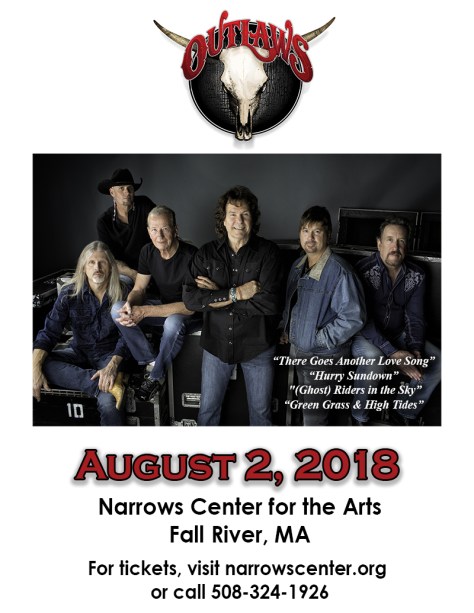
ADVERTISEMENT – Click on the above ad to purchase tickets to the Outlaws at the Narrows Center in Fall River, MA, on August 2, 2018!

HARDLINE – DOUBLE ECLIPSE (1992)

In modern day parlance, the debut album from Hardline would now be considered part of the melodic rock genre. But back in 1992 it was simply, despite coming out at the worst possible time considering grunge was about to explode, a hard rock and roll album.

The funny thing for me is that it reversed what I imagine was a generations long tradition. In music, it seems that the tradition is for an older sibling to pass down the music they love to a younger sibling. I know that in some cases, that it is how it worked for my brother and I.

But I have to admit until it came time to write this article, I had never bothered listening to Hardline. Rather, it was my brother who actually liked the band. He had their first couple of albums and really liked them. I can confirm that because ahead of listening to Double Eclipse, I checked with him to be sure my memory was correct. He said that this particular album was “cool”.

So I had some real interest in seeing if my brother was belatedly passing music UP to me.

Hardline featured singer Johnny Gioeli, brother Joey Gioeli on guitar along with Journey’s Neal Schon, Todd Jensen on bass and Deen Castronovo on drums. It was a solid lineup of talented players who could write a decent rock song with one great melodic hook after another.

But it did take a few minutes for me to really start getting into the album. The opening track is called “Life’s A Bitch” and it starts out as a great sounding fast paced rocker. The problem is that for the second half of the song, it just kind of flops around like a fish out of water, ruining the great start.

But thankfully for me, things pick up with the very next song. “Dr. Love” might not be the most original song title but the track as a whole sounds fantastic as it starts out a bit slowly and then gets moving right along quickly. “Rhythm From A Red Car” is a rocking thumper with a smoking guitar solo.

While the power ballad “Change of Heart” is incredibly weak, the first side of the album closed out with two fantastic rockers. I’m not sure exactly why it took seven people (including singer Eddie Money) to write the song “Everything” but it was excellent, perhaps disproving that saying about “too many cooks”. The majority of the songwriting is credited to Neal Schon and the Gioeli brothers. They wrote or co-wrote eight of the album’s twelve songs.

I wish that I could say I loved the second side of the album as much as side one, but after a couple of great tracks to start off the side, the material kind of felt more like filler than great songs to rock out to.

“Hot Cherie” is a hard driving rocker with a great melodic sense to the song. Johnny Gioeli’s vocal work gives the song an added level and the way the lyrics flow really helps to further capture the band in fine form. “Bad Taste” is just an aggressively blazing number that got me fired up.

But “Can’t Find My Way” was merely a shoulder shrug for me. I did think “I’ll Be There” was decent but the Neal Schon instrumental “31-91” and the somewhat grandiose but still missing the mark balladry of “In The Hands of Time” brought Double Eclipse to a less than resounding finish.

When the band was on fire, which is basically whenever they are rocking out, my brother was indeed right…Hardline is “cool”. I just wish there’d been more of that and less in the way pedestrian balladry and other assorted valleys amongst those melodious peaks.

NOTES OF INTEREST: The band is still active today and has released a total of five studio albums along with a live album. Singer Johnny Gioeli is the only remaining original member.

Bassist Todd Jensen recorded with Alice Cooper and Paul Rodgers and briefly played with Ozzy Osbourne. He also spent time as tour manager for David Lee Roth.

Drummer Deen Castronovo has been in three other groups that featured guitarist Neal Schon. The first was Bad English which came before Hardline. After Hardline, there was a 17-year stint in Journey as well as Schon’s Soul SirkUS project. In mid-July 2018, his reunion album with Johnny Gioeli will be released under the Gioeli-Castronovo banner. The album is set to be called Set The World On Fire.

The Cassette Chronicles – Reverend’s self-titled debut E.P.

By JAY ROBERTS

The Cassette Chronicles is a continuing series of mini reviews and reflections on albums from the 1980’s and 1990’s. The aim of this series is to highlight both known and underappreciated albums from rock, pop and metal genres from this time period through the cassette editions of their releases. Some of the albums I have known about and loved for years, while others are new to me and were music I’ve always wanted to hear. There will be some review analysis and my own personal stories about my connection with various albums. These opinions are strictly my own and do not reflect the views of anyone else at Limelight Magazine.

ADVERTISEMENT – Click on the above ad to purchase tickets to Michael Glabicki and Dirk Miller (of Rusted Root) in the Vault at Greasy Luck in New Bedford MA, on July 14, 2018!

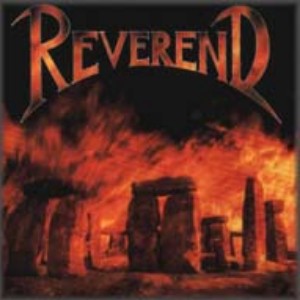
REVEREND – REVEREND (1989)

For those that don’t know or perhaps have forgotten, the story behind the formation of Reverend is a bit of musical chair theater. When singer David Wayne left Metal Church in the late 80’s, he was eventually replaced by singer Mike Howe.

Before joining up with Metal Church, Howe was the frontman for the band Heretic. They released an excellent album called The Breaking Point in 1988 just before Howe left and the band split up.

But as luck would have it, the other ex-members of Heretic ended up asking David Wayne to check out their material and after some initial hemming and hawing Wayne signed on with them and thus came the newly formed Reverend.

Calling the process by which Metal Church and Heretic essentially swapped singers a bit incestuous might be a little too much like an episode of Game of Thrones but it certainly was a bit odd when it first happened.

Reverend’s self-titled debut EP contained just four songs but it laid the foundation for what was to come on the band’s first two full length albums.

The band’s sound is one of classic heavy metal power and thunder. Wayne’s vocals were still powerful and intensely delivered. Musically the band delivered the goods as well.

With only four songs, there’s a definite feel that this is just a sampling for listeners. The songs are all pretty fast paced here.

At first listen, I was somewhat unimpressed with the first two songs on the album. “Powers of Persuasion” didn’t persuade and “Dimensional Confusion” provided plenty of that second word. But that was more due to me being unfamiliar with the music rather than the actual quality of the tracks. After I listened to the songs a couple more times, I started realizing the songs had more going for it than I realized the first time around.

Still, the last two tracks were my favorite. “Wretched Excess” was the most vocally aggressive song. David Wayne’s vocals were at times spit out like machine gun fire which made me think of the same time of song construction that Overkill does on some of their material (I’m thinking of songs like “E.N.D.” from that band’s album The Years Of Decay.

As for the closing song “Ritual”, that is what I would call the band’s first GREAT song. The song craft is amazing as the music and lyrics merge perfectly. It’s a song that makes the EP for me and makes the release that much stronger for its inclusion.

Pure heavy metal played straight up fast and furious is the best way to describe Reverend the band and the EP. It certainly whets the appetite for seeking out the band’s two full-length albums World Won’t Miss You (1990) and Play God (1991).

NOTES OF INTEREST – David Wayne died after a car crash in 2005. 

Reverend guitarist Brian Korban, who was a member the original lineup of Heretic, reformed Heretic in 2011. They’ve released two albums, A Time Of Crisis (2012) and A Game You Cannot Win (2017).


The Cassette Chronicles – U.D.O.’s ‘Animal House’

By JAY ROBERTS

The Cassette Chronicles is a continuing series of mini reviews and reflections on albums from the 1980’s and 1990’s. The aim of this series is to highlight both known and underappreciated albums from rock, pop and metal genres from this time period through the cassette editions of their releases. Some of the albums I have known about and loved for years, while others are new to me and were music I’ve always wanted to hear. There will be some review analysis and my own personal stories about my connection with various albums. These opinions are strictly my own and do not reflect the views of anyone else at Limelight Magazine.

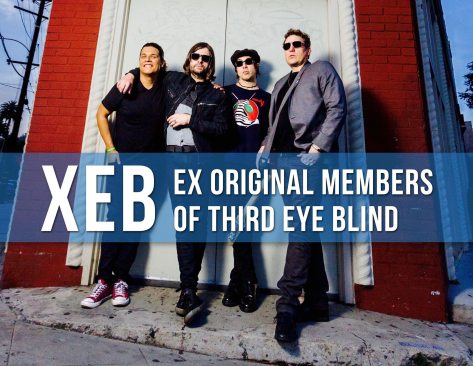
ADVERTISEMENT – Click on the above ad to purchase tickets to XEB in the Vault at Greasy Luck in New Bedford MA, on June 23, 2018!

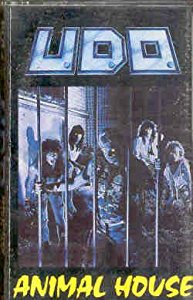
U.D.O. – ANIMAL HOUSE (1987)

Normally when I choose which albums to write about in this series, I try to avoid using any particular artist in back to back weeks. This week, however, I am purposely repeating an artist choice because I have seen my admiration grow and grow for singer Udo Dirkschneider. 

I would say that a good part of that increasing admiration stems from seeing him live for the first time. He delivered such an amazing performance that it might just end up being my favorite concert of 2018.

So, when I remembered that I had a copy of the first U.D.O. album Animal House, I had thought to hold off a week. But then I said to heck with that! I didn’t want to wait to listen and write up my thoughts about the album.

This is the first “solo” album for Dirkschneider, but when I was reading the liner notes I had to wonder just how much of a solo album it really was. All the music is credited to “Accept and Deaffy” and while it doesn’t say it in the liner notes, the Wikipedia page for the album says the song “Lay Down The Law” credits its performance to Accept and U.D.O.

Don’t get me wrong, I actually quite enjoyed this album but it did strike me a bit odd for an album that was Udo’s declaration of independence after leaving (or was it a firing?) Accept that they’d write an album FOR him.

As for the music, I thought the first side of the album was a bit of a mix. The title track opens the album and a creepy opening piece is used before the song launches into a faster paced rocker. Meanwhile the song “They Want War” has a big keyboard sound as well as the use of a children and youths choir to fill out the finished product. It seemed a bit weird at first but it actually worked in the end.

Otherwise, the first side of the album rocked hard with “Go Back To Hell” and “Black Widow” then closed out with the ballad “In The Darkness”, which thankfully was pretty enjoyable.

Side two was much more of a full on metal slobberknocker. That “Lay Down The Law” song explodes in your ear like a few dozen sticks of dynamite. There’s little subtly in the title of “We Want It Loud” but that’s fine because it’s an energetically paced rocker. 

The band downshifts a little on “Warrior” but the song still manages to be rather heavy. “Coming Home” is blazing with Udo’s vocals fueling the fieryness of the song.

I really like when an album closes out with a fast-paced cut, leaving you at an adrenaline high point as it takes its leave from you. But “Run For Cover” was far slower than that. It straddles the line between a ballad feel and a more anthemic sound. I’d be lying if I told you if I was disappointed in the song as a closing track though. It actually turned out rather well.

So, while I do wonder how much of a solo album you can really call this one, Animal House was a no doubt smashing way to introduce U.D.O. upon the world. 31 years later, the band is still going strong and this album laid the foundation for all that came after it.

NOTES OF INTEREST: Guitarist Peter Szigeti and bassist Frank Rittel were only a part of the band for the Animal House album, but they each played on the first three studio albums from Warlock (Burning The Witches, Hellbound and True As Steel).

The CD edition of the album had a bonus track called “Hot Tonight”. In 2013, Animal House was among the albums given anniversary edition reissues. It included four live bonus tracks and the video for the song “Go Back To Hell”.

The Cassette Chronicles – U.D.O.’s ‘Faceless World’

By JAY ROBERTS

The Cassette Chronicles is a continuing series of mini reviews and reflections on albums from the 1980’s and 1990’s. The aim of this series is to highlight both known and underappreciated albums from rock, pop and metal genres from this time period through the cassette editions of their releases. Some of the albums I have known about and loved for years, while others are new to me and were music I’ve always wanted to hear. There will be some review analysis and my own personal stories about my connection with various albums. These opinions are strictly my own and do not reflect the views of anyone else at Limelight Magazine.

ADVERTISEMENT – Click on the above ad to purchase tickets!

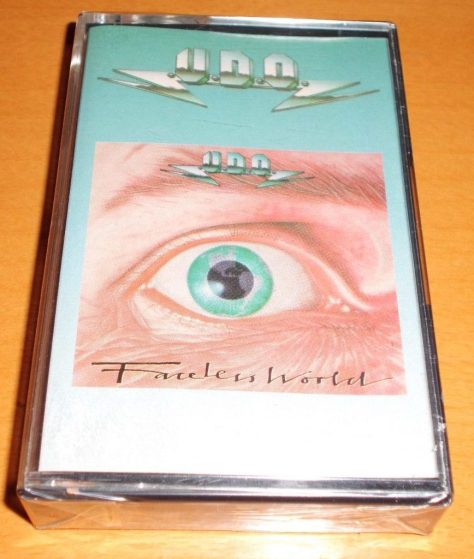
U.D.O. – FACELESS WORLD (1990)

It’s a funny thing to me that despite the fact that I’m a really big fan of Udo Dirkschneider’s solo band U.D.O., I never once bothered to pick up one of their albums until 2004’s Thunderball which was the band’s 9th studio release.

Earlier this year, I was able to see the Dirkschneider band live in concert. It’s basically the U.D.O. lineup but they played an entire set of songs from Udo’s time in the band Accept. This was due to it being a two year world tour where he was playing the songs live for the last time before retiring them from his set list.

The show was simply freaking amazing and while I’ve picked up all the albums post-Thunderball, it lit a fire under me to go back and get the earlier material as well. I grabbed four CDs from the merchandise table at the show, but I also had picked up the cassette edition of this album, the band’s 3rd studio release, on one of my music buying excursions.

The first thing I noted upon listening to Faceless World is that the material has a much more considered and measured feel to it. According the Wikipedia post about the album, it has far lighter feel than the two albums that preceded it or any of the ones that came after it. At times, it feels more like a rock and roll album that one of the band’s more go-for-broke metal offerings.

In fact, I’d be hard pressed to call “Trip To Nowhere” anything other than a straightforward rock and roll song. Yes, there’s more of an edge to it because of Udo’s instantly identifiable vocal style but there’s really not a whole lot of metal aggression to the track. However, you will find that whether rock or metal, it is a very cool sounding song. I found that “Restricted Area”, while a fast moving rocker, also had a strong rhythmic feel to it as well.

The album opening “Heart of Gold” is a decent track but the way the vocals alternate within each verse from soft to hard felt a bit weird. Luckily, the song’s chorus was really good and helped give an overall lift to cut. Speaking of songs with stand out choruses, “Blitz of Lightning” has a very lyrically impressive one.

For the majority of the material on Faceless World, the songs range from mid-to-uptempo with a few songs really earning more of a sense of the all out aggression metal feel. But as is the case, there’s always a ballad track. Unfortunately, “Unspoken Words” was more than a bit hard to get into. There’s been a number of strong ballads in the course of the U.D.O. discography but this one pales in comparison. Also, the title track…totally flat and lifeless!

Of course, if you want to really stick your head into the speakers to make your ears explode with metal goodness, you would need to do it on the songs “Born To Run” and “Can’t Get Enough”. Both are intense pieces of music with the latter song being the most fiery example of pure metal. Lyrically strong, each of them is just over three minutes long. They get in, rock you into next week, and then blaze their way out again.

I’d have to say that I liked this album overall, despite the seeming attempt to be more reined in with the songwriting. There’s only a couple of down tracks out of the 12 on the cassette and honestly, it’s extremely hard to go wrong with any of the music that features the inimitable Udo Dirkschneider.

NOTES OF INTEREST: There was an anniversary edition of the album released on CD in 2013 that included two live bonus tracks and the video for “Heart of Gold”.