Category Archives: Cassette Chronicles

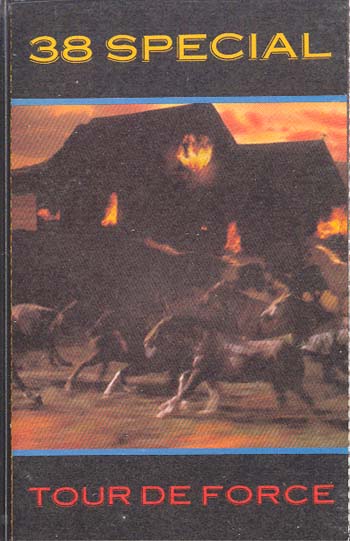
The Cassette Chronicles – .38 Special’s ‘Tour De Force’

BY JAY ROBERTS

The Cassette Chronicles is a continuing series of mini reviews and reflections on albums from the 1980’s and 1990’s. The aim of this series is to highlight both known and underappreciated albums from rock, pop and metal genres from this time period through the cassette editions of their releases. Some of the albums I have known about and loved for years, while others are new to me and were music I’ve always wanted to hear. There will be some review analysis and my own personal stories about my connection with various albums. These opinions are strictly my own and do not reflect the views of anyone else at Limelight Magazine.

.38 SPECIAL – TOUR DE FORCE (1983)

The sixth studio album from .38 Special continued the band’s commercial peak from the previous release Special Forces (which I wrote about in a previous article in this series).

Tour De Force was highlighted by two big hits in the songs “If I’d Been The One” and “Back Where You Belong”. While strictly speaking the former was the more successful song in terms of chart ranking, it is “Back Where You Belong” that is the most memorable song of the duo for me. However, both songs are quite the earworms when you listen to them. Each is a faster paced track full of melodic hooks and great vocal performances. This isn’t much of a surprise to anyone that has ever been a fan of the band I know, but still at the point in time this was released, it is always good to have musical beliefs reconfirmed over and over again.

Surprisingly though, one of the best songs on the album is the first song on Side Two of the album. “Twentieth Century Fox” has a nice edgy yet still commercially viable musical vibe and the song has a great sly lyrical slant as well as a powerfully assured vocal delivery. I’d never heard the song myself until I bought a greatest hits collection from the band but this song has quickly become one of my favorites.

Sadly, I cannot say the same for the Side One song “One Time For The Old Times”. Despite a slighty uptempo pace to the song, the vocal performance left me wanting something more. It struck me that there was an attempt at being a lot more subtle in the delivery of the lyrics but instead of coming off as a distinct change in the performance, it crashed and burned as a song that was far too mellow and relatively unworthy to have been a .38 Special song.

The song “Undercover Lover” features a set of lyrics about a male gigolo and it made me think of that David Lee Roth “Just A Gigolo” track. The styles of the two songs are different of course, but the blunt for the times lyrics kind of made me chuckle. It’s a decent song though and I really liked the guitar work throughout the track. Taking a different lyrical bent on “One Of The Lonely Ones”, the band sings about a broken hearted woman unsure if she’ll seek out romantic companionship again.

“I Oughta Let Go” was pretty much a 180 degree turn from the band’s brand of southern rock/melodic pop rock. There was a real swinging country pop sound to the song. Everything felt different with the performance. It was kind of out of place on this album given the rest of the material but I can’t lie, I dug the song. 

Perhaps the single most surprising song on Tour De Force for me was “Long Distance Affair”. Everything about this song screams “High energy quality rock and roll”! Musically, it is a fast paced guitar oriented number. And when you combine that with the vocals, you get a song that I think should’ve been one of the band’s bigger hits. Also, when looking at the liner notes, it is one of the longer set of lyrics on the album. So there’s a bit extra in the song’s storytelling as well.

Speaking of the liner notes, it probably doesn’t matter to anyone now but I noticed as I read along with the lyrics that what ended up on the album didn’t always match what was written down in print. Also, for some reason the sequencing of the song lyrics in the liner notes is all over the place in comparison to the running order of the songs. For me, that seems a little slipshod. No it doesn’t actually affect the enjoyment of the album at all, it was just something that probably annoys only me.

What I found when listening to Tour De Force is that for me, there are times when I hear .38 Special as more of a straight forward rock/pop band than one that is more universally recognized as a purveyor of the southern rock style. I know that some might consider this a bit of an insult to the band, but I assure you it is far from that.

Because I grew up listening to the band via their hit singles on American Top 40, they were pop hitmakers to me back then. Of course, now that I’m far more understanding in terms of musical competency than I was back then, I grasp the full scope of the band. But in 1983, much like Survivor, .38 Special was a pop rock band to me and Tour De Force is a prime example of why I loved them for it.

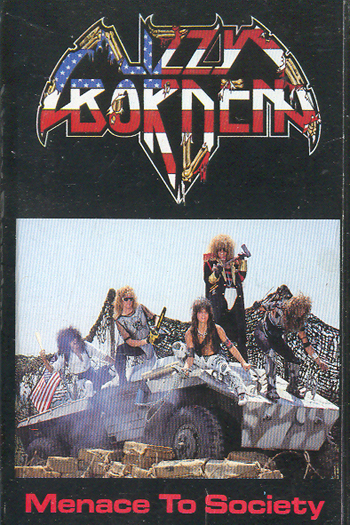
The Cassette Chronicles – Lizzy Borden’s ‘Menace to Society’

By JAY ROBERTS

The Cassette Chronicles is a continuing series of mini reviews and reflections on albums from the 1980’s and 1990’s. The aim of this series is to highlight both known and underappreciated albums from rock, pop and metal genres from this time period through the cassette editions of their releases. Some of the albums I have known about and loved for years, while others are new to me and were music I’ve always wanted to hear. There will be some review analysis and my own personal stories about my connection with various albums. These opinions are strictly my own and do not reflect the views of anyone else at Limelight Magazine.

LIZZY BORDEN – MENACE TO SOCIETY (1986)

Menace To Society is the second album from Lizzy Borden and I’d venture to say that it is one of the band’s most memorable releases. This is almost certainly due to the fact that the album contains one of the group’s all-time best songs in “Notorious”. 

Even though my timeline with the group didn’t start until the Visual Lies release, I do remember hearing “Notorious” on the various hard rock and metal specialty programs I would listen to on the radio. The song is an absolute classic! It rocks you hard and fast and with singer Lizzy Borden spitfiring the lyrics and the memorable backing chorus to give me depth to the song, it was pretty much the perfect situation for this song to come alive.

The problem for me with this particular album is that while others may consider this a classic of the mid 80’s metal era, I found myself more than a little unhappy with the majority of the other tracks on the cassette. 

The album opened with “Generation Aliens” and while it had a fast paced music soundtrack and a speedy delivery of the vocals, the song just never really took off for me. That kind of balls-out metal attack was also featured on “Stiletto (Voice of Command)” but with the same result. There’s nothing overtly wrong with the songs but at the same time, it is instantly forgettable once the song ends. It doesn’t have a stick to your ribs kind of staying power.

If I’m being honest, I felt that way about “Terror On The Town” and the title track as well. Even though I wrote about the band’s Give ‘Em The Axe EP in a previous article in this series where I said that I enjoyed the raw sound of those recordings, I just didn’t with this release. 

I say this because songs like “Bloody Mary”, “Love Kills”, “Brass Tactics” and “Ursa Minor” were gawdawful. And while I didn’t care for the songs in general, I was left wondering if the material would’ve sounded better if there’d been more of a polish to them in the production.

I also wonder if the fact that I loved the way Visual Lies sounded so much, if that affects the potential enjoyment factor for any of the releases that come before it. A song here and there sure but is my overall perception filtered through my love of that album? Gives me something to ponder as I listen to albums for future articles.

I should mention that the song “Ultra Violence” stands out alongside “Notorious” as a great track from the album. But unfortunately that’s about it. I missed out on this album when it was released in 1986, so when I dug this album out of the “Big Box of Cassettes” I had some high hopes that it would affect me in the same kind of positive manner that Give ‘Em The Axe did. But those hopes were mostly dashed and instead I was left feeling kind of gypped because I should’ve really dug this album. The fact that I didn’t seems like a musical failure on my part.

NOTES OF INTEREST – The album was reissued on CD in 2002 and has four bonus tracks. It was reissued again in 2018 on vinyl.

On June 14th, 2018 the new Lizzy Borden album My Midnight Things was released after an 11 year wait between new studio albums.

The Cassette Chronicles – Europe’s ‘Prisoners in Paradise’

By JAY ROBERTS

The Cassette Chronicles is a continuing series of mini reviews and reflections on albums from the 1980’s and 1990’s. The aim of this series is to highlight both known and underappreciated albums from rock, pop and metal genres from this time period through the cassette editions of their releases. Some of the albums I have known about and loved for years, while others are new to me and were music I’ve always wanted to hear. There will be some review analysis and my own personal stories about my connection with various albums. These opinions are strictly my own and do not reflect the views of anyone else at Limelight Magazine.

EUROPE – PRISONERS IN PARADISE (1991)

Welcome to another edition of “How did I not pay more attention to this album when it first came out?”

After the release of Europe’s 1988 album Out Of This World, I kind of soured on the band a little. So three years later when they released Prisoners In Paradise, I didn’t really give it much of a second thought. I heard the title track and while it had all the earmarks to make it a “Europe-type” song, I just kind of said, “OK” and moved on with my life.

But as luck would have it, the album ended up in my collection TWICE. My friend Jeff found a CD edition of the album and I picked up the cassette on a shopping trip. Once I got around to listening to it, I definitely have to break out the wet noodle for 50 lashes due to a small musical mind.

Now, it has to be said first off that if you didn’t like the 80’s sound of Europe, you probably won’t think much of this album either. But for those of us who do enjoy all that encompasses being a child of the 80’s metal era, this album is an audio feast.

The album opens with “All Or Nothing” which is a rocking track with a vibrantly ripping guitar solo. The band sounds great and singer Joey Tempest is in fine voice throughout each and every song on the album.

Side one really doesn’t have much of a downside. I liked the chorus to “I’ll Cry For You” a bit more than the main portion of the lyrics, but still overall the song was a great listen. “Little Bit Of Love” gets  your blood pumping and no matter where you turn, there’s a lot of quick stepping rock and roll for you to enjoy. “Talk To Me” and “Seventh Sign” are also staggeringly great.

When you flip the cassette over, things continue on in thrilling fashion. While the title track has all the hallmarks of a ballad in terms of the lyrical content, there’s far more “power” than “ballad” to the track. 

There’s more of an edgier rocking vibe than you might be used to with “classic Europe” on the song “Bad Blood”. It’s like you are being let in on something very few know about. It might be some kind of hint of what was to come when the band reformed, but any which way you look at it, the song is a winner.

For me, the only real downside to any one song on the album was on “Homeland”. The song was pretty slow moving and featured Tempest reflecting back on life and decisions made.  But I ended up restless to get on to the next song. 

But in the spirit of all that is good in rock and roll, the last three songs on the album more than make up for the momentary disappointment on “Homeland”. 

The song “Got Your Mind In The Gutter” has a great vibe. The rocker grabs you and there’s a great vocal turn from Tempest. And while “Til My Heart Beats Down Your Door” likely will make you think it is another ballad, it actually has more going for it than that.

While I loved most of the album, I particularly enjoyed the last song “Girl From Lebanon”. There’s just something to this song that really made it so appealing to me. As I listened to it, I couldn’t help but be struck by Joey Tempest’s vocals. They seemed almost conspiratorial in nature and made me think the track would serve as a great musical theme for a spy novel or something. Of course, the lyrics don’t really lend themselves to this idea of mine, it was just the overall feeling I got from the song in total.

In short, what I’m saying is that while I definitely should’ve listened to this album back in 1991, I’ve listened to it now. And what I found was that on what was the band’s last gasp in their first go-round, they more than delivered the goods. Prisoners In Paradise is a solid gold album that should probably be re-evaluated by a lot more people than just myself.

NOTES OF INTEREST – This was Europe’s last studio album for 13 years when they released Start From The Dark in 2004 and overhauled their sound.

Prisoners In Paradise is the last album to feature guitarist Kee Marcello.

Mr. Big front man Eric Martin co-wrote the lyrics to the song “All Or Nothing”.

The Cassette Chronicles – Vinnie Vincent Invasion’s self-titled debut

By JAY ROBERTS

The Cassette Chronicles is a continuing series of mini reviews and reflections on albums from the 1980’s and 1990’s. The aim of this series is to highlight both known and underappreciated albums from rock, pop and metal genres from this time period through the cassette editions of their releases. Some of the albums I have known about and loved for years, while others are new to me and were music I’ve always wanted to hear. There will be some review analysis and my own personal stories about my connection with various albums. These opinions are strictly my own and do not reflect the views of anyone else at Limelight Magazine.

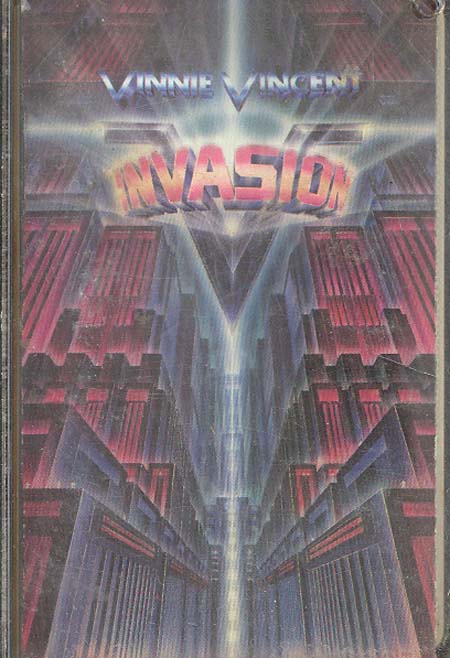
VINNIE VINCENT INVASION – VINNIE VINCENT INVASION (1986)

After years of being out of the public eye, ex-Kiss guitarist Vinnie Vincent has emerged in recent months and given a number of interviews. One of the talking points in the interviews has been Vincent totally trashing the second and final album that was recorded by his Vinnie Vincent Invasion group. The All Systems Go album featured Mark Slaughter on vocals and Vincent has nothing good to say about the album or the singer.

While I once owned that album, I’ve never owned or even heard the self-titled debut release until I picked it out of the “Big Box of Cassettes” to write this article. But after hearing it, I can understand why Vincent goes out of his way to dump all over the second album.

On All Systems Go, there seemed to be much more of a focus on writing full and actual songs. Whereas on this album, it seemed the songs were given, if they were lucky, secondary importance to serving as a way for Vincent to musically masturbate with his guitar and get people to pay for it.

I know this likely means I won’t be receiving a Christmas card from Vincent anytime soon but the fact is that there really isn’t much in the way of a decent track on this entire album. There’s ten songs and none of them really stuck with me or even got much of a rise out of me at all.

While the attempt to give listeners a jolt to the heart by making pretty much every song a fast charging rock and roll romp might’ve been a good idea, I found that the uniform lack of quality songwriting trumped all. It was all about how fast and how long Vincent could play a guitar solo. 

The band lineup featured ex-Journey singer Robert Fleischman, bassist Dana Strum and drummer Bobby Rock. Sadly, they are all thoroughly overshadowed by the endless (and pointless) soloing from Vincent. At times, Fleischman’s vocals were so low in the mix as to be swallowed up by the music.

The only song that showed any signs of slowing down was “Back On The Streets” which had a somewhat darker tone to it. It also ended up being a vocal duet with Fleischman and Vincent taking turns on vocals. And yet somehow, this version of the song still managed to not work.

A long time ago, when music magazines were pretty much the only way you got news and reviews about artists, I remember reading one particular magazine’s reviews section. I don’t remember which album was being written about but the review for it was simply “This Album Sucks!” While that might seem more than a bit unprofessional, I have to confess that I had the same feeling about the Vinnie Vincent Invasion album.

I know that there are a lot of fans of Vincent out there and my opinion is likely going to be in the extremely small minority, but there’s nothing here that makes me ever want to listen to this album again. I’ve heard some mind-numbingly bad albums while writing this series, this just might be one of the worst ones yet.

NOTES OF INTEREST: The video for “Boyz Are Gonna Rock” features Mark Slaughter lip-synching over the vocal track from Robert Fleischman, who had left the group before the video shoot over a contract dispute.

The song “Animal” was on the soundtrack for the comedy film Summer School that starred Mark Harmon and Kirstie Alley. “Back On The Streets” was covered by John Norum on his Total Control solo album, which was featured in The Cassette Chronicles back in April of 2017.

Bobby Rock is currently the drummer for Lita Ford and I’ve seen him perform twice with her in the last few years.

The Cassette Chronicles – House of Lords’ ‘Sahara’

By JAY ROBERTS

The Cassette Chronicles is a continuing series of mini reviews and reflections on albums from the 1980’s and 1990’s. The aim of this series is to highlight both known and underappreciated albums from rock, pop and metal genres from this time period through the cassette editions of their releases. Some of the albums I have known about and loved for years, while others are new to me and were music I’ve always wanted to hear. There will be some review analysis and my own personal stories about my connection with various albums. These opinions are strictly my own and do not reflect the views of anyone else at Limelight Magazine.

HOUSE OF LORDS – SAHARA (1990)

The second album from House of Lords might’ve been slightly less successful than their first album when you look solely at sales and chart records. But after listening to this album for the first time in more than two decades, I was a bit stunned to hear how well Sahara holds up. The album is a sleek, fast and at times highly aggressive guitar oriented album. While keyboardist Greg Giuffria started the band, the pomp and grandeur associated with the band’s sound gives way to the more guitar heavy sound and it comes off better for doing so.

I saw the band on the tour for this album. It was March 15th, 1991, when I saw them at the Citi Club in Boston (for those that don’t remember the place, it was on Lansdowne Street behind Fenway Park). They were opening for Nelson if you can believe it! While I am now what you might call an obsessive set list keeper, I didn’t keep track of the songs they played on this night. Oddly, I do have the Nelson set list. I was there to see House of Lords, but I brought my sister with me that night because she was a huge fan of Nelson (as well as loving their dad Ricky Nelson). So we both got to see bands we were interested in. Even more fun was the fact that we got driven to the show by my brother’s godfather in his limo.

Anyway, the album came out via Gene Simmons own label, Simmons Records, with the accompanying distribution of RCA and BMG.  The band had lost original guitarist Lanny Cordola (even though he does get co-writing credits on two songs on Sahara) and replaced him with Michael Guy. However, I’m not quite sure how involved Guy actually was with the band. While he’s listed as a band member in the liner notes, the Wikipedia entry for the album says that Doug Aldrich was the band’s guitarist. Aldrich is credited in the album notes as providing “additional guitars”. So there’s a mystery for you.

Like I said, I haven’t really listened to this album since 1991. The band’s cover of the Blind Faith song “Can’t Find My Way Home” still gets airplay on classic rock stations, so I’ve heard that song many times, but none of the other nine songs really stuck in my memory. After listening to Sahara for this article, I’m kind of saddened that they didn’t. 

The album opens with the song “Shoot” and though the term “crushing” isn’t one you might expect to read in association with House of Lords, that is exactly what this fast paced track made me think. There’s a nice gritty vibe to the song as well. I think part of that is because of the way singer James Christian’s vocals manage to get both down and dirty and soar high at the same time.

With “Can’t Find My Home” and the song “Remember My Name”, you get the required for the times power ballad tracks. Otherwise, rocking out madly is the name of the game here. There is really no track here I didn’t like hearing for the first time all over again.

The song “Heart On The Line” was written by Cheap Trick’s Rick Neilsen. He played the lead on the song as well. Probably unsurprisingly, this really did sound like a Cheap Trick with both Neilsen and singer Robin Zander performing backing vocals on the song as well.

The album’s title track might be the best example of the band’s ability to go for the more grandiose thematic openings to some of their songs. The extended opening here is still pretty rocking though. You might think that with a title like “It Ain’t Love” that you are in for another ballad, but despite opening up that way, the song soon vaults past that particular designation and becomes this big huge rocker. 

The album’s closing track “Kiss Of Fire” is just a pure ballsy rocker that really lets drummer Ken Mary shine in the intro as he slams away on the kit to fuel the adrenaline charged song. 

Given that a lot of the albums I listen to for this series are ones that I’ve either overlooked or skipped entirely when they were first released, I do enjoy finding what to me is an undiscovered gem. And with all ten songs on the album really appealing to me, I have to say that Sahara is one of my favorite albums to have written about for The Cassette Chronicles. It’s got a heavy power chord driven guitar sound, James Christian’s super vocals and it just rocks your socks off!

NOTES OF INTEREST – Despite numerous lineup changes over the years, House of Lords is still active today. The band will be playing in The Vault at the Greasy Luck in New Bedford, MA, on Sunday October 14th, 2018. And I was lucky enough to have already met current drummer BJ Zampa at that very venue when he played there on August 31st, 2018, in a couple of tribute bands (Black Knight’s Castle and Without Warning).

The Rick Nielsen written song “Heart On The Line” did end up being recorded by Cheap Trick themselves for their 2016 album Bang, Zoom, Crazy…Hello!

There’s a who’s who list of guests on this album. Others credited for playing guitar on the album included House of Lords singer James Christian, Krokus guitarist Mandy Meyer (mis-spelled Myer in the liner notes) and Chris Impellitteri. The backing vocals list included 20 people including White Lion’s Mike Tramp, Giuffria’s David Glen Eisley, Ron Keel and Autograph’s Steve Plunkett.

The Cassette Chronicles – Krokus’ ‘Headhunter’

By JAY ROBERTS

The Cassette Chronicles is a continuing series of mini reviews and reflections on albums from the 1980’s and 1990’s. The aim of this series is to highlight both known and underappreciated albums from rock, pop and metal genres from this time period through the cassette editions of their releases. Some of the albums I have known about and loved for years, while others are new to me and were music I’ve always wanted to hear. There will be some review analysis and my own personal stories about my connection with various albums. These opinions are strictly my own and do not reflect the views of anyone else at Limelight Magazine.

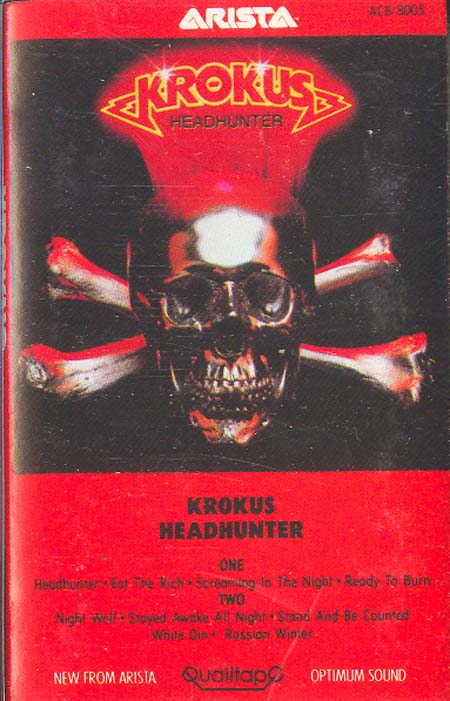
KROKUS – HEADHUNTER (1983)

You would think that a band that has released twenty albums over more than a forty year career would have made a pretty deep impression on me. But in the case of the Swiss rockers Krokus, that would be a false assumption.

If you’d asked me to name one of their albums, I likely wouldn’t have been able to do it. For whatever reason I never found my way into attaching my fandom to the band beyond the song “Screaming In The Night”. Beyond that, I have to own up to being essentially ignorant.

So when I dug Headhunter out of the “Big Box of Cassettes”, I wasn’t sure what to expect. I knew the band had kind of an AC/DC thing going for it with singer Marc Storace sounding an awful lot like he was auditioning for that particular band.

After listening to the album, I’m still not quite sure what to make of Krokus. The album opens up with two highly energetic and fast paced rock tracks. The title track has a particularly quick stepping feel to it. Both “Eat The Rich” and “Ready To Burn” are also charged rockers.

Headhunter features that classic “Screaming In The Night”, so it was pretty fun to hear that again. The song still gets airplay on classic rock radio stations and specialty programming shows, but it isn’t overplayed. Thus, when I have heard it on the radio, the power ballad still does have a specialness to it.

As for the second side of the album, things started out well with the opening “Night Wolf”. The song’s slow rolling intro gives way to a rocket fuel ride of a track. I thought Storace’s vocals were particularly enjoyable on this song. There was an added edgy snarl to his vocal delivery which made sense given the song’s lyrical content.

But then the band decided to include a cover of the Bachman-Turner Overdrive song “Stayed Awake All Night”. I’ve never really thought much of the original version of the song and Krokus didn’t accomplish anything that would be considered improving upon that original. It laid there flat and empty, a soulless attempt to curry favor with a song that admittedly many others have loved but I find a trying slog.

“Stand And Be Counted” was a decent enough rocker. I’d love to give you my first impressions on “White Din” and “Russian Winter”, but in all honesty, I fell asleep before the songs played. But when I woke up, I went back and listened to them both. I thought “White Din” was a bit of a futile waste of time. However, “Russian Winter” is actually a killer track. Even though the song is just over three and a half minutes, Krokus manages to give the song an epic feel to it. It feels like a longer song and I mean that in a good way. Fast paced and heavy, with a soundtrack that runs through your brain and a really great vocal turn from Storace, this is a great song!

Now, I know I said I don’t know what to make of the band. The album has some great highlights and not that many lows. But, while as a singular experienc I enjoyed the album, I can’t rightly decide if it makes me want to seek out more material from Krokus or not. Headhunter is good, but is it good enough to convert me into a long delayed fandom for the band? I just don’t know. I do have another Krokus album that will be featured in this series down the line, perhaps that will go a long ways towards answering my question.

Until that time, Headhunter does have a pretty solid pedigree and it was nice to finally get to experience a full album’s worth of material from Krokus.

NOTES OF INTEREST – The album was produced by Tom Allom, who is best known for producing a number of albums by Judas Priest. The song “Ready To Burn” features backing vocals from Judas Priest singer Rob Halford.

Jimi Jamison, who would go on to find his biggest fame with Survivor, also provided backing vocals for the album.

The band will embark on a career-ending farewell tour in 2019.

The Cassette Chronicles – Cinderella’s ‘Long Cold Winter’

By JAY ROBERTS

The Cassette Chronicles is a continuing series of mini reviews and reflections on albums from the 1980’s and 1990’s. The aim of this series is to highlight both known and underappreciated albums from rock, pop and metal genres from this time period through the cassette editions of their releases. Some of the albums I have known about and loved for years, while others are new to me and were music I’ve always wanted to hear. There will be some review analysis and my own personal stories about my connection with various albums. These opinions are strictly my own and do not reflect the views of anyone else at Limelight Magazine.

CINDERELLA – LONG COLD WINTER (1988)

As I wrote in my write up on the first Cinderella album Night Songs, I really wasn’t all that into the first two albums from the band. However, much like the case with that first album, I’ve had to do a major rethink about Long Cold Winter after listening to it again thirty years after the fact. I suppose better late than never would apply here, but I really need to go back in time and have a long musical discussion with my 18 year old self about the music I ignored.

While Long Cold Winter did have four songs that were released as singles, I can’t remember really being blown away by the rest of the tracks on the album. I loved the hits, but given what at the time I perceived to be just a bunch of filler material to round out the album, the album was doomed to eventually find its way out of my music collection.

Jump forward from 1988 to 2018, and it looks like I owe a large mea culpa to the band…AGAIN! The band started moving even more away from most of the glam sound on this album, even moreso than album #1. This shift was immediately on display with the opening song “Bad Seamstress Blues / Fallin’ Apart At The Seams”. The first part of the song was this really cool dead on bluesy intro. Mostly guitar with a little one verse lyrical passage, it really resonated with me and left me with the sinking feeling that I was going to be giving myself a mental head slap when all was said and done. The second part of the song is a rocking stomp that had me writing a note saying “This is a GREAT song!”

I mentioned that there were four songs that got released as singles. The album was front loaded with three of those songs. You had “Gypsy Road,” which despite being the song that charted the lowest out of the four, might just be my favorite song on the entire album. Listening to the album while reading the lyric sheet really gave me that new appreciation for Tom Keifer’s writing ability all over again. Other than one co-writing credit for bassist Eric Brittingham, Keifer wrote all the songs on this album.

When the band initially released “Don’t Know What You Got (Till It’s Gone),” I kind of found myself annoyed by it. However, as I listened to it now, I got the chance to go deeper into the lyrics and found myself suddenly being really digging the song. It was like I was hearing it with new ears or something. Maybe because the lyrics resonated with me due to my pathetically sad social life at this current point in life, but whatever the reason. I actually enjoyed the song a lot. 

And you can’t leave out “The Last Mile”, another rocking run through for the band. I do have to say that I was kind of disappointed by the closing song on the first side of the album. It’s called “Second Wind” but it actually did more to take the wind out of the sails of the album for a bit. It’s got a cool guitar solo and a long musical outro, but otherwise there was something missing with this number and I found myself feeling adrift while listening to the song.

The title track of the album opens up side two and while it had some really ballsy guitar work, I thought it failed to establish what seemed to be a moody atmospheric feel to the song. It left me cold (no pun intended) and I instantly hoped things would not be headed in the wrong direction with the rest of Side Two.

Thankfully, my fears were unfounded as “If You Don’t Like It” roared out of the speakers, with its butt-kicking ferociousness giving an instant jolt of energy. I really liked how the lyrics were so defiant and in your face. 

“Coming Home” was a mid tempo power ballad and the album’s third single. I enjoyed the song then and now. “Fire and Ice” was a bit of a surprise for me because it definitely fell under the banner of filler for me when I first listened to this album back in the day. But whether it was the song or myself that matured over the last three decades, the track has grown on me.

Cinderella closed out Long Cold Winter with a bang on the track “Take Me Back”. It’s a lyrical nostalgia trip down memory lane set to a rocking soundtrack. It’s a flat out great song but what really got me excited was how Keifer’s vocals/lyrics really flowed throughout the track, particularly on the chorus. 

It seems that once again, I’ve unearthed evidence that I failed to appreciate what was right in front of me all these years. While the notion of filler material isn’t completely dispelled for me because of the two songs I still really could do without, Long Cold Winter is actually far better than I ever gave it credit for upon its original release.  

NOTES OF INTEREST: The album initially went double platinum and was eventually certified triple platinum.

While Fred Coury was the drummer for Cinderella, like the first album, he did not play a single note on Long Cold Winter. Instead, the drums were recorded by Denny Carmassi (Heart) and Cozy Powell (Rainbow, amongst a host of other notable bands).

The Cassette Chronicles – Accept’s self-titled debut

By JAY ROBERTS

The Cassette Chronicles is a continuing series of mini reviews and reflections on albums from the 1980’s and 1990’s. The aim of this series is to highlight both known and underappreciated albums from rock, pop and metal genres from this time period through the cassette editions of their releases. Some of the albums I have known about and loved for years, while others are new to me and were music I’ve always wanted to hear. There will be some review analysis and my own personal stories about my connection with various albums. These opinions are strictly my own and do not reflect the views of anyone else at Limelight Magazine.

ACCEPT – ACCEPT  (1979)

While the stated time span of this series is the 80’s and ’90s, you’ll note that this article on the self-titled debut album from Accept dates to 1979. So it falls just outside of the parameters, but since the cassette edition I have appears to be a bargain basement reissue from 1986 (there’s even a “special bargain price” stamped onto the cover art), I’m fine with this slight exception. 

Now, it should be noted from the top that I’m a huge fan of the band. Three of their last four albums have ended up as my top album of the year they were released, and the fourth one came in at #2.

But in the interest of full disclosure, my Accept fandom didn’t start until the first time I heard the “Balls To The Wall” song. Given that came off the album of the same name, the band was on their fifth release before I was even aware of their existence.

Unlike a lot of bands that I “discover”, I have never really gone back to Accept’s earliest days to explore where they came from musically to where they are now. Until now that is.

The band’s first album has been less than charitably described by both singer Udo Dirkschneider and Wolf Hoffman. The common refrain seems to be that while it gave the band the ability to further their career, the songs weren’t really all that focused in one direction and the production was less than ideal.

I can see what they mean but at the same time, there are some rather interesting songs on the album. The first thing you notice at the start of the release is that the band has more of a straight up rock and roll sound as opposed to the more metallic nature fans have come to know in the last three plus decades. 

The first two songs, “Lady Lou” and “Tired Of Me”, are both quickly paced numbers. Both songs are good enough in their own right I suppose but truthfully they don’t really seem to have much staying power. It was actually track three, “Seawinds”, that struck me as the first strong track on the album. It’s a ballad but I found it rather a cool sounding track. It’s not like Accept has never done a ballad before and they do tend to have some good ones. For me, I’d add “Seawinds” to that list.

But never fear metal fans, because the rock and roll sound soon starts to give way to a heavier, more metal sound with “Take Him In My Heart”. The vocal performance on the song might strike you a bit odd at first because it seems totally out of character with what you might know of Udo’s vocal style but in the end this is just a very interesting song. And the scream from Udo at the end is a prime metal howl. As for the last song on the first side of the album, “Sounds Of War” really kicks in with a more metallic overtone as it races from start to finish.

Side two really has something going for it as the songwriting gets faster, heavier and far more aggressive. “Free Me Now” and “That’s Rock ‘N’ Roll” are straight up metal songs and if I could still headbang like a madman, that’s what I would’ve been doing.

I wasn’t crazy about the song “Glad To Be Alone”. It’s a plodding slog of a track at the start and while it does get faster as the song progresses, if I was to pick one song that best defines the band’s dissatisfaction with the album, it would be this one. It’s just a momentum killer for me.

Thankfully, the last two songs are once again fast paced and give an electrical charge to the ears and hearts of metal fans. “Helldriver” and “Street Fighter” are simple straight forward rockers with attitude to spare.

It’s funny to think that I liked this album better than the people who created it. But if beauty is in the eye of the beholder, then music must be in the ears of the listener. For me, Accept is where the nascent band first started showing signs of the future that was to come for them. The production may be raw and the songwriting may be less focused than what the band would’ve liked as they look back on it. However, for me this was one heck of an entertaining look at the very earliest days of one of my favorite bands.

NOTES OF INTEREST: Frank Friedrich played drums on Accept but according to Wikipedia, he decided against a career as a professional musician. Stefan Kaufmann was hired as his replacement before the album was released.

Bassist Peter Baltes sang lead on “Seawinds” and “Sounds Of War”.  


The Cassette Chronicles – CINDERELLA’S ‘NIGHT SONGS’

By JAY ROBERTS

The Cassette Chronicles is a continuing series of mini reviews and reflections on albums from the 1980’s and 1990’s. The aim of this series is to highlight both known and underappreciated albums from rock, pop and metal genres from this time period through the cassette editions of their releases. Some of the albums I have known about and loved for years, while others are new to me and were music I’ve always wanted to hear. There will be some review analysis and my own personal stories about my connection with various albums. These opinions are strictly my own and do not reflect the views of anyone else at Limelight Magazine.

CINDERELLA – NIGHT SONGS (1986)

It has been 32 years since the release of Cinderella’s debut album Night Songs and with the benefit of all that time having passed, hindsight is indeed 20/20. 

I owned the album back when it was released but I have to say that beyond the three best known songs on the album (“Shake Me”, “Nobody’s Fool” and “Somebody Save Me”), I remember being rather unimpressed by the material. The album just sat in my collection gathering dust until I got rid of it. For me, it was their third album, Heartbreak Station, that did the trick for me. That album remains my favorite release from the group.

But on a recent music buying excursion, I came across both Night Songs and Long Cold Winter on cassette and figured I had to pick them up and give a new listen to the album to see what I thought. What I found was that time has seemingly improved my taste because I have a newfound love of Night Songs.

Despite having a classic rock and straight up metal sound, the band was cast alongside the rest of the 80’s glam metal era. It might just have been a function of the prevailing tastes of the time, but it does strike me now as a big mistake.

The title track opens the album and while the uptempo pacing of the track gives an immediate jolt of energy to the listener, I wasn’t blown away by it. I thought it wasn’t the song to best represent the band.  But the next two songs were “Shake Me” and “Nobody’s Fool”, so suddenly the album was kicked into a higher gear. “Shake Me” was the first single released off the album and though it didn’t make the singles chart, it is simply a great in your face rocker. As for “Nobody’s Fool”, that was a monster hit on the charts and is pretty much the main reason why the album is now certified triple platinum. It’s the only song that can legitimately be thought of as a “power ballad”, but it is actually quite a bit more weighty than the more cloying aspects of the song genre.

I really dug the album track “Nothin’ For Nothin'”, which was another quickly paced song. The first side of the album closed out with “Once Around The Ride”. It’s another rocker and musically speaking, I really loved the track. It’s got a really good guitar solo. The only thing that holds back a full throated endorsement of the song from me is that I didn’t like the phrasing on the vocals during the chorus.

The second side of Night Songs opens with two hugely entertaining rockers. “Hell On Wheels” may not be a “greatest hit” track for the band, but I loved it. And “Somebody Save Me” might be one of the best known songs the band has but listening to it for this article gave me a newfound appreciation and love of the song.

All the songs on the album are written by frontman Tom Keifer and this new spin of the album has also opened my eyes more than I could’ve expected to his songwriting ability. This aspect of his talent may have gotten overshadowed in the 80’s metal era of excess, but the guy can write!

Side two of the album is actually all killer, no filler if you really want to know the truth. I loved the bouncy rhythm to “In From The Outside”, the straight up rocking nature of “Push, Push” and I think the closing “Back Home Again” is the best example of the direction the band would take for Heartbreak Station. The more focused bluesy sound shines through a lot on this track and left me wondering how I managed to not clearly see what the band was all about the first time around.

I’m not a fan of change. I like being in a rut and freely acknowledge that I’m a creature of habit. But on occasion, change is a good thing when it opens your eyes to something you should’ve seen the first time around. When it was originally released I didn’t think all that much of Night Songs. After three plus decades, I’ve found that I’ve come around and have to declare that I was apparently everybody’s fool all these years because this album is chock full of prime rock and roll. If you haven’t heard the album in years or never listened to it at all, you’d be doing yourself a favor by discovering for yourself exactly what I’m talking about here.

NOTES OF INTEREST: Drummer Fred Coury joined the band after the recording of the album. All drum tracks for the album were played by Jody Cortez. Cortez has played with the liked of Boz Scaggs, David Crosby, Christopher Cross and a host of other acts since his time in Cinderella.

The keyboards on the album were played by Jeff Paris. Among his credits, he co-wrote Vixen’s two biggest hits “Edge of a Broken Heart” and “Cryin'”.

Jon Bon Jovi provided backing vocals on “Nothin’ For Nothin'” and “In From The Outside”.

The Cassette Chronicles – Kiss’ ‘Animalize’

By JAY ROBERTS

The Cassette Chronicles is a continuing series of mini reviews and reflections on albums from the 1980’s and 1990’s. The aim of this series is to highlight both known and underappreciated albums from rock, pop and metal genres from this time period through the cassette editions of their releases. Some of the albums I have known about and loved for years, while others are new to me and were music I’ve always wanted to hear. There will be some review analysis and my own personal stories about my connection with various albums. These opinions are strictly my own and do not reflect the views of anyone else at Limelight Magazine.

KISS – ANIMALIZE (1984)

It may come as a bit of a surprise but I never really owned many Kiss albums growing up. As a kid, it wasn’t like I was allowed to listen to the band’s output in the 70’s. But even when I started making my own musical choices, I really only owned the Crazy Nights album.

This isn’t to say that I didn’t hear some the songs but the band really wasn’t a priority to start getting their albums. I’ve got a friend down in Texas that would probably consider that last sentence a rather large piece of blasphemy but there it is. 

Recently though, I’ve started picking up some of the cheap remastered editions of a few albums. I’ve liked a lot of what I’ve heard but the most recent CD I picked up was the Rock And Roll Over album. That one has the classic track “Calling Dr. Love”. Unfortunately, it is really the only song that stood out to me. I was quite disappointed in the album.

So when I picked up this cassette edition of Animalize, I had hopes that it would get the sour taste of Rock And Roll Over out of my mouth. I wouldn’t say this was a total success, but the album certainly had far more high points than the other album.

The first side opens strongly with “I’ve Had Enough (Into The Fire)”, a fast paced rocker that certainly does the job of capturing the attention of listeners. That leads into the big hit track from the album “Heaven’s On Fire”. This is a huge song for me. I love it. It remains one of my all-time favorite Kiss songs. It did pretty well on the charts as a single but that aside, it is just the best example of combining a standout rock soundtrack and a big commercial hook and chorus.

The rest of side one was a bit more of a slog for me though. Musically speaking, “Burn Bitch Burn” is pretty interesting but lyrically it was just a demonstration of the band’s inability to grasp the notion of subtlety. The last two songs were simply not what I would consider all that great.

Side two opens with a blazingly aggressive “Under The Gun”. I don’t recall having ever heard the  song before but now that I have, I really love it. Seriously, this one really got me all fired up. “Thrills In The Night” was another uptempo track and I liked this one as well. I thought the chorus was a bit better than the main lyrical passages but still, it was a fun listen. 

Of course, things went downhill for me on “While The City Sleeps” which is just flat in all respects. The album closed out with “Murder In High Heels” which was the second song on the album to fall under the banner of “musically interesting” but lacked the cohesive whole because of the lyrics.

At the time of this album’s recording, Gene Simmons was off chasing acting dreams. This left Paul Stanley in the lead position for the album’s direction. Whether this was for the good or the bad, you can decide for yourself. I know there are a lot of detractors for this particular time in the band’s career as they moved more towards the prevailing trend of glam metal that was growing in the mid 80’s but I’ve always liked the era so that might be a pretty good explanation for why I enjoyed the album’s better songs. Sure you can wish all the songs were uniformly great but you can’t have everything, right?

Still, Animalize was a decent album and considering it was certified platinum in the US, a lot of people seemed to enjoy what Kiss offered as heaven burned.

NOTES OF INTEREST: Mark St. John was the lead guitarist on Animalize. It is his only recorded music with the band as he left the band due to health issues in November 1984.

Bruce Kulick, who would replace St. John as the band’s lead guitarist, actually played lead on two of the songs on Animalize, “Lonely Is The Hunter” and “Murder In High Heels”.