Category Archives: Cassette Chronicles

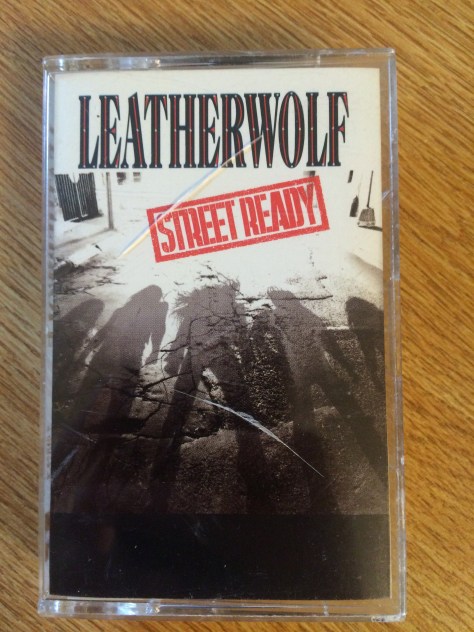
The Cassette Chronicles – Leatherwolf’s ‘Street Ready’

BY JAY ROBERTS (SPECIAL TO LIMELIGHT MAGAZINE)

The Cassette Chronicles is a continuing series of mini reviews and reflections on albums from the 1980’s and 1990’s that I have acquired through Purchase Street Records in New Bedford, MA.

The aim of this series is to highlight both known and underappreciated albums from rock, pop and metal genres from the 1980’s through the cassette editions of their releases. Some of the albums I have known about and loved for years, while others are new to me and were music I’ve always wanted to hear. There will be some review analysis and my own personal stories about my connection with various albums.

These opinions are strictly my own and do not reflect the views of anyone else at Limelight Magazine.

LEATHERWOLF – STREET READY (1989)

I’m not quite sure what the cause was behind the dismal failure of this album when it was released back in 1989. Whether it was a lack of label support, a simple case of falling between the cracks or a metal music fan base that didn’t know what was good for itself, Leatherwolf’s Street Ready, the band’s third album disappeared with nary a trace and led almost directly to the band’s breakup in 1990.

What amazes me most is that this album really had everything that should’ve made it a monster hit back in 1989, when metal’s reign atop the musical mountain top was still at full peak. If you wanted monster riffs and crackling musical runs, you could check out songs like “Wicked Ways”, the title track or even the instrumental “Black Knight”. For me to single out the latter track back in the day was a big thing because I really didn’t have much in the way of appreciation for instrumental music then. But that cut was outstanding.

The band also had a grasp on the notion of combining outstanding melodic hooks with the charged balls out rocking music. The song “Hideaway” (which was the band’s first single and video for radio/MTV) was a sort of power ballad that did the song genre proud. Side two of the album led off with another strong melodic heavy rocker in “Thunder”. It also should’ve been a big hit for the band.

There was also then a novelty of having three guitar players in the band (singer Michael Olivieri, Gary Gayer and Carey Howe all had guitars in hand and on the album). It might not mean much nowadays but it was intriguing to the sound back then.

I had this album from the time of release. I remember buying it from my Columbia House music club. I played it a lot and over the years I would always remember to rotate the album into the mix of the stuff I brought to work. But when my cassette finally wore out, I was able to track down an affordable CD though it wasn’t easy. Ironically, it was just a couple weeks after getting the CD that the album came back to me as a cassette with the purchase of the 100 cassettes from Purchase Street Records. Thus, a new Cassette Chronicles entry was born.

It might be more interesting to find something…anything…to complain about this album but in truth there is absolutely nothing wrong with this album. Every one of the 10 tracks is outstanding, not a single not of filler is to be found here. Street Ready should’ve given the band a huge profile all over the world. It really does have it all. The songwriting is strong, the vocals grab you immediately and for me, there’s an authenticity to it all that might’ve been in short supply by bands that came after them before grunge took over the musical landscape.

This is one of the more underrated metal albums from the 80’s, which I think is still a bit of an understatement. Do yourself a favor and check this one out, I think you’ll find that you’ll agree.

Advertisement – Please click!

Notes of Interest – Though the band broke up in 1990, they reunited in 1999 and have been a going concern since then (with a bevy of lineup changes over the years). However, they have not released a new studio album since 2007’s New World Asylum.

While original singer Michael Olivieri has been the longest serving vocalist, when he was out of the band, Racer X’s Jeff Martin and Wade Black (ex-Crimson Glory) stepped into the role. Black recorded the album World Asylum with the band in 2006 before it was reissued the following year with Olivieri’s vocals in place of Black’s.

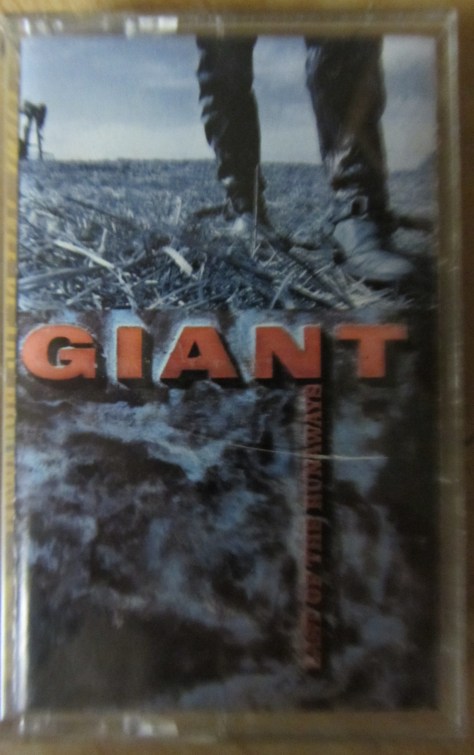
The Cassette Chronicles – Giant’s ‘Last of the Runaways’

BY JAY ROBERTS (SPECIAL TO LIMELIGHT MAGAZINE)

The Cassette Chronicles is a continuing series of mini reviews and reflections on albums from the 1980’s and 1990’s that I have acquired through Purchase Street Records in New Bedford, MA.

The aim of this series is to highlight both known and underappreciated albums from rock, pop and metal genres from the 1980’s through the cassette editions of their releases. Some of the albums I have known about and loved for years, while others are new to me and were music I’ve always wanted to hear. There will be some review analysis and my own personal stories about my connection with various albums.

These opinions are strictly my own and do not reflect the views of anyone else at Limelight Magazine.

GIANT – LAST OF THE RUNAWAYS (1989)

It’s a little funny to think that Giant’s debut album came out 28 years ago. I actually owned this on cassette, buying it when it was originally released. Unfortunately, I didn’t think much of it back then. It slipped from my memory rather quickly and at some point I just got rid of the album.

While the band didn’t make much of a lasting impression with me back then, Dann Huff is a name that kept popping up over the years for reasons you can read about later in this article.

I ended up getting another copy of this album when I made the Purchase Street Records 100 cassette acquisition. Time has an amusing way of bringing things full circle or enlightening something more fully.

While I am not fully onboard with the notion that Last of the Runaways is an AOR classic, this album actually came to be far better than I thought way back when.

The band’s one hit was the ballad “I’ll See You In My Dreams.” It’s not all that original a track but it isn’t bad either. The song has a nice hook accompanying the chorus and that helps make the song. The other song that came to be seen as a minor hit for the band was the album opening “I’m A Believer.” It’s an uptempo rocker that opens with a smoking guitar intro.

Unsurprisingly, the best material is when the band quickens up the pacing. The rockers far outstrip the ballads in terms of quality, at least from my viewpoint. The ballads “It Takes Two” and “Love Welcome Home” were mere annoyances in the way of better songs. The latter of those two tracks tried to use an increased sense of the grandiose to make the song seem bigger and more important than it was.

There is a grittier edge to the sound on “No Way Out”, Side one’s closing track, that had me bopping my head to the song’s swinging pace. Meanwhile, Side two opened with “Shake Me Up”, another rocker that did indeed shake things up for the album.

I was a little worried that I wasn’t going to be able to do this piece when I heard the second song “Innocent Days”. The tonal changes that occurred twice in the song made me think the tape was warping. The song was kind of mediocre overall, though it did include the lyric that serves as the album’s title.

For me, the two best songs are tracks that I’m sure are completely overlooked by most people that have heard this album are rockers “Hold Back The Night” and “The Big Pitch.”

There’s a line in “Hold Back The Night” that gives the feeling that the song has a kind of spiritual overtone. This wouldn’t be much of a surprise given that Dann Huff and his brother David started off in a Christian rock band. Normally, this would turn me off to a song since I tend to have little interest or patience with the more religiously inclined music. But I have to say that the song really worked. The music and lyrics were deftly intertwined together to make an even stronger whole.

“The Big Pitch” closes the album and it is just a flat out killer rock track. It certainly wormed its way into my cold dead heart as a song I came to love on the second go round.

Doubling up on my failure to appreciate Giant the first time around is the true confession that I actually saw them live in concert. They were the opening act for Heart back in 1990. I barely remember anything of their set beyond thinking that, much like the album itself, they were okay but nothing really that memorable.

Funny how time and distance have a way of changing opinions, isn’t it? Because I have to say that despite my lack of interest in the lesser material on the album, Last of the Runaways is a far better album than I ever gave it credit for.

Notes of Interest – The album was produced by Terry Thomas, who also co-wrote four songs on the album. Thomas produced and co-wrote a number of songs for three Bad Company albums (Dangerous Age, Holy Water and Here Comes Trouble) featuring singer Brian Howe on vocals.

Singer/guitarist Dann Huff has gone on to a highly successful career as a producer particularly in the field of country music. Outside of the country genre, he also produced Megadeth’s Cryptic Writings and Risk albums.

Ad for Giant’s “Last of the Runaways” in the November 1989 edition of “Hit Parader.”

The Cassette Chronicles – John Parr’s ‘Running the Endless Mile’

BY JAY ROBERTS (SPECIAL TO LIMELIGHT MAGAZINE)

The Cassette Chronicles is a continuing series of mini reviews and reflections on albums from the 1980’s and 1990’s that I have acquired through Purchase Street Records in New Bedford, MA.

The aim of this series is to highlight both known and underappreciated albums from rock, pop and metal genres from the 1980’s through the cassette editions of their releases. Some of the albums I have known about and loved for years, while others are new to me and were music I’ve always wanted to hear. There will be some review analysis and my own personal stories about my connection with various albums.

These opinions are strictly my own and do not reflect the views of anyone else at Limelight Magazine.

JOHN PARR – RUNNING THE ENDLESS MILE (1986)

The original intentions for this particular article was to write about John Parr’s self-titled 1984 solo album which included his #23 charting hit “Naughty Naughty.” However, as bad luck would have it, I got about three quarters into the album and the player at the tape. So, I don’t get to talk about that album, even though I was on my way towards saying nice things about it.

Instead, the brand new and never opened sophomore album Running The Endless Mile, is the focus of this week’s installment. In between the first and second albums, he had a monster #1 soundtrack hit with “St. Elmo’s Fire (Man In Motion)” from the St. Elmo’s Fire film. Every time I hear it on the radio, it gives me a thrill because of just how great I think that song was then and remains so now. I really love Parr’s voice.

I wish I could say the same for this album. Unfortunately, I can fully understand why this album was less successful than its predecessor. Four singles were released from the album and none charted higher than #88. That song was “Blame It On The Radio” which I have to say was embarrassingly trite.

The album opens up with “Two Hearts (American Anthem)”, a mostly uptempo track that I did like, at least until the multiple instrumental solos in the middle of the song that felt as if they were tacked on for no reason in particular. I did like the saxophone flourishes throughout the song though.

The next three tracks did nothing for me and I was in danger of zoning out until the last song started playing. It’s called “Don’t Leave Your Mark On Me (Mark 2)”. The original version of the song was on Parr’s first album. I liked how the song’s tempo alternated between a kind of hushed tone in the main lyrical verses and then had an explosive chorus. The storytelling of the lyrics draws the listener in as well. This is the best song on the album, which might say a lot about the rest of the material considering it is essentially a remake.

The second side of the album wasn’t much better than the first. “Scratch” had a fast tempo but completely missed whatever mark it was aiming for, while “Do It Again” was mildly entertaining but not necessarily a showcase tune. You have to wait until the last song on the album, “Steal You Away (Flight of the Spruce Goose)” before anything truly interesting catches your ear.

Essentially, the music overwhelms the vocals on this album and there’s not a whole lot to love with that music. It’s a soundtrack of its time but it doesn’t even come close to holding up.

John Parr has recorded six solo albums, the last coming out in 2012. None have done better here in the U.S. than his debut release. While I haven’t heard anything of the four latest solo albums, I can only hope that they have something more to offer than what I heard with Running The Endless Mile. Because two really good tracks out of ten just doesn’t cut it with me.

Note of Interest: Julia Downes is credited with co-writing three songs on this album, “Story Still Remains The Same” (which featured her on keyboards as well), “Do It Again” and “Don’t Leave Your Mark On Me (Mark 2)”. She has written with and/or for Roger Daltrey, Meat Loaf and Sheena Easton.

The Cassette Chronicles – John Waite’s ‘Rover’s Return’

BY JAY ROBERTS (SPECIAL TO LIMELIGHT MAGAZINE)

The Cassette Chronicles is a continuing series of mini reviews and reflections on albums from the 1980’s and 1990’s that I have acquired through Purchase Street Records in New Bedford, MA.

The aim of this series is to highlight both known and underappreciated albums from rock, pop and metal genres from the 1980’s through the cassette editions of their releases. Some of the albums I have known about and loved for years, while others are new to me and were music I’ve always wanted to hear. There will be some review analysis and my own personal stories about my connection with various albums.

These opinions are strictly my own and do not reflect the views of anyone else at Limelight Magazine.

JOHN WAITE – Rover’s Return (1987)

Back in the murky swamps of the distant past, I was slightly less grumpy and cranky than I am now. This would probably account for why in 1984, I absolutely loved the John Waite #1 smash hit ballad “Missing You” from his No Brakes album. It was a ballad but one that didn’t come with so much cheese as to bind up your insides beyond salvaging. As for the album it was on, No Brakes was fantastic from beginning to end. I really loved that album.

So, as I sat down to listen to Rover’s Return, I found myself wondering why I never really got into John Waite’s other solo albums. At least not to the point I did with No Brakes.

The ex-Babys singer Waite has always had a great voice that has shined with his original group, solo and with Bad English. However, on Rover’s Return there is ample evidence that a big reason why he never quite reached the continuing success peak with his solo career is because he just didn’t have the best songs to work with.

The album kicks off with the track that served as the big single attempt, “These Times Are Hard For Lovers.” Co-written by Desmond Child (who is also credited with backing vocals on the album), the uptempo number is quite catchy. However, the blending of backing vocals during the song’s chorus overpowers Waite’s main vocal track and feels like a bit of overkill. While I generally like the song, each time I hear the chorus I cringe.

The other single released from the album was “Don’t Lose Any Sleep,” which was written by another prolific hit songwriter, Diane Warren, but it did worse on the charts than “These Times…” I can understand why because the quality of the song changes from one moment to the next. I found myself wavering on this one because there were moments I liked in the song but they’d get swallowed up by the next moment which made me want to scream in agony.

Songs like “Act of Love,” a depressingly one note serving of blandness that makes white bread look edgy made me wonder who had the final say on picking the tracks for the release. Normally, a major complaint of mine centers on the ballad tracks on any given album, but in a somewhat refreshing yet odd change of pace, the faster rock paced song “Wild One” which closes out Side One is stunningly weak for a song that aims to get the blood pumping.

I know, I know. You are reading this and wondering if there was anything about this album that I liked without reservations because you don’t want to read just a diatribe of how mediocre I found Rover’s Return to be.

The answer is yes. There are some rather good tracks that deserved to be on a better cast album than this one. The song “Encircled” has an edgier musical score to it with Waite’s vocal performance more forceful. “Woman’s Touch” has a gritty guitar line in the song that caught my ear.

For my money, the last three songs on the album are where Waite’s abilities are demonstrated to their full potential. “Sometimes” is a ballad with some rather excellent storytelling in the lyrics. “Big Time For Love” closes things out with a racing rock crescendo and my personal favorite song on the album, “She’s The One,” melds rock aggressiveness with pop sensibilities for a song that I would’ve loved hearing as a big hit radio track all those years ago.

I’ve been a fan of John Waite’s voice ever since “Missing You” was released as a single, and that hasn’t changed regardless of where I heard his voice over the years. I’ve heard stuff from his time with The Babys and loved the first Bad English album. He’s just got something that endears his singing to the listener. But despite this, even though he wrote or co-wrote 7 out of the 9 cuts on this album, there are times when the songwriting is lacking and fails to capture the best of what he can do.

I find that to be a rather embarrassing thing to admit because I do claim an allegiance of fandom for him. But Rover’s Return is simply not more than an adequate release that leaves you feeling disappointed because the album could’ve been so much more.

Notes of Interest: Anton Fig, best known as the drummer for David Letterman’s house band The CBS Orchestra, is one of three credited drummers on this album. His name is spelled “Figg” in the liner notes. Meanwhile, singer Joe Lynn Turner (Rainbow, Deep Purple, Yngwie Malmsteen) is credited as providing backing vocals.

The Cassette Chronicles – Night Ranger’s ‘Man In Motion’

BY JAY ROBERTS (SPECIAL TO LIMELIGHT MAGAZINE)

The Cassette Chronicles is a continuing series of mini reviews and reflections on albums from the 1980’s and 1990’s that I have acquired through Purchase Street Records in New Bedford, MA.

The aim of this series is to highlight both known and underappreciated albums from rock, pop and metal genres from the I 1980’s through the cassette editions of their releases. Some of the albums I have known about and loved for years, while others are new to me and were music I’ve always wanted to hear. There will be some review analysis and my own personal stories about my connection with various albums.

These opinions are strictly my own and do not reflect the views of anyone else at Limelight Magazine.

NIGHT RANGER – MAN IN MOTION (1988)

I have to admit that while I was a big fan of Night Ranger during the two album stint where they hit the platinum sales level (Midnight Madness and 7 Wishes), my interest lapsed as the decade of the 80’s hit its latter stages. I didn’t really pay much attention to the gold selling Big Life beyond the soundtrack hit “Secret Of My Success” and by the time 1988’s Man In Motion album came out, it is safe to say that I was not much of a fan. In fact, the only thing I remember during this period was reading in the newspaper that keyboardist Alan Fitzgerald had left the band before the recording of the album. How about that, music news being reported in the newspaper!

In the case of this particular album, I probably should’ve been paying more attention. While the album isn’t a masterpiece of melodic hard rock, there are some rather decent gems here. The album is less laden with the keyboard sound that made the band famous. Instead, it is a more aggressively guitar oriented album.

The title track leads off the album and wastes no time showing off the change in musical direction. It has an edgier lead vocal take and there is a killer solo. “Right On You” also had an edgier vocal run through.

There are a couple of ballads on the album but one of them, “Restless Kind,” is really good and the most recognizable song of the eleven cuts. The other featured ballad, the mid-tempo “I Did It For Love” inspired nothing but a shrug of the shoulders on my part.

“Reason To Be” started off like it was going to be another slow declaration of some intended feeling but the middle section was more of an exhilaratingly paced rocker before it slowed back down at the fade out.

I found that the album did in fact shine best when the band’s sound cut loose and amped up the six string sound. Songs like “Love Shot Me Down,” “Halfway To The Sun” and the rather less than subtly titled “Kiss Me Where It Hurts” all feature fantastic guitar work with the latter song having a solo that I just loved.

In researching the album online for writing this article, it was interesting to note that it reached just #81 on the album chart. The album proved to be a bit of a breaking point for the band, at least for a while. Besides the departure of keyboardist Fitzgerald (who still had a co-writing credit on “Don’t Start Thinking (I’m Alone Tonight)”), singer/bassist Jack Blades left the band after the touring cycle for the album. It was at this point he went on to form Damn Yankees with Ted Nugent and Tommy Shaw.

Man in Motion was the last album for the band until 1995. It was largely ignored by fans but upon taking a look back nearly 30 years later, it is a surprisingly good record. It may lack the big commercial hit that the band likely (and the record company definitely) would have wanted but it shows more of a rocking edge and is an early look at the band’s sound as it is now.

I’ve really gotten into the band over the last three or four years. I saw them live in concert for the first time back in 2014 and their High Road album is mostly fantastic. Their latest album was released this year and is called Don’t Let Up.

NOTES OF INTEREST: Pop singer Michael Bolton co-wrote “Here She Comes Again.” While the band hired Jesse Bradman as their keyboardist for the tour, he was not one of the four keysman to have a credit on the Man In Motion album. Meanwhile, Alan Fitzgerald returned to the band’s lineup, recording the albums Neverland and Seven, but he left the group again in 2003.

The Cassette Chronicles – Fifth Angel’s ‘Time Will Tell’

BY JAY ROBERTS (SPECIAL TO LIMELIGHT MAGAZINE)

The Cassette Chronicles is a continuing series of mini reviews and reflections on albums from the 1980’s and 1990’s that I have acquired through Purchase Street Records in New Bedford, MA.

The aim of this series is to highlight both known and underappreciated albums from rock, pop and metal genres from the 1980’s through the cassette editions of their releases. Some of the albums I have known about and loved for years, while others are new to me and were music I’ve always wanted to hear. There will be some review analysis and my own personal stories about my connection with various albums.

These opinions are strictly my own and do not reflect the views of anyone else at Limelight Magazine.

FIFTH ANGEL – TIME WILL TELL (1989)

The second and final album from the band Fifth Angel took the band’s sound in a decidedly more commercial direction than their self-titled debut album had.

Released in 1989, Time Will Tell was pretty much dead on arrival despite a rather impressive collection of very accessible sounding music. I know that we’re supposed to hate anything that sounds as if it is courting mega-success, but I can’t find my way to doing that with this particular album. According to various articles online, a lack of support from Epic Records and band turmoil doomed the band and this album upon release.

I’ve had this album in my own personal collection for years but the cassette finally wore out. Then I acquired a new cassette copy and got reminded just how much I enjoyed this album.

The majority of this 11-track album features fast paced rockers with hooks galore. There are a couple of ballads that slow things down a bit but they aren’t bad so I tend to like hearing those songs each time I play the album.

The song “Midnight Love” is the perfect song to showcase the album’s commercial appeal. In 1989, this song had the right combination of sound, pace, lyrics and overall balls out performance. It should’ve given Fifth Angel a hit song. The title track should also have been earmarked to raise the band’s profile.

But much like you’d probably expect, nothing seemed to quite fall in the band’s favor. Of course, what really shot the band in the foot was the fact that they never played live during the time they were together. In the late 1980’s, if you weren’t touring there was just no way to make inroads to success. Fifth Angel broke up in 1990 having played a grand total of ZERO live shows.

The best thing about listening to this album again was reminding myself that they had covered UFO’s “Lights Out”. You’d think I would have remembered that but you’d be wrong. Instead, when I was checking out the writing credits I “discovered” or rather rediscovered it was the UFO song. Don’t you just hate when the memory fades on certain things. By the way, while singer Ted Pilot, guitarist Ed Archer and drummer Ken Mary did the majority of the songwriting, all five members of the band saw at least one writing credit for the album.

For me, the best song on the album is “We Rule”, which is just an in your face all out aggressive track. It’s the song that would be akin to the band flexing their muscles for all to see.

The funny thing is that the band is actually back together. Since 2009, they’ve been an active band and have even played a handful of live concerts. Guitarists Ed Archer and Kendall Bechtel along with bassist John Macko have kept the band going with various singers and drummers. The band was rejoined by original drummer Ken Mary in 2017. There has even been talk of a new album at some point down the road.

Time Will Tell is a very underappreciated gem of an album that could’ve been a highlight of the 80’s metal era but instead, like the band itself, found it slipping into the cracks and being mostly forgotten.

Notes of Interest: Singer Lisa Dalbello appears on backing vocals for the songs “Broken Dreams” and “So Long”. The Canadian artist, aside from her own recording career, has been a successful writer and producer for a variety of other musicians.

Fifth Angel singer Ted Pilot has long since left the music business. When there was talk about the band performing live for the first time, he was initially on board to front the band. But it never came to fruition. He is an endodontist with a successful practice in Washington state.

The Cassette Chronicles – Europe’s self-titled debut

BY JAY ROBERTS (SPECIAL TO LIMELIGHT MAGAZINE)

The Cassette Chronicles is a continuing series of mini reviews and reflections on albums from the 1980’s and 1990’s that I have acquired through Purchase Street Records in New Bedford, MA.

The aim of this series is to highlight both known and underappreciated albums from rock, pop and metal genres from the 1980’s through the cassette editions of their releases. Some of the albums I have known about and loved for years, while others are new to me and were music I’ve always wanted to hear. There will be some review analysis and my own personal stories about my connection with various albums.

These opinions are strictly my own and do not reflect the views of anyone else at Limelight Magazine.

Europe – Europe (1983)

I would hazard a guess that when Europe’s third album, The Final Countdown, made the band into international superstars, only the most hardcore music lovers realized that there were already two albums to the band’s credit.

It is a bit funny to think that while the album was originally released in 1983, Europe’s self-titled debut didn’t get an apparent US release until 1989, at least according to the liner notes on this cassette edition of the album.

The album was recorded as a four piece and shows the nascent Swedish band in a far more uptempo mode with songs that rock out more aggressively than you’d ever think. The music is far less dominated by the keyboard sound that would come to define the band’s best days. This album is akin to how raw and rocking the first couple of Def Leppard’s albums sounded.

Three quarters of the lineup from this first album are still in the band to this day (though guitarist John Norum did leave the band in 1986 right as the band was breaking out. He returned to the band when they staged their reunion. I wrote about his 1987 solo album Total Control in a previous article in this series).

As for the songs themselves, there are some surprisingly good tunes here. Pretty much the entirety of Side 1 is enjoyable, particularly “In The Future To Come,” “Seven Door Hotel” and the rather hard rocking instrumental “Boyazont.” That last track finds Norum shredding the six strings available to him in a seeming hyperactive attack. It is flat out fantastic and then it just cuts out at the end. No fade out, it just stops at the point where you are left wanting more. I know that the song “The King Will Return” is probably the best known song from the album but strangely I found that while it is enjoyable, I didn’t quite rank it as high as others might.

The album’s second half has a solid opener in “Children of Time.” The song “Words of Wisdom” spends most of its running time in a bit of a melodic but plodding fashion, but the chorus makes up for that, it is performed at a far faster pace and I like the way singer Joey Tempest vocally delivers the lyric at that point. I love “Paradize Bay” a lot while “Memories” sees the album go out on a rocking note.

What makes this a good album in my mind is how I can sit here three decades later and feel that I’m rediscovering the band all over again. I actually owned this cassette in my own collection BEFORE making the 100 cassette purchase. But I hadn’t listened to it in a long time, so the memory of what the band had to offer at their start had admittedly faded from my memory more than just a little.

I’m not sure what the band or their fans really think of this album. It won’t be seen as an all-time classic, but I found it a surprisingly effective way to get started with the band or rekindle a fandom that might’ve died down a bit.

Of particular note is that this album’s sound is far more aligned with the band’s current day sound than that sound of their best days. After the band broke up in 1992, they only appeared together once (in 1999) before reuniting in 2003. Their sound was revamped into what can only be described as “classic rock” and they’ve been mining that particular vein of music for five albums now, rather succesfully.

NOTE OF INTEREST: The band’s drummer for this album was Tony Reno. He was let go from the band during the tour for their second album. He was replaced by Ian Haugland, who has been with the band ever since.

The Cassette Chronicles – Winger’s self-titled debut

BY JAY ROBERTS (SPECIAL TO LIMELIGHT MAGAZINE)

The Cassette Chronicles is a continuing series of mini reviews and reflections on albums from the 1980’s and 1990’s that I have acquired through Purchase Street Records in New Bedford, MA.

The aim of this series is to highlight both known and underappreciated albums from rock, pop and metal genres from the 1980’s through the cassette editions of their releases. Some of the albums I have known about and loved for years, while others are new to me and were music I’ve always wanted to hear. There will be some review analysis and my own personal stories about my connection with various albums.

These opinions are strictly my own and do not reflect the views of anyone else at Limelight Magazine.

Winger – Winger (1988)

I know that it is somewhat fashionable to kick Winger whenever it comes to talking about bands that represented the downside of the 80’s metal heyday, but I think a lot of people have selectively convenient memories when it comes to the band’s debut album.

The four members (Kip Winger, Reb Beach, Paul Taylor and Rod Morgenstein) of the band each had a solid musical pedigree prior to the formation of Winger (The Dixie Dregs, Alice Cooper and studio work on the Twisted Sister album Love Is For Suckers are just some of their combined background).

The album and band, accompanied by some hit videos, was a solid performer out of the starting gate. It eventually went platinum. They toured all over the place (I saw them open for Bad Company at Boston’s Orpheum Theatre in 1988, where I got to meet the band. Heck, I still have the album cover flat they signed as well as the jean jacket that a couple of them signed as well).

As for the album itself, it was a bit hit and miss in parts, but the high points are really quite good. The first three songs on Side 1 are probably some of their best work in the first part of their career. “Madalaine” was a great uptempo rock song that amply fit the bill for that first single to introduce the band to listeners and get them hooked for the rest of the album. “Hungry” was a song that was pretty good upon first listen and gets better over time. I hadn’t heard that particular track in a while and found that I really got into it all over again when I listened to it for this article. And then you have what is probably the band’s most famous and controversial song, “Seventeen.” Now back in 1988 singing about some hot chick that was “only seventeen” might’ve been mildly offputting for some, but in general the song was just that, a song. You’d find yourself singing along without actually considering doing something statutory. Of course, in this day and age, that song wouldn’t even be allowed on an album with the sentiments it conveys. Can you imagine how controversial it would be now?

The last two tracks on the first side of the album are a little troubling for me. The ballad “Without The Night” was a mediocre at best slice of yearning and whining. But that is nothing compared to what is rightfully considered one of the worst cover songs ever recorded. I’m not sure who thought it was a good idea to cover the Jimi Hendrix song “Purple Haze” but they need some professional counseling. This is only compounded by the fact that the record company actually allowed this dreadful song on the album.

Side 2 of the album started off with the more uptempo “State of Emergency” but it just isn’t a song that meant a whole lot to me then or now. But the double shot of “Time To Surrender” and “Poison Angel” that follow show the band in a pretty in your face rocking kind of way. It gives listeners a shake and they are the kind of song that always manages to get me fired up.

Of course, “Hanging On” isn’t much to write home about so that kind of dampens the enthusiasm for Side 2 a bit. The album closing with Winger’s big ballad hit “Headed For A Heartbreak” is a prime example of what happens when a metal band did a ballad that was designed to get as much airplay as possible and make the women fall in love with the band. When I first heard the song, I liked it. There’s no denying that. But then when it became a single, you couldn’t get away from the song and I found myself growing to hate the song. Even now, my acquired distaste for the song, due to it being completely overplayed, kind of made the song “white noise” to me. Your ears just kind of push the song to the background.

Now despite my varied criticisms of the album, I do like the album overall. It was a fun release during a fun time for rock and metal fans. And believe me, Winger was quite popular. Like I said, I know people like to pretend that they didn’t like Winger when they were big, but they are generally lying their butts off. And why is that? Well, we have a crappy cartoon called Beavis & Butthead to thank for that bit of revisionist history.

Yeah I said it! I thought that MTV cartoon was a flaming dung heap in the first place, but Winger obviously has a bigger axe to grind because once the show made them their weekly whipping boy, Winger’s career cratered like you wouldn’t believe.

But for those who don’t follow trends and stick to what they believe, the debut Winger album still stands out as a good memory.

NOTES OF INTEREST: Dweezil Zappa plays a solo on the “Purple Haze” cover. Guitarist Reb Beach played with Dokken on their 1999 album Erase The Slate and has been a member of Whitesnake since 2002. Winger’s 2014 album was called Better Days Comin’ and is chock full of great fast paced rockers (ignore the gawdawful ballads).

The Cassette Chronicles – Dangerous Toys self-titled debut

BY JAY ROBERTS (SPECIAL TO LIMELIGHT MAGAZINE)

The Cassette Chronicles is a continuing series of mini reviews and reflections on albums from the 1980’s and 1990’s that I have acquired through Purchase Street Records in New Bedford, MA.

The aim of this series is to highlight both known and underappreciated albums from rock, pop and metal genres from the 1980’s through the cassette editions of their releases. Some of the albums I have known about and loved for years, while others are new to me and were music I’ve always wanted to hear. There will be some review analysis and my own personal stories about my connection with various albums.

These opinions are strictly my own and do not reflect the views of anyone else at Limelight Magazine.

Dangerous Toys – Dangerous Toys (1989)

If you have a phobia of clowns, whether they look like normal circus performers or psycho killers out of a Stephen King novel, you probably never made it past the cover art of Texas rockers Dangerous Toys self-titled debut album.

However, if you did get past the cover, you found yourself confronted with a mostly in your face release of pent up aggression channeled into a sometimes quite effective dose of rock/metal.

The band does get categorized mainly as a glam metal act but if you listen to their music, it is more of a sleaze rock kind of thing. There’s an unapologetic beer, babes and guitars kind of vibe to the music

Vocalist Jason McMaster and company explode out the speakers with a double shot of the band’s brand of rock and roll. “Teas’n Pleas’n” is an unrelenting track that leaves you little time to catch your breath.

They follow that up with what I think might be their most musically fulfilling song in “Scared”.  When you listen to the lyrics to the song, combined with the soundtrack, it is pretty easy to visualize your own kind of horror movie (even if you haven’t seen the video they made to go with the track). It really is quite effective, which for me at least is saying something as I’m really not a horror movie fan. I had gotten my hands on a CD copy of this album a couple of weeks before I got the cassette and whenever I hear the song, a movie begins playing in my head. Seriously, you should go check out the video on YouTube.

For the rest of Side 1 of the album, I thought the band missed the mark a bit. Two more pedal to the metal rockers combined with “Feels Like A Hammer” a slower track with what seemed to me a fuller depth to the musical sound, all felt a little wanting to me.

When you flip the cassette over to Side 2, you get two more tracks to kick things off that showed just how potent the band’s songwriting could be. Leading off was the guaranteed to upset pretty much any woman (or if you play the song at work, human resources), “Sport’n A Woody.” For the inner 10 year old boy who loved dick jokes that seems to reside in a lot of men, this is a hilarious track. If you have anyone that ever asks you to explain the term “cock rock” to them, play them this song and all shall come clear. I can still remember singing along to this song whenever I heard it back then and being unable to stop laughing every time.

To my recollection, this song is one of the band’s three (along with “Teas’n Pleas’n” and “Scared”) best known songs. But the track “Queen Of The Nile” should be included as final inclusion on the band’s “Big 4” song sampler. It is an undistilled adrenaline charged rocker that continually keeps a charge of electricity running through me when I hear it.

Side 2 falls victim to the same flaw that Side 1 had, where the first two tracks are great but the rest pale in comparison…at best. There’s a bit of an interesting feel to “Here Comes Trouble” but otherwise the remaining songs kind of all run together.

While the album might be a bit of a disappointment because I thought only four of the tracks were outstanding, four songs is actually pretty decent when you factor in a lot of bands from this time frame would’ve killed to have that many good tracks. When the album was originally released, I only had a dubbed cassette copy of it (remember doing that?), and hadn’t listened to it in years so perhaps that accounts for my initial expectations and subsequent letdown.

Dangerous Toys may not go down as legends of the era, but they do provide some solid entertainment and I have to say that I wish I’d seen them in their prime. I’m sure it would’ve been quite the memorable experience.

NOTES OF INTEREST: The band hasn’t released new music since 1995, but they still get together to this day to perform live on occasion. The song “Scared” is a tribute to Alice Cooper. While guitarist Danny Aaron is pictured on the back cover of the album, he didn’t actually play on any of the songs.

The Cassette Chronicles – Survivor’s ‘Too Hot To Sleep’

BY JAY ROBERTS (SPECIAL TO LIMELIGHT MAGAZINE)

The Cassette Chronicles is a continuing series of mini reviews and reflections on albums from the 1980’s and 1990’s that I have acquired through Purchase Street Records in New Bedford, MA.

The aim of this series is to highlight both known and underappreciated albums from rock, pop and metal genres from the 1980’s through the cassette editions of their releases. Some of the albums I have known about and loved for years, while others are new to me and were music I’ve always wanted to hear. There will be some review analysis and my own personal stories about my connection with various albums.

These opinions are strictly my own and do not reflect the views of anyone else at Limelight Magazine.

Survivor – Too Hot To Sleep (1988)

This album was the final release from the band during their most successful period. It was also, unfortunately, a rather overlooked gem. The band changed up their sound a good bit for this album. While their keyboard heavy sound made for huge hit albums with Vital Signs and When Seconds Count, the presence of that keyboard sound is pushed into the background more than usual in favor of more of an aggressive guitar sound. While the album would still fall under the AOR banner, this is definitely a more guitar rock oriented direction for the material.

And it is a good, no check that, GREAT album. I remember hearing the first single “Didn’t Know It Was Love” on the radio station I was listening to at the job I had at the time. I was so psyched to know they had a new album coming out that I cranked the volume up. And right from the start, the band served musical notice of the tweak to their sound. The opening track on Too Hot To Sleep, “She’s A Star,” is a tour de force with a smoking hot guitar line throughout the song.

The band became a three piece for this album because they used session players for their rhythm section. Singer Jimi Jamison was huge with his vocals, even more powerful with a good dose of grit added to the mix. Frankie Sullivan (in what was probably the last instance of him seeming to give a damn) was able to do a lot more shredding on the guitar and while Jim Peterik’s keyboards weren’t as prominent as the past, he was still responsible for a lot of the actual songwriting.

In truth, there is not a single bad song on the album. I love it all. Hell, I actually had just ordered the reissued/remastered edition of the album on CD from Rock Candy Records a couple days before I bought this cassette.

Survivor may have seen this last gasp of greatness fall flat with the music buying public at large, but those of us who were and continue to be hardcore fans know the truth, this album is truly magnificent.

Notes of Interest: With longtime drummer Marc Droubay out of the band, Survivor hired drummer Mickey Curry to record the album. You’ll note that Curry was also a featured player on the first album featured in this series, Helix’s Wild In The Streets. Styx guitarist Tommy Shaw also appears on backing vocals for the album.