One of our hobbies is to visit the filming locations of popular TV shows of the past and present. To coincide with our 10th anniversary, here are 10 filming locations where some of your favorite TV shows were shot and where to find them! (All photos by J. Kenney).
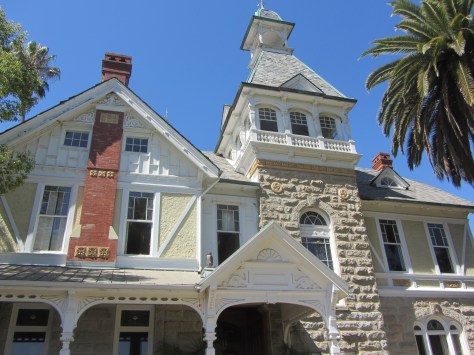
Benson(1365 S. Oakland Avenue, Pasadena CA 91106)
The “Governor’s Mansion” where Benson worked on the show. (PHOTO BY J. KENNEY)
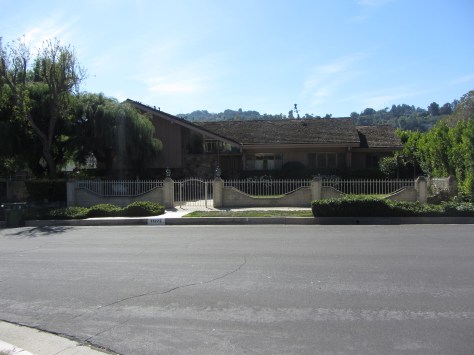
Brady Bunch (11222 Dilling Street, Studio City, CA 01604)
The home where Mike and Carol Brady lived on the show. (PHOTO BY J. KENNEY)
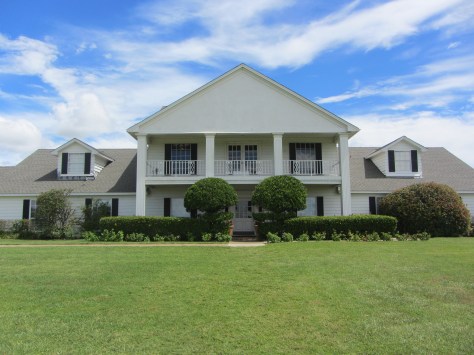
Dallas (3700 Hogge Drive, Parker, TX 75002)
Southfork Ranch – The home of the Ewings on the show. (PHOTO BY J. KENNEY)
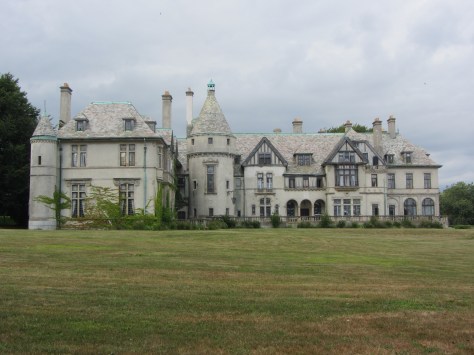
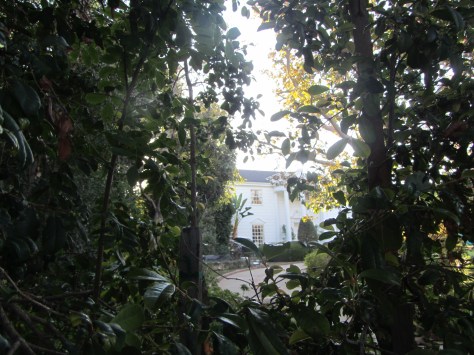
Dark Shadows (207 Ruggles Avenue, Newport, RI 02840)
The Collinwood Mansion (PHOTO BY J. KENNEY)
Falcon Crest (2805 Spring Mountain Road, St Helena, CA 94574)
The home where the Channing family lived on the show. (PHOTO BY J. KENNEY)
Fresh Prince of Bel-Air (251 N Bristol Avenue, Los Angeles, CA 90049)
The mansion where Will lived with the Banks family on the show. (PHOTO BY J. KENNEY)
Golden Girls (245 North Saltair Avenue, Los Angeles, CA 90049)
The ranch-style home where Dorothy, Rose, Blanche and Sophia lived on the show. (PHOTO BY J. KENNEY)
Happy Days (565 North Cahuenga Boulevard, Los Angeles, CA 90004)
The home where the Cunningham family & the Fonz lived on the show. (PHOTO B J. KENNEY)
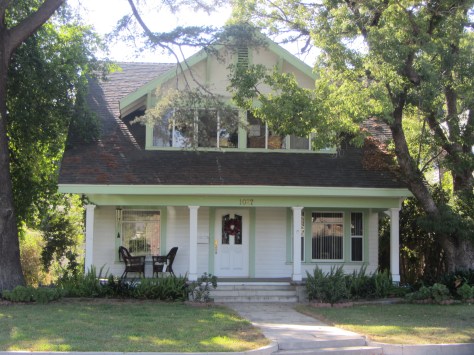
Mama’s Family (1027 Montrose Avenue, South Pasadena, CA 91030)
The home were Mama’s family lived on the show. (PHOTO BY J. KENNEY)
The Wonder Years(516 University Avenue, Burbank, CA 91504)
The home where Kevin Arnold and his family lived on the show. (PHOTO BY J. KENNEY)
One of our hobbies is to visit the filming locations of movies. To coincide with our 10th anniversary, here are 10 filming locations from some of our favorite movies and where to find them! (All photos by J. Kenney).
Death Wish 2 (1203 South Crescent Heights Boulevard, Los Angeles, CA, 90035)
Paul Kersey’s home in “Death Wish 2.” (PHOTO BY J. KENNEY)
The Exorcist (3600 Prospect St NW, Washington, DC 20007)
Chris and Regan MacNeil’s home in “The Exorcist.” (PHOTO BY J. KENNEY)
Fast & Furious (722 N. East Kensington Road, Echo Park, CA 90026)
The Toretto home in the “Fast & Furious” films. (PHOTO BY J. KENNEY)
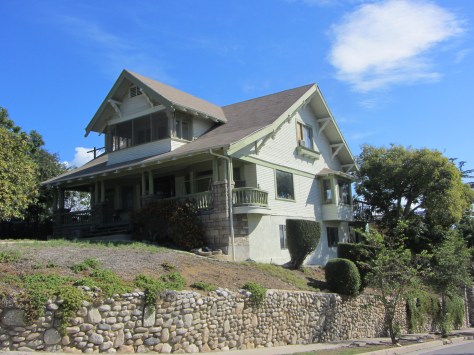
Halloween (1000 Mission Street, South Pasadena, CA, 91030)
The Myer’s family home in the original “Halloween.” (PHOTO BY J. KENNEY)
House of Dark Shadows & Night of Dark Shadows (635 S Broadway, Tarrytown, NY 10591)
The Collinwood Mansion in “House of Dark Shadows” and “Night of Dark Shadows.” (PHOTO BY J. KENNEY)
Insidious 3 (445 N Ave 53, Los Angeles, CA 90042)
Elise Rainier’s home in “Insidious 3.” (PHOTO BY J. KENNEY)
Mommie Dearest (417 Amapola Lane, Los Angeles, CA 90077)
Joan Crawford’s home in “Mommie Dearest.” (PHOTO BY J. KENNEY)
Shadow of a Doubt (904 McDonald Avenue, Santa Rosa, CA 95404)
Joseph Cotten’s home in Alfred Hitchcock’s “Shadow Of A Doubt.” *(PHOTO BY J. KENNEY)
A Nightmare on Elm Street (1428 Genessee Avenue, West Hollywood, CA, 90046)
Nancy Thompson’s family house in the original “A Nightmare on Elm Street.” (PHOTO BY J. KENNEY)
Whatever Happened to Baby Jane? (172 South McCadden Place, Los Angeles, CA, 90004)
The home of Jane & Blanche Hudson in “Whatever Happened to Baby Jane?” (PHOTO BY J. KENNEY)
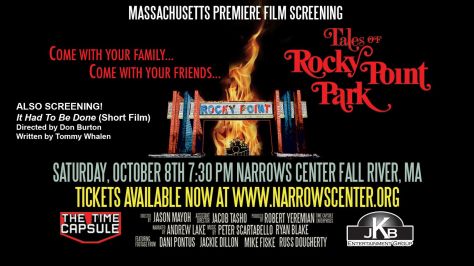
Rocky Point Amusement Park existed from 1847 to 1995. In 1996, it was shut down due to financial difficulties, yet this is where the story begins. Since the park was abandoned, research, interviews, and exploration was done to try and prove that the park was cursed. Since 1996, filmmakers have captured footage under the title Tales of Rocky Point Park. The film will premiere in Massachusetts on Saturday, October 8, 2016, at The Narrows Center for the Arts in Fall River. (Purchase tickets HERE.)
Located on Narragansett Bay in Warwick R.I., Rocky Point Amusement Park was a beautiful playground for over 150 years. Filled with a rich history, the park remained famous and still does – only the attention the park has been receiving recently has nothing to do with its earlier popularity.
People have been creating good memories at Rocky Point since 1847, but there is a legend that an ancient curse was bestowed on the park. Tales of Rocky Point Park explores the truth behind the legend. Filmmaker Jason Mayoh and producers Jacob Tasho and Robert Yeremian show never before seen footage, interviews and exploration within this film that explore the possibility that the park was cursed.
In 2008, Mayoh published a comic titled Tales of Rocky Point Park, which he has now turned into a film using the footage he gathered earlier on.
Within the film, Mayoh goes through the history of the park, recounting many documented events such as fires, hurricanes, a fatal accident, a murder, and a family of escaped monkeys. Andrew Lake, a ghost hunter himself, narrates these documented events and also the distinguished urban legends, such as questions about the Viking statue at the House of Horrors, Log 13 on the Flume, and a woman who supposedly got scalped on the Free Fall.
Like many others, Mayoh has great memories of Rocky Point when he was growing up.
“I went when I was a little kid. You know, my parents took me there in the early 80’s and on,” he said. “I went there in the mid-nineties as a teenager with my friend. It was definitely a summertime tradition and now I’ve got really great memories of it.”
Although Mayoh has these memories, he said he didn’t think of the comic until about ten years later.
“Originally, we were going to do all short stories with different artists, but I researched online pictures of the park,“ he said. “At the time, there were a lot of abandoned photography sites that were big and so there were multiple sites that had Rocky Point in ruins. Like I said, I hadn’t thought of it in years and I was actually shocked to see what it had turned into.”
Creating the comic and now film about Rocky Point was a perfect fit for Mayoh. He has always been interested in storytelling and also the genre of ghost films, horror movies, etc. Because of this, the story of Rocky Point instantly caught his attention.
Since childhood, Mayoh has loved, “Horror, monster movies, ghost stories. I think folklore in general. Rocky Point actually seemed like history or at least some of the more bizarre stuff that’s happened over the years.”
Mayoh spoke about his recent experiences at the park.
“We do have footage. We were in the park alone when it was abandoned and you definitely get an eerie vibe. There’s definitely something going on there, but I can’t quite put my finger on it,” he said.
Mayoh’s interest with the Rocky Point story started when he discovered that the abandon park was going to be turned into condos. He started writing the comic book in order to preserve the park in his own way.
“As the years went on, collecting all this footage, we kind of said to ourselves ‘why don’t we try to bring it back in film form because there’s so much footage that people haven’t seen,” he said. “We kind of used the cursed story as a motif to tell the history — the importance to New England that the park had.”
Mayoh explained the actual curse that is believed to have been bestowed on the land.
“There’s three different variations on that curse and legend and that is believed to result in the hurricanes, the fires and some of the riot acts,” he said. “One was that a group of gypsies and fortune tellers were basically fired from the park after they had worked there for years and years and, on their way out, they cursed the land. There’s also speculation that certain parts of the park were built over Native American burial grounds. Then, the third one is about one of the first attractions to the park, this cave, and actual legend is that certain things were removed from the cave, that certain stones were removed that caused a curse.”
Mayoh explained that the biggest challenge while creating the film was creating one cohesive story without telling it in a chronological way. He said that the hardest part was, “just how to put it all together in a ninety minute format because there’s so much information. And again, the park has been open for 150 years, so kind of telling that story and not doing it chronologically.”
Mayoh also alluded to the premiere in August at Park Theatre in Cranston R.I.
“It was sold out,” he said. “It sold a thousand seats and that’s just amazing for any filmmaker to have sellout…I’m really humbled by the whole experience.”
Although the film has gained the attention of many, some people don’t like what Mayoh is doing. He explained that there were a few people who didn’t like the film or didn’t go and see the film because they don’t like Rocky Point being remembered in this dark way, since it was a place where so many great memories were created. Mayoh said that was not his intention, but instead to preserve the park and all of its rich history.
If you’re still on the edge about coming to see the film at the Narrows Center on Oct. 8th,, here are some last words from Mayoh.
“Come out and see it,” he said. “If you experienced Rocky Point in any way, I think you’ll enjoy it. If, for some reason, you’re totally against the curse or the dark history, then bring some headphones and just watch the imagines.”
With this film, Mayoh hopes to perverse Rocky Point Park. He uses the theme of the curse to tell the story, but doesn’t use the film to argue this point. He instead wants the park to be celebrated by those who truly understand the magic that the park encompasses.
It Had To Be Done, a contemporary re-imagining of Edgar Allan Poe’s The Tell-Tale Heart, will screen before Tales of Rocky Point Park. This short film was directed by former Somerset, Mass., and current New Bedford, Mass., resident Don Burton and written by Tommy Whalen, an educator at Joseph Case High School in Swansea, Mass. The movie was filmed in Providence, R.I., with post-production and finishing in New Bedford. It was produced in conjunction with “The Big Read” in New Bedford. “The Big Read” is a program of the National Endowment for the Arts, in partnership with Arts Midwest. It Had To Be Done won First Prize at the Rhode Island International Film Festival’s Providence Underground Film Fest in 2014.
The Narrows Center is located at 16 Anwan Street in Fall River, Mass. Doors open at 7 p.m. for the Oct. 8th screening. Film starts at 7:30 p.m. Tickets are $12 and can be purchased online at http://www.narrowscenter.org or by calling the box office at 508-324-1926. For those wanting to purchase tickets in person, box office hours are Wednesday through Saturday, 12 noon to 5 p.m.
The logo of the Cable Car Cinema and Cafe in Providence, R.I. The award winning and nationally recognized theater will celebrate its 40th anniversary this weekend, Oct. 1st & 2nd.
The award-winning and nationally recognized Cable Car Cinema and Café in Providence, R.I., is a movie theater unlike any other. They are competing only with themselves since the movies they choose to show are aimed towards their specific community and own personal taste. The theater is known for playing offbeat, foreign, and unique films that are not shown at commercial movie theaters.
Cable Car is also unique since it features a cafe with comfortable chairs in an intimate, community-based setting. While many commercial theaters focus on filling seats, The Cable Car focuses on the quality of the movies they screen and the atmosphere that their audience experiences.
Daniel Kamil and Emily Steffian have owned and operated the Cable Car Cinema and Cafe since 2008. Before then, Kamil and his wife had owned The Revival House in Westerly, R.I., from 2003 to 2007. They coincidentally sold this property around the same time that they heard the Cable Car was closing. The timing was right and their passion was there.
“We thought it was a good thing to try and save so we ended up buying it in 2008 and trying to continue the tradition,” said Kamil.
Since then, Kamil and his wife have succeeded in both continuing the tradition and constantly updating and bettering the cinema and cafe to fit the times. Kamil spoke about his favorite part of owning the Cable Car.
“The community aspect,” he said. “The ability to provide a venue for the community to see programing that they would not be able to see in a social setting being woven very much into the fabric of the community.”
Kamil has had eight years of experience as the owner of the Cable Car. With many independent theaters closing over the years, Kamil talked about how he has helped the Cable Car to maintain its success.
“We are open for business at eight in the morning when we serve coffee and bagels and food to the students across the street,” he said. “The ability to get all different sources of revenue. The ticket revenue is only probably 35 percent of overall what we make.”
Combining a theater with a cafe has led to the Cable Car’s success and has granted them the ability to show unique films along with food and drinks that help support the business.
Patrons of the Cable Car Cinema and Cafe wait in line to purchase snacks and beverages before a recent screening of “Phantasm” on Sept. 24, 2016. (PHOTO BY J. KENNEY)
The Cable Car has been recognized by The New York Times, Wall Street Journal, Entertainment Weekly and Yankee Magazine among other major publications for its dedication and commitment to film as art. Last year, the Sundance Institute’s Art House Convergence recognized the Cable Car Cinema and Cafe among its first class of Art House Project theaters. Kamil talked about being one of only 23 theaters selected for this honor.
“We felt great about that,” he said. “To get that kind of recognition amongst your peers is great. You know, all those other theaters are great to see movies and to be included in that group felt really good.”
This past weekend on September 24, the Cable Car participated in the first annual Art House Theater Day. This day celebrated the art house theater and the cultural role it plays in a community, while recognizing the year-round contributions of film and filmmakers, patrons, projectionists and staff, and the brick and mortar theaters that are passionately dedicated to providing access to the best cinematic experience.
With so many independent theaters having to closer their doors, Kamil talked about the importance of small, privately owned cinemas.
“I think communities are enriched by having cinemas in their town,” he said. “It’s important that the programing decisions are made by people in your community that know the issues of the communities as opposed to some faceless corporate entity that is just trying to get as many people into the door as possible.”
The Cable Car will soon be celebrating their 40th anniversary. In celebration, they have decided to screen films from 1976, the year the Cable Car opened, on October 1st and 2nd over a 24-hour period. Kamil said that he will be unable to show one of his favorite films, Taxi Driver, since the studio put a block on it, but he is excited to show Rocky.
“I have a soft spot for Rocky,” he acknowledged. “It’s one of the best things Sylvester Stallone ever did…I love the Bowie movie (The Man Who Fell to Earth) we’re doing — the sci-fi movie that he did.”
The complete 40th anniversary schedule includes: The Pink Panther Strikes Again (12 PM), Murder By Death (2:15 PM), Car Wash (4:15 PM), Rocky (6:30 PM), All the President’s Men (9 PM), Carrie (11:45 PM), The Blank Generation (2 AM), The Man Who Fell to Earth (3:30 AM), The Song Remains the Same (6:15 AM), A Star Is Born (9 AM) and Network (11:45 AM).
Patrons pack the Cable Car Cinema and Cafe on Art House Theater Day. The theater will screen 24 hours worth of films from 1976, the year the theater opened, on Oct. 1 & 2 to coincide with their 40th anniversary. (PHOTO BY J. KENNEY)
Kamil talked about some of his most memorable moments since he took over ownership of The Cable Car.
“One of the most bizarre things that happened was getting issued a warrant by the Attorney State General of Rhode Island for screening The Interview,” he said.
Although this movie was not within the typical genre or style the Cable Car usually shows, The Interview gave the cinema a chance to host a whole different group of people. The Cable Car was one of the only theaters that played the movie, so they attracted many people.
“So literally, we had lines around the block,” he said.
Kamil himself dislikes the movie, but agreed it was an interesting experience, plus the FBI showed up.
“They just came to make sure servers were all secure, so we wouldn’t get hacked,” he said.
Mark Anastasio is the Program Manager at The Coolidge Corner Theatre in Brookline, Mass. Anastasio has managed to always keep this program eccentric and unique due to the abounding passion he has for his work. On March 10, 2016, Anastasio celebrated 10 years of working at The Coolidge and has continued to create new and interesting events year after year.
“I like playing movies for people the most. I think I have the most fun at a film event that I planned,” he said. “I like promoting the events here at the theatre. I really love hosting them. That’s when I’m enjoying the job the most. When I’m able to see audiences get excited at one of our events. That’s like the best, refreshing part of the gig.”
At The Coolidge, Anastasio is currently working on their weekly After Midnite Series which features weekend screenings of horrifying, weird, camp, avant garde, tripped out, and cult films, often from 35 mm prints.
“It’s primarily a genre film series. We mostly run horror and science fiction and all that type of fun stuff,” he said. “Currently, we have a program happening in September that’s a multitude of class midnight films. Because we see such a turnover in the city in September, I wanted to really open people’s eyes to the spirit of this film series in general, so that gave me the idea to run some of the more classic midnight films like the real midnight movies.”
The Coolidge After Midnite weekend films series often screens horrifying, weird, camp, avant garde, tripped-out, and cult films, from 35 mm or even 16-mm prints. (PHOTO BY J. KENNEY)
Anastasio talked about the importance and exclusive purity of watching a film in the theatre.
“Even though we’re playing events every weekend of the year, there are some films that some people agree can be, and only should be, seen with an audience, in a theater, at midnight,” he said. “You have Pink Flamingos that we ran last week (Sept. 2, 2016) which is one of them. This weekend (Sept. 9, 2016) we’re playing, what many people consider to be the first midnight movie, which is El Topo by Alejandro Jodorowsky and we follow up that up on Saturday night with a film from the same director, The Holy Mountain.”
While Anastasio finds watching movies in theatres to be a one-of-a kind experience, he talked about the positive and negative impact that Video on Demand (VOD), Amazon, iTunes, Hulu and other viewing platforms have had on The Coolidge. Although there seems to be a pretty direct connection, Anastasio explained that he tends to pick movies that are not available on those websites to avoid conflict and competition. By doing this, The Coolidge can successfully work alongside these websites since both are displaying different products.
Surprisingly, these websites such as Netflix, have managed to make a positive impact on The Coolidge in some ways.
“Netflix has helped us to build interest in some types of movies,” said Anastasio. “I remember when Twin Peaks first became available on Netflix. It was all that was showing up on people’s newsfeeds was like how every one of your friends was watching Twin Peaks. Then, we programmed the film prequel Twin Peaks: Fire Walk with Me as a Midnite title, and it brought out like 350 people. It was an insanely popular show and I could only attribute that to people newly discovering the television series on Netflix.”
Anastasio does admit, though, that these other platforms, which are designed primarily for a younger generation, make it harder for him to gain a younger demographic. Anastasio has a passion and great skill set for his job, yet he is faced with some other challenges too. The biggest challenge with programing The After Midnite Series is, “Film availability. With this film series in particular, we like to play as much as we can, on 35-mm. If we can’t find a film on 35-mm, sometimes we’ll source at 16-mm.”
Anastasio gave one example, “a few years ago when we wanted to play Predator, the Arnold Schwarzenegger film, we heard back from Fox that they didn’t have a 35-mm print.” He was surprised that the film hadn’t been preserved on 35-mm in 1987.
Anastasio also talked about the difficulty filling seats. While The Coolidge does have some dedicated fans, with new technology nowadays, it’s hard to get people to come off their couches. Anastasio did end on a positive note saying, “We’re fortunate that we’re in Boston. This is a pretty great town for film. We see our audience grow each year that we’ve run this series, especially with the increased frequency in which we’re running midnight films.”
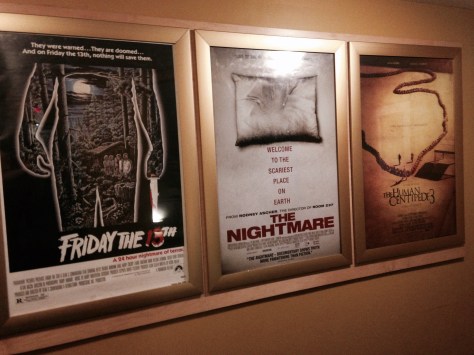
The above movie posters are just some of the old and newer films that have screened during the Coolidge After Midnight weekend series in the past. (PHOTO BY J. KENNEY)
In July, The Coolidge launched the “Summer of Psychosis” series where they screened ten different films on 35-mm. They decided to screen two different films back to back, instead of one over two nights.
“I wanted to try something new,” said Anastasio. “The series, for the ten years that I’ve been involved, there was always one film screened on both Friday and Saturday nights.”
With the “Summer of Psychosis” series, Anastasio wanted to play ten instead of five movies in order to, “give examples of what we were talking about with that film series; the different forms of psychosis that can manifest within people, and we just needed more to exemplify that.”
Anastasio took a risk, got approval from the Executive Director of The Coolidge, and the “Summer of Psychosis” series ended up being widely successful.
“We had close to sell out audiences for Taxi Driver. We actually did sell out the house for The Shining. So each weekend, we were leading with one of those larger titles, and then the accompanying title which would play the next night, was kind of a B-side,” he said.
This setup gave some lesser known films, such as Santa Sangre, exposure because they were partnered with a big name film.
Anastasio reminisced about one especially memorable experience he had during a movie that screened at The Coolidge. Although the film was very gory, he said that the audience had a great time due to the ironic structure of the movie plot.
“It was kind of an epiphany experience I had during one of our Halloween marathons, where the third film of the night was a film called Demons by Lamberto Bava,” he said. “It was produced by Dario Argento. The movie is about people going to a movie theater and the movie that they’re watching is about the spread of this demonic plague that everyone turns into demons and then everyone in the theatre becomes demons and begins tearing everyone apart. It becomes a survival horror film within a movie theatre.”
On Friday, October 21, The Coolidge is once again partnering with the Trustee of the Reservations to present “Cabin of Horror” at Rocky Woods Reservation in Medfield, Mass., where they’re screening the original The Evil Dead and The Cabin in the Woods.
Anastasio talked about the success he had presenting some of the Friday the 13th films last year at Rocky Woods Reservation. For a while, Anastasio had been looking for a place to host such an event, and was thrilled when The Trustee of the Reservation agreed to his pitch that many people had turned down. Anastasio joked about this struggle saying, “When you’re pitching horror films, you’re like, ‘hey, we run this midnight movie series and we want to bring our audience to your location to watch slasher films, like at your camp,’ like the answer to that was almost always, ‘no’.”
Anastasio received a phone call from the Program Manager of The Trustee of the Reservation. He asked if Anastasio had any use for their campsite.
“I had to like mute the phone and do a bunch of fist pumping, then pick up the phone and be like, ‘yes, yes, we would be interested. I think we can make this work’.”
Anastasio decided to pick November 13th, 2015, to play the original Friday the 13thand Friday the 13th Part VI: Jason Lives at Rocky Woods. The setting was perfect and the screening attracted many fans. Due to the success of the screening, The Coolidge decided to put the same show on again six months later on May 13th by screening Friday the 13th Part III and Friday the 13th Part IV: The Final Chapter, selling over 300 tickets.
“On May 13th, it was pouring rain the entire day. We planned for it and were able to set up additional tents, but the audience themselves, everyone who arrived, brought their tailgating tent. It turned into this weird little camp ground and, throughout the entire evening, through two movies, it was pouring rain, we were grilling in the rain and it was a great time. There wasn’t a single complaint. Nobody even brought up the idea of ‘may I have a refund’,” Anastasio said.
Anastasio was surprised by the fans dedication and easy going love for film. He hopes to have the same type of success on October 21st at the “Cabin of Horror” event at Rocky Woods. (Purchase tickets HERE).
Anastasio anticipates doing more screenings with themes at Rocky Woods Reservation in the future and is looking to expand The Coolidge’s resume.
“They have a new program coordinator at this point, but they seem just as game to put on these types of events,” he said. “I’d like to branch out. Even though these horror events are great, it would be great to start doing different types of films and many utilize some of [The Trustee of the Reservation’s] other locations. We’ve only briefly started to talk about that subject but they’re a wonderful organization. They have so many great properties around Massachusetts that I’m sure we can find different ways to activate their other spaces with film.”
This October, The Coolidge After Midnite schedule is full of horror related films for the Halloween season. Among the films being screened are The Omen on Sept. 30th, To The Devil A Daughter (Oct. 1st), The Amityville Horror (Oct. 7th), The Exorcist (Oct. 8th), The Pit (Oct. 14th, 15th & 22nd), An American Werewolf in London (Oct. 14th), Curse of the Werewolf (Oct. 15th), Poltergeist (Oct. 21st & 22nd), and The Fly (Oct. 28th).
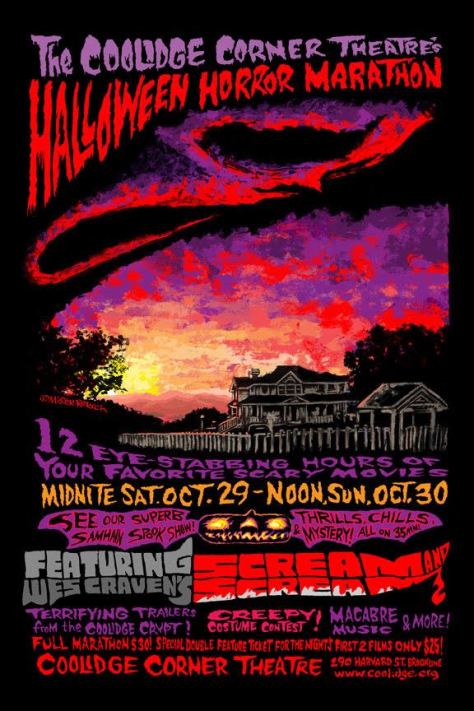
The Coolidge will also be hosting their 16th annual Halloween Horror Marathon on Oct. 29th. (Purchase tickets HERE). Anastasio explained that the film selection is a joint effort within the Coolidge staff. Anastasio also added that he always makes sure to consult the projection staff because, “they’re the guys who have to stay up all night running these movies. They definitely have a say in what’s shown.”
Anastasio’s passion for film has led to The Coolidge’s success, but he is sure to include the opinions of the people he works with and always has his ears open for new ideas that his co-workers present.
Anastasio explained the format of the annual horror movie marathon.
“The first two movies of the night are the ones we use to sell the event and then the additional four or five titles remain a secret throughout the night,” he said.
For this year’s marathon, Anastasio has chosen Scream and Scream 2 as the announced double feature. He also gave a hint about what the other movies may be.
“I can tell you that in programing the remainder of this year’s marathon, all of the programing ideas came from watching Scream and Scream 2,” he said.
You have to attend the show to find out which movies Anastasio selected that, “are either directly or indirectly referenced by the first two Scream movies.”
The Coolidge Corner Theatre is located at 290 Harvard Street in Brookline. Visit their website by clicking HERE.
A NOTE FROM OUR PUBLISHER – Today (Sept. 24, 2016) is the first ever Art House Day, which celebrates the legacy of independent theaters as advocates for cinema arts. In an age where media has become more digital than tangible, more solitary than social, art house theaters remain the physical spaces where film lovers congregate and connect with intrepid, creative filmmaking. They are the beating heart for new and exciting cinema that is shaping the future of the medium. Although we interviewed Mark Anastasio nearly two weeks ago, we held this story for Art House Day because the Coolidge Corner Theatre is one of our all time favorite theaters in the country and you can often find us there on weekends at midnight. We applaud Mark on his 10 years of service at the theater and the entire Coolidge staff for bringing great entertainment and passion for film to the Greater Boston Area!!! ~ Jay
The Narrows Center for the Arts, in collaboration with JKB Entertainment Group, of Dartmouth, Mass., is hosting the first Not Your Average Short Film Festival on Saturday, September 3, 2016, at 7 p.m. The Festival is now accepting films of all genres and lengths between 30 seconds and 18 minutes from current and former residents of New England.
The Not Your Average Short Film Festival is sure to excite all kinds of movie enthusiasts. This event promises to engage and entertain the audience, while helping short filmmakers to take their creative vision to new heights.
As a juried competition festival, all short films will be handpicked by a committee. The chosen films will be submitted to a three-member panel of established filmmakers and industry professionals who will judge the shorts and select a Jury Prize for “Most Outstanding Short Film.” Those in attendance will also be able to vote for the one film they think is best. These awards will be presented at the conclusion of the event.
For those wishing to submit a short film, here are the guidelines and details. Click HERE for a copy of the entry form.
ENTRY REQUIREMENTS
• Films must have a completion date of January 1, 2015, or later.
• Running time for all shorts must be less than 18 minutes, including credits.
• All non-English language films must have legible English language subtitles.
• A separate entry form and additional entry fee must be submitted for each film.
SUBMISSION REQUIREMENTS
• We accept online screeners through a private Vimeo or YouTube link. Please send it to NYASFF@gmail.com
• Entries received late or incomplete will be disqualified.
• Entrants are responsible for obtaining any necessary licenses, royalties, release forms, clearances, and permits necessary to present their work.
• Every precaution will be taken to safeguard all materials sent to the Festival, but the Festival is not responsible for damage to submitted materials incurred by shipping to or from the Festival.
SELECTION
• Short films are selected by a Selection Committee, a volunteer group of filmmakers, film enthusiasts and critics.
• If a film is accepted for screening, the Festival office will contact the entrant by the e-mail provided on the entry form on or before August 1, 2016. The Competition is not liable for e-mails delayed by spam filters, server rejections or outdated e-mail addresses.
JUDGING & AWARDS
• Accepted short films will be submitted to a volunteer, three-member, judging panel of established filmmakers and industry professionals. The judges will be announced on June 1, 2016.
• The following awards will be presented at the Festival:
Judge’s Award for Outstanding Short Film
All short films will be judged on script/story, direction, cinematography, and editing in creativity and originality.
Audience Award for Favorite Short Film
This will be voted on by audience members at the event.
SCREENING FORMATS
If accepted, the short film must be submitted as a high resolution AVI or MP4 video file using Dropbox, Google Drive or We Transfer. In select circumstances, we may consider acceptance via mail on a USB flash drive. The flash drive can be picked up at the Narrows Center after the Festival.
Films with incomplete materials by the deadline will forfeit their ability to screen in the Festival.
PUBLICITY AND MARKETING
• All selected films may be excerpted for publicity purposes. The Festival reserves the right to promote any film or script through print, broadcast or internet media.
ENTRY FEES
• Each entry must be accompanied by the appropriate entry fee and form. Click HERE for a copy of the entry form.
• Entry fees are non-refundable.
• Fees cover registration, notification that your entry has been received, and production costs associated with the event.
• Fees may be paid by check or money order, made payable to Narrows Center for the Arts, or by PayPal (using the e-mail address jkbbooking@gmail.com). Please be sure to include your name and film in the memo of the check or in the PayPal payment memo.
E-mail entry form to:
NYASFF@gmail.com
Mail entry fee and form to:
Not Your Average Film Festival
c/o JKB Entertainment Group
P.O. Box 79263
Dartmouth, MA 02747
DEADLINES
• Early Deadline by Friday, May 13, 2016. $15 entry fee.
• Regular Deadline by Friday, June 17, 2016. $20 entry fee.
• Final Deadline by Friday, July 15, 2016. $25 entry fee.
The Narrows Center is located at 16 Anawan Street in Fall River, Mass. Tickets to the Festival are only $15 and can be purchased online at http://www.narrowscenter.org or by calling the box office at 508-324-1926. For those wanting to purchase tickets in person, box office hours are Wednesday through Saturday, 12 noon to 5 p.m., and during show times.
The independent horror movie It Follows, directed by David Robert Mitchell, has been getting rave reviews by critics and fans alike, with it currently certified a stellar 96% fresh on the Rotten Tomatoes website. The breakout hit is about a teenage girl who finds herself haunted by nightmarish visions and the inescapable sense that something is after her. While we won’t say anymore about the film because it needs to be seen in a theater to be best appreciated, the soundtrack by video game composer Disasterpeace (also known as Rich Vreeland) has been equally praised by anyone who has seen the film. The synth-heavy score is very much in the vein of legendary filmmaker and composer John Carpenter’s work on Halloween and The Fog, but has its own originality, especially with conveying a sense of dread. Quite frankly, it’s one of the best horror film soundtracks in years and is definitely worth listening to or purchasing. While Vreeland is currently in New Zealand designing new music for a game about subway systems, he graciously took the time out of his extremely busy schedule to answer our questions by e-mail about the soundtrack and what the future holds for Disasterpeace.
LIMELIGHT MAGAZINE (LM): When you composed the score for It Follows, it was the first time you created music for a feature length film. How did you get involved with this project? RICH VREELAND: I scored a game called FEZ a few years ago. David loved the music and reached out to me via e-mail. Our initial discussions were straight-forward. We talked logistics and expressed our interest in working together. David touched base right before he started filming and then we fell out of touch for a year. When he came back to me, prepared to start scoring, I had a lot of work underway and did not have much time. I turned him down at first, but he could tell that I wanted to work on the film. After much discussion, I gave in to his persistence. I’m glad I did! We at first talked about exploring an aesthetic with guitars and other acoustic instruments. Over time, we realized that synths had the versatility we needed.
LM: I’ve read that you initially had six months to develop the score, but when the film was accepted into Cannes, your timeline was condensed to only three weeks. How did you end up creating such a haunting masterpiece in so little time? RICH VREELAND: My familiarity with synths and the strength of the temp score allowed us to make it happen. When you are comfortable with your tools, the feedback loop is more immediate. Getting good results doesn’t take as long.
LM: I also read that writer-director David Robert Mitchell created a temp score to go with the film when the timeline was condensed. Did you have to work within the parameters of the temp score when you created yours and how much give and take went into the process? RICH VREELAND: I wanted to work within those parameters. I thought the temp score was solid, and it was a great help given the scenario. As someone with limited familiarity of the horror genre, it was nice to have a guide. I tried to boil down each reference piece to a general feeling. Then I’d build that feeling back up into something fresh.
LM: Upon listening to the soundtrack to It Follows, it’s very much in the vein of legendary filmmaker and composer John Carpenter’s synth heavy scores for Halloween and The Fog. Were you already familiar with Carpenter’s work when you created the score for It Follows? RICH VREELAND: I had heard some of his stuff in passing, but wouldn’t call myself well-versed. We did reference some Carpenter pieces for the score, though.
LM: I saw the movie in New York City on March 15th when it was playing on only four screens across the country. Since then it has expanded to over 1,200 locations and is going to expand to 1,655 screens this weekend. Did you ever expect the movie to take off the way it did and become one of the most talked about horror films in years? RICH VREELAND: I knew the potential was there based on the feedback we were getting. But it still came as a surprise!
LM: Has the movie’s success had any impact on your career so far or plans for the future? RICH VREELAND: I’ve had a lot of folks ask me to work on film projects. I think David and I will work together in the future too.
LM: Prior to your work on It Follows, you created music for video games, most notably the eight-bit soundtrack for the game FEZ. How much of a difference is it to compose a soundtrack for a video game compared to that of a film? RICH VREELAND: Scoring film is in some ways a nice reprieve from working on games. I’m working on music for a game right now that allows you to be a subway designer. I’m coding, playtesting, and doing lots of logistical problem-solving. I’m trying to make each interaction between the game and the sound symbiotic. It is intense and often a rewarding process. Scoring linear media for me tends to be more zen than problem-solving. I’m also working on an episode of Adventure Time right now. My creative process for that is a lot like flinging paint on a canvas. The structure of a film is more of a known quantity, and I can just get on with it. The linearity of scoring film makes it easier for me to perceive the outer limits.
LM: Now that you have one feature film under your belt, would you like to compose another one? RICH VREELAND: Sure! I care less about the medium than the experience and the value.
LM: How did you get involved with music and who are some of your biggest musical influences? RICH VREELAND: I grew up in a musical household. My step-father was the music director of our church. He would hold band practice in our basement, and I would go down there to play the drums. My mom sings and plays the piano and my sister has been singing since she could speak. I fooled around for a while but took up guitar in high school. I was big into bands like Tool and Rage Against the Machine. In the last few years my influences have been all over the map. I’ve been listening to a lot of jazz and impressionism.
LM: What are your plans for Disasterpeace for the rest of 2015? RICH VREELAND: I’m finishing music for a guest episode of Adventure Time. I’m in New Zealand right now designing a music system for a game about subway systems. Later this year I’ll be scoring a game inspired by the book Flatland.
2014 was another great year for quality films. In fact, I’d say this list easily outshines last year’s top 10. With the exception of only one movie, my top 10 didn’t include any big budget films released by major studios. Quite honestly, their films are getting stale and boring. They may make money, but they often lack originality and substance. So, my list contains several independent and foreign films that were only given limited releases in the United States. Thanks to local art houses like the Coolidge Corner Theatre in Brookline, Mass., and the Brattle Theatre in Cambridge, Mass., as well as a two week long trip to Los Angeles, I was able to see many of these films in an actual movie theater. Rather than go into detail about each film, I’m only going to list them. You can discover these movies for yourself. (Disclaimer: This list is based on films I’ve seen as of Dec. 31, 2014. It could be adjusted in the future as I view other films from 2014).
Horror magazine Fangoria is partnering with Screenvision to bring 1984‘s controversial movie, SILENT NIGHT, DEADLY NIGHT back to the big screen beginning today, Dec. 4th, and running through the 17th. The film will be fully uncut and re-mastered using a high definition transfer.
The film tells the tale of Billy Chapmen, orphaned at age five after witnessing the murder of his parents at the hands of a Santa suit-clad madman on Christmas Eve. Now 18 and out of the brutal grip of orphanage nuns, Billy is forced to confront his greatest fear, sending him on a rampage, leaving a crimson trail in the snow behind
When SILENT NIGHT, DEADLY NIGHT was originally released, angered parents picketed theaters where it was being screened, and asked oncoming patrons to sign petitions to have the film removed from theaters. Two weeks later, the film had been withdrawn. Now, it’s getting its most widespread release in nearly three decades.
We recently caught up with writer Michael Hickey, editor/second unit director Michael Spence, and producer Scott Schneid for an exclusive interview with Limelight Magazine.
ADAM P. CRAY: Scott-SILENT NIGHT, DEADLY NIGHT is getting re-released in theatres in a stunning new HD transfer. Did you ever expect the film to get such a widespread re-release?
SCOTT J. SCHNEID: Ummmm…no. (laughs). I had had hopes a few years ago that perhaps. Michael Spence and I were talking about this on the phone a few days ago. We saw the picture at a revival theatre in Los Angeles back in 2006 or 2007. 400 people lined up around the block! It was kind of like being at a ROCKY HORROR PICTURE SHOW screening and we just had a blast! It was like a revival meeting. Hooting and hollering and laughing just having a great time. At that point I was thinking “Wow, maybe there’s a market for SNDN as kind of almost like a ROCKY HORROR PICTURE SHOW item you could show at post-Thanksgiving up until New Years. Maybe on weekends in college towns for young people at revival theatres.” So that’s kind of where I was thinking.
ADAM P. CRAY: Wow!
SCOTT J. SCHNEID: I did not expect distribution entities like Fangoria were going to come forward and actually get it out there on this many screens. No, I did not, and I am thrilled.
ADAM P. CRAY: Yeah, me too! Michael Hickey, question for you: how did the story first come about (the original screenplay)? And did the script evolve much from early drafts to the final shooting script?
MICHAEL HICKEY: The story had its original genesis in a script that was given to Scott by somebody whose name shall go unmentioned. Scott found the script useless except for the central idea of a slasher movie about Santa Claus. He never used any part of that script. I’ve never read it. Nobody’s ever described it to me, but he ran with the concept. Scott and his producing partner Dennis Whitehead brought me on board based on a spec script that I had written. We worked out the basic beats of the brand new story together then I went off and wrote a 30-page treatment fleshing out the plot and the structure and characters and some of the dialogue. On the basis of that treatment they got some money together to buy a screenplay and fortunately they bought it from me. I went off for I guess a couple of months and wrote the screenplay based on my treatment which was based on the story we’d worked out together. Of course with each step in that process the story became more elaborate and more completely fleshed and detailed. Once I handed in my screenplay, I would say that the movie changed virtually not at all on its way to the screen. So, the movie that you see this week is identical to about 99 percent of the screenplay that I turned in. All of the dialogue except a couple lines is word for word. Mr. (Charles) Sellier, the director, was very faithful to the written script when he made the film.
ADAM P. CRAY: And that leads into my next question for Michael Spence: so everything in the script was filmed and included in the final cut? Is there any of SILENT NIGHT, DEADLY NIGHT that we did not see? Any scenes or shots end up on the cutting room floor?
MICHAEL SPENCE: Nothing that I remember, nothing significant. This was a very low budget picture with a fairly short shooting schedule. You don’t really have the opportunity a lot of times to overshoot stuff. As far as my memory is that virtually everything that was in the script ended up in the movie.
ADAM P. CRAY: Beautiful!
SCOTT J. SCHNEID: I just want to chime in for one second. Michael Hickey you might remember this as well. There were two short scenes in Michael Hickey’s original screenplay which did not make it into the movie. Michael-remember when the family first arrived at the mental hospital? There was a scene where they were walking down the corridor and some crazy old lady grabs Billy and says “He’s the dopey one, Doctor. Lock him in the room!” or something like that. Is that a scene we originally had in our script?
MICHAEL HICKEY: I don’t remember…There’s a extended edition out on video which has some footage in it that was not in the theatrical release. But having looked that version over on Youtube you can tell the new footage because it’s “work print” or something. Quality goes bad when the added footage comes up. It seems to me (and it’s been a few years since I wrote that) there were no complete scenes. There were trims and ends. It was just some stuff that was tightened for pace.
ADAM P. CRAY: And Scott: as producer, what was the biggest challenge during pre-production and then into production?
SCOTT J. SCHNEID: I wish I could answer that question because Dennis Whitehead and I had co-executive producer credits on the movie. We developed the script with Michael from inception. However, we brought the script to a gentleman who had a deal at Tri Star Pictures in 1984 named Ira Barmak who had a deal at Tri Star to make some low budget films. What ended up happening unfortunately for Dennis and I was that once we made a deal with Barmak, he got the picture funded by Tri Star. We were just young guys 26 or 27 years old and this was our first Hollywood experience and we were kind of frozen out of the production. So, Dennis Whitehead and I developed “the baby”. Michael was the writer. Dennis and I also raised approximately $40,000 at that time for seed money to hire Michael, to pay Michael. Part of that was Michael and we did a lot of the hard work and unfortunately did not get to see our “baby birth”. We were basically locked out of the situation which was sad for us. So, Dennis and I had developed it, raised a huge amount of money, came up with the concept. Michael did all the writing then we did not get to see it come to life. A lot of first time Hollywood people have that kind of experience. It does happen.
ADAM P. CRAY: Oh yeah. I’ve heard stories. (laughs) Scott-what was your reaction to the public’s reaction during the film’s initial release? Did you ever expect parents picketing theatres?
SCOTT J. SCHNEID: No, I did not. I don’t think Michael Hickey or I or Dennis were [when] developing the script. We were just psyched that we were in the middle of this maelstrom of genre movies getting made. Our horror movie/slasher movie seemed a little bit better than your then-typical formulaic slasher movie with a back story told in two minutes somewhere about halfway through the movie. You know the killer is anonymous and the back story is told in two minutes. We decided as we developed the treatment and the script that the back story was actually a really fascinating part of the story. We wanted to get to know this character and see what happened to him from when he was a child. How he was traumatized. So we were just excited about developing this cool script. We knew we were developing an R-rated movie for the teen audience at the time. I can’t speak for Michael but I never thought for one second that there was going to be that kind of backlash.
MICHAEL HICKEY: We’re often asked if we ever expected any of that and since it happened in such a big way there’s a feeling that it must have been inevitable, that you must have seen it coming. But, in reality, to my knowledge, nothing like that ever happened before. It was completely unpredictable. Completely unexpected by Scott and me and Dennis. I’m sure that Tri Star didn’t expect this because their hair caught fire when it happened. It was a total surprise. And who could’ve imagined that the CBS Evening News would cover the opening of a movie like this. What they were covering of course was the controversy. But it just took hold and the fire spread and it got completely out of control…which I thought was hilarious and wonderful. I think Scott did too. Up until Tri Star pulled it. But the movie’s still alive. It was the #3 top grossing movie the weekend that it opened.
SCOTT J. SCHNEID: The picture was made for $1,065,000 I believe it was a negative pickup and in ten days it grossed almost $4,000,000 or a little more at the box office and that was only really on about one-third of the screens in the country. Tri Star was going to release the picture wide to the rest of the country two weeks later but because of the controversy…It was my understanding that Coca Cola (which was a part owner of Tri Star at that time along with CBS and HBO) said “we want this picture out of theaters”.
MICHAEL HICKEY: I guess we showed them didn’t we! (laughs)
ADAM P. CRAY: For sure! Question for Michael Hickey: as you were writing the script, had you thought, or any of you, thought of a future franchise? With sequels being so prevalent today, you can plan for two or three films if the first is successful. Were you guys thinking ahead like this as you were producing the original?
MICHAEL HICKEY: As you can tell if you watch the last minute of SNDN, a sequel was very much on our mind. Basically our movie hands the sequel concept off to whoever would take it up. By setting up the character of Ricky, that last moment in which he looks at the axe on the floor and he has this demonic look on his face and he says “Naughty”. That moment is the reason that there is a younger brother Ricky in the movie at all. That’s the reason the infant is present in the car at the beginning (although his screaming in the night was effective). Yes, we had it in mind although I think that just the implication that there was something more to follow probably is an idea that fulfills itself just by making the suggestion. It could’ve stopped there without a sequel. I think that would’ve been just fine
SCOTT J. SCHNEID: When we were developing the material with Michael Hickey, Dennis Whitehead and I always felt this premise, the script developed and the treatment were something that yes, absolutely was franchiseable. It was going to lend itself to multiple sequels hopefully and we knew that we were pretty certain of that. Unfortunately, as I was telling earlier in the conversation, Dennis and I ended up getting frozen out not only in the production of the film but of any future involvement of any sequels. Had we had future involvement, we would’ve gone back to Michael (Hickey) to write SNDN2 and God knows how many other SNDN’s. (laughs)
MICHAEL HICKEY: Whoever it was that made the sequel clearly had no interest in a new script, a new thought, a new idea. 80 percent of the package is footage that they recycled from the original.
SCOTT J. SCHNEID: 3, 4 and 5 which were all made by LIVE Home Video had nothing to do with our movie. They just used the title: SILENT NIGHT, DEADLY NIGHT Part 3, Part 4, Part 5. I don’t even think there was a Santa Claus character. They were just capitalizing on the title and the video boom of the mid-to-late 80’s and they were using the title just knocking out these crappy made for video sequels that have nothing to do with the original. For me it was a sad day in a way. Michael certainly would’ve loved to have a hand in steering the ship in the future for SILENT NIGHT’s “children” and he didn’t get a chance to do that.
MICHAEL HICKEY: I definitely would’ve. I don’t think we have anything more to do with the concept once SNDN is over. What can you do that’s not just a repetition?
SCOTT J. SCHNEID: Collect your royalties, Michael! (laughs)
MICHAEL HICKEY: Yeah, that’s true.
ADAM P. CRAY: I think Part 3 actually had the Ricky character, but didn’t have any other resemblance to the first film. That was about it.
MICHAEL HICKEY: I never saw any of them so I suppose I shouldn’t comment on their quality (which I think was atrocious).
SCOTT J. SCHNEID: I’m probably one of the few people in the world that saw Part 2 theatrically. It was released at the Egyptian Theatre on Hollywood Blvd. in the back theatre. You know, the Egyptian has the main theatre, then two small theatre bunkers in the back and I was there with three people I think and I could not believe what I was watching. Half, if not more of the movie, was footage from our movie. And I heard that they did it for like $250,000 and just shot the new footage and wrapped the footage from our movie around the new footage.
MICHAEL HICKEY: Let’s talk about ours some more.
SCOTT J. SCHNEID: Yeah, I was amazed.
ADAM P. CRAY: (laughs) I heard that with that second film, they were just going to recut the first film and not even have new footage so that could’ve been much worse. (laughs)
SCOTT J. SCHNEID: (laughs)
ADAM P. CRAY: Why do you guys think the original film has become such a cult classic among horror fans? What do you think sets it apart?
SCOTT J. SCHNEID: Now that all that craziness from the mid-1980s is long gone (all the mothers and the madness and publicity) people can watch it now and appreciate what Michael said before. There’s a real edge of black humor to the movie and satire. A black humor edge to the movie that really comes across when you remove it from all that craziness that was going on in the maelstrom of publicity and craziness that was going on when it came out. And now all these years later you look at it and wow there’s actually a story there that’s a cut above (excuse the bad pun) the typical boring formulaic slasher movie from that era. And on top of it, it’s got that fantastic edge of black humor that Michael brought to the project. I think that’s the big reason it’s lived on.
ADAM P. CRAY: I remember watching it as a young kid and even thinking that the scenes are logical. Everything in the film is logical. How he becomes the killer. It’s organic and I appreciated that even back then. Not just being a cut ‘em up from the beginning. I really like the backstory and what you all did.
SCOTT J. SCHNEID: Thank you.
MICHAEL HICKEY: Thank you. That was really the challenge. That the film presented to us: how do you end up in a Santa suit with an axe in your hand? (laughs)
ADAM P. CRAY: Right!
MICHAEL HICKEY: And so we backed out of that. I’m glad to hear you say that it struck you as logical because that was really a big part of the effort: to sort of line up the dominoes in a way that is sequential. It’s not just the first one but then it’s always fun to watch them fall. You know they’re gonna fall. You know how it’s gonna end up. I always assumed the audience for this movie knew where it was going from the beginning. So watching it get there, watching what happens to Billy and how his descent into Santa Claus-clad madness is pretty ordained. It’s inevitable. He can’t extricate himself from his fate. And so we’re watching fate play itself out on him and I actually think it’s funny. It all is a little bit over the top, tongue in cheek and the audience seems to respond to it which is what I was going for.
SCOTT J. SCHNEID: It’s funny that you say that Michael because when we were trying to set the film up, with Dennis Whitehead, my partner, and get money prior to Tri Star coming into it, I had a meeting with a Canadian producer that had read the script. He said “It was kind of boring in the first half. I really like the second half when Santa goes on his rampage. Why do you have to have all that backstory in the beginning and all that?” I said, “That’s what’s different about it. That’s what’s interesting about it. So you almost sympathize with the character and you understand what that character went through. How the character became and why he became what he became.” I was just getting Formula Slasher 101 back from this money person. That’s not what Michael, Dennis, and I wanted.
ADAM P. CRAY: I remember watching it for the first time paired with HALLOWEEN I & II. At the end of SNDN when Billy dies, I felt terrible. Because of that back story, you understand him. You understand where he was coming from. Maybe over the top, but still very effective.
Adam P. Cray is a Los Angeles-based filmmaker and entertainment correspondent. His work includes killerfilm.com and morehorror.com and he has workedat various capacities for MGM and 20th Century Fox studios. His film work can be seen at facebook.com/cinemastarproductions and youtube.com/cinemastarprods.
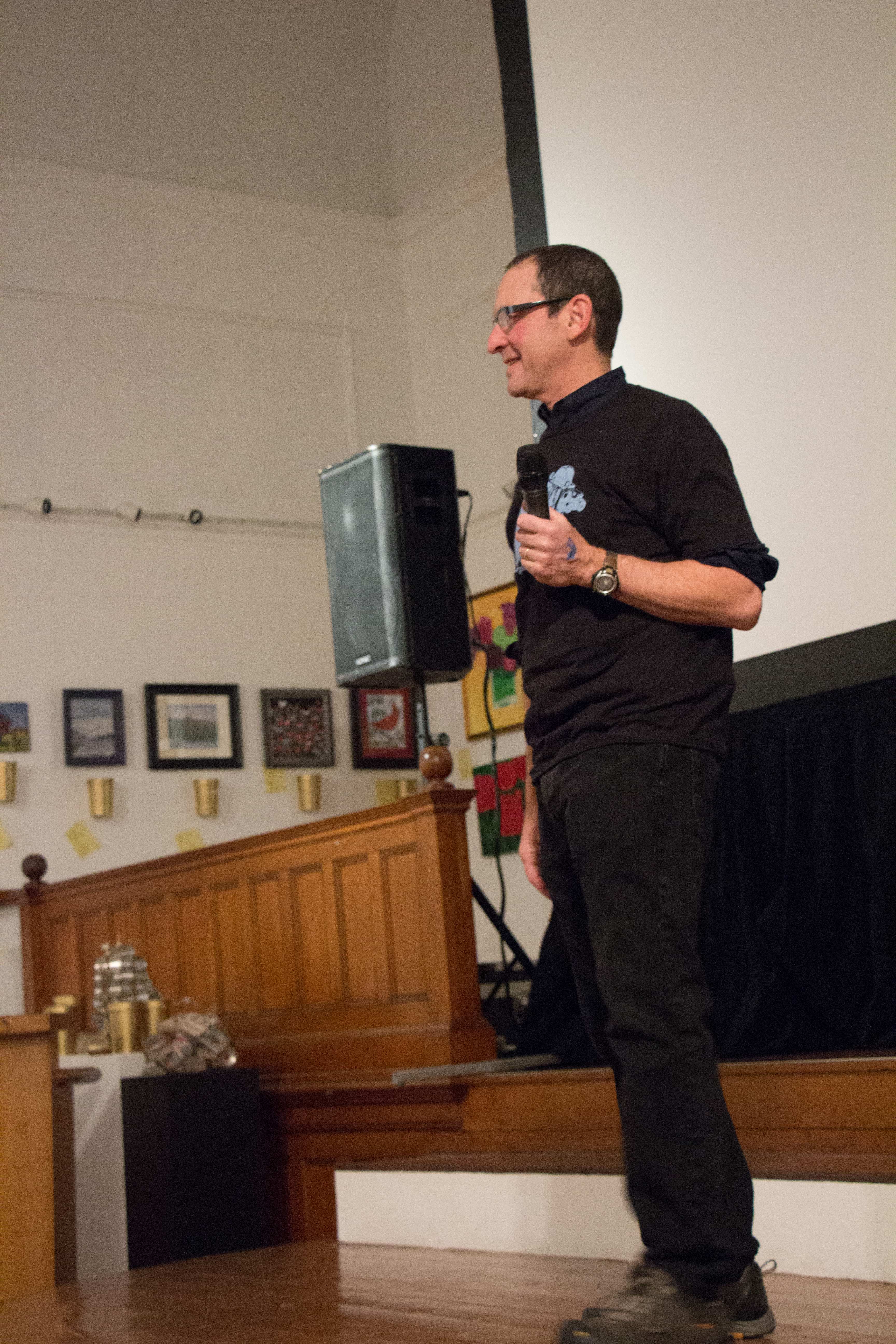
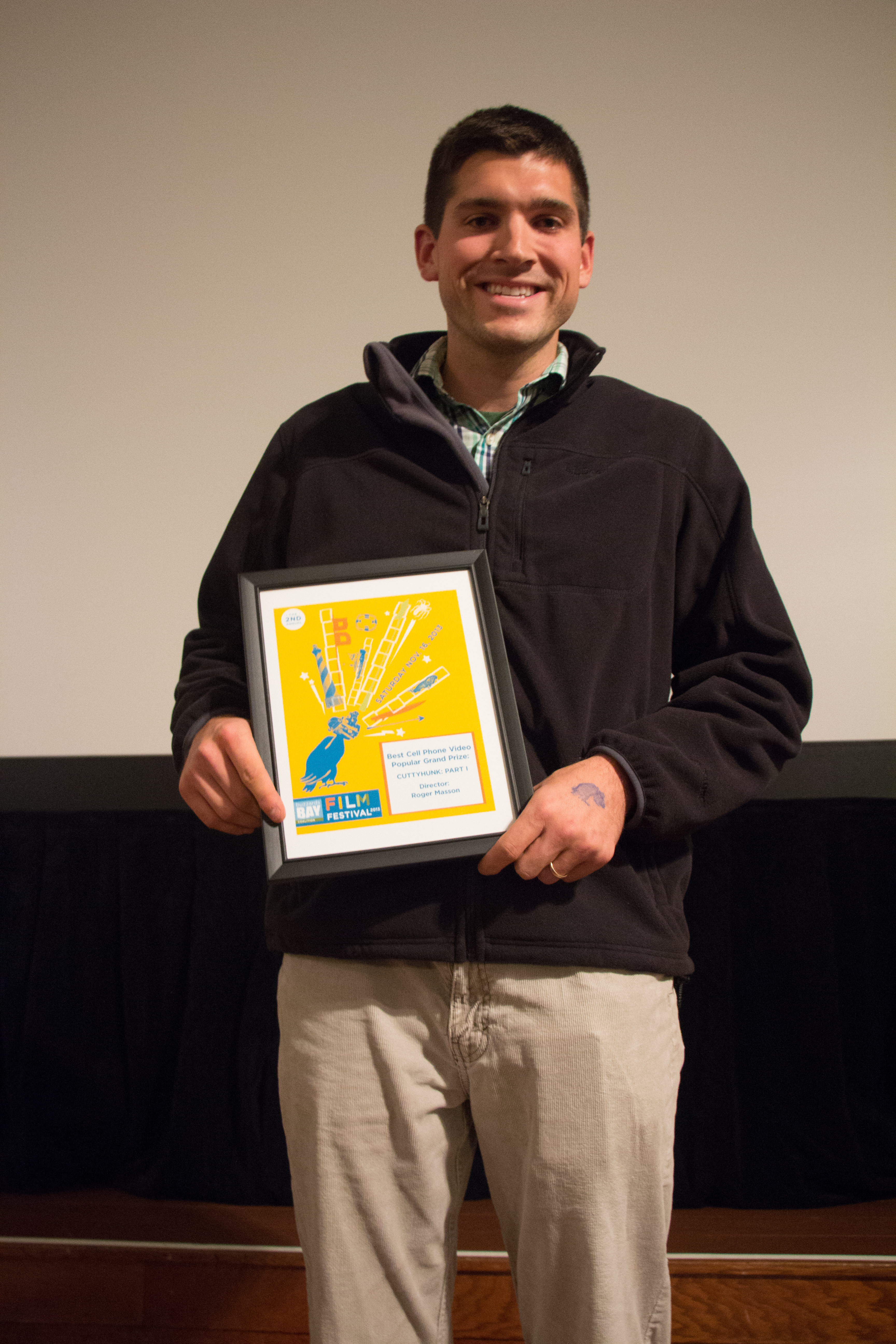
The audience at the sold out event which was held at Gallery X in New Bedford, Mass.The audience at the sold out event which was held at Gallery X in New Bedford, Mass.Buzzard’s Bay Film Festival Director Tom Gidwitz.From left, Mark Rasmussen, President of the Buzzards Bay Coalition, Elise Hugus, Producer of “Saving Paradise,” and Ben Gilbarg, Director of “American Dreams.”Roger Masson, Grand Prize Winner for his film “Cuttyhunk,” accepts his award.Roger Masson was the Grand Prize winner for his film “Cuttyhunk.”Mike Dunn was the Jury Prize winner for his film “Dune Day at Horseneck Beach.” This award came with a pair of tickets to every show booked by JKB Management & Booking in 2014.From left, Jury Prize winner Mike Dunn and Rachel Astore.
Bringing great entertainment to New England since 2011!


















 Limelight Magazine