Category Archives: Home

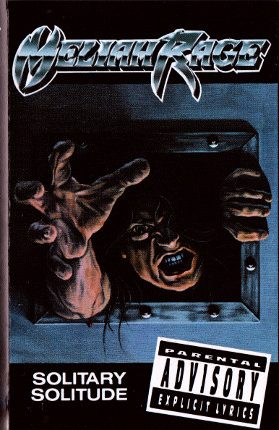
The Cassette Chronicles – MELIAH RAGE’S ‘KILL TO SURVIVE’

By JAY ROBERTS

The Cassette Chronicles is a continuing series of mini reviews and reflections on albums from the 1980’s and 1990’s. The aim of this series is to highlight both known and underappreciated albums from rock, pop and metal genres from this time period through the cassette editions of their releases. Some of the albums I have known about and loved for years, while others are new to me and were music I’ve always wanted to hear. There will be some review analysis and my own personal stories about my connection with various albums. These opinions are strictly my own and do not reflect the views of anyone else at Limelight Magazine.

MELIAH RAGE – KILL TO SURVIVE (1988)

While I’m sure there are other bands that fit this category for me, Meliah Rage is the first band that comes to mind where I’ve seen them in concert but had never heard their music on an album before now.

The Boston-based metallers are fittingly described as both power and thrash metal. The Kill To Survive album is their debut release. Though it comes in a bit short with just seven tracks on the album, it is the quality of the material that matters to me here.

Mike Munro’s vocals inhabit the band’s music and gives each track he’s featured on both an ominous and sinister feel. He has the requisite growl in his delivery but thankfully never quite fully descends into what you would call “cookie monster vocals”.

The music is powerful, brutal and at times kind of hypnotic. There’s no lack of metallic crunch but there’s a harsh edge of melody to each song at the same time. The guitar work (from Anthony Nicols and Jim Koury) is outstanding. Shredding the six string, the guitars give the material the fuel to go full bore right from the start.

The album opens with “Beginning of the End” which kicks things off in a gripping manner. The band’s ability to grab your interest right at the start gets the listener immensely fired up.

The band gets even heavier on “Bates Motel”, which should need no explanation for the inspiration behind the track.

The “Meliah Rage” song is an instrumental. I would normally bemoan the lack of vocals but for a song that clocks in at 7 plus minutes long, there isn’t a second where I wasn’t drawn into this track.

The more thrashy side of the band’s playing shows up best in “Deadly Existence” and “Impaling Doom”.

I know the term “slow” is relative when talking about thrash metal, but the album’s slowest track, “Enter The Darkness” is still pretty fast and I felt my blood pumping while it played.

Meliah Rage combines the heavy and thrash sides of their songwriting most effectively on the album closing “The Pack”. It’s brutal, unrelenting and displays a committed passion that sweeps you up into the song and slaps you around for the length of the track.

While I’ve known of the band’s existence for decades, the fact that I let their recorded output slip through the cracks for me is a pretty sorry admission to have to make. I have at least one more Meliah Rage album on cassette and I can lay hands on some CD editions of other albums. If they are anywhere near as brutally brilliant as the Kill To Survive album, I may just have found another new band to be musically passionate about for myself.

NOTES OF INTEREST – Godsmack frontman Sully Erna played drums for Meliah Rage and is featured on their Unfinished Business album.

I saw the band live in concert at the 2007 Locofest in Mansfield, MA. The day long concert was headlined by Heaven & Hell, Alice Cooper and Queensryche.

The title track to the band’s Barely Human album was featured in an episode of the TV series The Shield.

The Cassette Chronicles – Firehouse’s self-titled debut


By JAY ROBERTS

The Cassette Chronicles is a continuing series of mini reviews and reflections on albums from the 1980’s and 1990’s. The aim of this series is to highlight both known and underappreciated albums from rock, pop and metal genres from this time period through the cassette editions of their releases. Some of the albums I have known about and loved for years, while others are new to me and were music I’ve always wanted to hear. There will be some review analysis and my own personal stories about my connection with various albums. These opinions are strictly my own and do not reflect the views of anyone else at Limelight Magazine.

Full page magazine advertisement for the self-titled debut by Firehouse.

FIREHOUSE – FIREHOUSE (1990)

I HATE FIREHOUSE!

That was a rallying cry for me for any number of years. That gawdawful “Love of a Lifetime” ballad really killed any chance for me to like the band back in the day.

But a funny thing happened about 18 months or so ago. I finally got off my duff and listened to a full Firehouse album. I wrote about the band’s Hold Your Fire release for The Cassette Chronicles in December 2018 and overall, I really enjoyed it.

So the blind hatred softened a lot. But it’s been a while since I’ve been tempted to try and listen to any of their other releases. First off, they aren’t exactly easy to find on cassette these days and then there was the slight fear that Hold Your Fire would be a one-off exception to the admittedly self-made rule.

But on the occasion of the 30th anniversary of the band’s self-titled debut album’s release, I figured it was about time I checked out where it all started for the band.

The Firehouse album ended up featuring four songs that were released as singles. While three of them did make some noise on the charts, it was the one that didn’t chart that I ended up thinking the most of overall. “Shake & Tumble” may not have thrilled the singles chart people but there is a darn good edginess to the song that made it stand out to me.

As for the other three singles, you had what have become some of Firehouse’s best known (and loved) songs like “All She Wrote”, “Don’t Treat Me Bad” and of course, the ballad which I mentioned at the top of this piece.

While “Love of a Lifetime” may have found the most success (it hit #5), you will never convince me that it is anything other than a total crapfest. Now you may chalk that up to the fact that I’m never going to be confused as a great romantic, but my skin crawls and my teeth ache whenever I hear this damn song.

But I will say that the other two songs have kind of grown on me a bit over the years. I didn’t think much of “All She Wrote” originally but I’ve come to appreciate the song a lot more than I ever did before now. With “Don’t Treat Me Bad”, there’s an undeniable hook to the song that gets inside you for some reason. Again, the song has grown on me over the years.

The strange thing about the first side of the cassette is how fast moving each song is. There isn’t much rest for the weary as each song rocks out. I didn’t think a whole lot of the opening track “Rock On The Radio”, which I might put down to the song’s overlong and boring intro. But when I got to the last two songs on Side One, I started thinking to myself that the strength of this album seemed to lay with the album tracks over the singles.

On “Oughta Be A Law”, the way the band used the big backing vocal sound to enhance the chorus really gave the song a lift. Meanwhile, “Lover’s Lane” was a purely killer aggressive sounding rocker. It ended up as one of my preferred tracks on the album.

The second side of the album started off a bit slow with the intro on “Home Is Where The Heart Is” but the song’s tempo picked up soon afterwards and it became a solid rock track.

I liked the more slow burning groove oriented feel to “Don’t Walk Away”. The instrumental “Seasons Of Change” was adeptly written and performed but I can’t help feeling it was a little out of place on this album for some reason. Still, it was a decent track and guitarist Bill Leverty certainly earned any and all kudos that comes his way for this track and throughout the Firehouse album.

As with Side One, the standout songs on Side Two were album cuts. Singer C.J. Snare’s elastic vocal scream at the start of “Overnight Sensation” got that track off to a rousing start that continued right to the finish. The album’s closing track “Helpless” is another ballsy rocker that brings things to a frenzied finish and quickly became another track I just couldn’t help but love.

So remember when I said that I was a card-carrying member of the “I HATE FIREHOUSE” club? I may have been overstating things a bit due to an overabundance of pure musical ignorance. While I am not a fan of the band’s ballads in the least, when they cut loose, they really come up with some fiery rock and roll songs that are full of aggressive hooks and loads of melody.

It may have taken me waiting 30 years to get around to it, but I think I just might actually like the band a hell of a lot than I could ever have imagined. You just need to listen to this album for evidence as to my evolving opinion about the band.

NOTES OF INTEREST: The band got loads of recognition and critical acclaim for the Firehouse album. The release went to #21 on the album chart and was certified double platinum.

The song “Don’t Walk Away” was used in the Mickey Rourke film The Wrestler.

The band has released eight studio albums, though they haven’t put a new release since 2011. There was a 1999 live album and there’s been three greatest hits releases as well.


FILMING LOCATION SPOTLIGHT – “THE GOLDEN GIRLS” (1985-1992)

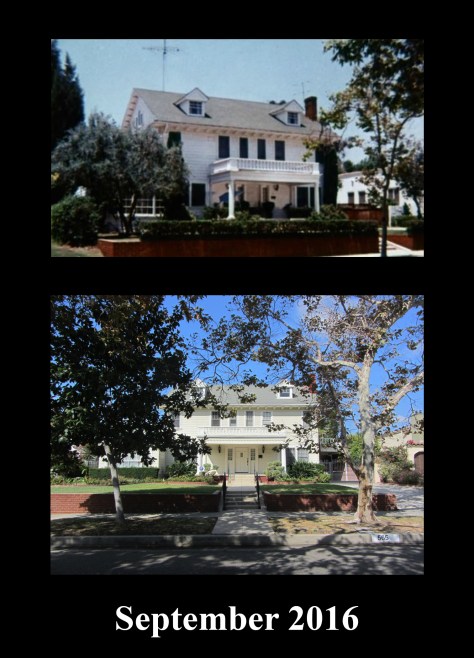
On the second and fourth Friday of every month in 2020, Limelight Magazine spotlights the filming location site(s) we visited for some of our favorite (and not so favorite) films and TV shows. Today we spotlight the filming location for The Golden Girls, which aired on NBC from September 14, 1985, to May 9, 1992. The top photo is a screen shot taken from the TV show while the photo underneath is what the location looks like when we visited the location.

Although the house the “Golden Girls” lived was mentioned in the show as being located at 6151 Richmond Street in Miami, FL, the façade was based on a real house located at 245 N. Saltair Avenue in the Brentwood neighborhood of Los Angeles, CA.

[As of this posting, the home is currently on the market for $2,999,000 with Douglas Ellimen Real Estate].

The Cassette Chronicles – Glass Tiger’s ‘The Thin Red Line”

By JAY ROBERTS

The Cassette Chronicles is a continuing series of mini reviews and reflections on albums from the 1980’s and 1990’s. The aim of this series is to highlight both known and underappreciated albums from rock, pop and metal genres from this time period through the cassette editions of their releases. Some of the albums I have known about and loved for years, while others are new to me and were music I’ve always wanted to hear. There will be some review analysis and my own personal stories about my connection with various albums. These opinions are strictly my own and do not reflect the views of anyone else at Limelight Magazine.

GLASS TIGER – THE THIN RED LINE (1986)

It might be tempting to dismiss the Canadian band Glass Tiger as a one hit wonder of a pop group if the only thing you’ve ever heard from them was their big hit single “Don’t Forget Me (When I’m Gone)”.

While that song went to #1 in Canada and #2 in the US, it is pretty much the only song you might hear on any radio station these days.

I know that I’m guilty of enjoying the song and never investigating the band any further. But in getting ready to write this article, I finally got a chance to listen to the album in full and was rather shocked to discover that Glass Tiger’s debut album The Thin Red Line is far more than just one hit single.

In fact, I’d venture to say that while there are two true pop songs (Side Two’s #7 hit single “Someday” being the other hit single), the band has more of a rock and roll feel to the material on the album than a pop sensibility.

Officially  there were five singles released from The Thin Red Line but three of them made no real mark on the charts. However, I think that’s actually a bonus for my purposes.

The title track leads off the album and it immediately struck me that it was a song you couldn’t expect to hear from “just a pop group”. There’s definitely a hook to the song’s music but nothing that would make you think of it a straight forward pop track. There’s a really cool tone to the song that initially threw off my admittedly preconceived notions for the album.

The song “Closer To You” was the only track I felt didn’t quite hit the mark. It starts out intriguingly enough but never fully captured my interest.

But with uptempo tracks like “Vanishing Tribe” and “Looking At A Picture”, I found myself investing a lot of attention to what was going on with the album’s tracks. While “Vanishing Tribe” has a great sound to it, I thought “Looking At A Picture” had a slightly darker tone to the music at the start of the song. That kind of atmospheric feel lights as the song goes on but it did give me the notion that the song was far deeper than just what you hear on the surface of it.

I’m not quite sure what the purpose of the ever so brief introductory piece “The Secret” was but the start of the 2nd side of the album could’ve done without it. Once that is over, the rest of the songs reinforce the feeling I got from Side One. “Ancient Evenings” is pretty damn entertaining and the album closing “You’re What I Look For” ends things in a fast moving manner.

But the songs I really got into the most on this side was “I Will Be There” (a song that featured a huge sound and a solidly driving rhythm to it) and “Ecstasy” which might just be my personal favorite track on the entire album.

It’s true that I had the preconceived idea that listening to this Glass Tiger album would find me thinking of them as a kind of Canadian version of Duran Duran or something. So you can probably imagine how pleasantly surprised I was to discover that the band actually had far more in common with the rock and roll sound I have spent most of my life passionately exploring. The Thin Red Line is definitely an album worth taking a chance on. I think you’ve got a very nice surprise just waiting for you to discover it.

NOTES OF INTEREST: The Thin Red Line was a huge hit for the band. It helped them win three Juno Awards in 1986 including Album of the Year and Song of the Year. It went quadruple platinum in Canada and gold in the US. The album was produced by Jim Vallance and featured Bryan Adams on backing vocals for “Don’t Forget Me (When I’m Gone)” and “I Will Be There”

In 2012, the album was reissued with a second disc that included remixes, live cuts, demos and more.

The band is still active today. Their lineup has remained largely intact, having only changed drummers once and that was in 2003. They’ve released five studio albums, a live disc and three compilation albums since 1986.

Filming Location Spotlight – “Shadow of a Doubt” (1943)

On the second and fourth Friday of every month in 2020, Limelight Magazine spotlights the filming location site(s) we visited for some of our favorite (and not so favorite) films. Today we spotlight one of the filming locations for Shadow of a Doubt. The film, which was directed by Alfred Hitchcock, was released in 1943. The top photo is a screen shot taken from the movie while the photo underneath is what the location looks like when we visited in September 2014.

This filming location used for the Newton home is located at 904 McDonald Avenue in Santa Rosa, CA.

The Cassette Chronicles – House of Lords’ self-titled debut

By JAY ROBERTS

The Cassette Chronicles is a continuing series of mini reviews and reflections on albums from the 1980’s and 1990’s. The aim of this series is to highlight both known and underappreciated albums from rock, pop and metal genres from this time period through the cassette editions of their releases. Some of the albums I have known about and loved for years, while others are new to me and were music I’ve always wanted to hear. There will be some review analysis and my own personal stories about my connection with various albums. These opinions are strictly my own and do not reflect the views of anyone else at Limelight Magazine.

Full page magazine advertisement for House of Lords’ self-titled debut.

HOUSE OF LORDS – HOUSE OF LORDS (1988)

As I was preparing to listen to this album, I was racking my brain to see if I could remember owning the self-titled debut album from House of Lords when it was originally released.

Sadly, the passage of time has left me with no clear-cut memory of that so at best, it is 50-50 whether or not I had previously owned the album. If I did, the album didn’t survive whatever collection purge I have done over the years.

But when I saw the album sitting in a cassette rack at my local record shop, I just felt a need to pick it up. The fact I’d written about two other House of Lords albums played a part in that buying decision but I remember a couple of tracks from the songs getting airplay on the radio and MTV back in the day.

Happily enough, those two remembered songs are the first two on the album. “Pleasure Palace” has a big instrumental overture to open up the song before a more intensely rocking soundtrack kicks in. Guitarist Lanny Cordola plays a mean guitar lick on this song and throughout the album and when you add in the deeper bold vocal sound from singer James Christian, it doesn’t surprise me that I have fond memories of this song.

And you can’t forget the song “I Wanna Be Loved”, which I believe was the big single/video release for the album. I liked the song back when it was originally released and hearing it now, it still retains a vibrant kind of vitality to it.

As for the rest of the album, even if I did own it, I can’t say that I remembered many of the songs off the top of my head. That gave me the opportunity to listen to the remaining eight songs as one of those new musical experiences that make rediscovering albums such a big thrill.

The last three songs on side one cover the spectrum of song styles for a hard rocking band of the 1980’s. While “Edge of Your Life” has a slow and stark tempo to the beginning of the track, it morphs into a solid rocker after the first verse.

There’s a cover of the Stan Bush song “Love Don’t Lie”. I don’t know which way the wind blows regarding the Bush fans over this cover but I actually kind of liked it. This surprised me a little.

I also loved the fiery rock style of “Lookin’ For Strange”. In fact, I came away incredibly impressed with how aggressively the band could rock out on this particular album without sacrificing the more melodic side of their musical nature.

That’s especially evident on the first song of Side Two. “Slip of the Tongue” takes no prisoners when it comes to that fast aggressive tempo. And the way Christian fires out the lyrics makes this just a flat out killer track. I’d venture to say that it might just be my overall favorite track on the album.

The band’s more grandiose style comes into play most effectively on the songs “Heart of the World” and “Under Blue Skies”. For “Heart of the World”, the epic scale is tempered by more of a driving rock tone. But with “Under Blue Skies”, the sense of the grand epic reigns throughout the song and the sentiments conveyed by the song’s lyrics are pretty interesting too.

The album closing out on hard rocking songs “Call My Name” and “Jealous Heart” leaves the listener amped up on adrenaline.

I know I was pretty jazzed up throughout listening to the album and I can’t really say I was disappointed by any of the album’s ten songs. While that may be coming 32 years too late to mean much to those concerned, the important part for me is the discovery of yet another House of Lords album that I am proud to have in my music collection.

NOTES OF INTEREST: Singer David Glen Eisley, who was the frontman for House of Lords keyboardist Gregg Giuffria’s GIUFFRIA band, co-wrote four of the songs on this album. One of those tracks, “Slip of the Tongue”, was written with Giuffria and Cheap Trick guitarist Rick Nielsen.

Though Kiss’s Gene Simmons is listed as the executive producer for this album, it was Andy Johns and Gregg Giuffria who co-produced the music itself.

I’ve seen House of Lords (in whatever grouping of lineups they had at the time) twice in concert. The first time was in 1991 in Boston. The second time was in New Bedford, MA, back in October of 2018. Both shows were pretty darn entertaining!


The Cassette Chronicles – Poison’s ‘Open Up and Say… Ahh!’

By JAY ROBERTS

The Cassette Chronicles is a continuing series of mini reviews and reflections on albums from the 1980’s and 1990’s. The aim of this series is to highlight both known and underappreciated albums from rock, pop and metal genres from this time period through the cassette editions of their releases. Some of the albums I have known about and loved for years, while others are new to me and were music I’ve always wanted to hear. There will be some review analysis and my own personal stories about my connection with various albums. These opinions are strictly my own and do not reflect the views of anyone else at Limelight Magazine.

Full page magazine advertisement for Poisons “Open Up and Say… Ahh!”

POISON – OPEN UP AND SAY…AHH! (1988)

I suppose you can say that I’m having kind of a mini-renaissance with the band Poison. After enjoying the Flesh & Blood album when I wrote about it last week, I decided to pull their previous album out of my regular cassette collection and give that a listen.

I’ve had that cassette for quite a while now but it isn’t like I’ve been playing it a lot over the years. And after listening to it, maybe I should’ve been doing that very thing. I say that because once again, I found myself really enjoying the entirety of the album.

Open Up and Say Ahh!, for those that weren’t paying attention back in 1988 was a pretty monstrously successful album for the band. It spawned four singles, three of which hit the Top 10.

The first side of the album opens up with a real corker of a rock and roller type song in “Love On The Rocks”. It grabs the listener from the start and gives you a shot of energy for what is to come.

Things really get going with the album’s second track “Nothin’ But A Good Time”. Back then and even today, it serves as one of those quintessential good time rock and roll party anthems. You just can’t help but feel energized when you hear this song. The song went all the way to #6 on the singles chart, so you know that a tremendous amount of people felt the same way about the song.

I enjoyed the heck out of both “Back To The Rocking Horse” and “Good Love”. Both songs are pretty uptempo tracks and keep that outsized party vibe in the forefront of your mind. But it was the last song on Side One that really fired me up. “Tearin’ Down The Walls” is simply a killer tune. From start to finish it rocks hard but I really liked the way the chorus was constructed. Between the lyrics and the way singer Bret Michaels delivered that chorus, it just enhanced the song for me. Since I’ve listened to the album, the song itself wasn’t a surprise per se, but I found that I seemed to get something more out of it as I listened to it now.

The second side of the album continued the highly amplified rock and roll show with “Look But You Can’t Touch”, a song about some frustration in search of female companionship. Okay, it’s not nearly that subtle in the lyrical content, but that aside, I just really dug the song.

The closing song “Bad To Be Good” was pretty decent but it was the three songs leading up to that one that really helped Poison’s fortunes soar. The band’s cover of the Loggins and Messina song “Your Mama Don’t Dance” went to #10 when it was released as a single. The song is good but I think for me as I listen to it 30 plus years later, it doesn’t quite have the same staying power for me. But that doesn’t take away from just how much the song did for the band.

For three weeks, Poison had the #1 song in the country. “Every Rose Has Its Thorn” was their power ballad hit and the only song that ever hit #1 for the band. The song was EVERYWHERE! I’m pretty sure the way the radio and MTV was saturated with the song back then would’ve made me make fun of the song after a while. But the passage of time has given me far more in the way of appreciation for the song. Whenever I hear it on the radio nowadays, I at least hum the song and sometimes, if the mood is right and I’m ALONE, I might even (badly) sing along with it.

But I think my favorite “hit” song from Poison was one that didn’t even make the Top 10 as a single. Sure, “Fallen Angel” hit #12 but saying you had a Top 20 hit doesn’t have quite the same cache as saying a Top 10 hit, now does it?

The song tells a familiar tale of a woman heading to Hollywood seeking fame and fortune but finding things are quite the constant glitz and glamour one imagines. It might not be all that unique of a song, but Poison does do quite a good job at telling their version of that same old song and dance. And the companion video for the song is a conceptual piece that plays along with the lyrics and I still think it is one of the better “story” videos from that time.

I know that it seems a bit crazy to discover that I just might be a bigger fan of Poison than I ever thought I was but getting a new appreciation for a band’s music is never a bad thing in my book. Poison got a huge commercial boost from the Open Up and Say Ahh! album and now that I’ve bothered to really sit down and dig into it with a more open mind, I can see why they became one of the bigger 80’s bands. They just had some fantastically entertaining rock and roll that captured music fans imagination and gave them an exhilarating good time…and nothin’ but!

NOTES OF INTEREST: The Open Up and Say Ahh! album was certified five times platinum and ended up hitting #2 on the album chart. The original cover art featured a demonic woman with a long tongue sticking out of her mouth. This caused some controversy and the edited version of the cover art (which is the version on my cassette) showed just the demon’s eyes.

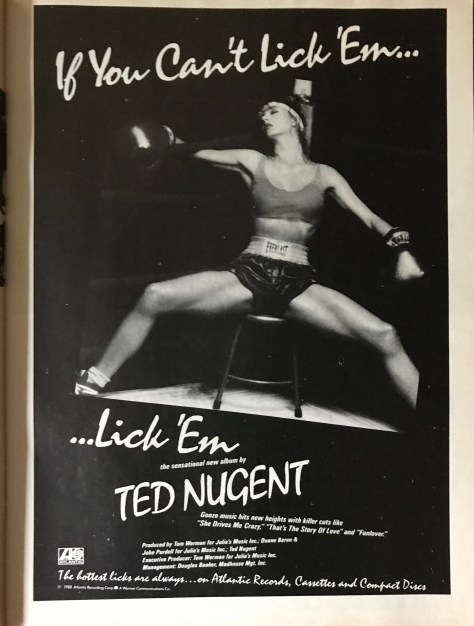
Reportedly, the album was originally supposed to be produced by Paul Stanley of Kiss but he had to drop out and Tom Werman ended up producing the release.

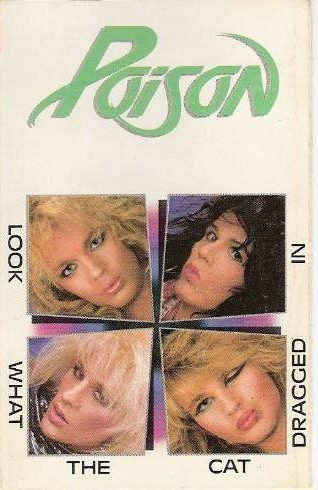
After the release of the album, Poison put out a home video called Sight For Sore Ears that collected the videos they put out for both the Look What The Cat Dragged In and Open Up and Say Ahh! albums.

The 20th anniversary CD release included the bonus track “Livin’ For The Minute”. It was originally released as a B-side. Another song was written for the album sessions called “Face The Hangman”. It was also used as a B-side but got an official release on the Crack A Smile…and More! release.

The Cassette Chronicles – Poison’s ‘Flesh & Blood’

The Cassette Chronicles is a continuing series of mini reviews and reflections on albums from the 1980’s and 1990’s. The aim of this series is to highlight both known and underappreciated albums from rock, pop and metal genres from this time period through the cassette editions of their releases. Some of the albums I have known about and loved for years, while others are new to me and were music I’ve always wanted to hear. There will be some review analysis and my own personal stories about my connection with various albums. These opinions are strictly my own and do not reflect the views of anyone else at Limelight Magazine.

Full page magazine advertisement for Poison’s “Flesh Blood”

POISON – FLESH & BLOOD (1990)

It is a funny thing about the band Poison. Despite the fact that they were one of the most successful bands back in metal’s 1980’s glory days, I don’t think they’ve ever gotten much in the way of any critical acclaim.

I distinctly remember watching some documentary type film on the band (it might’ve been a Behind The Music episode, but I can’t be sure) where one of the talking heads interviewed pretty much crapped all over the quality of the band’s material. He basically dismissed them as almost a joke.

Well, more than three decades later, I think the joke is on all of those people who wrote the band off because their music has survived the passage of time and the band is still a going concern today even if in a more limited capacity.

I didn’t completely write the band off back then, but I wasn’t what you would call their biggest fan either. I owned the Open Up and Say…Ahh! album when it came out but while I enjoyed the various singles the band released, it wasn’t until their ill-fated collaboration with guitarist Richie Kotzen on the Native Tongue in 1993 that I truly raved about one of the band’s releases.

But as time has gone on, I’ve really come to enjoy the band’s early catalog a lot more than I did on the first time around. Today’s case in point is the Flesh & Blood album.

I have a bit of a confession here. I’d been listening to this album on CD for a couple of weeks prior to me receiving a cassette copy of the album from a not-so-mysterious benefactor. So I had some renewed passing familiarity with the music before putting the cassette in my player.

But it wasn’t until I listened with the intent to write this article that I really got into the album. Okay, the opening intro piece (I really hesitate to call it an instrumental) “Strange Days Of Uncle Jack” wastes a perfectly cool sounding title on a what I consider to be a thorough waste of time and I wasn’t all that interested in the actual instrumental “Swampjuice (Soul-O)”.

But after that? Poison really killed it with their songs on the album! The fun side of the band is still on great display but they were a lot more serious in their subject matter at the same time.

On side one, “The Valley of Lost Souls” kicks the album off in truth with a blazing highly energetic romp that got my foot stomping and badly singing along. I did strongly remember the album’s nominal title track “(Flesh & Blood) Sacrifice” from when the album was originally released. It was one of five songs released as a single from the album, four of which hit the Billboard singles chart Top 40.

The first of the two singles that made it all the way into the Top 10 was their big rocker “Unskinny Bop”. Yes, the title really doesn’t mean anything since it was kind of a placeholder but out of accident comes “genius” because tell me you don’t remember the hell out of this song!

As for the rest of the album’s first side, you’ve got killer rock numbers like “Let It Play” and “Come Hell Or High Water” as well as the mid-to-uptempo song “Life Goes On” which mixes power balladry with an amped up rock style at the same time. It’s a great sounding song in my opinion.

The second side of Flesh & Blood kicks off with a song that still gets me to this day. “Ride The Wind” is pretty much a description of living life on a motorcycle cruising the highways and byways with the freedom of the open road your only concern. Despite the fact that I’m a cranky old homebody these days, it still makes me nostalgic for when I was young and wanted nothing more than to leave it all behind and live that kind of life. I sure as heck wouldn’t want that now, but the memories this song stirs up are still up there in my noggin and it always brings a smile to my face.

I loved the slow bluesy intro on “Ball and Chain” and the fast pacing of “Don’t Give Up An Inch”. Poison also hit the top 10 singles chart with their monstrously successful power ballad “Something To Believe In”. That song still gets played on radio stations (and not just classic rock stations) to this day. I’m not sure if I liked the song the first time around or if I might’ve made fun of it but I know that nowadays, I really love the song so there is definitely no making fun of it now for me.

The album closes out on a couple of slow build rockers in “Life Loves A Tragedy” and “Poor Boy Blues”. The “Life” song builds into a kick your tail kind of rocker while the band mines a vein of blues rock for the album closing “Poor Boy Blues”.

I know for sure that I didn’t give this album, and almost certainly the band themselves enough credit back in the day but as I look back on the Flesh & Blood album now, it’s a heck of an entertaining rock and roll record almost from start to finish. How much of an impression did the album make on me? As I’ve been writing this article, I’ve been listening to the album yet again. It just rocks, plain and simple.

 NOTES OF INTEREST: The Flesh & Blood album was certified triple platinum. The 20th anniversary reissue had two bonus tracks on it including an instrumental cover of the Sex Pistols’ track “God Save The Queen”.

Sadly, the one time I saw Poison in concert, they were headlining over Tesla and they were awful. It was one of the lesser shows I’ve seen and Tesla blew them off the stage.

Poison was supposed to be doing “The Stadium Tour” with Motley Crue, Def Leppard and Joan Jett and the Blackhearts during the summer of 2020 but that tour got bumped to 2021 due to the pandemic closure of pretty much everything.

Filming Location Spotlight – ‘The Brady Bunch” (1969-1974)

On the second and fourth Friday of every month in 2020, Limelight Magazine spotlights the filming location site(s) we visited for some of our favorite (and not so favorite) films and TV shows. Today we spotlight the filming location for The Brady Bunch, which aired on ABC from September 26, 1969, to March 8, 1974. The show also  spawned several television reunion and spin-off series. The top photo is a screen shot taken from the TV show while the photo underneath is what the location looks like when we visited the location.

This filming location used for the Brady House is located at 11222 Dilling Street in Studio City, CA.

The Cassette Chroncles – Lionel Richie’s ‘Can’t Slow Down’

By JAY ROBERTS

The Cassette Chronicles is a continuing series of mini reviews and reflections on albums from the 1980’s and 1990’s. The aim of this series is to highlight both known and underappreciated albums from rock, pop and metal genres from this time period through the cassette editions of their releases. Some of the albums I have known about and loved for years, while others are new to me and were music I’ve always wanted to hear. There will be some review analysis and my own personal stories about my connection with various albums. These opinions are strictly my own and do not reflect the views of anyone else at Limelight Magazine.

LIONEL RICHIE – CAN’T SLOW DOWN (1983)

It’s time for another curveball folks! Yes, this series mostly focuses on rock and metal releases but I do have a love of 80’s pop music in my background as well and occasionally I pull out an album from that time that struck a nerve with me back then and still resonates with me to this day.

I’m not sure if I remember much about Lionel Richie’s time with The Commodores. At least not before I became as fan of his solo work. But while I probably learned more about his time with that group after he hit it big with Can’t Slow Down, it has definitely been more about his solo music that has had me hooked all these years.

And boy did he hit it big with this album! Can’t Slow Down has reportedly sold over 20 million copies, got a 20th anniversary 2-disc reissue release, won the Grammy for Album of the Year and had five top ten singles. Realistically, most artists would take a lengthy career to receive the kind of success he enjoyed with this album alone.

I’ve had this cassette in my collection for a long time, probably pretty much since it was released. But while I’m very familiar with the five classic tracks, it isn’t like I play the album a whole lot.

So, it was a bit of a surprise to me to realize that the album opening title track seems to be a huge missed opportunity. While certainly not a rule, I’ve kind of felt that a title track should generally serve as a way to sum up an album as a whole. Well, if you judged the album by this one’s title track, you’d dismiss it out of hand. The song is totally undersold and Richie’s vocals are barely above a whisper as if they were “accidentally” recorded and added to the musical score. It completely throws off the song and any hope for the track to be a more memorable one.

But the great thing is that the album rebounds strongly from that point. As I said, it had five top ten singles and given that Can’t Slow Down only had eight tracks on the original release, this makes for an almost hilarious level of great music to listen to.

Two songs made it all the way to #1 on the singles chart. The first one was “All Night Long (All Night)” an uptempo track with a party-slash-celebratory vibe to it. Truth be told, from the first notes of the song, I am always drawn into the song. It makes you feel great and sweeps you up into the party atmosphere.

The other #1 hit is the ballad “Hello” which closes the album. In 1983, MTV was actually still playing music videos and I remember the video for this song vividly. It is one of the better storyline videos I’ve seen and unlike most 80’s rock power ballads, I find the ballads on this album to be of a superior quality. Now I love this song but you know what kind of amused me as I listened to it for this article? If you combine the song with the video, it actually comes off as a little bit stalker-like in this day and age. I suppose it is all how you look at the song as an individual but in the right light (or perhaps a more sinister light), I’d say The Police song “Every Breath You Take” might just have a companion piece. I know, way to ruin a song for you, right? Feel free to ignore all that because if you love the song, I’m right there with you.

If every song has its fanbase, I’d like to ask those who like the song “Love Will Find A Way” what makes it work for them? The midtempo pacing makes the song feel like it is just wandering around the musical landscape looking for some kind of meaning.

Eh, but enough about that. Let’s get back to the hits, shall we?

The last two songs on the first side of the album are both rather successful ballads. “Penny Lover” was a #8 single and “Stuck On You” went to #3. These are also great songs and intriguingly enough, as I listened to them I could actually sing (okay, lip-synch) the entire set of lyrics for each one. I don’t know if that loses me points with metalheads, but I don’t really care. I feel not a bit of shame for enjoying the non-cloying sentimentality each of these songs conjures up. It must be true…I’m not always a cold and heartless SOB!

While it wasn’t released as a single, the song “The Only One” is actually a pretty decent song. The main lyrical verses are good but I found that the chorus has a great hook to it. I read online that the song is still played during Lionel Richie’s concerts to this day.

Perhaps the song that resonates with the part of me that loves mysteries is the #7 hit “Running With The Night”. It’s got a real uptempo pace to it but at the same time, there’s an edgy sense of atmosphere in regards to how the song is presented. Listening to the lyrics, I got the feeling that if Richie had been writing a crime novel, he’d have a keen grasp of noir conventions.

While he is probably more noted the last few years for being a judge partly responsible for foisting mediocre at best “talent” on the unsuspecting general public via the American Idol TV show, Richie’s place in music history is secure. Turning out a wide array of successful pop songs, love ballads and just get up and dance numbers (No, I didn’t actually do that), the Can’t Slow Down album is likely the masterwork of his catalog and shows that regardless of genre, greatness always shines through.

NOTES OF INTEREST: Singer Richard Marx sang backup vocals on four tracks on the album: “All Night Long (All Night)”, “Love Will Find A Way”, “The Only One” and “Running With The Night”.

Also providing backing vocals on “All Night Long (All Night)” was singer-songwriter Kin Vassy, who was a member of Kenny Rogers and the First Edition in the 1960’s. The video for the song was produced by ex-Monkee Michael Nesmith.

Toto members Jeff Porcaro and Steve Lukather featured on Can’t Slow Down. Porcaro played drums on “Running With The Night” while that song featured a guitar solo from Lukather. Lukather also played guitar on the song “The Only One”. The video for “Running With The Night” features singer-percussionist Sheila E. as a bridesmaid.