Carl Palmer’s ELP Legacy to rock the Narrows Center in Fall River

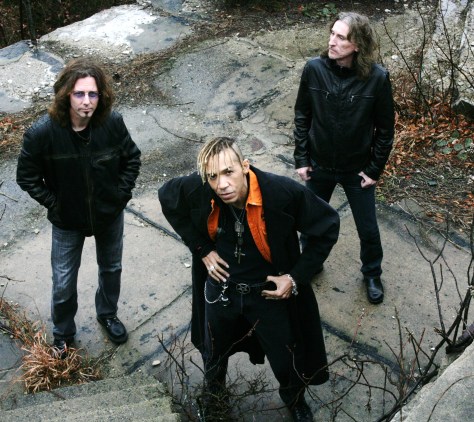
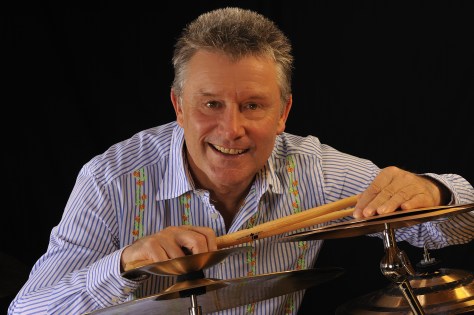
FALL RIVER – Legendary drummer Carl Palmer, a founding member of progressive rock groups Emerson, Lake & Palmer (ELP) and Asia, will bring his power trio to the Narrows Center for the Arts in Fall River, Mass., this Wednesday, October 4th. Purchase tickets HERE.

The tour will pay tribute to ELP’s late keyboardist, Keith Emerson, and vocalist/bassist, Greg Lake. It will showcase some of ELP’s finest pieces of music and is expected to feature “Tarkus,” “Fanfare for the Common Man,” “Hoedown,” and “Pictures At An Exhibition,” among others.

For nearly four decades, Palmer has thrilled listeners and audiences alike with some of music’s most memorable bands including Atomic Rooster, The Crazy World Of Arthur Brown, Emerson, Lake & Palmer, and Asia. Along the way, his dazzling speed and mastery of the drums, combined with his infectious stage personality, have secured for him a respected place in history as one of Rock and Roll’s greatest drummers. Joining Palmer onstage will once again be guitarist Paul Bielatowicz and bassist Simon Fitzpatrick.

For this intimate concert, Palmer will meet fans after the show, doing autograph signings at the venue.

The Narrows Center for the Arts is located at 16 Anawan Street in Fall River. To purchase tickets to the show, click HERE or call the box office at 508-324-1926. Tickets will also be available at the venue on the day of the show.

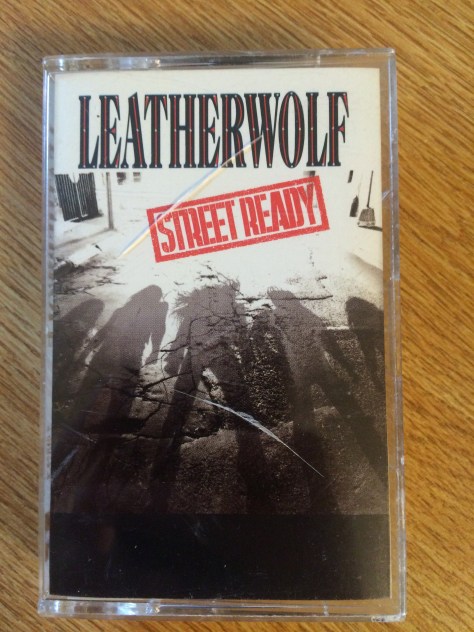
The Cassette Chronicles – Leatherwolf’s ‘Street Ready’

BY JAY ROBERTS (SPECIAL TO LIMELIGHT MAGAZINE)

The Cassette Chronicles is a continuing series of mini reviews and reflections on albums from the 1980’s and 1990’s that I have acquired through Purchase Street Records in New Bedford, MA.

The aim of this series is to highlight both known and underappreciated albums from rock, pop and metal genres from the 1980’s through the cassette editions of their releases. Some of the albums I have known about and loved for years, while others are new to me and were music I’ve always wanted to hear. There will be some review analysis and my own personal stories about my connection with various albums.

These opinions are strictly my own and do not reflect the views of anyone else at Limelight Magazine.

LEATHERWOLF – STREET READY (1989)

I’m not quite sure what the cause was behind the dismal failure of this album when it was released back in 1989. Whether it was a lack of label support, a simple case of falling between the cracks or a metal music fan base that didn’t know what was good for itself, Leatherwolf’s Street Ready, the band’s third album disappeared with nary a trace and led almost directly to the band’s breakup in 1990.

What amazes me most is that this album really had everything that should’ve made it a monster hit back in 1989, when metal’s reign atop the musical mountain top was still at full peak. If you wanted monster riffs and crackling musical runs, you could check out songs like “Wicked Ways”, the title track or even the instrumental “Black Knight”. For me to single out the latter track back in the day was a big thing because I really didn’t have much in the way of appreciation for instrumental music then. But that cut was outstanding.

The band also had a grasp on the notion of combining outstanding melodic hooks with the charged balls out rocking music. The song “Hideaway” (which was the band’s first single and video for radio/MTV) was a sort of power ballad that did the song genre proud. Side two of the album led off with another strong melodic heavy rocker in “Thunder”. It also should’ve been a big hit for the band.

There was also then a novelty of having three guitar players in the band (singer Michael Olivieri, Gary Gayer and Carey Howe all had guitars in hand and on the album). It might not mean much nowadays but it was intriguing to the sound back then.

I had this album from the time of release. I remember buying it from my Columbia House music club. I played it a lot and over the years I would always remember to rotate the album into the mix of the stuff I brought to work. But when my cassette finally wore out, I was able to track down an affordable CD though it wasn’t easy. Ironically, it was just a couple weeks after getting the CD that the album came back to me as a cassette with the purchase of the 100 cassettes from Purchase Street Records. Thus, a new Cassette Chronicles entry was born.

It might be more interesting to find something…anything…to complain about this album but in truth there is absolutely nothing wrong with this album. Every one of the 10 tracks is outstanding, not a single not of filler is to be found here. Street Ready should’ve given the band a huge profile all over the world. It really does have it all. The songwriting is strong, the vocals grab you immediately and for me, there’s an authenticity to it all that might’ve been in short supply by bands that came after them before grunge took over the musical landscape.

This is one of the more underrated metal albums from the 80’s, which I think is still a bit of an understatement. Do yourself a favor and check this one out, I think you’ll find that you’ll agree.

Advertisement – Please click!

Notes of Interest – Though the band broke up in 1990, they reunited in 1999 and have been a going concern since then (with a bevy of lineup changes over the years). However, they have not released a new studio album since 2007’s New World Asylum.

While original singer Michael Olivieri has been the longest serving vocalist, when he was out of the band, Racer X’s Jeff Martin and Wade Black (ex-Crimson Glory) stepped into the role. Black recorded the album World Asylum with the band in 2006 before it was reissued the following year with Olivieri’s vocals in place of Black’s.

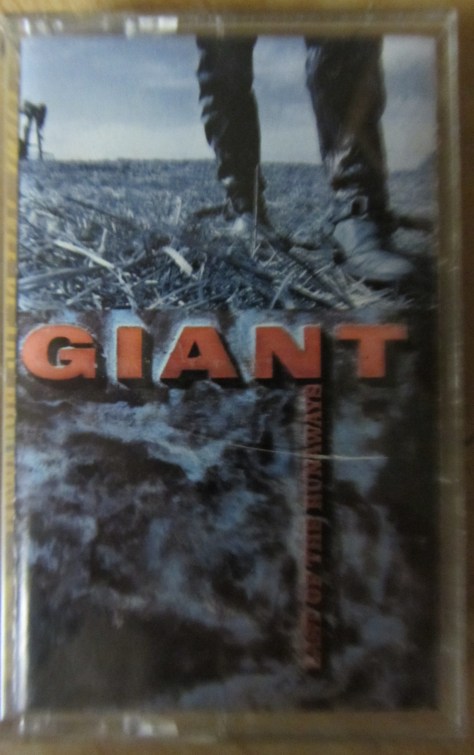
The Cassette Chronicles – Giant’s ‘Last of the Runaways’

BY JAY ROBERTS (SPECIAL TO LIMELIGHT MAGAZINE)

The Cassette Chronicles is a continuing series of mini reviews and reflections on albums from the 1980’s and 1990’s that I have acquired through Purchase Street Records in New Bedford, MA.

The aim of this series is to highlight both known and underappreciated albums from rock, pop and metal genres from the 1980’s through the cassette editions of their releases. Some of the albums I have known about and loved for years, while others are new to me and were music I’ve always wanted to hear. There will be some review analysis and my own personal stories about my connection with various albums.

These opinions are strictly my own and do not reflect the views of anyone else at Limelight Magazine.

GIANT – LAST OF THE RUNAWAYS (1989)

It’s a little funny to think that Giant’s debut album came out 28 years ago. I actually owned this on cassette, buying it when it was originally released. Unfortunately, I didn’t think much of it back then. It slipped from my memory rather quickly and at some point I just got rid of the album.

While the band didn’t make much of a lasting impression with me back then, Dann Huff is a name that kept popping up over the years for reasons you can read about later in this article.

I ended up getting another copy of this album when I made the Purchase Street Records 100 cassette acquisition. Time has an amusing way of bringing things full circle or enlightening something more fully.

While I am not fully onboard with the notion that Last of the Runaways is an AOR classic, this album actually came to be far better than I thought way back when.

The band’s one hit was the ballad “I’ll See You In My Dreams.” It’s not all that original a track but it isn’t bad either. The song has a nice hook accompanying the chorus and that helps make the song. The other song that came to be seen as a minor hit for the band was the album opening “I’m A Believer.” It’s an uptempo rocker that opens with a smoking guitar intro.

Unsurprisingly, the best material is when the band quickens up the pacing. The rockers far outstrip the ballads in terms of quality, at least from my viewpoint. The ballads “It Takes Two” and “Love Welcome Home” were mere annoyances in the way of better songs. The latter of those two tracks tried to use an increased sense of the grandiose to make the song seem bigger and more important than it was.

There is a grittier edge to the sound on “No Way Out”, Side one’s closing track, that had me bopping my head to the song’s swinging pace. Meanwhile, Side two opened with “Shake Me Up”, another rocker that did indeed shake things up for the album.

I was a little worried that I wasn’t going to be able to do this piece when I heard the second song “Innocent Days”. The tonal changes that occurred twice in the song made me think the tape was warping. The song was kind of mediocre overall, though it did include the lyric that serves as the album’s title.

For me, the two best songs are tracks that I’m sure are completely overlooked by most people that have heard this album are rockers “Hold Back The Night” and “The Big Pitch.”

There’s a line in “Hold Back The Night” that gives the feeling that the song has a kind of spiritual overtone. This wouldn’t be much of a surprise given that Dann Huff and his brother David started off in a Christian rock band. Normally, this would turn me off to a song since I tend to have little interest or patience with the more religiously inclined music. But I have to say that the song really worked. The music and lyrics were deftly intertwined together to make an even stronger whole.

“The Big Pitch” closes the album and it is just a flat out killer rock track. It certainly wormed its way into my cold dead heart as a song I came to love on the second go round.

Doubling up on my failure to appreciate Giant the first time around is the true confession that I actually saw them live in concert. They were the opening act for Heart back in 1990. I barely remember anything of their set beyond thinking that, much like the album itself, they were okay but nothing really that memorable.

Funny how time and distance have a way of changing opinions, isn’t it? Because I have to say that despite my lack of interest in the lesser material on the album, Last of the Runaways is a far better album than I ever gave it credit for.

Notes of Interest – The album was produced by Terry Thomas, who also co-wrote four songs on the album. Thomas produced and co-wrote a number of songs for three Bad Company albums (Dangerous Age, Holy Water and Here Comes Trouble) featuring singer Brian Howe on vocals.

Singer/guitarist Dann Huff has gone on to a highly successful career as a producer particularly in the field of country music. Outside of the country genre, he also produced Megadeth’s Cryptic Writings and Risk albums.

Ad for Giant’s “Last of the Runaways” in the November 1989 edition of “Hit Parader.”

The Cassette Chronicles – John Parr’s ‘Running the Endless Mile’

BY JAY ROBERTS (SPECIAL TO LIMELIGHT MAGAZINE)

The Cassette Chronicles is a continuing series of mini reviews and reflections on albums from the 1980’s and 1990’s that I have acquired through Purchase Street Records in New Bedford, MA.

The aim of this series is to highlight both known and underappreciated albums from rock, pop and metal genres from the 1980’s through the cassette editions of their releases. Some of the albums I have known about and loved for years, while others are new to me and were music I’ve always wanted to hear. There will be some review analysis and my own personal stories about my connection with various albums.

These opinions are strictly my own and do not reflect the views of anyone else at Limelight Magazine.

JOHN PARR – RUNNING THE ENDLESS MILE (1986)

The original intentions for this particular article was to write about John Parr’s self-titled 1984 solo album which included his #23 charting hit “Naughty Naughty.” However, as bad luck would have it, I got about three quarters into the album and the player at the tape. So, I don’t get to talk about that album, even though I was on my way towards saying nice things about it.

Instead, the brand new and never opened sophomore album Running The Endless Mile, is the focus of this week’s installment. In between the first and second albums, he had a monster #1 soundtrack hit with “St. Elmo’s Fire (Man In Motion)” from the St. Elmo’s Fire film. Every time I hear it on the radio, it gives me a thrill because of just how great I think that song was then and remains so now. I really love Parr’s voice.

I wish I could say the same for this album. Unfortunately, I can fully understand why this album was less successful than its predecessor. Four singles were released from the album and none charted higher than #88. That song was “Blame It On The Radio” which I have to say was embarrassingly trite.

The album opens up with “Two Hearts (American Anthem)”, a mostly uptempo track that I did like, at least until the multiple instrumental solos in the middle of the song that felt as if they were tacked on for no reason in particular. I did like the saxophone flourishes throughout the song though.

The next three tracks did nothing for me and I was in danger of zoning out until the last song started playing. It’s called “Don’t Leave Your Mark On Me (Mark 2)”. The original version of the song was on Parr’s first album. I liked how the song’s tempo alternated between a kind of hushed tone in the main lyrical verses and then had an explosive chorus. The storytelling of the lyrics draws the listener in as well. This is the best song on the album, which might say a lot about the rest of the material considering it is essentially a remake.

The second side of the album wasn’t much better than the first. “Scratch” had a fast tempo but completely missed whatever mark it was aiming for, while “Do It Again” was mildly entertaining but not necessarily a showcase tune. You have to wait until the last song on the album, “Steal You Away (Flight of the Spruce Goose)” before anything truly interesting catches your ear.

Essentially, the music overwhelms the vocals on this album and there’s not a whole lot to love with that music. It’s a soundtrack of its time but it doesn’t even come close to holding up.

John Parr has recorded six solo albums, the last coming out in 2012. None have done better here in the U.S. than his debut release. While I haven’t heard anything of the four latest solo albums, I can only hope that they have something more to offer than what I heard with Running The Endless Mile. Because two really good tracks out of ten just doesn’t cut it with me.

Note of Interest: Julia Downes is credited with co-writing three songs on this album, “Story Still Remains The Same” (which featured her on keyboards as well), “Do It Again” and “Don’t Leave Your Mark On Me (Mark 2)”. She has written with and/or for Roger Daltrey, Meat Loaf and Sheena Easton.

Julia Cirignano releases compilation of poems

Julia Cirignano has released her first self-published book titled White Wine & Medical Marijuana: A Compilation of Poems. Cirignano recently graduated from Endicott College where she received a BA in English with a music minor. She has several articles published by Limelight Magazine and That Music Mag, and has poetry published in The Endicott Review, The Endicott Observer, Mad Swirl, The New York Literary Magazine, Red Wolf Journal, and The Somerville Times.

White Wine & Medical Marijuana is a book of poetry that explores themes such femininity, sexuality, weakness, strength, power, addiction, and profanity. It analyzes these themes, while keeping the language casual, simple, and accessible to all readers. Enjoy the power struggle between self criticism and self love, the raw life observations, and the relentless scrutinization of everyday life.

Cirignano released White Wine & Medical Marijuana on August 8th, and has already received rave reviews from NY Literary Magazine, Doug Holder of Ibbetson Street Press, and Ziggy Merrit of That Music Mag.

Check out Cirignano’s writing on her website http://www.juliacirignano.com, and follow her on Instagram, Twitter, and Linkedin. Also, feel free to contact Cirignano with any inquiries or review possibilities at jciri341@mail.endicott.edu.

Pick up your copy of White Wine & Medical Marijuana on Amazon by clicking HERE.

The Cassette Chronicles – John Waite’s ‘Rover’s Return’

BY JAY ROBERTS (SPECIAL TO LIMELIGHT MAGAZINE)

The Cassette Chronicles is a continuing series of mini reviews and reflections on albums from the 1980’s and 1990’s that I have acquired through Purchase Street Records in New Bedford, MA.

The aim of this series is to highlight both known and underappreciated albums from rock, pop and metal genres from the 1980’s through the cassette editions of their releases. Some of the albums I have known about and loved for years, while others are new to me and were music I’ve always wanted to hear. There will be some review analysis and my own personal stories about my connection with various albums.

These opinions are strictly my own and do not reflect the views of anyone else at Limelight Magazine.

JOHN WAITE – Rover’s Return (1987)
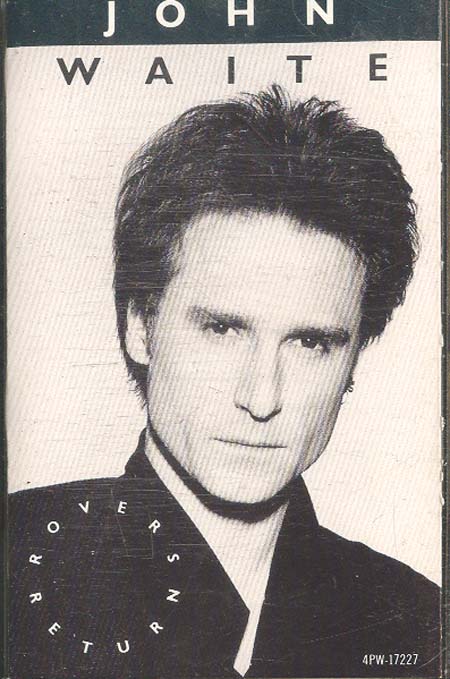
Back in the murky swamps of the distant past, I was slightly less grumpy and cranky than I am now. This would probably account for why in 1984, I absolutely loved the John Waite #1 smash hit ballad “Missing You” from his No Brakes album. It was a ballad but one that didn’t come with so much cheese as to bind up your insides beyond salvaging. As for the album it was on, No Brakes was fantastic from beginning to end. I really loved that album.

So, as I sat down to listen to Rover’s Return, I found myself wondering why I never really got into John Waite’s other solo albums. At least not to the point I did with No Brakes.

The ex-Babys singer Waite has always had a great voice that has shined with his original group, solo and with Bad English. However, on Rover’s Return there is ample evidence that a big reason why he never quite reached the continuing success peak with his solo career is because he just didn’t have the best songs to work with.

The album kicks off with the track that served as the big single attempt, “These Times Are Hard For Lovers.” Co-written by Desmond Child (who is also credited with backing vocals on the album), the uptempo number is quite catchy. However, the blending of backing vocals during the song’s chorus overpowers Waite’s main vocal track and feels like a bit of overkill. While I generally like the song, each time I hear the chorus I cringe.

The other single released from the album was “Don’t Lose Any Sleep,” which was written by another prolific hit songwriter, Diane Warren, but it did worse on the charts than “These Times…” I can understand why because the quality of the song changes from one moment to the next. I found myself wavering on this one because there were moments I liked in the song but they’d get swallowed up by the next moment which made me want to scream in agony.

Songs like “Act of Love,” a depressingly one note serving of blandness that makes white bread look edgy made me wonder who had the final say on picking the tracks for the release. Normally, a major complaint of mine centers on the ballad tracks on any given album, but in a somewhat refreshing yet odd change of pace, the faster rock paced song “Wild One” which closes out Side One is stunningly weak for a song that aims to get the blood pumping.

I know, I know. You are reading this and wondering if there was anything about this album that I liked without reservations because you don’t want to read just a diatribe of how mediocre I found Rover’s Return to be.

The answer is yes. There are some rather good tracks that deserved to be on a better cast album than this one. The song “Encircled” has an edgier musical score to it with Waite’s vocal performance more forceful. “Woman’s Touch” has a gritty guitar line in the song that caught my ear.

For my money, the last three songs on the album are where Waite’s abilities are demonstrated to their full potential. “Sometimes” is a ballad with some rather excellent storytelling in the lyrics. “Big Time For Love” closes things out with a racing rock crescendo and my personal favorite song on the album, “She’s The One,” melds rock aggressiveness with pop sensibilities for a song that I would’ve loved hearing as a big hit radio track all those years ago.

I’ve been a fan of John Waite’s voice ever since “Missing You” was released as a single, and that hasn’t changed regardless of where I heard his voice over the years. I’ve heard stuff from his time with The Babys and loved the first Bad English album. He’s just got something that endears his singing to the listener. But despite this, even though he wrote or co-wrote 7 out of the 9 cuts on this album, there are times when the songwriting is lacking and fails to capture the best of what he can do.

I find that to be a rather embarrassing thing to admit because I do claim an allegiance of fandom for him. But Rover’s Return is simply not more than an adequate release that leaves you feeling disappointed because the album could’ve been so much more.

Notes of Interest: Anton Fig, best known as the drummer for David Letterman’s house band The CBS Orchestra, is one of three credited drummers on this album. His name is spelled “Figg” in the liner notes. Meanwhile, singer Joe Lynn Turner (Rainbow, Deep Purple, Yngwie Malmsteen) is credited as providing backing vocals.

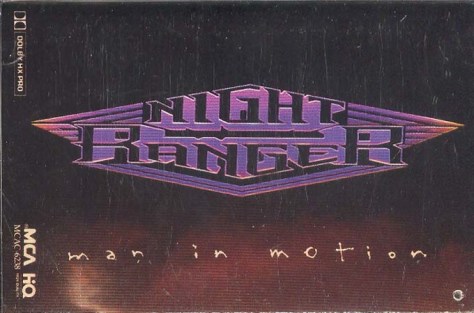
The Cassette Chronicles – Night Ranger’s ‘Man In Motion’

BY JAY ROBERTS (SPECIAL TO LIMELIGHT MAGAZINE)

The Cassette Chronicles is a continuing series of mini reviews and reflections on albums from the 1980’s and 1990’s that I have acquired through Purchase Street Records in New Bedford, MA.

The aim of this series is to highlight both known and underappreciated albums from rock, pop and metal genres from the I 1980’s through the cassette editions of their releases. Some of the albums I have known about and loved for years, while others are new to me and were music I’ve always wanted to hear. There will be some review analysis and my own personal stories about my connection with various albums.

These opinions are strictly my own and do not reflect the views of anyone else at Limelight Magazine.

NIGHT RANGER – MAN IN MOTION (1988)

I have to admit that while I was a big fan of Night Ranger during the two album stint where they hit the platinum sales level (Midnight Madness and 7 Wishes), my interest lapsed as the decade of the 80’s hit its latter stages. I didn’t really pay much attention to the gold selling Big Life beyond the soundtrack hit “Secret Of My Success” and by the time 1988’s Man In Motion album came out, it is safe to say that I was not much of a fan. In fact, the only thing I remember during this period was reading in the newspaper that keyboardist Alan Fitzgerald had left the band before the recording of the album. How about that, music news being reported in the newspaper!

In the case of this particular album, I probably should’ve been paying more attention. While the album isn’t a masterpiece of melodic hard rock, there are some rather decent gems here. The album is less laden with the keyboard sound that made the band famous. Instead, it is a more aggressively guitar oriented album.

The title track leads off the album and wastes no time showing off the change in musical direction. It has an edgier lead vocal take and there is a killer solo. “Right On You” also had an edgier vocal run through.

There are a couple of ballads on the album but one of them, “Restless Kind,” is really good and the most recognizable song of the eleven cuts. The other featured ballad, the mid-tempo “I Did It For Love” inspired nothing but a shrug of the shoulders on my part.

“Reason To Be” started off like it was going to be another slow declaration of some intended feeling but the middle section was more of an exhilaratingly paced rocker before it slowed back down at the fade out.

I found that the album did in fact shine best when the band’s sound cut loose and amped up the six string sound. Songs like “Love Shot Me Down,” “Halfway To The Sun” and the rather less than subtly titled “Kiss Me Where It Hurts” all feature fantastic guitar work with the latter song having a solo that I just loved.

In researching the album online for writing this article, it was interesting to note that it reached just #81 on the album chart. The album proved to be a bit of a breaking point for the band, at least for a while. Besides the departure of keyboardist Fitzgerald (who still had a co-writing credit on “Don’t Start Thinking (I’m Alone Tonight)”), singer/bassist Jack Blades left the band after the touring cycle for the album. It was at this point he went on to form Damn Yankees with Ted Nugent and Tommy Shaw.

Man in Motion was the last album for the band until 1995. It was largely ignored by fans but upon taking a look back nearly 30 years later, it is a surprisingly good record. It may lack the big commercial hit that the band likely (and the record company definitely) would have wanted but it shows more of a rocking edge and is an early look at the band’s sound as it is now.

I’ve really gotten into the band over the last three or four years. I saw them live in concert for the first time back in 2014 and their High Road album is mostly fantastic. Their latest album was released this year and is called Don’t Let Up.

NOTES OF INTEREST: Pop singer Michael Bolton co-wrote “Here She Comes Again.” While the band hired Jesse Bradman as their keyboardist for the tour, he was not one of the four keysman to have a credit on the Man In Motion album. Meanwhile, Alan Fitzgerald returned to the band’s lineup, recording the albums Neverland and Seven, but he left the group again in 2003.

Limelight Magazine debuts Analog Heart’s new single

Analog Heart, a vocal powerhouse, guitar-driven, genre-colliding rock and roll band, are pleased to release their new single “Not Good Enough” with Limelight Magazine. Click on the link below to listen.

Analog Heart seamlessly combines alt-rock, pop, blues, alt-country, and R+B, among many other musical styles with jaw-dropping live performances that will take you on an unforgettable hypnotizing musical journey.

In 2012, Analog Heart released their self-titled debut EP with Scott Riebling, who is best known for his work with Letters to Cleo, Weezer, Fall Out Boy, Metro Station, Nina Gordon and Tracy Bonham. The band steadily became a fixture on the New England scene, establishing a presence at many well-known venues such as the The Middle East, The Bull Run, T.T. The Bear’s, The Berklee Performance Center, Cafe 939 and also embarking on several northeastern tours.

Later that year Liz Bills competed in American Idol and placed in the top 30 females in Hollywood, sharing the stage with legendary icons Mariah Carey, Keith Urban, Randy Jackson and Nicki Minaj. Analog Heart has gone on to share the stage with such acts as Bon Jovi, Will Dailey, Zach Deputy, Ryan Montbleau Band, Gary Hoey, The Brew, Kellie Picklier, Danielle Bradbery, Angie Miller, and Saving Abel, among many others.

The band’s first full-length album, Sun Here I Come, co-produced and engineered by Chris Piquette formerly of The Trophy Wives, was released in 2016 with an array of music videos and live performances. Analog Heart competed in the prestigious WZLX’s 2016 Rock and Roll Rumble, reaching the semi-finals and in turn kickstarting a local buzz that’s still sizzling in the Boston community.

Analog Heart was previously featured in Limelight Magazine. Click HERE to read the story.

The band has a single release party tonight (July 29) at Koto’s Grille in Salem, MA, at 8 PM.

The Cassette Chronicles – Fifth Angel’s ‘Time Will Tell’

BY JAY ROBERTS (SPECIAL TO LIMELIGHT MAGAZINE)

The Cassette Chronicles is a continuing series of mini reviews and reflections on albums from the 1980’s and 1990’s that I have acquired through Purchase Street Records in New Bedford, MA.

The aim of this series is to highlight both known and underappreciated albums from rock, pop and metal genres from the 1980’s through the cassette editions of their releases. Some of the albums I have known about and loved for years, while others are new to me and were music I’ve always wanted to hear. There will be some review analysis and my own personal stories about my connection with various albums.

These opinions are strictly my own and do not reflect the views of anyone else at Limelight Magazine.

FIFTH ANGEL – TIME WILL TELL (1989)

The second and final album from the band Fifth Angel took the band’s sound in a decidedly more commercial direction than their self-titled debut album had.

Released in 1989, Time Will Tell was pretty much dead on arrival despite a rather impressive collection of very accessible sounding music. I know that we’re supposed to hate anything that sounds as if it is courting mega-success, but I can’t find my way to doing that with this particular album. According to various articles online, a lack of support from Epic Records and band turmoil doomed the band and this album upon release.

I’ve had this album in my own personal collection for years but the cassette finally wore out. Then I acquired a new cassette copy and got reminded just how much I enjoyed this album.

The majority of this 11-track album features fast paced rockers with hooks galore. There are a couple of ballads that slow things down a bit but they aren’t bad so I tend to like hearing those songs each time I play the album.

The song “Midnight Love” is the perfect song to showcase the album’s commercial appeal. In 1989, this song had the right combination of sound, pace, lyrics and overall balls out performance. It should’ve given Fifth Angel a hit song. The title track should also have been earmarked to raise the band’s profile.

But much like you’d probably expect, nothing seemed to quite fall in the band’s favor. Of course, what really shot the band in the foot was the fact that they never played live during the time they were together. In the late 1980’s, if you weren’t touring there was just no way to make inroads to success. Fifth Angel broke up in 1990 having played a grand total of ZERO live shows.

The best thing about listening to this album again was reminding myself that they had covered UFO’s “Lights Out”. You’d think I would have remembered that but you’d be wrong. Instead, when I was checking out the writing credits I “discovered” or rather rediscovered it was the UFO song. Don’t you just hate when the memory fades on certain things. By the way, while singer Ted Pilot, guitarist Ed Archer and drummer Ken Mary did the majority of the songwriting, all five members of the band saw at least one writing credit for the album.

For me, the best song on the album is “We Rule”, which is just an in your face all out aggressive track. It’s the song that would be akin to the band flexing their muscles for all to see.

The funny thing is that the band is actually back together. Since 2009, they’ve been an active band and have even played a handful of live concerts. Guitarists Ed Archer and Kendall Bechtel along with bassist John Macko have kept the band going with various singers and drummers. The band was rejoined by original drummer Ken Mary in 2017. There has even been talk of a new album at some point down the road.

Time Will Tell is a very underappreciated gem of an album that could’ve been a highlight of the 80’s metal era but instead, like the band itself, found it slipping into the cracks and being mostly forgotten.

Notes of Interest: Singer Lisa Dalbello appears on backing vocals for the songs “Broken Dreams” and “So Long”. The Canadian artist, aside from her own recording career, has been a successful writer and producer for a variety of other musicians.

Fifth Angel singer Ted Pilot has long since left the music business. When there was talk about the band performing live for the first time, he was initially on board to front the band. But it never came to fruition. He is an endodontist with a successful practice in Washington state.

King’s X bring the ‘Groove Machine’ to the Regent Theatre in Arlington, MA

Power rock trio King’s X return to the road for an exclusive date at the Regent Theatre in Arlington, MA, on October 12th.  This will be the band’s first performance in New England since 2015. Kings of Spade will open the show. Purchase tickets HERE.

Few hard rock bands are as widely respected yet overlooked as King’s X. The band, which combines progressive rock and soul with vocal arrangements influenced by gospel, blues and British Invasion groups, still features original members Doug Pinnick (vocals/bass), Ty Tabor (guitar) and Jerry Gaskill (drums). They were ranked #83 on VH1’s 100 Greatest Artists of Hard Rock and released over a dozen albums featuring the radio hits “Over My Head,” “It’s Love,” “Black Flag” and “Dogman.”

King’s X released their first studio album, “Out of the Silent Planet,” in 1988 and followed it up with the stellar “Gretchen Goes to Nebraska.” Their third album, “Faith, Hope, Love,” was the group’s first release to crack the US Top 100, with the help of the successful single “It’s Love”. The band landed a gig opening for AC/DC in the U.S. and Europe for the first half of 1991. They also toured with Living Colour and were nearing the peak of their popularity.

King’s X signed with major label Atlantic Records for their next self-titled release. After parting ways with their longtime manager, the band enlisted veteran producer Brendan O’Brien, who had previously produced albums for Stone Temple Pilots and Pearl Jam. The ensuing release, “Dogman,” performed respectfully on the charts. This success resulted in the band opening shows for Pearl Jam and a show-stopping performance on the opening night of the mammoth Woodstock ’94 festival

King’s X completed their contract with Atlantic Records with “Ear Candy” in 1996, before moving to Metal Blade Records where they released four studio albums and one live release. The band’s latest studio albums, “Ogre Tones” (2005) and “XV” (2008), were released on the InsideOut label. “XV” was their first album since “Ear Candy” to chart on the Billboard Top 200, ushering in a new wave of popularity for the band.

The Regent Theatre is located at 7 Medord Street in Arlington, MA. Tickets to the show can be purchased online HERE or by calling the box office at 781-646-4849. Tickets can also be purchased in person at the box office.

Bringing great entertainment to New England since 2011!